
How to Size an Industrial Conveyor Oven
Size the product envelope, usable conveyor width, working height, line speed, heated length, temperature zones, cooling section and installed footprint before fixing an industrial conveyor oven layout.
Industrial conveyor oven sizing is a system-design exercise. A buyer may begin by asking for an oven that is “one metre wide and ten metres long,” but those dimensions do not confirm whether the products will fit, whether the required output can be achieved or whether the product will reach the correct internal temperature.
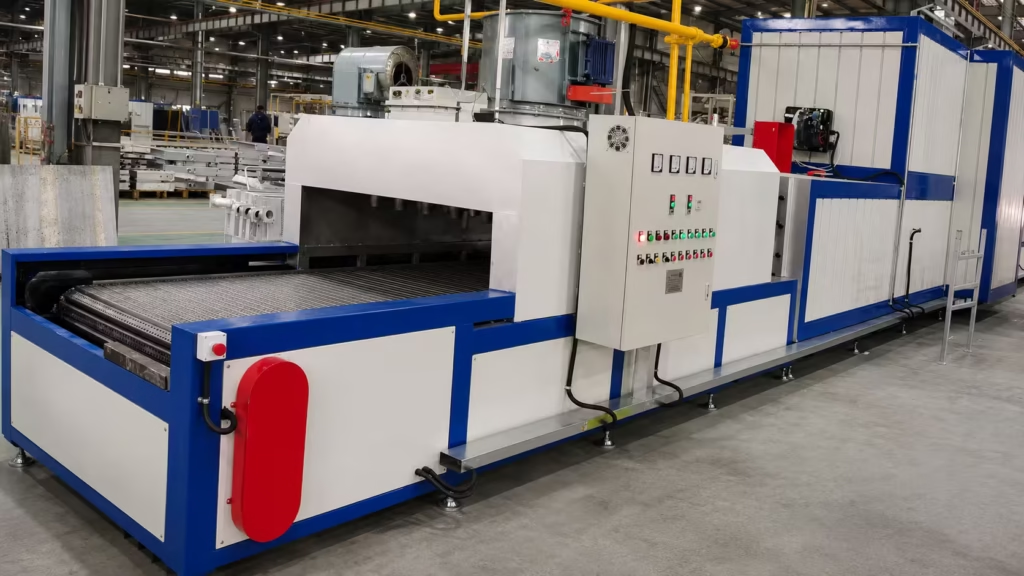
A practical starting point is an industrial conveyor oven system sized around a stable product family and repeatable production rate. Projects with unusual carriers, several process stages, restricted layout, special exhaust or line-control interfaces may instead require custom-built continuous oven solutions.
Follow the Product-to-Footprint Sizing Chain
The dimensions should be developed in a fixed order. Each step creates the inputs for the next one; changing product spacing or lane count later can alter both conveyor width and oven length.
Product
Envelope, mass, carrier and temperature limits.
Arrangement
Orientation, pitch, lanes and loading pattern.
Throughput
Pieces per hour, shifts and practical utilization.
Thermal Path
Heat-up, process dwell, zones and cooling.
Conveyor
Width, height, load and transfer interfaces.
Site Layout
Total length, services and maintenance space.
Size the Worst-Case Product Envelope—Including the Carrier
Use the maximum production envelope, not only the nominal part drawing. The oven must accommodate the product in its actual conveying condition, including trays, baskets, pallets, fixtures, hooks, raised features and any movement that occurs during transfer.
Product Length
Controls minimum pitch, transfer stability and the number of products occupying the heated path.
Product Width
Defines lane options and usable conveyor width after side and airflow clearances are added.
Product Height
Sets the working opening and influences heat loss, airflow coverage and entrance/exit containment.
Product Mass
Changes heat-up time and heating capacity even when the outside dimensions remain unchanged.
Carrier or Fixture
Include the mass, underside geometry, contact points, heat capacity and repeat-use temperature.
Movement & Clearance
Allow for product swing, thermal expansion, transfer guides, misalignment and loading variation.
Product Arrangement Can Trade Oven Width for Length
The same hourly output can sometimes be achieved with one fast lane, two slower lanes or a multi-pass arrangement. These choices change usable belt width, product pitch, required speed, thermal exposure and floor-space geometry.
Narrower Conveyor, Higher Linear Demand
A single lane can simplify loading and temperature coverage, but more products must pass each point per minute. That may require higher speed or longer heated length.
Wider Conveyor, Lower Speed per Lane
Parallel lanes can increase capacity at a lower belt speed, provided the full width receives acceptable airflow and each lane is loaded consistently.
Inline Roller Transfer
Trays, pallets and fixtures with stable flat bases may suit a roller conveyor oven for inline transfer, especially when adjacent processes already use powered rollers.
Fold the Conveyor Path
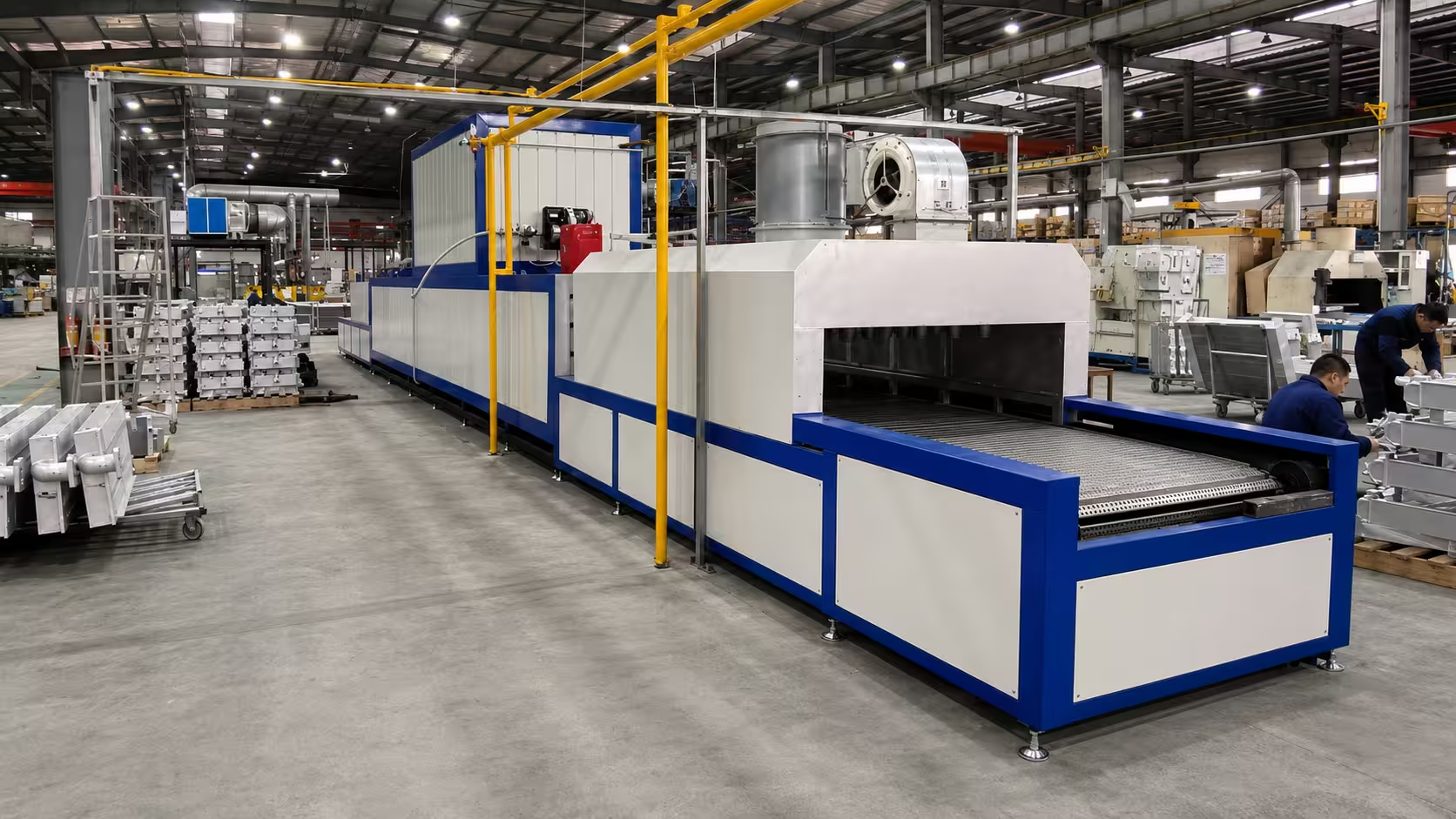
A multi-tier continuous oven can place a longer process path inside a shorter floor footprint. It does not eliminate required residence time; it changes how the path is arranged.
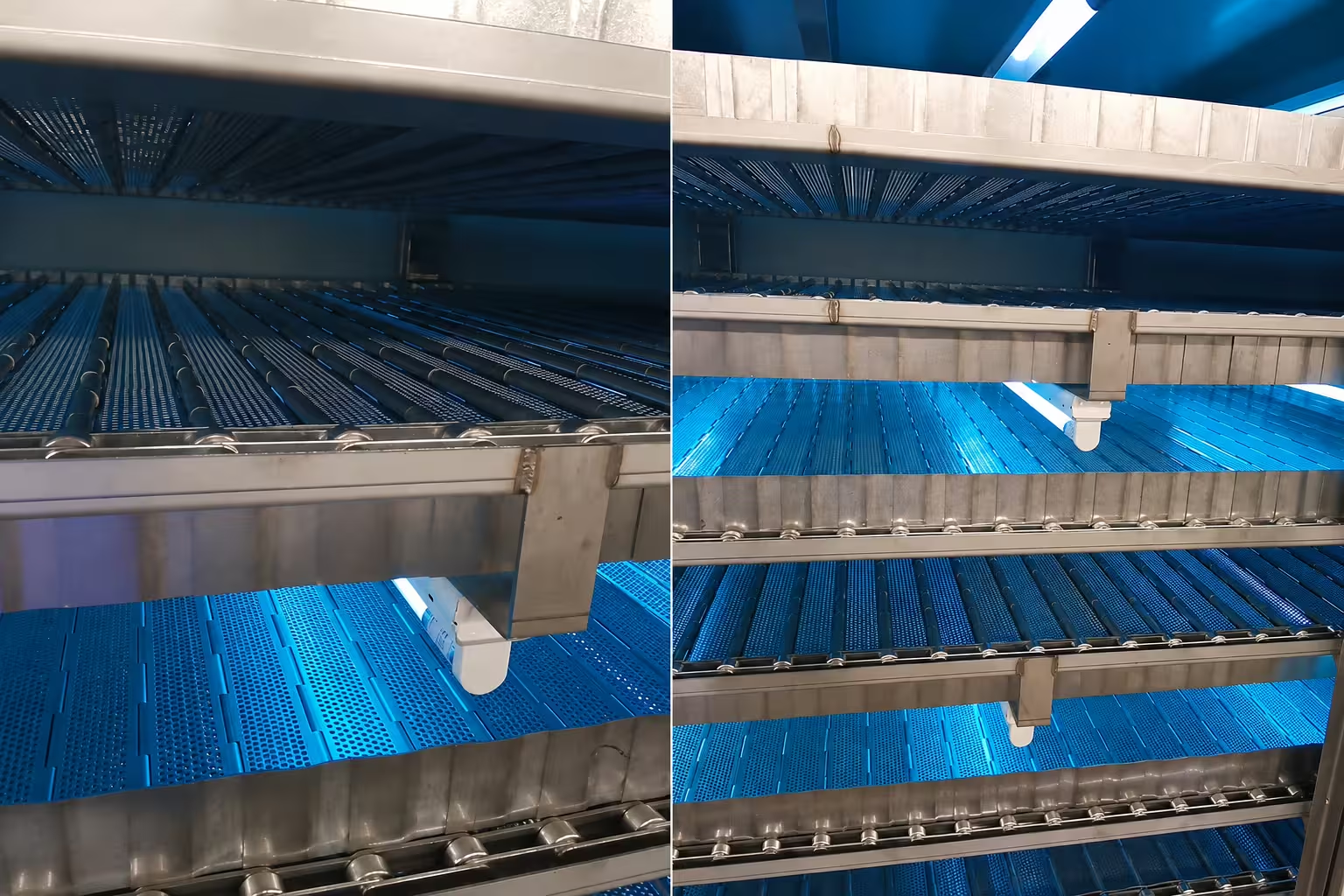
Calculate Usable Belt Width and Working Height Separately
The product arrangement establishes a required usable area. The nominal conveyor and chamber must then include allowances for safe tracking, side structure, product guides, airflow distribution and practical loading variation.
This is a layout relationship, not a universal design formula. Belt edge, guide and airflow allowances remain project-specific.
Product and carrier height in the actual production orientation.
Vertical clearance for movement, loading variation and thermal expansion.
Airflow space where top, bottom or combination circulation must pass around the load.
| Dimension | What It Represents | What Commonly Gets Missed |
|---|---|---|
| Usable conveyor width | Area where products may be safely placed. | Side guides, belt-edge exclusion and lane-to-lane gaps. |
| Nominal belt width | Physical conveying-surface width. | Not every millimetre is usable for product placement. |
| Working opening width | Clear passage through entrance, chamber and exit. | Product movement, fixture overhang and alignment tolerance. |
| Working height | Vertical process envelope above the conveying surface. | Airflow clearance, raised fixtures and product swing. |
| Overall machine width | Exterior equipment envelope. | Ducts, fans, heaters, burner, controls and service access. |
Use Throughput to Establish Product Pitch and Belt Speed
Pieces per hour cannot be converted into a conveyor size until the loading arrangement is known. Product pitch is the repeating distance occupied by one product position along the travel direction, including required spacing.
Required Pieces per Hour
Use sustained production demand, not a short peak that the upstream line cannot maintain.
Product Pitch
Include the product length, thermal separation, fixture spacing and any sensor or transfer gaps.
Lane Count
Each stable lane adds capacity, but a wider belt increases airflow and uniformity design demands.
Loading Efficiency
Allow for missed positions, changeovers, stoppages and the practical ability to keep every lane filled.
Use the detailed calculation for conveyor belt speed and residence time to convert product pitch, throughput and process time into a preliminary line speed. Final speed must still be checked against product heating, transfer stability and downstream takt.
Calculate Heated Length from Validated Process Time—not Air Temperature Alone
Preliminary heated length is the product of conveyor speed and required residence time. The difficult part is establishing the correct residence time. The product must heat from its entry condition, reach the target product temperature and then complete the required dry, cure, preheat or heat-treatment stage.
Use matching units. The result is the required heated conveyor path—not necessarily the complete machine length.
Product heat-up: mass, material, geometry and entry temperature.
Process exposure: time at the required product condition.
Load effects: carrier mass, belt loading and airflow obstruction.
The focused heated-length calculation guide explains the formula and why entrance transitions, thermal separation and cooling are not included in the simple result.
Allocate the Heated Path Across the Required Temperature Stages
A single-zone oven may be sufficient for a simple, stable process. Where preheating, controlled ramping, moisture release, curing or recipe flexibility require different conditions, the total path should be divided into independently controlled sections.
Single Controlled Environment
Suitable when one temperature condition can provide the required heat-up and process result without distinct stages.
Multi-zone conveyor oven
Use independent zones when the product needs controlled preheat, ramp, soak, cure or recipe adjustment along the path.
Gas-fired conveyor oven
For larger continuous heat loads or site-specific energy conditions, the heating method must be evaluated with capacity, exhaust, safety and operating profile.
Zone quantity should not be selected by catalog preference. Each independent section adds sensors, controls, balancing work and commissioning scope, so every added zone should have a defined process purpose.
Include the Cooling Section Before the Layout Is Frozen
The required equipment does not necessarily end when heating ends. If products must be handled, packaged, measured, stacked or transferred by a robot at a lower temperature, the discharge target must be part of the initial sizing brief.
Hot Product Leaves the Oven
Suitable only when downstream equipment, personnel and product quality can accept the actual exit temperature.
Continuous heating and cooling oven
Add a controlled cooling section when discharge temperature is part of the process or line-integration requirement.
Cooling length depends on belt speed, product mass, required temperature reduction, airflow method, ambient conditions and fixture heat. It should not be selected as an arbitrary percentage of heated length.
Working Openings and Airflow Change Both Size and Performance
A taller or wider entrance can pass a larger product, but it also creates a larger path for heat loss and room-air infiltration. The chamber cross-section must therefore be coordinated with recirculation volume, duct arrangement, exhaust, thermal separation and product blockage.
Opening Heat Loss
Large openings may require vestibules, air management or pressure control to reduce thermal leakage.
Airflow Coverage
Wide, tall or densely loaded products require supply and return paths that reach every lane and exposed surface.
Load Shadowing
Closely spaced fixtures can block recirculation, changing heat-up time and edge-to-centre performance.
Uniformity Criteria
Define the required measurement condition using the conveyor oven temperature uniformity guide before final quotation.
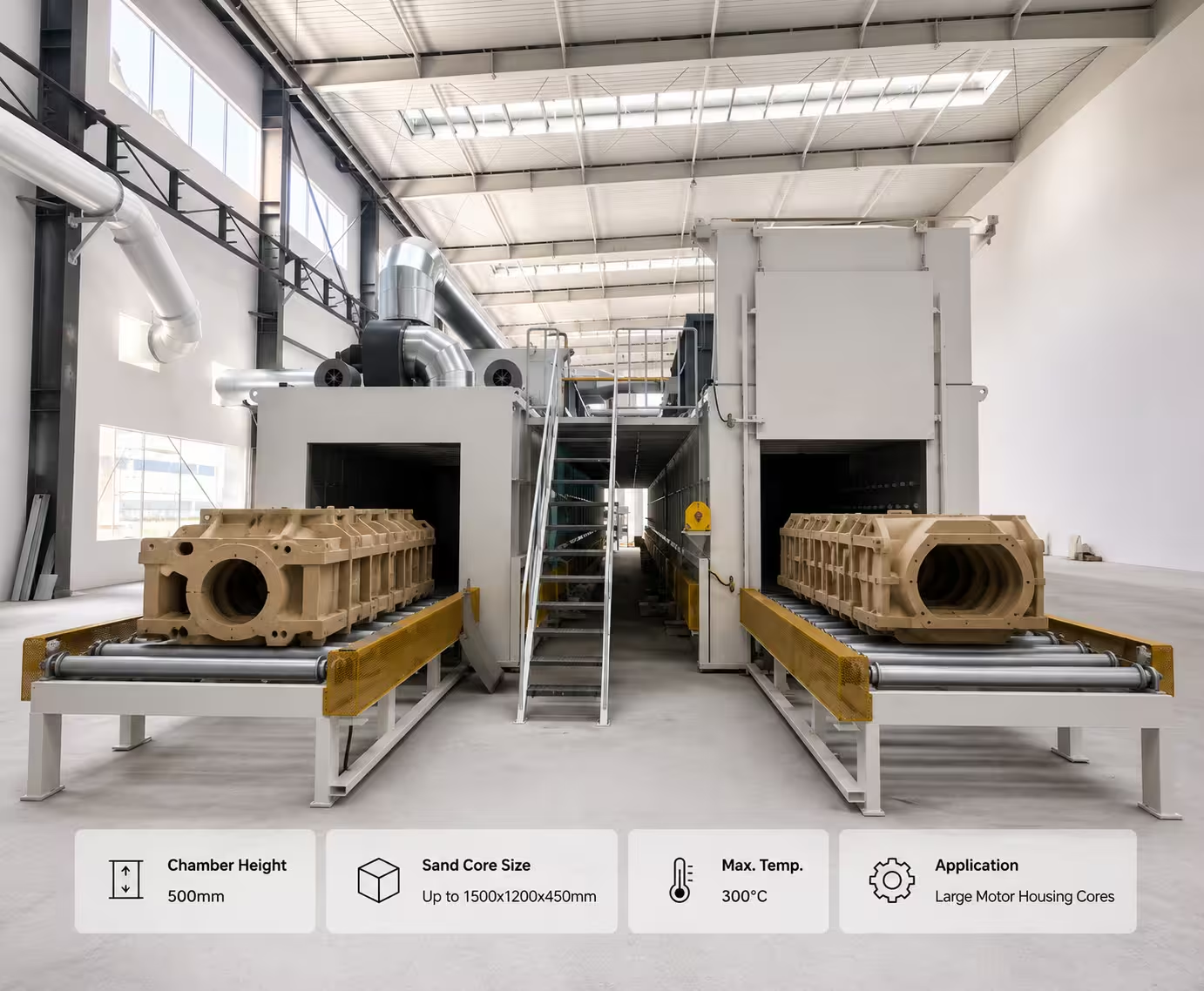
Check Load per Position, per Metre and Inside the Entire Oven
Conveyor load is not only the weight of one product. The mechanical design must account for every product and carrier simultaneously inside the heated and cooling sections, plus the conveyor's own moving mass and temperature-dependent strength.
| Load Input | Why It Matters | Typical Design Effect |
|---|---|---|
| Weight per product | Defines local support and acceleration demand. | Belt, roller, chain, fixture and drive selection. |
| Weight per loaded position | Includes tray, pallet or basket. | Point loading and support spacing. |
| Loaded weight per metre | Shows distributed conveyor loading. | Frame, shaft, chain pull and drive torque. |
| Total load inside oven | All occupied positions at once. | Drive start-up, thermal load and structural capacity. |
| Operating temperature | Materials and lubricants change at heat. | Allowable strength, expansion and maintenance design. |
Do not select a conveyor type solely from part weight. The product underside, required positioning, transfer method, airflow and cleaning environment must be evaluated together.
Total Installed Footprint Is Larger Than the Heated Chamber
The site plan must show more than the insulated heating body. Include every functional section and enough access to install, operate, clean and maintain the system.
Loading Conveyor
Manual staging, robot hand-off, sensors, guides and upstream synchronization.
Heated Sections
Entrance transition, independent zones, separation and exhaust connections.
Cooling Section
Fans, filters, transition, conditioned air or external cooling conveyor.
Unloading Conveyor
Safe handling, accumulation, robot access and downstream takt matching.
Utilities & Controls
Control cabinet, fan modules, heater or burner, exhaust and service connections.
Maintenance Clearance
Doors, belt removal, fan service, cleaning and access to drives or sensors.
Wide products or large carriers may require a large-part continuous oven, where edge-to-centre airflow, opening losses, structural loading and transport modules become major layout considerations.

Convert the Sizing Inputs into a Preliminary Conveyor Oven Layout
The most useful early deliverable is not a generic outside dimension. It is a preliminary process layout showing the proposed product arrangement, usable conveyor width, line speed, heated path, temperature stages, cooling requirement and total site envelope.
Preliminary Sizing Input Sheet
Prepare the following data before requesting a layout. Unknown values can be marked TBD so confirmed requirements remain separate from assumptions.
Build a Quote-Ready Data Package
Use the information required for a conveyor oven quotation to document the thermal process, conveyor load, utilities, controls and delivery scope.
Get a Preliminary Conveyor Oven Layout
Send product size, weight, throughput, process temperature, required time and available floor space. ZonHoo will review the width, path length, zones, cooling and site arrangement together.
Plan Conveyor Oven Capacity & Layout →Industrial Conveyor Oven Sizing FAQ
What information is required to size an industrial conveyor oven?
At minimum, provide the maximum product and carrier dimensions, weight, required pieces per hour, product spacing or loading pattern, entry temperature, target product-temperature profile, required process time, discharge-temperature requirement and available floor space.
Is conveyor belt width the same as usable product width?
No. The usable loading width is normally smaller because the design must allow for belt edges, tracking, guides, side clearance, product variation and airflow. The quotation should state both nominal conveying width and usable product width where relevant.
How is conveyor oven heated length calculated?
The preliminary relationship is heated length equals belt speed multiplied by required residence time. The residence time must include product heat-up and valid process exposure; it should not be based only on chamber-air setpoint.
Does increasing the number of lanes reduce oven length?
It can reduce the required linear throughput per lane, which may permit a lower belt speed and therefore a shorter heated path for the same residence time. However, the wider conveyor increases chamber width, airflow-distribution demands and structural scope, so the complete system must be compared.
Can a multi-level conveyor oven reduce floor space?
Yes. A multi-level arrangement can fold the required conveyor path into a shorter plan-view length. It does not reduce the thermal path or process time; it changes the layout and adds transfer, access and control considerations.
Should the cooling section be included when sizing the oven?
Yes, whenever product discharge temperature affects handling, packaging, coating quality, dimensional stability or downstream automation. Cooling load and length should be reviewed with the heating process before the site layout is frozen.
Why is the complete machine longer than the calculated heated length?
The calculated heated path excludes entrance and exit transitions, thermal separation, cooling, loading and unloading conveyors, drives, sensors and service space. These sections must be added to determine the total installed length.
Can ZonHoo size the oven when some process values are unknown?
Yes. Unknown values can be marked TBD. ZonHoo can separate confirmed production requirements from assumptions, identify which values require testing or customer confirmation and develop a preliminary layout without presenting assumptions as guaranteed performance.