

Industrial Ovens for Composites Manufacturing
Composite manufacturing is fundamentally a heat-controlled process, and in many applications it also involves vacuum-assisted consolidation before or during cure. Whether the goal is composite curing, prepreg drying, post-curing, or vacuum bagging with oven curing, final part quality depends on how accurately temperature, time, airflow, and processing conditions are controlled. For large composite panels, molds, fixtures, or full-size assemblies, a walk-in curing oven for composite parts can provide the chamber space and loading flexibility needed for stable production.
Industrial ovens make those variables manageable. They provide defined ramp-and-soak profiles, stable chamber conditions, and repeatable thermal performance for composite parts, molds, tools, and assemblies. ZonHoo provides industrial oven solutions for composites manufacturers, including electric batch ovens, walk-in ovens, truck-in ovens, large industrial ovens, and selected vacuum-capable thermal systems configured around real production requirements.
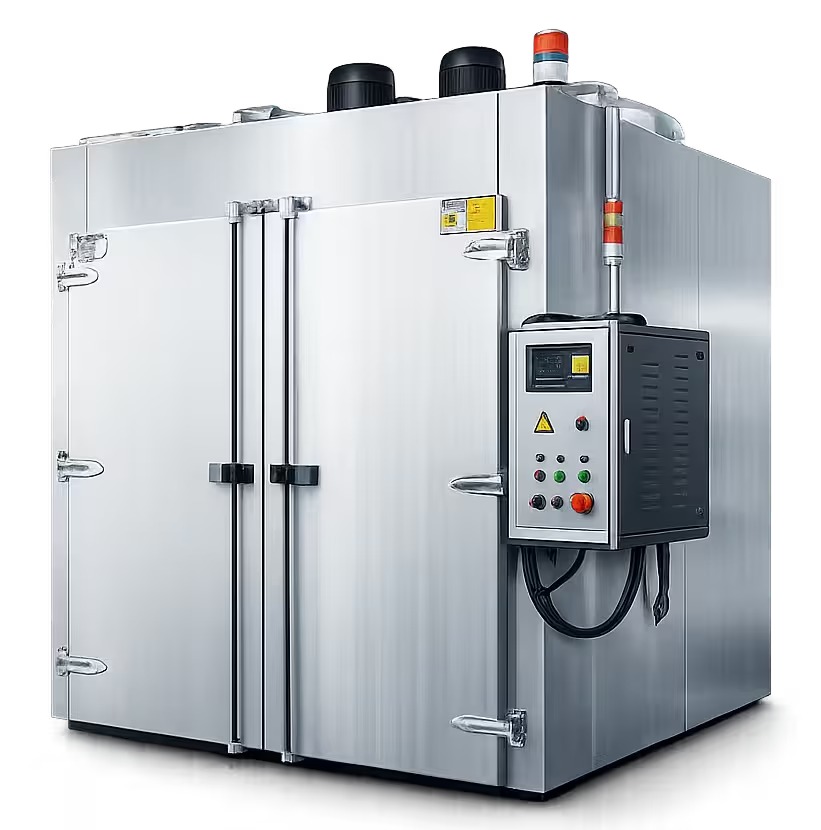
Industrial Electric Oven
For composite curing, drying, bonding, and material conditioning, industrial electric ovens provide clean, stable heating with repeatable control. They are often used where controlled thermal cycles and process consistency are more important than continuous flow.
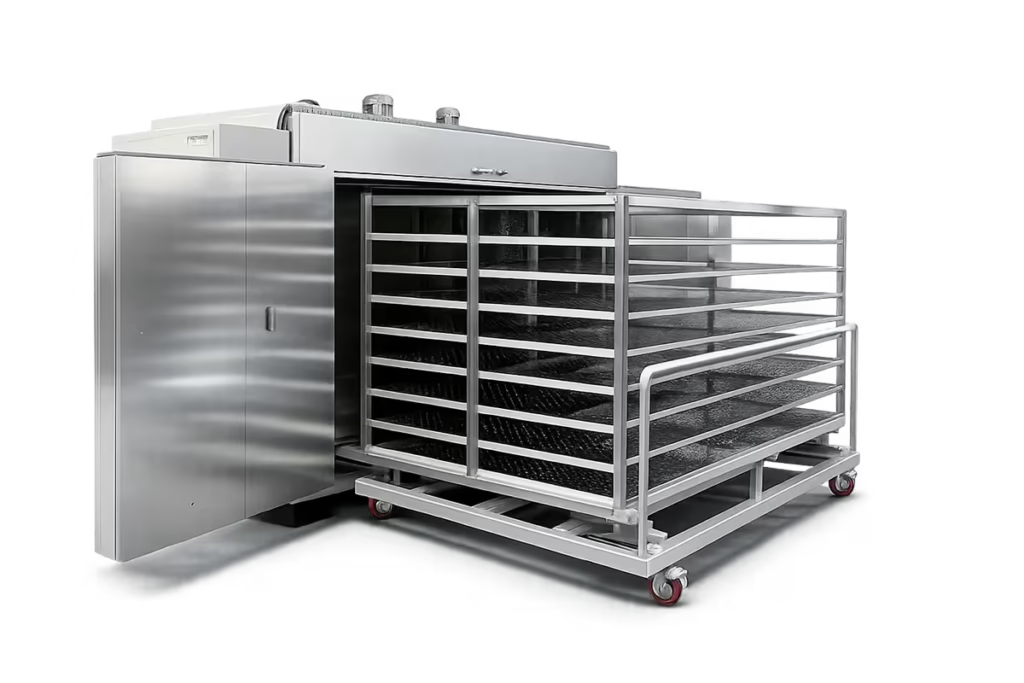
Industrial Batch Oven
Batch ovens are suitable for composite parts, prepregs, fixtures, trays, and medium-volume production lots. They are commonly used for curing, drying, post-curing, and process development where flexibility matters.
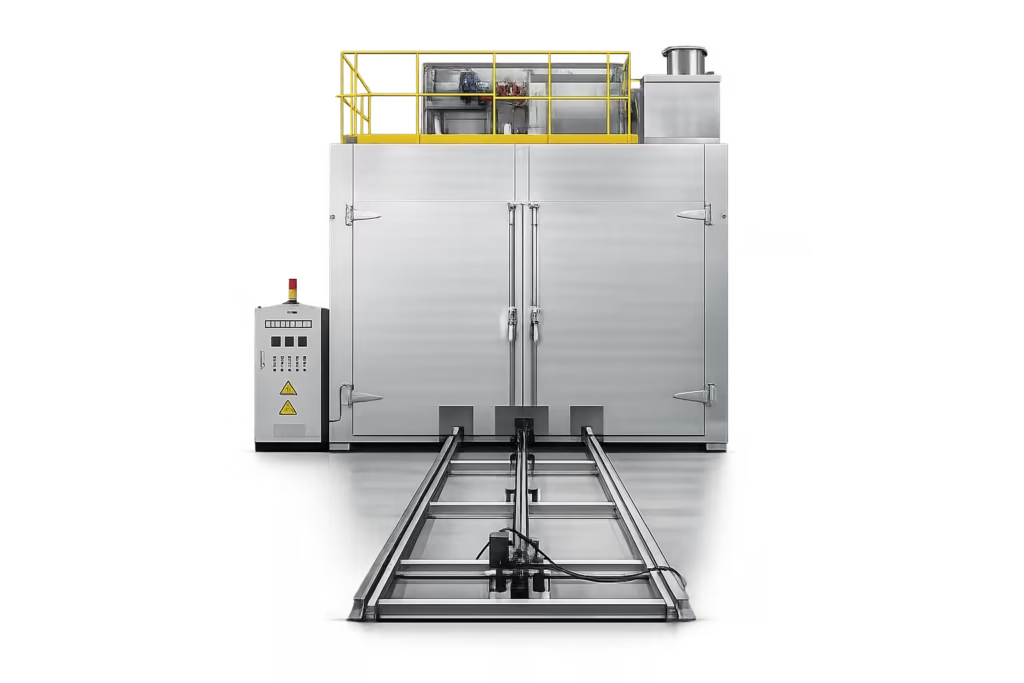
Truck-In Oven
For heavy tooling, wheeled fixtures, or large composite structures loaded by cart or rail, truck-in ovens simplify handling while supporting stable batch heating.
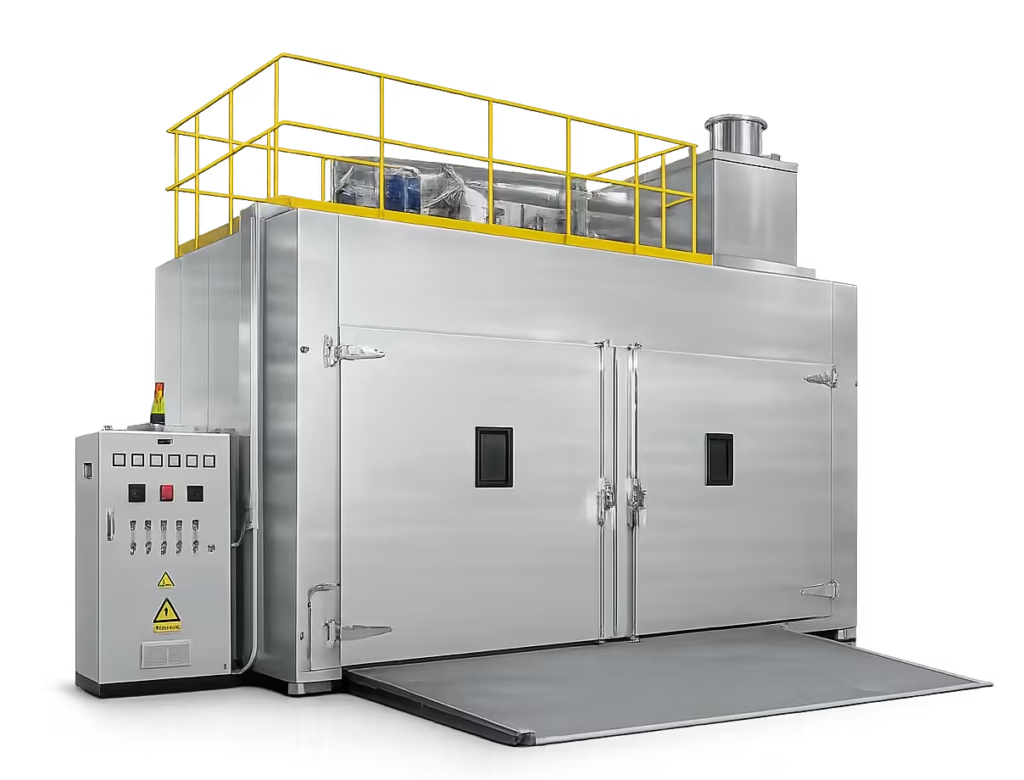
When molds, tools, panels, or composite assemblies become larger in size, walk-in ovens provide easier access, more usable chamber space, and flexible loading for carts, racks, or floor-loaded composite parts during curing, post-curing, and drying processes.
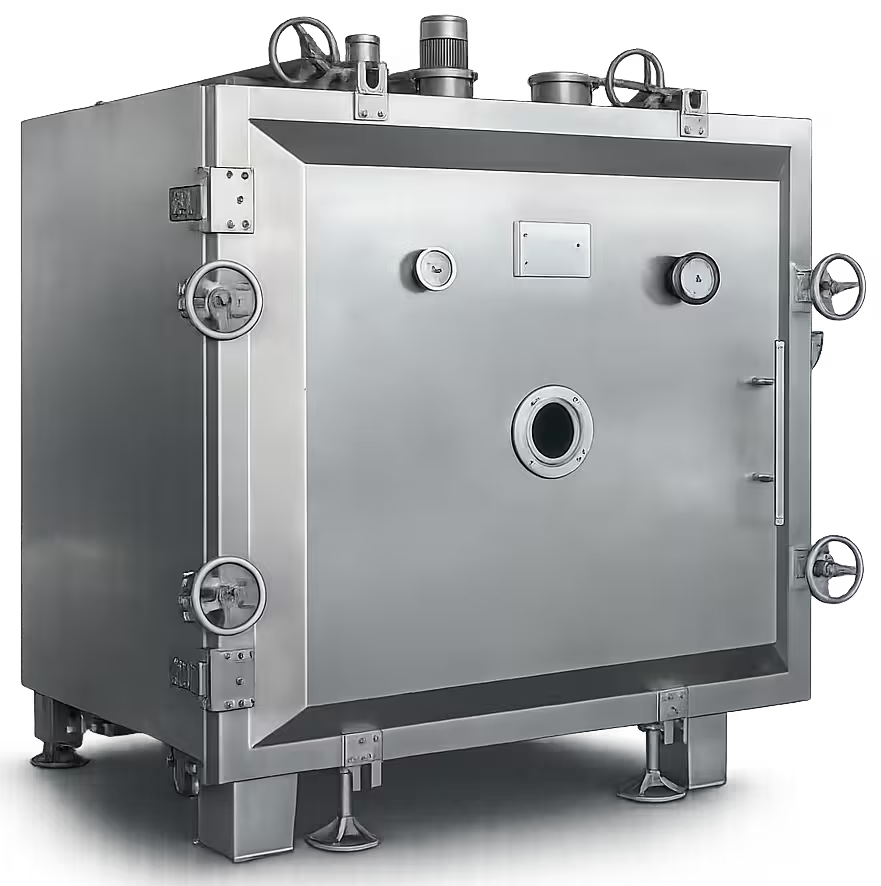
Vacuum Curing Furnace
For selected composite processes involving moisture-sensitive materials, volatile removal, vacuum drying, or degassing-related thermal treatment, vacuum-capable systems provide a more controlled environment than conventional hot-air processing alone.
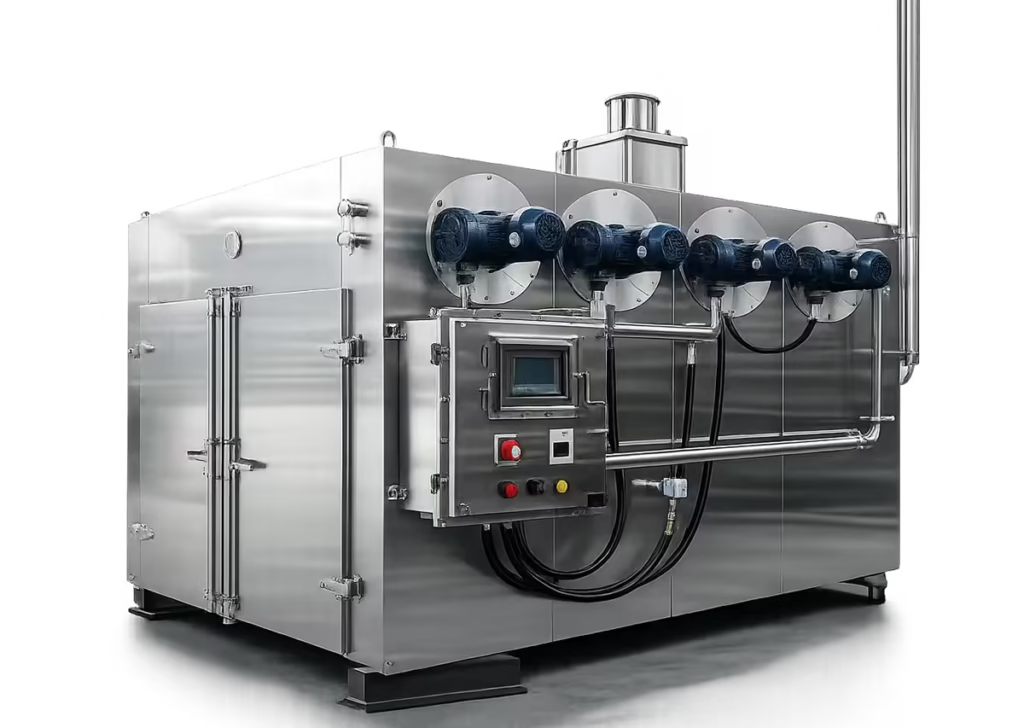
High Temp Vacuum Oven
When composite-related materials require elevated temperature under reduced pressure, high temperature vacuum ovens support more specialized thermal steps involving sensitive materials or stricter process windows.
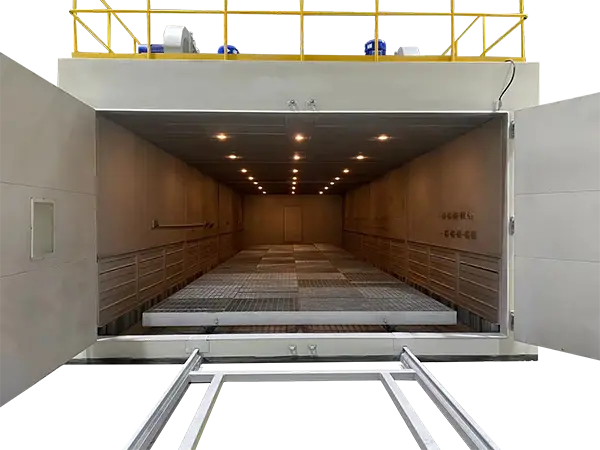
Large Industrial Oven
For oversized composite structures, large molds, vacuum-bagged assemblies, or broad batch loads, large industrial ovens provide the chamber volume and loading flexibility required for out-of-autoclave production and other large-part thermal processes.
Why Composite Manufacturing Depends on Industrial Ovens
Composite materials are typically built around a fiber-and-resin system, and resin performance is shaped by controlled thermal processing. In practical terms, this means the manufacturing result depends on three variables being managed correctly: temperature, time, and processing environment.
Industrial ovens make these variables controllable. They allow manufacturers to run defined ramp-and-soak cycles, maintain temperature consistency across the chamber, and support repeatable processing conditions from batch to batch. Without that control, composite parts face higher risks of incomplete cure, trapped moisture, voids, dimensional instability, or inconsistent final properties.
For many composite manufacturers, the oven is not just auxiliary equipment. It is a core part of process control.
Composite Curing
Composite curing is one of the most critical thermal stages in the entire manufacturing process. During curing, the resin system undergoes crosslinking under controlled heat, and this stage largely determines the final strength, rigidity, heat resistance, and overall performance of the composite part.
Industrial ovens support this process by controlling ramp rates, soak time, and chamber uniformity. That control helps manufacturers achieve repeatable cure quality across different parts, tools, and production batches.
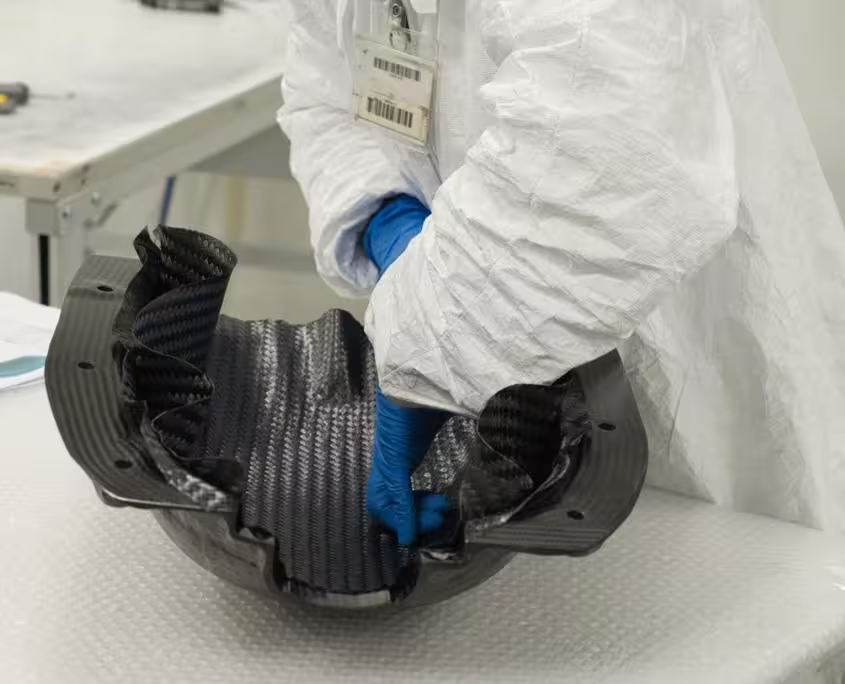
Typical processes: composite curing, resin crosslinking, laminate curing, structural part curing, thermal curing of composite assemblies.
Why it matters: Moisture control helps reduce voids and delamination risk before cure.
Explore related solutions:
Prepreg / Laminate Drying & Moisture Control
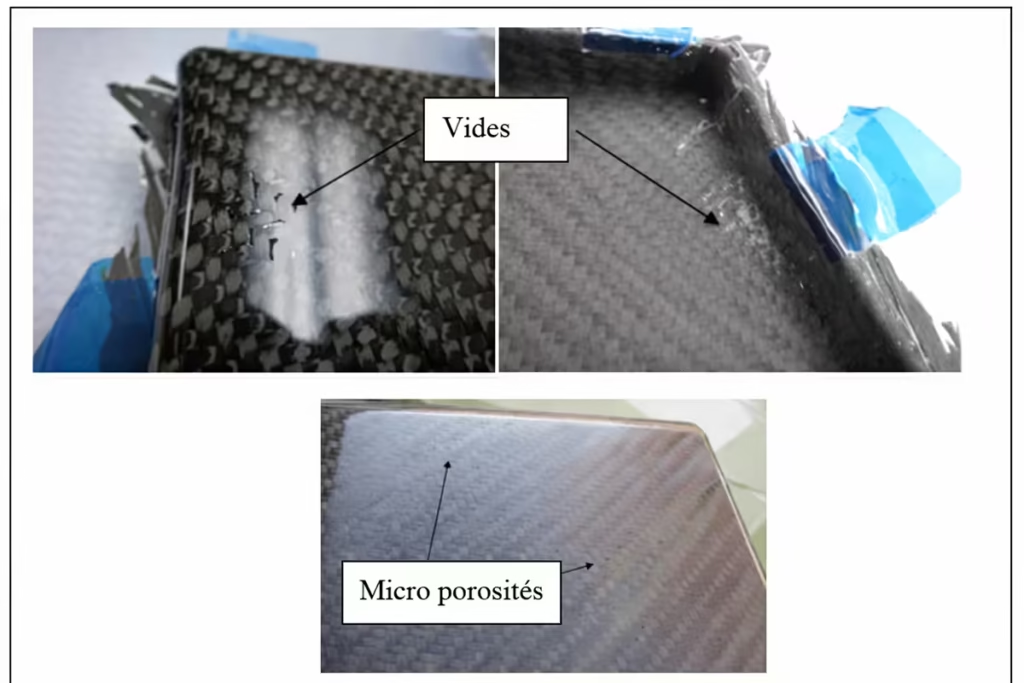
Many composite materials are highly sensitive to moisture, especially prepregs, laminates, resins, and related materials used before the main cure cycle. Controlled drying or thermal conditioning helps remove residual moisture and reduce the risk of voids, bubbling, delamination, or unstable downstream curing results.
This step is easy to underestimate, but it has a major impact on process stability and final product quality. Industrial ovens help standardize drying conditions and support more predictable material behavior before curing, bonding, or assembly. For moisture-sensitive or volatile-sensitive materials, vacuum-assisted drying or conditioning may also be used to improve consistency before downstream cure.
Typical processes: prepreg drying, laminate drying, resin conditioning, moisture removal, material thermal preparation.
Why it matters: Curing defines the final mechanical properties of composites.
Vacuum Bagging & Oven Curing
Vacuum bagging is a widely used composite manufacturing method in which the laminate is sealed under vacuum to remove trapped air, compact the structure, and support resin control before or during curing. The vacuum side of the process helps reduce voids, improve laminate consolidation, and increase structural consistency. The oven side provides the controlled heat required for resin curing through defined ramp rates, soak time, and chamber temperature uniformity.
These two functions are different but inseparable. Vacuum provides pressure control. The oven provides temperature control. Together, they allow composite manufacturers to produce parts with higher strength, lower porosity, and more repeatable quality.
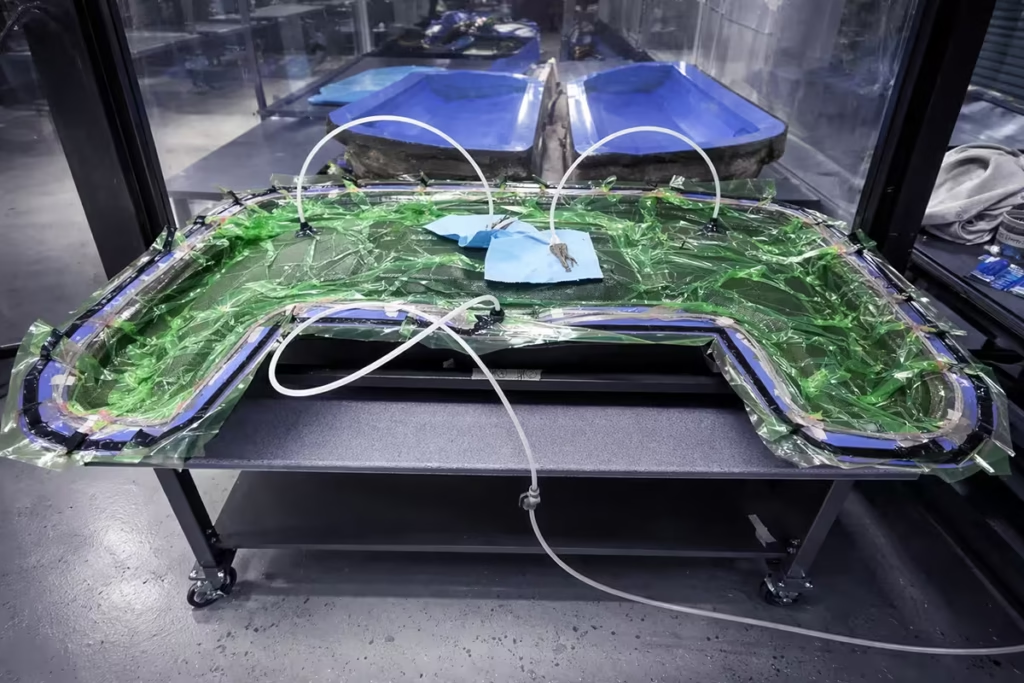
This approach is widely used in out-of-autoclave (OOA) composite processing, where manufacturers need a more practical and cost-effective alternative to autoclave systems while still maintaining controlled curing conditions for composite structures, molds, panels, and bonded assemblies.
Typical processes: vacuum bagging, oven curing, out-of-autoclave curing, laminate consolidation, composite structure curing.
Explore related solutions:
Industrial Ovens for Out-of-Autoclave (OOA) Composite Processing
Not all composite parts require autoclave processing. In many applications, manufacturers use vacuum bagging together with controlled oven curing as a more practical and cost-effective route. This out-of-autoclave (OOA) approach combines vacuum-assisted laminate consolidation with repeatable thermal control, making industrial ovens a critical part of composite production without the complexity and cost of full pressure-vessel systems.
How to Match the Right Oven to Composite Production
The best oven choice depends on whether the process is focused on curing, drying, post-curing, large-part handling, or vacuum-related thermal treatment.
| Production need | Recommended oven |
|---|---|
| Standard composite curing with stable batch control | Industrial Batch Oven |
| Clean electric heating for curing or drying cycles | Industrial Electric Oven |
| Moisture-sensitive prepregs or laminate drying | Vacuum Curing Furnace |
| Large molds, panels, or composite assemblies | Walk In Curing Oven |
| Heavy tooling or wheeled composite loads | Truck-In Oven |
| Large vacuum-bagged structures or OOA composite parts | Large Industrial Oven |
Related Solutions & Guides
- emperature uniformity for composite curing
- Controlled ramp-and-soak profiles
- Airflow design for repeatable heating
- Drying support for moisture-sensitive materials
- Post-curing for improved Tg and stability
- Large-part and tooling handling flexibility
- Vacuum-bag oven processing support
- PLC / HMI recipe control (opt)
Need help matching the right oven to your automotive process, load style, or production layout?