

Hot Air Circulation Dryers
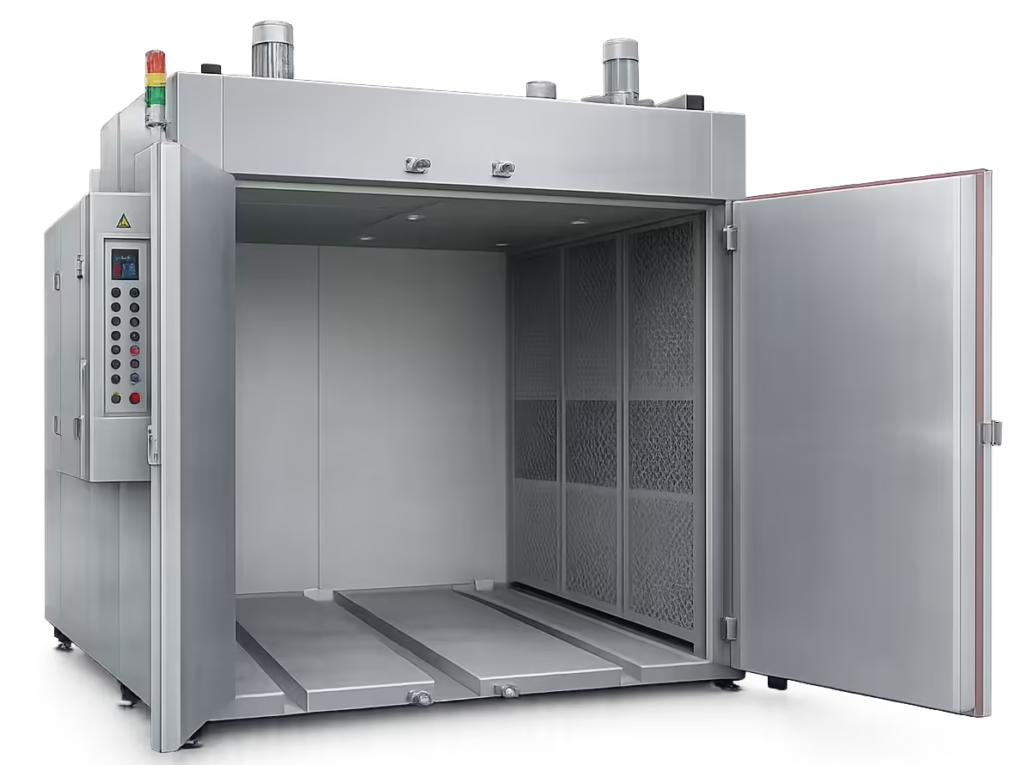
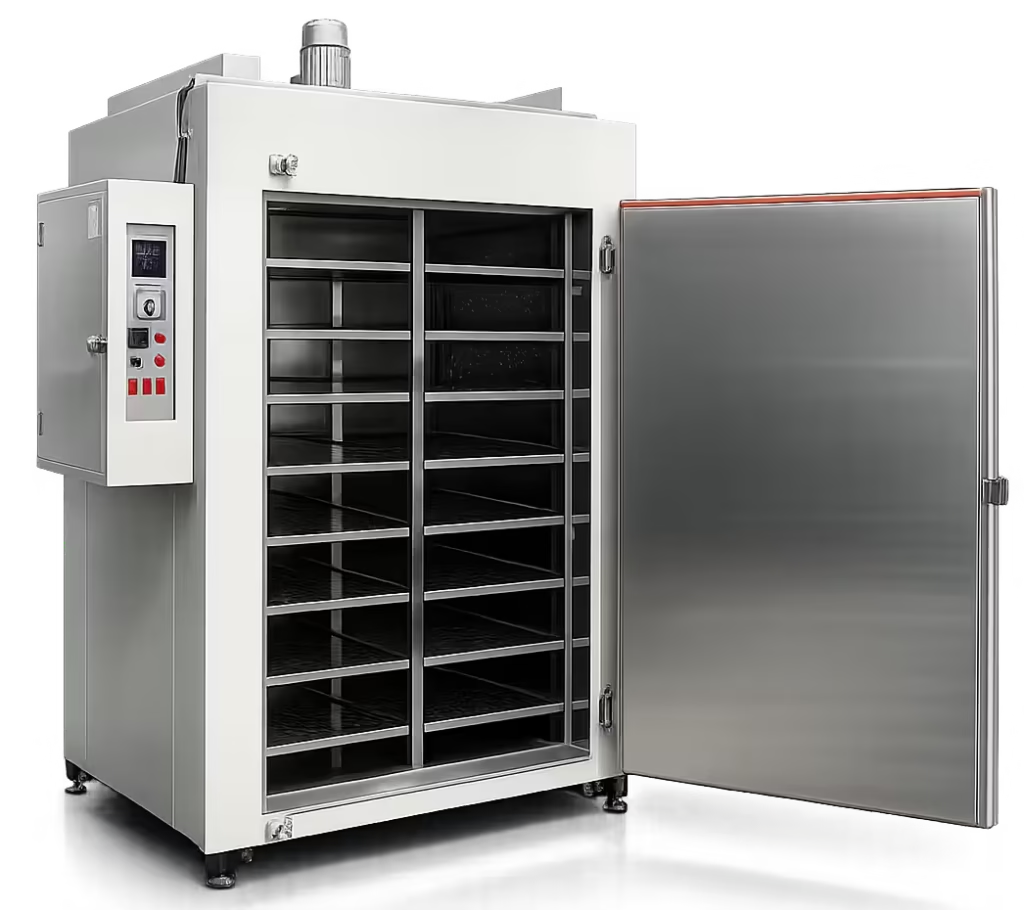
ZonHoo hot air circulation dryers are forced-convection drying systems built around a controlled recirculated airflow loop—moving heated air through the load, removing moisture, and maintaining a stable drying environment for repeatable batch output. This is the practical choice when your priority is moisture removal efficiency, consistent drying across trays/racks, and reliable daily operation without over-complicating temperature tolerance requirements.
As an OEM/ODM manufacturer, ZonHoo engineers the airflow path, recirculation ratio, exhaust strategy, and load spacing around your material, wet-load profile, and throughput. We provide an RFQ-ready scope—dryer sizing, airflow concept, controls, utilities, and documentation—so approval is faster and lead-time is clearer.
- Recirculated airflow loop for fast moisture removal and energy efficiency
- Exhaust / make-up air strategy tuned to your wet-load profile
- Load spacing & airflow coverage engineered for trays, racks, or carts
- Recovery-focused design for frequent door openings and stable cycles
- Recipe control & alarms (optional) for repeatable batch drying
- Data logging & cycle reports (optional) for process traceability
- RFQ-ready delivery: drawings, documentation scope, FAT/SAT support
When to Choose Hot Air Circulation Dryers
Choose hot air circulation dryers when drying speed and moisture removal are driven by airflow—not ultra-tight temperature tolerance:
- You need reliable moisture removal after washing, coating, impregnation, or wet processing
- Your load is on trays/racks/carts and benefits from recirculated forced convection
- You want a practical balance of drying speed and operating cost via recirculation ratio
- Exhaust and make-up air must be engineered to avoid slow drying, re-condensation, or unstable cycles
- Batch repeatability matters (shift-to-shift output), but you do not require the tightest ± tolerance class
- You want an RFQ-ready system scope: airflow concept, utilities, controls, documentation, and serviceability
If your primary requirement is tight temperature stability and validation-first tolerance, use a Constant Temp Drying Oven; if your process involves flammable solvents or VOCs, review an Explosion-Proof Drying Oven; if your throughput is continuous on a belt, use Conveyor Belt Dryers.
Engineering, Options & Key Specs
- Airflow loop design: supply/return path and recirculation ratio tuned to wet-load behavior
- Exhaust placement & control: engineered moisture removal to prevent saturation and drying slow-down
- Air velocity & coverage: airflow distribution built around tray/rack geometry and spacing rules
- Heat-up & recovery logic: stable cycle performance after door openings and batch transfers
- Controls for repeatability: recipes, alarms, and optional batch prompts to reduce operator variance
- Serviceability focus: filter access, fan maintenance access, and spare parts planning for uptime
- Exhaust and make-up air control modes (project-defined)
- Filtration and ducting options for your environment (opt.)
- Tray/rack/cart layout planning and guides (project-defined)
- Variable-frequency fan control for airflow tuning (opt.)
- Door configurations and sealing approach (project-defined)
- Recipes, alarms, data logging, cycle reports (opt.)
- I/O integration: ready/busy/fault signals (opt.)
- Documentation scope: drawings, manuals, acceptance checks, FAT/SAT support (project-defined)
- Temperature Range: Process-defined drying configuration
- Usable Workspace (W×H×D): Custom per load size & batch quantity
- Airflow Mode: Forced convection, recirculated hot air (project-defined)
- Exhaust / Make-up Air Strategy: Project-defined for moisture removal
- Load Format: Trays / racks / carts (project-defined)
- Door-Opening Recovery Strategy: Custom (takt-time aligned)
- Controls & Data Logging: Optional recipes, records, alarms, reporting
- Installation & Utilities: Power and ventilation requirements (project-defined)
For moisture-heavy drying processes, circulation airflow, fresh-air make-up, and exhaust should be engineered as one system. See our Drying Oven Airflow, Moisture Exhaust & Ventilation guide for the design logic behind recirculation, evaporation load, chamber pressure, and exhaust control.
If chamber size, heater capacity, or batch moisture load has not yet been defined, use How to Size an Industrial Drying Oven for preliminary workspace, heat-load, evaporation, and heating-power calculations.

Typical Applications
- Drying after aqueous washing/cleaning (parts, fixtures, assemblies)
- Pre-drying before coating, bonding, or packaging
- Drying of wet racks/trays in batch production workflows
- Moisture removal from porous or absorbent components (process-defined)
- General industrial batch drying where airflow efficiency defines throughput
- Tray and rack drying of loose powder materials — see Powder Drying
- Wet paint, liquid coating and adhesive-film drying — see Paint & Coating Drying
Related Solutions & Guides
- Hot air circulation drying (forced convection)
- Recirculated airflow & exhaust balancing
- Moisture removal strategy (project-defined)
- Tray/rack/cart drying layouts
- Recovery-focused batch operation design
- Recipe control & data logging (opt.)
- Door status, alarms & safety interlocks (opt.)
- I/O integration for line coordination (opt.)
Let’s talk about how we can support your thermal processing goals. Contact our team to explore the right solution for your needs.