

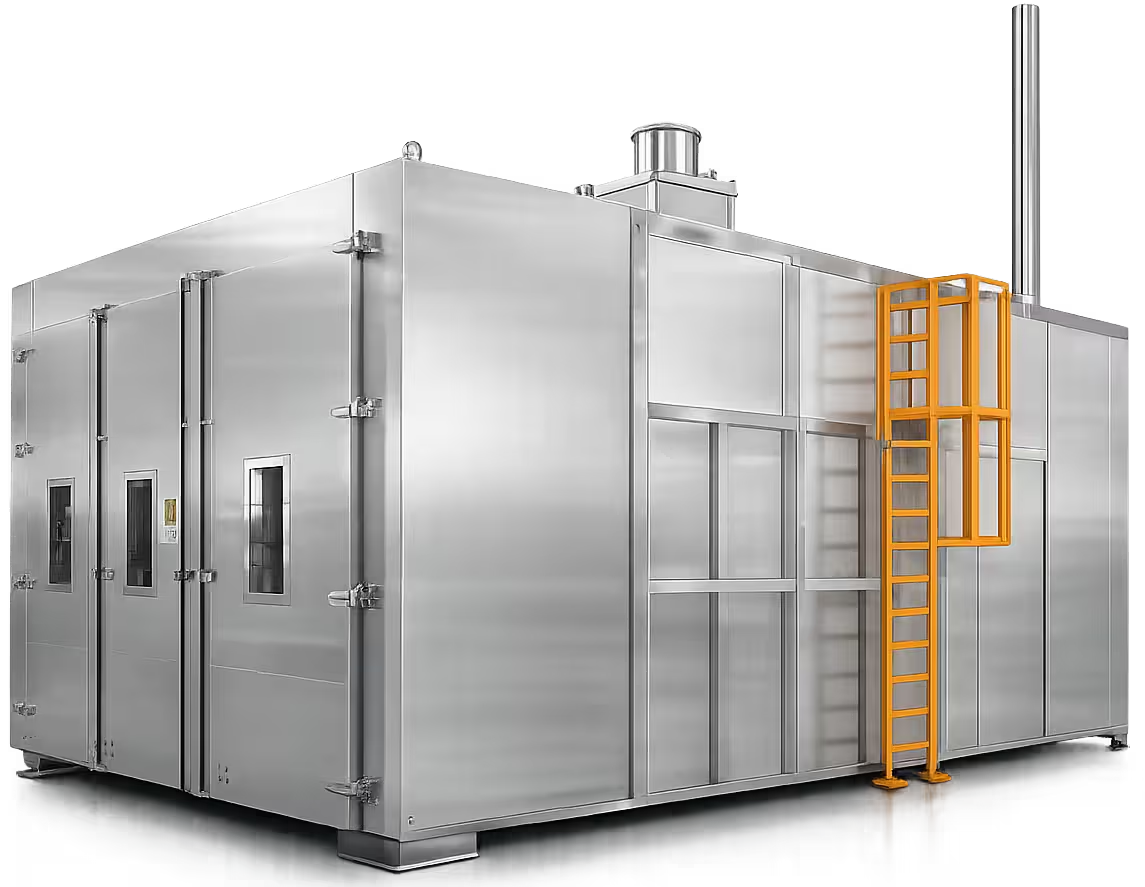
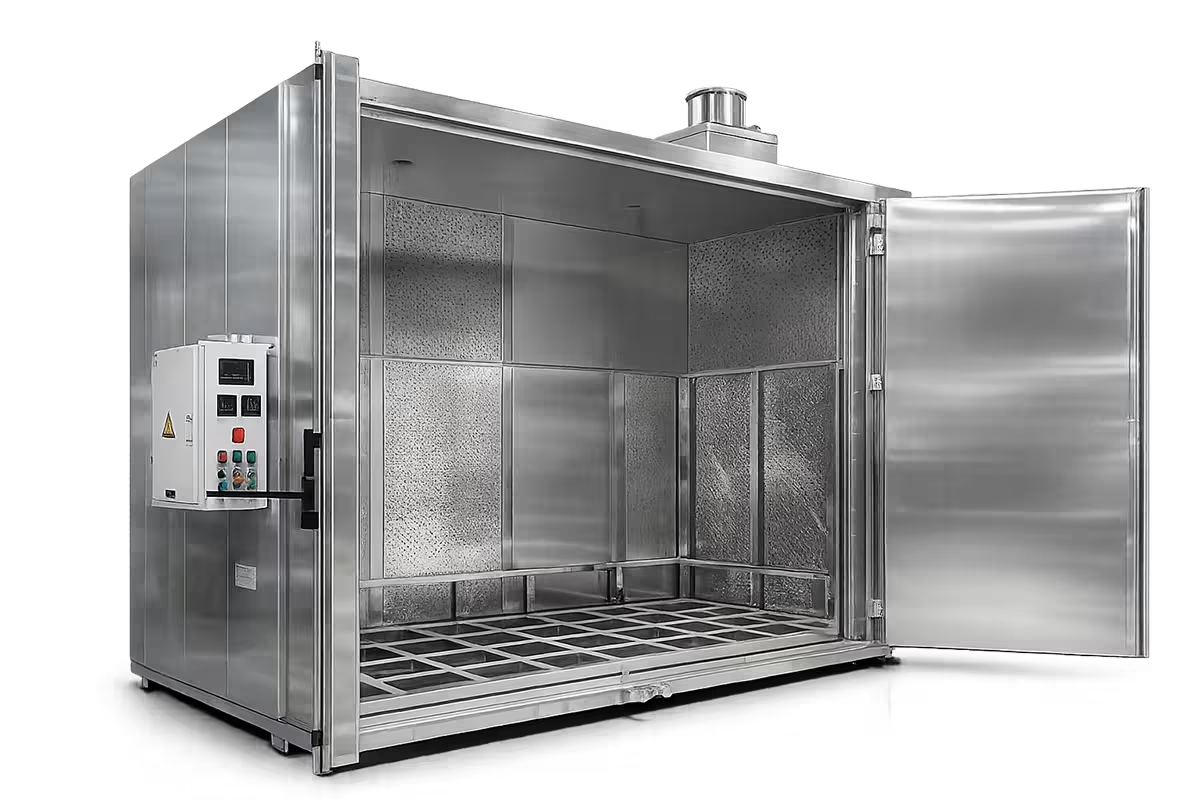
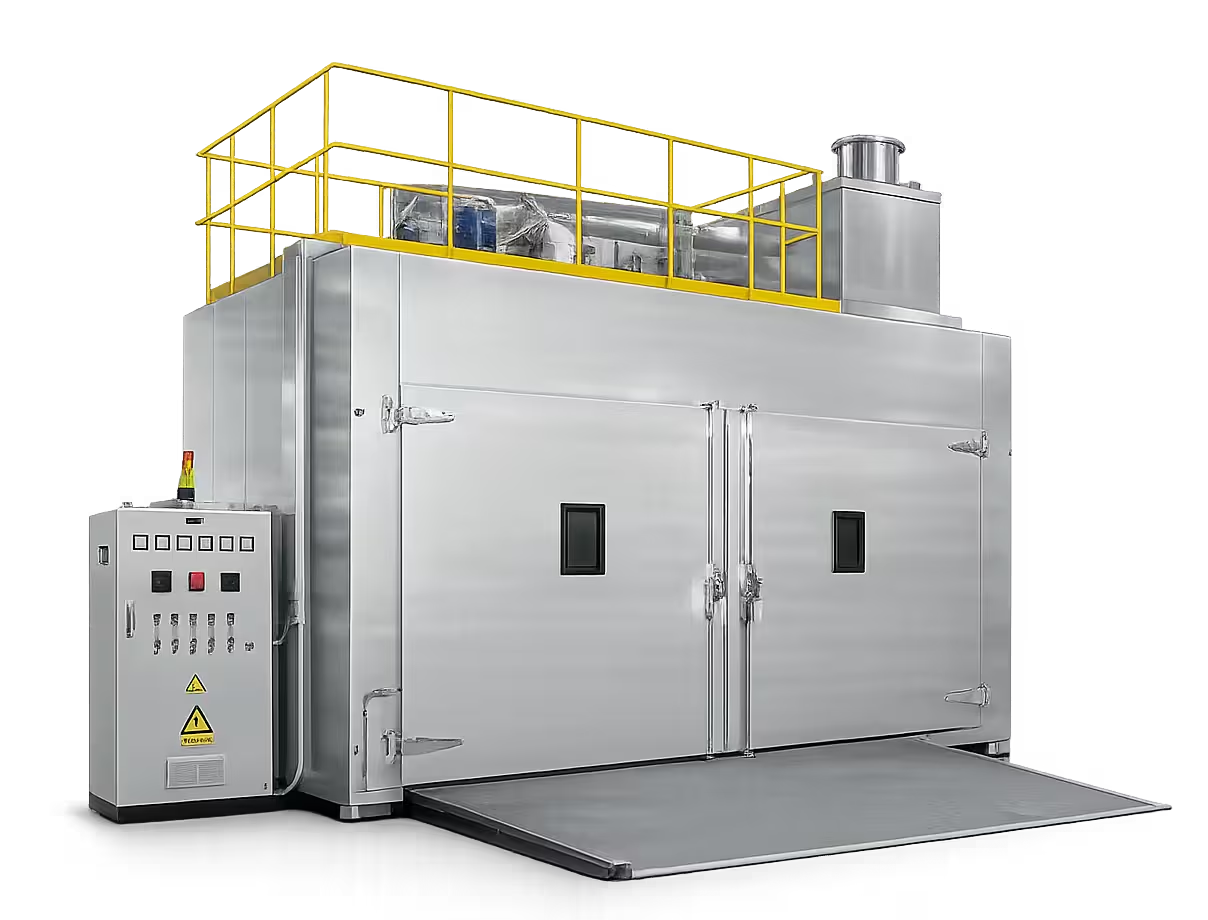
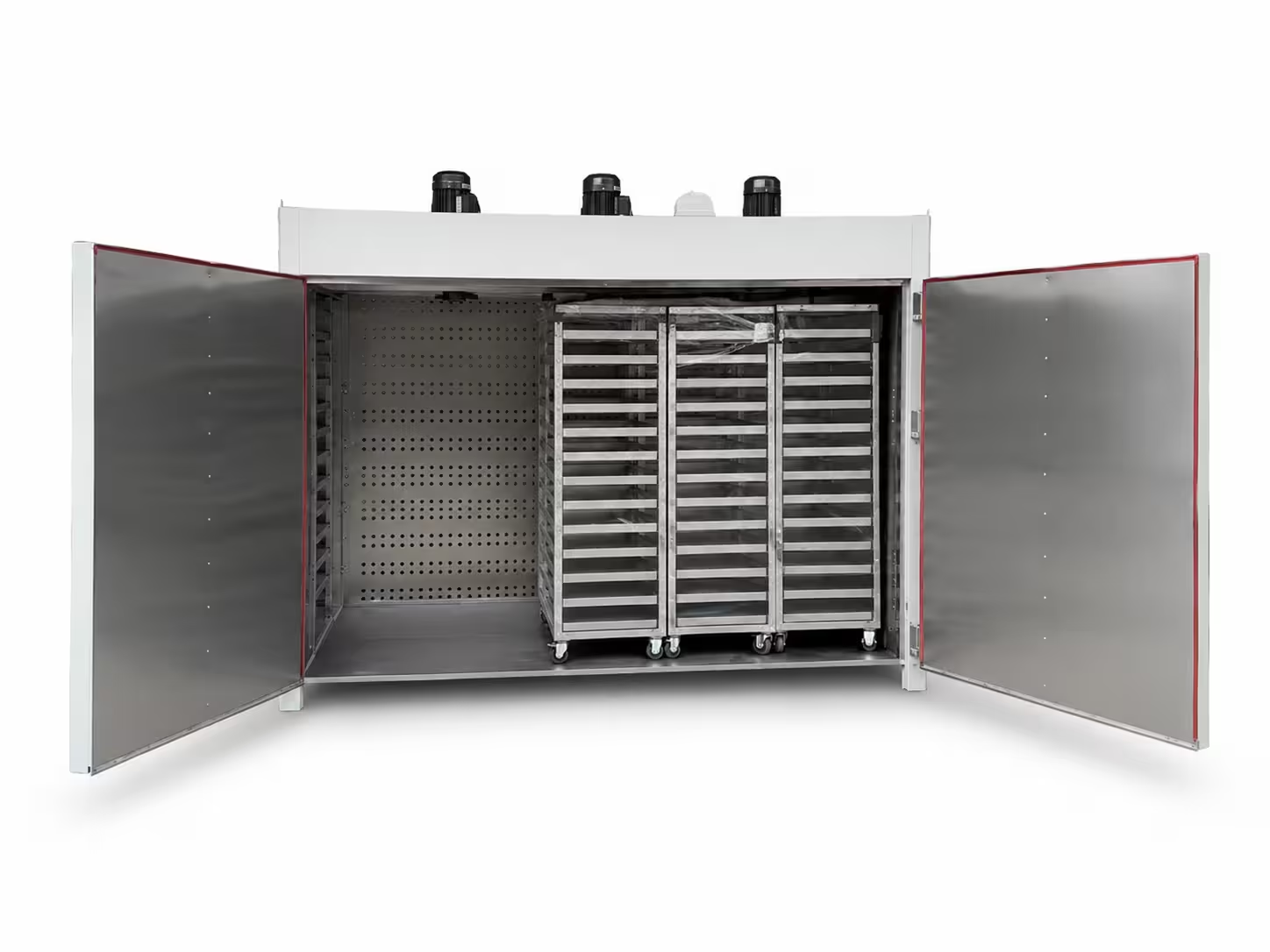
Industrial Walk-In Oven for Large Parts, Carts, Racks, and Heavy-Duty Batch Heating
ZonHoo designs and manufactures custom industrial walk-in ovens for curing, drying, preheating, aging, and controlled heat treatment. Each oven is engineered around your chamber size, loading method, temperature range, heating source, airflow design, and safety requirements, making it suitable for oversized parts, heavy racks, carts, and palletized loads.
Typical Use
Large parts, carts, racks, trays, and pallet loads
Heating Options
Electric, gas, steam, or thermal oil
Customization
Chamber size, airflow, controls, safety, and layout
Support Scope
Engineering review, FAT, installation guidance, and service
Industrial Walk-In Oven Overview
What Is an Industrial Walk-In Oven?
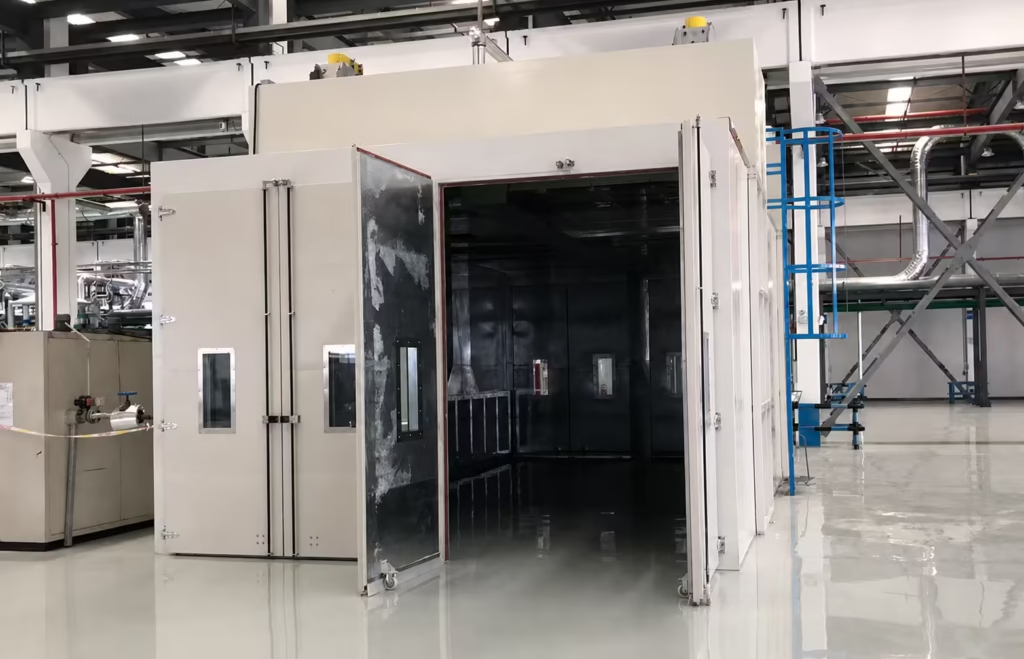
An industrial walk-in oven is a large batch heating chamber designed for operators, carts, racks, or oversized components to enter the working area during loading and unloading. Compared with small batch ovens, an industrial walk-in oven offers larger usable space, flexible loading access, and custom chamber layouts for production processes that require controlled thermal treatment.
Built for Production, Not for Light-Duty Use
Industrial walk-in ovens are commonly used in manufacturing environments for curing, drying, preheating, aging, stress relieving, and controlled process heating. They are especially useful when the load is too large, too heavy, or too irregular for a standard shelf oven or smaller cabinet oven.
A custom industrial walk-in oven can be configured with electric heating, gas-fired heating, high-temperature insulation, pass-through layout, rail-cart loading, forklift access, or floor-level entry, depending on the workflow and process requirements.
Whether you need an electric walk-in oven, gas walk-in oven, high-temperature walk-in oven, or a large chamber solution with floor-level entry, our team supports requirement review, engineering, fabrication, FAT, and installation guidance.
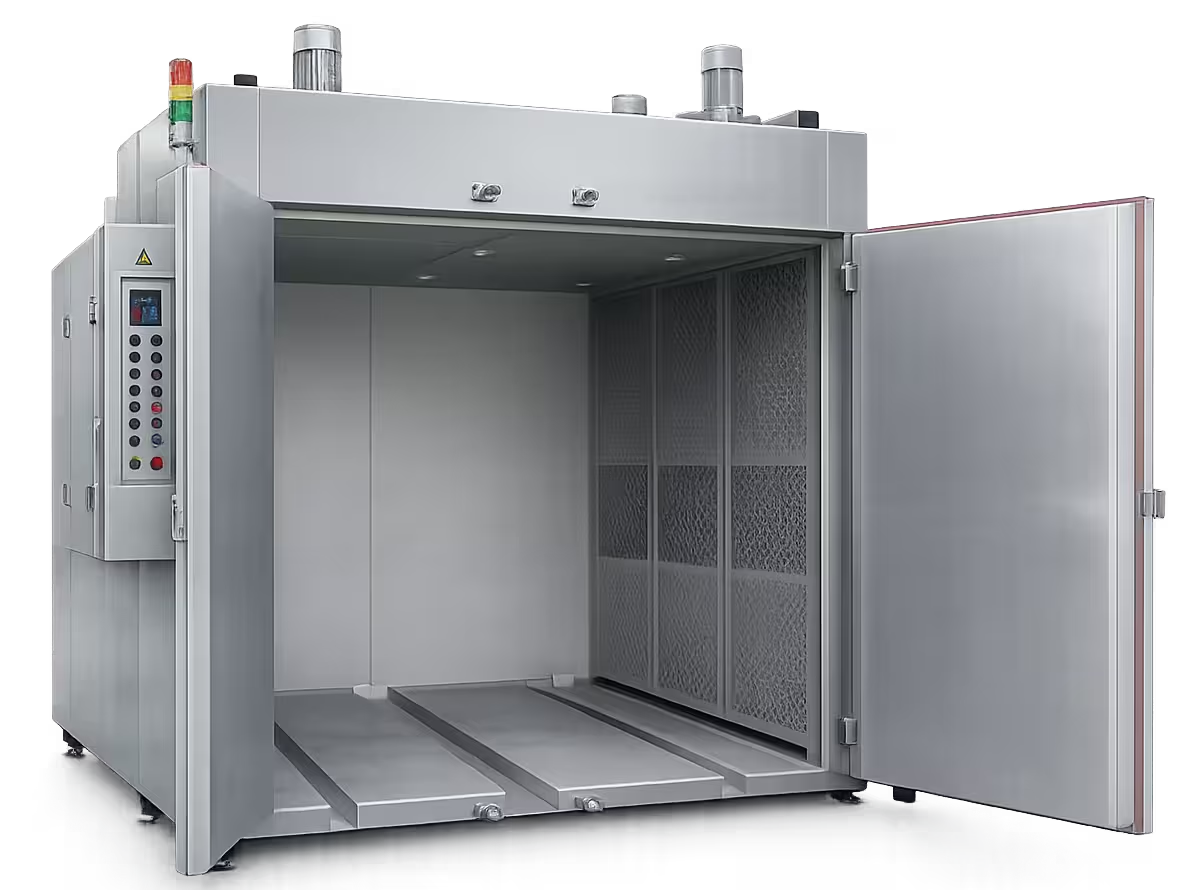
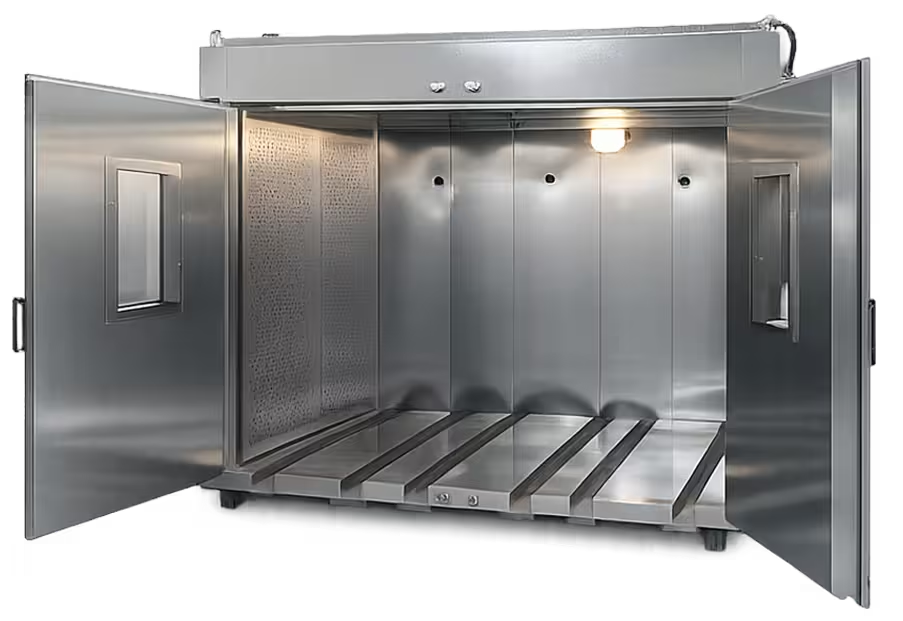
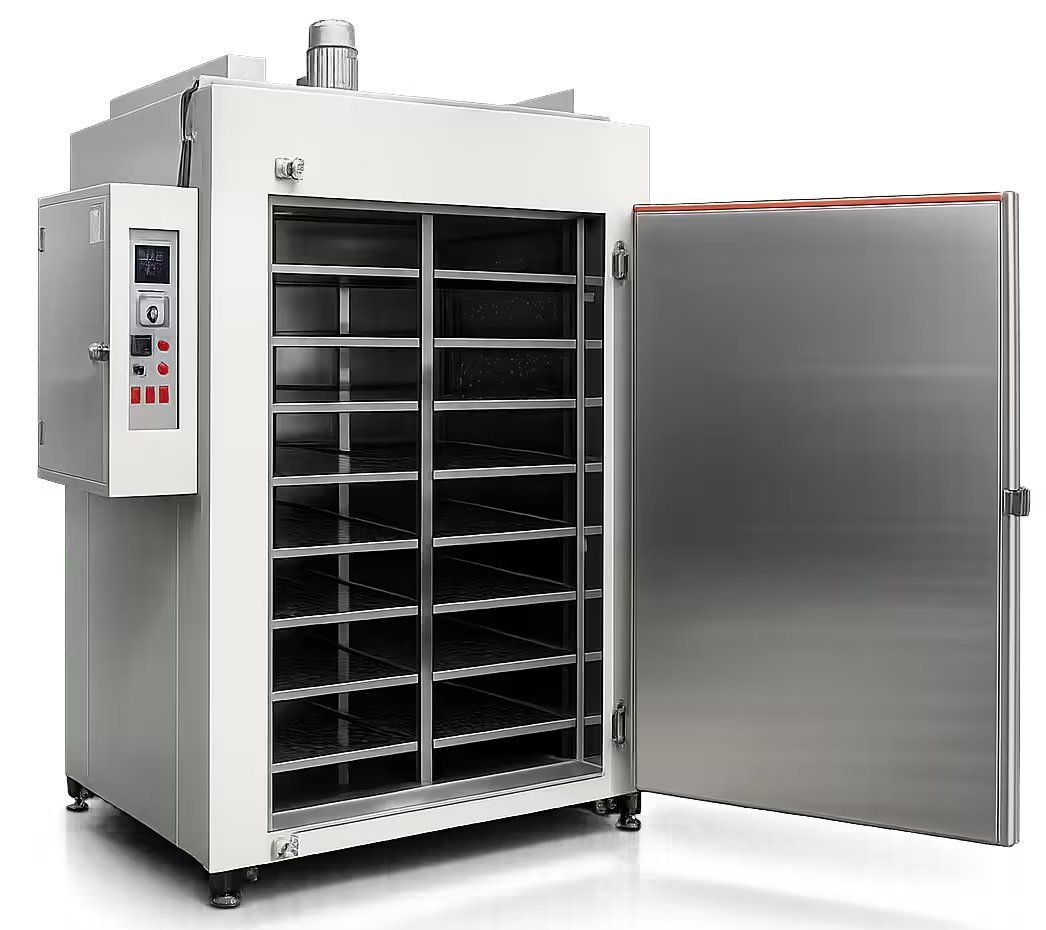
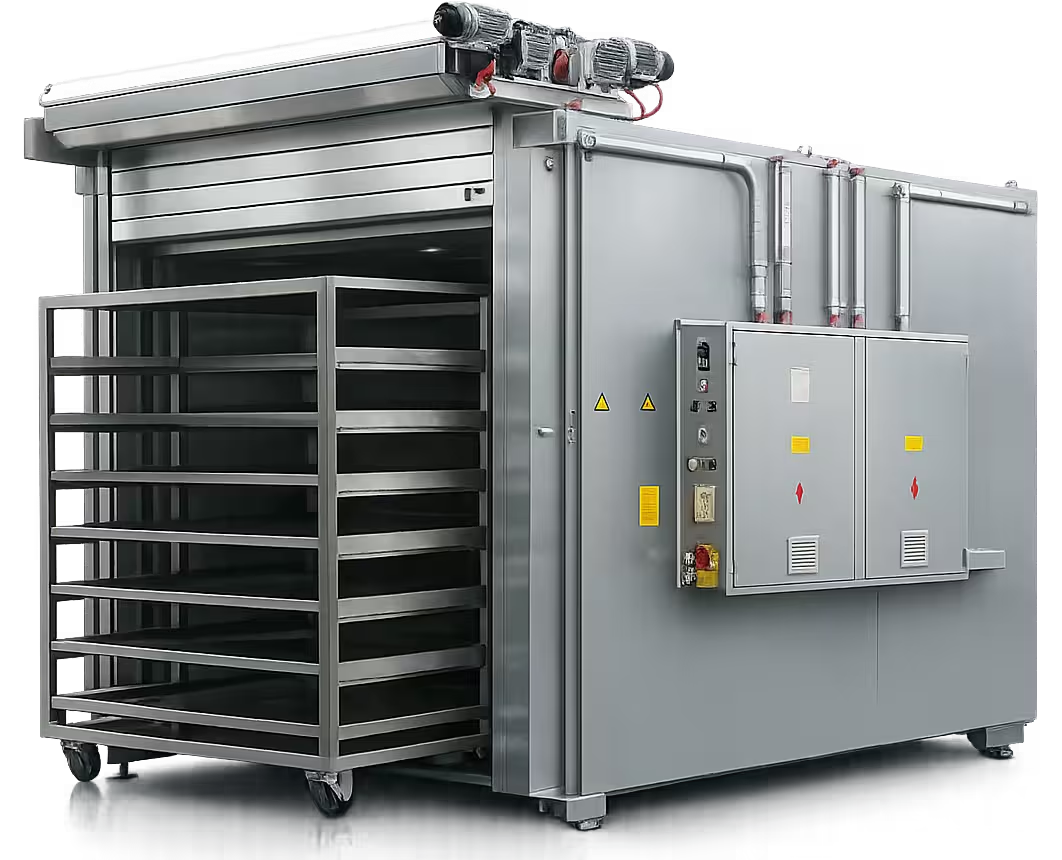
Typical Industrial Applications
Where Walk-In Ovens Are Used
Walk-in ovens are selected when the process requires flexible loading, repeatable thermal cycles, and a larger chamber than a standard batch oven can provide. They are widely used in batch manufacturing, thermal processing, and heavy-duty industrial applications.
For coatings, adhesives, composites, molded parts, and products that need controlled ramp and soak cycles.
For coatings, adhesives, composites, molded parts, and products that need controlled ramp and soak cycles.
For coatings, adhesives, composites, molded parts, and products that need controlled ramp and soak cycles.
For coatings, adhesives, composites, molded parts, and products that need controlled ramp and soak cycles.
Size, Loading, and Chamber Layout
Walk-In Oven Size and Loading Method
For a large walk-in oven, the most important question is not only the temperature range, but also how the load enters the chamber, how it sits inside the workspace, and how airflow moves around it. Chamber size, door opening, floor structure, cart path, and load spacing all influence the final oven design.
Common Loading Configurations
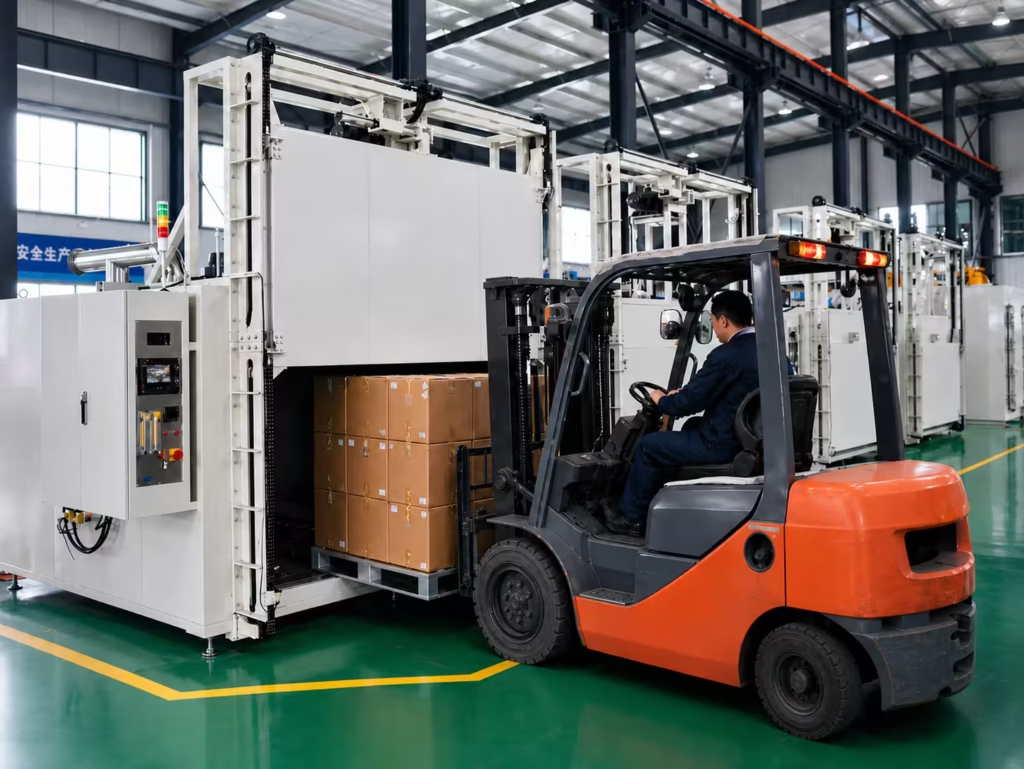
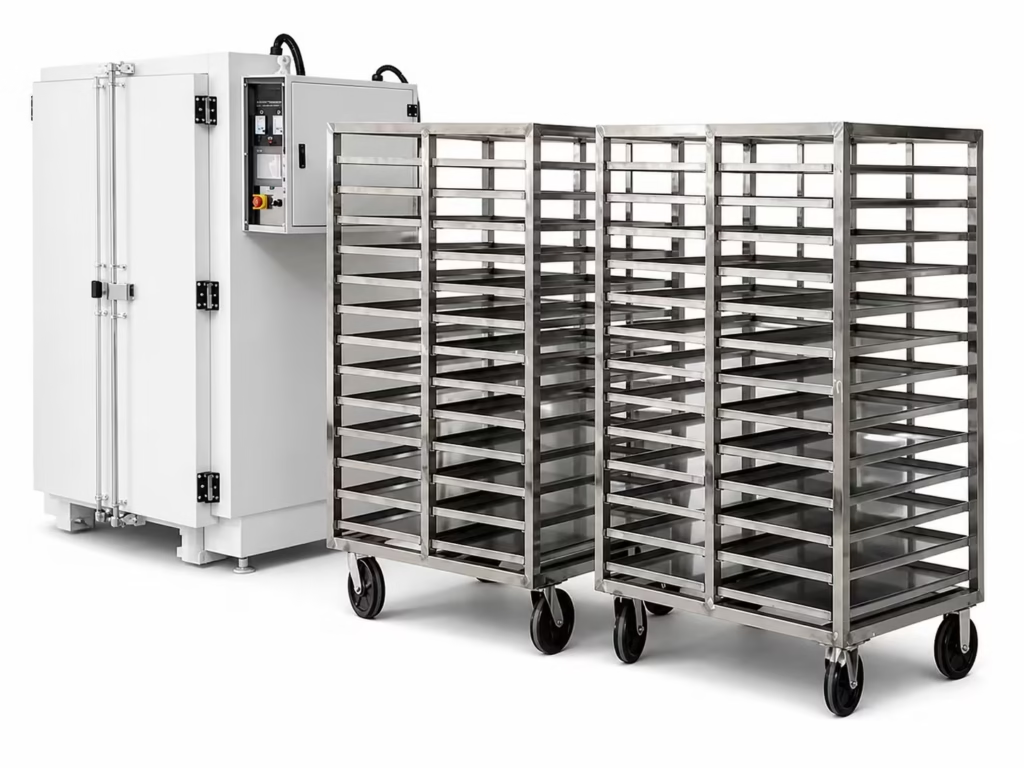
- Cart-loaded walk-in oven: suitable for trays, racks, and repeatable batch loading.
- Forklift-access oven: used when pallets or heavy parts are moved directly into the chamber.
- Rail-cart or trolley loading: recommended for heavy-duty loads that need stable positioning.
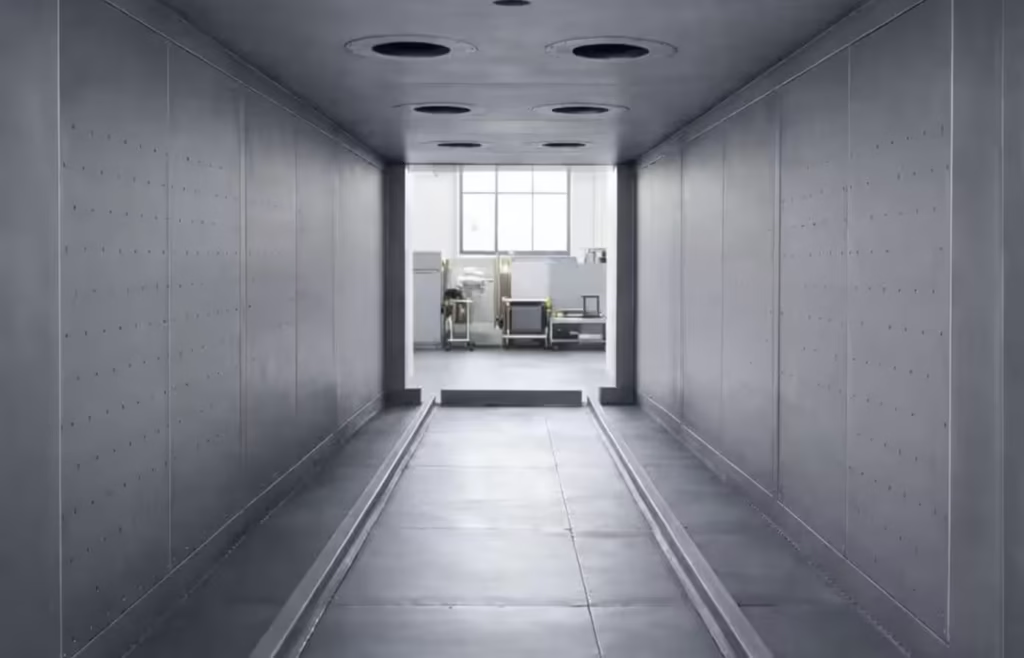
- Double-door / pass-through layout: supports separate loading and unloading zones.
- Floor-level entry: useful when low-threshold cart movement is required.
Temperature Range and Uniformity
High-Temperature Walk-In Oven Design Should Match the Real Process
A high-temperature walk-in oven should not be selected by maximum temperature alone. Chamber size, load mass, heat-up time, airflow direction, insulation structure, and acceptance criteria all influence how the system should be engineered.
What Affects Final Performance:
- Target process temperature and cycle duration
- Ramp-up speed and recovery after door opening
- Chamber size and insulation thickness
- Load density, rack arrangement, and airflow path
- Temperature control method and sensor placement
- Uniformity testing and FAT / SAT acceptance requirements
Temperature Range
Temperature capability should be defined according to process demand, chamber size, heating capacity, and oven construction.
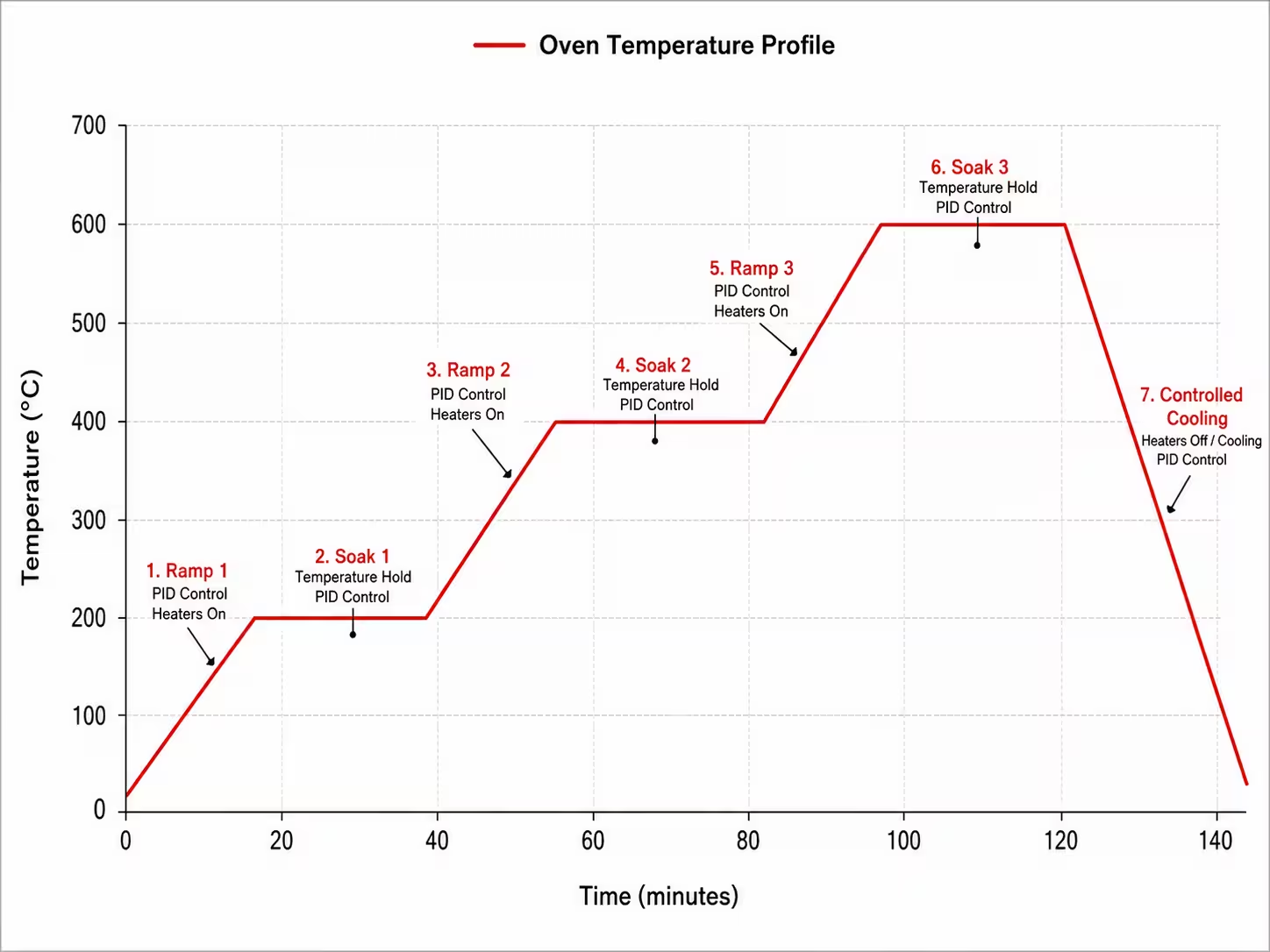
Ramp / Soak Control
Programmable control, PID adjustment, and recipe logic help keep heating cycles more stable and repeatable.
Uniformity Targets
Uniformity targets should be confirmed according to load pattern, test positions, chamber layout, and acceptance criteria.
Airflow Engineering
Airflow Design for Large Chamber Heating
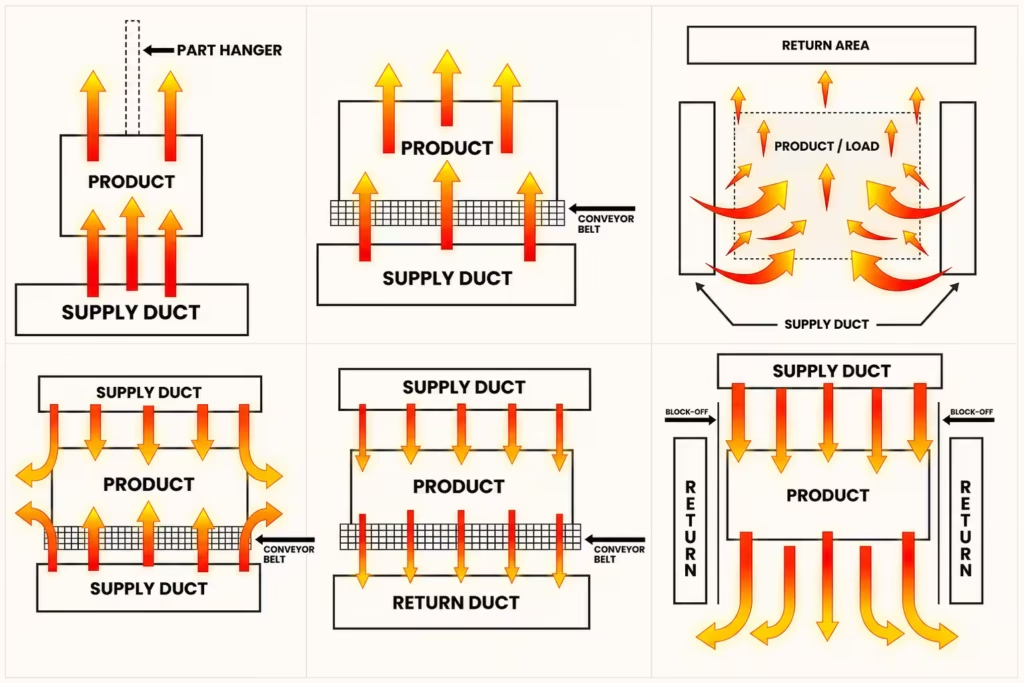
In a large walk-in oven, airflow engineering is critical. Proper ducting, blower selection, air return path, and baffle arrangement help reduce hot spots and cold spots while improving heat transfer around the actual load.
Typical Airflow Design Considerations
- Horizontal or vertical airflow direction
- Recirculation blower capacity
- Ducts and baffles for guided airflow
- Air return path around large or dense loads
- Uniform heating around racks, carts, or pallets
- Recovery performance after door opening
Airflow design is one of the key differences between a basic heated room and a true industrial walk-in oven engineered for repeatable production.
Heating Source Options
Electric, Gas, Steam, and Thermal Oil Walk-In Ovens
Electric walk-in ovens and gas walk-in ovens are used for different project conditions. The best heating source depends on chamber size, utility availability, process temperature, operating cost, site conditions, and safety requirements.
| Heating Source | Best-Fit Projects | Engineering Notes |
|---|---|---|
| Electric Walk-In Oven | Clean heating, precise control, and projects where electrical supply is suitable. | Easy to integrate with PID/SCR control, recipe management, and data logging. |
| Gas Walk-In Oven | Large chambers, high heat demand, and projects where fuel cost is favorable. | Requires burner system review, combustion safety, and exhaust planning. |
| Steam / Thermal Oil | Plants with existing utility systems or indirect heating requirements. | Requires plant utility coordination and control integration. |
Industrial Safety Features
Safety Features for Industrial Walk-In Ovens
Because a walk-in oven may involve people entering the chamber area, large doors, heavy loads, or elevated temperatures, safety design must be considered early. Standard and optional safety features should be selected according to the process and operating environment.
Emergency door release, safe access design, alarms, and interlocks help reduce operating risk during loading and unloading.
Independent over-temperature protection, sensor monitoring, and shutdown logic protect the oven and the load.
Fan alarms, airflow proof, and heater interlocks can be configured according to electric or gas heating design.
Custom Manufacturer Support
Custom Walk-In Oven Manufacturer Support from ZonHoo
ZonHoo supports custom industrial walk-in oven projects from requirement review to engineering, fabrication, FAT, shipment, installation guidance, and after-sales support. This section strengthens the page for walk-in oven manufacturer, walk in oven manufacturer, and custom industrial walk-in oven search intent.
Our Project Support Scope
Compared with general walk-in oven manufacturers or trading suppliers, ZonHoo focuses on custom industrial oven engineering, chamber layout review, airflow design, heating source selection, and project documentation for B2B manufacturing users.
For more planning, installation, control, safety, maintenance, and engineering guidance, visit the ZonHoo industrial oven support center before finalizing your walk-in oven specification.
- Horizontal or vertical airflow direction
- Recirculation blower capacity
- Ducts and baffles for guided airflow
- Air return path around large or dense loads
- Uniform heating around racks, carts, or pallets
- Recovery performance after door opening
Walk-In Oven Knowledge Cluster
Walk-In Oven Engineering & Buyer Guides
Use these walk-in oven guides to compare loading methods, chamber sizing, airflow design, temperature control, cost factors, safety features, and RFQ preparation before selecting a custom industrial oven.
Industrial Walk-In Oven Selection Guide
Learn how to define temperature range, chamber size, loading method, airflow, controls, and safety requirements before purchasing a walk-in oven.
Walk-In Oven Loading Options
Compare floor loading, carts, racks, forklift access, and pallet loading for different production layouts.
Airflow Design and Temperature Uniformity
Learn how circulation fans, ducting, airflow direction, and load arrangement affect uniform heating inside a walk-in oven.
Walk-In Oven Chamber Sizing Guide
Define usable chamber size, door opening, cart clearance, load spacing, and internal airflow space before quotation.
Industrial Walk-In Oven Cost Factors
Understand how chamber size, temperature range, insulation, airflow, controls, and customization affect the final oven price.
Walk-In Oven Temperature Control
Review ramp, soak, temperature uniformity, sensors, alarms, recipes, and data logging for controlled heating processes.
Walk-In Oven Temperature Range
Compare common industrial walk-in oven temperature ranges and how to select the right range for drying, curing, preheating, or heat treatment.
Walk-In Oven Safety Features
Understand over-temperature protection, airflow interlocks, door safety, emergency stops, exhaust, and electrical safety options.
Custom Industrial Walk-In Ovens Before RFQ
Use this checklist to prepare chamber size, load details, temperature cycle, heating source, controls, and installation requirements before sending an RFQ.
Walk-In Oven vs Truck-In Oven
Compare chamber access, loading methods, carts, rails, forklift use, and workflow differences between walk-in and truck-in oven designs.
Related Engineering Support
Oven System Planning
Turn process requirements into a clearer oven specification before quotation.
Special Oven Customization
Share non-standard chamber size, temperature, control, loading, or safety requirements with our engineering team.
Install & Engineering
Review site preparation, power supply, ventilation, access clearance, and installation support for industrial ovens.
Oven Control System
Learn about temperature controllers, PLC options, recipes, alarms, and data logging for industrial heating processes.
Standard Features for Walk-In Ovens
Engineered for Walk-In Performance & Productivity
Our industrial walk-in ovens are built for heavy-duty batch processing, offering full interior access and superior capacity for large, heavy, or complex-shaped components. Ideal for use with carts and racks for efficient loading and workflow integration.
- Heavy-duty walk-in batch ovens for large/complex parts
- Full interior access:cart/rack-friendly loading
- Power: 208/230/460V, 3-phase, 60Hz (others on request)
- Controls: dual-display PID with auto-tune & recipes
- Heating control: SCR linear power regulation
- Optional data logging with curves & reports
- Unibody welded frame:structural-steel chassis
- 304 SS interior:aluminized, powder-coated exterior
- Insulation: high-density rock wool, to 1000 °C
- Reinforced shelf supports:rugged interior build
- Heat sources: Electric (std), Gas, Steam, Thermal Oil
- Tubular elements:durable and electrically isolated
- High-pressure blower:combo horizontal/vertical flow
- Patented ducting for ±2 °C temperature uniformity
- Safety: auto-sealing explosion-relief doors
- Doors: heavy-duty latches,high-temp gaskets
- Venting: adjustable intake/exhaust,optional fan
- Slip flashing at threshold:factory uniformity test
Certifications
Certification & Compliance: Global Standards, Local Assurance
- Seamless Market Access: Certification-Ready Design
- Certified Safety Components: Assured Reliability
- End-to-End Quality Assurance: ISO 9001 Certified Manufacturing
- Pre-engineered for global certification pathways (CE, UL, and beyond)—compliant integration facilitated for your target market.
- Every oven is built under a certified quality management system, ensuring repeatable performance and traceable production.
Safety Assurance
- Auto temp cycles: heat / soak / cool
- Dual over-temp: manual-reset cutout + independent limiter & alarm
- Electrical: phase-loss alarm/shutdown; breakers w/ ground-fault; short/overload/over-current
- Heating fail-safe: separate element contactors drop on main-contactor fault
- Airflow interlock: loss of air cuts heat
- Blower interlock: blower power loss cuts heat
- Motor overload protection
- Optional: solvent concentration, combustion pressure, flame supervision, part-temp probe
oven control
- Precision digital PID controller with ±0.1–1°C accuracy and auto-tuning.
- Programmable timer (1s–99.99h) with automatic cut-off and audible alarm.
- Dual-sensor safety: PT100 for control, K-type for independent over-temperature protection.
- Visual/audible alarms for cycle end and over-limit temperature faults.
- Solid-state relay (SSR) output for stable temperature uniformity and component longevity.
- Leakage-protected circuit breakers and phase loss protection.
- Optional data loggers (with chart recording or USB export).
Walk-In Oven FAQ
What is an industrial walk-in oven?How does an industrial walk-in oven work?
A walk-in oven is a large industrial drying or curing oven that is designed with an interior space big enough for a person to enter and walk inside. It is typically used for curing, drying, baking, or heat-treating large components or substantial quantities of materials in industries such as manufacturing, automotive, aerospace, and laboratories.
ZonHoo walk in oven chamber is constructed with heavy-duty insulation (often rock wool or equivalent) and industrial-grade stainless steel to sustain high temperatures and provide uniform heat distribution.
Entry is usually through a doorway or access port on the front, and the interior is spacious, with room for pallets, carts, or large workpieces.
Power and control components are typically located outside
What temperature range can industrial walk-in ovens achieve, and how long does it take to reach operating temperature?
ZonHoo walk-in ovens are engineered to meet diverse industrial thermal processing needs, with standard models operating from ambient to 700°F (370°C). We offer specialized high-temp designs that reliably reach 1200°F (650°C) for the most demanding applications like metal heat treatment.
The heat-up time is not a guess; it’s a result of our integrated design:
- High-Efficiency Heating System: Utilizing our custom-manufactured heating elements, our ovens achieve rapid thermal transfer.
- Superior Insulation: High-density rock wool insulation (rated to 1000°C) minimizes heat loss, directing energy into the chamber.
- Powerful Air Circulation: High-pressure blowers work in concert with our patented ductwork to distribute heat quickly and evenly.
- For a standard model, reaching a common process temperature like 350°F (177°C) from a cold start typically takes under 60 minutes. The exact time is calculated based on your specific oven size, insulation package, and heating power, which we optimize for your operational efficiency during the design phase.
How is heat distributed to ensure uniformity in such a large space?
In industrial walk-in ovens, ZonHoo’s multi-fan forced convection system plays a key role in ensuring temperature uniformity across the large workspace. The system drives hot air to circulate horizontally or vertically through blower motors and fans, combined with precisely designed air ducts to achieve even heat distribution throughout the entire chamber.
Additionally, ZonHoo ovens are typically equipped with a PID intelligent temperature control system that continuously adjusts heating power and fan speed. Supported by multi-point temperature sensors, this setup maintains stable temperatures across all zones, with deviations controlled within ±3°C. This design enables ZonHoo walk-in ovens to deliver excellent temperature consistency even under high-capacity conditions, providing reliable support for mass production.
How much weight can the floor of a walk-in oven support?
Standard floor rating: 1,000 kg/m² (≈ 205 psf) uniform load.
Need more capacity? We routinely engineer higher-rated floors and wheel-load reinforcements. If your parts are heavier or point-loaded (wheels, jacks, skids), we’ll size the deck and sub-frame accordingly.
Heavy Loads & Movement Options
Cart/Track: Powered or manual carts; typical single-cart capacity up to 5 tons.
Rails & Wheel Loads: Rail spacing and plate thickness tuned for concentrated loads.
Walk-In Floor Upgrades: Custom floors 1,500–3,000 kg/m² for very heavy or dense parts.
Continuous Lines: Rail-to-rail or conveyorized paths for high throughput and repeatable takt.
How We Build a Strong Floor?
- Structure: Steel channel frame with densified cross-stiffeners under the deck.
- Deck & Liner: Industrial steel deck; optional stainless (SUS304/201) wear surface.
- Thermal Pack: 100–120 mm high-density insulation—keeps heat in, weight down.
- Safety Margin: Designed with 1.5–2.0× safety factor; verified for uniform and wheel loads.
Part weight & footprint: total kg/ton + whether load is uniform or wheel/point-load.
How you move it: forklift, pallet jack, cart/rail, or conveyor/continuous.
Process conditions: peak temp, dwell, atmosphere (air/inert).
Facility/standards: floor space, door clearances, codes to meet.
Whether it’s floor-loading, cart/track walk-in, or continuous, we have the engineering to support your parts—big or small—with the right capacity and safety margin.
What are the common heating methods for walk-in ovens (e.g., electric, gas, steam)?
Electric Heating (Clean, Precise, Low-Maintenance)
- Benefits: Tight temperature control (excellent uniformity), fast heat-up, no on-site combustion, minimal maintenance.
- Best fit: Regulated facilities, electronics, coatings cure, dry-outs.
- Utilities: 3-phase electric; easy to install/scale.
- Compliance: Designed to meet applicable CE directives;
- UL/CSA evaluation available by model; OSHA/NFPA 86 best practices integrated.
- Next step (fast quote): Tell us peak temp & dwell, part weight/footprint (uniform or wheel loads), and move method.
*Tell us your load, dimensions, and process—we’ll engineer the right oven and quote fast.*
Gas Heating (High Throughput, Large Chambers)
- Benefits: Very rapid ramps and recovery after door openings; strong choice where gas pricing lowers operating cost.
- Best fit: Automotive/metal parts, big batches, multi-shift production.
- Utilities: Natural gas or LPG; direct or indirect-fired designs available.
- Compliance: Built to align with CE where applicable; UL/CSA field labeling can be arranged; OSHA/NFPA 86 principles observed.
- Next step (fast quote): Share throughput targets (batch/hour), chamber size, and available gas type/pressure.
*Tell us your load, dimensions, and process—we’ll engineer the right oven and quote fast.*
Steam Heating (Uniform, Utility-Integrated)
- Structure: Steel channel frame with densified cross-stiffeners under the deck.
- Deck & Liner: Industrial steel deck; optional stainless (SUS304/201) wear surface.
- Thermal Pack: 100–120 mm high-density insulation—keeps heat in, weight down.
- Safety Margin: Designed with 1.5–2.0× safety factor; verified for uniform and wheel loads.
*Tell us your load, dimensions, and process—we’ll engineer the right oven and quote fast.*
Advanced Options (When the Spec Demands More)
- Benefits: Tailored methods for demanding specs—e.g., thermal oil for high-temperature stability; IR boosters for cycle-time cuts; microwave for select volumetric heating.
- Any heat source, engineered right: We size airflow, floor/rails, and controls around your parts, takt time, and utilities.
- Compliance: Model-specific CE conformity available; UL/CSA listing/field labeling arranged as required; OSHA/NFPA 86 design practices.
- Ready to proceed? Upload drawings (PDF/DWG) or use our Dimension Checklist for a same-day engineering review.
*Tell us your load, dimensions, and process—we’ll engineer the right oven and quote fast.*
Is a ZonHoo Walk-In Oven Safe?
Safety practices for walk-in ovens involve specific procedures and equipment due to their size and high temperature capabilities:
- Proper Ventilation: Essential to expel fumes, especially when curing coatings or drying solvent-containing materials.
- Personal Protective Equipment (PPE): Heat-resistant gloves, safety glasses, and aprons must be worn when loading/unloading.
- Access Control: The oven area should be secured to prevent unauthorized or accidental entry, especially during operation.
- Emergency Shut-off: Equipped with emergency power-off and temperature overheat protection to stop heating immediately if needed.
- Fire Protection: Should include fire extinguishers nearby, and the oven must be regularly inspected for electrical and mechanical safety.
- Door Handling: The door must be closed securely before starting, and opening should be slow to avoid steam or fumes exposure and thermal burns.
What Are ZonHoo Walk-In Ovens Used For?
Walk-in ovens are used for industrial processes that require large capacity or high throughput, including
- Curing coatings on large metal parts (e.g., automotive bodies, industrial machinery)
- Drying lumber, or plastic components in batches
- Pre-heating molds or large assemblies prior to manufacturing
- Baking or drying food products in the food processing industry
- Stress relieving or annealing metal components
- Testing material performance under elevated temperatures for R&D or quality control
Why is ZonHoo the Smartest Choice for a Walk-In Oven?
Many oven manufacturers assemble components from third-party suppliers, creating a critical disconnect between the heating system and the chamber it serves. This often results in inefficient performance, premature failure, and costly downtime.
The “Heart” Built by Specialists: While others buy generic heating elements, we design and manufacture our own. This allows us to custom-engineer the element’s watt density, material (such as durable Incoloy), and configuration to perfectly match the airflow dynamics and thermal mass of your specific walk-in oven. The result? Faster heat-up times, lower stress on the elements, and a dramatically longer lifespan compared to ovens using off-the-shelf heating components.
Holistic System Integration: Because we build the core heating system, we can seamlessly integrate it with our SCR power controllers and patented airflow design. This eliminates the compatibility issues and performance gaps common in assembled solutions. You get perfect synchronization between heat generation and heat distribution, ensuring superior temperature uniformity and eliminating the hot spots that ruin product quality.
This foundational control over the most critical component is why a ZonHoo oven delivers unmatched reliability and energy efficiency. You aren’t just getting an oven; you are getting a fully integrated thermal system born from decades of specialist expertise in creating heat itself. This translates directly to less downtime, lower operating costs, and a higher return on your investment.
What happens if the temperature controller fails? Is there an over-temperature protection?
What happens if the temperature controller fails?
Yes. ZonHoo ovens use a multi-layer safety stack. If the main temperature controller fails or drifts, an independent high-limit safety cuts heater power automatically, circulation fans keep running to purge heat, alarms trigger, and the system requires a manual reset before restart.
*Tell us your load, dimensions, and process—we’ll engineer the right oven and quote fast.*
Gas Heating (High Throughput, Large Chambers)
- Primary Control: High-accuracy PID control (e.g., PT100/RTD input) for tight regulation.
- Independent High-Limit: A separate, hard-wired safety is set above the process setpoint (typ. +3–5 °C). It does not rely on the main controller; once tripped it kills all heaters.
- Runaway Cutoff: A second threshold can force a hard cutoff (typ. +10 °C) for worst-case runaway.
- Cool-Down Logic: Heat is off; fans run 15–30 min to shed heat and protect product.
- Alarms & Records: Audible/visual alarms, event logs, optional remote notifications.
- Manual Reset: Operator confirms safe temperature before the oven can restart.
- ZonHoo Promise: We size sensors, safeties, and interlocks to your load, temperature, and takt so protection remains effective under real-world conditions.
*Tell us your load, dimensions, and process—we’ll engineer the right oven and quote fast.*
Steam Heating (Uniform, Utility-Integrated)
- Controller Fault / Sensor Error: High-limit trips; heaters off; fans purge; operator manual reset after temps return to safe band.
- Power Loss / Return: Controlled recovery with sensor self-check; if temps are high or readings abnormal, system stays in safe lockout.
- VOC/Solvent Loads (optional): Purge timers, LEL interlock, and exhaust control available following best practices for industrial ovens.
- Heavy / High-Mass Loads: Floors, carts/rails, and airflow are engineered with 1.5–2.0× safety factors so protection logic remains reliable at full load
*Tell us your load, dimensions, and process—we’ll engineer the right oven and quote fast.*
Advanced Options (When the Spec Demands More)
- Standards: Designed to support applicable CE documentation by configuration; OSHA/NFPA-informed safety practices; UL/CSA evaluation or field labeling available by model.
- Proof: Optional SAT/TUS mapping and alarm tests can be included at FAT/SAT.
- What We Need: Peak temp & dwell, load mass/footprint (uniform vs. wheel/point), VOC presence, and any site codes to meet.
*Tell us your load, dimensions, and process—we’ll engineer the right oven and quote fast.*
Are there safety interlocks for airflow loss or power failure?
Airflow-loss protection (fan/exhaust failure):
We directly monitor airflow (e.g., fan-prove, differential pressure/air-velocity sensing). If airflow drops below a safe threshold—fan stops, belt breaks, exhaust is blocked—the heater contactors de-energize instantly, alarms trigger, and the system will not re-enable heat until the fault is cleared and an operator performs a manual reset. In higher-risk applications, airflow loss can also release the door lock to support safe egress.
Power-failure safety (brownout/blackout/restore):
A loss of power is inherently fail-safe: heaters drop out. Our standard design uses de-energize-to-release door hardware; many models add a mechanical/gravity release so the door can be opened even if an electric strike were to fail. On power restoration, the oven remains in safe lockout until temperatures are back in range and an operator acknowledges the event. For critical sites, we can add UPS to keep alarms, controls, and egress devices alive long enough for a controlled response.
Design options to match your risk profile:
Redundant airflow sensors for high-hazard duty, LEL/purge interlocks where VOCs/solvents are present, and dual-source/UPS packages for pharma/chem plants that require continuous alarm visibility. We size these protections to your peak temperature, load mass/footprint (uniform vs. wheel/point), utilities, and site code requirements.
Tell us your process and site constraints—we’ll right-size the interlocks and documentation for your jurisdiction. Configure & Quote (ZonHoo).
Need a Custom Industrial Walk-In Oven?
Send your chamber size, loading method, part dimensions, target temperature, cycle time, heating source preference, and safety requirements. ZonHoo will review the project and help define a practical walk-in oven solution for quotation.