

Infrared Conveyor Oven
ZonHoo infrared conveyor ovens use radiant energy to heat products quickly as they move through a continuous line. The design must match emitter arrangement, product absorptivity, distance, exposure time and part orientation so rapid surface heating remains controlled instead of becoming uneven or overly localized.
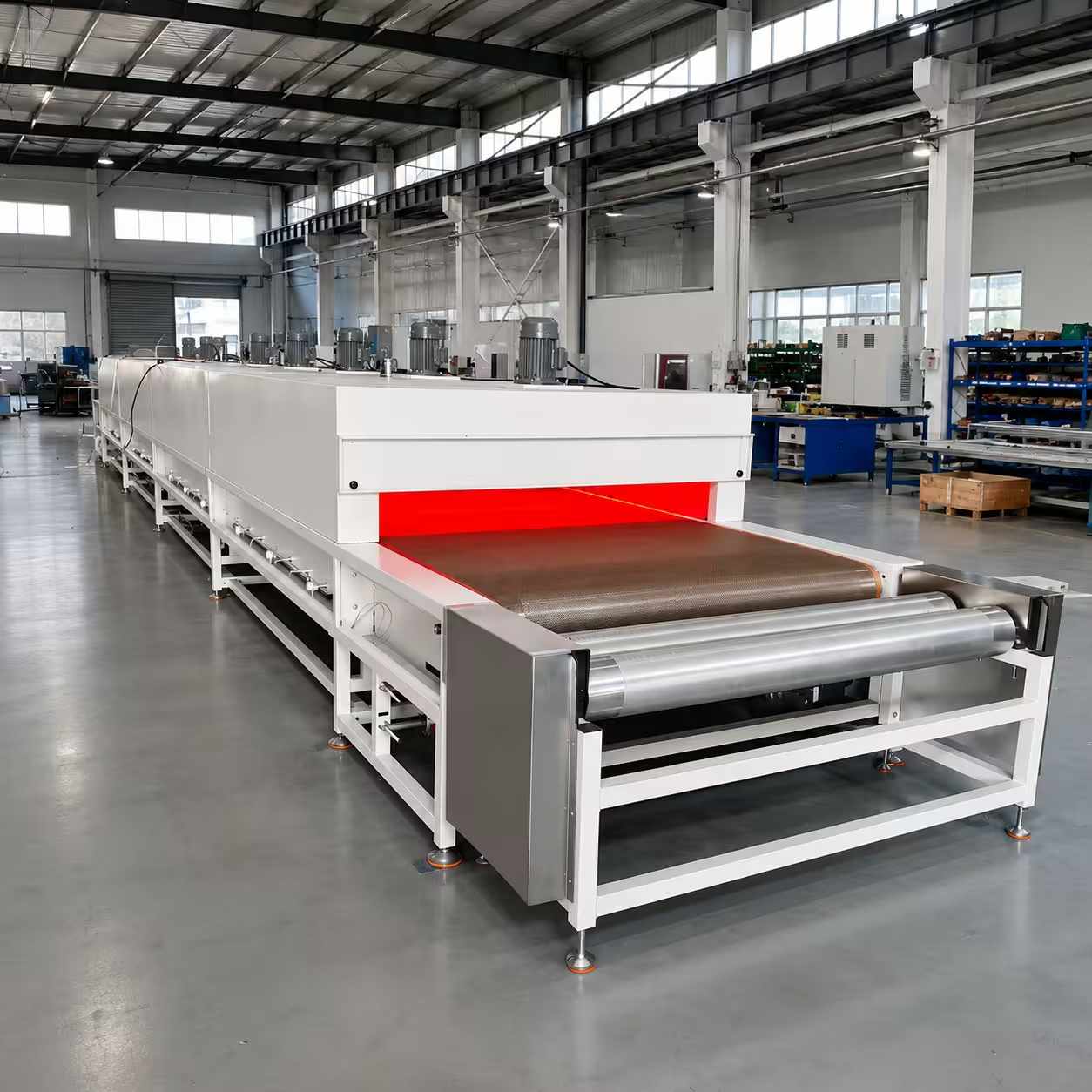
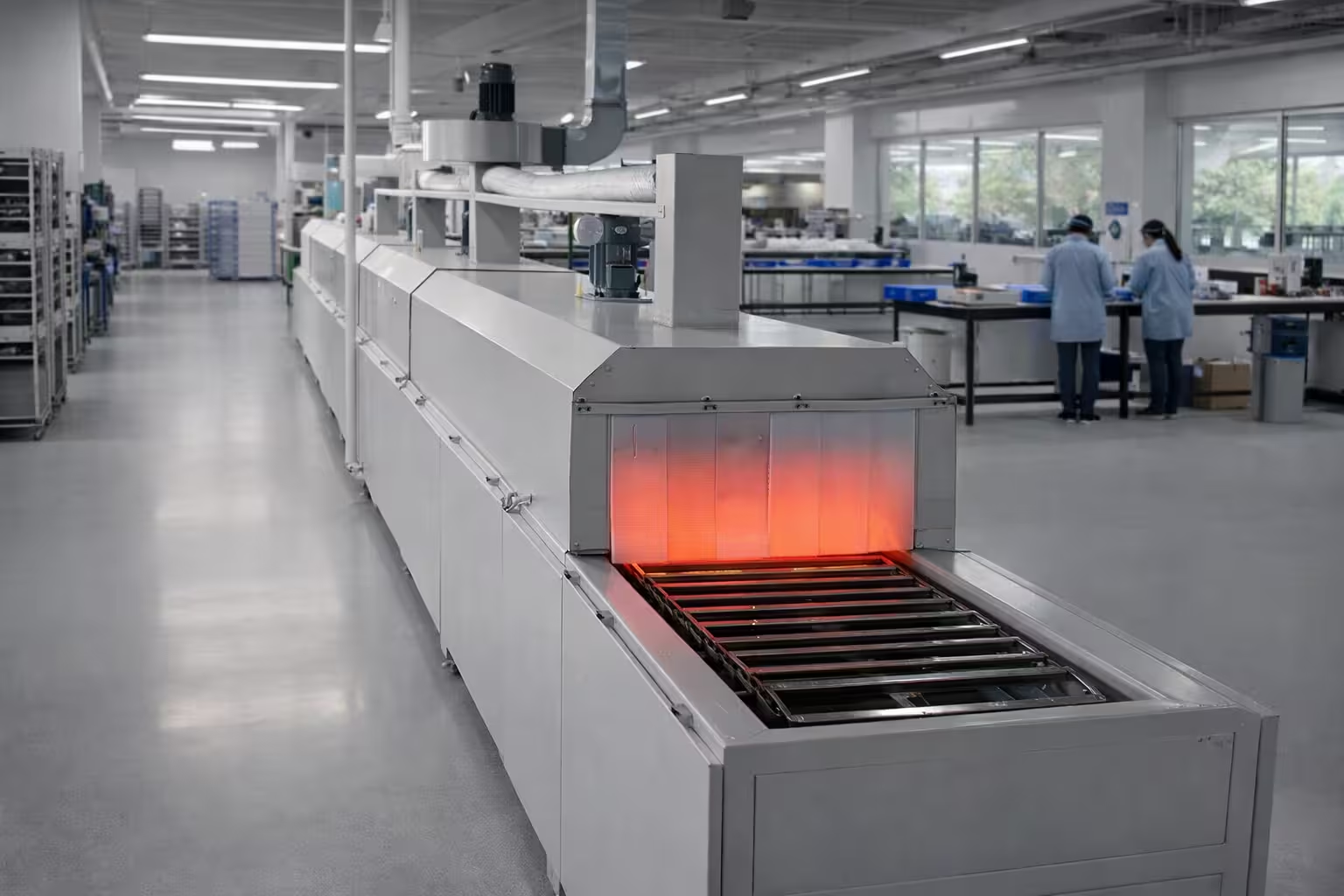
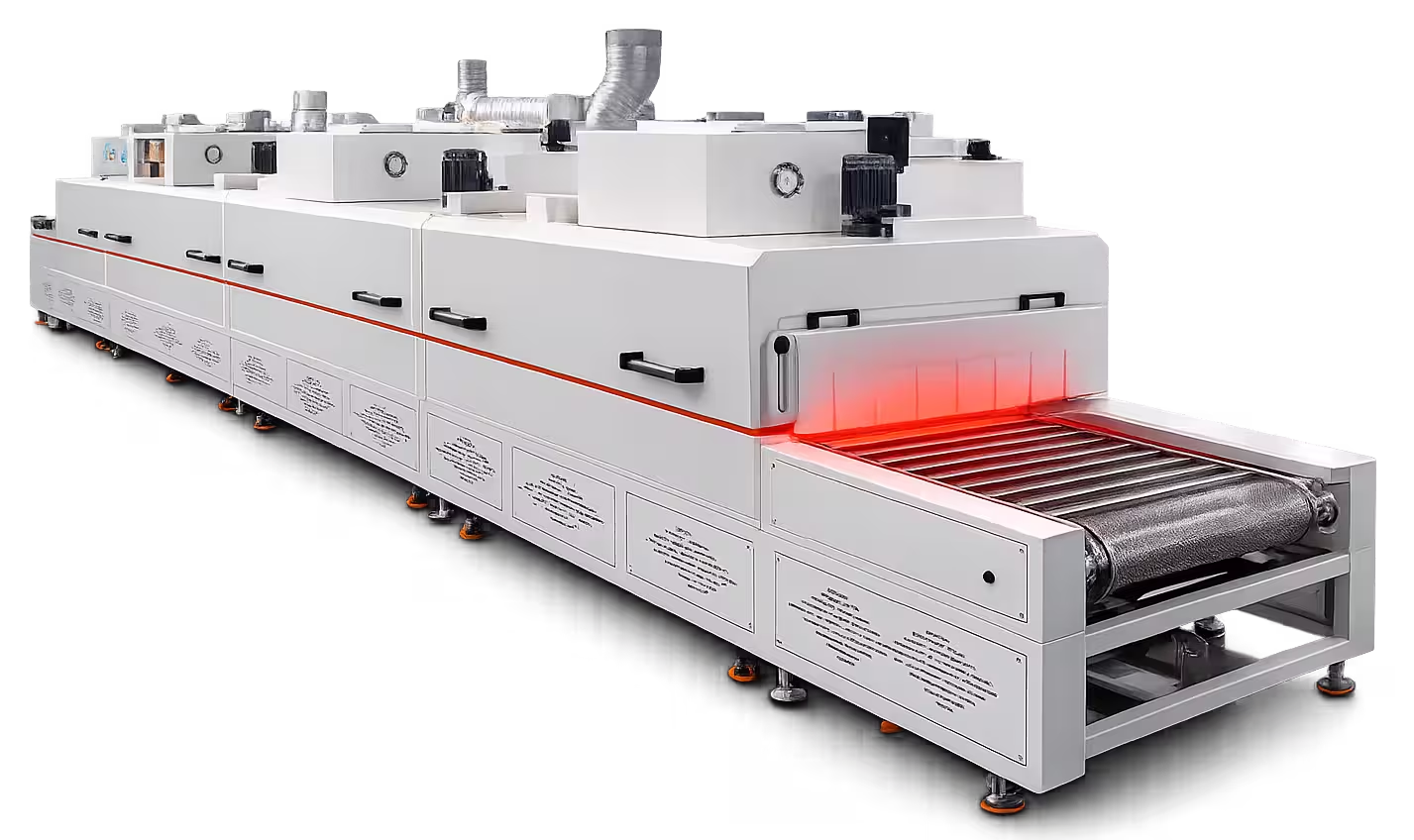
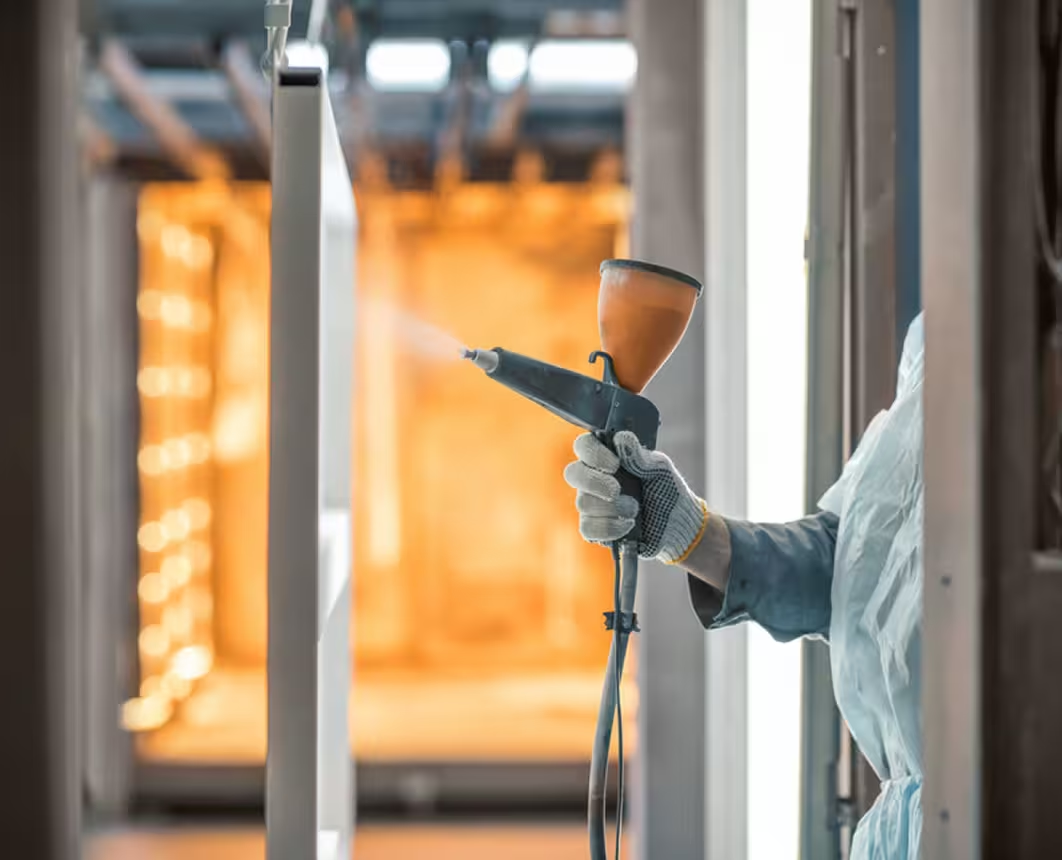
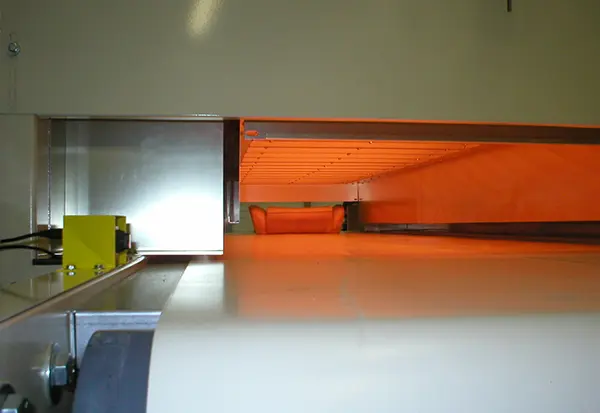
Browse real ZonHoo infrared conveyor oven configurations, including tunnel ovens, production-line systems and targeted IR heating zones.
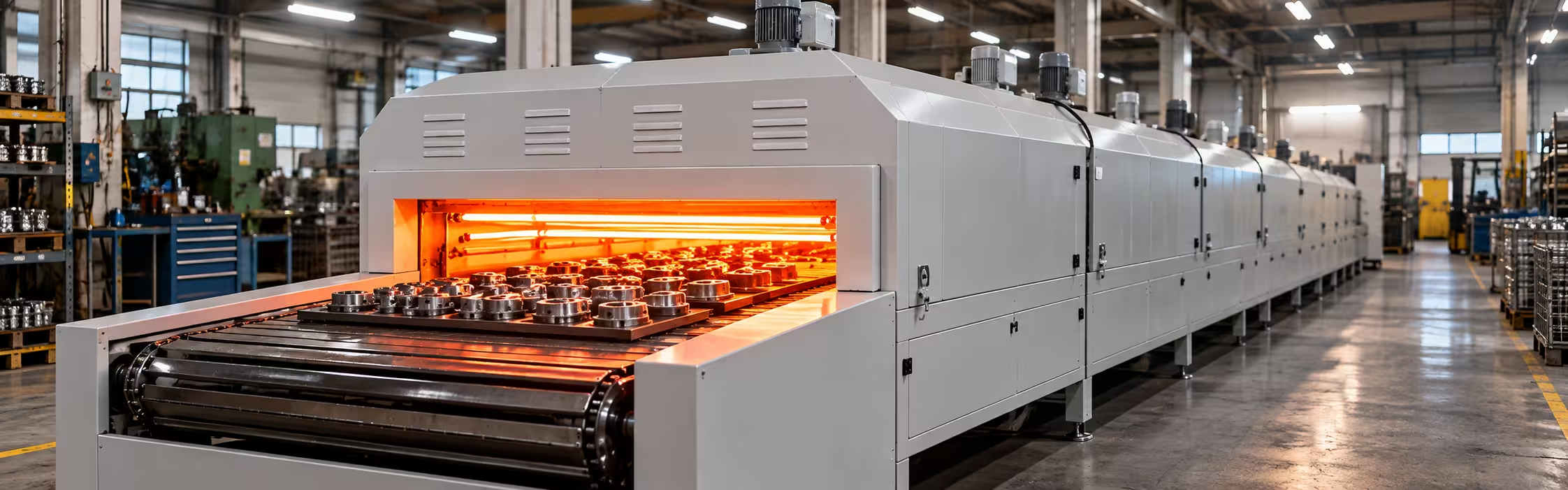
What Makes an Infrared Conveyor Oven Different?
An infrared conveyor oven transfers a significant portion of heat by radiation directly to the product surface. Unlike a conventional hot-air system, performance is strongly influenced by the relationship between emitter output and the product’s ability to absorb the radiant energy.
- Fast response can reduce the time needed to begin transferring heat to the product.
- Emitter placement can target top, bottom or selected product surfaces.
- Compact heating sections are possible when the process responds well to radiant energy.
- Product color, coating, geometry and material can change IR absorption.
- IR can be used alone or combined with convection when surface and internal heating needs differ.
Choose IR for Heat Response — Not Just for a Smaller Oven
If your process is better suited to a conventional belt and hot-air system, start with the belt-based industrial conveyor oven. If you are comparing the broader family first, compare continuous oven configurations.
This page focuses on infrared conveyor oven, IR conveyor oven and radiant-heating projects where fast surface response, emitter zoning and product absorption are central to the process decision.
Four Variables That Control Infrared Heating Performance
Infrared performance is not defined by oven air temperature alone. The product must actually receive and absorb the radiant energy within the available conveyor exposure time.
Absorptivity & surface condition
Color, finish, coating and material influence how strongly the product responds to the incoming radiant energy.
Emitter distance & geometry
Distance, angle and product orientation influence energy density and how evenly the surface is exposed.
Exposure time & line speed
Conveyor speed determines how long each product remains under the active emitter zones and therefore how much energy it receives.
Shadowing & coverage
Fixtures, complex shapes and closely spaced parts can block direct radiation, making layout and optional convection important.
IR-Only or IR + Convection?
The correct answer depends on whether the process result is dominated by rapid surface heating or requires more complete heating through the product thickness and hidden geometry.
When IR-Only Can Be Effective
When Hybrid Heating Deserves Review
For thicker, more complex or partially shadowed products, a hybrid IR + convection approach can help combine rapid radiant input with broader heat coverage.
Before selecting the heat source, use our guide to compare electric, gas and infrared heating.
If the process needs staged preheat, IR boost or soak sections, also compare conveyor oven temperature zones.
Define the Product Response Before Finalizing IR Power and Length
A useful IR conveyor oven quotation needs more than target temperature. Product surface, geometry and the required temperature rise should be defined together with throughput.
| Engineering input | What to define | Why it matters |
|---|---|---|
| Product material & surface | Base material, coating, color, finish and whether the surface changes during heating | IR absorption varies with the surface, affecting heater response and control strategy. |
| Part geometry | Length, width, height, orientation and any shadowed surfaces | Determines emitter placement, distance and whether supplemental convection is useful. |
| Target thermal result | Surface temperature, product temperature, cure target or moisture-removal objective | Clarifies whether the process is truly surface-driven or needs deeper heat penetration. |
| Production rate | Parts/hour, spacing, conveyor speed and loading pattern | Defines exposure time and the practical heated length. |
| Zone control | Number of heating stages, power adjustment range and any soak / cooling requirements | Determines whether a simple IR section or a staged thermal system is more suitable. |
For the wider equipment decision, use the industrial conveyor oven selection guide.
Infrared Conveyor Oven Applications
IR is most attractive where rapid surface heating, compact process zones or fast response can improve the production flow.
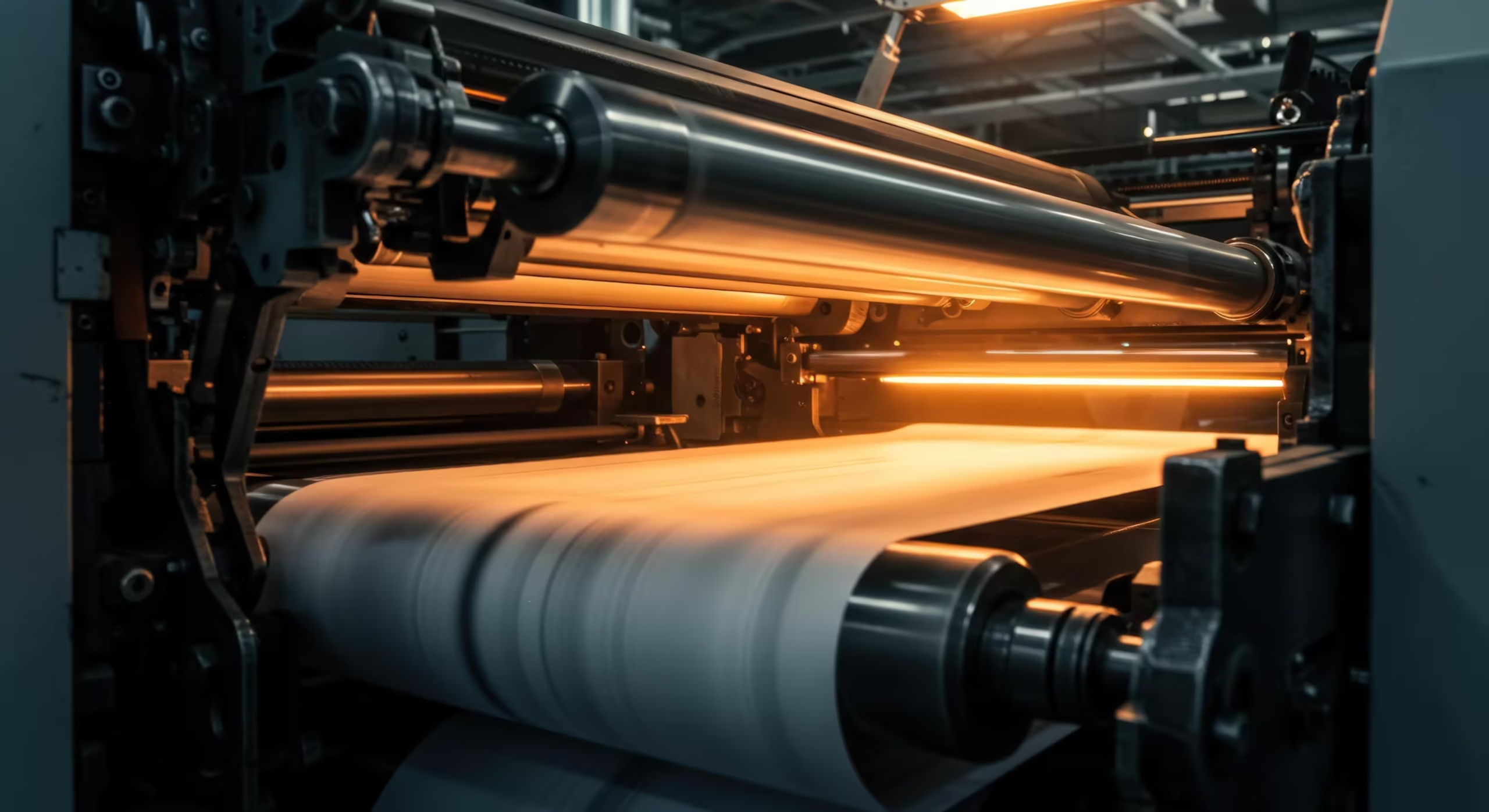
Printing & Textile Thermal Processing
Rapid radiant heating can support ink, coating and printed-material processes where line speed and surface response matter.
industrial ovens for printing and textile production →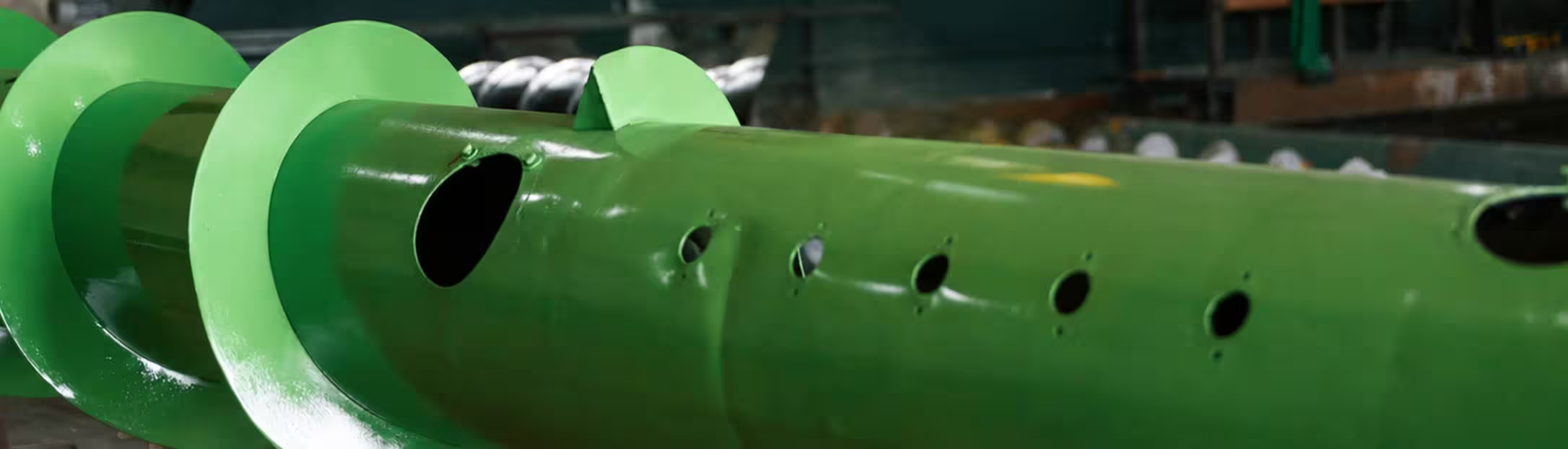
Continuous Coating Drying & Curing
IR can deliver rapid heat input to receptive coatings before, during or alongside convection-based curing stages.
continuous coating drying and curing →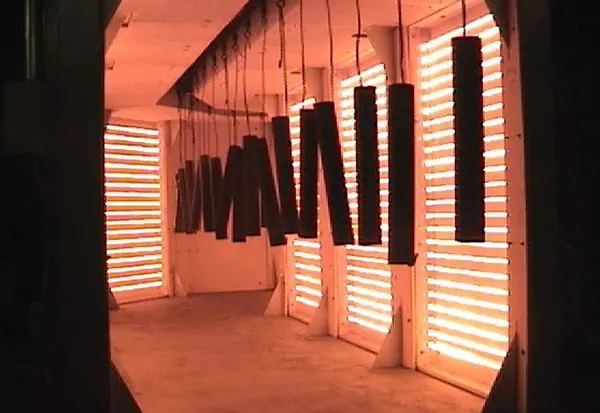
Surface Treatment Heating
Fast-response radiant sections can be integrated into finishing processes where product surfaces need targeted or staged heating.
industrial ovens for surface treatment →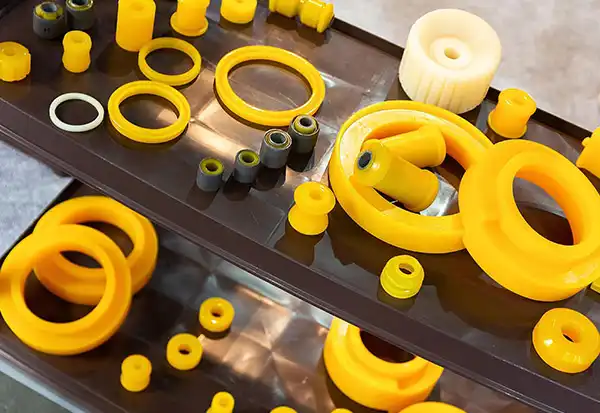
PTFE & Polymer Sintering
Radiant heat can form part of a staged high-temperature process when the product and coating system respond appropriately to IR energy.
high-temperature PTFE sintering →Brazil Textile Conveyor Oven Project
Application evidence is useful because radiant-heating decisions should be grounded in the actual material, line speed and process result rather than generic heater power.
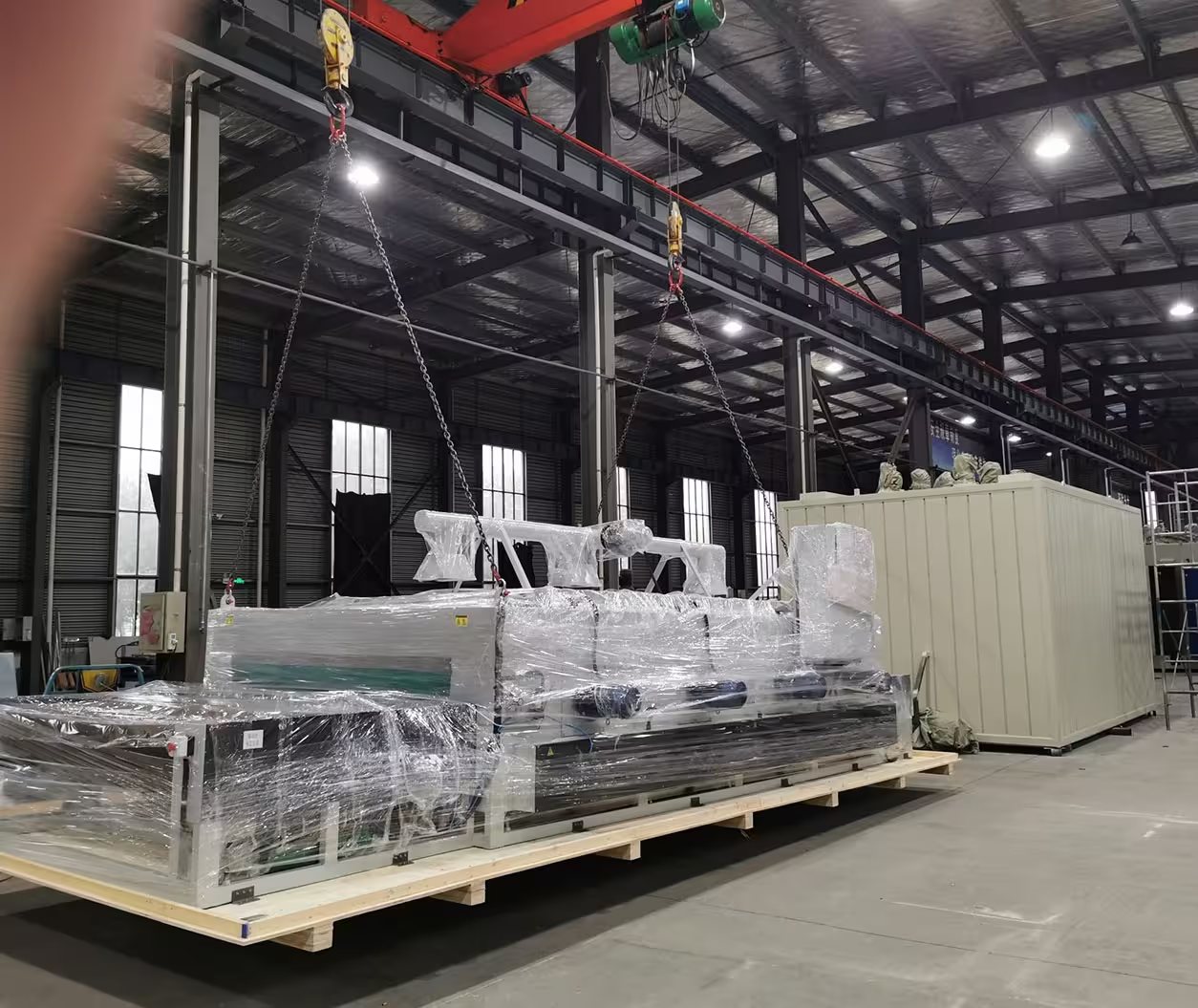
From Printed Material to Continuous Thermal Processing
Review a real textile conveyor oven application to see how continuous production requirements, material handling and thermal processing were translated into equipment scope.
Brazil textile conveyor oven project →IR Heating Still Needs Coordinated Conveyor and Zone Control
Fast heater response only helps when conveyor speed, zone output, alarms and production logic remain coordinated across the line.
Electric vs Gas vs Infrared
Compare the practical differences in response, energy delivery and line architecture before fixing the heating method.
compare electric, gas and infrared heating →Single-Zone vs Multi-Zone
Use multiple controlled sections when the process needs preheat, IR boost, soak or other staged thermal steps.
compare conveyor oven temperature zones →Industrial Oven Controls
Coordinate conveyor speed, zone output, recipes, over-temperature protection and upstream / downstream interlocks.
industrial oven control systems →Use IR as Part of the Complete Process Line
Infrared heating is often most valuable when it is engineered as one thermal stage inside a larger coating or sintering process rather than treated as an isolated oven.
Spray Coating & Curing Line
Integrate application, flash-off, IR boost and curing stages around the coating system and production speed.
integrated spray booth and curing oven line →PTFE Coating & Sintering Line
Coordinate coating, staged heating and high-temperature sintering around the polymer system, substrate and required thermal profile.
PTFE coating and sintering line →Infrared Conveyor Oven Questions
When is an infrared conveyor oven better than a hot-air conveyor oven?
IR becomes attractive when the product surface absorbs radiant energy effectively and the process benefits from rapid heat input, fast response or a compact active heating section. Conventional convection may be stronger for highly shadowed or thick products that require broader heat penetration.
Does product color affect infrared heating?
Surface properties can affect how the product absorbs and reflects radiant energy. Material, coating, finish and color should therefore be considered during process testing and emitter selection.
How does conveyor speed affect IR heating?
Conveyor speed controls exposure time under the emitter zones. Faster speed reduces radiant exposure, while slower speed increases it. Final settings should be based on the required product result rather than heater power alone.
Can infrared and convection be combined in one conveyor oven?
Yes. Hybrid systems can use IR for rapid surface heating and convection for broader heat coverage or continued soak, depending on product geometry and process requirements.
Can an infrared conveyor oven use multiple heating zones?
Yes. Emitter banks can be divided into controlled sections so different parts of the line operate at different outputs or temperature targets. This is useful for staged heat-up, curing or hybrid processes.