

Industrial Ovens for General Drying
Industrial ovens for general drying help remove surface moisture, reduce retained moisture, and improve production consistency across parts, materials, trays, racks, and larger production loads. ZonHoo provides process-oriented drying oven solutions with configurable airflow, temperature control, and batch or continuous layouts.
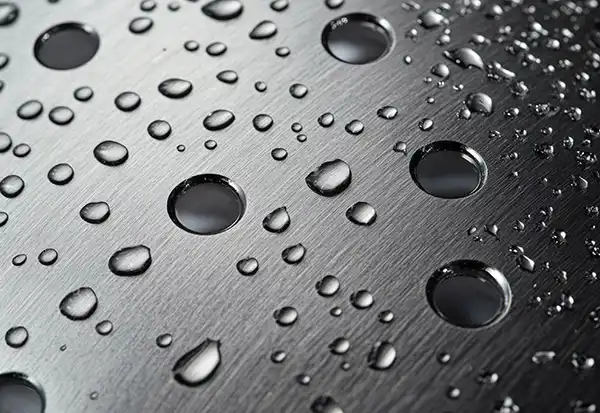
Why This Process Matters
Why General Drying Requires Controlled Thermal Processing
General drying is one of the most common thermal processes in industrial production. It is used to dry washed metal parts, powders, bulk materials, trays, fixtures, and assemblies before coating, assembly, packaging, storage, or the next processing step. A properly selected industrial oven for general drying helps manufacturers achieve more even moisture removal, shorter cycle times, and more repeatable drying performance.
Stable Moisture Removal Across the Load
Controlled heating and airflow help remove surface or retained moisture more evenly across trays, racks, baskets, or carts, reducing wet spots and inconsistent results.
Airflow Matched to Material and Geometry
Different parts and materials dry differently. Proper airflow direction, recirculation, and exhaust control help improve drying efficiency without overprocessing temperature-sensitive loads.
Repeatable Cycles for Production Consistency
A defined drying cycle supports more stable production, better scheduling, and fewer quality variations between batches, shifts, or operators.
Configurable Heat, Exhaust, and Handling
Industrial ovens for general drying can be configured for tray loading, carts, racks, conveyors, or large workpieces, with the right balance of heat input, fresh air, and moisture exhaust.
Typical Applications
Where General Drying Is Commonly Used
General drying appears in many manufacturing environments where moisture must be removed before assembly, coating, packaging, storage, or the next thermal or mechanical step.
Washed Metal Parts and Components
Remove surface moisture after cleaning, rinsing, or pretreatment to help prevent corrosion, water marks, or downstream process instability.
Powders, Granules, and Bulk Materials
Dry loose materials before blending, storage, packaging, or further thermal processing, with the drying method matched to material behavior and handling requirements.
Plastic, Rubber, and Composite Parts
Reduce retained moisture before forming, bonding, assembly, or finishing, especially when dimensional stability or surface quality matters.
Electronic and Electrical Components
Dry parts, housings, fixtures, or assembled components after washing or before the next step where moisture control is important for quality and reliability.
Trays, Racks, Tools, and Process Fixtures
Dry reusable production tools and carriers between operations to keep lines moving and reduce delays caused by manual air drying.
Large Assemblies, Baskets, and Cart Loads
Handle higher-volume or larger-format drying processes where load size, spacing, and airflow path have a direct effect on drying performance.
Selection Guidance
How to Match the Right Oven Direction to General Drying
The right solution depends on material condition, load size, sensitivity to heat, required throughput, and how moisture needs to be removed. This application page helps you compare process needs and then route to the most suitable oven direction.
| Process Need | Typical Requirement | Recommended Oven Direction |
|---|---|---|
| Small to medium tray-based batches | Stable circulation, practical loading, good daily flexibility | Hot Air Circulation Dryer |
| Temperature-sensitive parts or finish-sensitive loads | Gentle heating, tighter control, lower risk of over-drying | Constant Temp Drying Oven |
| Mixed products with changing batch sizes | Flexible chamber use, rack or tray loading, repeatable cycles | Industrial Batch Oven |
| Large housings, baskets, racks, or wheeled carts | Larger chamber, easier loading and unloading, better handling efficiency | Walk-In Oven |
| Heavy or oversized loaded carts | Stronger handling path, large usable chamber, production-oriented loading | Truck-In Oven |
| Continuous production with steady flow | Inline movement, reduced manual handling, better throughput continuity | Conveyor Belt Dryer Industrial Conveyor Oven |
| Moisture removal before downstream coating, assembly, or packaging | Reliable dryness level, repeatable process control, documentation options | Constant Temp Drying Oven Industrial Batch Oven |
| Future capacity growth or multi-product drying | Scalable layout, configurable chamber size, broader process coverage | Walk-In Oven Industrial Batch Oven |
EQUIPMENT DIRECTION
Recommended ZonHoo Oven Solutions for General Drying
Application requirements vary by material, load pattern, moisture level, and production mode. The oven families below are commonly used for industrial general drying, depending on whether the priority is flexibility, gentle control, large-load handling, or continuous throughput.
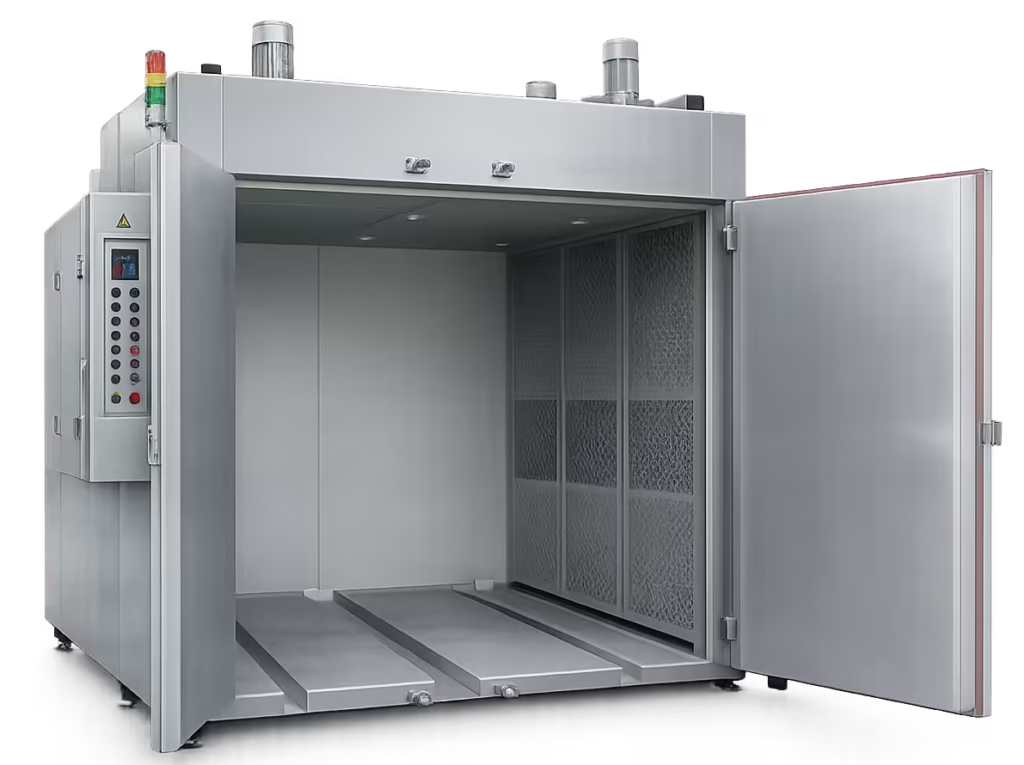
Hot Air Circulation Dryer
A practical solution for many general drying tasks involving trays, racks, baskets, or small-to-medium production loads. Recirculating hot air helps improve drying uniformity and cycle stability in everyday manufacturing use.
Best for:routine batch drying, tray-loaded parts, general factory drying tasks
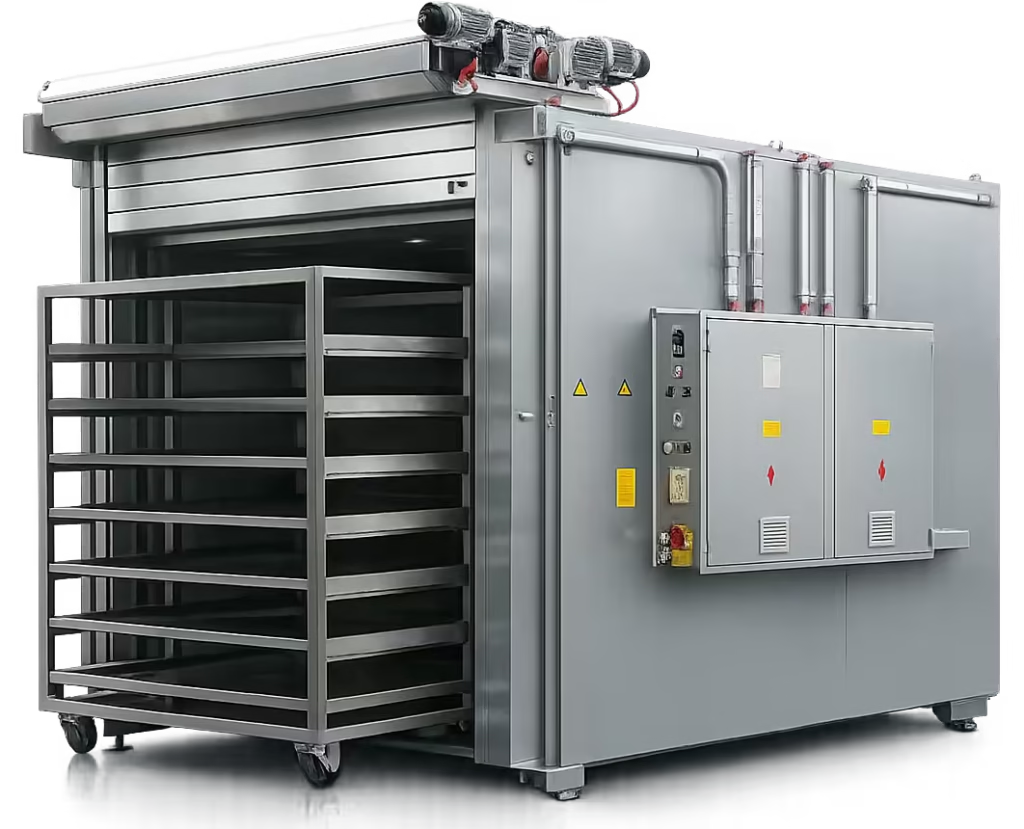
Constant Temp Drying Oven
Suitable when the drying process requires more controlled heating and reduced temperature fluctuation. Often used for materials or parts that benefit from a steadier and more predictable drying environment.
Best for:temperature-sensitive parts, controlled moisture removal, quality-focused drying
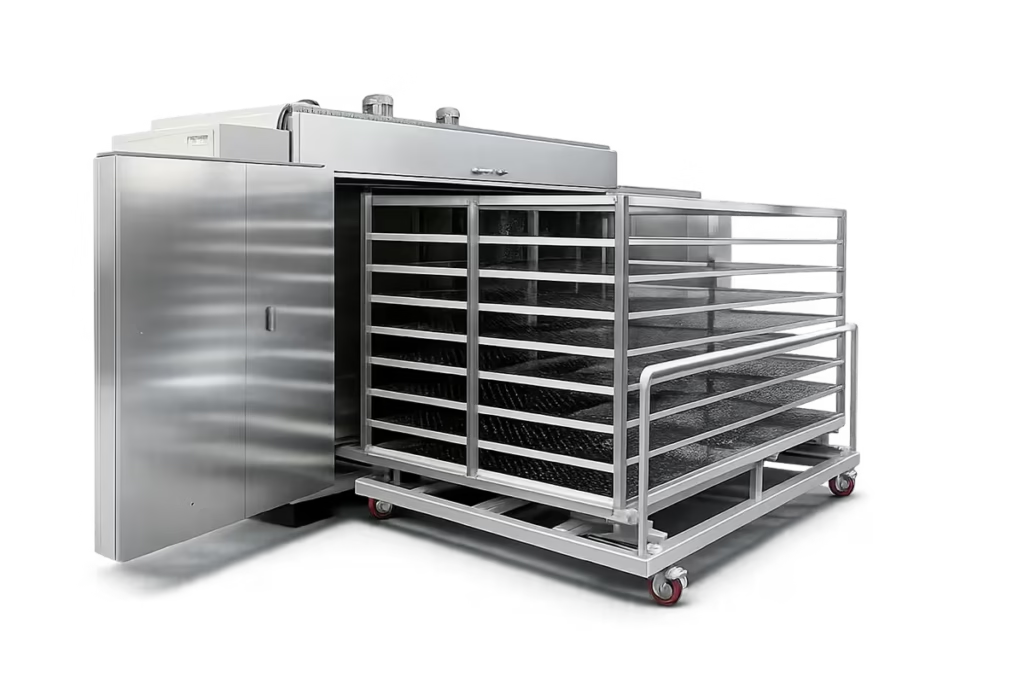
Industrial Batch Oven
A flexible oven direction for manufacturers handling multiple product types, changing lot sizes, or mixed drying requirements. It supports repeatable batch processing with adaptable chamber layouts and airflow options.
Best for:mixed production, flexible schedules, multi-purpose drying operations
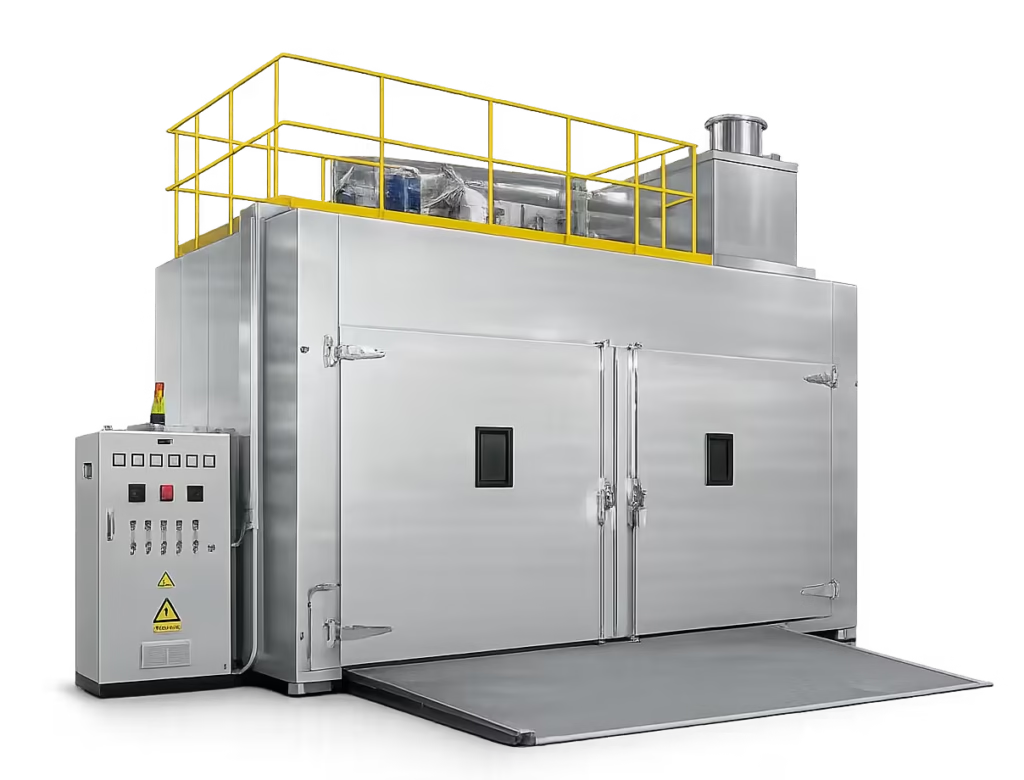
Walk-In Oven
Designed for larger loads, racks, baskets, or cart-based drying processes where access, loading convenience, and larger usable chamber space are important.
Best for:larger assemblies, racks, carts, higher-volume batch drying
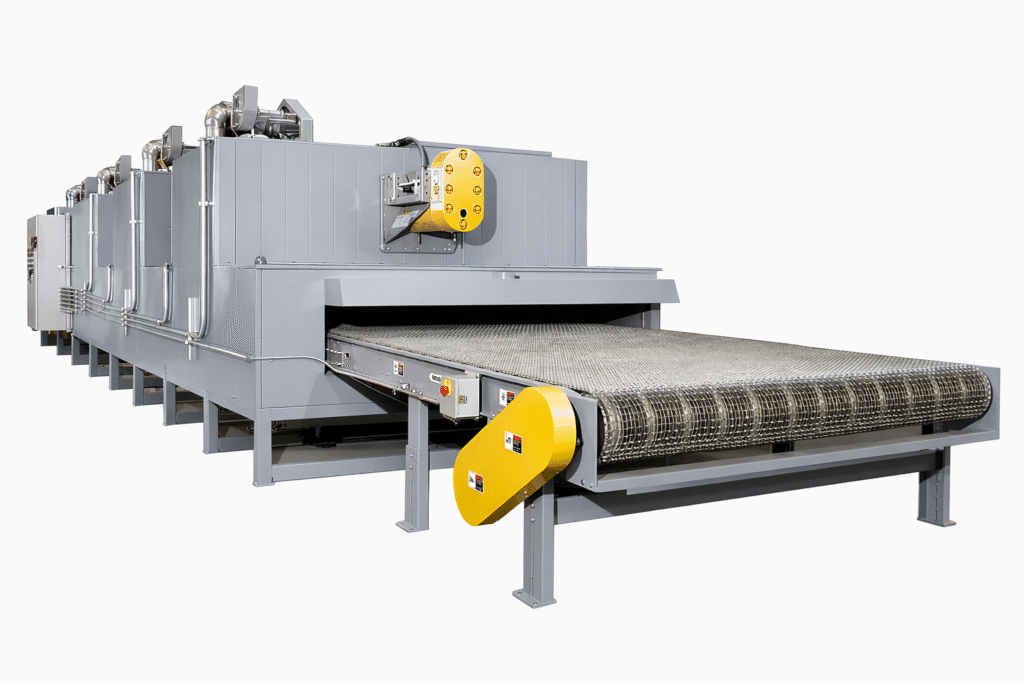
Industrial Conveyor Oven
A strong option for continuous drying lines where product moves through the process at a defined speed. This direction helps reduce manual handling and supports consistent throughput.
Best for:inline production, continuous drying, stable line flow
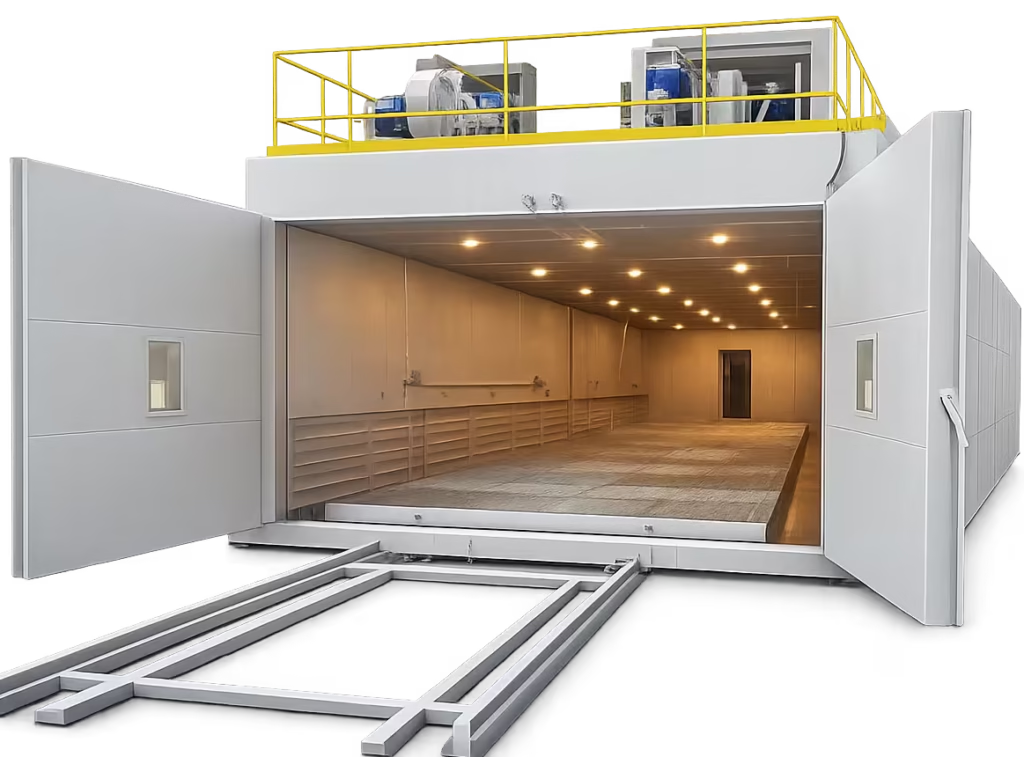
Truck-In Oven
Recommended for oversized loads or heavy wheeled handling structures where the drying process must accommodate large dimensions and practical in-and-out movement.
Best for:large cart loads, oversized parts, heavy-duty drying layouts**
Support Before RFQ
Process Validation and Engineering Support
General drying performance is influenced by more than chamber temperature alone. Moisture level, material geometry, load density, airflow path, exhaust strategy, and handling method all affect the final result. ZonHoo supports customers with process-oriented review so the selected oven direction better matches real production conditions.
- Review material type, initial moisture condition, and target dryness level
- Confirm allowable part temperature and practical cycle window
- Evaluate trays, racks, baskets, carts, or conveyor handling method
- Define airflow pattern, recirculation logic, and moisture exhaust strategy
- Support chamber sizing based on load dimensions and throughput goals
- Configure controls, alarms, timers, and data logging as needed
- Discuss plant utilities, installation conditions, and expansion plans
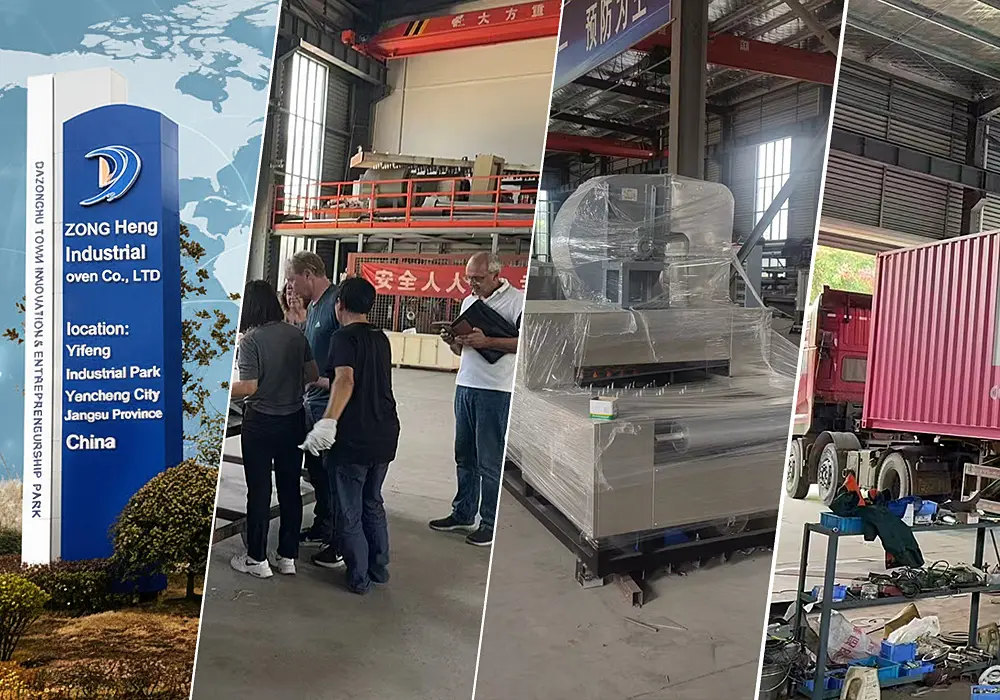
Test Your Process on Available Equipment
Frequently Asked Questions
Frequently Asked Questions About General Drying
What is general drying in industrial processing?
General drying is an industrial thermal process used to remove surface moisture or retained moisture from parts, materials, tools, or production carriers before the next manufacturing, assembly, finishing, or storage step.
How do I choose between a batch drying oven and a continuous drying system?
Batch drying is usually better when products vary, lot sizes change, or flexibility matters. Continuous drying is often more suitable when production flow is stable, handling needs to be reduced, and throughput consistency is a priority.
Why does airflow matter in an industrial general drying oven?
Airflow affects how heat reaches the load and how moisture is carried away. Poor airflow can lead to uneven drying, longer cycle times, and wet areas inside dense or complex loads.
What type of oven is suitable for drying washed metal parts or fixtures?
That depends on load size, basket or tray arrangement, required throughput, and allowable part temperature. Hot air circulation dryers, constant temp drying ovens, industrial batch ovens, and walk-in ovens are all common options depending on the process.
Can ZonHoo recommend an oven layout for general drying based on my parts and production target?
Yes. ZonHoo can review material type, moisture condition, load dimensions, batch size or line speed, plant constraints, and control requirements to recommend a suitable oven direction and project scope.
Tell Us About Your General Drying Process
Tell us your material, load size, moisture condition, target dryness level, and production target. We will help you review suitable oven directions, airflow concepts, chamber sizing, and handling layouts for your general drying process.
What to Prepare
- Part or material name
- Initial condition after washing, storage, or upstream processing
- Load dimensions, tray quantity, rack layout, basket size, or cart size
- Target dryness result and expected cycle time
- Batch quantity or continuous throughput target
- Site utilities and available installation space
What We Can Discuss
- Recommended oven direction based on your process
- Batch versus continuous layout options
- Chamber size, airflow concept, and exhaust strategy
- Handling method for trays, racks, carts, or conveyors
- Controls, timers, alarms, and data logging options
- Project planning, customization scope, and RFQ preparation