

Sand Core Drying Ovens for Foundry Cores and Molds
ZonHoo sand core drying ovens are engineered around core size, binder system, residual moisture, production rate and handling method. From batch drying of large molds to continuous conveyor drying of high-volume sand cores, the oven configuration is selected around stable moisture removal without damaging fragile cores or creating unnecessary handling.
Why This Process Matters
Why Sand Core and Mold Drying Requires Controlled Thermal Processing
In sand core and mold production, drying is not just about removing visible moisture. It also affects core strength, dimensional stability, handling reliability, and casting consistency. If heat is uneven, or if drying is too aggressive, foundries can face cracked cores, soft centers, unstable mold surfaces, or downstream pouring defects.
A properly matched industrial oven helps foundries dry more consistently across different core sizes, wall thicknesses, and production speeds. The right system also makes it easier to balance throughput, drying time, loading method, and floor-space limits.These drying requirements vary significantly with binder chemistry, core geometry and foundry production method. For the broader production context, see our industrial ovens for foundry production.
Lower Blowhole Risk
Controlled drying helps reduce residual moisture before assembly or pouring, lowering the risk of steam-related casting defects.
Better Core Stability
Balanced airflow and controlled heat input help protect core strength, shape accuracy, and handling reliability.
More Uniform Drying
A well-designed oven improves consistency across deep cavities, thicker sections, and mixed core geometries.
Smoother Throughput
When drying becomes more repeatable, foundries can reduce waiting time, improve line flow, and support more predictable output.
Typical Applications
Where Sand Core and Mold Drying Is Commonly Used
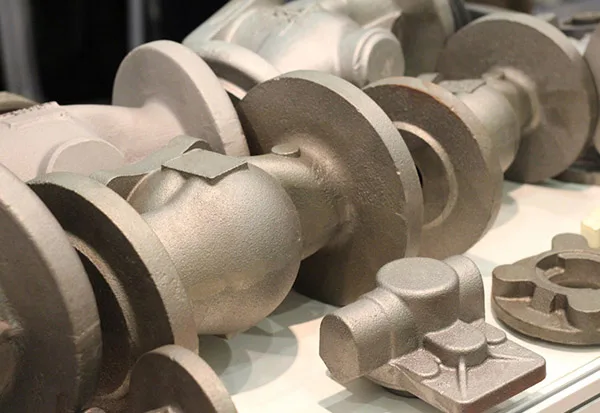
From small resin-bonded cores to large foundry molds, sand core and mold drying is used wherever controlled moisture removal supports safer handling, better dimensional stability, and more stable casting results.
Resin-Bonded Sand Cores
For cores that need stable drying before storage, transport, or assembly.
Large or Thick Molds
For mold structures where deeper sections dry more slowly and need more balanced airflow.
Foundry Core Rooms
For batch production environments handling multiple core sizes and recipes.
Automated Casting Lines
For operations that need continuous drying matched to takt time and downstream handling.
Pump, Valve, and Motor Castings
For foundries producing complex geometries where moisture control affects casting quality.
Automotive and Machinery Foundries
For medium- to high-volume plants that need consistent drying and better process repeatability.
Selection Guidance
How to Match the Right Oven Direction to Sand Core and Mold Drying
For repetitive foundry production, conveyor design should be based on product spacing, required drying time and actual production output—not oven length alone. Use our guide to calculate conveyor belt speed and residence time, then review the conveyor oven sizing guide before fixing the working width and heated length.
| Process Need | Typical Requirement | Recommended Oven Direction |
|---|---|---|
| Small or medium sand cores in trays or racks | Stable batch drying, repeatable airflow, flexible loading | Batch Baking Oven |
| Mixed core sizes with recipe changes | Easy parameter adjustment, controlled heating, flexible scheduling | Industrial Electric Oven |
| Large molds or heavy mold assemblies | Floor loading, cart handling, wide door access, even drying across bigger structures | Walk-In Oven |
| High-volume continuous core production | Steady takt time, less manual handling, predictable residence time | Industrial Conveyor Oven |
| Higher throughput with limited floor labor | Parallel processing, stable drying time, reduced waiting between loads | Conveyor Belt Dryer with dual-lane layout |
| Deep cavities or uneven section thickness | More balanced airflow, staged drying, controlled exhaust and heat profile | Hot Air Circulation Dryer |
| Foundry lines needing automation linkage | PLC/HMI integration, alarm logic, line-speed coordination, repeatable output | Custom Batch Oven |
EQUIPMENT DIRECTION
Recommended ZonHoo Oven Solutions for Sand Core and Mold Drying
The best oven direction depends on core size, mold structure, target throughput, and how the drying step fits into the foundry workflow. Below are typical ZonHoo oven directions for sand core and mold drying applications.
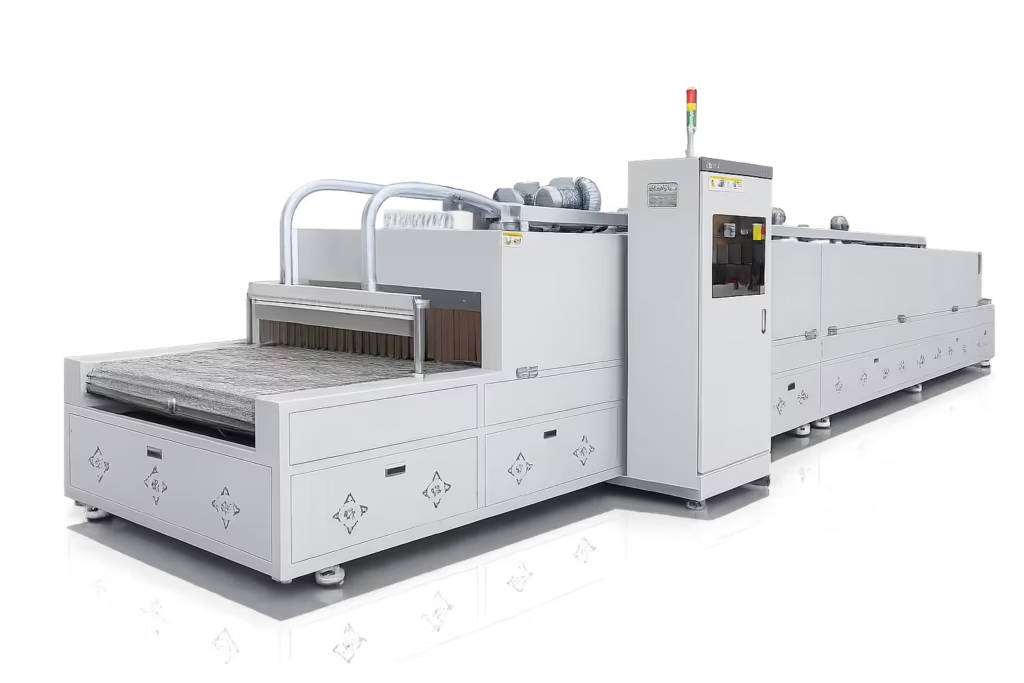
A practical solution for continuous sand core and mold drying where stable residence time and higher throughput are required. It is especially suitable when customers want smoother material flow or a dual-lane layout with two conveyor belts for better efficiency.
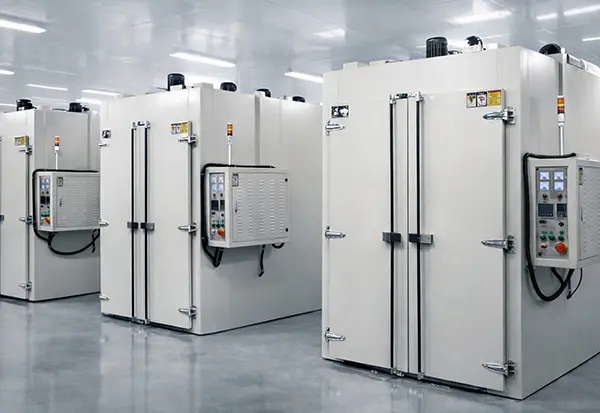
Well suited for foundries handling tray-loaded or rack-loaded cores in flexible production batches. It supports stable drying for multiple core sizes without forcing a continuous layout.
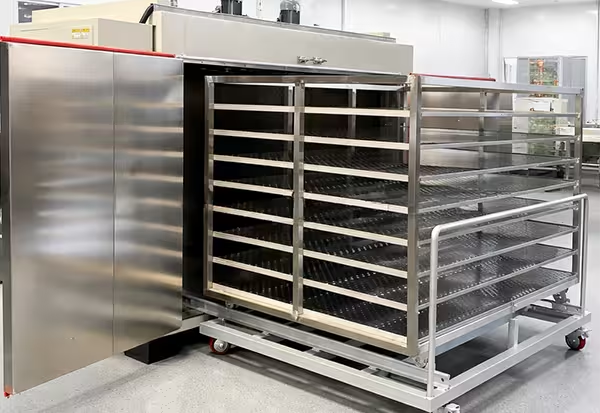
Recommended for heavier cores, molds, pallets or fixtures that need more positive support than a conventional mesh-belt conveyor.
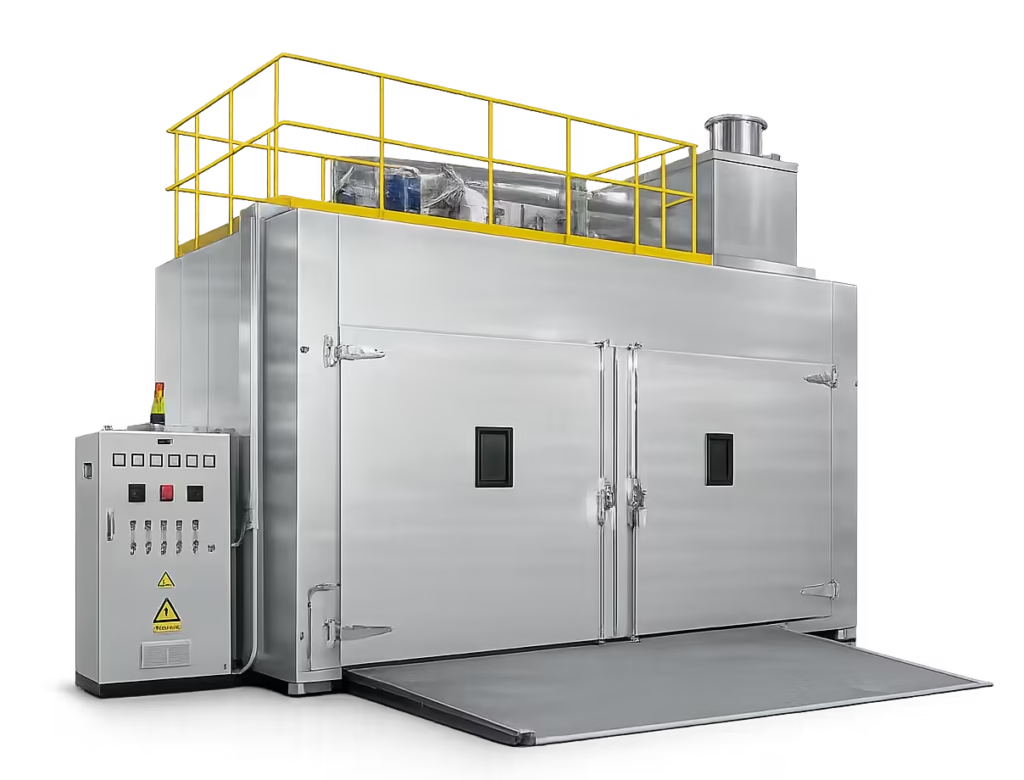
Recommended for large molds, bigger assemblies, or cart-loaded foundry work that requires floor entry, larger chamber space, and stable drying across heavier loads.
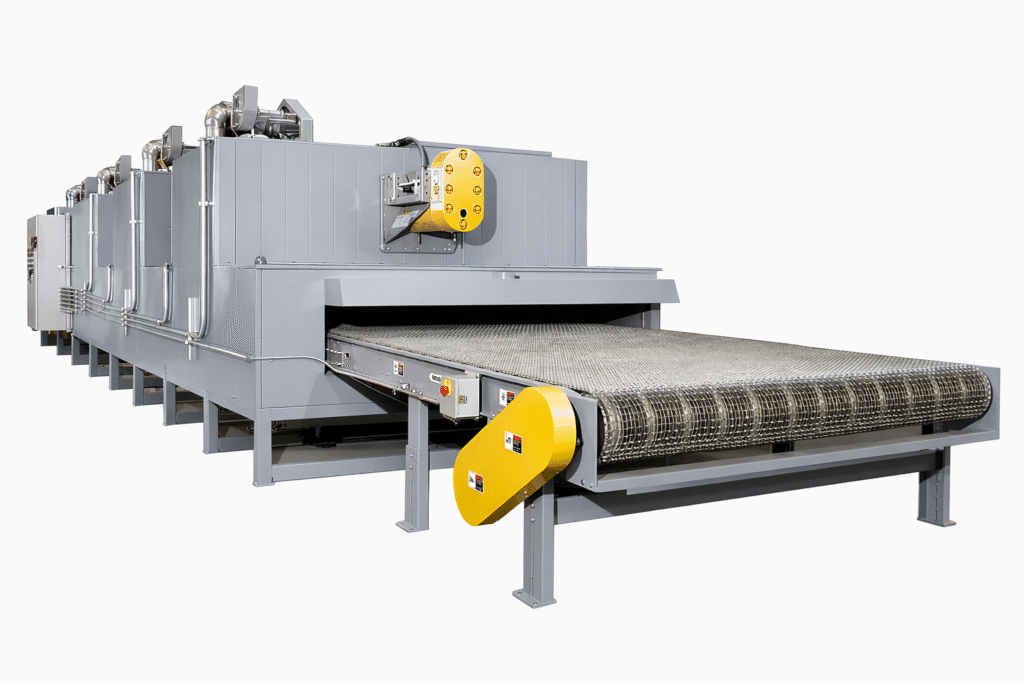
Designed for continuous foundry production lines that need repeatable drying, line integration, and reduced manual handling. It can be configured with controlled airflow, recipe logic, and synchronized conveying for process stability.
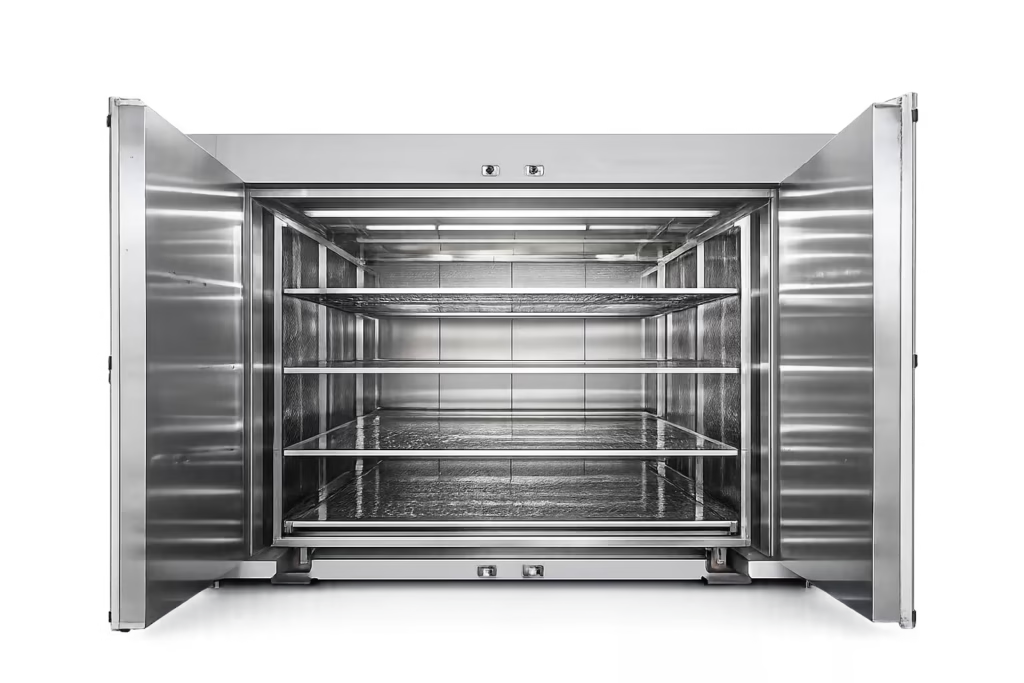
Useful when drying uniformity across deep cavities, thick sections, or mixed geometries is a higher priority. It supports more balanced heat transfer and gentler moisture removal.
Support Before RFQ
Process Validation and Engineering Support
Every foundry drying project is different. Binder system, core geometry, mold size, loading method, moisture condition, and required output all influence the best oven direction. ZonHoo supports process review from initial RFQ through equipment definition, including both batch and conveyor-based drying layouts.
For new continuous projects, ZonHoo can also help plan conveyor oven capacity and layout around product spacing, throughput, drying time and available plant space.
- Drying temperature and time review
- Batch vs. conveyor layout guidance
- Dual-lane conveyor configuration support
- Airflow and exhaust design recommendations
- PLC/HMI recipe and alarm planning
- FAT documentation and engineering support
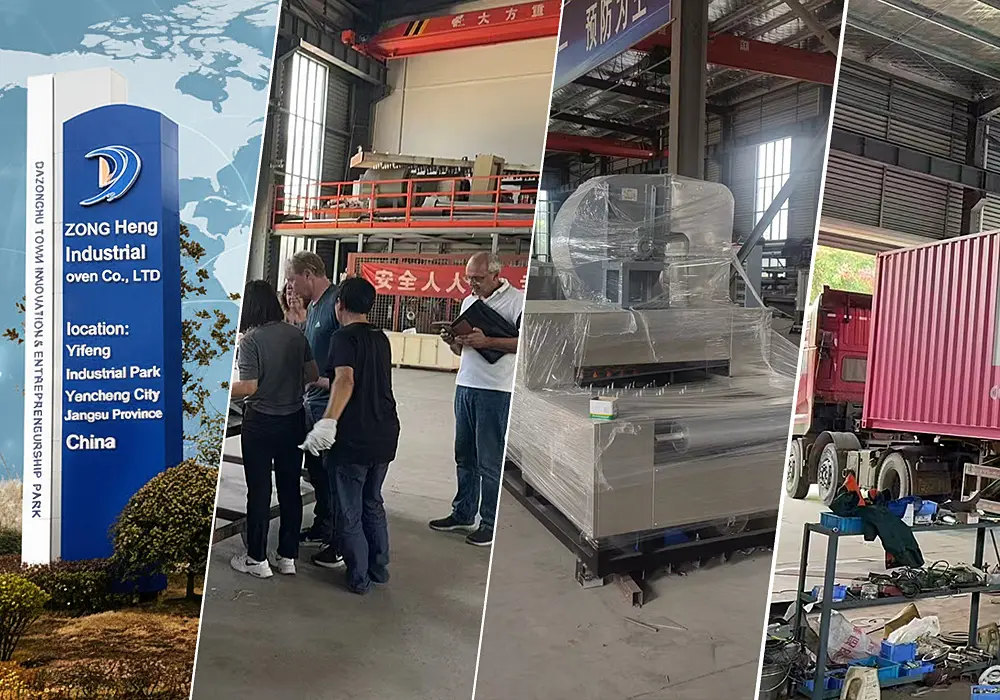
Test Your Process on Available Equipment
Tell Us About Your Sand Core and Mold Drying Process
To recommend a suitable oven direction, we need to understand your core or mold size, moisture condition, throughput target, loading method, and whether you need batch drying or conveyor-based production. If your line is output-driven, we can also review dual-lane or two-belt conveyor configurations.
What to Prepare
We typically review part geometry, binder system, moisture condition, desired drying time, loading direction, floor-space limits, utilities, and production targets before recommending a solution.
What We Can Discuss
Oven direction, chamber size, airflow concept, control needs, uniformity targets, and documentation support for your production case.