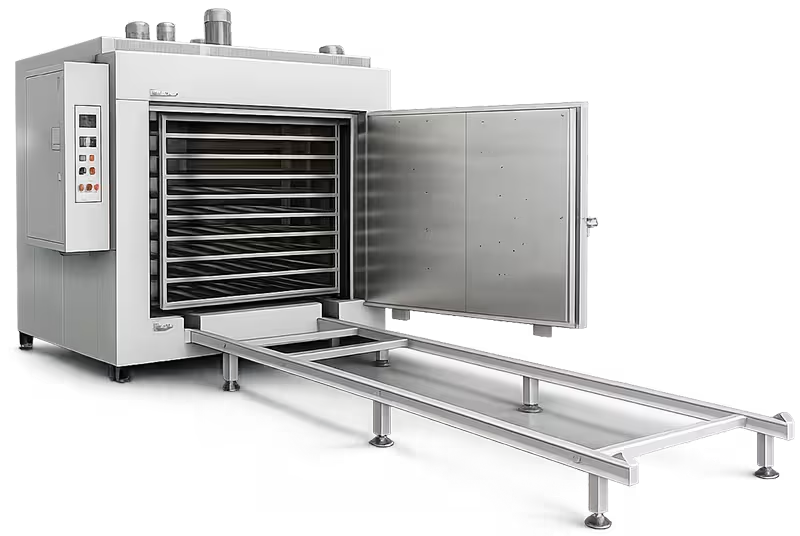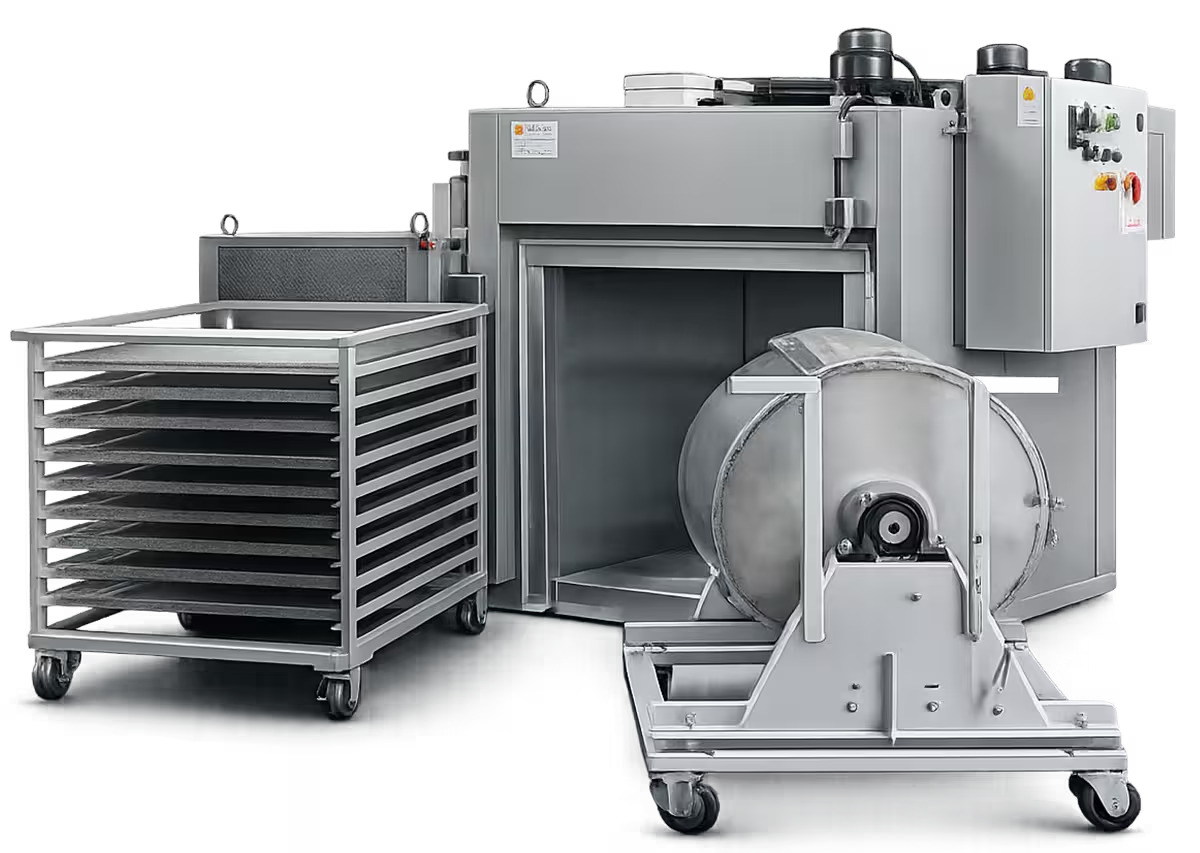
Oven system planning

Define your temperature profile, part size, load weight, and throughput target. Our engineers translate your process into a practical oven layout—airflow strategy, heating power, controls, and safety options—so the final system delivers stable uniformity, repeatable results, and predictable lead-time.

3o Years of Service

Built on 30 years of thermal engineering, we support projects from specification to commissioning. Expect clear documentation, FAT/SAT support, reliable spare parts, and responsive troubleshooting—so your oven stays productive, compliant, and easy to maintain across its full service life.

Request a Quote

Coating & Powder Cure Ovens for Production

Cure powder coating, wet paint, primers, and functional coatings with stable airflow and uniform temperature for repeatable finish quality. Choose batch or continuous systems, integrate pretreatment and cooling, and specify part size and line speed for a manufacturer-built solution.

Electronics Ovens for Clean Controlled Curing

Support PCB coating, potting, encapsulation, and transformer varnish drying where cleanliness and control matter. Maintain temperatures, controlled airflow, and data logging for audit-ready quality; select chamber size, fixtures, and production cadence to match your sourcing and compliance requirements.

Metal Heat-Treatment Ovens for Heavy Loads

Run tempering, aging, annealing, and post-weld stress relief with controlled ramp/soak and consistent uniformity across large parts. Specify work envelope, load weight, and cycle time; we engineer insulation, circulation, and controls for repeatable heat-treatment results in production today.

Installation, Commissioning & Support

Powder Coating Curing Ovens for Consistency

Achieve repeatable cure and finish quality for metal parts with stable airflow and uniform temperature. Configure batch or conveyor solutions, match line speed and part size, and add pretreatment interface, cooling, and data logging for production control.

Industrial Drying Ovens for Moisture Removal

Dry components, castings, coatings, and assemblies before coating, bonding, or packaging with controlled temperature and airflow. Specify load, cycle time, and humidity sensitivity; we build batch or continuous ovens with scalable chambers and stable performance.

Adhesive Curing Ovens for Reliable Bonds

Cure structural adhesives, sealants, and bonding compounds with controlled ramp/soak profiles and uniform heat transfer. Choose racking, fixtures, and airflow direction to reduce scrap; integrate with assembly cells and quality documentation for audits.

Custom Oven Engineering, Built to Spec

Oven Control Systems for Stable Output

Select PLC/HMI, PID/SCR power control, recipe management, alarms, and data logging to standardize cycles across shifts. We configure sensors, interlocks, and remote diagnostics, then support commissioning and operator training so your oven runs safely and repeatably every day.

Special Oven Customization for Your Process

Need a non-standard oven? Share temperature range, solvent/ATEX risk, part size, load, and takt time. We engineer chamber, airflow, controls, and safety features, then define scope, drawings, and lead-time for RFQ approval with performance targets and acceptance criteria.

Maintenance & Spare Parts for Continuity

Keep ovens running with planned spare parts, preventive maintenance guidance, and troubleshooting support. Identify wear items, schedule inspections, and standardize replacement intervals. Reduce downtime risk with documented service routines, recommended inventory lists, and responsive technical assistance.

Request a Quote in 24 Hours

Trolley Type Curing Oven
Truck-In Oven Carts, Rails, Trays, and Loading Options
Learn how truck-in oven carts, rails, trays, and loading options affect handling efficiency, workflow,...
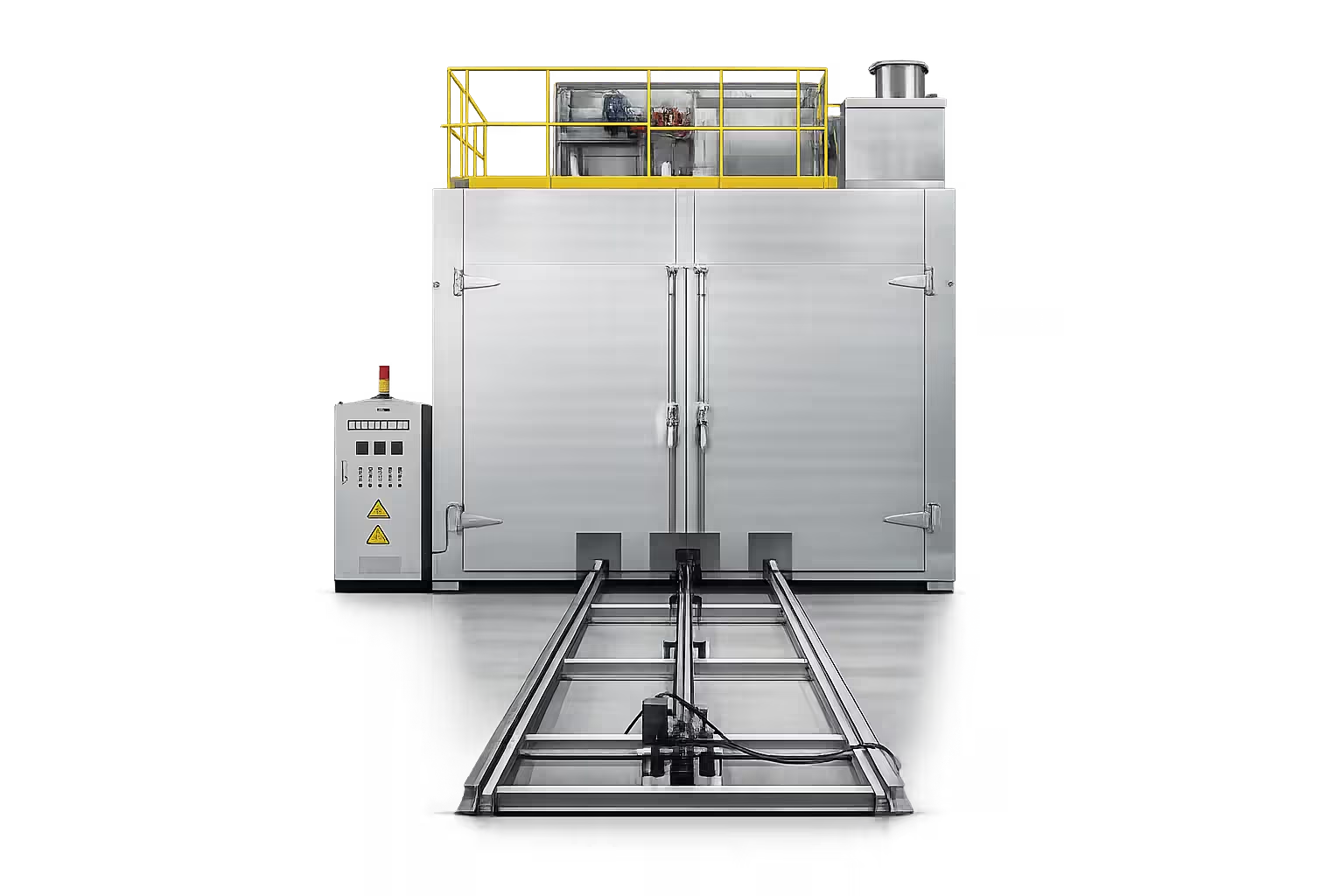
lineup of industrial truck-in ovens with loading ramps and top service platforms
Truck-In Oven vs Walk-In Oven
Compare truck-in ovens and walk-in ovens to understand the key differences in loading method, chamber...
PTFE and polymer sintering process with controlled soak and cooling in an industrial oven
ZonHoo customized two conveyor ovens for a fabric printing factory in Brazil
ZonHoo customized two conveyor ovens for a fabric printing factory in Brazil.ZonHoo customized two conveyor...

Request a Quote in 24 Hours

About Us: Manufacturer Built for Industry

ZonHoo designs and manufactures industrial ovens and thermal systems for global production lines. From requirement definition to engineering, fabrication, and testing, we deliver repeatable performance, clear documentation, and responsive support—built to reduce sourcing risk and accelerate project approval.

Our Ability: Engineering, Build, Test, Deliver

Explore our capabilities in design, fabrication, insulation, airflow, controls, and factory testing. We translate your process into specifications, validate performance with commissioning-ready documentation, and support custom batch or continuous systems—optimized for throughput, safety, and long-term uptime.

30 Years of Service, One Focus

Our history started with heating elements, grew into heating equipment, and evolved into industrial ovens and heat-treatment systems. Decades of field feedback shaped our safety mindset, engineering discipline, and manufacturing quality—helping customers scale production with confidence and repeatability.

Request a Quote in 24 Hours

2026/03/22

Truck-In Oven Carts, Rails, Trays, and Loading Options

Key Takeaways
  • Truck-in oven performance depends not only on chamber size, but also on how loads are moved into and through the oven.
  • Carts, rails, trays, and internal supports affect handling efficiency, repeatability, and daily workflow.
  • The right loading option depends on part size, load weight, batch frequency, and plant layout.
  • Both standard and custom industrial truck-in oven designs can be configured around specific loading methods.
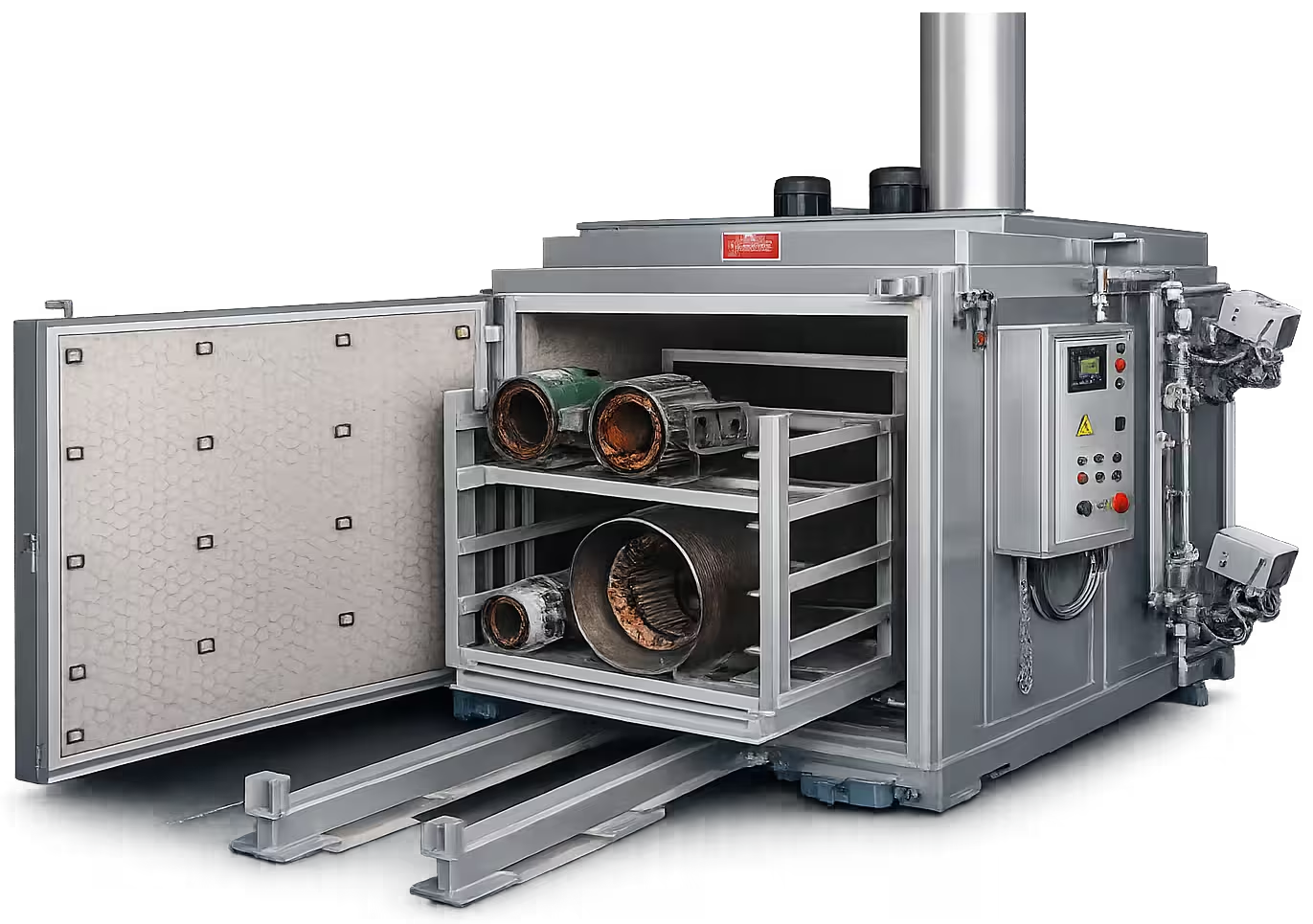
1.Why Do Loading Options Matter in a Truck-In Oven?

Truck-in oven performance is not only determined by chamber size and temperature range. Loading equipment such as carts, rails, trays, and transfer logic also affects workflow efficiency, part handling, operator effort, and daily operation.

For industrial batch heating projects, the right loading option depends on part size, load weight, batch frequency, plant layout, and whether the process relies on wheeled transfer or direct chamber entry.

In simple terms: even a well-designed chamber can create daily handling problems if the loading method does not match the actual production workflow. That is why carts, rails, trays, and internal supports should be reviewed early in project planning.

2.What Types of Truck-In Oven Carts Can Be Used?

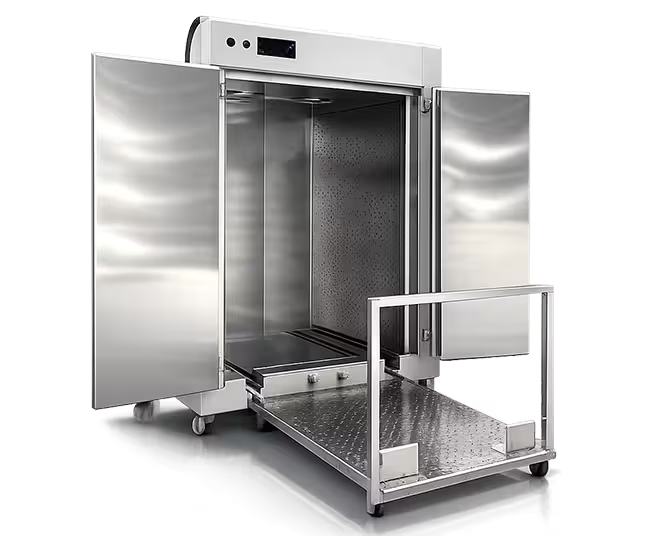
(1) Free-rolling carts.

These are practical when the process requires flexible wheeled movement and floor conditions allow stable manual transfer.

(2) Heavy-duty wheeled trucks.

These are often selected for larger parts, denser loads, or fixture-based batch handling.

(3) Custom cart structures.

Cart height, deck format, frame strength, and wheel arrangement can all be matched to the chamber and product geometry.

A truck-in oven cart is not just a transport tool. It directly affects how the load enters the chamber, how airflow moves around the product, and how repeatable the handling cycle is from batch to batch.

3.When Is Rail-Guided Loading the Better Option?

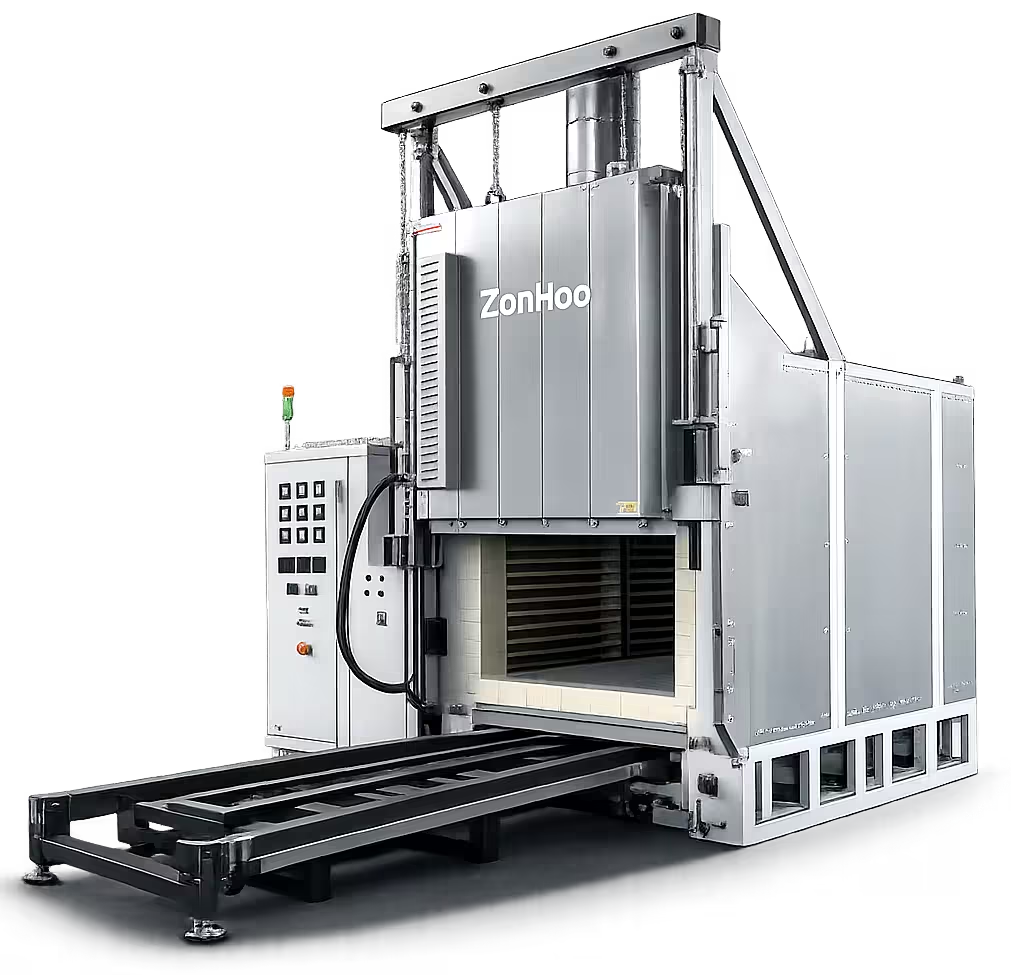
(1) Better positioning control.

Rail-guided loading helps align the cart or truck more consistently when repeated movement accuracy matters.

(2) More stable movement.

In some projects, rails reduce handling variation compared with completely free-rolling carts.

(3) More repeatable workflow.

Rail-guided loading is often preferred when the process depends on fixed entry direction and predictable transfer paths.
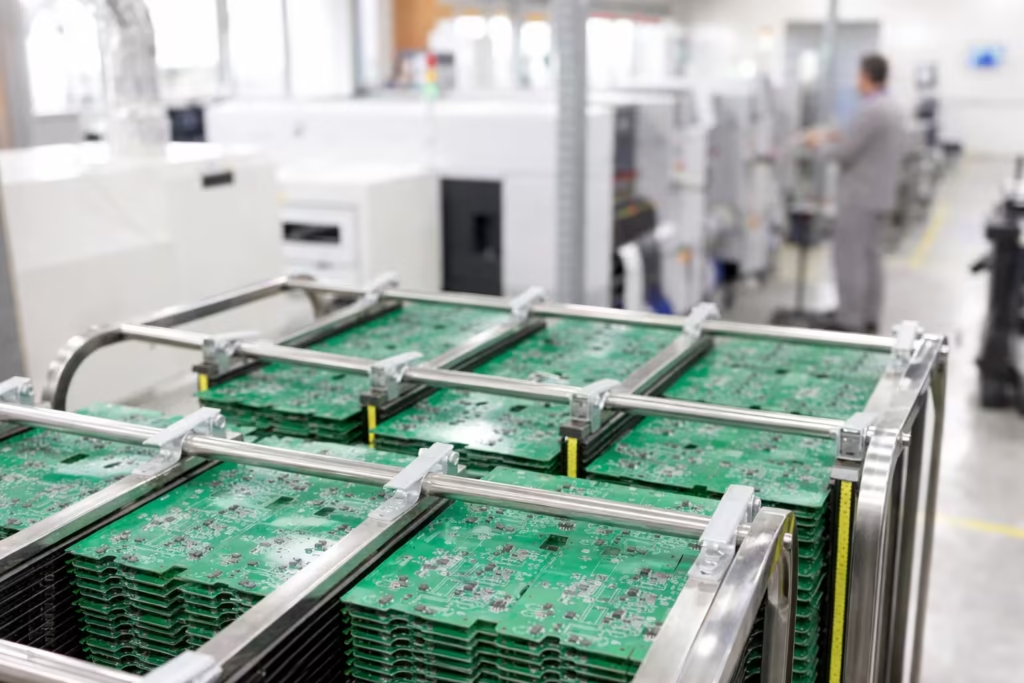
Start Planning with Us

Review loading method, chamber size, rail layout, and operator transfer logic before defining the final oven structure.

4. How Do Trays, Racks, and Internal Load Supports Affect Loading?

(1) Trays for layered loading.

Trays are often suitable when smaller parts are loaded in multiple levels and organized in repeated batches.

(2) Racks for batch grouping.

Rack-based loading helps structure multiple parts into a repeatable arrangement before entry into the oven.

(3) Fixtures for part stability.

Custom fixtures may be needed when parts must stay in controlled positions during transfer and heating.

These internal loading supports affect not only capacity, but also airflow path, operator handling, and how efficiently the chamber can be used from cycle to cycle.

5. Common Loading Scenarios in Truck-In Ovens
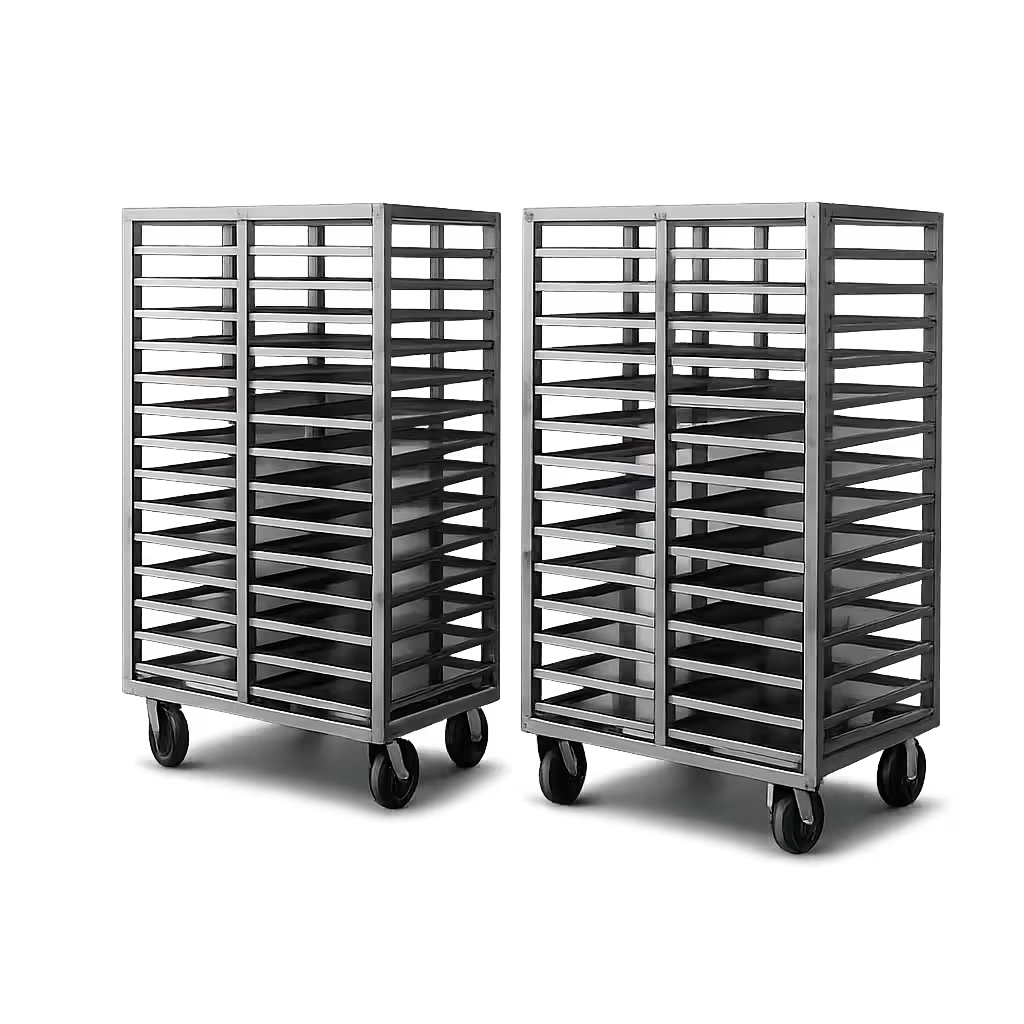
(1) Cart-Loaded Batch Movement

Best when repeated batches move on wheeled carts through a defined loading and unloading workflow.
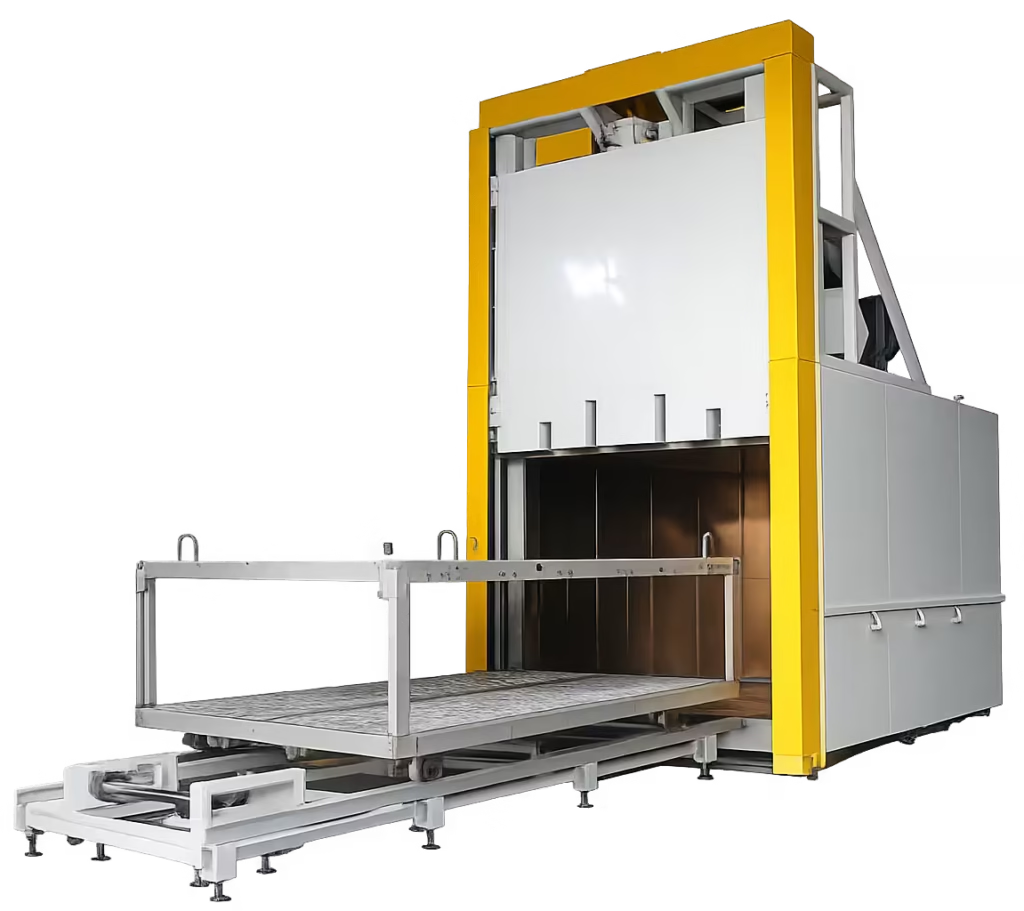
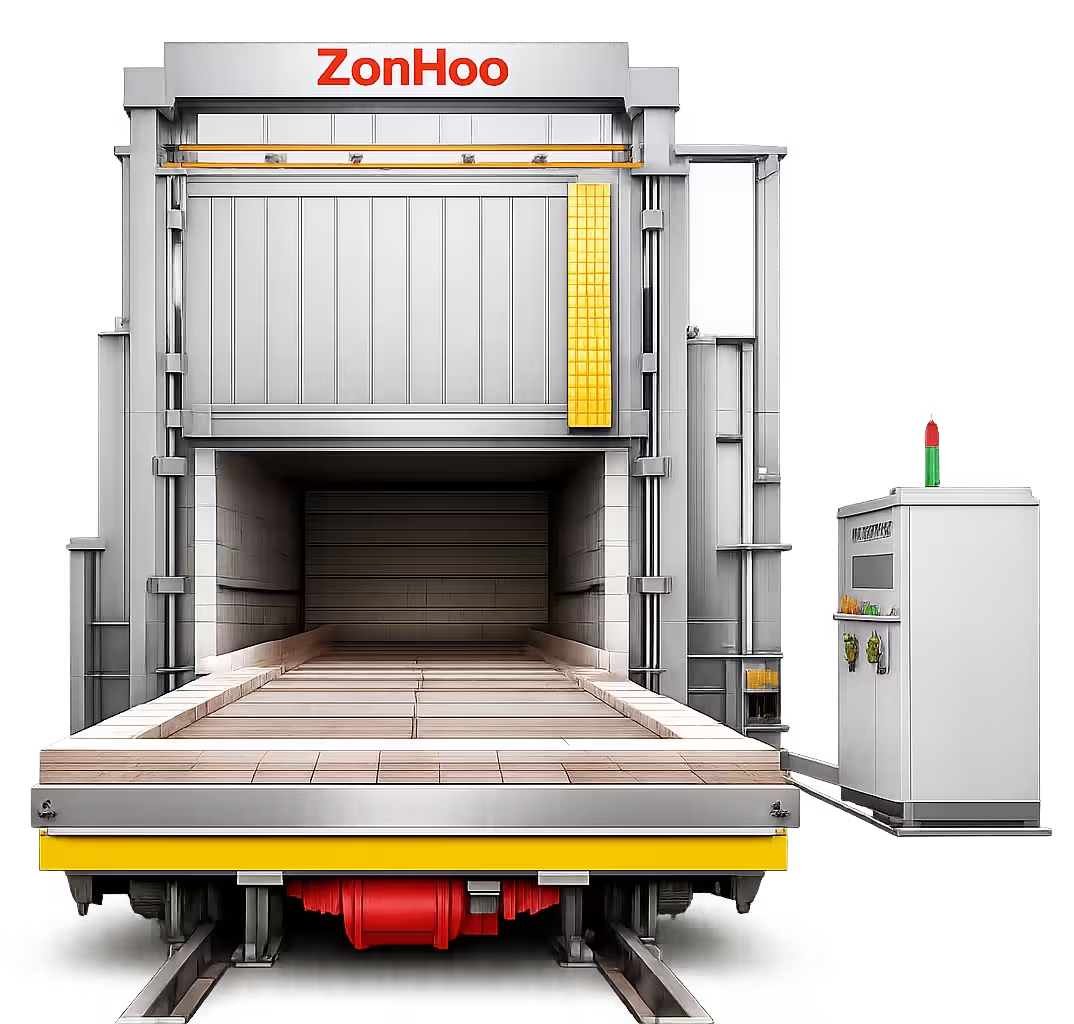
industrial post-curing oven used for coatings and composite parts curing process

(2) Rail-Guided Transfer

Useful when more consistent chamber entry and repeatable positioning matter for daily operation.
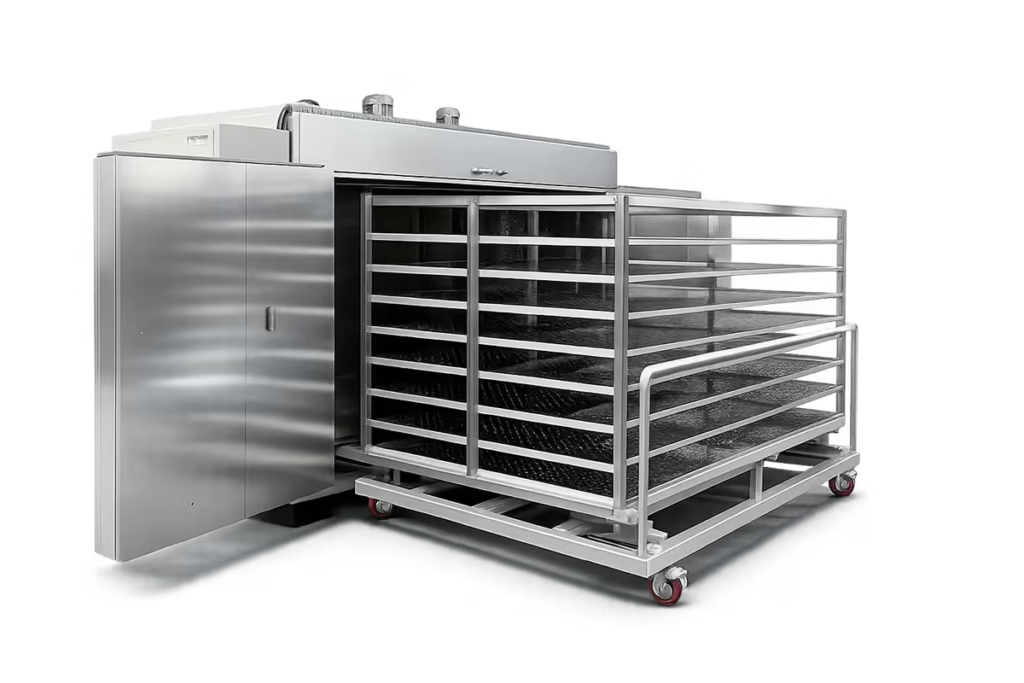
(3) Tray and Rack Loading

Suitable when smaller parts are grouped on trays or racks and moved into the chamber as organized batches.

Engineering note: the loading option should match not only product size and weight, but also the way your operators actually move parts between staging, chamber entry, and unloading.

Further reading:

Frequently Asked Questions

Q: What carts can be used in a truck-in oven?

Common options include free-rolling carts, heavy-duty wheeled trucks, and custom cart frames matched to the product, chamber, and workflow.

Q: When should I choose rail-guided loading?

Rail-guided loading is usually preferred when repeated chamber entry alignment, more stable movement, or more predictable transfer paths are required.

Q: Are trays suitable for truck-in ovens?

Yes. Trays are suitable when smaller parts are loaded in organized layers and moved into the oven as grouped batches.

Q: Can a truck-in oven be customized for specific loading equipment?

Yes. An industrial truck-in oven can be customized for carts, rails, trays, racks, fixtures, and chamber layout based on process requirements.

Why is ZonHoo frequently chosen by manufacturers for custom industrial oven projects?
「Engineering, Manufacturing, and Service」

— are ZonHoo’s three guarantees.

This page may also interest you

Explore more truck-in oven resources, comparison guides, and engineering insights to better understand loading methods, chamber access, and selection logic for industrial batch heating projects.
How to Choose a Truck-In Oven

are a type of bearing that performs exceptionally well at high speeds. Their rollers are precisely guided by specially shaped, high-rigidity cages with minimal dimensional error. Despite their small cross-section, needle bearings…
Industrial Walk-In Oven Selection Guide

are a type of bearing that performs exceptionally well at high speeds. Their rollers are precisely guided by specially shaped, high-rigidity cages with minimal dimensional error. Despite their small cross-section, needle bearings…

Truck-In Oven vs Walk-In Oven Back Why uniformity matters in heat-treatment ovens
Need Support?

Need a cart-loaded batch heating solution? Explore our Industrial Truck-In Oven page for design features, loading options, and RFQ guidance.

More
2026-04-20
Compare truck-in ovens and walk-in ovens to understand the key differences in loading method, chamber access, workflow, and industrial batch heating applications.
2025-12-24
ZonHoo customized two conveyor ovens for a fabric printing factory in Brazil.ZonHoo customized two conveyor ovens for a fabric printing factory in Brazil.ZonHoo customized two conveyor ovens for a fabric
2025-11-01
How to Choose an Industrial Oven — and Boost Throughput NowHow to Choose an Industrial Oven — and Boost Throughput NowHow to Choose an Industrial Oven — and Boost Throughput
Contact Us
  • Allowed types: pdf, jpg, jpeg, png, dwg, dxf, step, stp, iges, igs, stl, iam, ipt, sldprt, sldasm,

Need Your Equipment Fast? Contact Our Engineer Now!

The faster you contact us, the faster your equipment is delivered. Don’t wait—act now!

After the form is submitted, a thank-you page will pop up.