

Industrial Ovens for Post Weld Heat Treatment
Post weld heat treatment (PWHT) is used to reduce residual stress, improve dimensional stability, and support code-driven heat treatment requirements after welding. For pressure vessels, piping systems, structural fabrications, and heavy welded assemblies, industrial ovens for post weld heat treatment must deliver controlled ramp rates, stable soak temperatures, load-aware airflow, and reliable process recording. ZonHoo builds industrial oven solutions for post weld heat treatment with manufacturer-level support for chamber sizing, loading method, controls, and documentation planning.
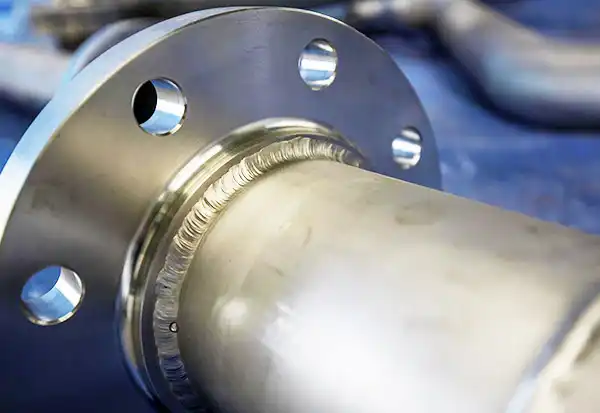
Why This Process Matters
Why Post Weld Heat Treatment Requires Controlled Thermal Processing
After welding, residual stress, uneven thermal history, and local hardness variation can affect dimensional stability, service life, and downstream performance. Post weld heat treatment helps welded components reach a more stable condition by applying a controlled heating, soaking, and cooling cycle matched to the material, section thickness, and fabrication standard.
Residual Stress Reduction
PWHT helps reduce residual stress introduced during welding, which can improve structural stability and lower the risk of cracking or distortion in service.
Better Dimensional Stability
Controlled thermal processing helps welded assemblies hold shape more consistently, especially for heavy sections, long weldments, and fabricated structures with tight fit-up requirements.
More Consistent Mechanical Performance
A properly controlled PWHT cycle can support hardness control, stress redistribution, and more predictable performance across welded areas and surrounding base material.
Stronger Process Traceability
With recipe control, alarms, and optional batch recording, manufacturers can manage post weld heat treatment more consistently across jobs, operators, and production batches.
Typical Applications
Where Post Weld Heat Treatment Is Commonly Used
Post weld heat treatment is widely used in fabrication sectors where welded parts must meet structural, dimensional, or code-related requirements after welding.
Pressure Vessels and Vessel Sections
Used for shells, heads, nozzles, and fabricated pressure-containing parts where weld stress reduction and controlled soak performance are important.
Piping Systems, Pipe Spools, and Skids
Common in refinery, energy, and process piping fabrication where welded spool sections and assemblies require repeatable thermal cycles after welding.
Structural Steel and Heavy Fabrications
Applied to beams, frames, support structures, and large welded fabrications that benefit from improved dimensional stability and lower residual stress.
Power, Energy, and Oil & Gas Components
Suitable for welded parts used in demanding industrial environments where thermal processing consistency and documentation may be required.
Machine Bases, Welded Frames, and Equipment Structures
Useful for large fabricated machine parts and structural assemblies that must remain stable during final machining, installation, or service.
Custom Fabricated Metal Assemblies
A practical direction for contract manufacturers and fabrication shops handling mixed welded parts with varying sizes, thicknesses, and process requirements.
Selection Guidance
How to Match the Right Oven Direction to Post Weld Heat Treatment
The right oven direction depends on part size, loading method, production rhythm, thermal uniformity needs, and whether your post weld heat treatment process is batch-based, oversized, high-mass, or documentation-driven.
| Process Need | Typical Requirement | Recommended Oven Direction |
|---|---|---|
| Pressure vessels, shells, and welded fabrications requiring full-body PWHT | Stable heating, soak control, repeatable temperature profile, recording-ready controls | Stress Relieving Oven |
| Large welded assemblies loaded by cart or rail | Easier loading, floor-level access, better handling for heavy welded structures | Truck-In Oven |
| Oversized fabrications and operator-entry loading | Large chamber space, flexible dimensions, practical loading for bulky weldments | Walk-In Oven |
| Very large or long welded structures | Oversized chamber, rail guidance, heavy handling, recovery after door opening | Large Truck-In Oven |
| High-mass steel fabrications and dense welded loads | Reinforced floor, strong load capacity, durable loading structure | Heavy-Duty Oven |
| Small to medium welded parts in repeat batches | Flexible recipes, efficient batch handling, repeatable production use | Industrial Batch Oven |
EQUIPMENT DIRECTION
Recommended ZonHoo Oven Solutions for Post Weld Heat Treatment
Based on welded part size, loading method, and cycle control requirements, the following ZonHoo oven directions are commonly used for post weld heat treatment applications.
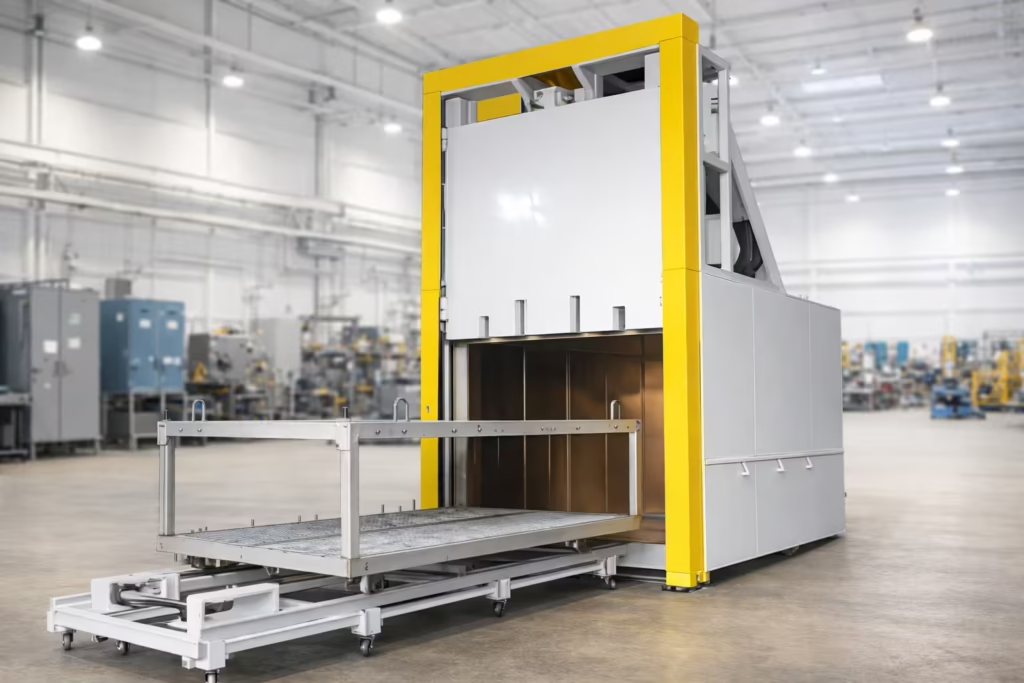
A strong-fit solution for code-oriented post weld heat treatment where controlled ramping, soaking, and stable heat distribution are central to the process. Suitable for welded components that require repeatable thermal cycles after fabrication.
Best for:pressure-containing parts, welded structures, controlled PWHT cycles
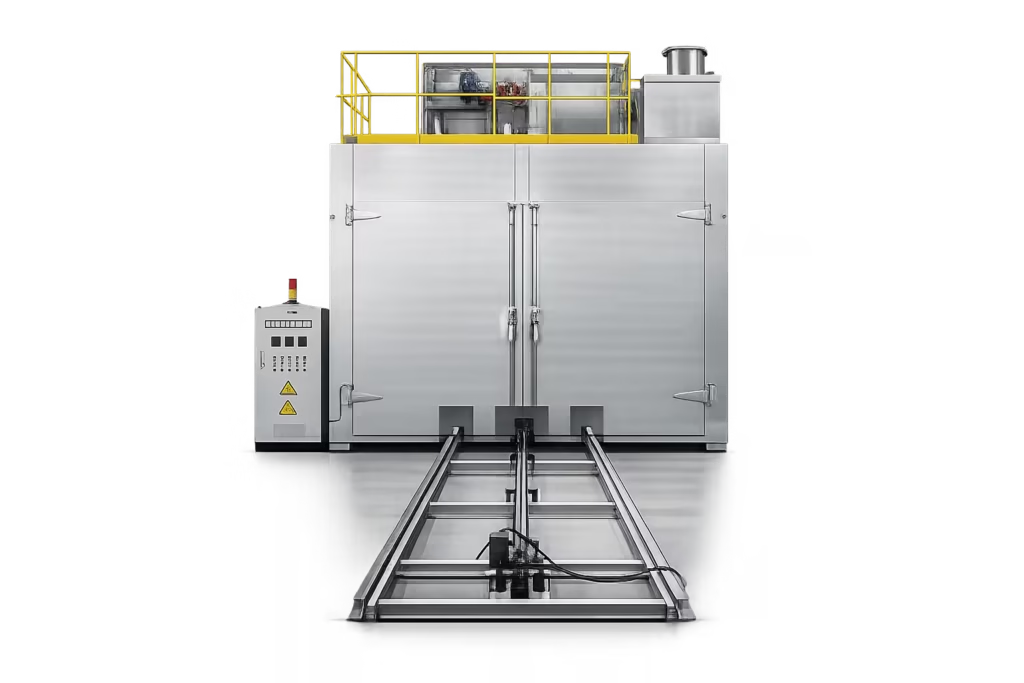
A practical direction for welded parts loaded on carts, rails, or heavy rolling fixtures. It supports easier handling for medium-to-large welded assemblies while keeping batch operation straightforward.
Best for:pipe skids, frames, vessel sections, cart-loaded fabrications
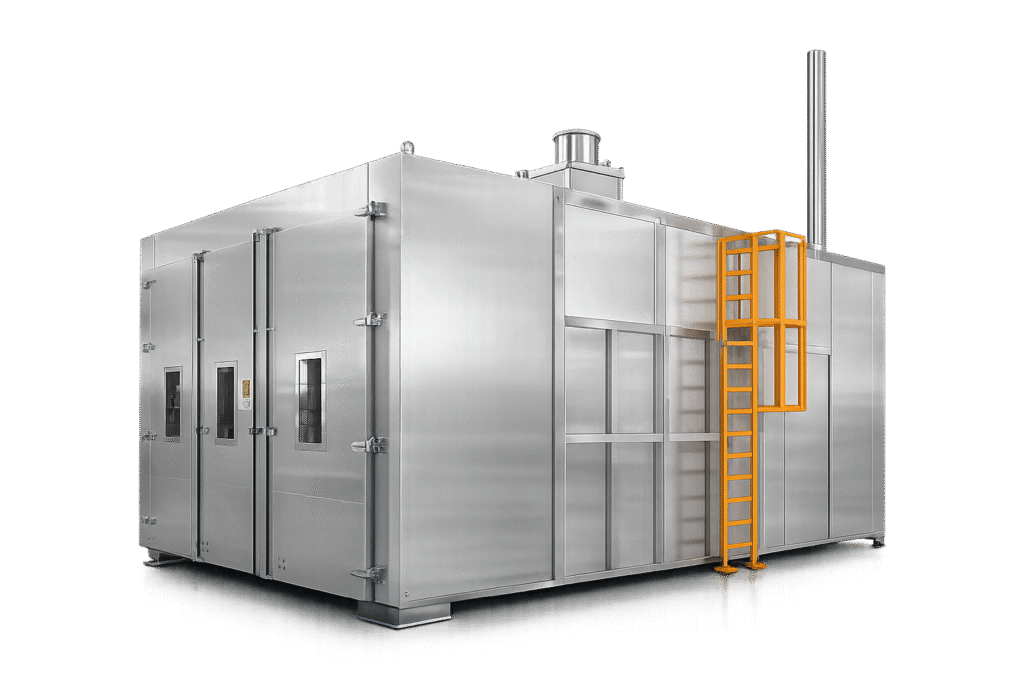
Designed for larger assemblies that need spacious access and flexible chamber sizing. It works well when welded fabrications are bulky, tall, or awkward to load through standard batch configurations.
Best for:structural weldments, large fabricated parts, oversized assemblies
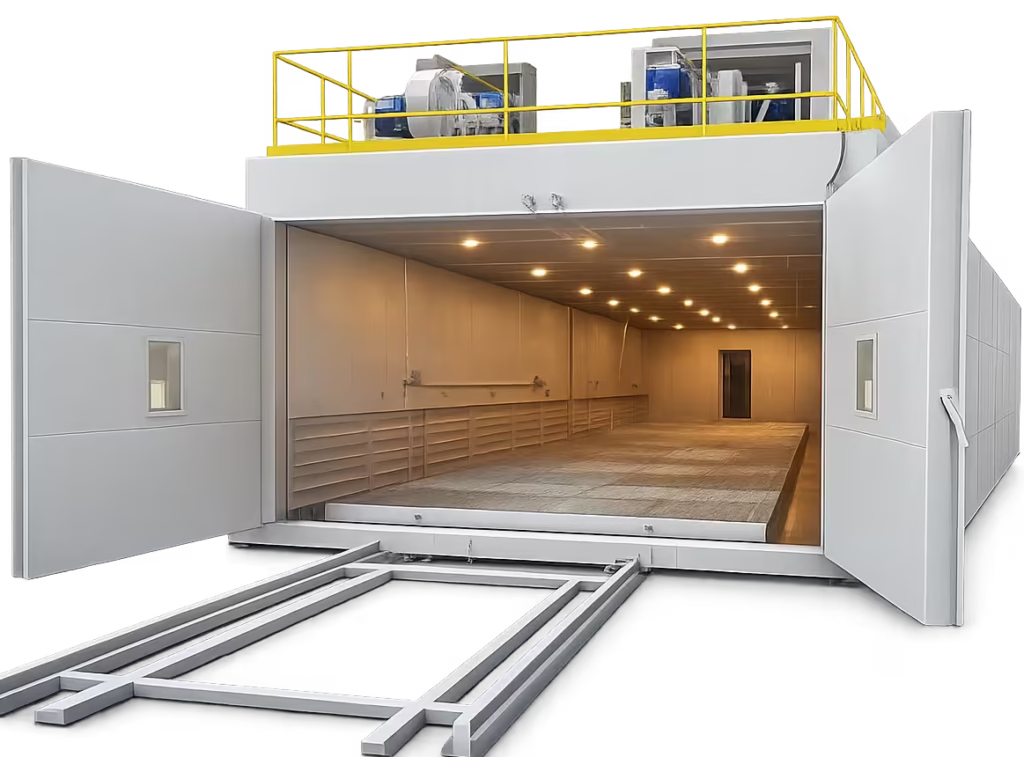
Built for oversized welded structures where chamber size, cart handling, and recovery performance matter. This direction is especially useful for energy equipment, large vessel sections, and heavy fabrication jobs.
Best for:oversized PWHT loads, long weldments, large industrial fabrications
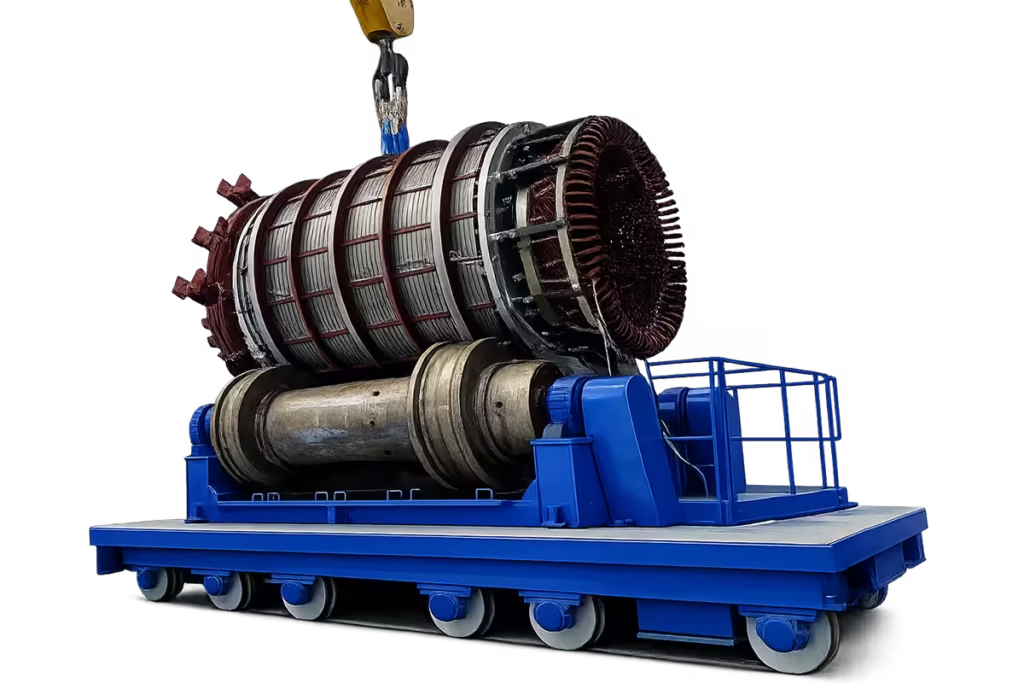
Recommended when load rating and structural robustness are key selection factors. It supports dense steel loads and rugged handling environments commonly seen in heavy fabrication shops.
Best for:high-mass weldments, dense steel structures, heavy shop handling
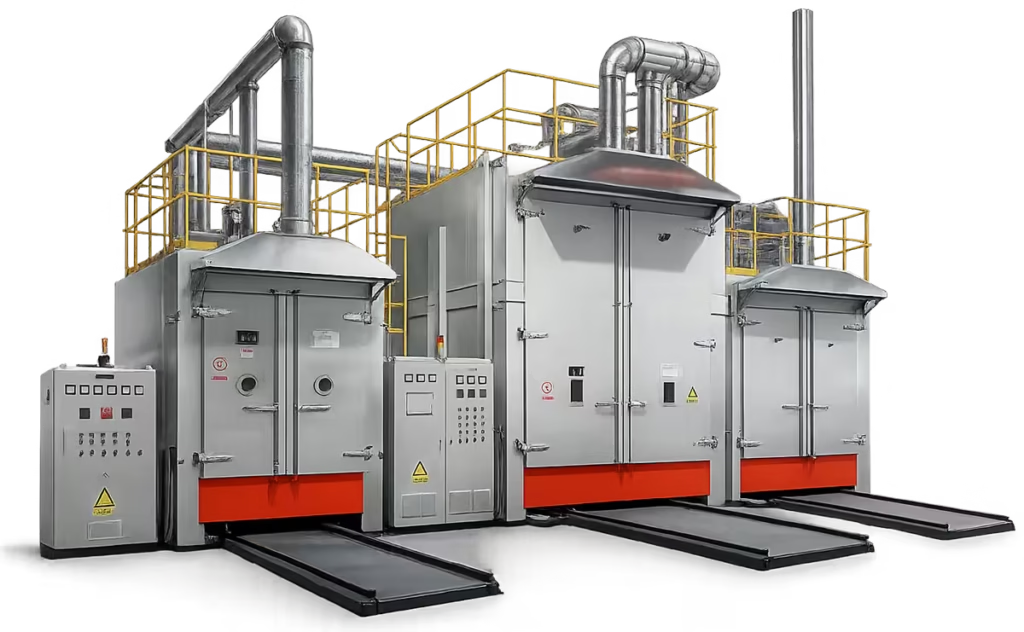
A flexible oven direction for repeat post weld heat treatment on smaller welded components and mixed production batches. Easy to configure for recipe-based operation and day-to-day fabrication workflows.
Best for:repeat batches, medium-size welded parts, general fabrication production
Support Before RFQ
PWHT Planning and Engineering Support
When post weld heat treatment affects dimensional stability, residual stress control, and fabrication quality, engineering support matters. ZonHoo helps align oven structure, airflow, controls, and chamber layout with the actual welded parts you need to process.
- PWHT process review based on part size and loading method
- Chamber sizing for welded assemblies, carts, or fixtures
- Ramp, soak, and control strategy discussion
- Airflow and temperature uniformity planning
- Recorder, alarms, and optional data logging support
- Custom configuration support for oversized or heavy welded parts
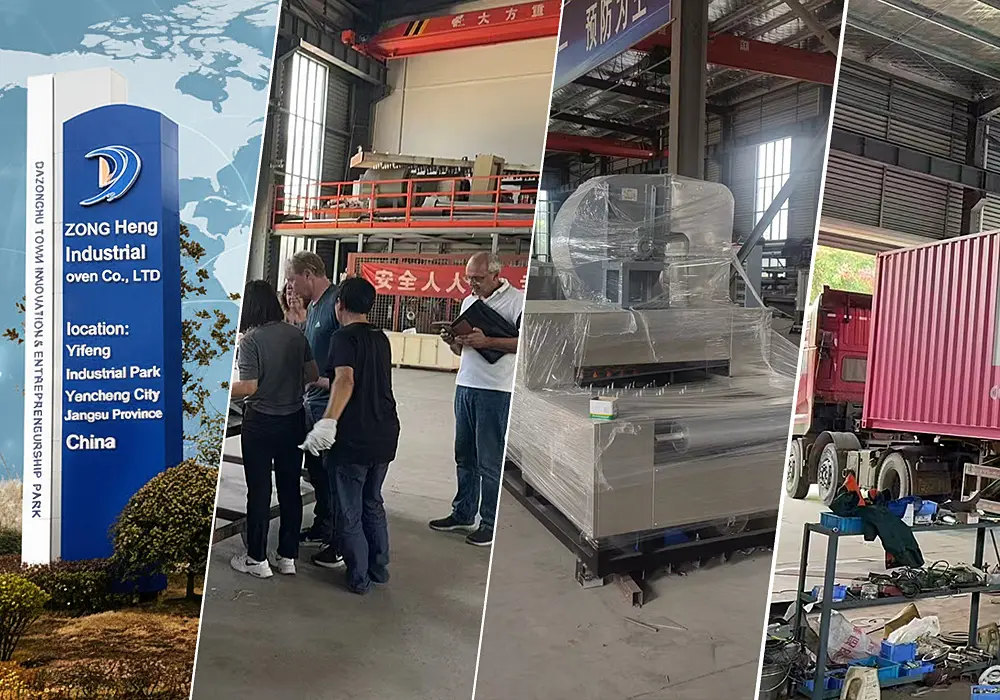
Test Your Process on Available Equipment
Frequently Asked Questions
Frequently Asked Questions About Post Weld Heat Treatment
What is post weld heat treatment in industrial fabrication?
Post weld heat treatment is a controlled heating and soaking process applied after welding to reduce residual stress, improve dimensional stability, and support fabrication requirements tied to the welded part and its service condition.
What type of oven is commonly used for post weld heat treatment?
That depends on part size, loading method, and production setup. Smaller welded parts may run in batch ovens, while larger fabrications often require truck-in, walk-in, or large truck-in oven configurations.
Can large welded structures be processed in a post weld heat treatment oven?
Yes. Large welded structures can be processed in walk-in, truck-in, or large truck-in oven systems when the chamber size, floor loading, cart design, and thermal circulation are engineered around the actual workpiece.
How do I choose between a truck-in oven and a walk-in oven for PWHT?
A truck-in oven is often preferred when rail or cart loading is the priority, while a walk-in oven is useful when operator access, flexible chamber space, or bulky assembly handling matters more.
Can ZonHoo customize a post weld heat treatment oven for heavy fabrication work?
Yes. ZonHoo can support custom chamber sizing, reinforced floors, control configuration, loading method planning, and other engineering adjustments based on welded part dimensions, load weight, and process requirements.
Tell Us About Your Post Weld Heat Treatment Process
To recommend a suitable oven direction for post weld heat treatment, share your welded part size, load weight, material, target temperature range, soak time, loading method, and whether you need recording, alarms, or special chamber dimensions. ZonHoo can help match your PWHT process with a more practical oven configuration.
What to Prepare
Welded part or assembly type, material grade, target PWHT temperature, soak time, load size, loading method, and any documentation or process control requirements.
What We Can Discuss
Oven direction, chamber size, loading layout, ramp and soak control, temperature uniformity targets, recorder or data logging needs, and documentation support for your PWHT process.