

Industrial Ovens for Chemical Manufacturing
Chemical manufacturing relies on industrial ovens for controlled drying, solvent removal, curing, and selected thermal treatment steps, where temperature stability, airflow control, and process safety are critical.
From powders and intermediates to resins, coated materials, drums, trays, and containers, the right oven helps improve product consistency, support material stability, and match process requirements with the appropriate heating, ventilation, and safety configuration.
ZonHoo provides industrial oven solutions for chemical manufacturers, helping define chamber size, heating method, airflow pattern, controls, and safety options according to your actual material form, load style, production rhythm, and plant requirements.
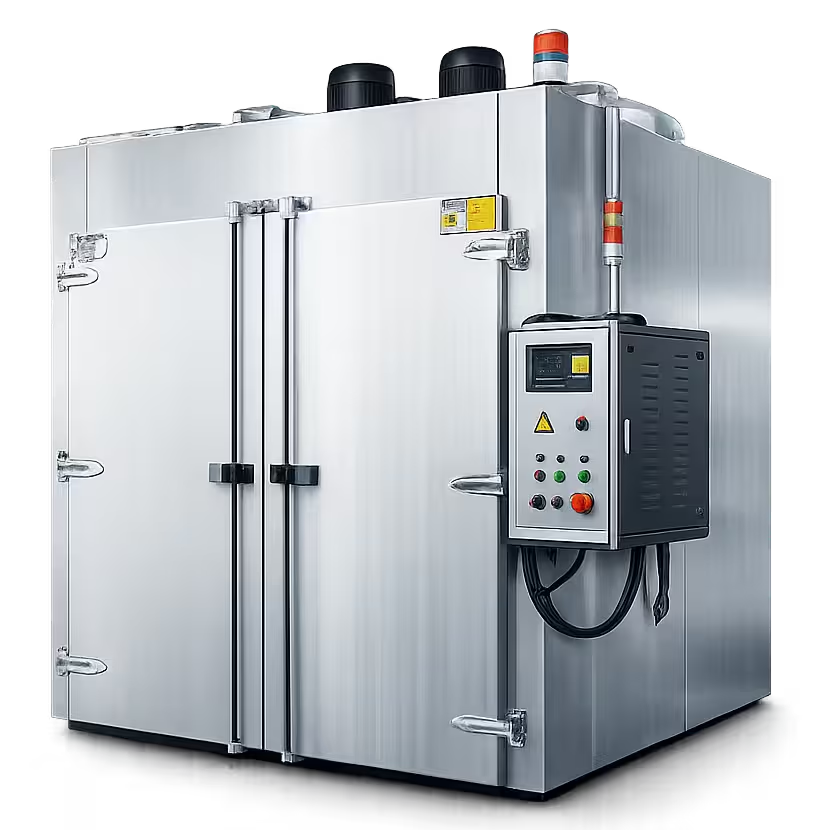
Industrial Electric Oven
For clean, controllable thermal processing, industrial electric ovens are widely used in chemical manufacturing for drying, curing, preheating, and general-purpose heating cycles. They are suitable where stable temperature control and repeatable batch processing are important.
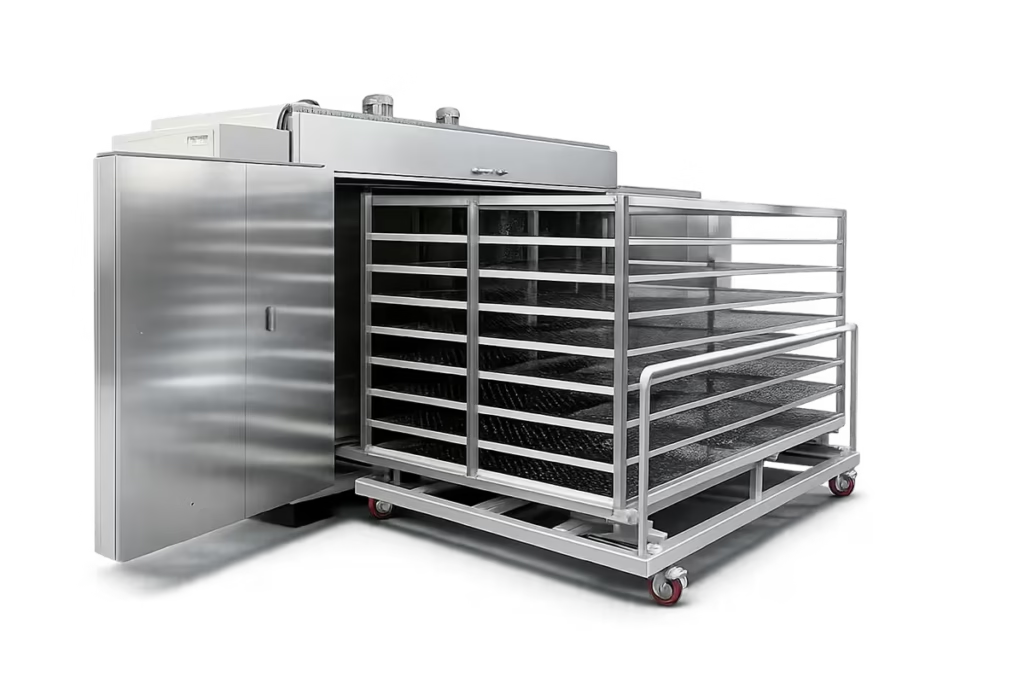
Industrial Batch Oven
Batch ovens are a practical choice for powders, granules, trays, and intermediate products processed in flexible lots. They support repeatable drying, solvent removal, and low-to-medium temperature thermal cycles with simple batch loading and changeover.
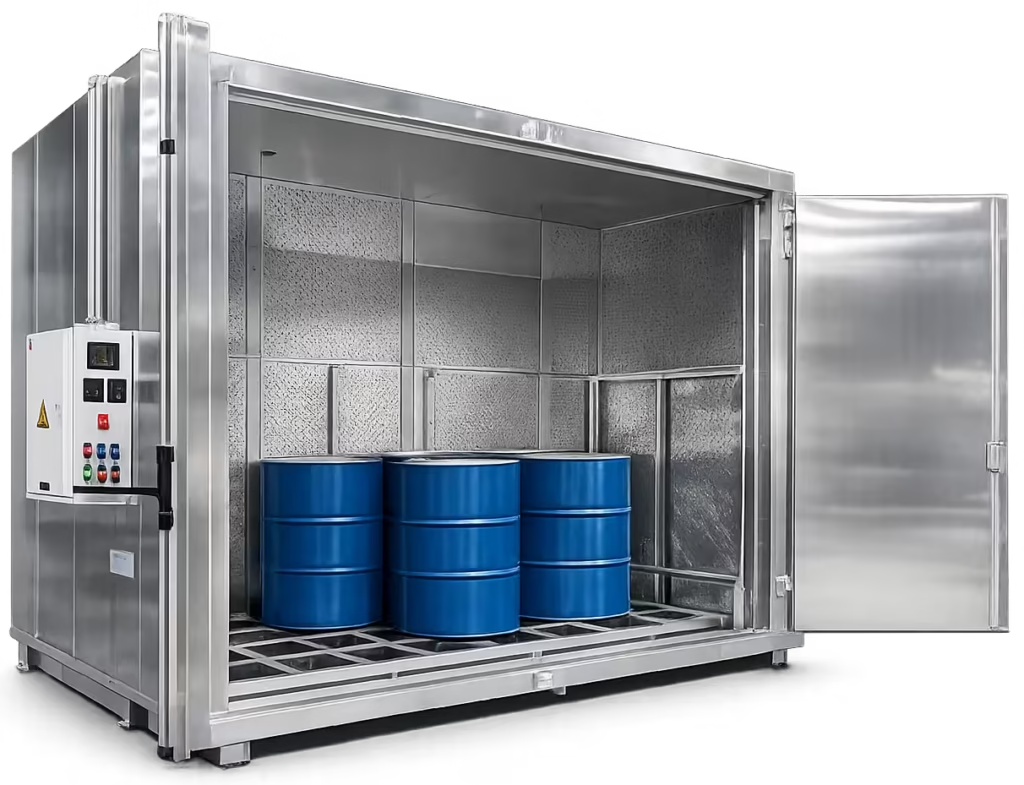
Drum Heating Ovens
For viscous raw materials stored in drums or pails, drum heating ovens help reduce viscosity, improve transfer or pumping, and prepare materials before mixing, filling, or downstream use. They are commonly used for container-based material warming.
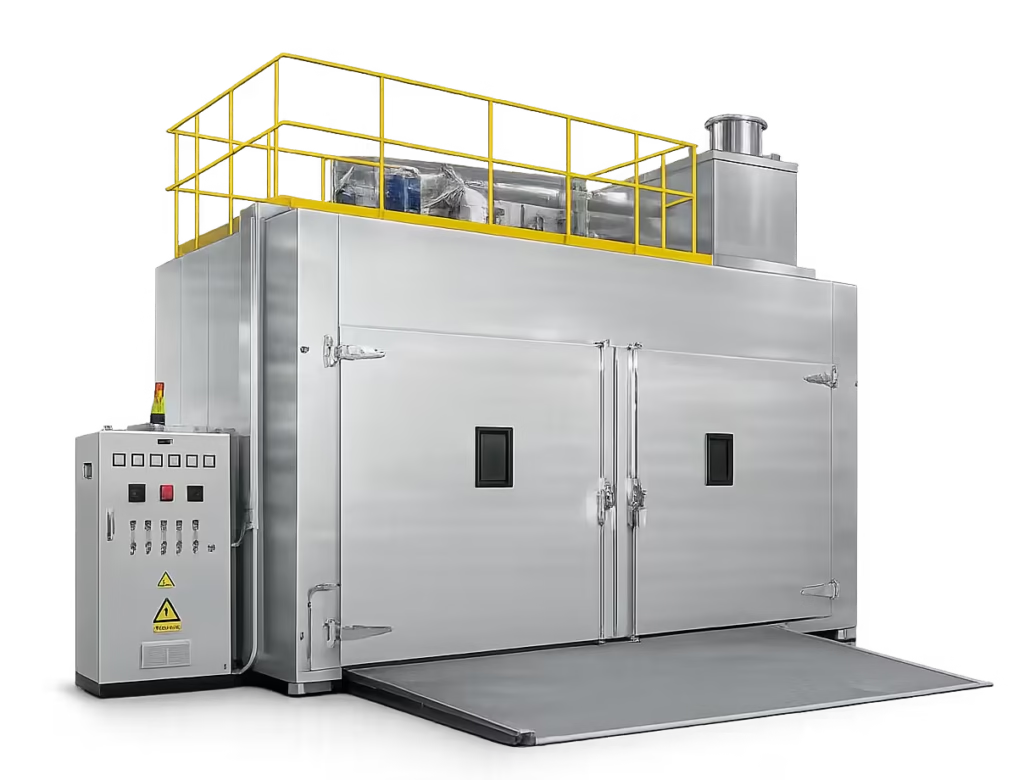
Walk-In Oven
When chemical production involves larger racks, carts, trays, drums, or bulk loads, walk-in ovens provide larger usable chamber space and easier loading access. They are suitable for staged batch processing where loading style and chamber access matter.
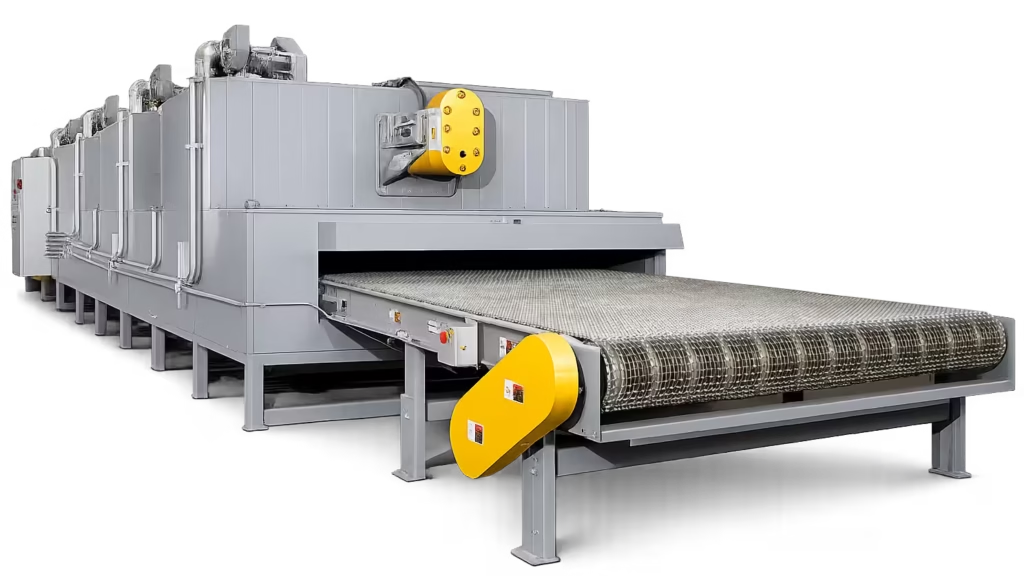
Industrial Conveyor Oven
For higher-volume chemical materials or coated products requiring continuous flow, conveyor ovens help improve throughput consistency and reduce manual handling between heating stages. They are often selected where stable production rhythm is required.
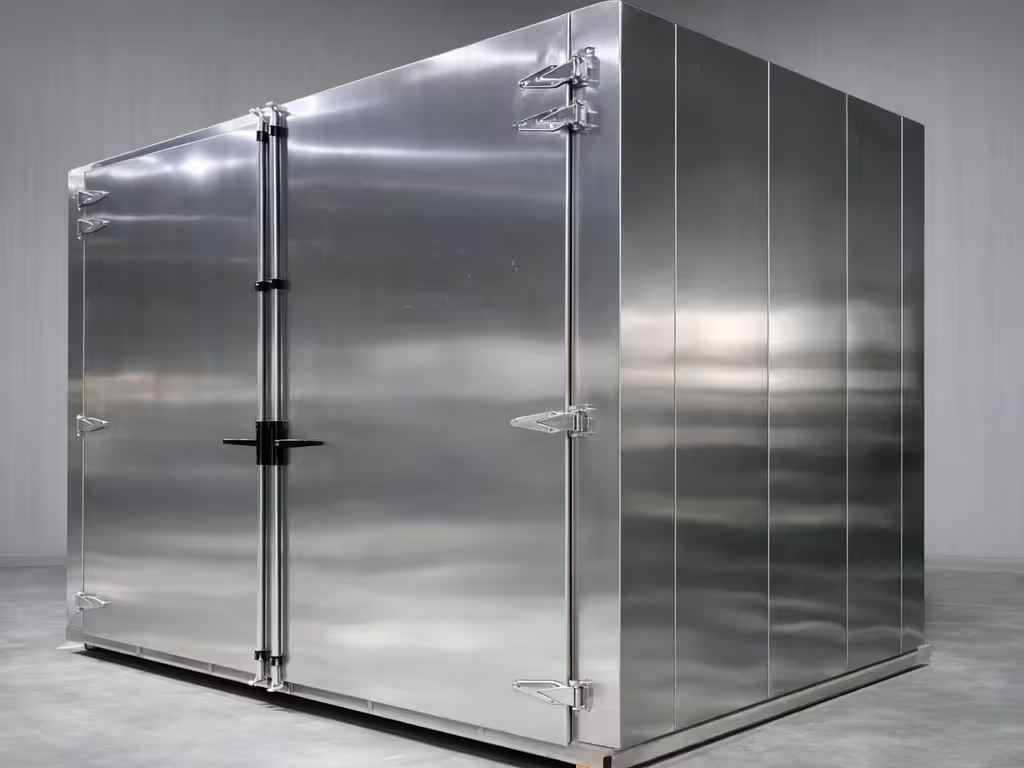
Explosion-Proof Curing Oven
When solvent-bearing materials or flammable vapors are involved, explosion-proof oven configurations support safer drying or curing. These systems can include ventilation, interlocks, and safety-focused control logic to match the actual process risk.
Chemical Drying & Solvent Removal
Many chemical materials require controlled drying to remove moisture, residual solvents, or volatile content before packaging, blending, coating, or downstream processing. Stable airflow and temperature control help reduce variation and support more repeatable results across batches.
Typical applications include powder drying, granule drying, raw material moisture removal, solvent evaporation from formulated products, and drying of chemical intermediates.
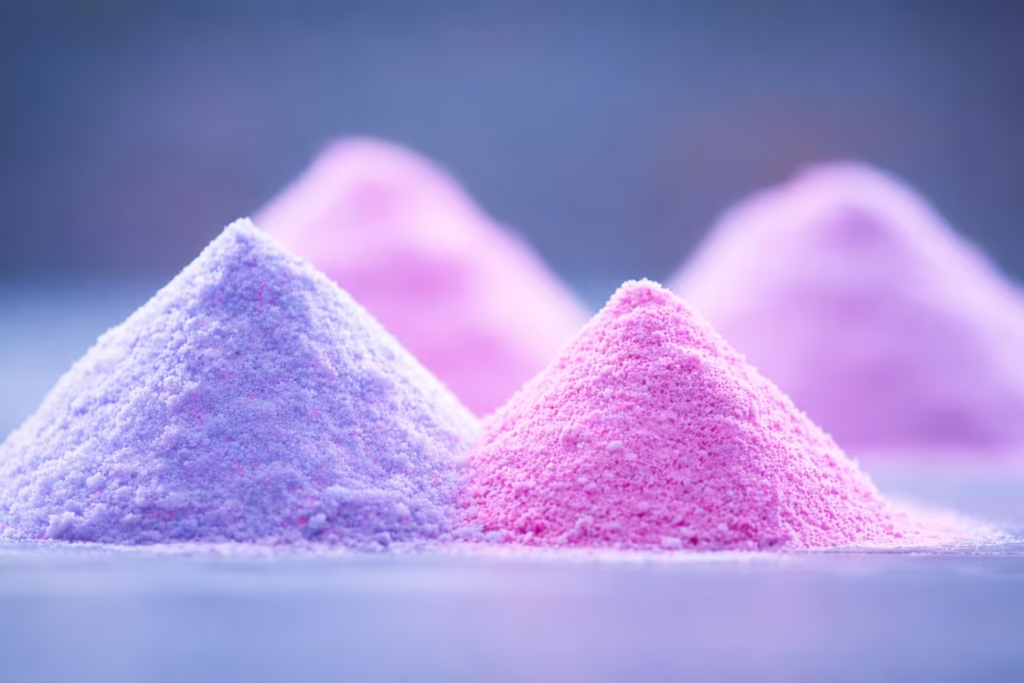
Typical processes: moisture removal, solvent evaporation, batch drying, low-temperature stabilization
Explore related solutions:
Resin, Adhesive & Functional Material Curing

Chemical production often includes thermally controlled curing or post-treatment for resins, adhesives, coated substrates, insulation materials, and other formulated materials. The right oven helps maintain stable cycle control, material consistency, and repeatable processing quality.
Typical applications include resin curing, adhesive-related thermal processing, coated material drying, polymer post-curing, and thermal stabilization of functional materials.
Typical processes: curing, post-curing, drying after coating, thermal stabilization
Explore related solutions:
Drum Heating, Container Warming & Safety-Critical Heating
Many chemical plants handle raw materials in drums, pails, trays, or containers, and some processes require controlled warming, viscosity reduction, or safety-focused heating for solvent-bearing materials. Oven selection should match the load style, ventilation demand, and required safety level.
Typical applications include drum heating before pumping, container warming before mixing or filling, safety-controlled drying of solvent-bearing materials, and selected protected-atmosphere heating processes.
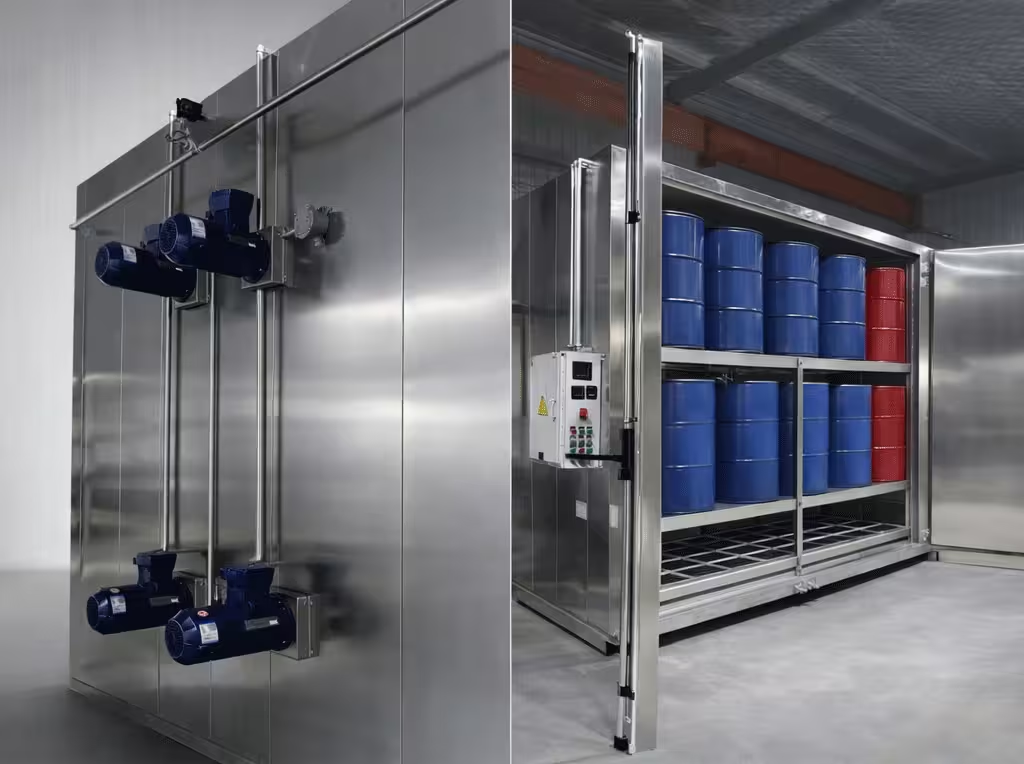
Typical processes: viscosity reduction, preheating, container warming, safety-controlled batch heating, protected thermal processing
Explore related solutions:
How to Match the Right Oven to Chemical Production
Selecting the right oven depends on material form, solvent risk, production volume, loading method, and process control requirements.
| Production need | Recommended oven |
|---|---|
| Flexible batch drying of powders, trays, or intermediates | Industrial Batch Oven |
| Large carts, racks, drums, or bulk loads | Walk-In Oven |
| Continuous drying or curing with higher throughput | Industrial Conveyor Oven |
| Warming viscous materials in drums or pails | Drum Heating Ovens |
| Solvent-bearing or flammable-vapor process | Explosion-Proof Curing Oven |
| Clean electric heating for stable general cycles | Industrial Electric Oven |
Related Solutions & Guides
- Controlled drying and solvent removal
- Stable temperature and airflow
- Batch or continuous material handling
- Tray, rack, drum, or trolley loading
- Ventilation and exhaust planning
- Explosion-proof safety options
- Inert atmosphere support (opt)
- PLC / HMI recipe control
Need help matching the right oven to your chemical process, material form, safety requirement, or production layout?