ZonHoo high temperature ovens are built for parts that live in the red zone – tool steels, castings, ceramics, and advanced materials that need stable performance above 400°C. From vacuum chambers to truck-in and cart-loaded designs, we help you lock in repeatable cycles, improve part-to-part uniformity, and protect your operators from extreme heat.
CE
ISO
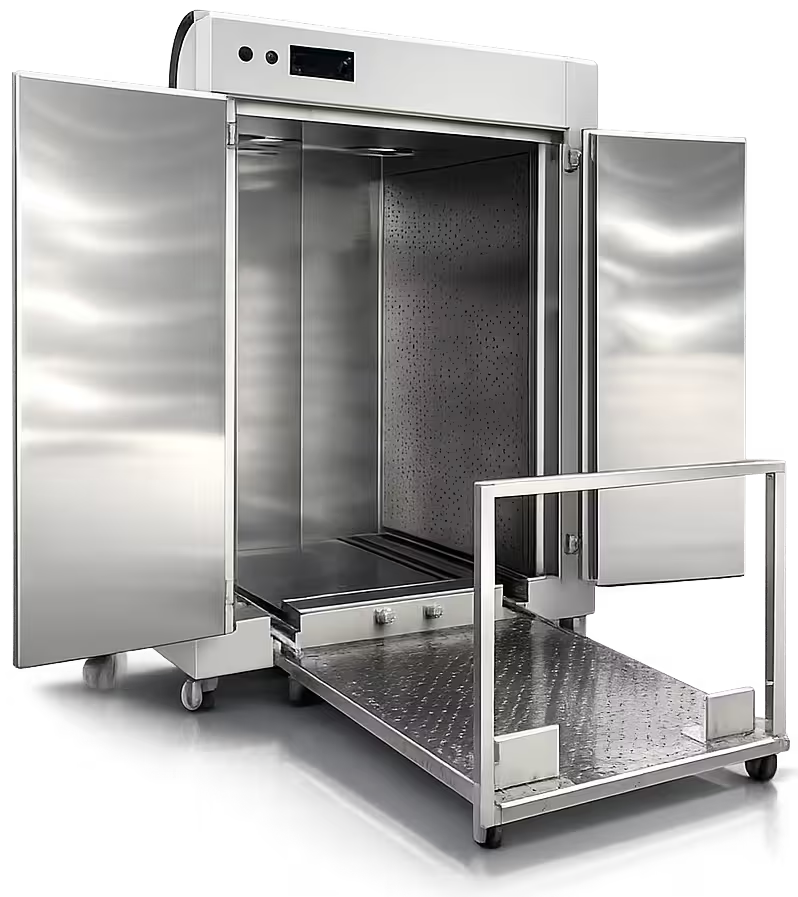
A ZonHoo high temperature oven is a purpose-built thermal processing system designed to run safely and efficiently at elevated temperatures, typically between 300 and 650°C. Compared with standard industrial ovens, our high temperature line uses reinforced insulation, heavy-duty construction, and carefully selected materials to withstand thermal shock, intense radiant heat, and long Soak times without compromising uniformity or safety:
Whether you need hardening, tempering, sintering, or high-temperature curing, ZonHoo high temperature ovens are sized and tuned to your exact parts and process.
High temp cart ovens are compact, cart-loaded designs for plants that need high temperatures in a smaller footprint. Operators load parts on shelves or fixtures and move the whole cart in one motion.
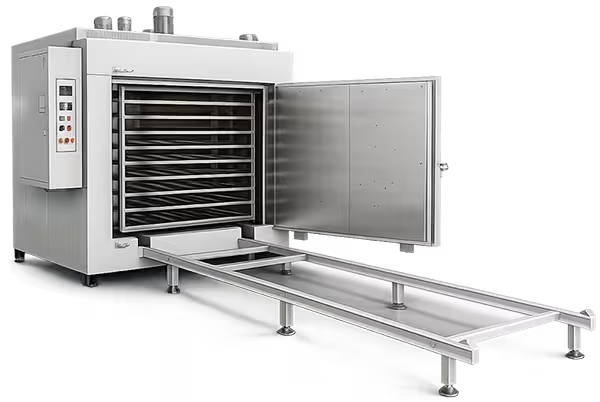
Truck-in high temperature ovens handle heavy loads on one or two wheeled carts. Your team can stage full racks outside the chamber and roll them in as a unit, which keeps changeovers fast and layouts consistent.
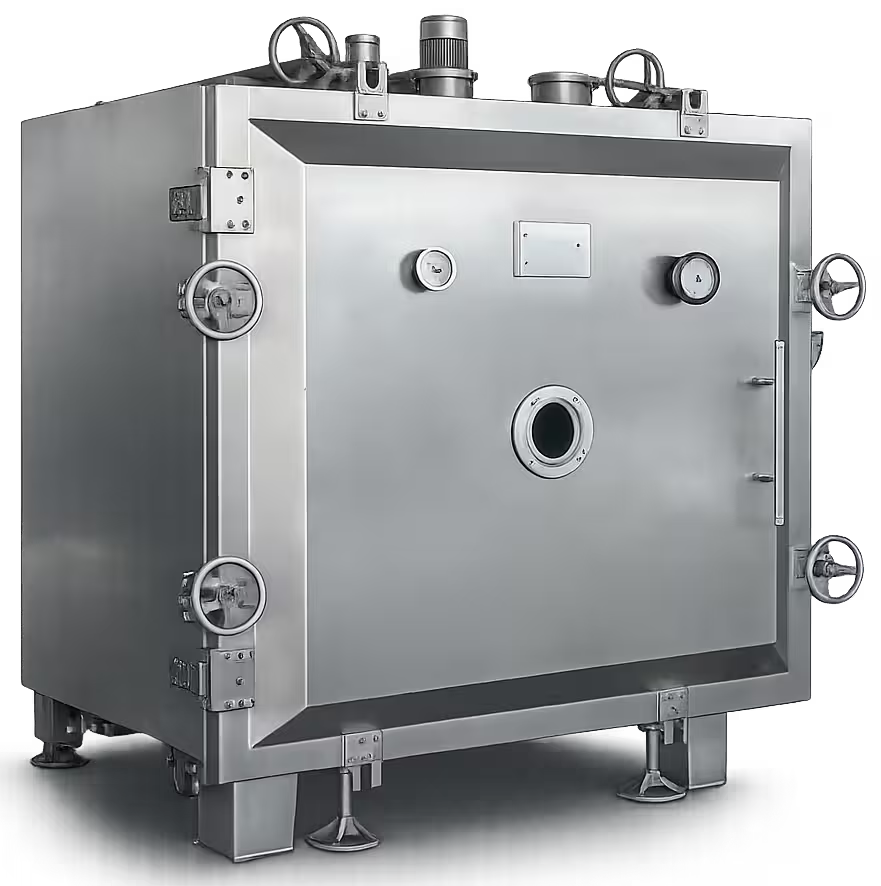
For processes that combine high temperature with low pressure or controlled atmosphere, our high temp vacuum ovens provide clean, repeatable results for high-value parts.
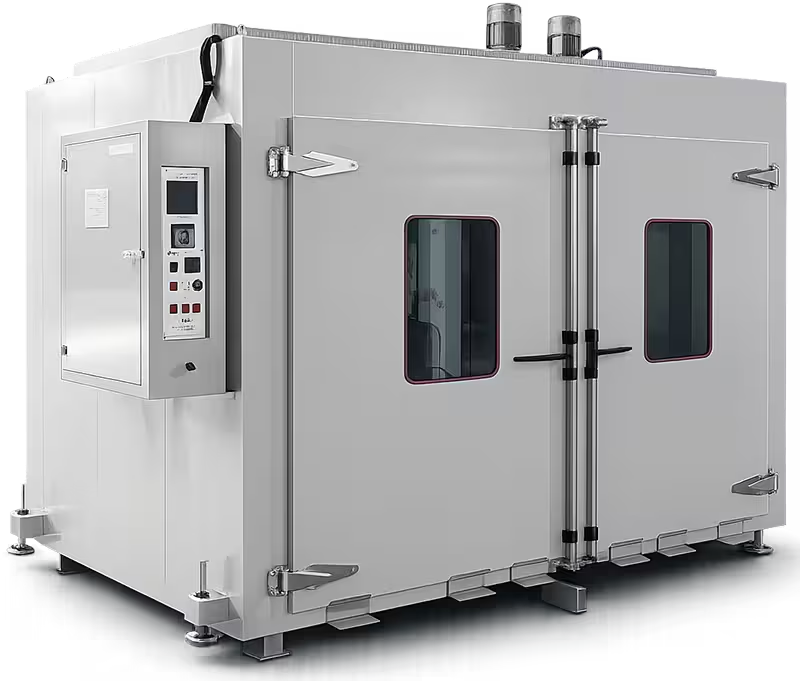
High-temp box ovens are simple, robust chambers for batch loads on racks, trays, or floor stands. They are the workhorse of many heat treat and production shops.
| Model | Typical Tmax (°C) | Load type | Best for | Typical parts & materials | Key advantages |
|---|---|---|---|---|---|
| High Temp Truck-In Oven | up to 550–600 °C | Single wheeled cart, shelf fixtures | Medium batches, frequent changeovers | Tools, jigs, small castings, R&D samples | Compact footprint, flexible shelving, easy loading |
| High Temp Cart Oven | up to 600 °C | One or two heavy carts on floor tracks | Large, heavy batches, repeat layouts | Castings, weldments, large fixtures, steel parts | Handles heavy loads, airflow tuned to truck layout |
| High Temp Vacuum Oven | up to 600–650 °C | Trays or racks inside sealed chamber | Clean, controlled atmosphere processes | Sensitive alloys, electronics, ceramics, powder parts | Low contamination, vacuum/inert gas options, precise control |
| High-Temp Box Oven | up to 500–600 °C | Racks, trays, or floor stands | General-purpose high-temp batch work | Mixed metal parts, tools, small assemblies | Simple, robust design, daily production workhorse |
All dimensions, power ratings and loading capacities shown are typical reference data. ZonHoo industrial ovens are highly customized systems – final usable workspace, external dimensions and connected load will be defined in your project-specific proposal.
Suitable Applications
ZonHoo high temperature ovens are used across a wide range of heat treatment and high-temperature processes. Below are some common examples – if you do not see your process here, our engineers can still help you evaluate it.
ZonHoo high temperature ovens are widely used in industries where parts must survive extreme conditions and still perform flawlessly.
For a full list of industries we serve, contact ZonHoo or visit our industry pages.
If your process needs temperatures above about 350–400°C, tight uniformity, or long soak times, a high temperature oven is usually the safer and more efficient choice. We’ll review your material, target temperature, cycle time, and quality requirements and then recommend whether you need a high temperature design.
Start from your process spec and the material supplier’s recommendations, then add a reasonable margin. For example, if your process runs at 550°C, we might design the oven for 600–650°C to give you flexibility and protect the components. Overspecifying temperature can add cost, so we help you find the right point.
High temperature ovens use thicker, higher-grade insulation and thermal breaks to keep shell temperatures under control and reduce heat loss. We also optimize airflow and control strategies so you reach temperature quickly without wasting energy in idle or partial-load operation.
Often yes, as long as the temperature range, cleanliness, and airflow requirements are compatible. Many customers run several recipes in one oven by using fixtures and programmable recipes. If your processes conflict, we may suggest separating them into two chambers or a custom multi-zone design.
We’ll ask for part drawings or photos, material and weight per batch, target temperature and tolerance, cycle time, available floor space, utilities, and any standards you must meet. The more detail you share, the faster we can recommend a suitable high temperature oven model and quote.
Need help? See Maintenance & Parts or Commitment-To-Safety.
Contact our sales and engineering professionals to clarify your requirements, get your questions answered, and learn about our oven solutions! Just send us a message or give us a call at your convenience
Need Your Equipment Fast? Contact Our Engineer Now!
The faster you contact us, the faster your equipment is delivered. Don’t wait—act now!

After the form is submitted, a thank-you page will pop up.