

Industrial Ovens for Annealing
Annealing is a controlled heat treatment process used to reduce internal stress, improve ductility, stabilize material structure, and prepare parts for downstream forming, machining, welding, or final use. ZonHoo provides industrial oven solutions for annealing metal parts, welded assemblies, castings, wire, tubes, and other production workloads with controlled heating, soak consistency, and process-oriented oven configuration.
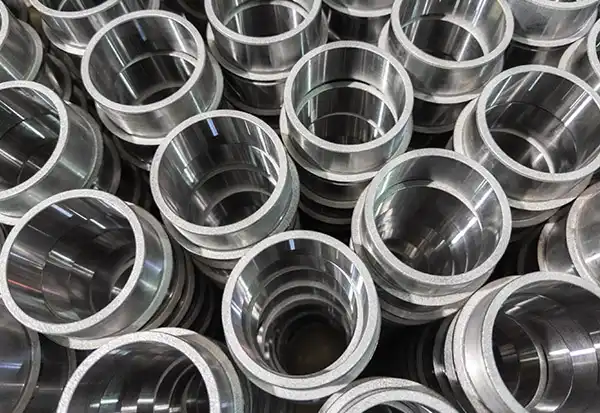
Why This Process Matters
Why Annealing Requires Controlled Thermal Processing
Reliable annealing results depend on more than reaching a target temperature. The oven must manage heating rate, soak stability, load uniformity, and cooling behavior so the material achieves the intended structural change without excessive oxidation, distortion, or inconsistent mechanical properties.
Stress Relief and Structural Stability
Annealing helps reduce internal stress created by welding, forming, machining, or casting and supports more stable downstream performance.
Improved Ductility and Workability
For many metal parts, annealing improves ductility and makes later bending, forming, or machining operations more predictable.
Controlled Heating Across the Workload
Large batches, dense loads, and varied part geometry require engineered airflow and chamber design to reduce temperature variation.
Surface and Process Quality
When oxidation, discoloration, or dimensional drift matters, process control, atmosphere options, and cycle repeatability become critical.
Typical Applications
Where Annealing Is Commonly Used
Annealing is widely used across metalworking and heat treatment operations where material stress reduction, improved formability, or structural stabilization is required before downstream processing or final use.
Welded Assemblies and Fabrications
Annealing is often used to reduce internal stress in welded structures and fabricated metal parts before further machining, finishing, or service use.
Castings and Forgings
Metal castings and forgings may require annealing to improve machinability, reduce residual stress, and stabilize the material before secondary operations.
Wire, Rod, Tube, and Strip Products
Annealing supports ductility recovery and structure control in metal products that undergo drawing, bending, or other deformation processes.
Stampings and Formed Parts
Annealing helps restore workability in stamped or formed components and can improve consistency before additional shaping or assembly.
Fasteners, Springs, and Metal Hardware
Small production parts often require controlled thermal treatment to improve processability, reduce brittleness, or prepare for later manufacturing steps.
Precision Metal Components
For parts with tighter dimensional or surface requirements, annealing must be matched to material sensitivity, load density, and finish expectations.
Selection Guidance
How to Match the Right Oven Direction to Annealing
Different annealing applications call for different oven configurations. The right oven direction depends on part size, batch format, oxidation sensitivity, loading method, and production rhythm. Use the table below as a process-oriented selection guide.
| Process Need | Typical Requirement | Recommended Oven Direction |
|---|---|---|
| Flexible batch annealing for small to medium parts | Repeatable cycles, easy recipe changes, stable soak control | Post-Curing Oven Batch Curing Oven Industrial Batch Oven |
| Large welded assemblies or fabricated structures | Stress reduction with easier loading and high batch mass handling | Forced Convection Curing Oven Industrial Electric Oven |
| Oxidation-sensitive parts or cleaner surface requirements | Reduced scaling, lower discoloration, cleaner process environment | Trolley Type Curing Oven Truck-In Oven |
| Atmosphere-sensitive metal components | Better surface protection with controlled gas environment | Walk-In Oven Large Truck-In Oven Large Convection Oven |
| Continuous production of wire, strip, or small repetitive parts | Stable throughput and repeatable production rhythm | Heavy-Duty Oven Large Truck-In Oven |
| Mixed product sizes with changing process needs | Flexible chamber design and adaptable future use | Wide/Deep Oven Custom Batch Oven |
| Heavy dense loads requiring deeper heat penetration | Improved thermal consistency across the workload | Industrial Conveyor Oven Large Conveyor Oven Custom Continuous Oven |
| Large parts with handling constraints or trolley-based loading | Better workflow, easier loading access, safer material movement | Infrared Conveyor Oven |
EQUIPMENT DIRECTION
Recommended ZonHoo Oven Solutions for Annealing
Annealing process requirements vary by part size, material type, oxidation risk, load density, and production flow. The recommended oven direction below helps align those process needs with the most practical equipment path.
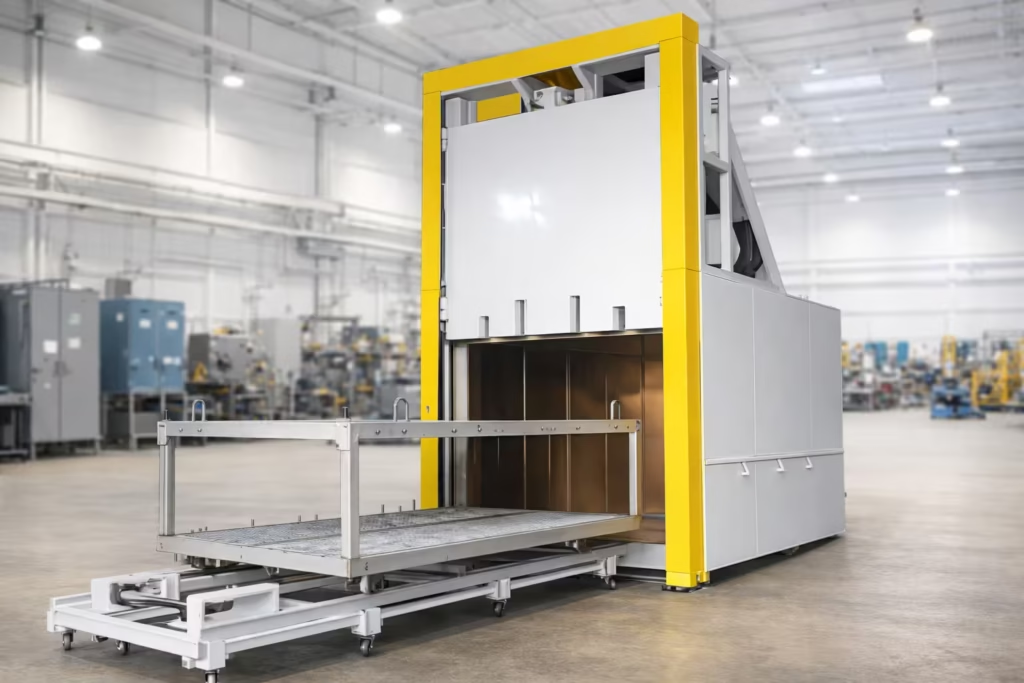
A dedicated annealing oven is ideal for controlled batch processing where stable temperature management, repeatable soak time, and process-specific configuration are priorities. It fits manufacturers that run annealing as a regular production step and need consistent results across changing workloads.
Best for:routine batch annealing, stress relief work, flexible production mixes
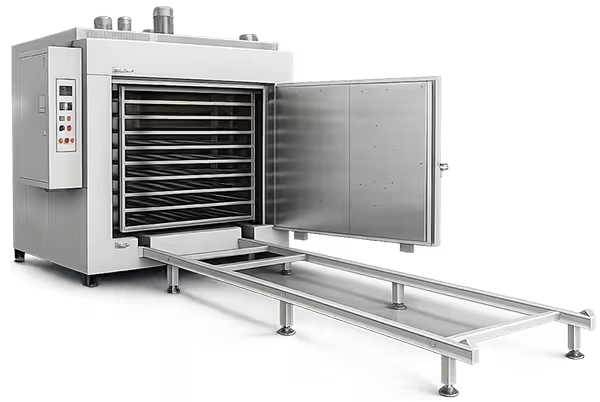
Truck-in ovens are well suited for heavy fabrications, large weldments, racks, or bulky metal parts that need easier loading and unloading. They help reduce handling difficulty while supporting large batch mass and stable recovery after door opening.
Best for:large structures, heavy loads, trolley-based handling
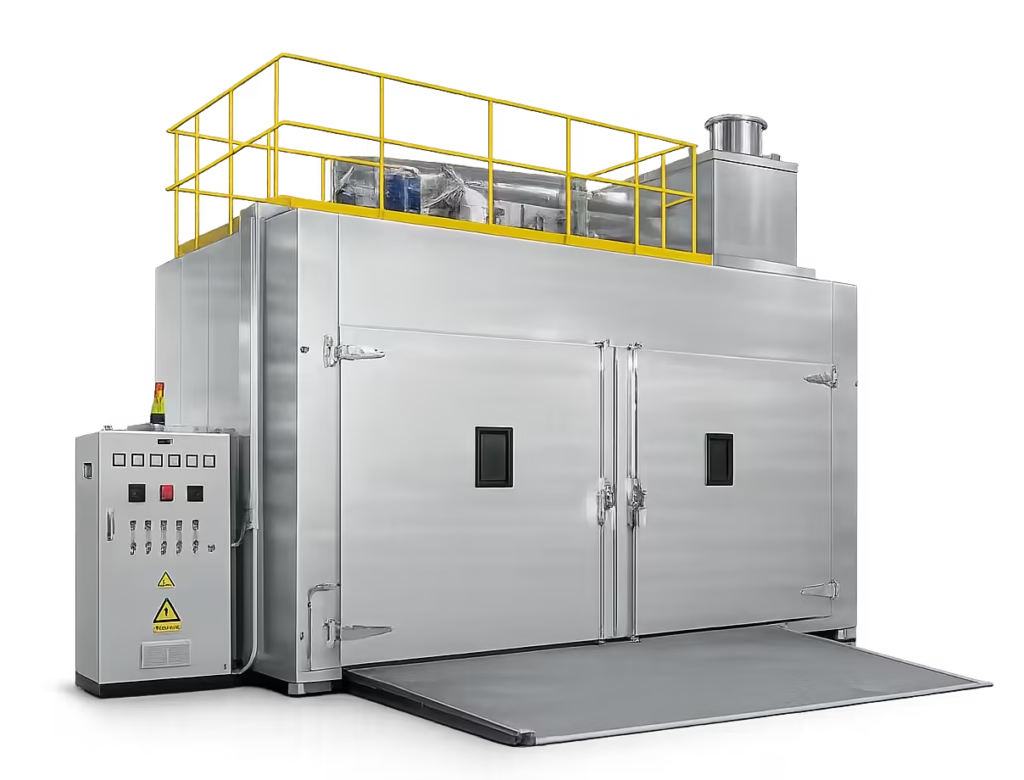
A walk-in oven offers larger chamber access for oversized parts or flexible rack loading. It works well when operators need easier entry, varied batch arrangement, and more room for awkward or high-volume workloads.
Best for:large chamber access, mixed-size parts, flexible batch loading
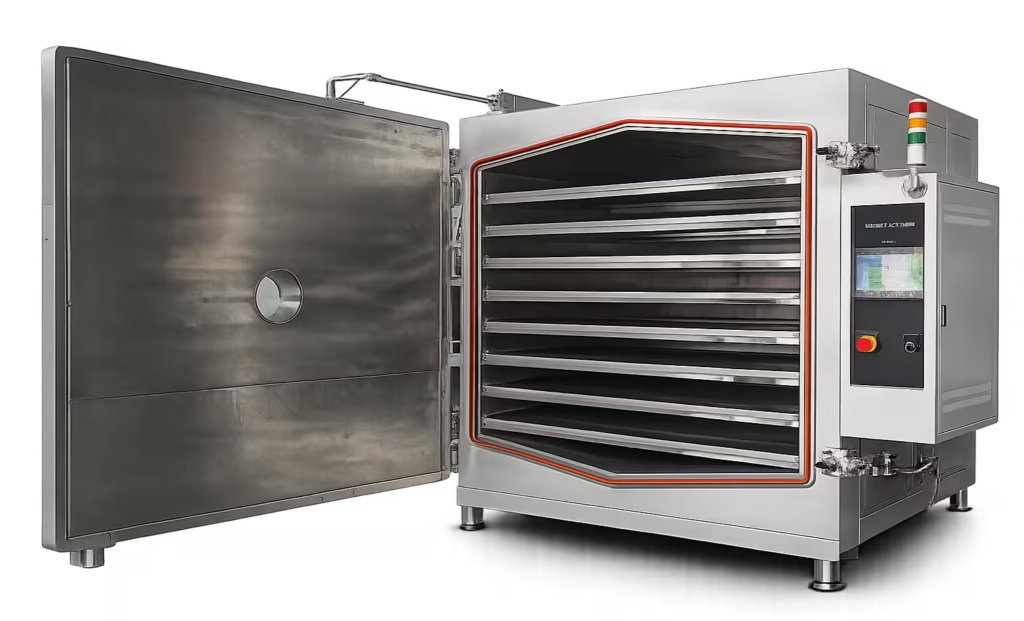
For oxidation-sensitive applications, vacuum heat treat ovens provide a cleaner annealing environment with reduced scaling and improved surface condition. This option is often considered for higher-value parts, stainless materials, and processes with tighter surface expectations.
Best for:cleaner annealing, oxidation-sensitive parts, higher surface requirements
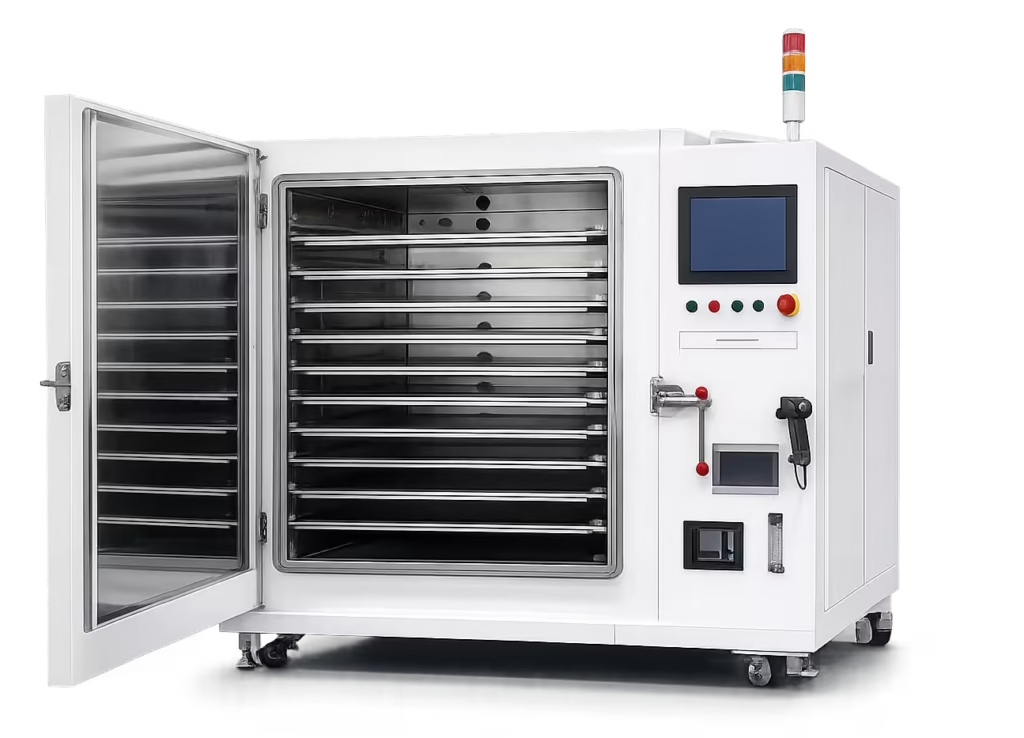
When atmosphere protection is needed without going fully into vacuum processing, inert gas ovens can help reduce oxidation and improve process control. They are a practical direction for selected materials and finish-sensitive annealing tasks.
Best for:protective atmosphere processing, reduced oxidation, controlled surface quality
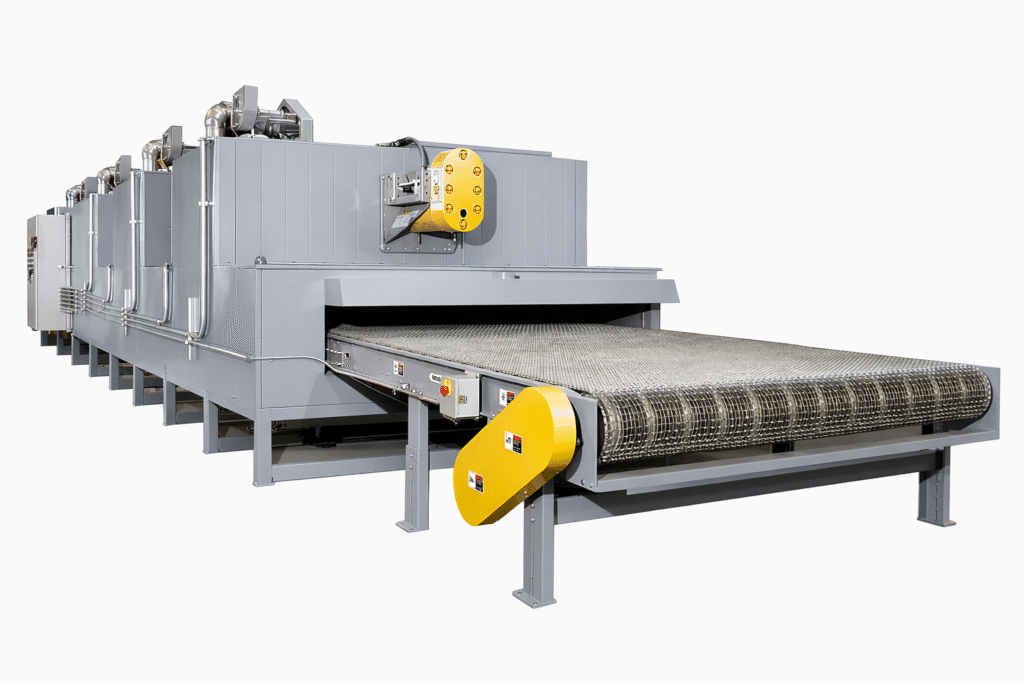
For repetitive, higher-volume annealing operations, an industrial conveyor oven supports continuous production flow and more stable takt-based output. It is best matched to standardized part geometry and steady manufacturing rhythm.
Best for:continuous production, stable throughput, repeatable line operation
Support Before RFQ
Process Validation and Engineering Support
If your annealing process involves uncertain load behavior, oxidation risk, large part handling, or evolving production needs, we can help define the right oven direction before quotation. Our team supports application review, chamber planning, loading logic, and process-oriented equipment recommendations.
- Process requirement review
- Part size and batch load evaluation
- Heating profile and soak analysis
- Oxidation and atmosphere consideration
- Chamber sizing and loading method guidance
- Control, data logging, and documentation discussion
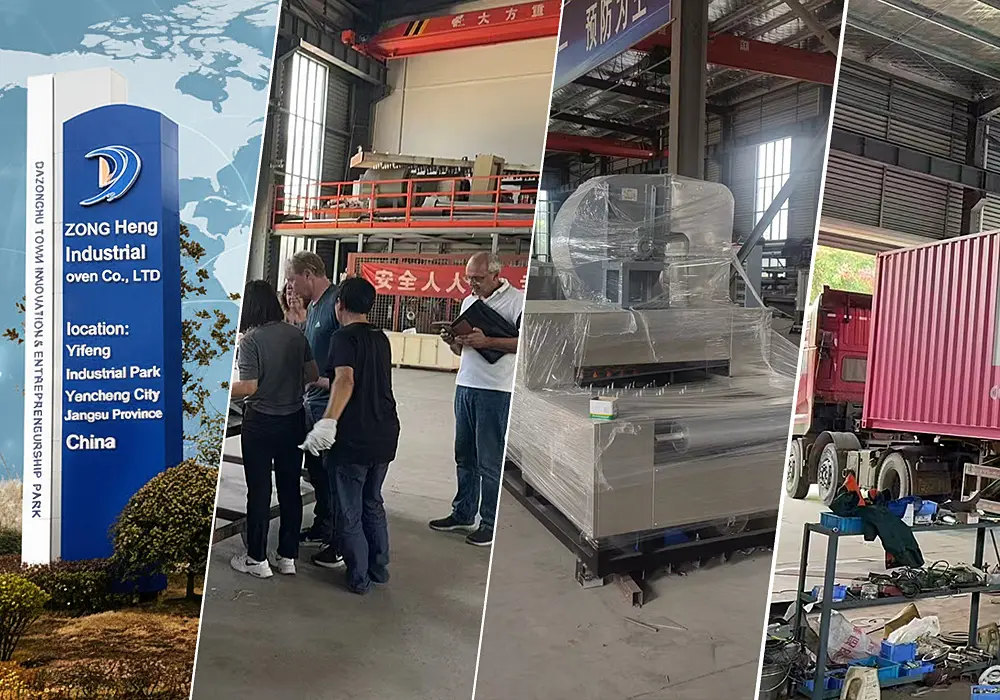
Test Your Process on Available Equipment
Frequently Asked Questions
Frequently Asked Questions About Annealing
What is the main purpose of annealing in industrial production?
Annealing is used to reduce internal stress, improve ductility, stabilize material structure, and prepare parts for downstream operations such as forming, machining, welding, or finishing.
What type of oven is usually used for annealing?
That depends on part size, surface sensitivity, and production flow. Common options include annealing ovens, batch ovens, truck-in ovens, walk-in ovens, vacuum heat treat ovens, inert gas ovens, and conveyor ovens.
When should I choose a vacuum oven for annealing?
A vacuum oven is usually chosen when oxidation control, cleaner surface condition, or more protected processing is important for the material or final part quality.
How do I choose between batch and continuous annealing equipment?
Batch systems are better for mixed production, changing recipes, and varied part loads. Continuous systems are better for stable, repetitive, higher-volume production with consistent part flow.
Is annealing the same as aging treatment?
No. Annealing is generally used for stress relief, ductility improvement, and structural stabilization, while aging treatment is usually associated with property development after prior heat treatment steps. They should be treated as separate process pages.
Tell Us About Your Annealing Process
Tell us your part size, material, loading method, temperature range, oxidation concern, and production target. Our engineering team will help map your annealing process to a suitable oven direction.
What to Prepare
Part dimensions, batch size, load type, temperature range, soak time, oxidation sensitivity, and throughput expectations.
What We Can Discuss
Annealing oven direction, chamber sizing, loading method, atmosphere needs, control level, and documentation support for sourcing decisions.