

Industrial Ovens for Heat Assembly
Heat assembly requires controlled heating before fit-up, insertion, bonding, sealing, or final stabilization. ZonHoo designs industrial ovens for repeatable part expansion, gentle thermal conditioning, and stable batch or inline processing—helping manufacturers reduce assembly force, protect sensitive materials, and improve consistency across metal, electrical, polymer, and mixed-material production.
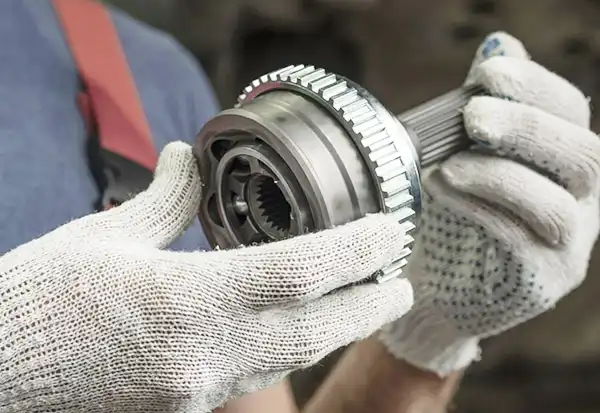
Why This Process Matters
Why Heat Assembly Requires Controlled Thermal Processing
Heat assembly depends on more than temperature alone. Part geometry, mass, material mix, transfer time, and allowable temperature window all influence assembly quality. A controlled oven process helps manufacturers achieve predictable expansion, consistent fit, and safer handling without overheating coatings, seals, insulation, adhesives, or precision-machined surfaces.
In many manufacturing lines, heat assembly is not just about making parts hot. It is about reaching the right temperature window at the right time so components can be assembled more smoothly, with less damage risk and better repeatability. From shrink-fit metal parts to adhesive-assisted subassemblies and large mechanical modules, controlled oven heating helps standardize assembly quality and throughput.
More Repeatable Fit-Up and Insertion
Controlled heating helps parts reach a stable and repeatable assembly temperature, reducing variation during press-fit, shrink-fit, or fixture-based joining.
Lower Assembly Force and Reduced Damage Risk
A properly managed heat assembly process can reduce excessive insertion force, helping protect edges, surfaces, housings, and sensitive components during assembly.
Better Process Stability Across Part Variations
When part mass, wall thickness, or loading changes, a controlled oven process helps maintain more predictable heating behavior and more consistent assembly results.
Stronger Production Control and Traceability
Recipe control, alarms, and optional data logging make heat assembly easier to standardize across operators, shifts, and production lines.
Typical Applications
Where Heat Assembly Is Commonly Used
From precision metal components to large mechanical modules, heat assembly is used wherever controlled heating improves fit, reduces handling stress, or supports more stable downstream assembly performance.
Bearings, Bushings, Gears, and Hubs
Common in mechanical assembly where controlled heating helps support easier fit-up, shaft installation, and shrink-fit operations.
Motor, Stator, and Rotor Components
Used when electrical or rotating assemblies require controlled preheating before insertion, positioning, or final fit-up.
Pumps, Valves, Seals, and Housings
Applied where components need stable thermal conditioning before assembly to improve seating, alignment, or installation consistency.
Electronics and Electrical Assemblies
Useful for lower-temperature heat assembly involving insulated components, encapsulated parts, connector assemblies, or temperature-sensitive materials.
Plastic, Rubber, and Composite Subassemblies
Controlled heating can support material flexibility, adhesive-assisted joining, or moisture-sensitive assembly preparation.
Large Fabricated Parts and Mechanical Modules
For oversized housings, frames, or fixture-loaded assemblies, controlled oven heating helps improve process repeatability before final integration.
Selection Guidance
How to Match the Right Oven Direction to Heat Assembly
Different post-curing applications call for different oven configurations. The right oven direction depends on part size, load format, throughput, cleanliness requirements, and the level of control needed for stable thermal processing.
| Process Need | Typical Requirement | Recommended Oven Direction |
|---|---|---|
| Small precision parts before press-fit or shrink-fit | Repeatable bulk heating, tight control, fast batch turnover | Industrial Electric Oven |
| Bearings, sleeves, hubs, and gears in trays or baskets | Uniform soak, operator-friendly loading, stable cycle repeatability | Batch Baking Oven |
| Adhesive-assisted assembly or seal seating | Lower-temperature airflow, gentle heating, material-sensitive control | Hot Air Circulation Dryer |
| Large housings, frames, or rack-loaded subassemblies | Cart loading, low-floor access, room for fixtures or racks | Walk-In Oven |
| Inline heat assembly before the next station | Matched takt time, continuous flow, reduced manual transfer | Industrial Conveyor Oven |
| Parts requiring controlled preheating before assembly | Focused thermal preparation before fit-up or joining | Preheating Oven |
| Heavy or oversized assemblies with large thermal mass | Larger chamber volume, stable heating under load, easier handling | Truck-In Oven |
| Mixed-SKU production with recipe changes | Flexible batch control, ramp/soak adjustment, traceability support | Industrial Electric Oven |
EQUIPMENT DIRECTION
Recommended ZonHoo Oven Solutions for Heat Assembly
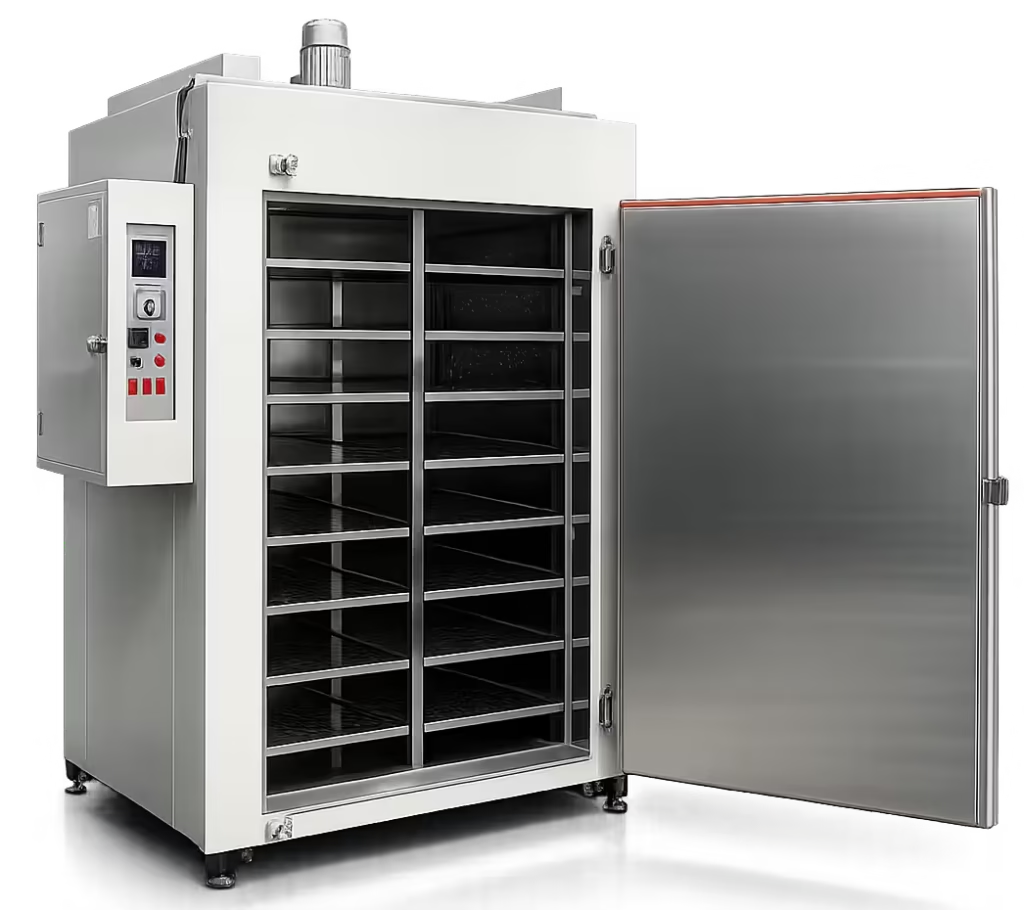
Used when parts need controlled temperature preparation before insertion, fit-up, or thermal joining. A practical choice for assembly lines that require stable preheat without unnecessary process complexity.
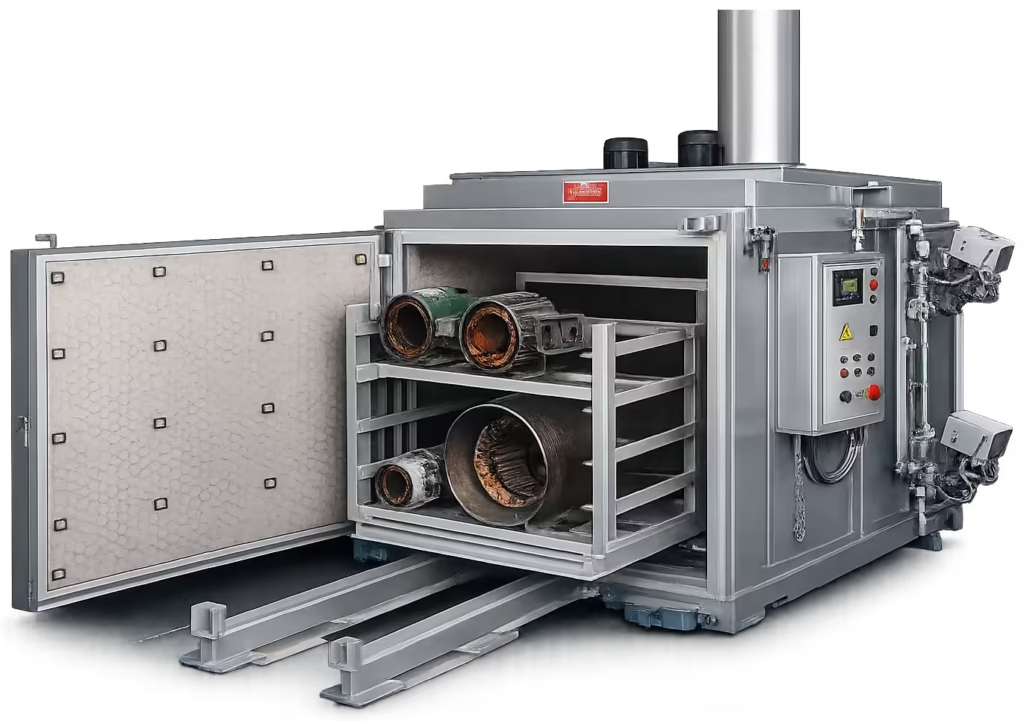
Used when parts need controlled temperature preparation before insertion, fit-up, or thermal joining. A practical choice for assembly lines that require stable preheat without unnecessary process complexity.
Best for:Small precision parts, varied batches, tray loading, and controlled shelf processing
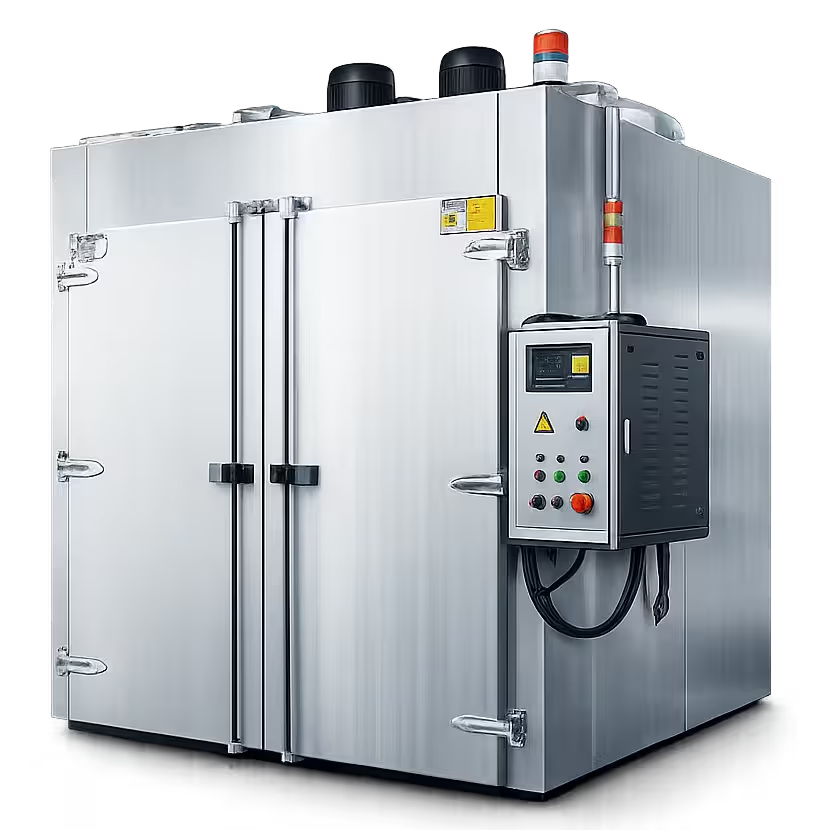
A flexible solution for general heat assembly work. Suitable for repeatable batch heating, recipe control, and clean electric operation across metal, electrical, and mixed-material production.
Best for:Large assemblies, carts, fixtures, and oversized bonded products
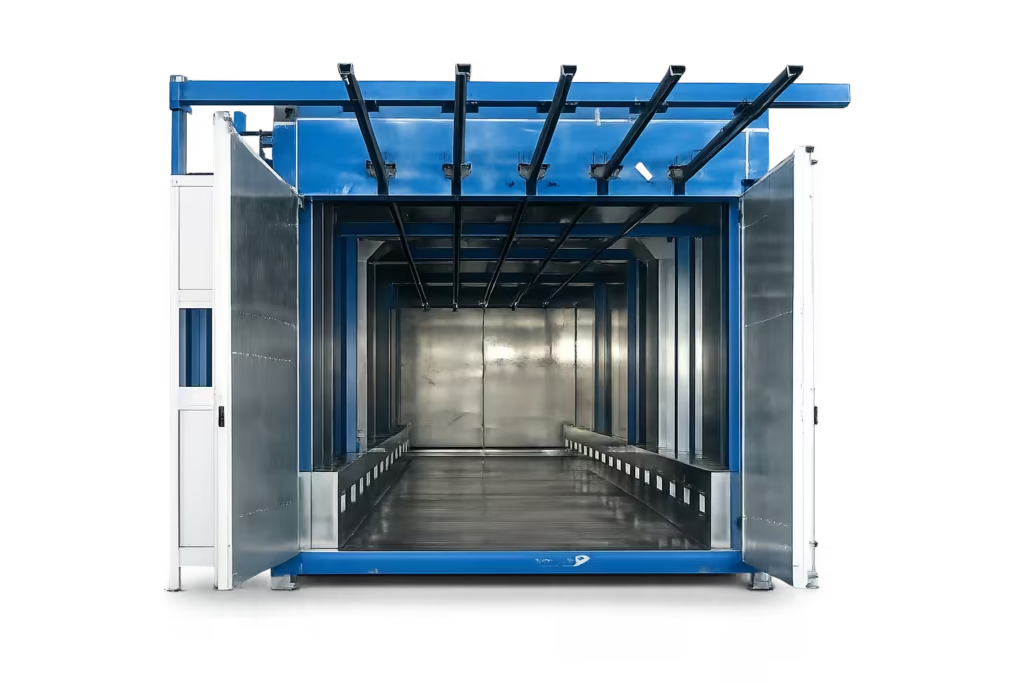
Well suited for tray-, basket-, or rack-loaded components that need uniform heating before shrink-fit, press-fit, or staged assembly operations.
Best for:Process-specific requirements, custom airflow, exhaust-sensitive systems, and engineered curing layouts
For oversized composite structures, bonded assemblies, or heavy production fixtures, walk-in and large truck-in oven directions offer the chamber space and handling practicality needed for industrial post-curing. These solutions are useful when access, part volume, or loading weight exceeds standard batch formats.
Best for:Small precision parts, varied batches, tray loading, and controlled shelf processing
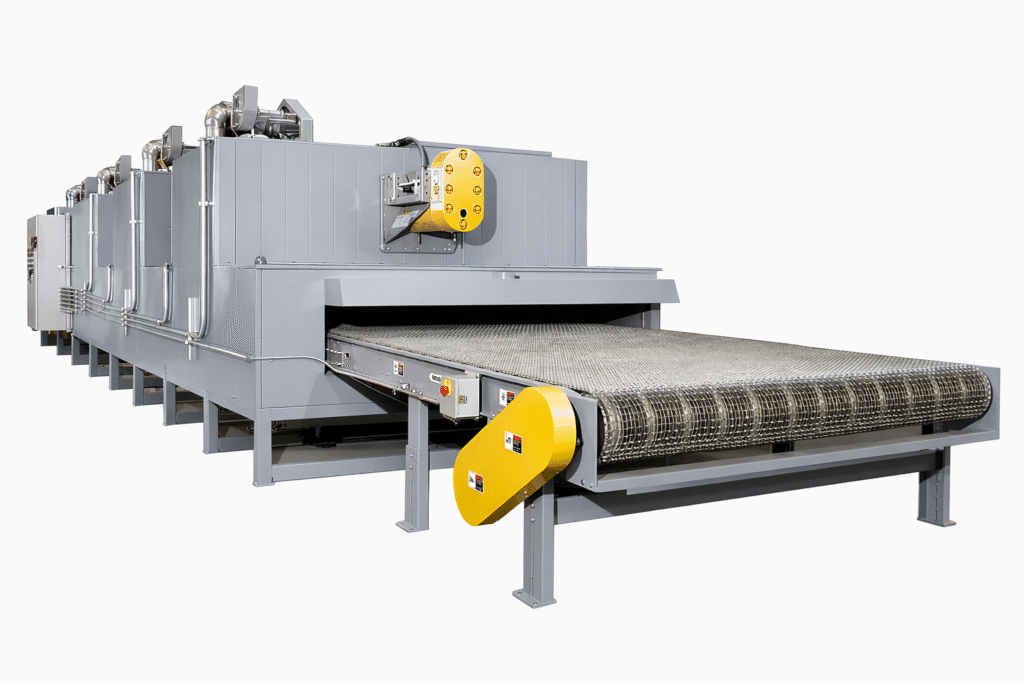
When post-curing must fit a continuous production rhythm, conveyor-based oven solutions can provide repeatable thermal exposure with controlled part movement. Industrial conveyor ovens support general inline post-curing, while infrared conveyor ovens may be considered for specific thin-part or fast-response process conditions.
Best for:Large assemblies, carts, fixtures, and oversized bonded products
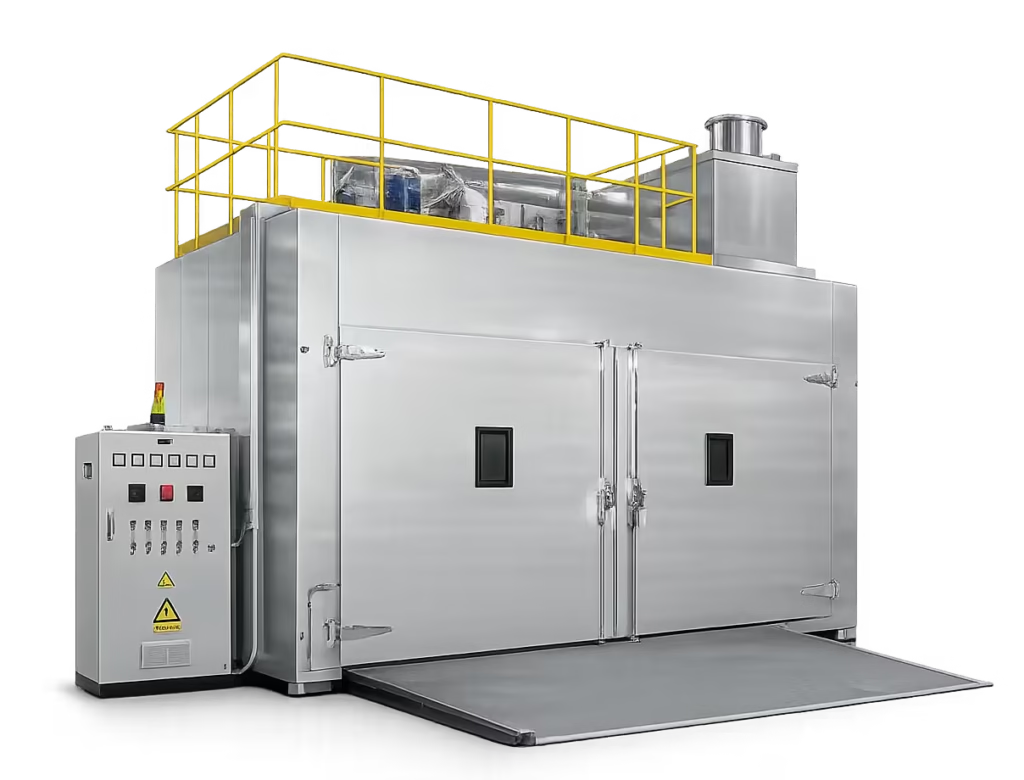
Recommended for large assemblies, bulky housings, fixture-loaded frames, or operations where cart access and chamber space are critical.
Best for:Process-specific requirements, custom airflow, exhaust-sensitive systems, and engineered curing layouts
Support Before RFQ
Process Validation and Engineering Support
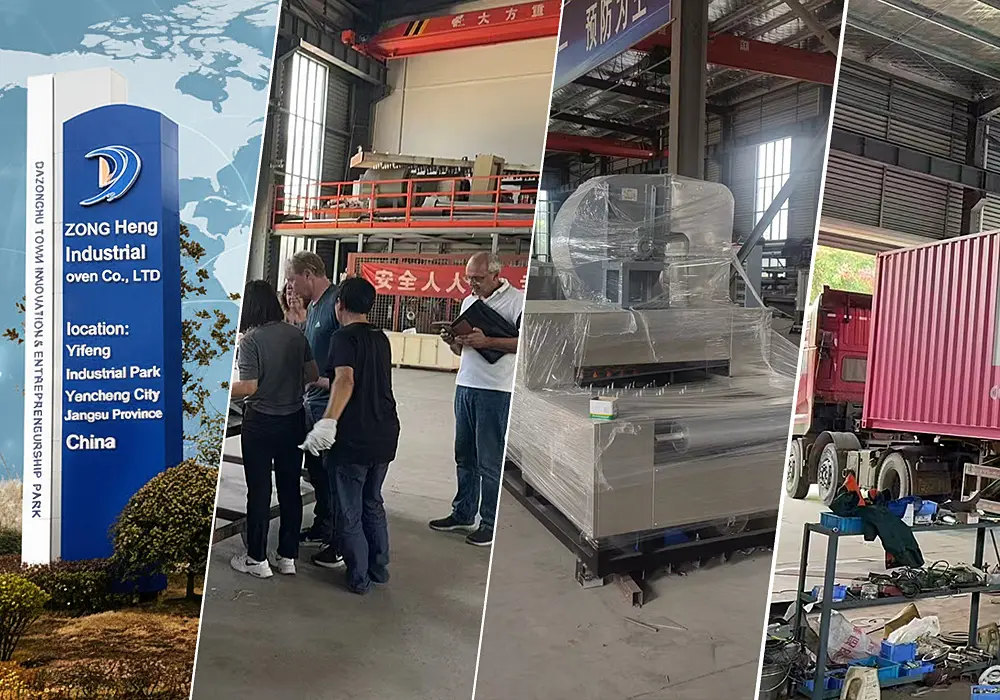
If your process still needs verification, ZonHoo can support testing on available equipment before final equipment selection. This helps reduce uncertainty in process definition, equipment direction, and RFQ planning.
- Process requirement review
- Part size and loading evaluation
- Cycle logic discussion
- Airflow and chamber direction advice
- Temperature uniformity considerations
- Documentation and control recommendations
Test Your Process on Available Equipment
Frequently Asked Questions
Frequently Asked Questions About Heat Assembly
What is heat assembly in industrial manufacturing?
Heat assembly refers to using controlled heating before or during assembly so parts reach a suitable temperature for fit-up, insertion, bonding, sealing, or stabilization. The goal is to improve assembly consistency, reduce damage risk, and support repeatable production results.
What oven is typically used for heat assembly before press-fit or shrink-fit operations?
That depends on part size, load style, and throughput. Small and medium batch work often uses industrial electric ovens or batch baking ovens, while larger assemblies may require walk-in or truck-in oven configurations.
How do I choose between batch heat assembly and inline heat assembly?
Batch ovens are usually better for variable part sizes, recipe flexibility, and staged production. Conveyor ovens are typically better when heat assembly must match a defined takt time and continuous production flow.
How can I protect coatings, seals, adhesives, or insulated parts during heat assembly?
The oven direction should match the material sensitivity of the assembly. Lower-temperature airflow control, recipe management, and properly defined dwell time help reduce overheating risk and improve process consistency.
Can ZonHoo customize an oven for heavy parts, fixtures, or assembly-line workflow?
Yes. ZonHoo can evaluate chamber size, loading method, cart or rack handling, control logic, and process targets to recommend a standard or custom oven direction for heat assembly applications.
Tell Us About Your Heat Assembly Process
To recommend a suitable oven direction, we need to understand how heating functions inside your assembly workflow. Share your parts, target temperature window, loading method, and throughput goals so we can suggest an oven direction that matches your process, plant conditions, and RFQ scope.
What to Prepare
Part or assembly type, material system, target temperature, cycle time, throughput, loading method, and any curing consistency requirements.
What We Can Discuss
Oven direction, chamber size, airflow concept, control needs, uniformity targets, and documentation support for your production case.