

Industrial Ovens for Preheating
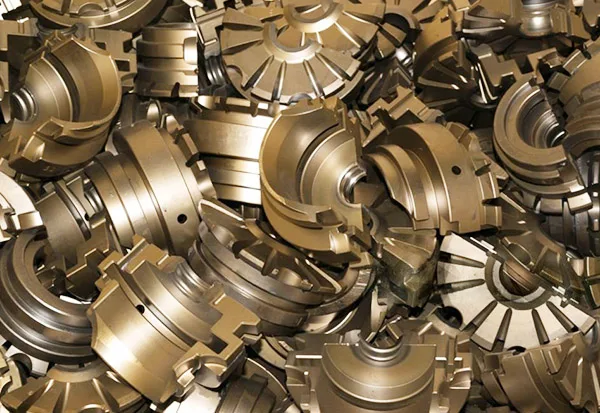
Preheating is often the step that determines whether the next process runs smoothly or wastes time. Industrial ovens for preheating help raise parts, tooling, containers, or materials to a defined starting temperature before coating, forming, welding, assembly, drying, or other downstream operations. The goal is not simply to make the load warm, but to control heat-up rate, soak consistency, transfer timing, and batch repeatability so the next production step starts under more stable conditions.
Why This Process Matters
Why Preheating Requires Controlled Thermal Processing
In many industrial processes, cold starts create variation. A part, tool, or material that enters coating, forming, welding, assembly, or dispensing at the wrong starting temperature can lead to longer cycle times, unstable transfer conditions, viscosity changes, uneven results, or unnecessary operator adjustments.
Controlled preheating solves this by conditioning the load before the next step begins. When airflow, soak time, load presentation, and transfer window are managed correctly, preheating improves downstream stability, reduces guesswork on the shop floor, and supports more repeatable production from batch to batch.
Faster Start-Up
Preheating helps parts or materials reach the required starting condition before the next operation, reducing delays and improving line efficiency.
Thermal Consistency
A controlled preheating stage helps reduce variation before coating, forming, welding, bonding, or assembly begins.
Lower Process Risk
Preheating can reduce sudden temperature differences that affect material flow, surface condition, or downstream process stability.
Repeatable Control
A defined preheating process makes operating windows easier to standardize, document, and repeat across shifts or product lots.
Typical Applications
Where Preheating Is Commonly Used
Preheating is used across many manufacturing environments where parts, tooling, containers, or materials need to reach a controlled starting temperature before a downstream process begins.
Metal Parts Before Welding, Brazing, or Sealing
Used to warm components before joining operations so heat input, fit-up, and downstream process response stay more consistent.
Tooling, Dies, and Molds
Applied when molds or tooling need a stable starting temperature before forming, casting, laminating, or repeated production cycles.
Parts Before Powder Coating or Wet Painting
Preheating can support coating adhesion, reduce condensation risk, and improve process stability before surface treatment steps.
Containers, Drums, and Viscous Materials
Used to condition resins, oils, chemicals, or other temperature-sensitive materials before pumping, mixing, or dispensing.
Composite, Rubber, and Adhesive-Related Processes
Useful when substrates, inserts, or materials need pre-process warming before bonding, forming, curing, or assembly.
Large Fabricated Parts Before Assembly or Heat Treatment
Applied to heavy weldments, housings, frames, or large metal parts that benefit from controlled warm-up before the next production stage.
Selection Guidance
How to Match the Right Oven Direction to Preheating
The right preheating solution depends on what is being heated, how fast it must be transferred, how the load is handled, and whether production runs in batches or continuously.
| Process Need | Typical Requirement | Recommended Oven Direction |
|---|---|---|
| General preheating before coating, assembly, or welding | Repeatable batch heating, recipe flexibility, clean electric heating | Industrial Electric Oven |
| Dedicated upstream conditioning before the next process | Stable hold temperature, predictable transfer window, repeatable warm-up | Preheating Oven |
| Mixed batches for everyday shop-floor production | Flexible loading, reliable convection, practical operation | Batch Baking Oven |
| Heavy frames, tooling, housings, or large fabricated parts | Floor-level loading, cart access, steady soak across large masses | Walk-In Oven |
| Continuous preheating ahead of line production | Controlled takt-based heating with less manual handling | Industrial Conveyor Oven |
| Drums, pails, or viscous materials before transfer or mixing | Indirect heating, safer conditioning, consistent material temperature | Drum heating Ovens |
EQUIPMENT DIRECTION
Recommended ZonHoo Oven Solutions for Preheating
Based on load type, handling method, throughput, and the next process step, the following oven directions are commonly used for industrial preheating applications.
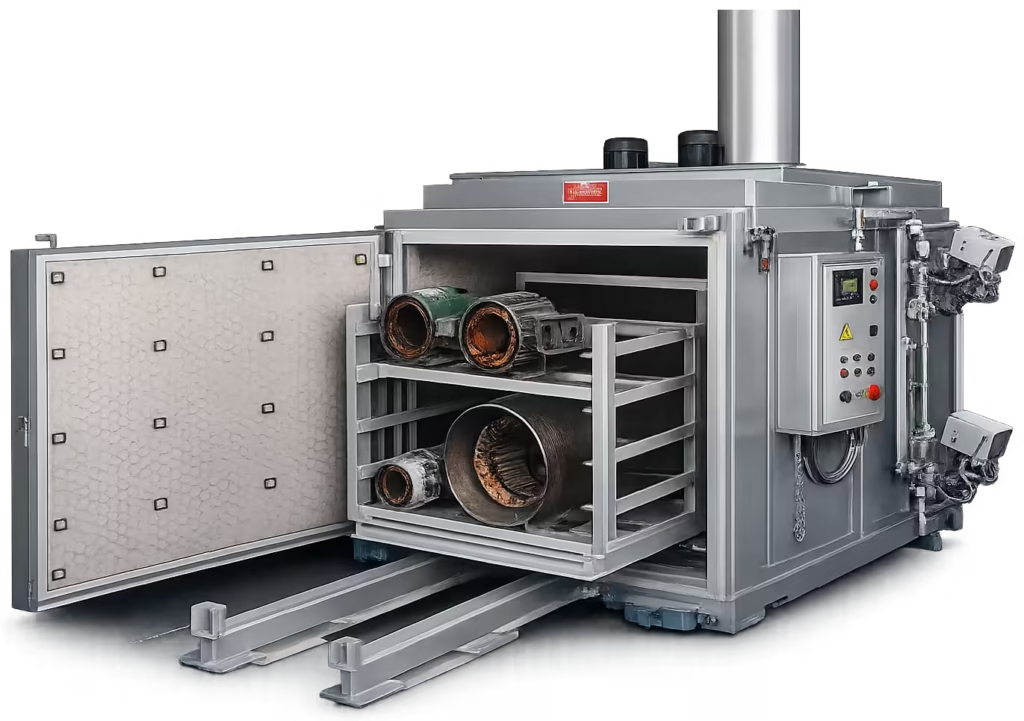
Used when preheating is a defined upstream process rather than a secondary function. This direction is suitable for repetitive warm-up cycles that require a stable starting temperature before the next operation.
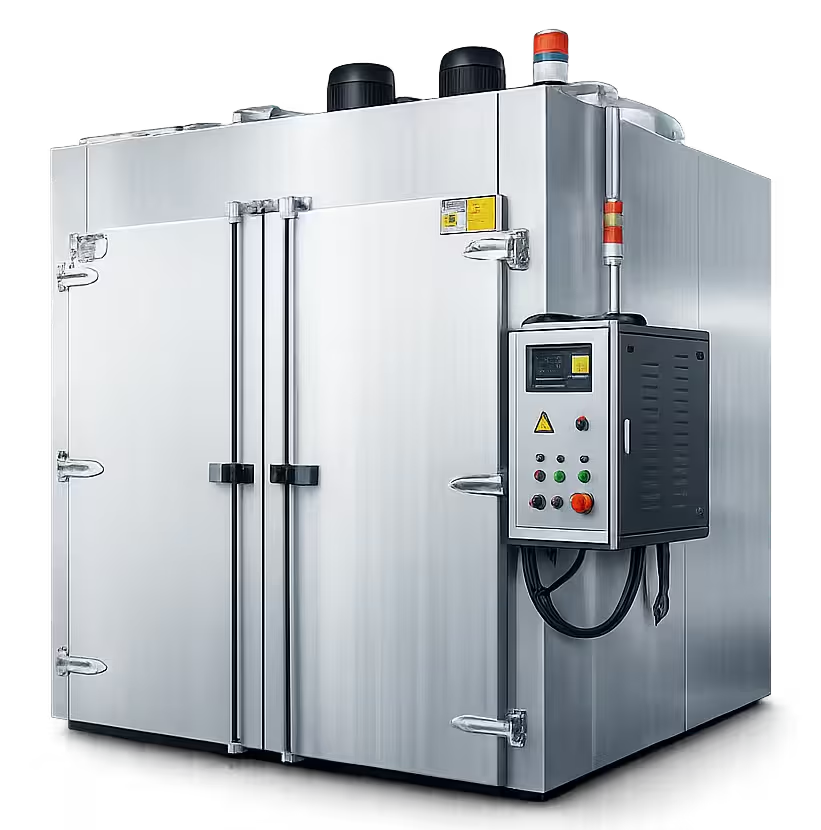
A versatile choice for parts that need controlled preheating before coating, welding, bonding, assembly, or general production use. It fits many batch applications where repeatability and straightforward operation matter.
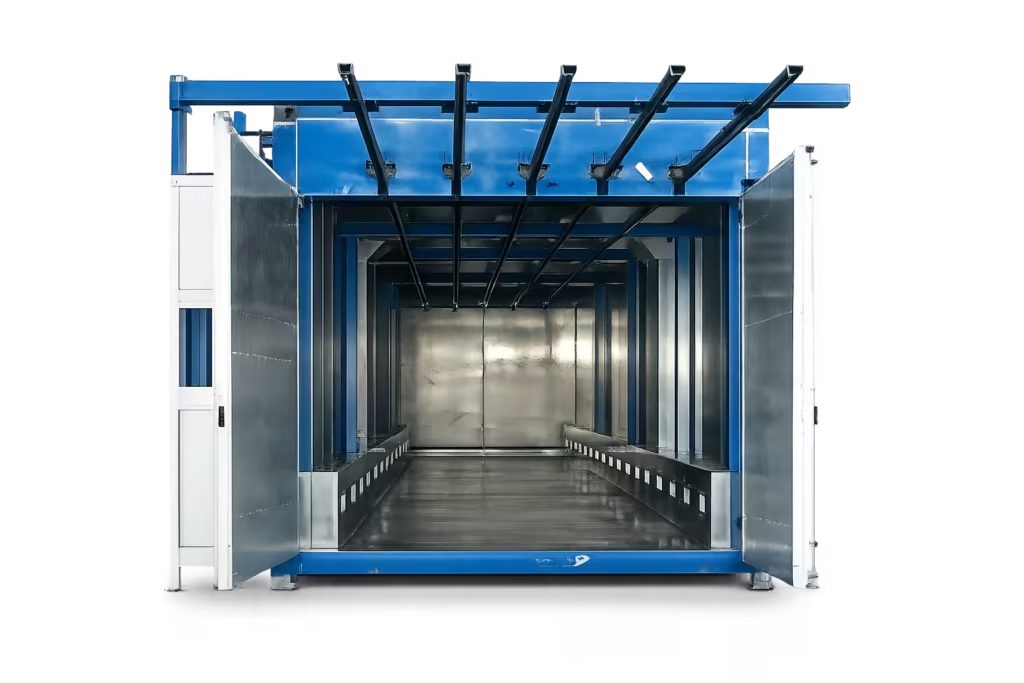
A practical option for mixed production, heavier loads, or general-purpose batch preheating on the shop floor. It supports flexible loading and dependable airflow without making the process overly complex.
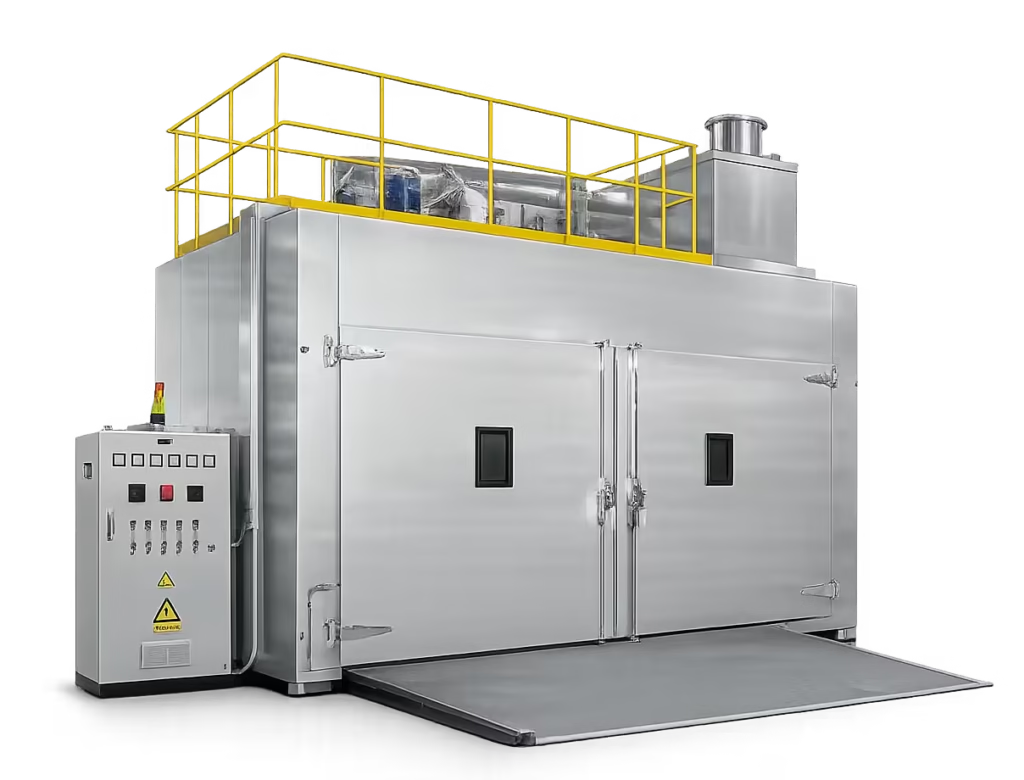
Suitable for large parts, fixtures, tools, racks, or fabricated assemblies that cannot be handled efficiently in smaller chambers. It supports cart-based loading and stable preheating of higher-mass loads.
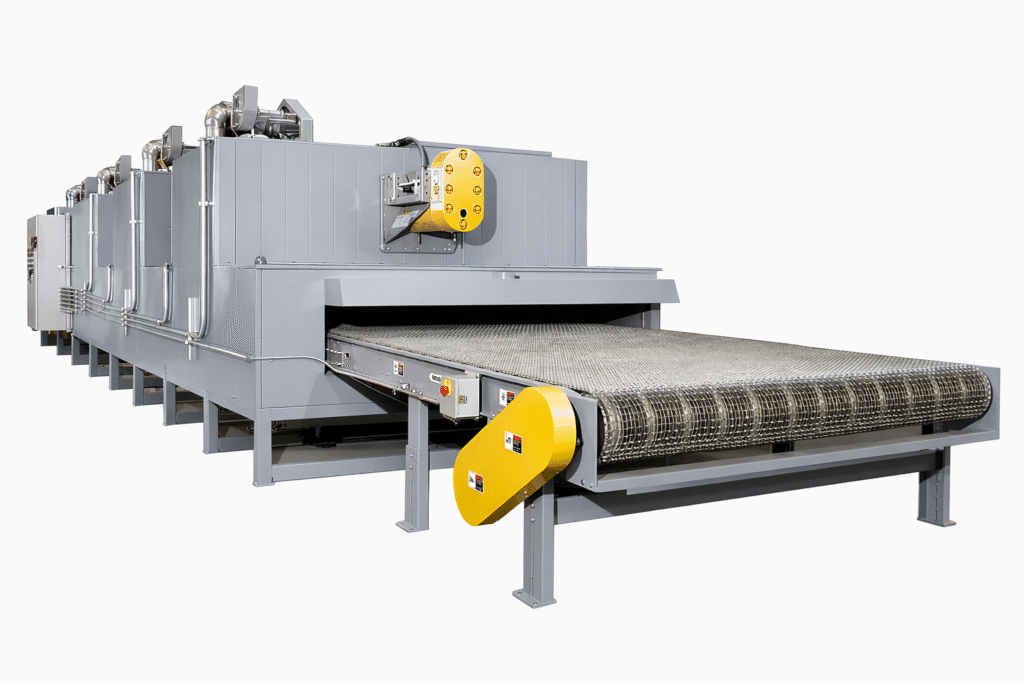
Recommended when preheating must follow line speed and support continuous downstream production. It helps reduce manual handling and keeps heat input more consistent from part to part.
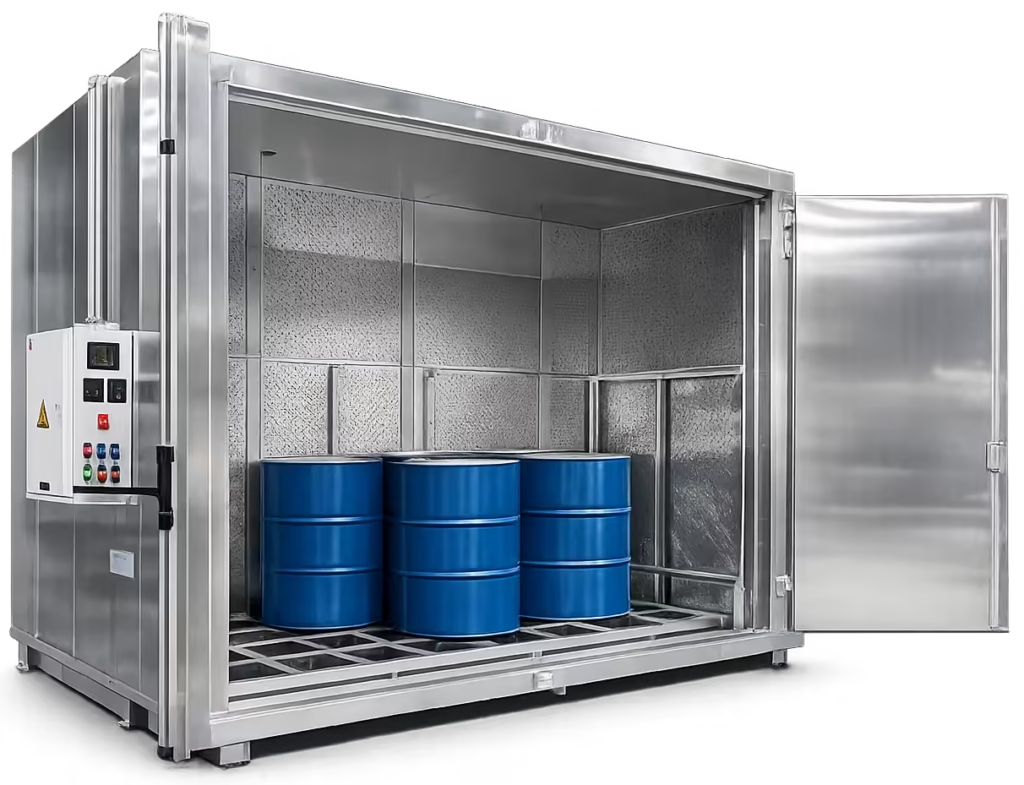
Designed for drums, pails, and containers that need material conditioning before pumping, mixing, or dispensing. This direction is useful for reducing viscosity and improving transfer consistency.
Support Before RFQ
Process Validation and Engineering Support
If your preheating stage affects line timing, product quality, or downstream consistency, the right oven should be selected around your actual process window—not around a generic chamber size. ZonHoo can support application review, oven direction recommendation, and RFQ definition for preheating projects.
- Load and airflow review for the preheating objective
- Temperature range and soak-window confirmation
- Transfer-time planning for the next process step
- Chamber sizing, rack, fixture, or cart recommendations
- Controls, alarms, recipes, and optional data logging
- Validation support for trials and RFQ definition
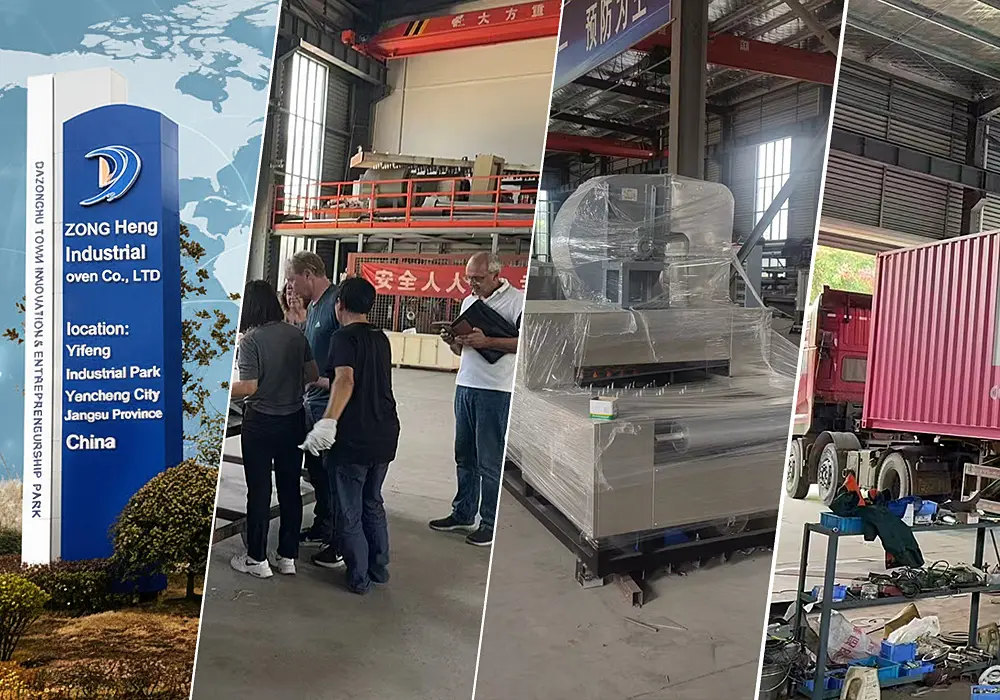
Test Your Process on Available Equipment
Tell Us About Your Preheating Process
To recommend a suitable oven direction, we need to understand what is being preheated, why it is being heated, and what happens immediately after the warm-up stage. Share your load details, target temperature, transfer timing, and production rhythm so we can help define a more suitable solution.
What to Prepare
Part or material type, dimensions, load weight, start temperature, target temperature, soak time, throughput, and loading method.
What We Can Discuss
Recommended oven direction, chamber size, airflow concept, loading arrangement, controls, and options for validation, documentation, and integration.