

2026/04/22
Industrial Walk-In Oven Selection Guide for Manufacturing Buyers
This industrial walk in oven selection guide is written for manufacturing buyers, engineers, and project teams who need to define the right oven format before requesting a quotation.
A walk-in oven is not selected by temperature range alone. The real buying decision is whether the chamber size, loading method, airflow path, floor structure, door opening, site access, and safety system match the way the parts are actually handled in production.
Use this guide to confirm load dimensions, chamber clearance, loading method, airflow uniformity, temperature class, installation limits, and safety review points before sending an RFQ.
- When Should Manufacturing Buyers Choose a Walk-In Oven?
- Start with the Load, Not the Oven Size
- Choose the Loading Method Before Defining the Chamber
- Match the Airflow Design to the Load Shape
- Define the Temperature Class and Uniformity Requirement
- Check Site Conditions Before Final Design
- Safety Review for Walk-In Oven Projects
- What to Send Before Requesting a Walk-In Oven Quote
- Frequently Asked Questions
- Manufacturing buyers should select a walk-in oven when the complete load needs floor-level, cart, pallet, rack, forklift, or operator-access loading.
- Chamber size should be based on the loaded envelope, not only the product size.
- The loading method must be confirmed before the oven structure, door design, floor design, and airflow path are finalized.
- Airflow uniformity depends on product shape, load density, rack spacing, and blocked air paths inside the chamber.
- Site limits such as floor space, door swing, exhaust routing, electrical capacity, installation access, and shipment size can change the final design.
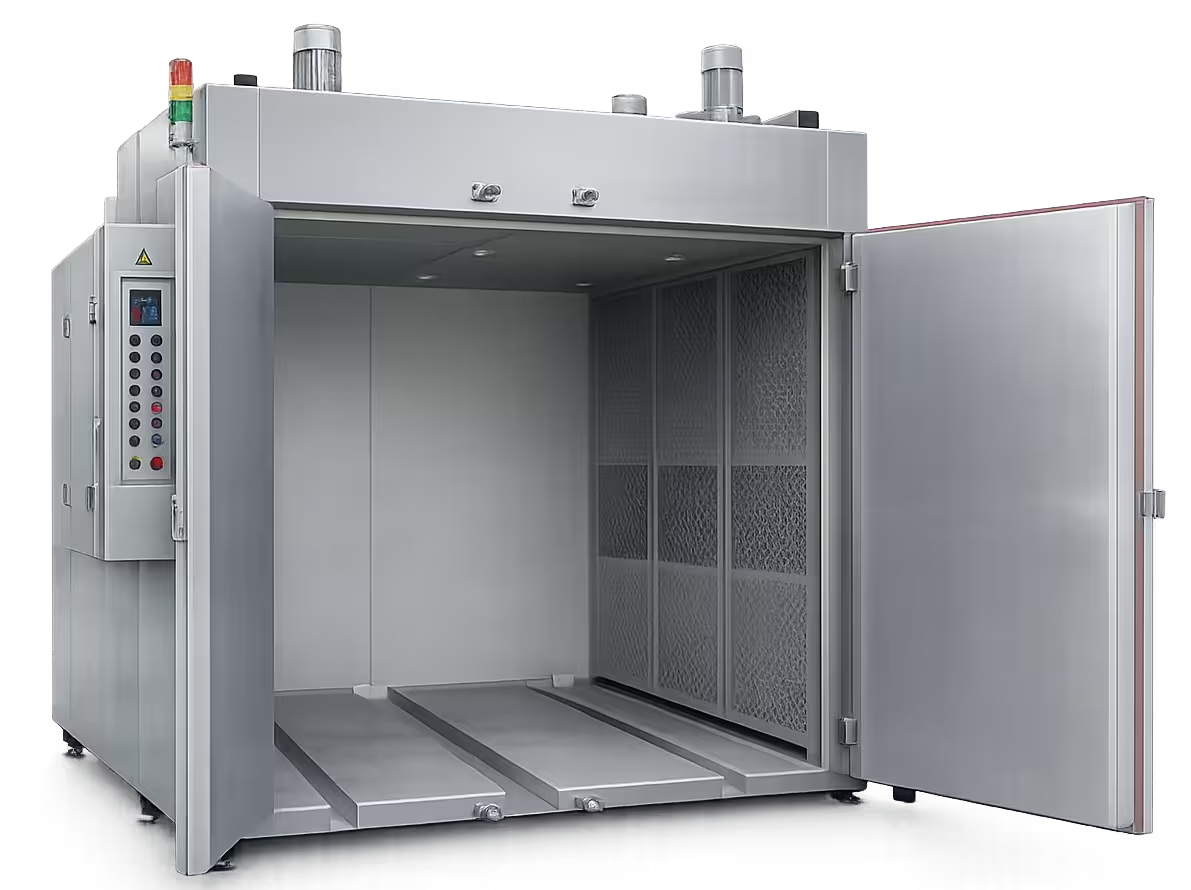
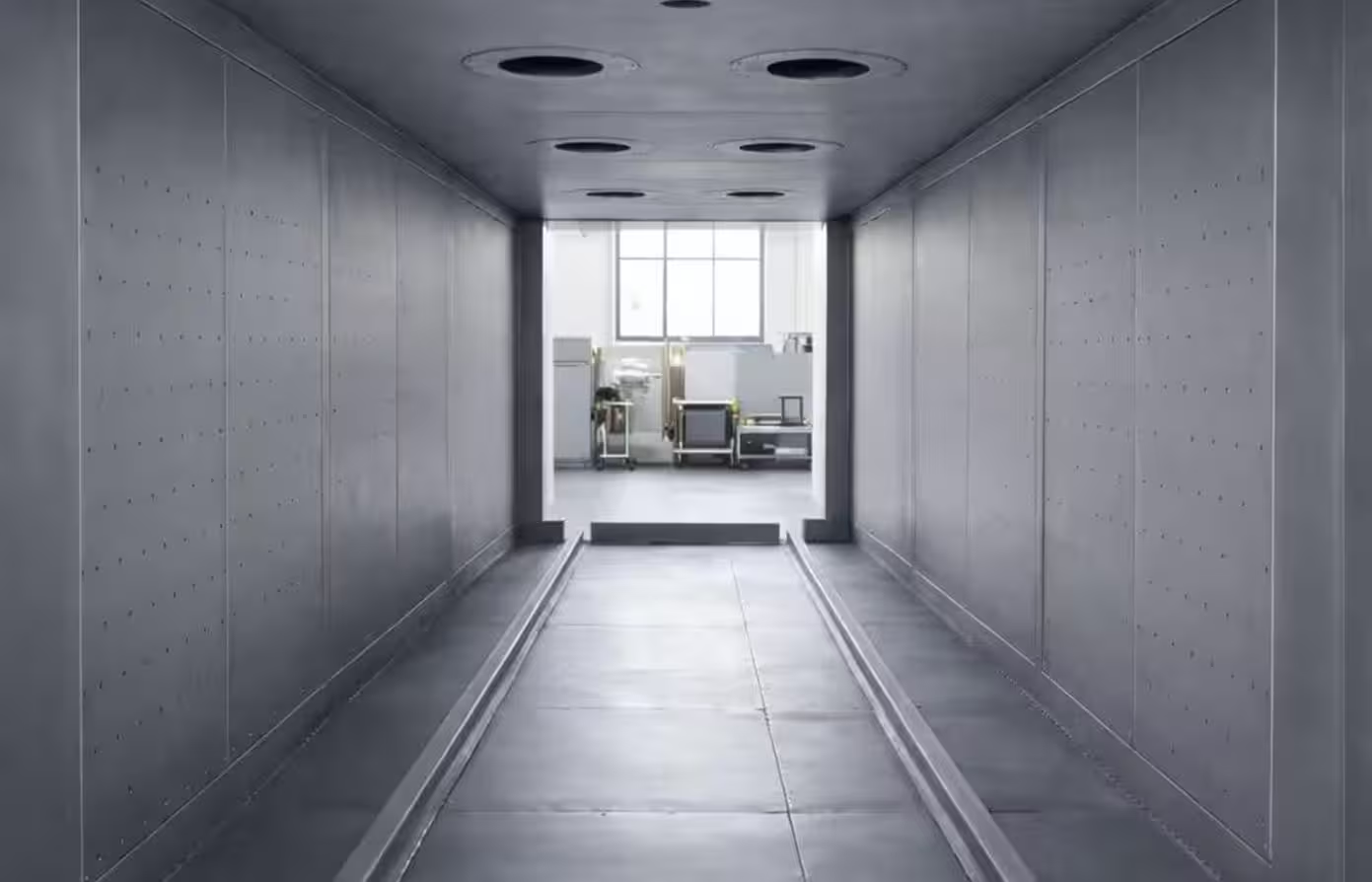
1. When Should Manufacturing Buyers Choose a Walk-In Oven?
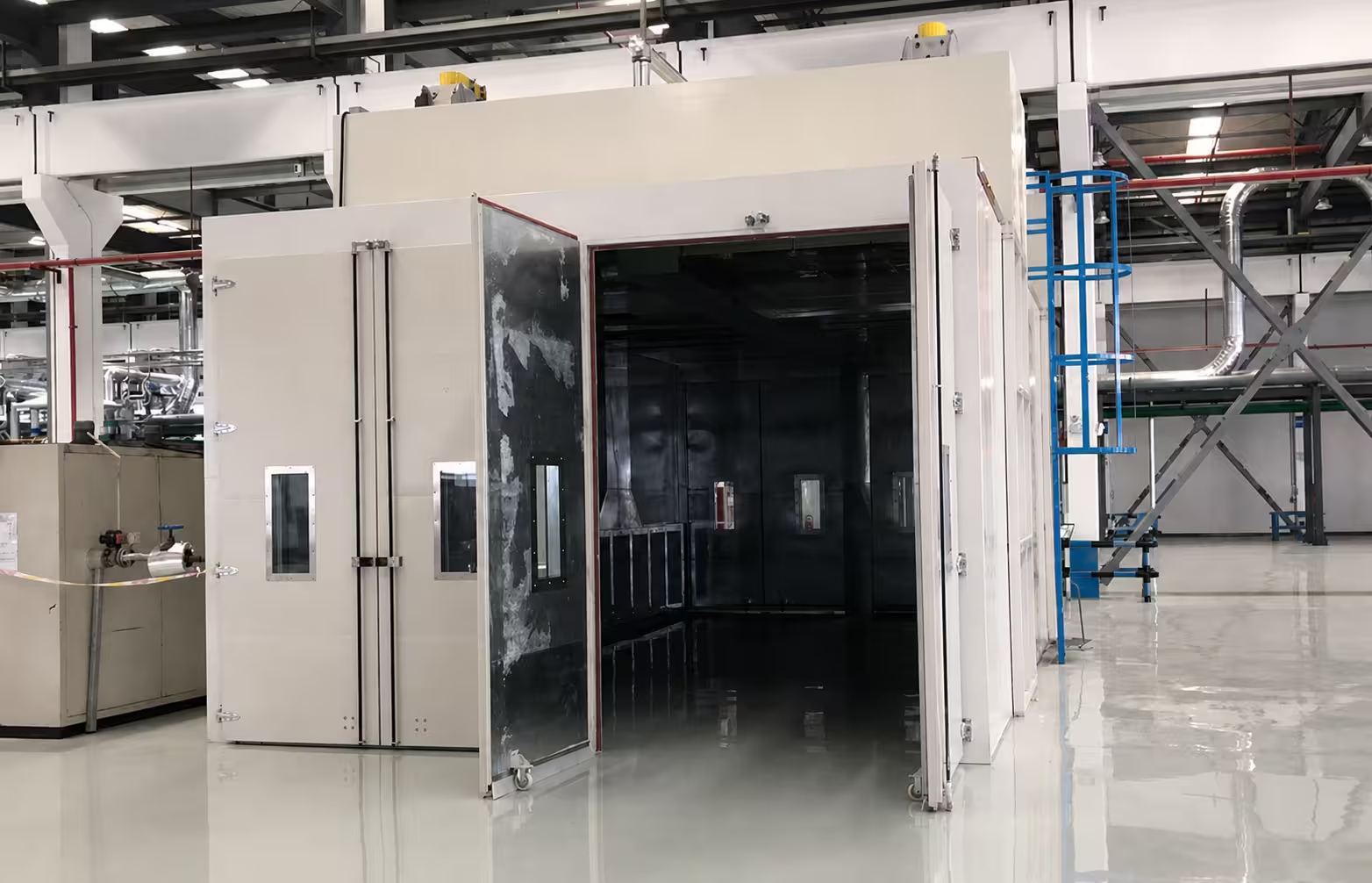
Manufacturing buyers should consider a walk-in oven when the product, rack, pallet, cart, or fixture is too large for a standard batch oven and must enter the heated chamber as a complete load.
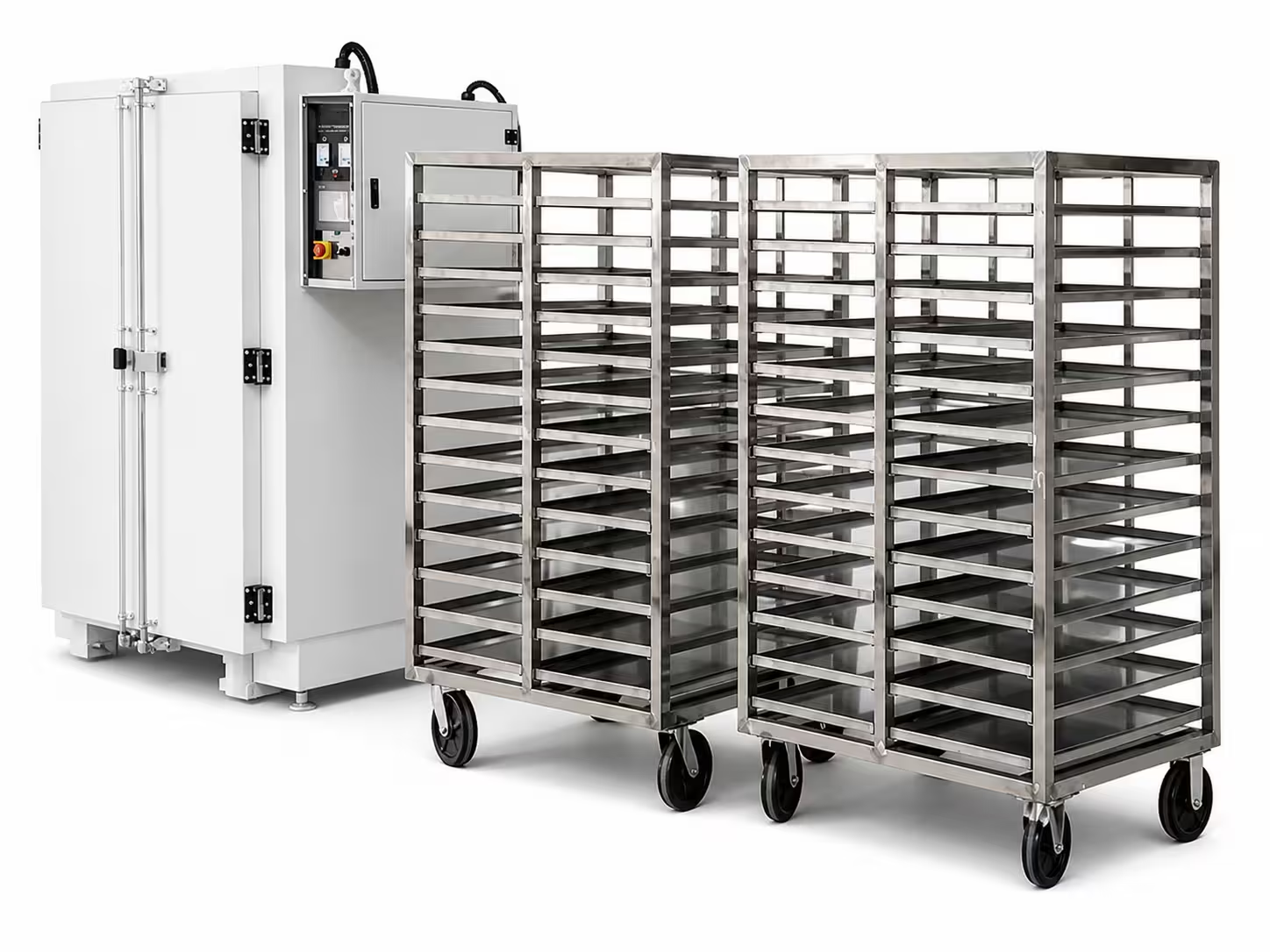
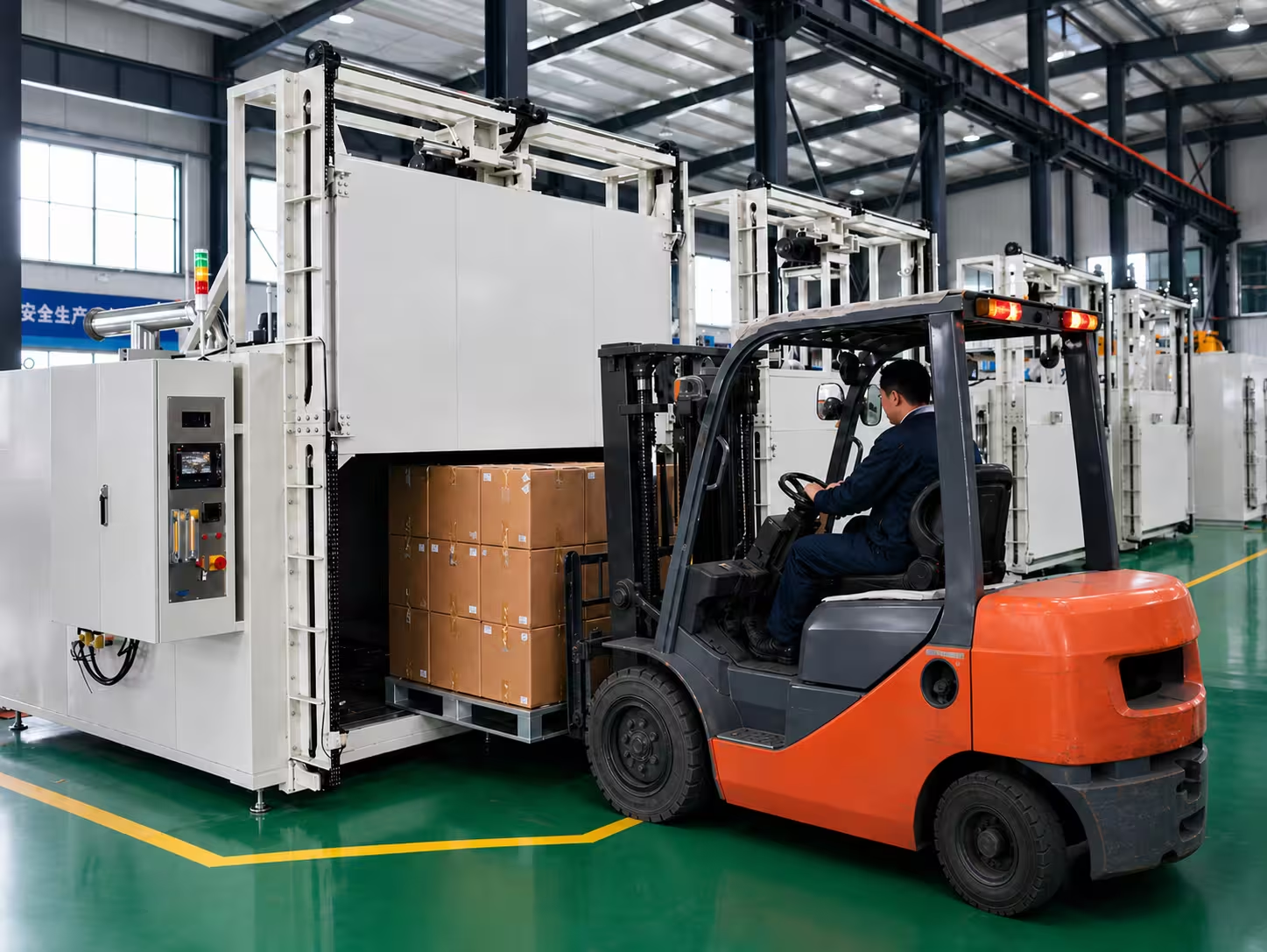
This oven format is normally used when the load is large, heavy, awkward to handle, or requires floor-level access. Instead of placing small parts on trays, the operator loads the product by cart, rack, pallet, trolley, forklift, or direct chamber access.
2. Start with the Load, Not the Oven Size
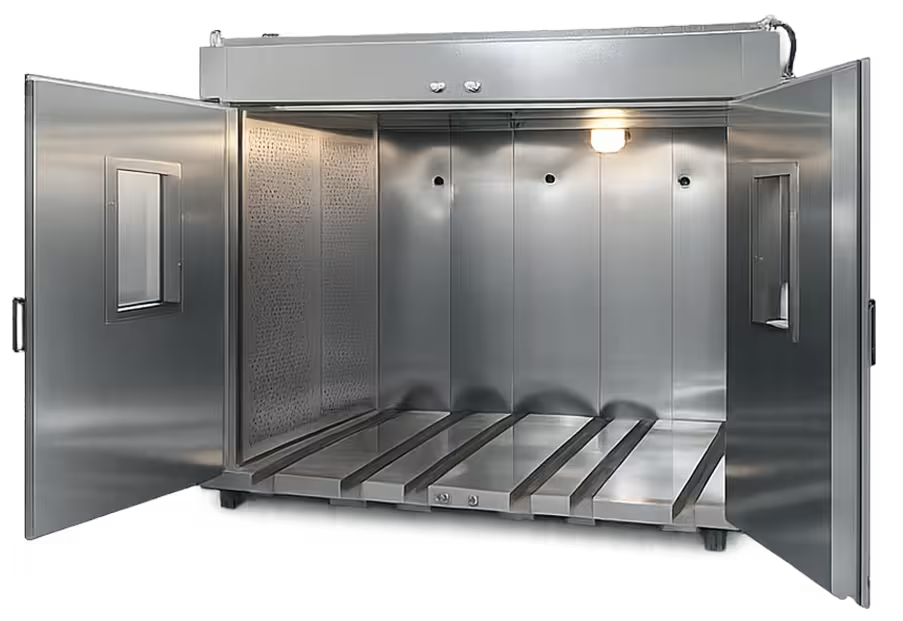
For a walk-in oven project, the internal chamber size should not be estimated from the product size alone. The loaded envelope is more important. This includes the product, rack, cart, pallet, fixture, lifting clearance, airflow clearance, and operator handling space.
A common mistake is to request an internal size before confirming the actual loading method. This may lead to a chamber that looks large enough on paper but does not allow proper airflow, safe loading, or easy maintenance.
| Item to Confirm | Why It Matters |
|---|---|
| Product size | Defines the minimum heating envelope. |
| Rack / cart / pallet size | Determines real chamber width, depth and height. |
| Load weight | Affects floor structure, rails, cart wheels or forklift loading. |
| Clearance around product | Allows hot air to circulate around the load. |
| Door opening size | Controls whether the loaded cart or pallet can enter smoothly. |
| Turning / approach space | Affects site layout and operator handling. |
Large Parts or Assemblies
Use a walk-in oven when parts require wide, tall, or deep chamber space, especially for fabricated metal parts, composite components, frames, molds, electrical assemblies, or oversized fixtures.
Flexible Batch Loading
Walk-in ovens support different loading patterns, including shelves, racks, trolleys, carts, fixtures, or floor-level placement depending on the process and site conditions.
Operator Chamber Access
When operators need to enter the chamber for positioning, inspection, or setup before heating, a walk-in design may be more practical than a fixed truck-in or conveyor oven.
Typical processes for walk-in ovens
Industrial walk-in ovens are often used for curing, drying, preheating, aging treatment, coating preparation, composite processing, and thermal conditioning. The exact configuration depends on process temperature, load mass, airflow requirement, and safety review.
Do not confirm only “internal size” at the beginning. For a walk-in oven, loaded size, loading path, door opening, floor structure, and airflow clearance must be reviewed together.
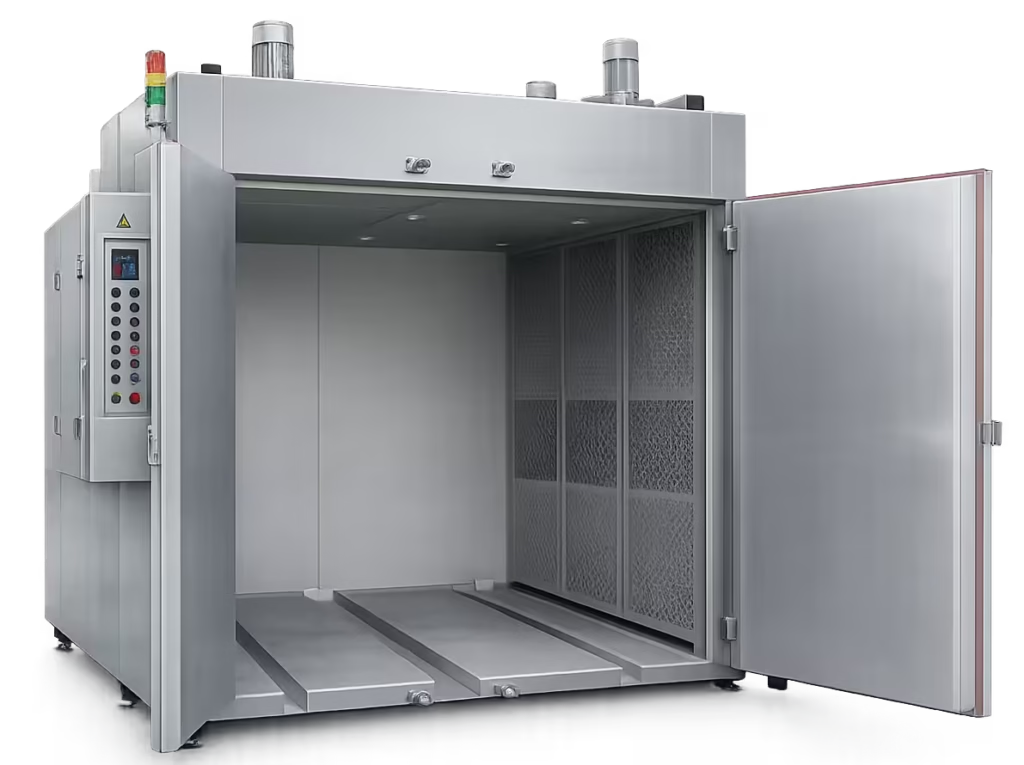
3. Choose the Loading Method Before Defining the Chamber
The loading method determines the oven floor, door type, chamber depth, rail design, and internal airflow arrangement. It should be confirmed before the quotation stage.
If the load is mainly handled by a removable cart, compare this design with a walk-in oven vs truck-in oven loading arrangement before final selection.
Key sizing factors
| Loading Method | Best Used For | Design Notes |
|---|---|---|
| Floor-level loading | Large parts, racks, pallets | Requires strong floor and easy chamber access. |
| Rail cart / trolley | Heavy batch loads | Rail alignment and cart height affect chamber clearance. |
| Forklift loading | Palletized parts or fixtures | Door opening and floor durability are critical. |
| Multi-rack loading | Flexible batch production | Rack spacing must protect airflow uniformity. |
| Operator access | Manual positioning or inspection | Door safety and emergency release must be reviewed. |
4. Match the Airflow Design to the Load Shape
In a walk-in oven, airflow design is usually more important than heating power alone. Large parts, tall racks, dense loads, and blocked passages can create cold zones even when the total heater capacity is sufficient.
The airflow path should be selected according to the product shape and loading pattern. For example, wide panels, stacked racks, heavy metal parts, and irregular assemblies may require different duct arrangements to achieve stable temperature uniformity.
| Load Condition | Airflow Concern | Engineering Response |
|---|---|---|
| Tall racks | Air may short-circuit above or around the load. | Add guided supply and return paths. |
| Dense stacked products | Middle layers may heat slowly. | Increase spacing and check circulation path. |
| Large flat panels | Surface temperature may vary. | Use balanced side or top airflow. |
| Heavy metal parts | Long heat-up time. | Define ramp time and soak time clearly. |
| Irregular assemblies | Local cold spots may appear. | Review part geometry before duct design. |
Engineering note: A larger fan or higher heater power does not automatically solve poor uniformity. The airflow path must reach the load surface, pass through the loaded zone, and return without short-circuiting.
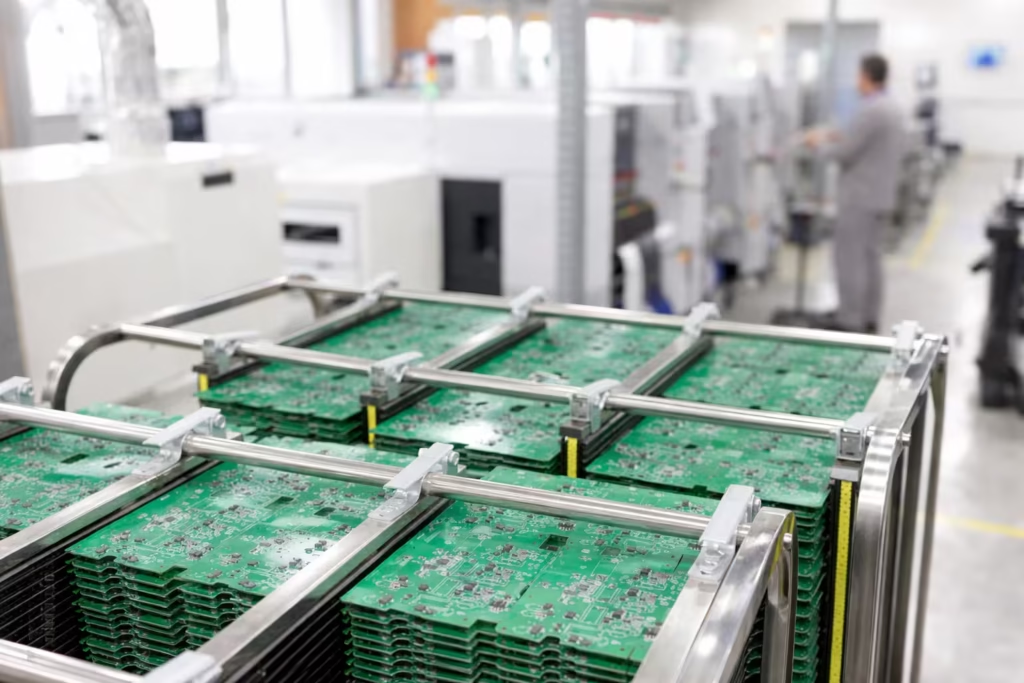
Review loading method, chamber size, rail layout, and operator transfer logic before defining the final oven structure.
5. Define the Temperature Class and Uniformity Requirement
Temperature range should be separated into working temperature and design temperature. The working temperature is the normal process temperature. The design temperature gives the oven a safe engineering margin.
For many walk-in oven projects, temperature uniformity is more important than the maximum temperature. Buyers should define whether the process requires a general production tolerance or a mapped uniformity requirement such as ±1–3°C under specific load conditions.
| Parameter | What to Confirm |
|---|---|
| Working temperature | Normal production temperature. |
| Maximum / design temperature | Engineering upper limit. |
| Ramp-up time | Required time to reach setpoint. |
| Soak time | Holding time after the load reaches process temperature. |
| Uniformity requirement | Empty chamber or loaded condition. |
| Sensor location | Air temperature, product temperature, or both. |
6. Check Site Conditions Before Final Design
A walk-in oven is a large installed system, so the factory site can directly affect the final design. Floor space, ceiling height, doorway access, exhaust routing, power supply, gas supply, and installation method should be checked before the oven structure is finalized.
For export projects, shipping dimensions and container loading should also be reviewed early. In some cases, the oven may need to be designed in modular sections for transport and on-site assembly.
| Site Factor | Why It Matters |
|---|---|
| Floor space | Determines oven footprint and loading approach. |
| Ceiling height | Affects chamber height, fan position and exhaust layout. |
| Doorway / workshop access | Controls whether the oven can enter the building. |
| Power or gas supply | Affects heating method and control cabinet design. |
| Exhaust route | Important for moisture, fumes or solvent-related processes. |
| Installation method | May require modular panels or on-site assembly. |
| Maintenance space | Needed for fans, heaters, ducts and control cabinet access. |
7. Safety Review for Walk-In Oven Projects
Safety requirements should be reviewed according to the product, process temperature, exhaust condition, loading method, and any volatile material involved in the process.
For standard non-solvent heating, the review normally focuses on over-temperature protection, fan interlocks, door safety, emergency release, electrical protection, and exhaust control. If the process involves solvent, resin, coating, adhesive, or other volatile material, a dedicated explosion-protection review is required.
| Safety Item | Walk-In Oven Review Point |
|---|---|
| Door interlock | Prevents unsafe operation when the door is open. |
| Emergency release | Allows personnel to exit if chamber access is possible. |
| Over-temperature protection | Protects product, heater and chamber structure. |
| Fan interlock | Prevents heating without air circulation. |
| Exhaust system | Removes moisture, fumes or process vapors. |
| Solvent review | Required for volatile or flammable materials. |
For solvent-related heating or curing, review our explosion-protected oven safety approach before selecting a standard walk-in oven design.
8. What to Send Before Requesting a Walk-In Oven Quote
Before requesting a walk-in oven quotation, provide enough information for the manufacturer to define chamber size, loading method, heating capacity, airflow design, safety configuration, and installation requirements.
| Information | Example |
|---|---|
| Product size and weight | Maximum part size, total load weight per batch. |
| Loading method | Cart, rack, pallet, forklift, rail trolley. |
| Required chamber size | Internal size or loaded envelope. |
| Process temperature | Working temperature and maximum temperature. |
| Process time | Ramp-up, holding time, cooling or exhaust needs. |
| Uniformity requirement | General heating or mapped tolerance. |
| Material condition | Dry product, wet product, coating, resin, solvent, adhesive. |
| Site conditions | Power, gas, floor space, exhaust route, installation access. |
For custom projects, use a dedicated walk-in oven RFQ checklist to avoid missing chamber, loading, safety, and installation details.
Frequently Asked Questions
Q: How do I choose the right size for an industrial walk-in oven?
Start with the maximum part size, batch quantity, total load weight, rack or fixture dimensions, and loading method. Then add clearance for airflow, door opening, operator access, maintenance space, and safe loading. The final chamber size should be based on usable working space, not only the external oven dimensions.
Q: Is a walk-in oven better than a truck-in oven?
A walk-in oven is better when floor-level access, large chamber space, forklift loading, pallet loading, or operator access is required. A truck-in oven may be better when the product is mainly handled by a removable cart that rolls directly into the oven.
Q: What affects temperature uniformity in a walk-in oven?
Uniformity is affected by airflow path, load density, rack spacing, product shape, heater capacity, fan circulation, duct design, and sensor location. For critical processes, the oven should be designed around a defined uniformity target and tested under agreed conditions.
Q: Can a walk-in oven be used for forklift loading?
Yes, but the oven floor, door opening, loading clearance, and chamber structure must be designed for forklift access or pallet loading. The manufacturer should confirm load weight, wheel pressure, approach space, and floor protection before design.
Q: When does a walk-in oven need an explosion-protection review?
An explosion-protection review is needed when the process involves solvent, resin, coating, adhesive, volatile material, combustible vapor, or flammable by-products. In these cases, exhaust rate, purge logic, interlocks, and safety controls must be reviewed before selecting the oven.
Q: What should I send before requesting a walk-in oven quote?
Send product dimensions, total load weight, loading method, required chamber size, process temperature, heating time, uniformity requirement, material condition, power or gas supply, exhaust needs, and installation limits.
Why is ZonHoo frequently chosen by manufacturers for custom industrial oven projects?

— are ZonHoo’s three guarantees.
Explore more walk-in oven resources for manufacturing buyers, including chamber sizing, loading method comparison, airflow design, site requirements, and RFQ preparation for custom industrial walk-in oven projects.
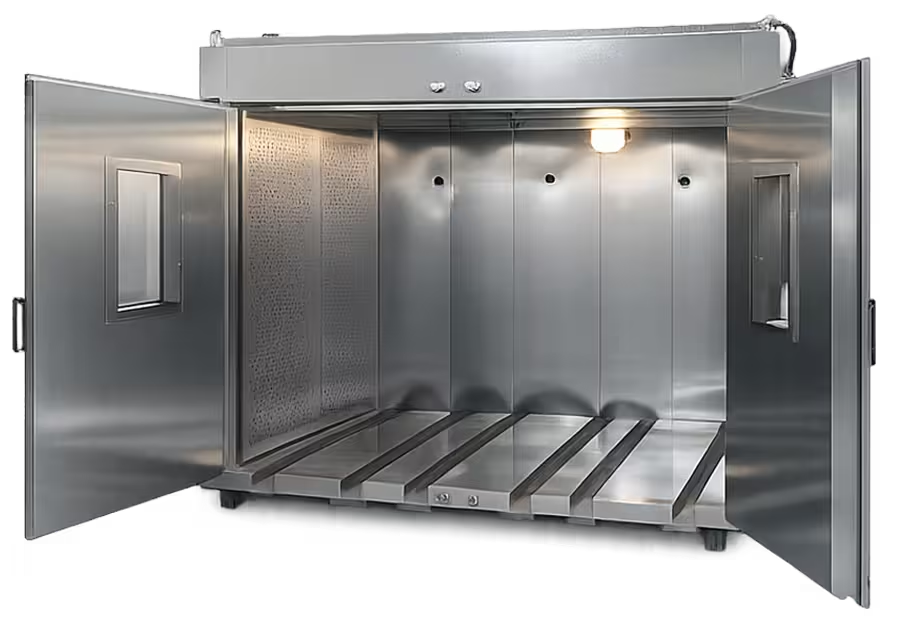
A practical guide to choosing between electric and gas industrial ovens, covering cost, temperature control, installation, safety, ventilation, and long-term production requirements.
This guide explains key walk-in oven safety features for industrial facilities, including over-temperature protection, door interlocks, airflow monitoring, exhaust review, emergency stops, alarms, electrical protection, and RFQ safety checklist items.
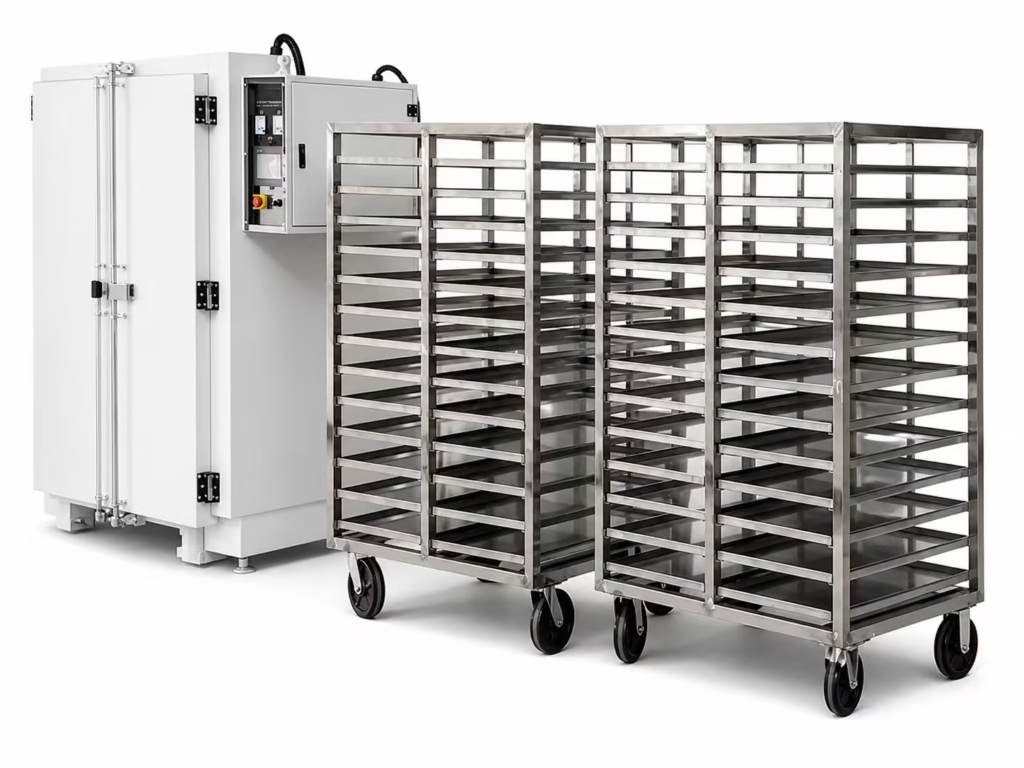
Need help selecting an industrial walk in oven? Contact us to review your load size, chamber access, airflow design, site limits, and RFQ details.