

Industrial Ovens for Curing and Forming
Curing and forming processes combine controlled heat with shape retention, tooling, or fixture support to develop both part geometry and material performance. Whether you are working with composite laminates, polymer sheets, rubber-based parts, or fixture-held assemblies, the oven must deliver repeatable temperature control, stable ramp-and-soak cycles, and consistent heating across both the part and its support structure. ZonHoo supplies industrial ovens for curing and forming applications where dimensional stability, batch consistency, and production repeatability matter.
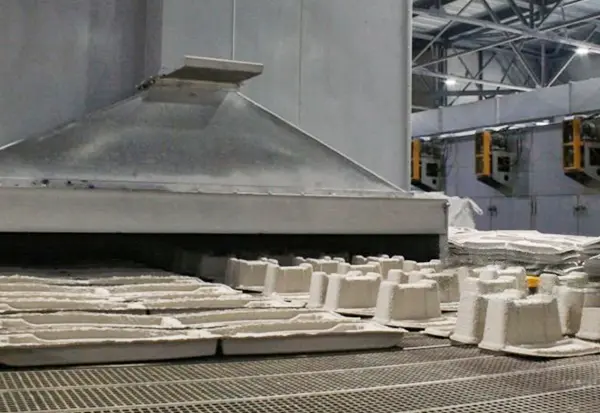
Why This Process Matters
Why Curing and Forming Requires Controlled Thermal Processing
In curing and forming applications, the oven does more than apply heat. It must help the material reach the required condition while maintaining the intended part shape, controlling distortion risk, and supporting repeatable production. That is why oven selection affects both product quality and process stability.
Stable Ramp and Soak Control for Material Set
Controlled heating and hold times help materials cure or set properly without underprocessing, overheating, or uneven property development.
Uniform Heating Across Parts, Fixtures, and Tools
When parts are processed in molds, jigs, or support frames, the system must heat the full assembly consistently to reduce uneven forming or cure variation.
Dimensional Stability During Shape Holding
Many curing and forming processes depend on thermal consistency while the part is restrained, shaped, or supported into its final geometry.
Repeatable Cycles for Production Transfer
Documented recipes, stable temperature control, and data support make it easier to move from trials to routine production with fewer variables.
Typical Applications
Where Curing and Forming Is Commonly Used
Curing and forming is used across industries where heat must support both material transformation and part geometry control. The exact oven direction depends on part size, tooling method, throughput, and the level of dimensional consistency required.
Composite Panels and Laminates
Used for molded or fixture-supported composite parts that require controlled heating to develop structure and maintain target shape.
Thermoformed Polymer Sheets and Profiles
Applied where plastic materials are heated and stabilized into a designed shape for downstream assembly or use.
Rubber and Elastomer Components
Suitable for parts that require thermal curing while being supported in molds, frames, or forming setups.
Tooling-Based Industrial Assemblies
Used when parts are held in fixtures or jigs during thermal processing to improve consistency and reduce shape variation.
Insulation, Fiber, and Technical Material Parts
Helpful for specialty materials that need controlled heat exposure during shaping, setting, or dimensional stabilization.
Coated or Laminated Formed Components
Common where multiple material layers or surface systems must be processed while preserving the required part geometry.
EQUIPMENT DIRECTION
Recommended ZonHoo Oven Solutions for Curing and Forming
Application requirements vary by material, fixture design, part geometry, and production style. These oven directions are commonly used for curing and forming processes that need controlled heat, stable support conditions, and reliable batch or line performance.
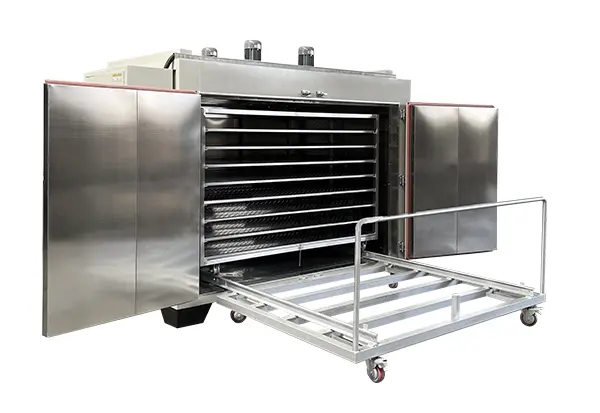
A practical choice for curing and forming jobs that require stable temperature control, recipe-based cycles, and flexible batch scheduling. It works well for small to medium parts processed with fixtures, molds, or support tools.
Best for:fixture-held parts, controlled ramp/soak cycles, repeatable batch production
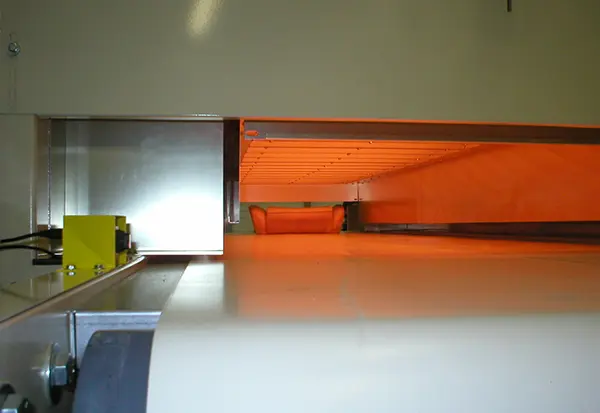
Suitable where faster thermal response or surface-focused heating is needed as part of the curing and forming process. It can help shorten response time in selected materials and staged processes.
Best for:fast-response heating, surface-dominant processes, shorter thermal stages
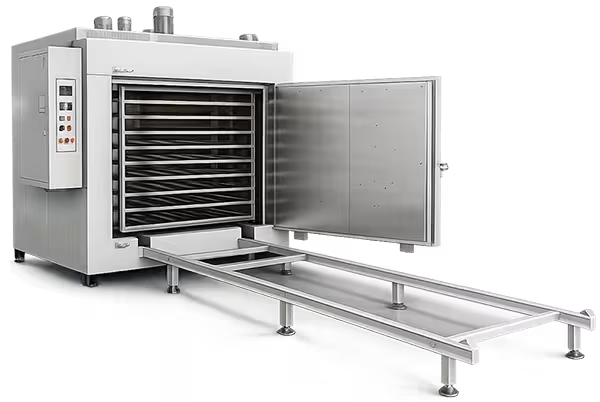
Designed for heavier tooling, large molds, or oversized parts that are easier to move on carts or rails. This direction supports curing and forming processes where handling and usable chamber space are critical.
Best for:large tools, heavy loads, oversized parts, rail or cart transfer
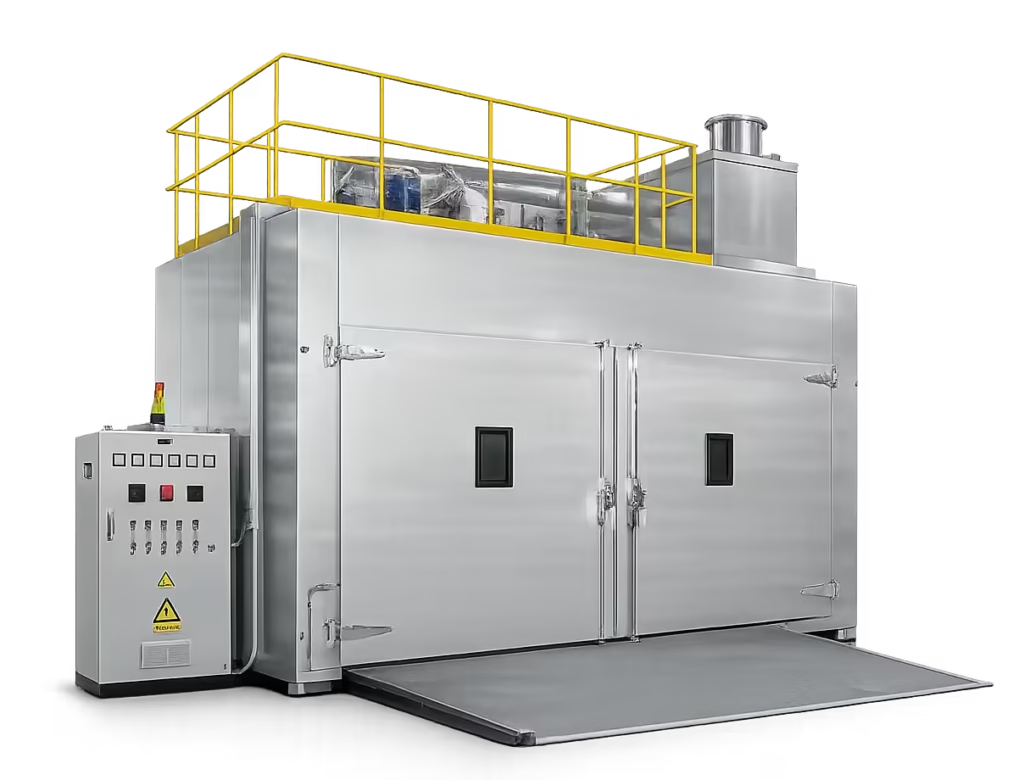
A strong option for larger components, manual loading conditions, or processes where operators need interior access for loading, unloading, or tooling arrangement. Useful when flexibility matters more than automated flow.
Best for:large formed parts, manual handling, fixture setup and adjustment
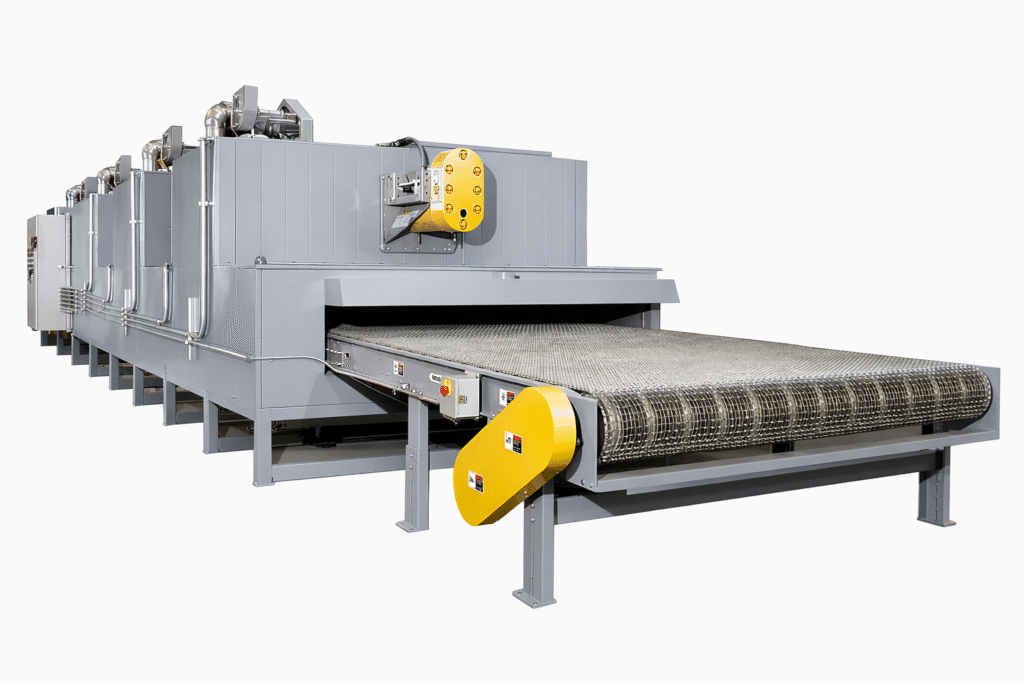
Recommended when curing and forming must be integrated into a more continuous production route. It supports repeatable throughput, reduced handling variation, and smoother process flow between upstream and downstream stations.
Best for:repeat production, conveyorized handling, stable throughput requirements
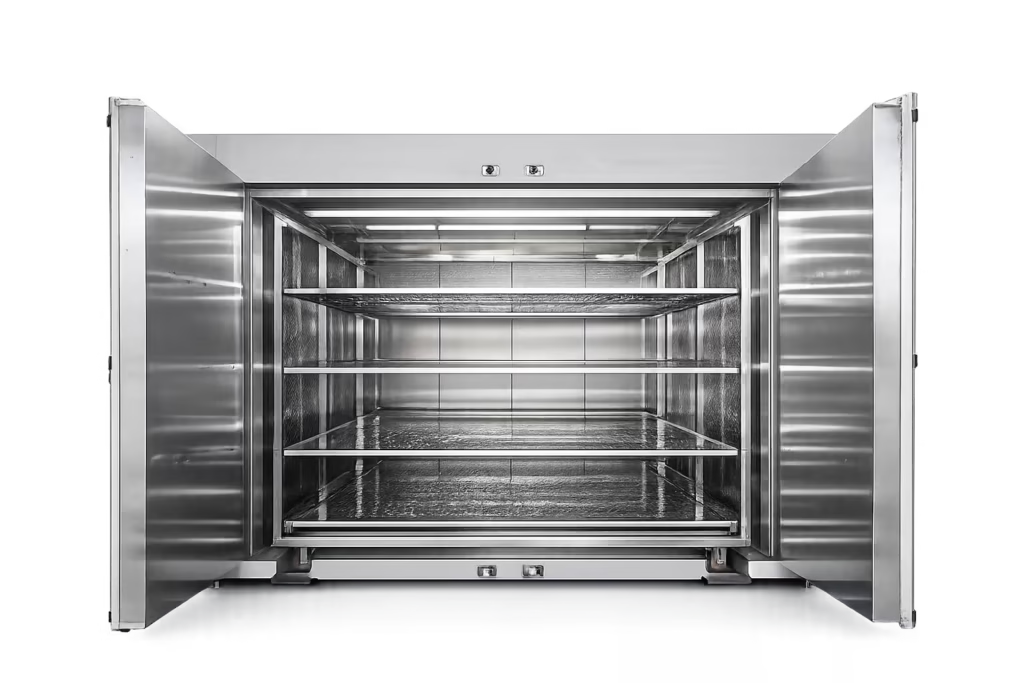
Well suited for parts processed with changing fixtures, tooling carts, or mixed production setups. It offers flexible loading and can be configured for different part sizes and forming conditions.
Best for:heavy fixtures, mixed batches, flexible loading arrangements
Support Before RFQ
Process Validation and Engineering Support
When curing and forming involves part geometry, tooling compatibility, temperature windows, or production throughput, early engineering input helps reduce downstream risk. ZonHoo supports process review, oven direction selection, loading concept discussion, and specification alignment for industrial thermal systems used in curing and forming applications.
- Review of part size, tooling or fixture dimensions, and loading direction
- Confirmation of temperature range, ramp profile, soak time, and cycle repeatability
- Advice on airflow pattern, chamber use, and part-to-part spacing
- Evaluation of batch versus conveyor direction based on throughput goals
- Options for PLC/HMI control, data logging, alarms, and recipe management
- Support for RFQ definition, layout discussion, and engineering review
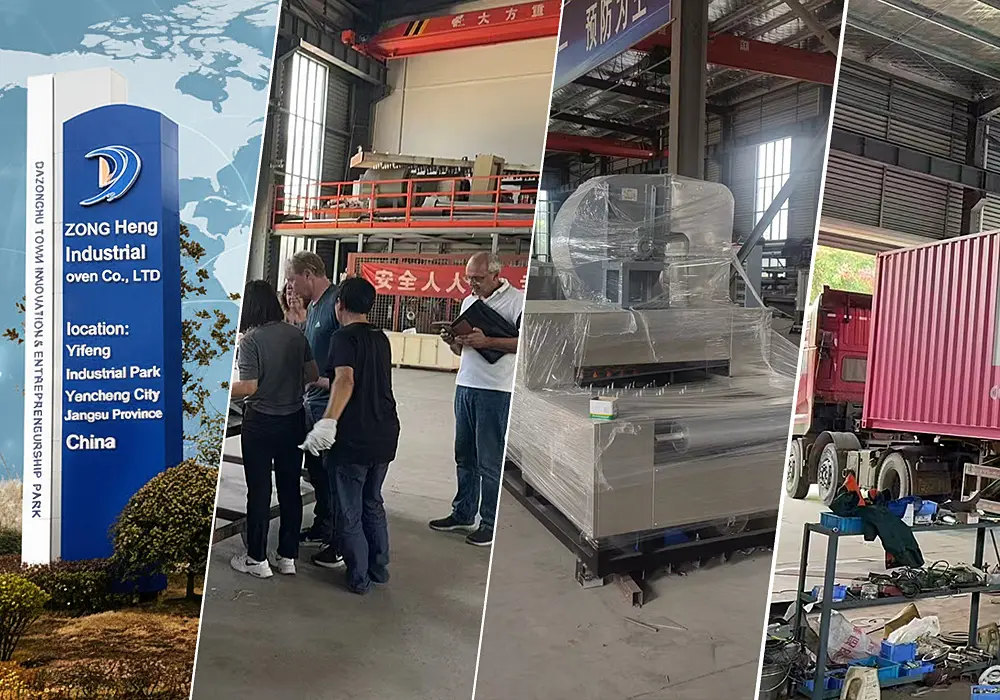
Test Your Process on Available Equipment
Frequently Asked Questions
Frequently Asked Questions About Curing and Forming
What is curing and forming in industrial heat processing?
Curing and forming refers to processes where controlled heat helps develop material properties while the part is being held, shaped, or stabilized into its required geometry. The process often involves fixtures, molds, supports, or tooling during thermal exposure.
How is curing and forming different from post-curing?
Curing and forming focuses on thermal processing during shape development or dimensional stabilization, while post-curing usually refers to an additional heat cycle applied after the part has already been formed or initially cured.
What oven type is best for parts processed in molds or fixtures?
That depends on part size, fixture weight, temperature range, and throughput. Batch curing ovens are often suitable for controlled batch work, while truck-in, walk-in, or trolley-type designs may be better for larger tools or heavier loading conditions.
When should infrared heating be considered for curing and forming?
Infrared can be considered when the process benefits from faster thermal response, shorter heating stages, or more surface-oriented heat delivery. Suitability depends on material behavior, part geometry, and process consistency requirements.
Can ZonHoo help define chamber size and heating direction for curing and forming?
Yes. ZonHoo can support post-curing applications with custom chamber sizes, loading formats, airflow directions, and control configurations based on process requirements.
Tell Us About Your Curing and Forming Process
Tell us your part type, material, target temperature range, fixture or tooling condition, and production volume. We will help you review suitable oven directions, loading concepts, and control options for your curing and forming application.
What to Prepare
- Part name, material, and target process result
- Part size, tooling or fixture size, and loading method
- Temperature range, ramp/soak profile, and cycle time
- Batch quantity or line throughput target
- Any concern about distortion, surface marks, or uneven heating
What We Can Discuss
- Recommended oven direction and loading concept
- Chamber size, heating method, and airflow pattern
- Control options, data logging, alarms, and recipe management
- Layout, utility requirements, and production-line integration