

Industrial Ovens for Plastics Processing
Plastics processing is not just about shaping materials. It also depends on controlled thermal processes such as drying, curing, annealing, and preheating to improve product quality, dimensional stability, and process consistency.
From resin drying before molding to post-process stabilization of finished plastic parts, manufacturers often rely on industrial ovens to remove moisture, complete thermal reactions, reduce residual stress, and prepare materials or components for the next production step. ZonHoo provides industrial oven solutions for plastics processing, helping match oven type, temperature range, airflow pattern, chamber size, loading method, and control system to your actual material, process, throughput, and plant layout.
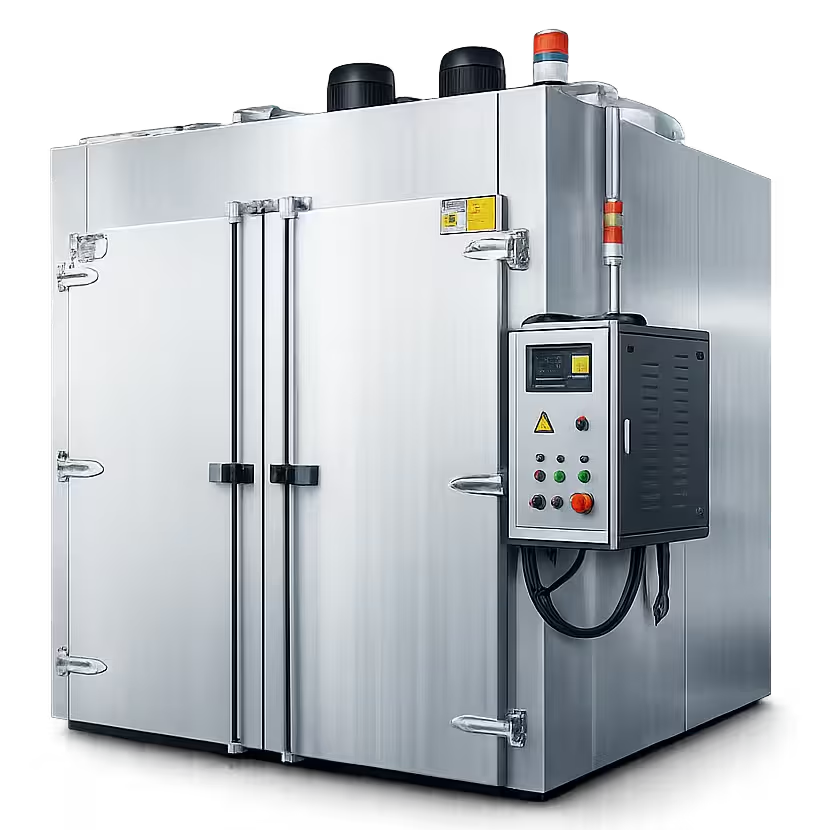
Industrial Electric Oven
Used for clean, stable electric heating in plastics processing. Suitable for resin drying, plastic part drying, annealing support, and general-purpose batch thermal cycles where temperature consistency matters.
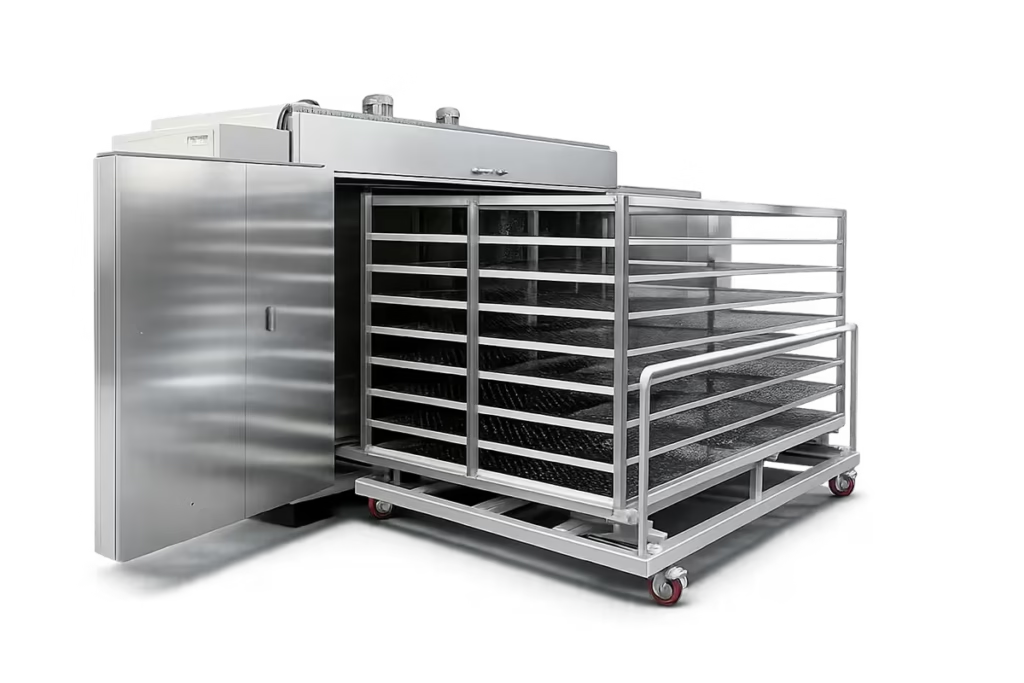
Industrial Batch Oven
A flexible solution for mixed production, changing part sizes, and batch-based thermal processes. Commonly used for curing, post-process drying, stabilization, and stress-relief cycles in plastics manufacturing.
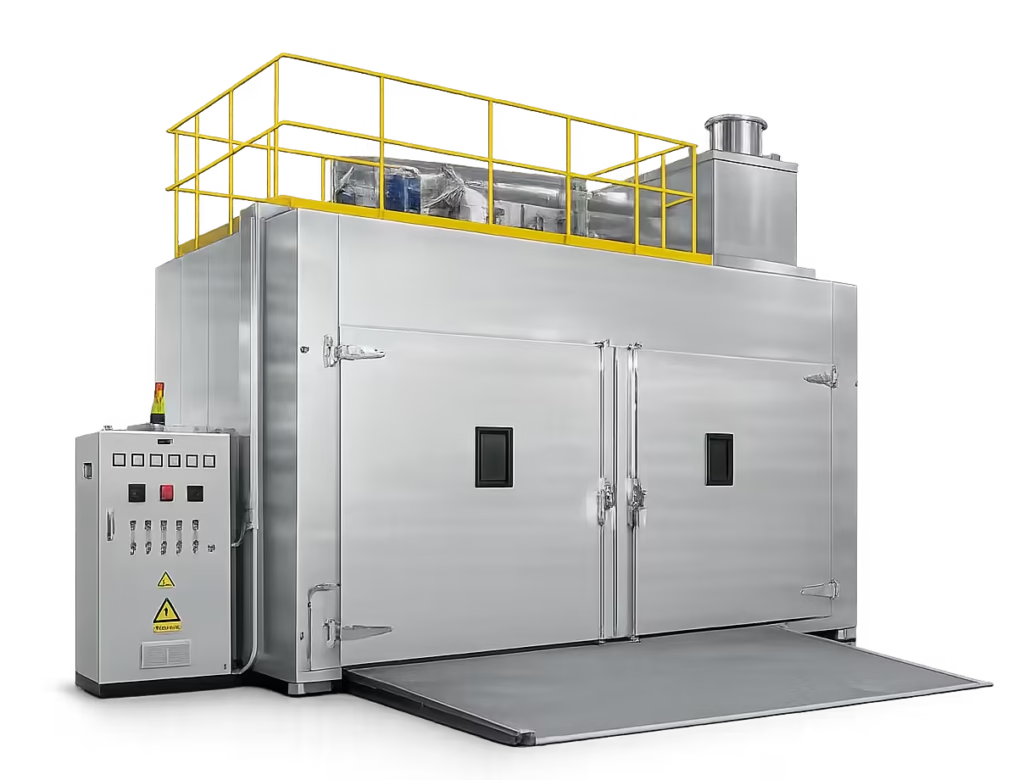
Walk-In Oven
Selected when larger molded parts, trays, racks, carts, or oversized tooling require more chamber access. A practical choice for bulky plastic components and larger batch handling.
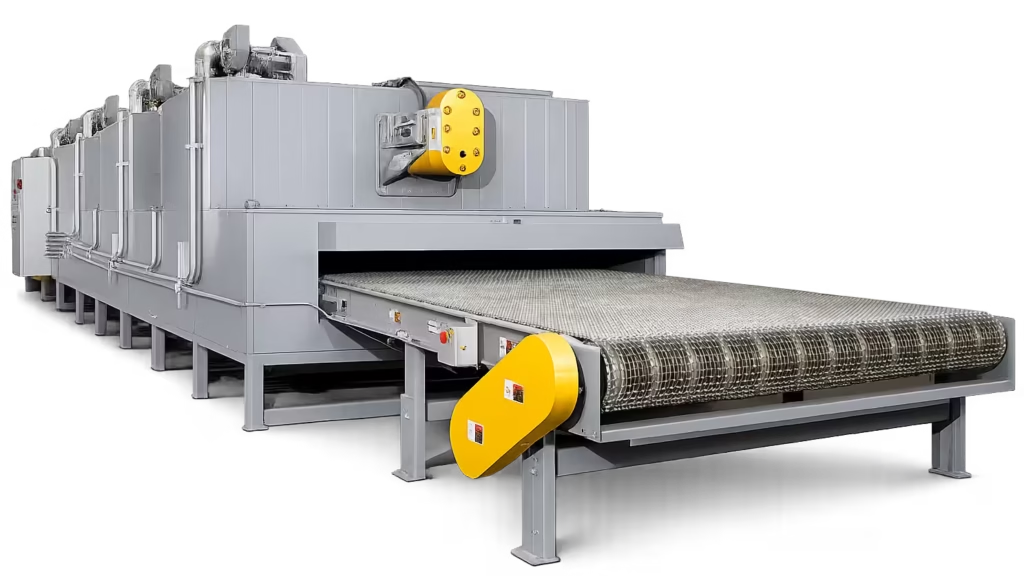
Industrial Conveyor Oven
Designed for continuous plastics processing where repeatable heating time and stable throughput are important. Often used for in-line drying, preheating, curing, or thermal support before downstream operations.
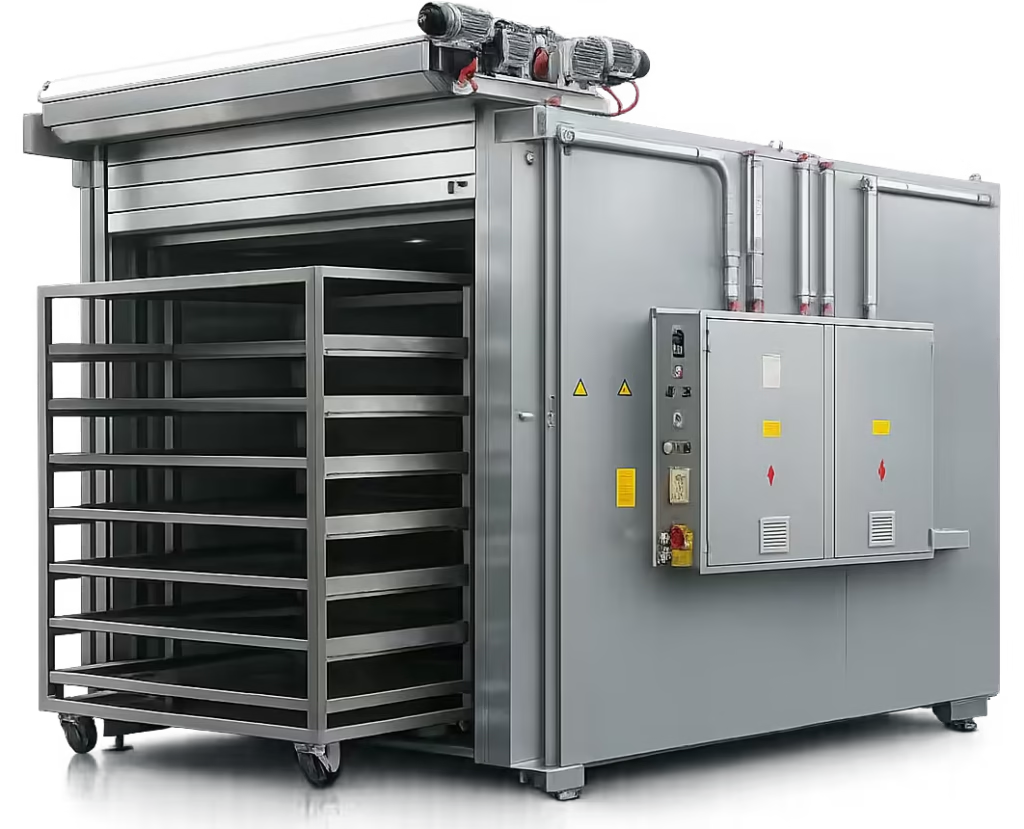
Constant Temp Drying Oven
Well suited for controlled low-temperature drying of plastic materials and parts. Often chosen for moisture-sensitive resin drying, post-wash part drying, and gentle thermal preparation before molding or assembly.
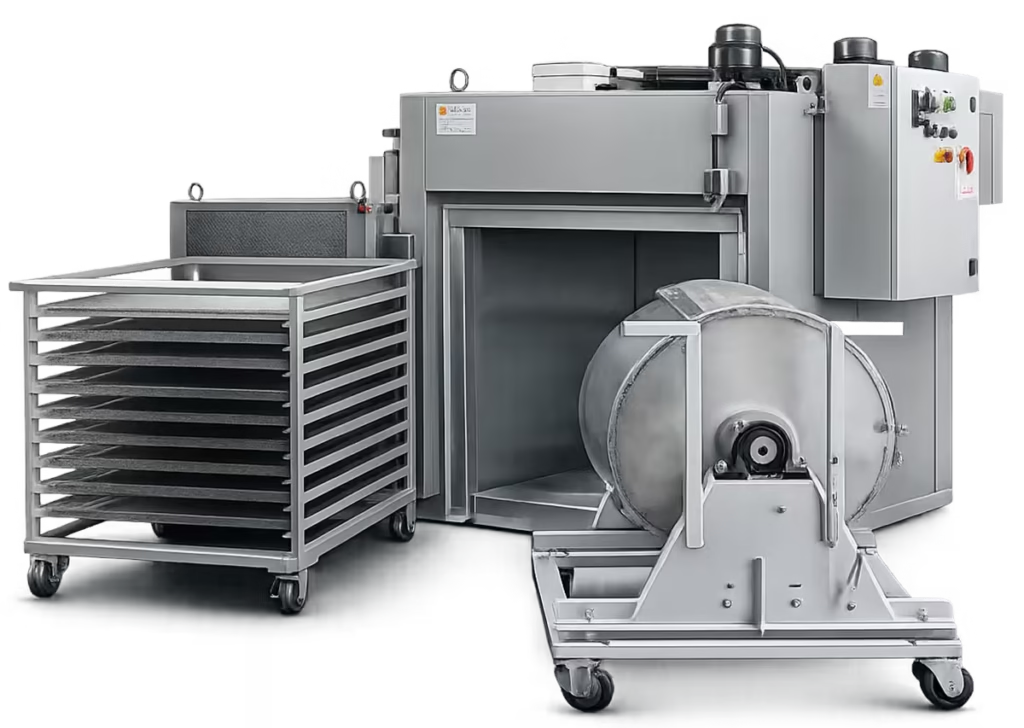
High-Temp Box Oven
Used for higher-temperature polymer processing and specialty thermal applications. A good fit for selected PTFE, engineering plastic, and controlled bake cycles beyond standard drying temperatures.
Resin Drying, Material Preparation & Preheating
Moisture control is one of the most critical thermal requirements in plastics processing. Many plastic resins, especially hygroscopic materials, absorb moisture during storage and handling. If the material is processed without proper drying, defects such as bubbles, silver streaks, reduced strength, and unstable molding quality can occur.
Controlled thermal preparation is also important before molding, forming, or secondary processing. Preheating resin, compounds, inserts, or selected tooling helps move materials into a more stable processing window and supports more consistent downstream results.

Typical processes: resin drying, pellet drying, compound warming, insert preheating, material preparation
Explore related solutions:
Plastic Part Drying, Annealing & Dimensional Stabilization
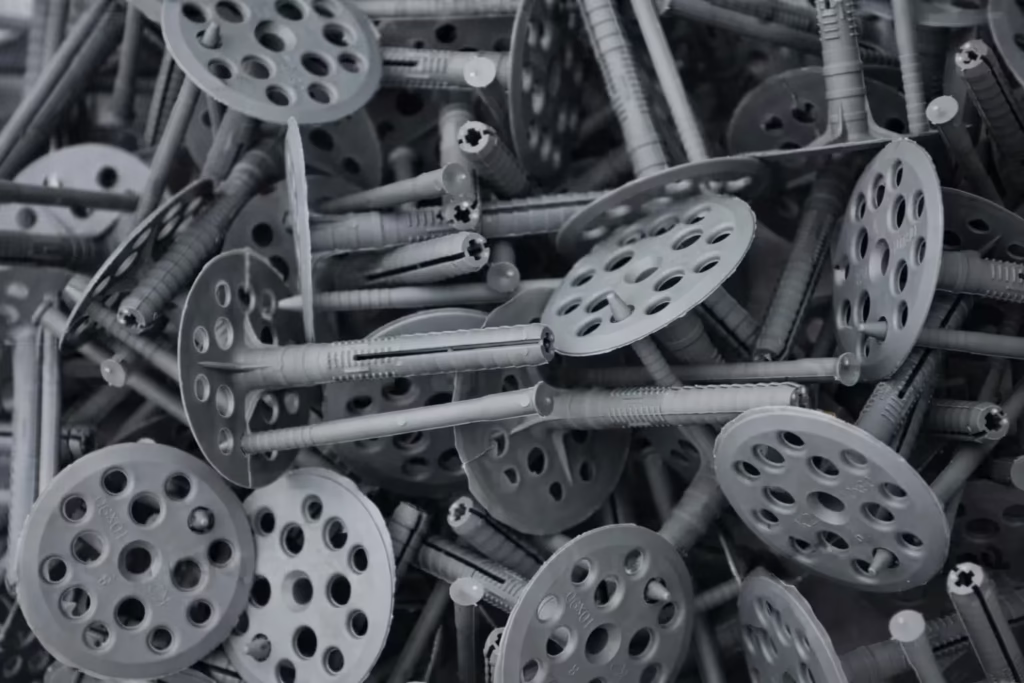
Thermal processing is also widely used after molding, machining, washing, or intermediate handling steps. Plastic parts may require controlled drying to remove residual moisture, while selected components need annealing or stabilization to reduce residual stress and improve dimensional consistency.
This is especially relevant for precision plastic parts, transparent components, stress-sensitive geometries, and applications where dimensional drift, cracking, or long-term instability must be controlled before assembly, coating, packaging, or shipment.
Typical processes: post-wash drying, molded part drying, low-temperature annealing, stress relief, dimensional stabilization
Explore related solutions:
Polymer Curing, Post-Curing & Specialty Thermal Processing
Not all plastics processes end when the part is formed. In thermoset plastics, composite-related components, bonded assemblies, and selected engineered materials, controlled heating may still be required to complete curing, support post-curing, or stabilize final performance.
Some specialty plastics applications also involve higher-temperature thermal cycles, such as selected polymer baking, PTFE-related processing, or thermal preparation for demanding industrial use. In these cases, oven selection must consider temperature range, airflow behavior, exhaust needs, loading method, and cycle repeatability.

Typical processes: curing, post-curing, specialty polymer heating, controlled bake cycles, PTFE-related thermal processing
Explore related solutions:
Need Help Defining the Right Plastics Oven Configuration?
Tell us your material type, drying target, temperature range, part size, throughput, and plant conditions. We can help you narrow the right oven direction for plastics processing and prepare a more RFQ-ready solution path.
How to Match the Right Oven to Plastics Processing
Selecting the right oven depends on the actual thermal objective—whether the process is drying, curing, annealing, stabilization, or preheating—as well as the material type, part size, loading style, and production mode.
| Production need | Recommended oven |
|---|---|
| Resin drying before molding or extrusion | Constant Temp Drying Oven |
| General plastic part drying and low-temperature thermal support | Industrial Electric Oven |
| Flexible batch curing, post-curing, or stabilization | Industrial Batch Oven |
| Larger molded parts, racks, trays, or tooling | Walk-In Oven |
| Continuous thermal processing with stable throughput | Industrial Conveyor Oven |
| Higher-temperature specialty polymer processing | High-Temp Box Oven |
Related Solutions & Guides
- Stable low-to-mid temperature control
- Uniform hot-air circulation for drying and stabilization
- Flexible batch or continuous production options
- Controlled heating for resin, parts, and tooling
- Optional exhaust and fresh-air exchange
- PLC / HMI recipe control (opt)
Need help matching the right oven to your plastics process, material behavior, throughput, or production layout?