

Industrial Truck In Oven
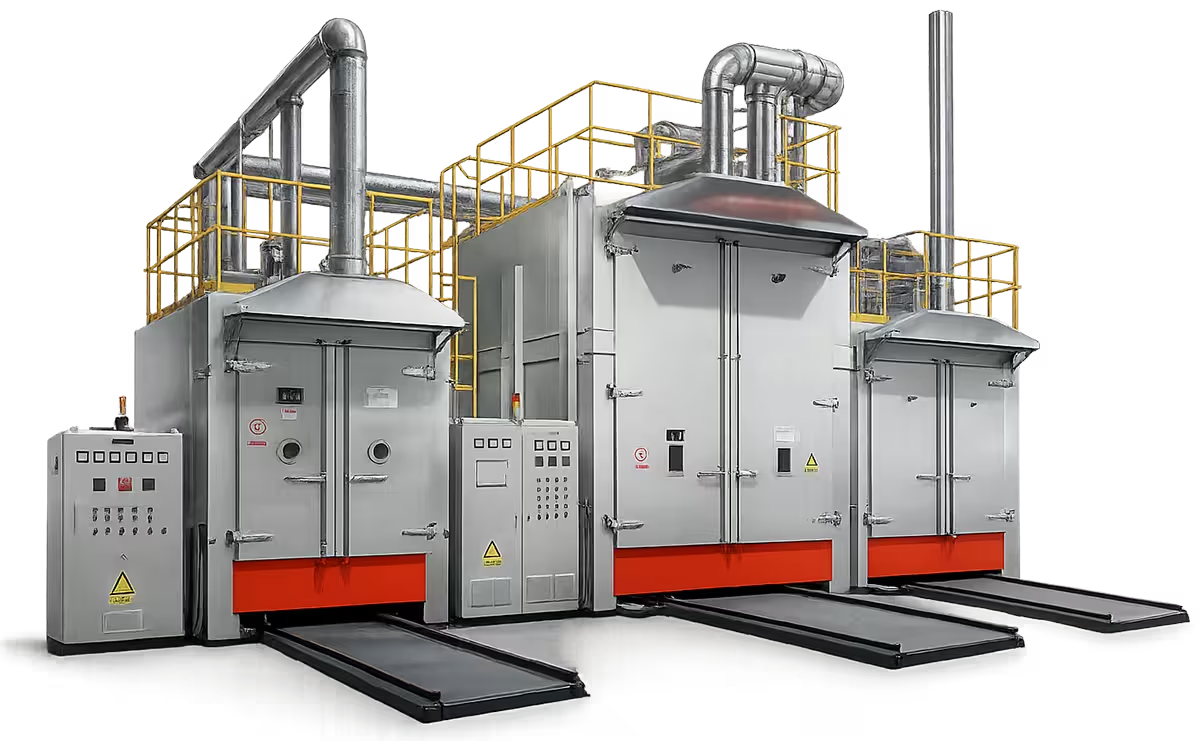
ZonHoo designs industrial truck in ovens for cart-loaded batch heating, drying, curing, and preheating. Each truck in oven can be configured for chamber size, temperature range, airflow pattern, loading method, controls, and safety requirements based on your production process.
Compared with general batch ovens, a truck-in oven is built for loads that move directly into the chamber on carts, trucks, or rail-guided bases. This loading method improves handling efficiency, supports repeatable batch processing, and makes the system easier to integrate into plant workflow.
What Is a Truck In Oven?
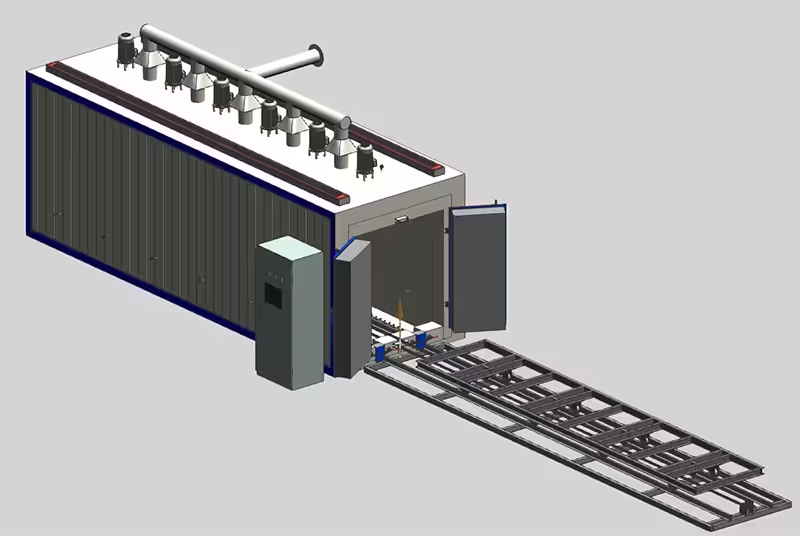
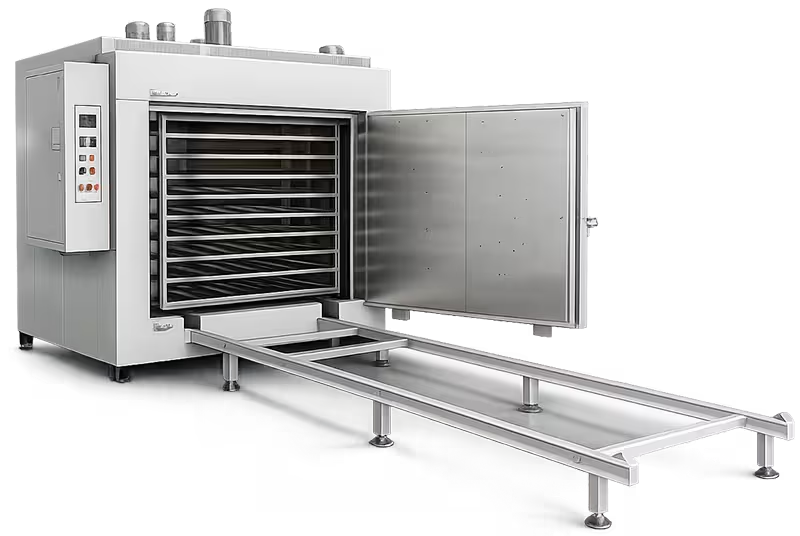
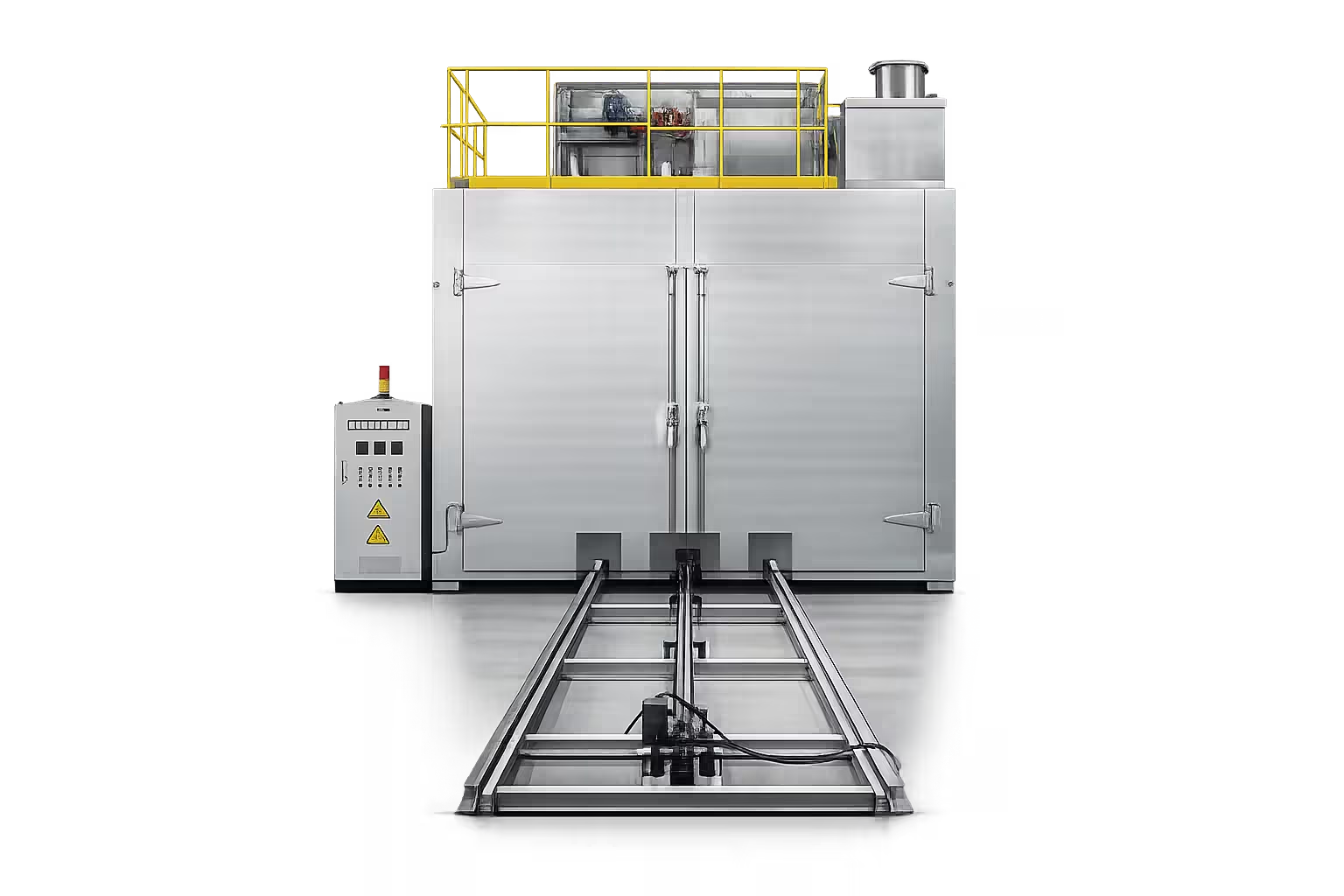
A truck-in oven (also called a cart-in batch oven) is a floor-level batch oven where the product is loaded on wheeled trucks instead of being stacked directly on fixed shelves inside the chamber.
Operators:
Load parts on the cart outside the oven
Roll the truck along rails or a flat floor into the truck-in oven
Run the programmed heating cycle
Roll the truck out and move the finished batch to the next station
Compared with a general industrial batch oven, a ZonHoo truck-in oven is optimized for:
Heavy and bulky loads on steel trucks
Repeatable layouts – same truck layout every batch
Safer, faster loading and unloading at floor level
ZonHoo truck-in ovens are cart-loaded batch ovens built around one or two wheeled trucks, so your operators load at floor level, roll the whole batch in, and roll it back out again—no more climbing into a hot chamber or restacking heavy parts by hand. With a few well-chosen options we can balance investment cost, lead time, and performance for most heavy-load jobs, while still tuning the chamber size and airflow to your actual truck layout instead of an empty test box. The circulation system is sized for dense, multi-level racks, giving you quick heat-up and repeatable part-to-part temperature even with frequent door openings, and the reinforced floor, rail zones, and industrial-grade components are built to live with daily cart impacts. For plants dealing with slow changeovers, inconsistent layouts, or awkward, heavy loading, a ZonHoo truck-in oven lets you push more product through the same space and keep quality stable shift after shift. If you’re still mapping out the line and utilities, see: Oven system planning →; if you already know you’ll need something beyond these standard designs, have a look at Custom industrial ovens → for special sizes, temperatures, and safety packages.
Truck In Oven Design Features & Construction
ZonHoo designs each truck-in oven around your trucks, fixtures, and plant layout. The goal is to move full carts in and out quickly while maintaining tight temperature uniformity and safe operation in daily production.
Cart-Loaded Batch Design
- Custom single-truck or dual-truck layouts to match your load size and weight
- Multi-level shelves, hooks, or dedicated fixtures built onto the truck
- Floor or recessed rails designed for your forklifts, tugger trucks, or manual handling
- Hinged, bi-parting, or vertical lift doors selected for your building height and crane access
Airflow & Temperature Uniformity
- Engineered horizontal crossflow or combination airflow tuned to your truck layout
- Recirculation blowers sized for real pressure drop through racks and dense loads
- Typical truck-in oven temperature uniformity of ±3–5 °C at steady state with full load
- Optimized ductwork to avoid hot and cold spots on tall carts and multi-level shelves
Structure, Insulation & Floor Design
- Heavy-gauge steel shell with reinforced door frames and rail zones
- High-performance insulation (typically 100–150 mm) to reduce heat loss and energy cost
- Plate floor, integral rails, or refractory floor depending on load weight and temperature
- Industrial-grade door hardware and seals for long service life
Safety for Coating and Solvent Processes
- Dedicated fresh-air and exhaust design for solvent-bearing coatings and adhesives
- Independent high-limit temperature protection and safety interlocks
- Optional LEL monitoring for critical truck-in oven installations
From Concept to Installation —
We’ve Got You Covered
| Comparison Point | Truck-In Oven | Walk-In Oven |
|---|---|---|
| Primary Loading Method | Loads enter on carts, trucks, or rail-guided bases. | Loads are placed manually or with flexible chamber access. |
| Best For | Cart-loaded batch processing and repeated wheeled load movement. | Processes requiring operator entry or flexible chamber access. |
| Chamber Access | Designed around load entry rather than operator movement. | Designed for easier operator access inside the chamber. |
| Handling Logic | Best for organized batches moved on wheeled fixtures. | Best for flexible loading of parts with more manual positioning. |
| Typical Workflow | Load on cart → move into oven → run cycle → move out. | Load inside chamber → run cycle → unload manually or by cart. |
If your process depends on wheeled batch handling, a truck-in oven is usually the more practical choice, while a walk-in oven is better suited for flexible chamber access.
The right truck-in oven should be selected according to load design, thermal process, plant layout, and handling method. This section works best as an always-open selection guide rather than an accordion, because users can scan it quickly and Google can read the full content directly.
1.Load Type and Cart Structure
Start with the actual load: part dimensions, total loaded weight, rack or fixture design, and whether the load is moved on carts, trucks, or rail-guided bases.
2.Chamber Size and Usable Space
The chamber must provide enough usable space for the cart and the load while allowing proper airflow circulation, loading clearance, and door access.
3.Temperature Range and Process Requirements
Define target operating temperature, hold time, heating rate, and process stability for drying, curing, preheating, aging, or stress-relieving applications.
4.Airflow and Temperature Uniformity
Truck-in oven performance depends on how heated air moves around the loaded cart, not just on empty-chamber design or heater placement.
5.Controls, Safety, and Project Needs
Review controls, alarms, over-temperature protection, exhaust needs, interlocks, and documentation expectations based on the product and site conditions.
Truck In Oven Operating Precautions
To protect operators, product quality, and equipment life, ZonHoo recommends the following precautions when operating a truck-in oven:
Loading & Layout
- Respect the specified maximum truck weight and shelf loading limits
- Keep airflow paths open; avoid blocking ducts with solid plates or over-packed loads
- Use consistent truck layouts to keep truck-in oven uniformity stable from batch to batch
Safety & Maintenance
- Check door seals, rails, and door latches regularly for wear or damage
- Follow process limits for solvents, exhaust settings, and maximum part temperature
- Allow controlled cooling time before opening doors fully to protect operators
- Perform routine checks on fans, heaters, safety switches, and limit circuits
ZonHoo supplies each truck-in oven with operating instructions and a maintenance checklist that can be adapted to your EHS and quality systems.
Product & Process Information
- Part description and material (welded frames, castings, coated panels, etc.)
- Maximum part size and weight; total load per truck and per batch
- Required operating temperature, tolerance, and hold time
- Process type: curing, drying, preheating, stress relieving, tempering, etc.
- Any coatings, solvents, or atmosphere requirements
Truck, Floor & Layout Details
- Truck dimensions, wheel type, and loaded weight
- Preferred rail style – floor rails, recessed rails, or flat plate floor
- Available installation space, clear height, and preferred door orientation
- Need for one or two trucks per oven, plus spare trucks for staging
Utilities, Controls & Project Targets
- Preferred heating method: electric, indirect gas, thermal oil, or steam
- Available voltage and frequency, and any power limitations
- Required control level: basic controller vs PLC/HMI with data logging
- Project timeline, target start-up date, and required on-site services
Send this truck-in oven RFQ checklist together with your drawings – or contact ZonHoo to help design the oven for you – so we can lock key parameters early and confirm a realistic lead time.
What is a truck-in oven?
A truck-in oven is an industrial batch oven designed for loads that enter the chamber on wheeled carts, trucks, or rail-guided bases. It is commonly used when manufacturers need a practical way to move heavy, bulky, or fixture-loaded parts into the oven with better handling efficiency.
What is a truck-in oven used for?
Truck-in ovens are used for drying, curing, preheating, aging, stress relieving, and other controlled batch heating processes. They are especially suitable for applications where products are loaded on carts or wheeled fixtures before entering the oven.
What is the difference between a truck-in oven and a walk-in oven?
A truck-in oven is built around cart-based or rail-guided load movement, while a walk-in oven is usually designed for direct operator access into the chamber. The best choice depends on whether your process is centered on wheeled batch handling or flexible chamber entry.
Can a truck-in oven be customized for heavy loads?
Yes. A truck-in oven can be customized for load size, cart structure, chamber dimensions, temperature range, airflow arrangement, controls, and safety functions. The system should be designed around the actual production load and handling method.
What loading systems can be used in a truck-in oven?
Common loading systems include free-rolling carts, wheeled trucks, rail-guided bases, and track-aligned loading arrangements. The most suitable option depends on load weight, operator workflow, plant floor conditions, and batch frequency.
How do I choose the right truck-in oven?
To choose the right truck-in oven, you should review load dimensions, total loaded weight, cart or rail design, required temperature range, airflow needs, production frequency, and site layout. A proper technical review helps define the most suitable chamber design and configuration.
ZonHoo truck-in ovens are often used in cart-loaded batch heating processes where heavy parts, fixtures, or racks need to be moved directly into the chamber for controlled heating, drying, curing, or stress relief.
– For molds, dies, tools, and parts that need controlled heating before forming, casting, or assembly, see Preheating.
– For composite parts, coated parts, and bonded assemblies that require a final thermal cycle, see Post-Curing.
– For automotive, machinery, and fabricated components that rely on adhesive bonding, see Adhesive Curing.
– For metal parts, fixtures, and jigs that need moisture removal before coating or assembly, see General Drying.
– For fitted parts and assemblies that require controlled thermal expansion, see Heat Assembly.
– For welded frames and machined structures that need stress reduction after fabrication, see Post Weld Heat Treatment.
Truck-in ovens are a practical choice for manufacturers that handle large, heavy, or cart-loaded parts in batch production. They are commonly used in automotive component manufacturing, composites processing, metalworking, surface treatment, and foundry-related drying or heating operations.
– Automotive manufacturers use truck-in ovens for frames, racks, bonded parts, coated components, and heat-treated assemblies.
– Composite manufacturers use truck-in ovens for post-curing, fixture-loaded parts, and large molded components.
– Metalworking plants use truck-in ovens for preheating, stress relieving, tempering, and drying before finishing.
– Surface treatment lines use truck-in ovens for coating cure, part drying, and controlled heating before or after surface preparation.
– Foundry operations may use truck-in ovens for mold, core, tooling, and fixture drying where batch loading is more practical than conveyor feeding.
Related Truck-In Oven Resources
- Truck-In Oven Buying Guide for Industrial Manufacturers
- Truck-In Oven vs Walk-In Oven
- Commitment to Safety
- Special Oven Customization
- Maintenance and Parts
- Truck-In Oven Carts, Rails, Trays, and Loading Options
- Temperature Uniformity in Truck-In Ovens
- Oven System Planning
- Install & Engineering
- Oven Control