

Industrial Ovens for PCB Baking & Drying
PCB baking and drying remove absorbed moisture, wash water, or residual humidity from printed circuit boards and electronic assemblies before soldering, rework, coating, storage, or the next production step. ZonHoo engineers controlled hot-air ovens around board size, rack loading, temperature limits, moisture condition, batch capacity, airflow, cleanliness, data logging, and production rhythm.
PCB Baking Controls Moisture Before Heat-Sensitive Manufacturing Steps
Printed circuit boards, laminates, packages, and assembled electronics can absorb moisture during storage, washing, transport, or exposure to humid environments. Controlled baking removes that moisture before later thermal operations and helps stabilize the next manufacturing step.
Reduce Absorbed Moisture
Remove moisture from boards, laminates, components, racks, and assemblies before downstream heating.
Dry After Washing
Forced hot air removes residual wash water from surfaces, holes, connectors, and assembly features.
Protect Sensitive Assemblies
Stable temperature and controlled airflow help avoid unnecessary thermal stress on populated boards.
Improve Traceability
Recipes, alarms, recorder functions, and data logging can support repeatable electronics production.
Where PCB Baking & Drying Is Commonly Used
Bare PCB Pre-Bake
Moisture removal before soldering, lamination, coating, or another controlled thermal step.
PCBA Pre-Bake
Controlled baking of assembled boards before reflow, rework, repair, or other heat-sensitive processing.
Post-Wash Drying
Removal of residual water after aqueous cleaning or rinsing of electronic assemblies.
Moisture-Sensitive Assemblies
Controlled low-temperature drying where product materials or electronic devices have strict temperature limits.
Repair & Rework
Pre-bake before component replacement, soldering, repair, or controlled rework procedures.
Pre-Coating / Pre-Encapsulation
Moisture removal before conformal coating, potting, encapsulation, or adhesive application.
Board Construction, Loading Density, and Temperature Limits Drive Oven Design
| Process Input | Why It Matters | Useful RFQ Information |
|---|---|---|
| Board type | Bare PCB, PCBA, connector assembly, panel, or module can tolerate different conditions | Photos, drawings, material information if relevant |
| Board / rack size | Controls chamber size, rack design, airflow and loading access | L × W × H of board, tray, rack, or cart |
| Load density | Closely spaced boards can block airflow | Boards/rack, rack quantity, spacing, total load |
| Temperature limit | Populated assemblies may have stricter limits than bare boards | Target setpoint and maximum allowable temperature |
| Bake / drying time | Determines batch cycle or conveyor residence time | Required duration or known production recipe |
| Moisture condition | Storage history and wash water affect process duration | Reason for baking and incoming condition |
| Cleanliness | Electronics may require low-particle or low-contamination construction | Internal materials, filtration, clean-air expectations |
| Traceability | Repeat production may require records and recipe control | PLC/PID, HMI, logging, export, network needs |
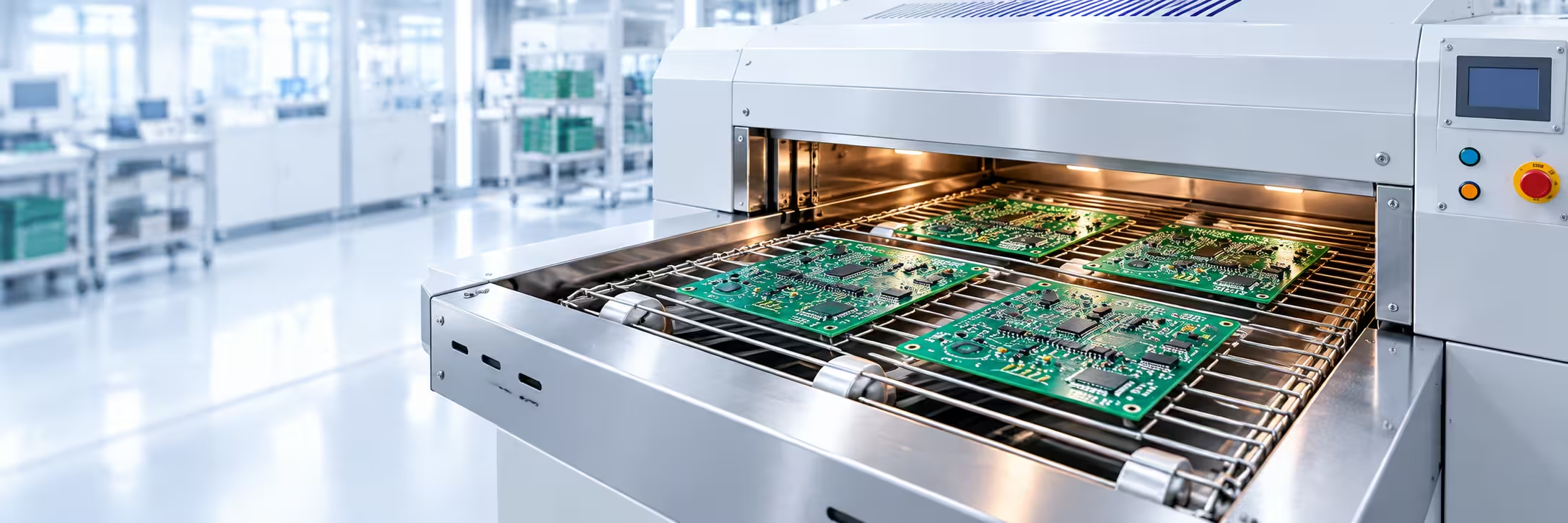
Match the Oven Direction to Process Control, Loading, and Production Volume
| Process Need | Typical Requirement | Recommended Oven Direction |
|---|---|---|
| Repeatable low-temperature PCB baking | Stable setpoint, racks, repeat recipes | Constant Temperature Drying Oven |
| Post-wash moisture removal | Controlled circulation and moisture exhaust | Hot Air Circulation Dryer |
| Flexible electronics batch baking | Different board sizes, racks, recipes | Industrial Batch Oven |
| Clean controllable electric heating | Electric heat, controlled chamber materials | Industrial Electric Oven |
| Continuous PCB / panel drying | Stable pitch, line speed, integrated handling | Conveyor Belt Dryer |
| Special cleanliness / logging / custom racks | Project-specific chamber and controls | Custom Industrial Oven |
Recommended ZonHoo Oven Solutions for PCB Baking & Drying
The right equipment direction depends on whether the process is pre-bake, post-wash drying, repair/rework preparation, high-density rack loading, low-contamination electronics processing, or continuous production.
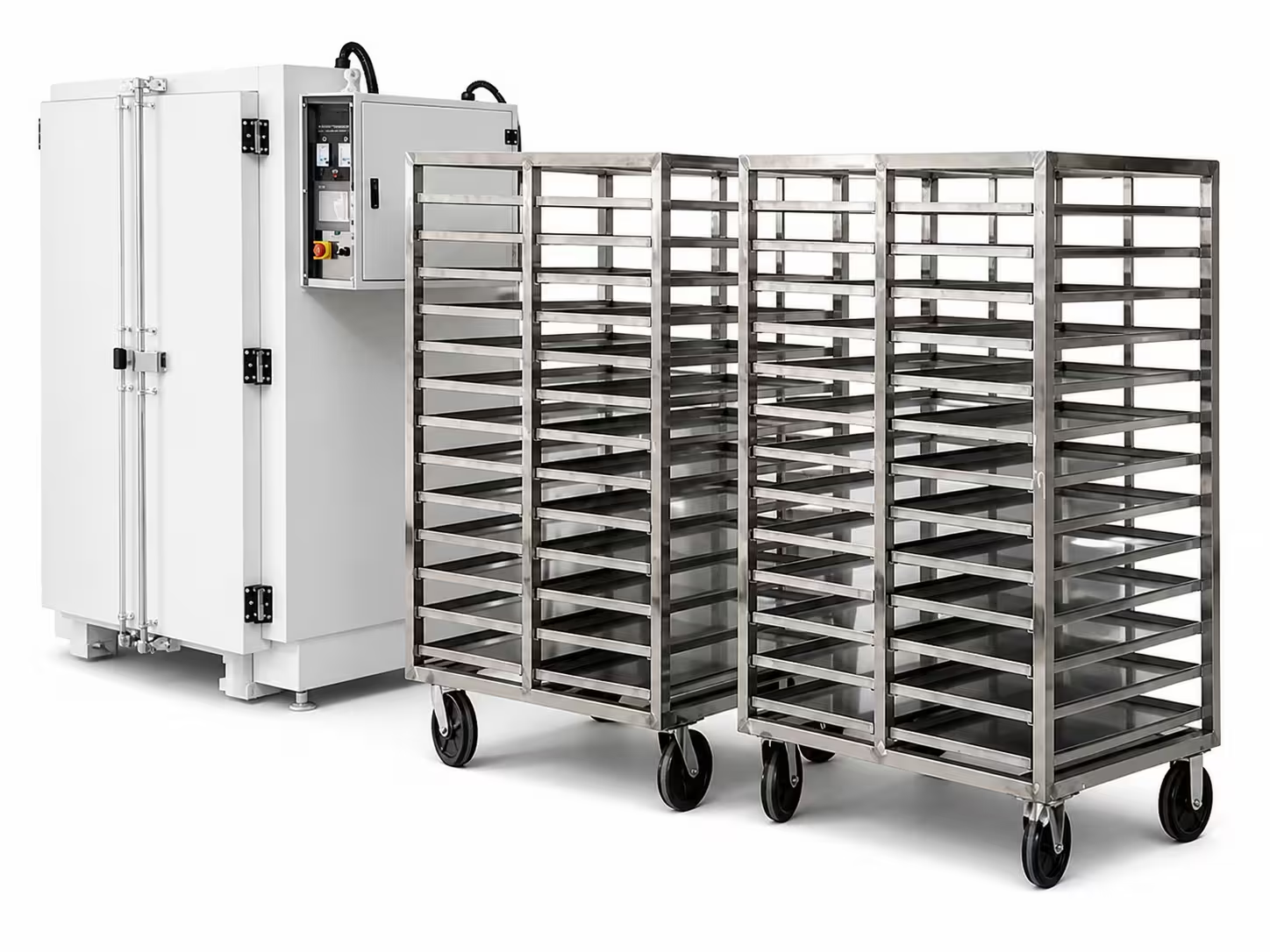
Constant Temperature Drying Oven
Stable batch-temperature control for repeat PCB baking recipes and electronics moisture removal.
Best for: PCB pre-bake, PCBA moisture removal, repeat recipes, and low-/medium-temperature electronics drying.
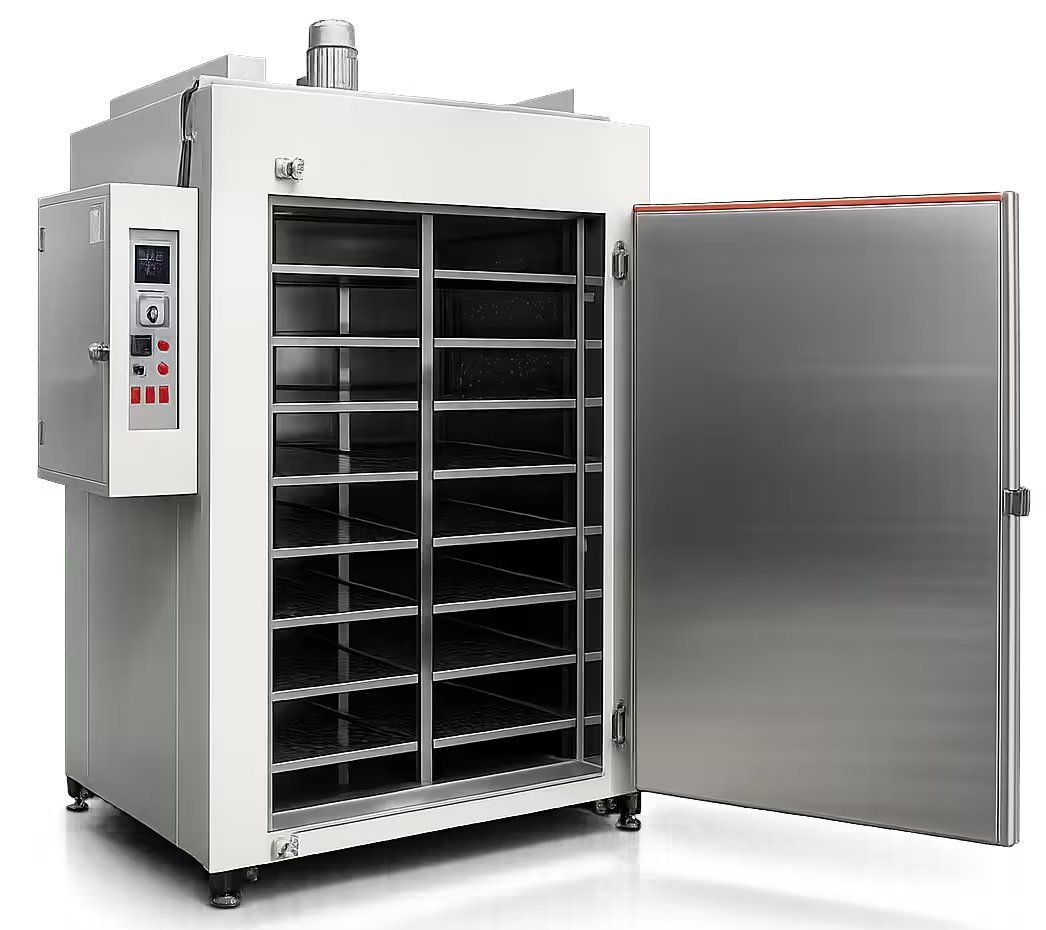
Hot Air Circulation Dryer
Controlled convective airflow for rack-loaded boards and assemblies where moisture removal is central to the process.
Best for: post-wash drying, dense rack loading, and higher moisture removal.
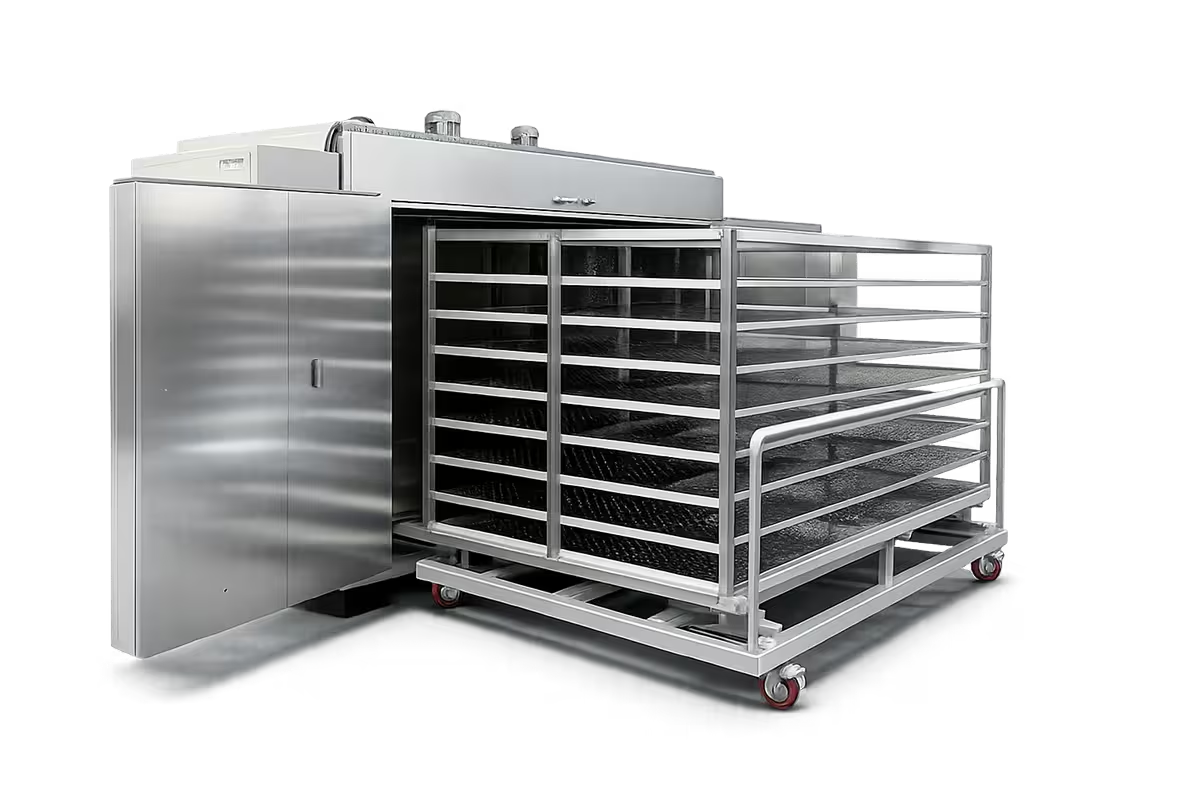
Industrial Batch Oven
A flexible chamber for different PCB sizes, rack layouts, bake recipes, and mixed electronics production.
Best for: repair/rework, mixed products, variable batches, and flexible production.
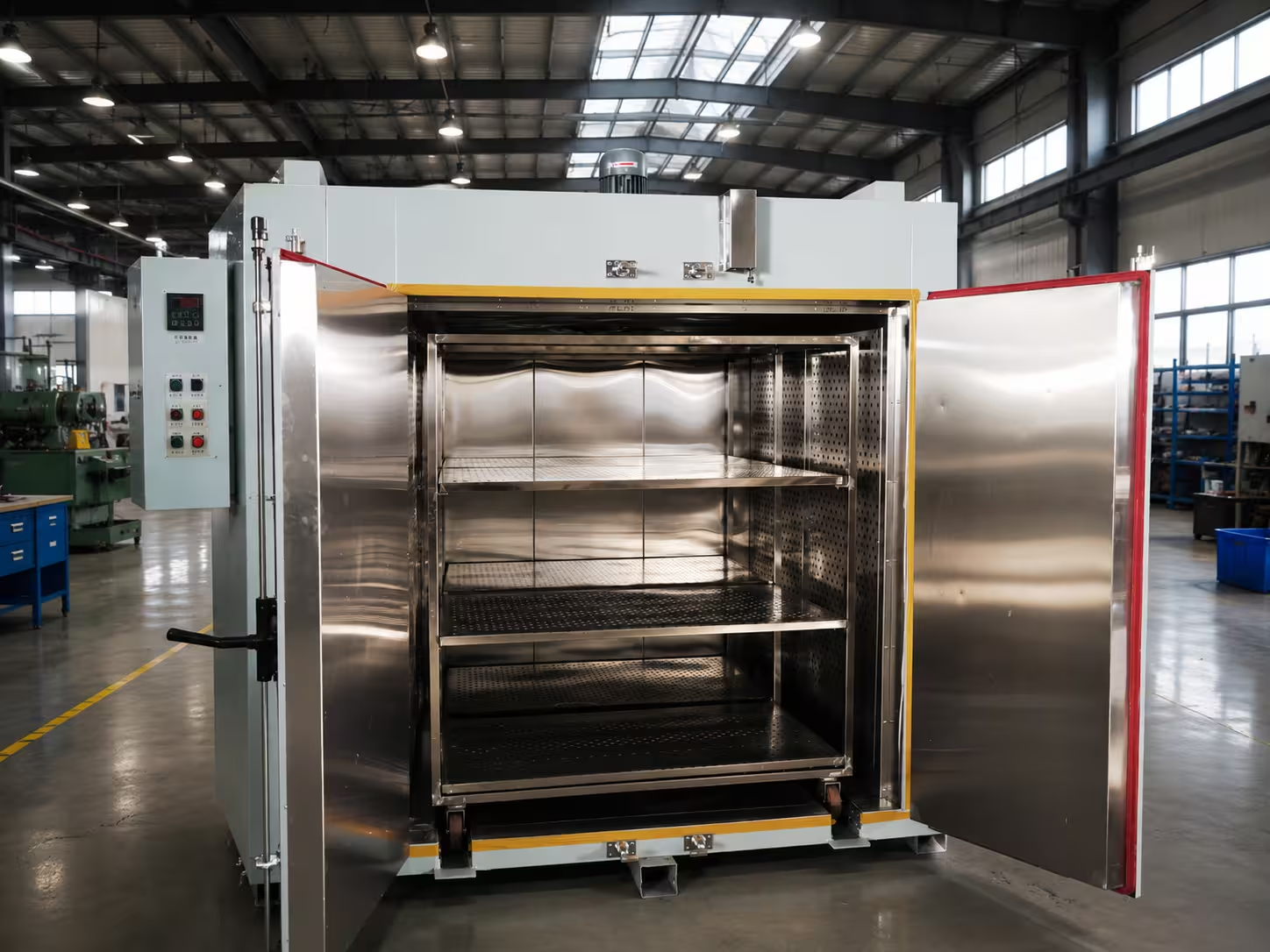
Industrial Electric Oven
Clean and controllable electric heating for electronics processes where direct combustion is undesirable.
Best for: PCB/PCBA baking, clean electric heating, and indoor electronics manufacturing.
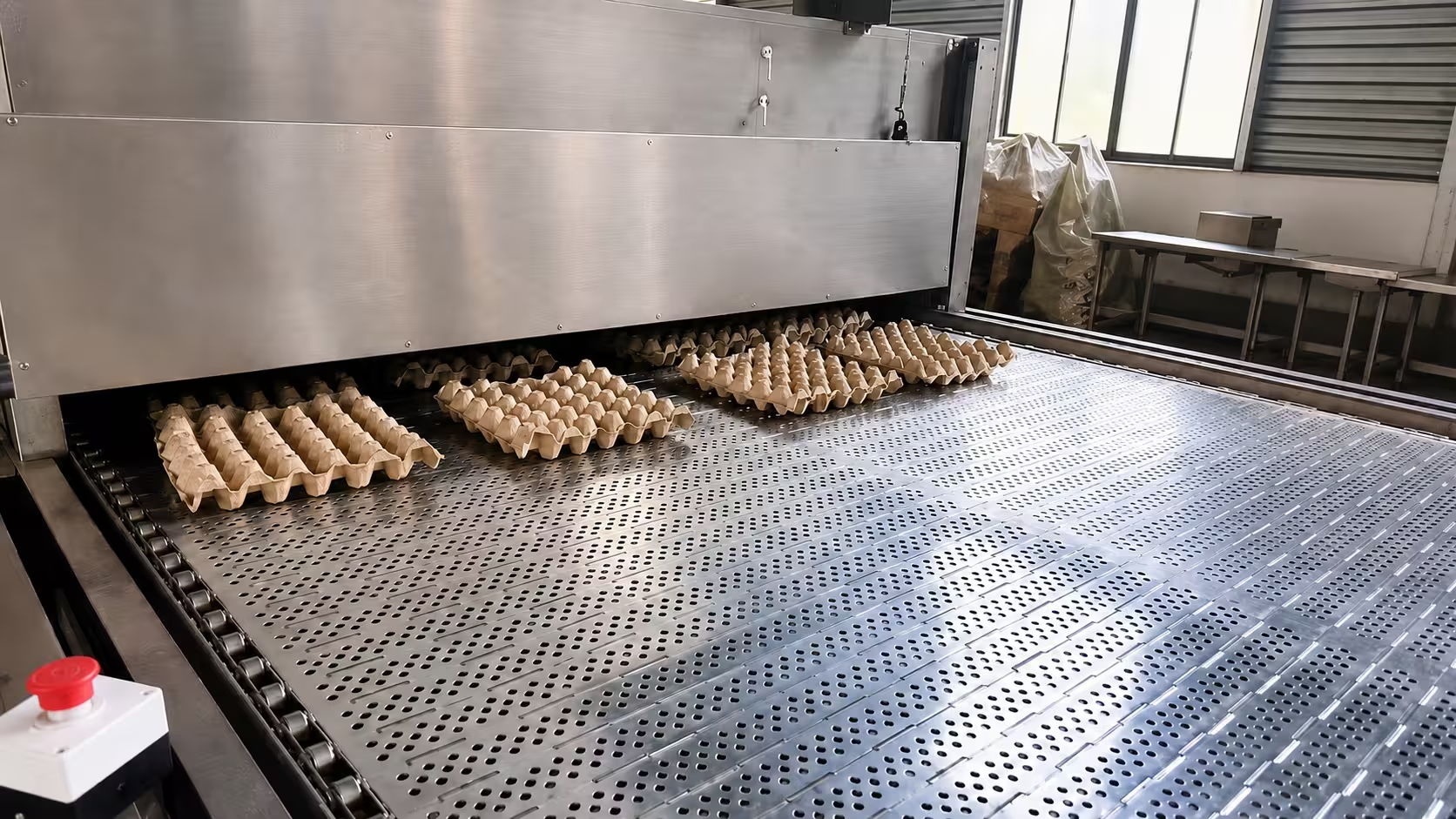
Conveyor Belt Dryer
A continuous drying direction for boards, panels, carriers, or assemblies moving through an integrated production line.
Best for: continuous post-wash drying, panel drying, and high-throughput lines.
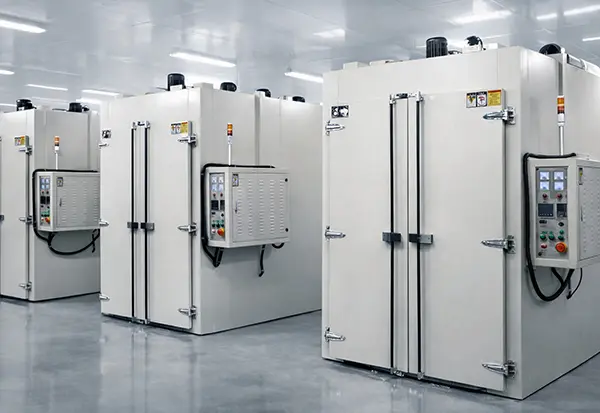
Custom Low-Contamination Oven
Custom chamber materials, filtration, racks, controls, recorder functions, alarms, and documentation can be configured around the electronics process.
Best for: special cleanliness, custom racks, data logging, and customer-specific acceptance criteria.
PCB Drying Depends on Airflow Access, Rack Density, and Temperature Discipline
Electronics drying is not improved simply by increasing heater power or fan speed. Rack pitch, chamber plenums, supply/return arrangement, exhaust, sensor placement, and loading consistency should be planned together.
- Rack spacing and usable airflow passages
- Controlled hot-air circulation around boards and assemblies
- Moisture exhaust without excessive temperature loss
- Electric heating and low-contamination chamber options
- PLC/PID control, alarms, recipes, and optional data logging
- Temperature-uniformity mapping and FAT where required
Airflow & Moisture Removal
See the Drying Oven Airflow, Moisture Exhaust & Ventilation guide.
Chamber & Heating Capacity
Uniformity & FAT
Connect PCB Drying Requirements to Electronics Production
Electronics & Electrical Industry
Broader thermal-processing applications for electronics, electrical components, assemblies, and manufacturing plants.
Drying Oven Selection Guide
Use when the project still needs to compare batch, continuous, airflow, loading, and equipment architecture.
Drying Oven RFQ Checklist
Use before quotation to organize board size, rack layout, temperature, time, output, controls, and acceptance requirements.