
MOLDED PULP & FIBER DRYING
Industrial Ovens for Molded Pulp & Fiber Drying
Molded pulp and molded fiber products leave forming with significant retained moisture. The drying stage must remove that moisture fast enough for production while controlling deformation, surface defects, uneven shrinkage, and excessive energy use.
ZonHoo engineers custom industrial drying ovens for egg trays, protective packaging, molded-fiber tableware, inserts, and other formed fiber products. Systems can be designed around batch or continuous production, electric or gas heating, controlled hot-air circulation, moisture exhaust, product support, and the required production rate.
Why Molded Pulp Drying Requires Controlled Airflow and Moisture Exhaust
Drying molded fiber is not simply a matter of adding heat. The equipment must move heat into the product, carry released moisture away, and keep airflow consistent around parts whose thickness, geometry, loading density, and incoming moisture can vary.
Even Moisture Removal
Balanced circulation and controlled exhaust help reduce wet spots and uneven drying between different tray positions or product layers.
Shape & Dimensional Stability
Appropriate temperature, air velocity, support method, and residence time help limit warping, edge distortion, and non-uniform shrinkage.
Surface Quality & Lower Rejects
A stable process helps avoid over-drying some surfaces while other areas remain wet, improving repeatability across production batches.
Repeatable Production Throughput
Drying capacity must be sized around incoming moisture, product mass, hourly output, loading pattern, and the available heating and exhaust capacity.
Where Industrial Molded Pulp & Fiber Drying Is Commonly Used
The same drying principles apply across many formed-fiber products, but the oven configuration changes with geometry, thickness, support method, production volume, and required final moisture.
Egg Trays & Egg Cartons
High-volume molded pulp products where continuous transfer and predictable residence time are often important.
Protective Packaging Inserts
Custom molded-fiber packaging with variable wall thickness, deeper cavities, and tighter appearance requirements.
Molded-Fiber Tableware
Plates, bowls, trays, clamshells, and related fiber products requiring repeatable drying and controlled handling.
Cup Carriers & Beverage Trays
Nested or shaped products where airflow access and loading orientation can directly affect drying uniformity.
Industrial Cushioning & Dunnage
Thicker molded-fiber protection parts used in appliances, electronics, automotive components, and industrial shipping.
Fiber Pots & Specialty Molded Products
Plant pots and other custom fiber shapes where part support, moisture release, and deformation control must be considered.
How to Match the Right Oven Direction to Molded Pulp Drying
The oven direction should follow the production process. Product size, thickness, incoming moisture, hourly output, loading method, temperature limit, and available floor space determine whether a batch oven, belt dryer, or integrated drying line is the better fit.
| Process Need | Typical Requirement | Recommended Oven Direction |
|---|---|---|
| Mixed products or lower-volume batch production | Flexible recipes, carts/racks/trays, changing product sizes, easy access for loading | Industrial Drying Oven |
| High-volume continuous production | Stable output, repeatable residence time, continuous loading and unloading | Industrial Conveyor Belt Dryer |
| High moisture load requiring strong air exchange | High recirculation volume, controlled fresh-air make-up, adjustable moisture exhaust | Hot Air Circulation Drying Oven |
| Forming, transfer, drying, and downstream equipment as one process | Integrated conveying, multi-zone drying, exhaust, cooling, controls, and line balancing | Molded Pulp Drying Line |
Recommended ZonHoo Drying Solutions for Molded Pulp & Fiber Products
ZonHoo does not limit the project to a fixed standard model. The equipment is configured around the required moisture removal, production rate, product support, heating method, airflow, exhaust, controls, plant layout, and shipping or installation constraints.
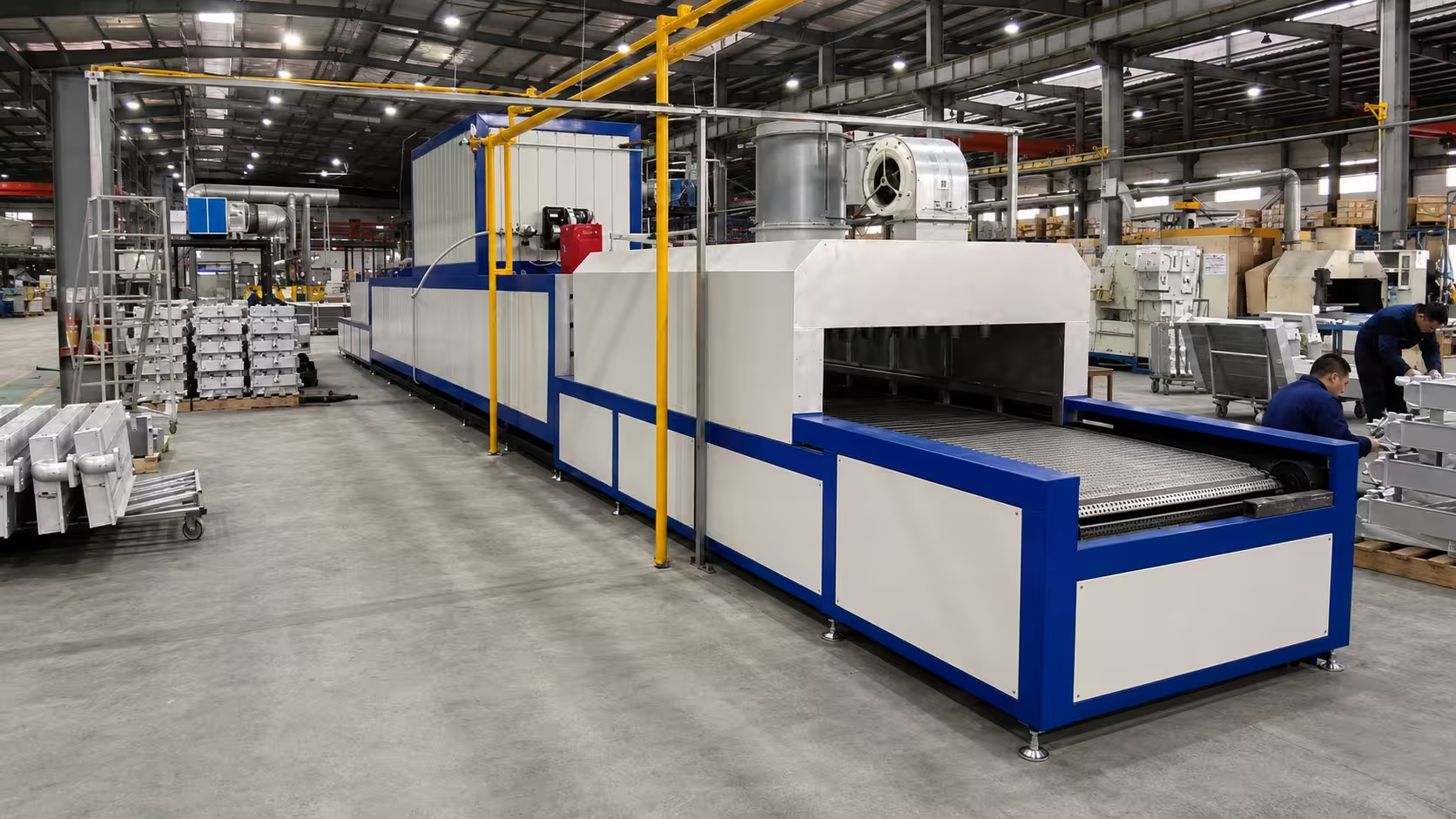
Industrial Drying Oven
A flexible batch solution for molded-fiber products loaded on trays, racks, carts, or custom fixtures. Chamber size, air distribution, heating capacity, exhaust, and controls can be built around the actual load.
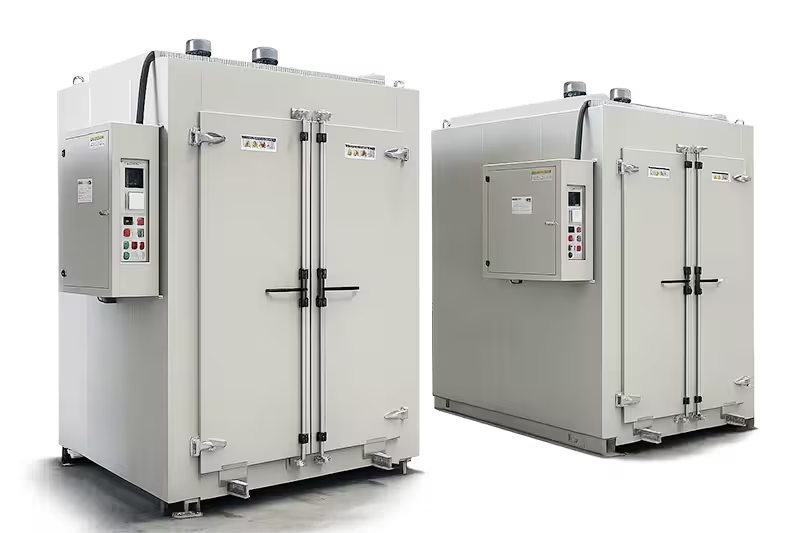
Hot Air Circulation Drying Oven
Designed around recirculated hot air, make-up air, and controlled moisture exhaust. Airflow direction and circulation volume can be adapted to the product geometry and loading density.
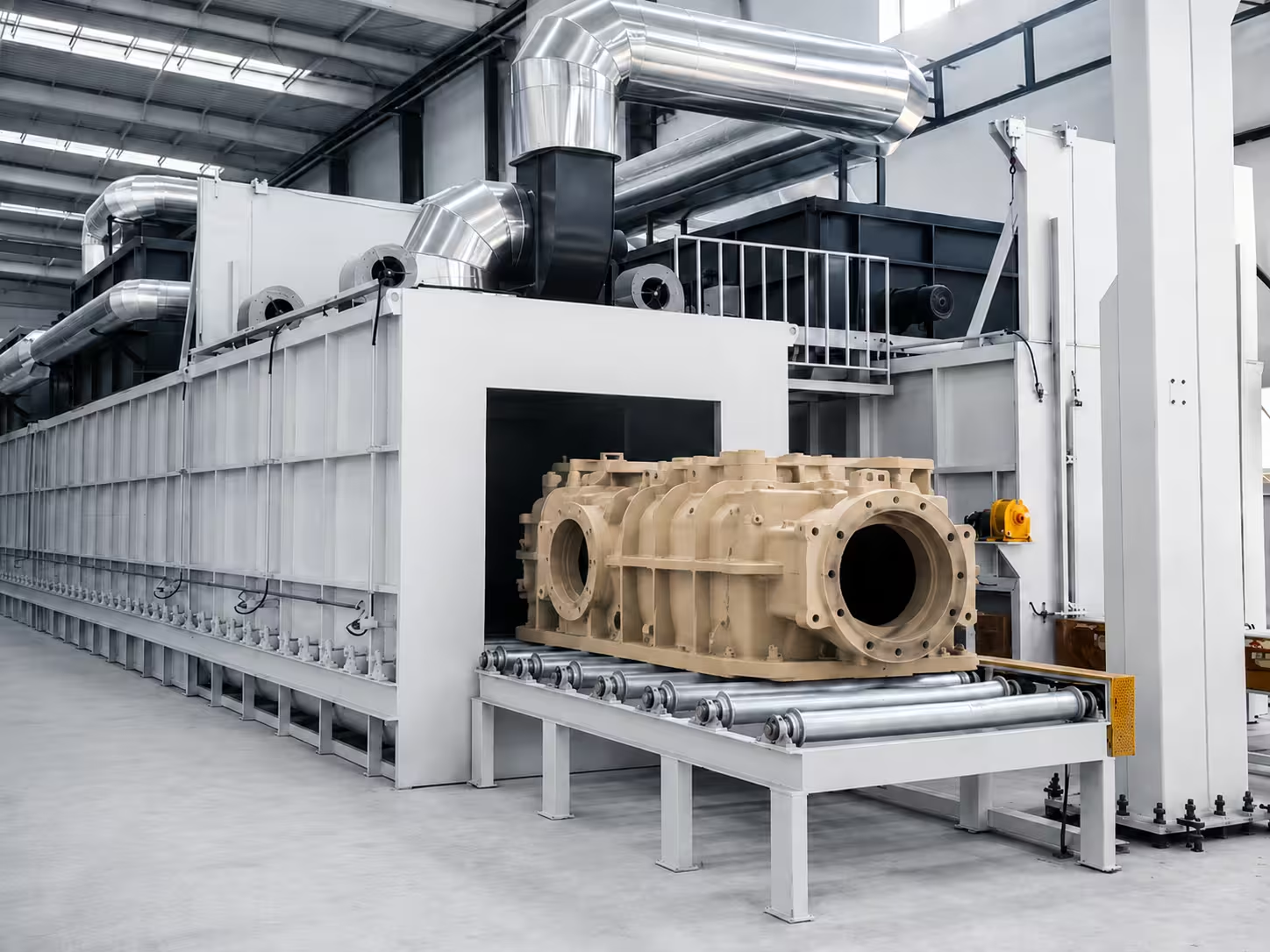
Industrial Conveyor Belt Dryer
A continuous dryer for stable production flow. Belt width, zone length, air circulation, exhaust, temperature control, residence time, and cooling can be engineered around the target hourly throughput.
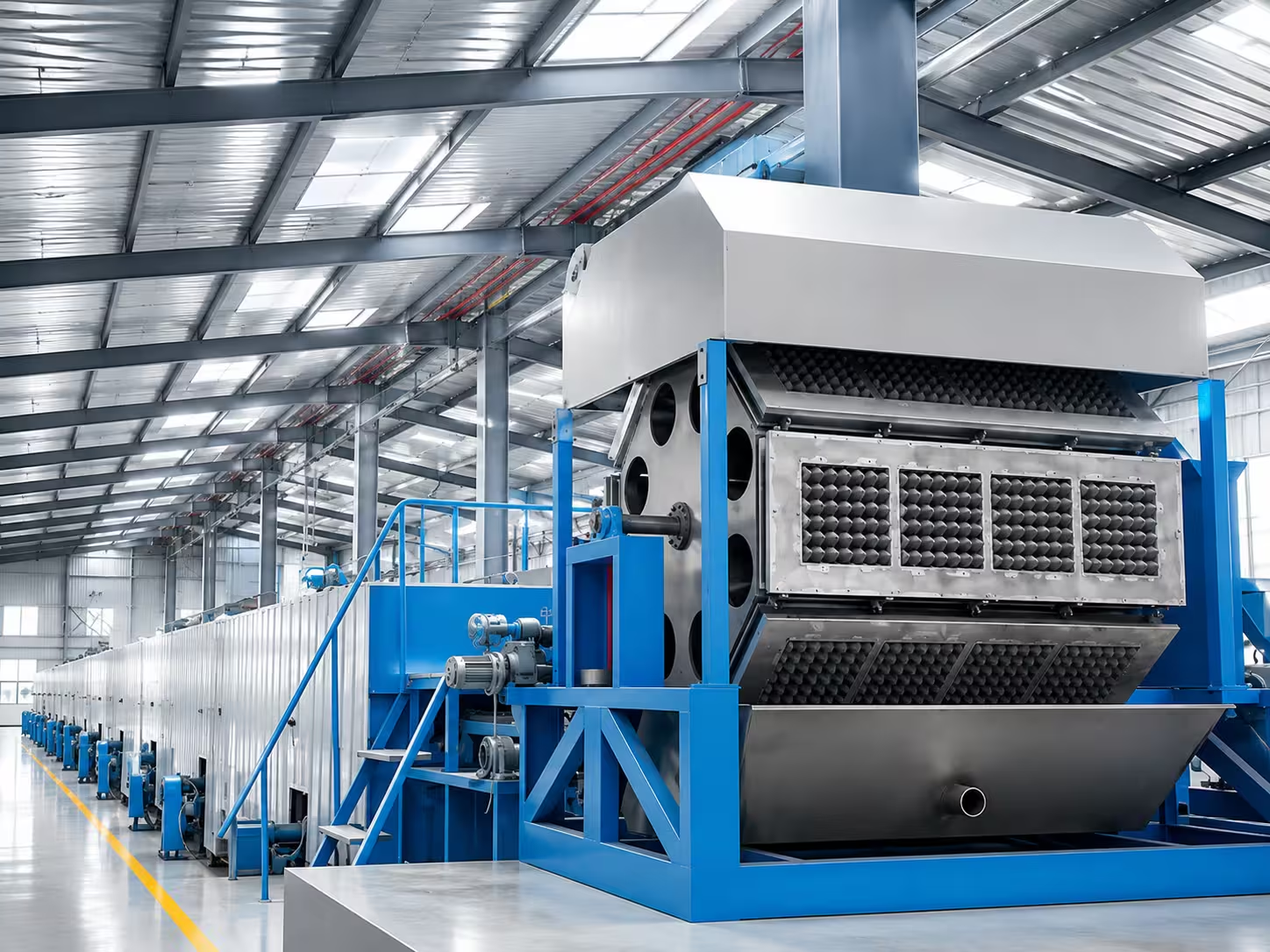
Molded Pulp Drying Line
For projects requiring more than a standalone oven, ZonHoo can engineer the drying section as part of an integrated line, including transfer, multi-zone drying, exhaust, cooling, controls, and process coordination.
What We Need to Size a Molded Pulp Drying System
For a custom drying oven, the starting point is the product and moisture load—not a standard chamber model. Our industrial drying oven sizing guide explains how chamber volume, load, heat-up demand, airflow, and production rate work together.
For molded pulp in particular, airflow, moisture exhaust, and ventilation must be considered together so released moisture is removed instead of recirculating through the load.
- Product dimensions, shape, wall thickness, and material/fiber composition
- Incoming moisture condition and required final moisture level
- Maximum load per batch or required hourly production output
- Permitted drying temperature or process temperature window
- Tray, rack, cart, belt, fixture, or other product-support method
- Electric or gas heating preference and site electrical/fuel conditions
- Available floor space, line direction, loading/unloading arrangement
- Required controls, recipes, data logging, alarms, and FAT documentation
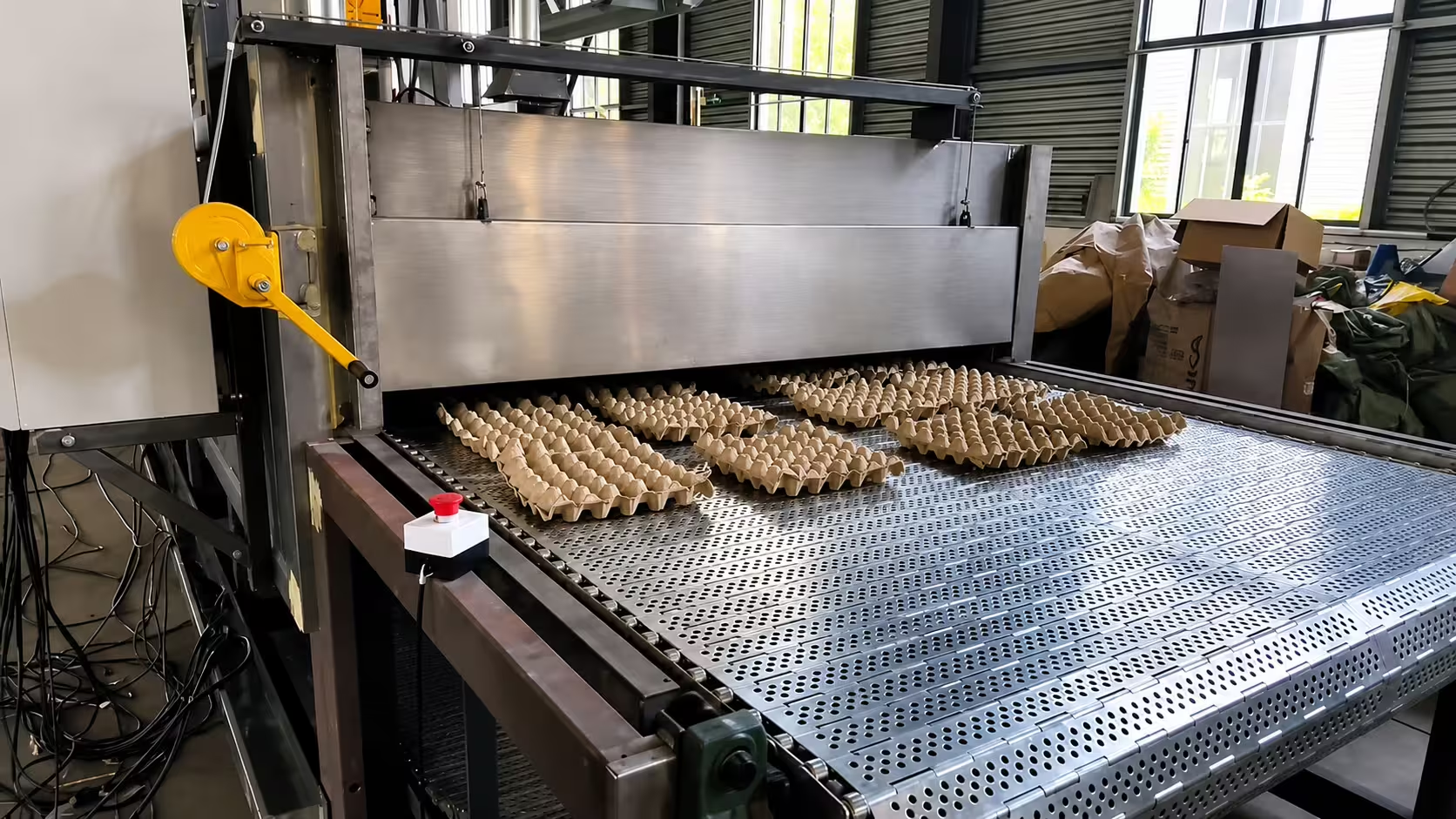
PROJECT EVIDENCE
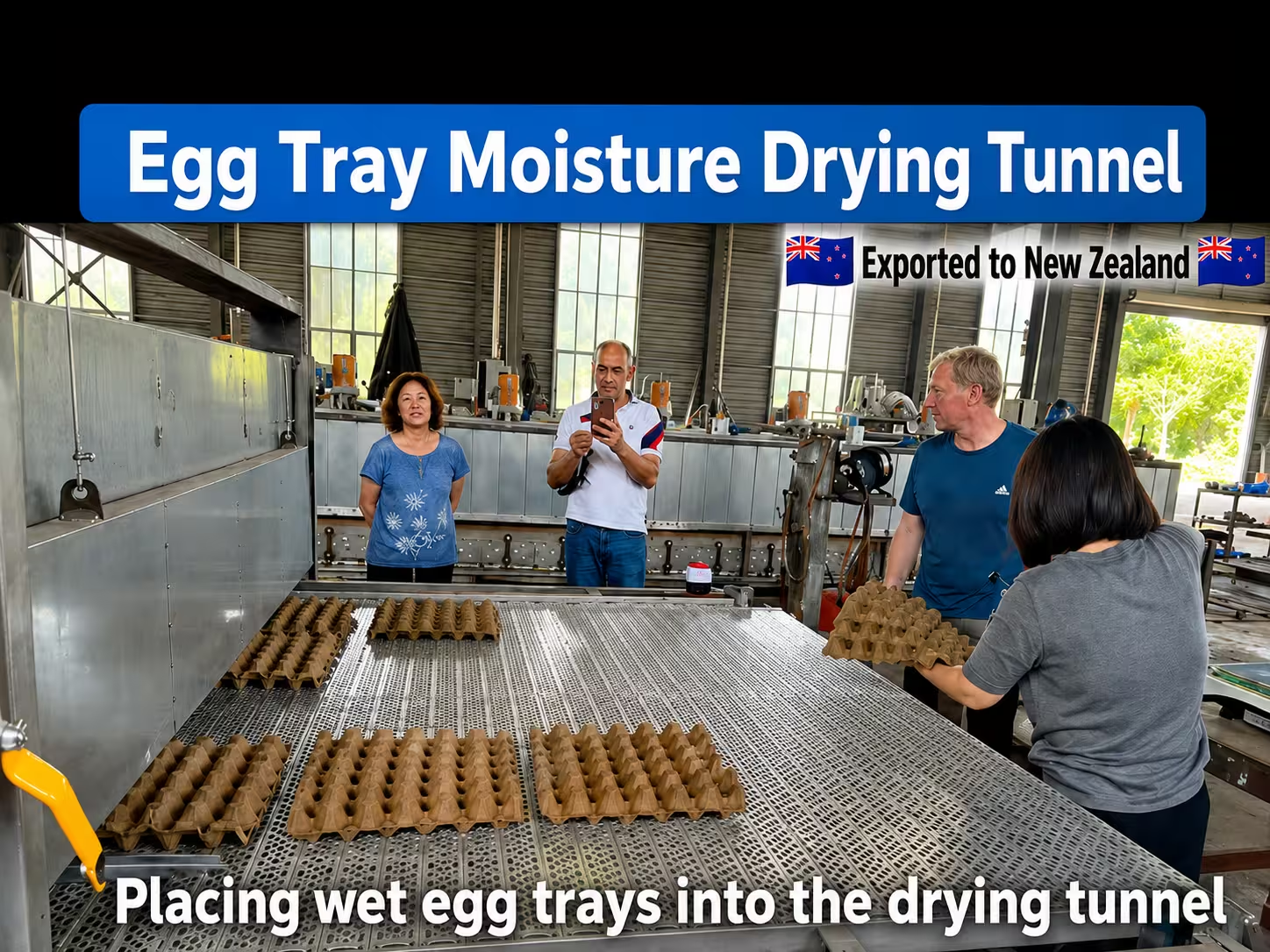
Egg Tray Drying Project — New Zealand
A real molded-pulp application provides a useful reference for continuous drying, product transfer, heating, airflow, exhaust, and production planning. Project details can help buyers understand how a drying concept is translated into actual equipment.