

Molded Pulp Drying Line
A continuous drying system for egg trays and molded-fiber packaging, engineered around wet product load, water removal, drying time, airflow, exhaust, heat source, conveyor path and the final moisture condition required for stacking or downstream processing.
Drying Begins the Moment the Wet Product Leaves Forming
The drying line must accept fragile wet products, move them without deformation, deliver controlled heat and airflow, remove evaporated moisture, and discharge products at a repeatable condition for stacking or further processing.
Wet Forming Output
Fresh molded products leave the forming process with high retained moisture.
Transfer & Load
Wet products are placed onto trays, carriers or conveyor supports without deformation.
Preheat
Product temperature rises and free moisture begins to evaporate.
Main Drying
High-rate moisture removal occurs through controlled hot-air circulation.
Final Drying
Later zones bring the product toward the required final moisture condition.
Cool / Condition
Where required, product temperature is reduced before stacking or packing.
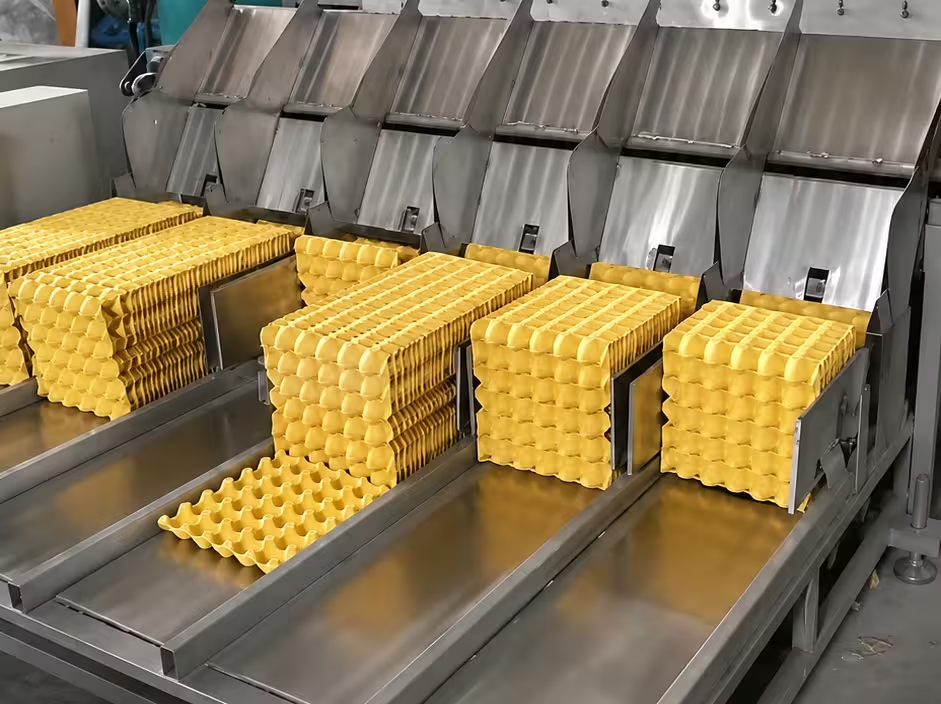
Stack / Transfer
Dried products move to counting, stacking, hot pressing, inspection or packaging.
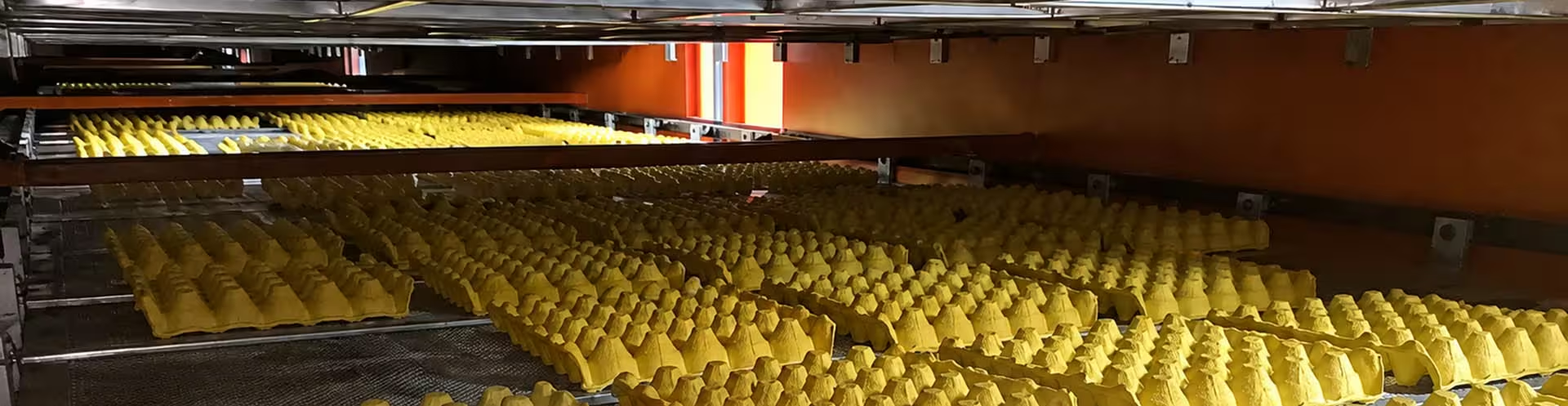
Wet Weight and Dry Weight Reveal the Real Evaporation Duty
For Egg Trays, Capacity Is More Than Pieces per Hour
Two lines can produce the same number of trays per hour and still require very different drying systems if wet weight, dry weight, pulp formulation or final moisture differ.
The preliminary design should therefore convert the production target into an approximate water-removal load and validate the drying time against the actual molded product.
One Drying Principle, Different Molded-Fiber Products
Product shape, wall thickness, nesting geometry and wet strength determine how the part should be supported and how air reaches both surfaces during drying.
Egg Trays & Egg Cartons
High-volume molded products where stable shape, repeatable dryness and stacking condition are central.
Fruit & Produce Trays
Different depths and wall sections can change airflow access and the time needed to dry internal surfaces.
Cup Carriers
Deep molded pockets may retain moisture and require careful air distribution through the load.
Custom Molded Pulp Parts
Protective packaging and formed fiber components can be engineered from actual product drawings and moisture data.
Six Inputs Determine the Molded-Pulp Drying Architecture
The most reliable quotation starts with the molded product and wet process, not with a requested dryer length copied from another plant.
Tray dimensions, pocket depth, ribs, wall thickness and deformation sensitivity.
Actual mass difference per product determines approximate water-removal demand.
Output, lanes, carrier density, shift pattern and upstream forming-machine rhythm.
Known drying data, current process or trial results establish residence-time requirements.
Utility availability, heat load, local cost and process requirements influence the heating architecture.
Available L × W × H determines whether single-pass or compact multi-level routing is more practical.
Move Fragile Wet Products Through a Controlled Thermal Path
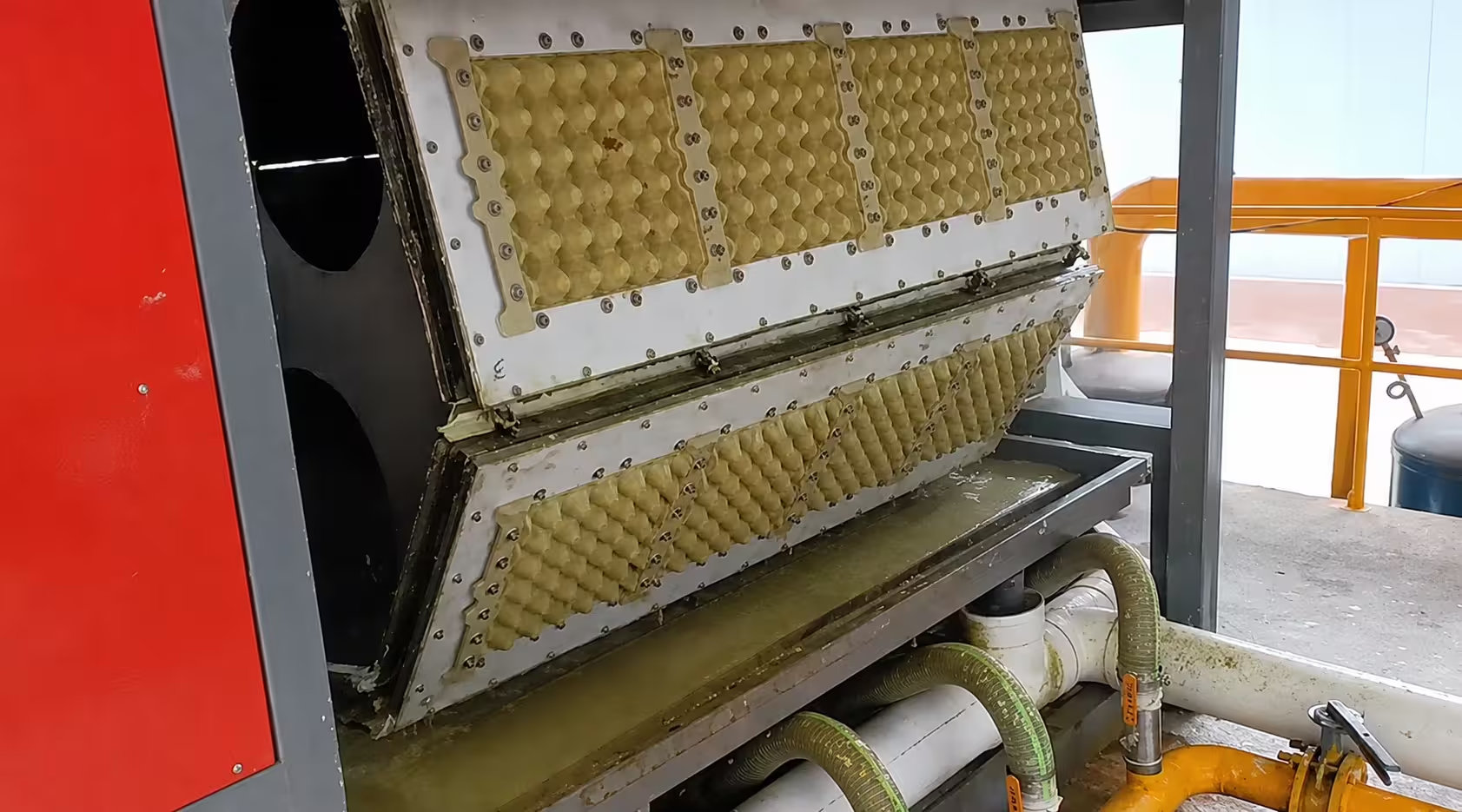
Transfer Without Crushing or Distorting the Wet Mold
Fresh molded pulp has limited strength. Transfer, support and spacing should keep the product stable while exposing enough surface area for hot air to reach the moisture inside the structure.
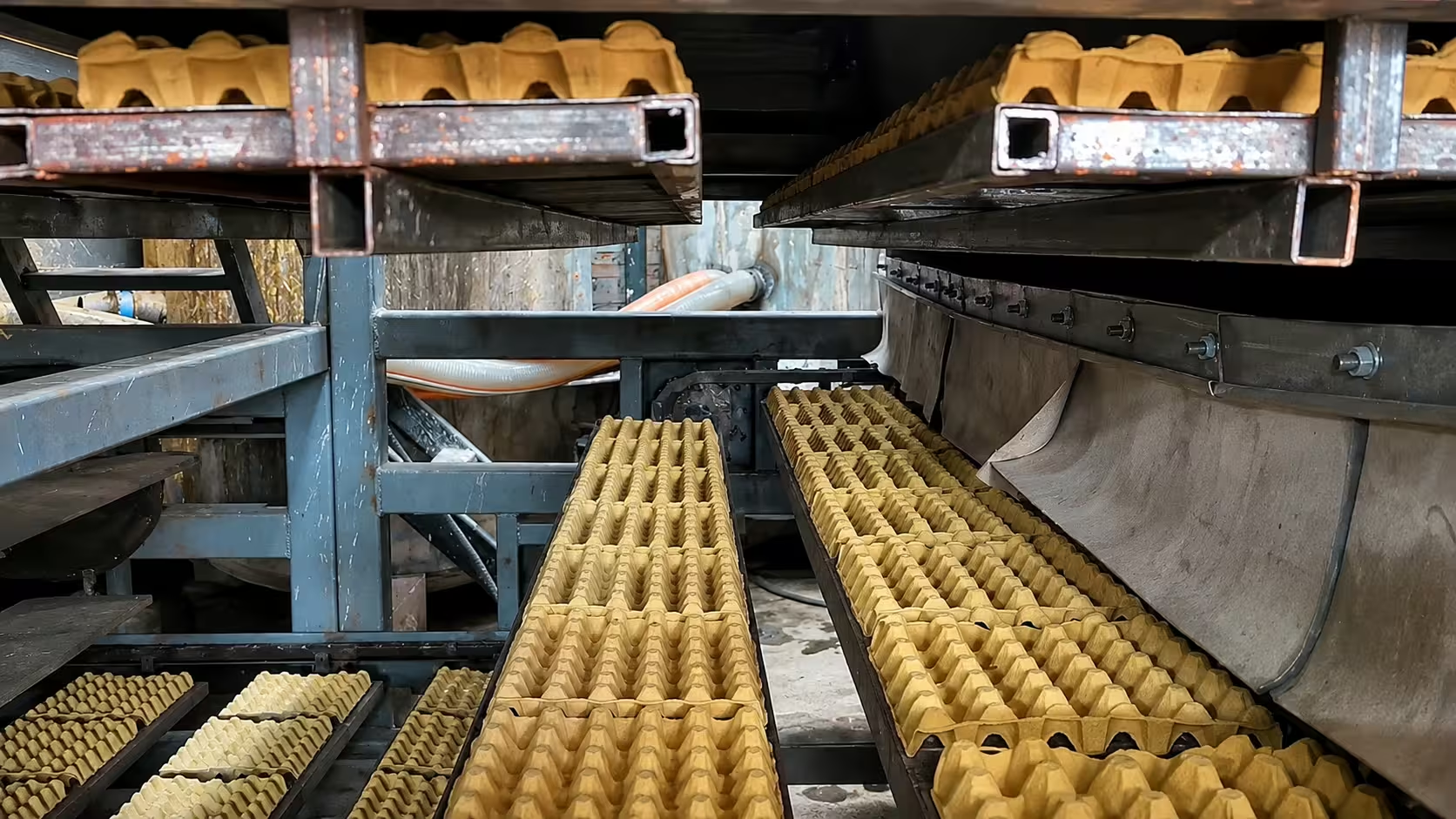
Long Drying Time Can Be Folded into a Multi-Level Layout
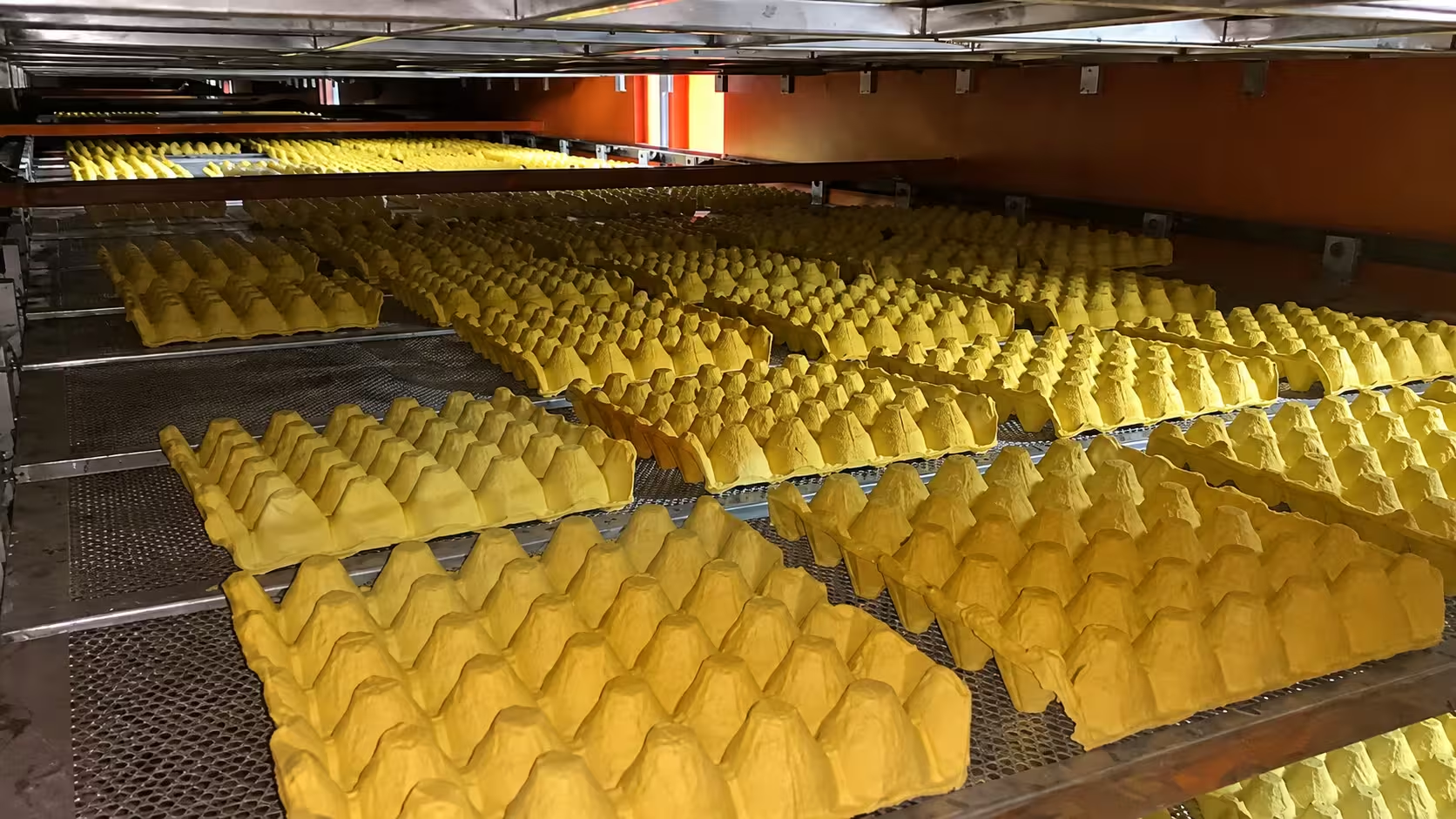
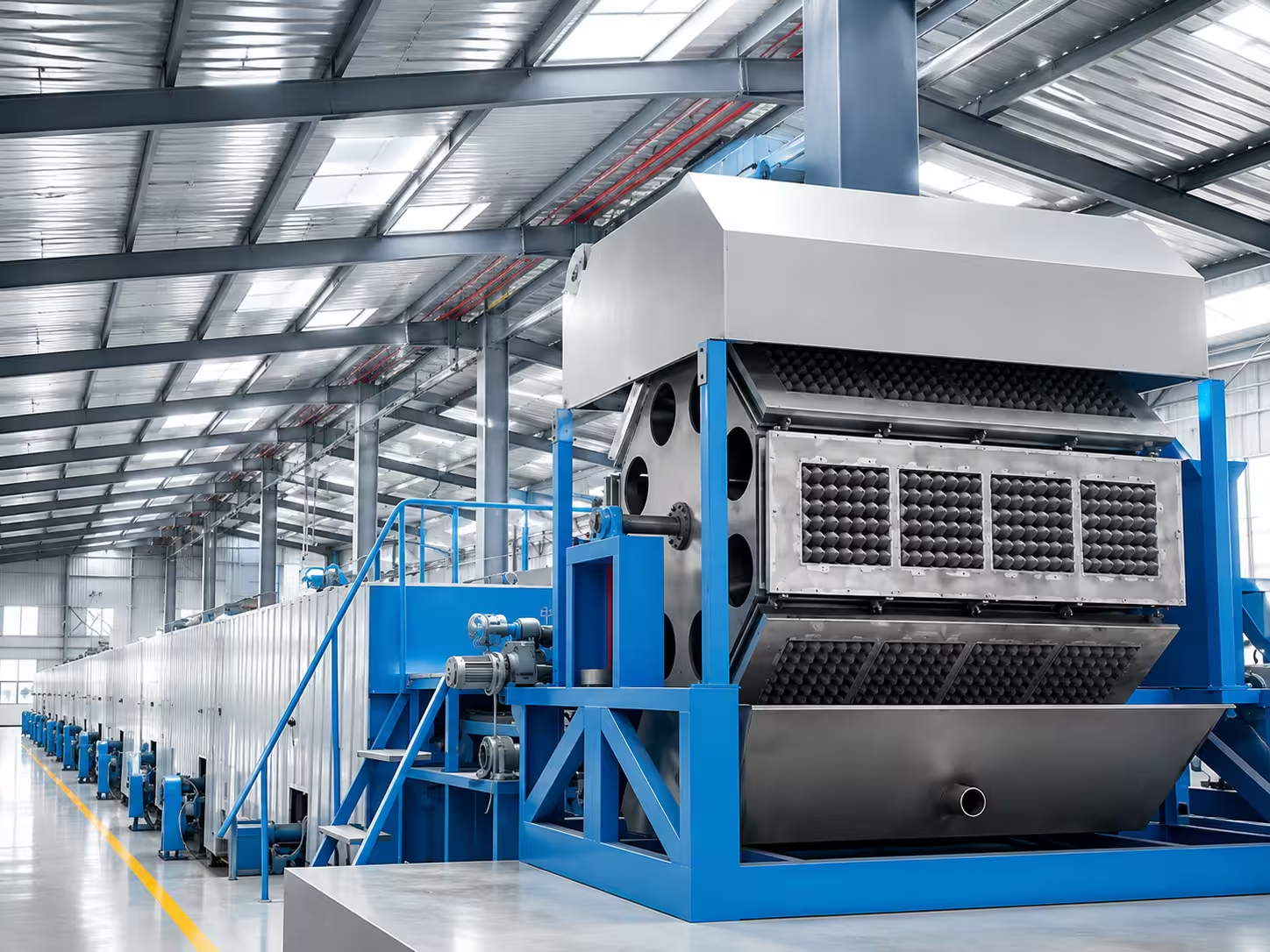
Where floor length is limited, a multi-tier continuous oven architecture can increase conveyor residence path while using factory height more effectively.
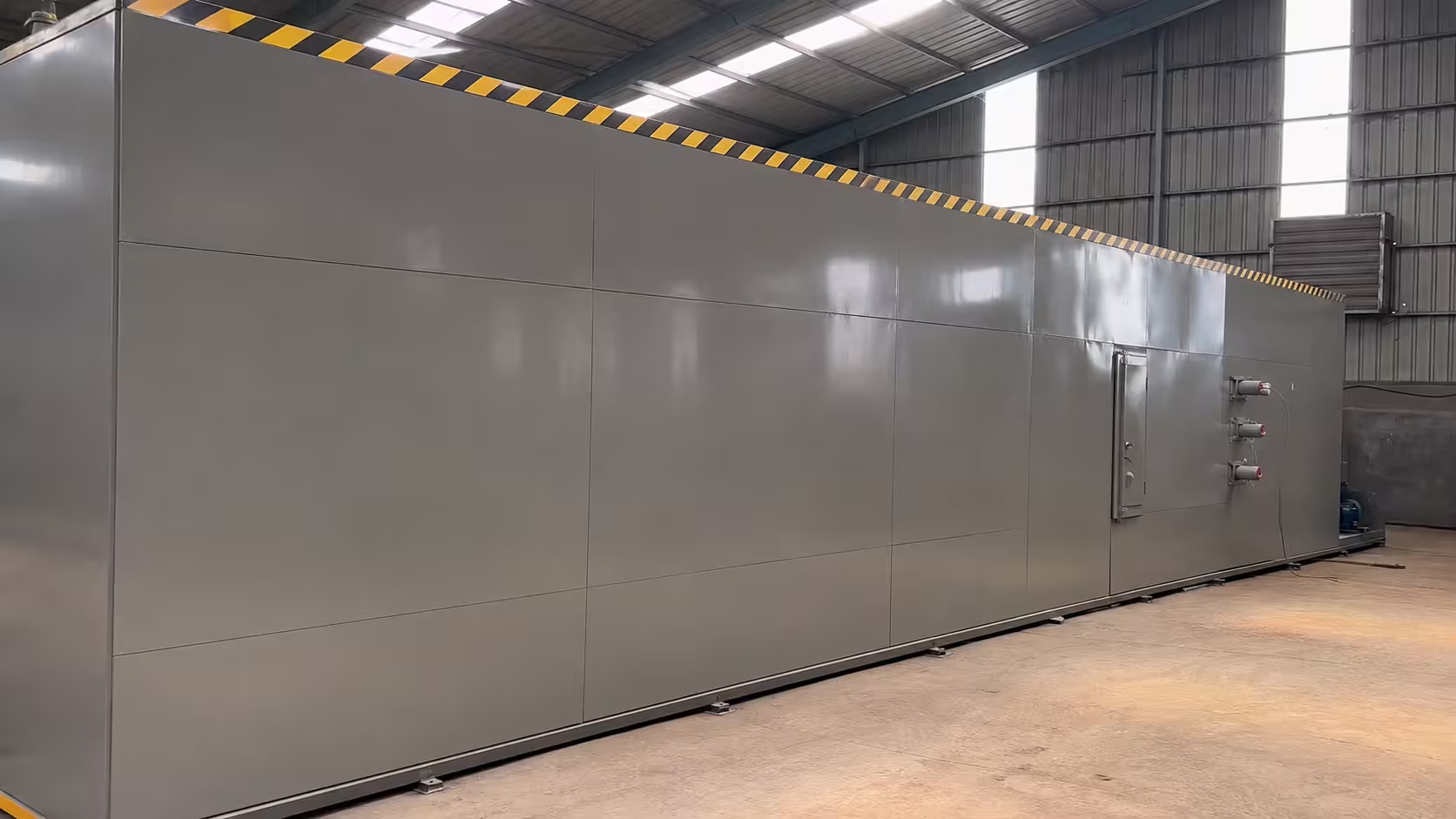
Drying Requires Heat Input and Continuous Moisture Removal
The system must add thermal energy while continuously removing humid process air. For suitable high-load projects, a gas-fired conveyor oven heating architecture can be evaluated against available utilities and site requirements.
The Product Must Leave Dry Enough for the Next Operation
Final moisture and product temperature influence stacking stability, hot-pressing behavior, packaging and storage. The drying line should therefore be accepted against the required product condition rather than only chamber temperature.
Moisture Release Changes as the Product Moves Through the Dryer
Early zones may remove free moisture rapidly; later zones often require more time for internal moisture to migrate toward the surface. A practical multi-zone line can reflect this changing drying rate.
Coordinate Zone Temperatures, Fans, Exhaust and Conveyor Speed
A molded-pulp dryer should make the drying process visible through the HMI rather than operate as several disconnected temperature controllers.
Drying Recipes
Store applicable zone setpoints, conveyor speed and fan settings for different molded products.
Conveyor Residence Time
VFD speed control links the physical conveyor path to actual drying time.
Airflow & Exhaust Status
Fans and exhaust can be interlocked with heating so the dryer does not operate without required air movement.
Forming / Stacking Interfaces
Ready, run, stop, fault and production-flow signals can be exchanged with upstream and downstream equipment.
Clarify the Drying System Scope Inside the Molded-Pulp Production Line
The page is intentionally positioned as an application-specific drying line, not as a claim that every pulping, forming and packaging machine is manufactured by ZonHoo.
Core ZonHoo Scope
- Continuous drying chamber / multi-level dryer
- Conveyor, trays or carriers where included
- Hot-air circulation and heating system
- Moisture exhaust and selected cooling section
- Electrical controls and dryer line logic
- Factory assembly and agreed FAT
Integrated / Optional
- Wet-product transfer from forming equipment
- Feeding / loading automation
- Stacking, hot-press or packaging interface
- Special moisture / product sensing
- Customer-selected or partner equipment integration
Customer / Site
- Pulp preparation and forming process
- Main electricity, gas and plant utilities
- Building exhaust / stack interface
- Foundation, access and maintenance space
- Local environmental and safety requirements
Use the Available Factory Space to Create the Required Drying Time
Long residence time can be achieved through a longer single-pass line or a compact multi-level route. The right choice depends on product strength, transfers, building height and maintenance requirements.
For preliminary layout work, use ZonHoo industrial oven system planning to coordinate residence time, conveyor path and available plant space.
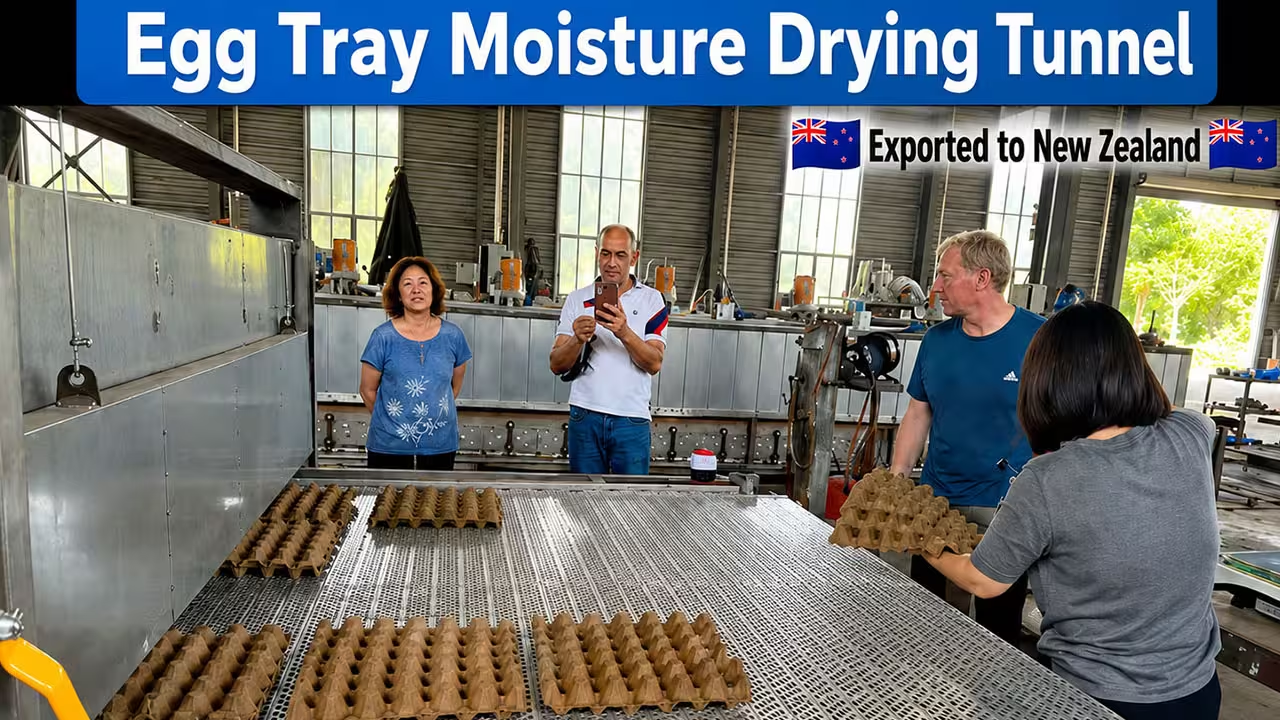
New Zealand Egg Tray Conveyor Drying Project
This page has a real application reference available. Use the actual New Zealand project as the primary trust module and keep every project value verifiable.
Replace with Verified Project Data
Connect the Egg Tray Application to the Right Drying Architecture
From Wet Tray Data to a Drying-Line Concept
Product Data
Wet/dry weight, dimensions, product type and production rate.
Drying Basis
Water load, time, temperature, heat source and final condition.
Line Concept
Single/multi-level path, loading, airflow, exhaust and discharge.
Engineering
Dimensions, zones, conveyor, heat source, controls and interfaces.
Fabrication & FAT
Manufacture and test the agreed thermal and conveyor scope.
Delivery & Support
Shipment planning, installation guidance and commissioning support.
Send the Wet Product Data That Determines the Dryer
Size the Dryer from Wet Load, Water Removal and Available Plant Space
Send product photos or drawings, wet/dry weight, pieces per hour, drying data, heat source and factory layout. ZonHoo can develop a preliminary molded-pulp drying concept and identify the data needed for final sizing.
Submit Molded Pulp Drying Data →Molded Pulp Drying Line FAQ
What information is needed to size an egg tray drying line?
Provide product dimensions, wet weight, dry weight or target final moisture, pieces per hour, known drying time/temperature, available heat source and factory layout. These inputs establish the approximate water-removal load and residence-path requirement.
Why are wet weight and dry weight important?
The mass difference is closely related to the amount of water that must be removed from each product. Combined with pieces per hour, it provides a practical starting point for estimating evaporation load.
Can a molded pulp dryer use multiple conveyor levels?
Yes. A multi-level path can provide long drying residence time in a shorter building footprint when the wet product can tolerate the required transfers and support method.
Can natural gas be used for egg tray drying?
Yes, for suitable projects. Gas heating should be evaluated against the required thermal load, local gas supply, combustion requirements, process conditions and site safety rules.
How is moisture removed from the dryer?
Hot-air circulation transfers energy to the wet product, while controlled exhaust removes humid process air. Recirculation and exhaust should be balanced to maintain useful drying conditions through the line.
Can the drying line connect directly to an egg tray forming machine?
Yes, when the mechanical elevation, product transfer method, production rhythm and control interfaces are defined during engineering.
Can the line handle molded pulp products other than egg trays?
Yes. Fruit trays, cup carriers and other molded-fiber products can be evaluated from their geometry, wet strength, wall thickness, drying behavior and production target.
How is this page different from the general Conveyor Drying Line page?
This page is application-specific to molded pulp and egg-tray production, including wet-product handling and water-removal inputs. The Conveyor Drying Line page covers broader continuous drying applications and dryer architectures.
Build the Dryer Around the Wet Molded Product
Send the product, wet/dry weight, capacity, drying data and plant layout. ZonHoo will connect moisture load, airflow, heat source, conveyor residence time and discharge condition into a preliminary drying-line concept.