

Industrial Ovens for Powder Drying
Powder drying removes water, residual moisture, or process volatiles from loose powder materials before mixing, packaging, sintering, coating, compounding, or the next production step. ZonHoo engineers batch and continuous hot-air drying systems around powder properties, tray depth, moisture load, temperature sensitivity, production output, exhaust, contamination control, and plant safety requirements.
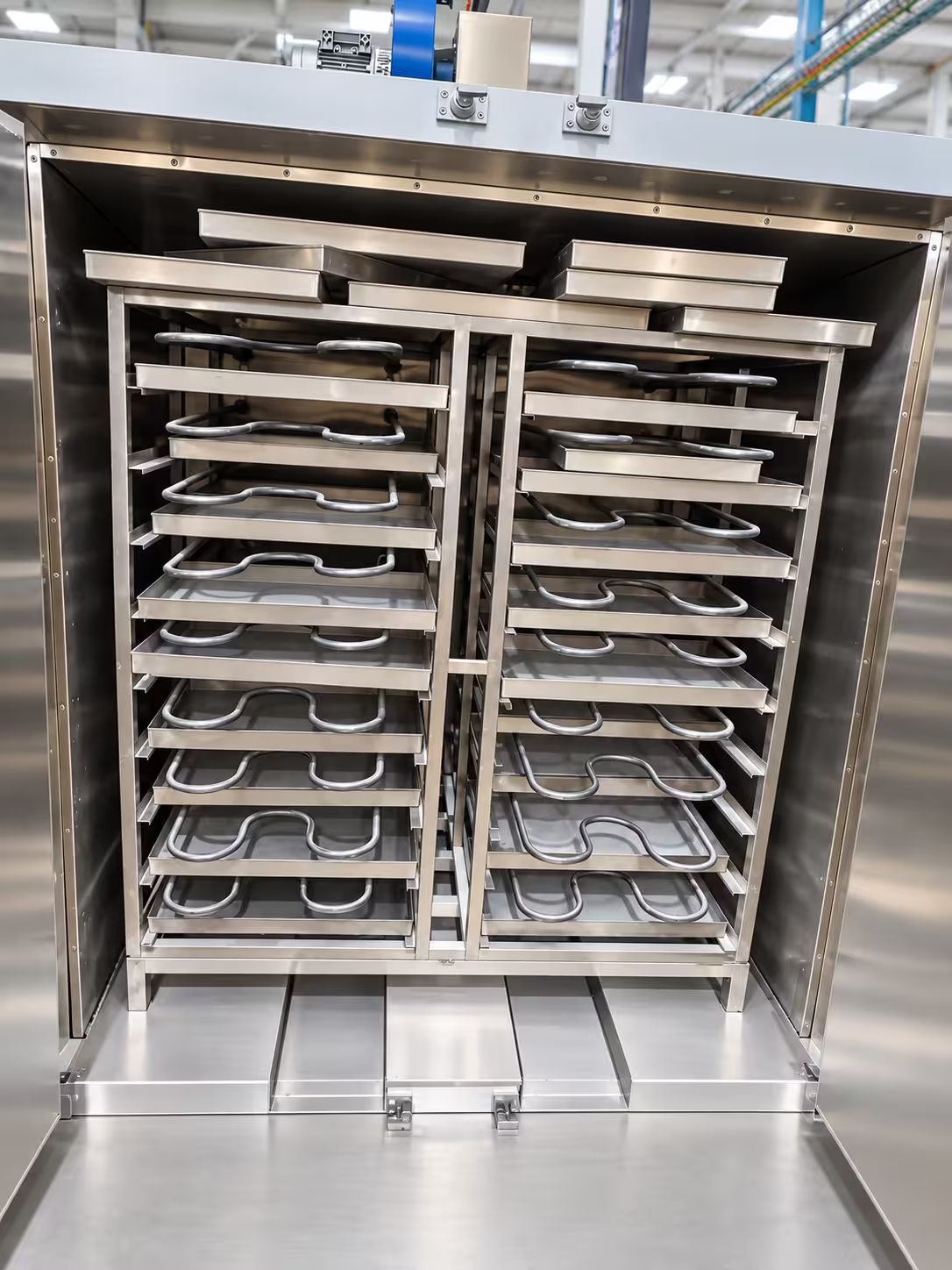
Powder Drying Is a Moisture-Removal Process — Not Powder Coating Cure
The word “powder” can describe two completely different thermal processes. In powder drying, the powder itself is the material being dried. It may be spread in trays, held in shallow beds, carried in containers, or moved continuously through a dryer. The engineering goal is to remove moisture or other permitted volatiles without overheating, contaminating, blowing away, oxidizing, agglomerating, or otherwise damaging the powder.
Remove Moisture Predictably
Drying conditions should reduce moisture to the required process level without relying only on chamber temperature.
Protect Powder Quality
Temperature, air velocity, tray depth, and residence time should match heat sensitivity, oxidation risk, and material behavior.
Control Airborne Powder
Airflow must transfer heat without unnecessarily disturbing fine or low-density powders.
Manage Vapor & Safety
Water vapor, solvent, combustible dust, and chemical hazards require different exhaust and safety strategies.
Powder Materials Commonly Evaluated for Oven Drying
Suitability depends on powder chemistry, particle size, dust behavior, moisture level, oxidation sensitivity, and the required final condition. These are application categories rather than universal process approval.
Chemical Powders & Intermediates
Powdered chemicals, inorganic compounds, process intermediates, additives, and materials dried before blending, reaction, or packing.
Pigments, Dyes & Mineral Powders
Materials requiring controlled moisture removal before formulation, coating production, mixing, or downstream processing.
Ceramic & Technical Powders
Ceramic powders, fillers, catalyst or adsorbent materials, and technical blends requiring controlled low- or medium-temperature drying.
Resin & Polymer Powders
Selected resin, plastic, additive, or compound powders requiring moisture reduction before molding, compounding, or another process.
Metal & Metallurgical Powders
Selected metal powders may require drying before screening, blending, sintering, or additive manufacturing, but dust and ignition hazards must be reviewed first.
Powders in Trays or Shallow Beds
Batch applications where powder can be spread to a controlled depth on trays, pans, shelves, or removable rack systems.
Powder Properties Control the Drying-Oven Design
For powder drying, bed depth, particle behavior, moisture release, dust movement, and tray loading can have more influence on drying performance than chamber dimensions alone.
| Process Input | Why It Matters | Useful RFQ Information |
|---|---|---|
| Powder chemistry | Determines temperature limits, compatibility, corrosion, oxidation, dust, and safety considerations | Material name, SDS / TDS, process description |
| Incoming moisture | Controls moisture-removal load and drying time | Initial moisture %, kg water/batch, or estimated condition |
| Target final moisture | Defines the drying endpoint | Target %, weight-loss target, or downstream requirement |
| Tray / bed depth | Thick beds can limit internal heat and mass transfer | Tray dimensions, powder depth, kg/tray |
| Particle / dust behavior | Fine or low-density powder may be disturbed by high local air velocity | Particle size, bulk density, dust tendency |
| Drying temperature | Affects evaporation rate, product stability, oxidation, and cycle time | Target setpoint and maximum allowable product temperature |
| Production requirement | Determines batch capacity or continuous line capacity | kg/batch, batches/day, or kg/hour |
| Volatile / dust hazard | Can fundamentally change ventilation and safety scope | SDS, solvent quantity, dust classification, Kst/Pmax or site zone if available |
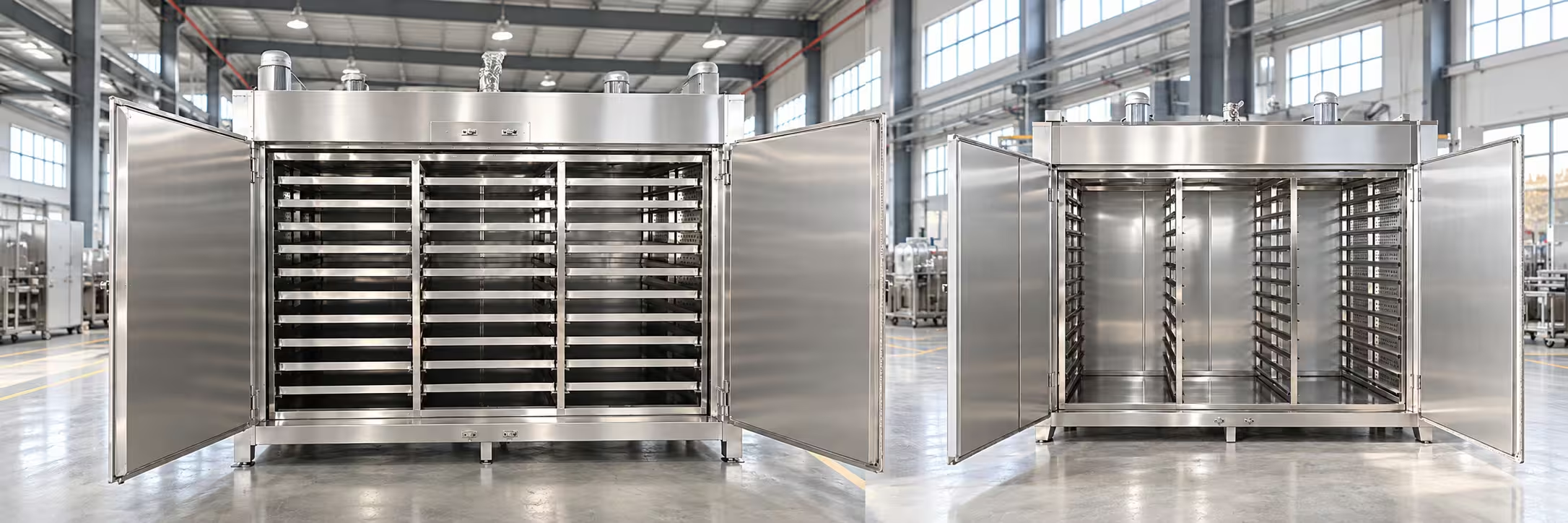
Natural Moisture Exhaust + Auxiliary Exhaust Fan When Faster Drying Is Needed
Powder drying does not always benefit from continuously pulling large volumes of air through the chamber. For suitable tray-loaded powder processes, ZonHoo can use natural moisture discharge as the normal operating mode while also installing a dedicated auxiliary exhaust fan for additional drying capacity when required.
Two Exhaust Modes in One Drying System
The operator can keep the auxiliary exhaust fan off during normal drying and allow moisture to leave through the designed natural exhaust path. When the process needs faster moisture removal or a shorter drying cycle, the exhaust fan can be started to increase the discharge of humid air. Fan airflow can be made adjustable where the application requires it.
01 · Natural Exhaust — Normal Mode
Gentler moisture discharge with less unnecessary air movement around fine or low-density powders, while reducing avoidable heat loss from continuous forced exhaust.
02 · Assisted Exhaust — Drying Boost
Start the dedicated exhaust fan when higher moisture-removal capacity is needed. This can help remove humid air faster and shorten the drying cycle when the process permits.
Match the Oven Direction to Batch Size, Bed Depth, and Production Flow
| Process Need | Typical Requirement | Recommended Oven Direction |
|---|---|---|
| Flexible tray-based powder batches | Multiple trays, changing recipes, moderate output | Hot Air Circulation Dryer |
| Stable low- / medium-temperature batch drying | Repeatable setpoint, shelf or rack loading | Constant Temperature Drying Oven |
| General flexible powder batch drying | Mixed tray / rack configurations, changing recipes | Industrial Batch Oven |
| Large rack or trolley powder batches | Many trays, large load, roll-in handling | Industrial Walk-In Oven |
| Stable continuous powder throughput | Controlled feed layer, suitable carrier, kg/h target | Conveyor Belt Dryer |
| Solvent-bearing powder / volatile removal | Defined volatile load, engineered exhaust and safety logic | Explosion-Proof Drying Oven |
Recommended ZonHoo Oven Solutions for Powder Drying
The best oven direction depends on the powder chemistry, tray or carrier arrangement, bed depth, moisture or volatile load, batch size, production rhythm, airflow sensitivity, and plant safety requirements.
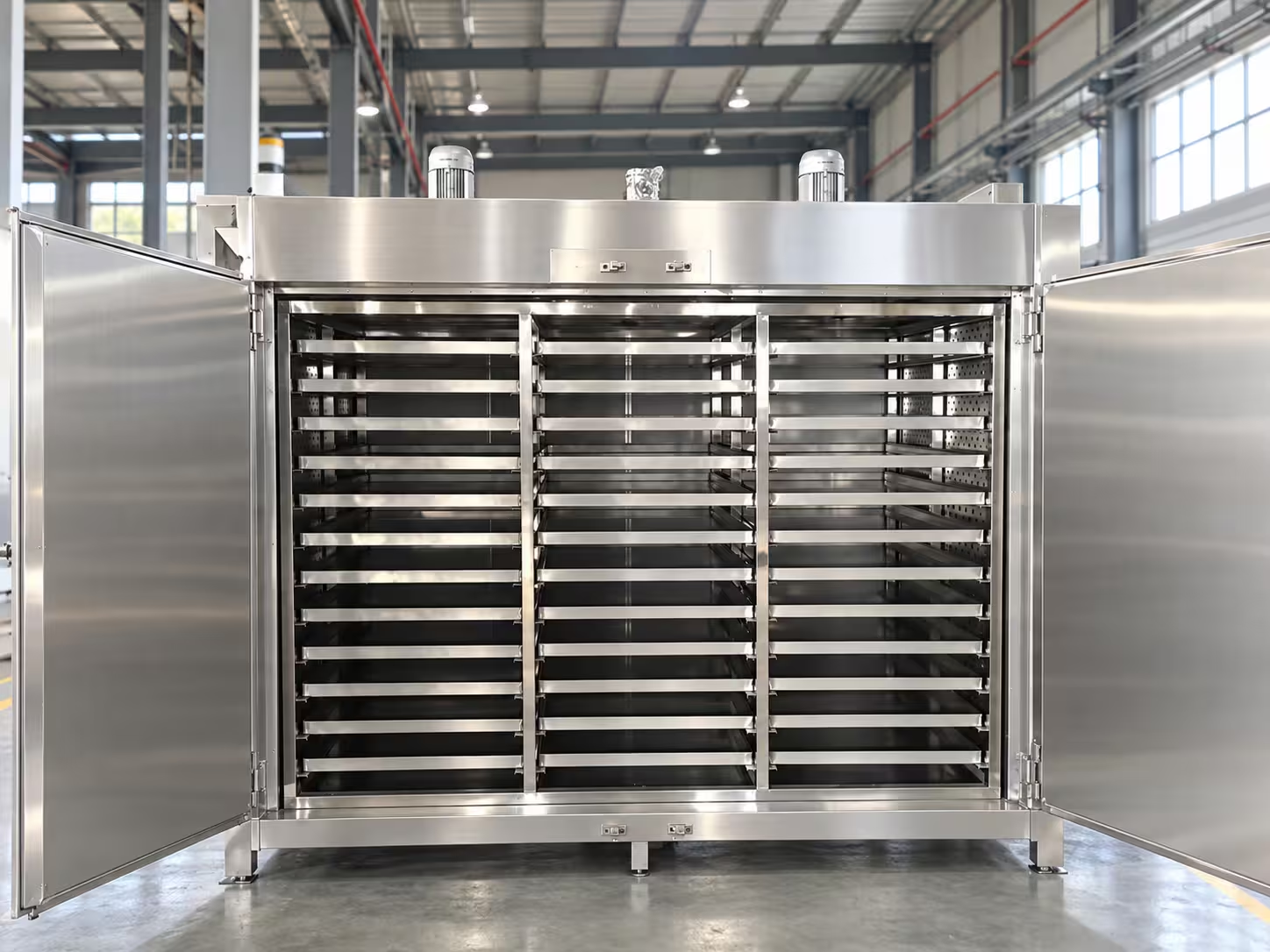
Hot Air Circulation Dryer
A primary direction for tray and rack powder drying where controlled convective heat transfer and moisture exhaust are the main process requirements.
Best for: tray-loaded powders, multi-tier racks, moderate to high moisture removal, and flexible batch production.
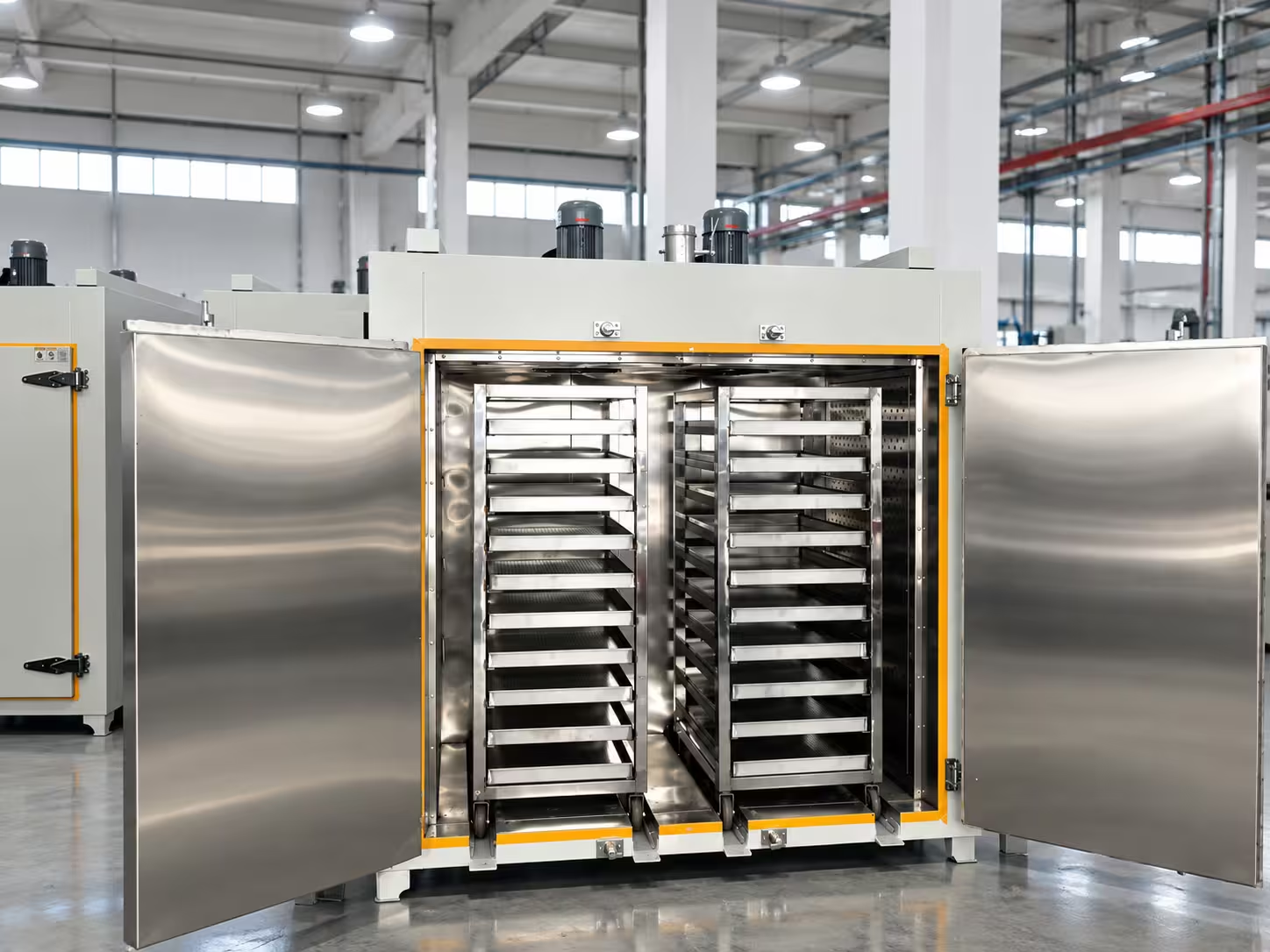
Constant Temperature Drying Oven
Suitable where the powder process needs a repeatable low- or medium-temperature setpoint and stable batch conditions rather than aggressive heating.
Best for: temperature-sensitive powders, repeatable recipes, controlled shelf drying, and stable batch processing.
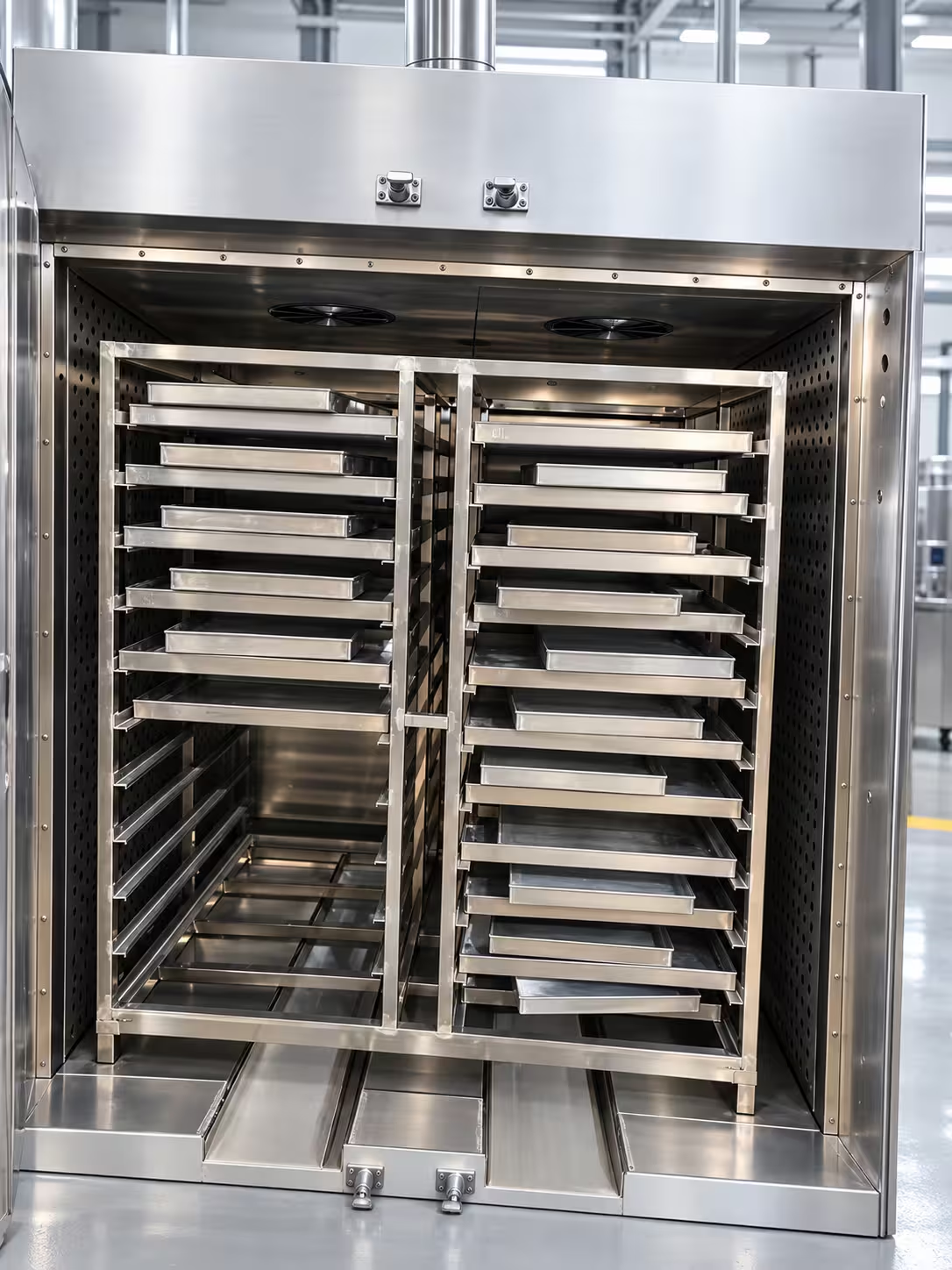
Industrial Batch Oven
A flexible custom chamber for powder processes using removable trays, racks, pans, containers, or carts with changing batch sizes and recipes.
Best for: mixed products, changing recipes, general-purpose powder drying, and projects that need batch flexibility.
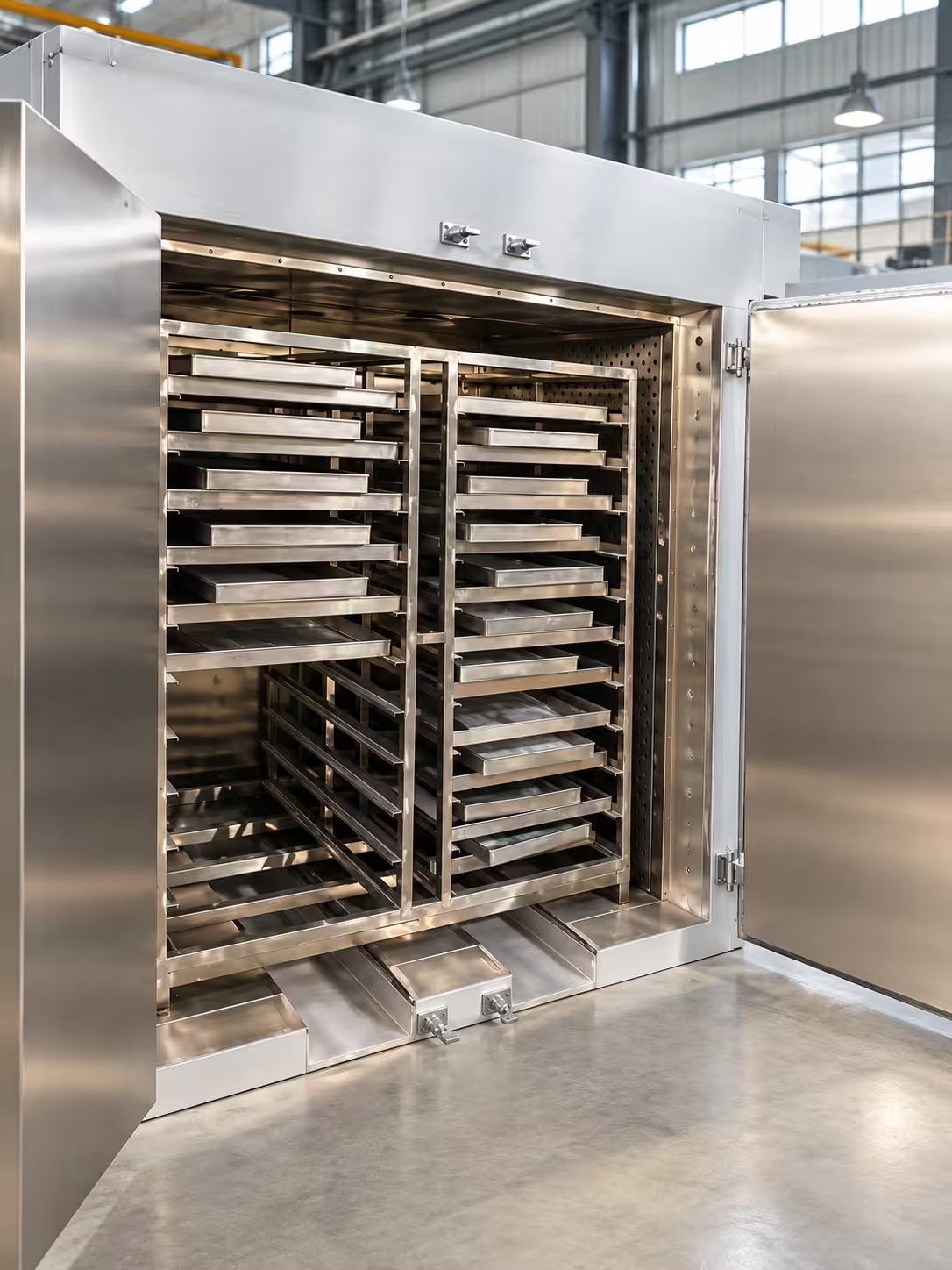
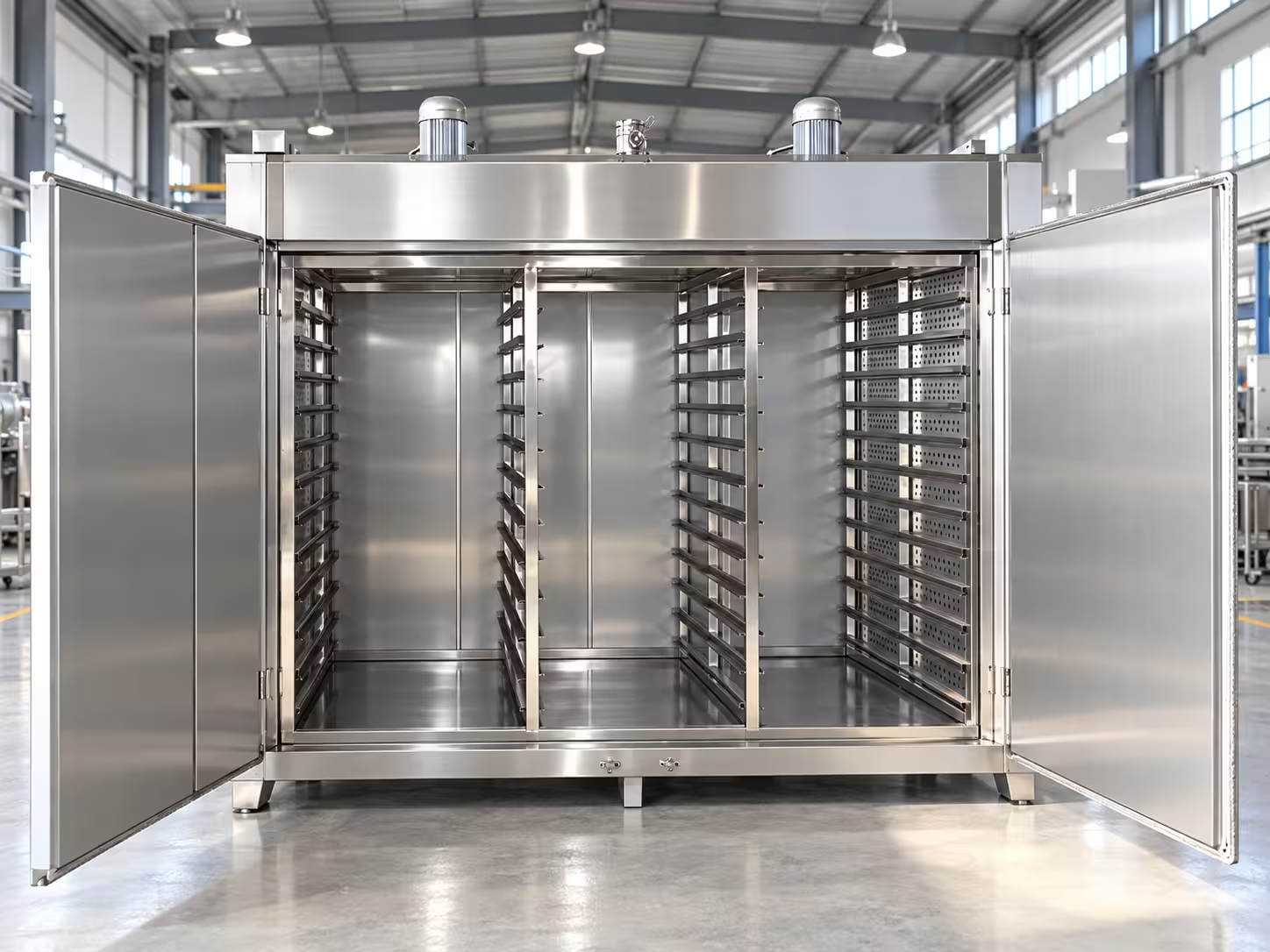
Industrial Walk-In Oven
A large-chamber direction for many trays or heavy trolley loads where the complete rack or cart should roll directly into the drying chamber.
Best for: large batch loads, multi-rack powder drying, trolley loading, and high total tray capacity.
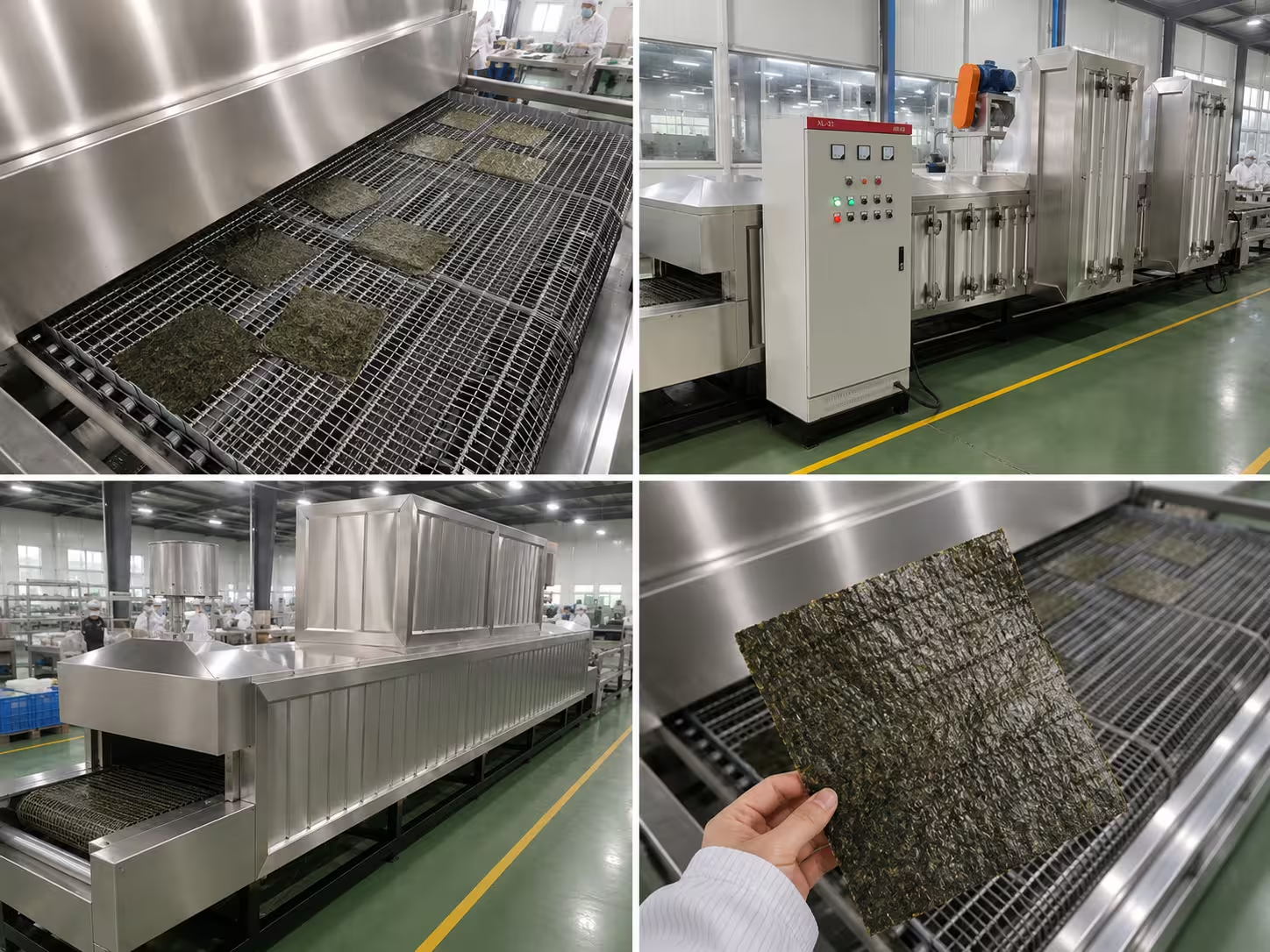
Conveyor Belt Dryer
A continuous direction for suitable powders or granulated materials that can be distributed in a controlled layer and transported through defined thermal zones.
Best for: stable kg/h output, continuous production, controlled residence time, and integrated drying lines.
Explosion-Proof Drying Oven
For powder processes where solvent vapor or another flammable volatile must be considered. Exhaust, fresh-air make-up, interlocks, and protection scope are engineered from the actual process data.
Best for: solvent-bearing powder processes, volatile removal, project-specific safety requirements, and controlled exhaust applications.
Powder Drying Requires Airflow Without Uncontrolled Powder Movement
Fine powders may need heat and moisture removal while also requiring lower local air velocity at the material surface. The solution is not simply to increase fan power. For suitable processes, natural moisture exhaust can be used as the normal mode, with an auxiliary exhaust fan available when faster moisture removal is required. Tray spacing, supply direction, return location, baffles, exhaust, bed depth, and chamber pressure must still work together.
- Tray / rack arrangement around real loading density
- Airflow designed to reduce bypass and dead zones
- Natural moisture exhaust for normal operation where suitable
- Auxiliary exhaust fan available to increase moisture removal and shorten drying time
- Controlled make-up air to maintain stable temperature
- Temperature control, alarms, logging, and project-specific interlocks
Natural + Assisted Moisture Exhaust
For suitable powder processes, the chamber can use natural moisture discharge during normal drying while a dedicated auxiliary exhaust fan remains available for a faster-drying mode. The fan can be activated when additional humid-air removal is needed. See the Drying Oven Airflow, Moisture Exhaust & Ventilation guide for circulation and exhaust fundamentals.
Chamber & Heating Capacity
Use How to Size an Industrial Drying Oven for load, moisture, power, and preliminary chamber sizing.
Quote Preparation
Use the Industrial Drying Oven RFQ Checklist when preparing a technical inquiry.
Powder Drying vs Powder Coating: The Word “Powder” Is the Only Similarity
| Powder Drying | Powder Coating | |
|---|---|---|
| What enters the oven? | Loose / bulk powder material in trays, beds, containers, or carriers | A solid part after dry coating powder has been electrostatically applied |
| Main thermal objective | Remove water or permitted process volatiles from the powder | Melt, flow, level, and cure the coating film on the substrate |
| Primary design inputs | Powder chemistry, moisture, bed depth, kg/batch or kg/h, dust behavior, exhaust | Part mass, coating cure schedule, metal temperature, dwell time, line rhythm, finish quality |
| Primary ZonHoo page | This Powder Drying application page | Powder Coating Application |