
How to Calculate Conveyor Oven Belt Speed and Residence Time
Use the core formulas to calculate belt speed, residence time and preliminary heated length—then check product heating, spacing, throughput and zone allocation before fixing the oven specification.
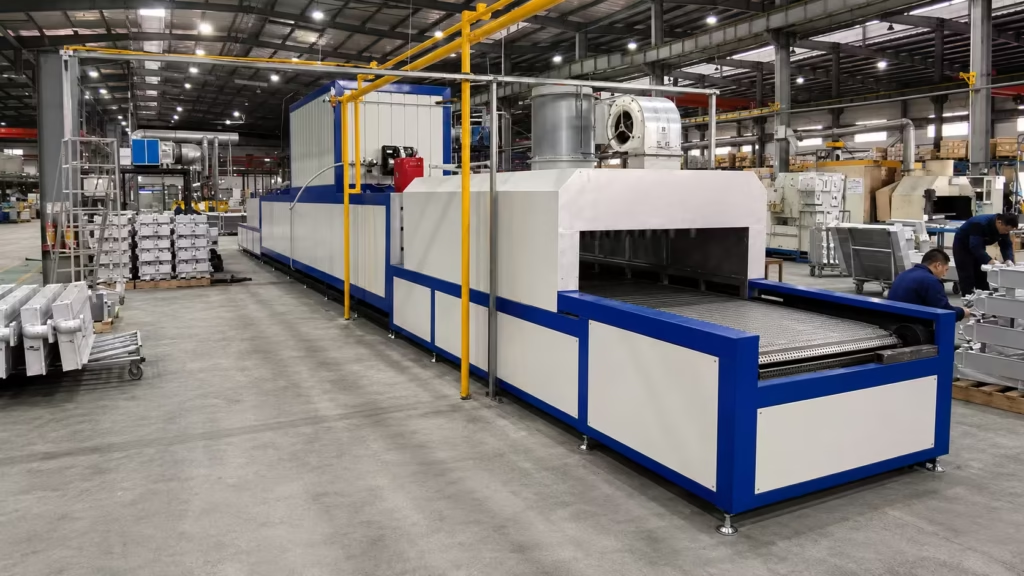
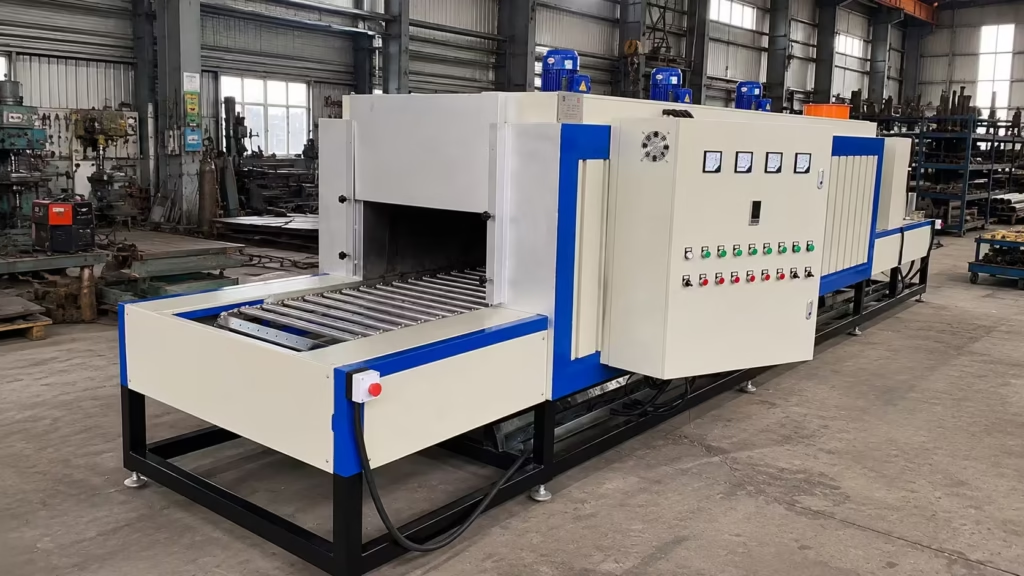
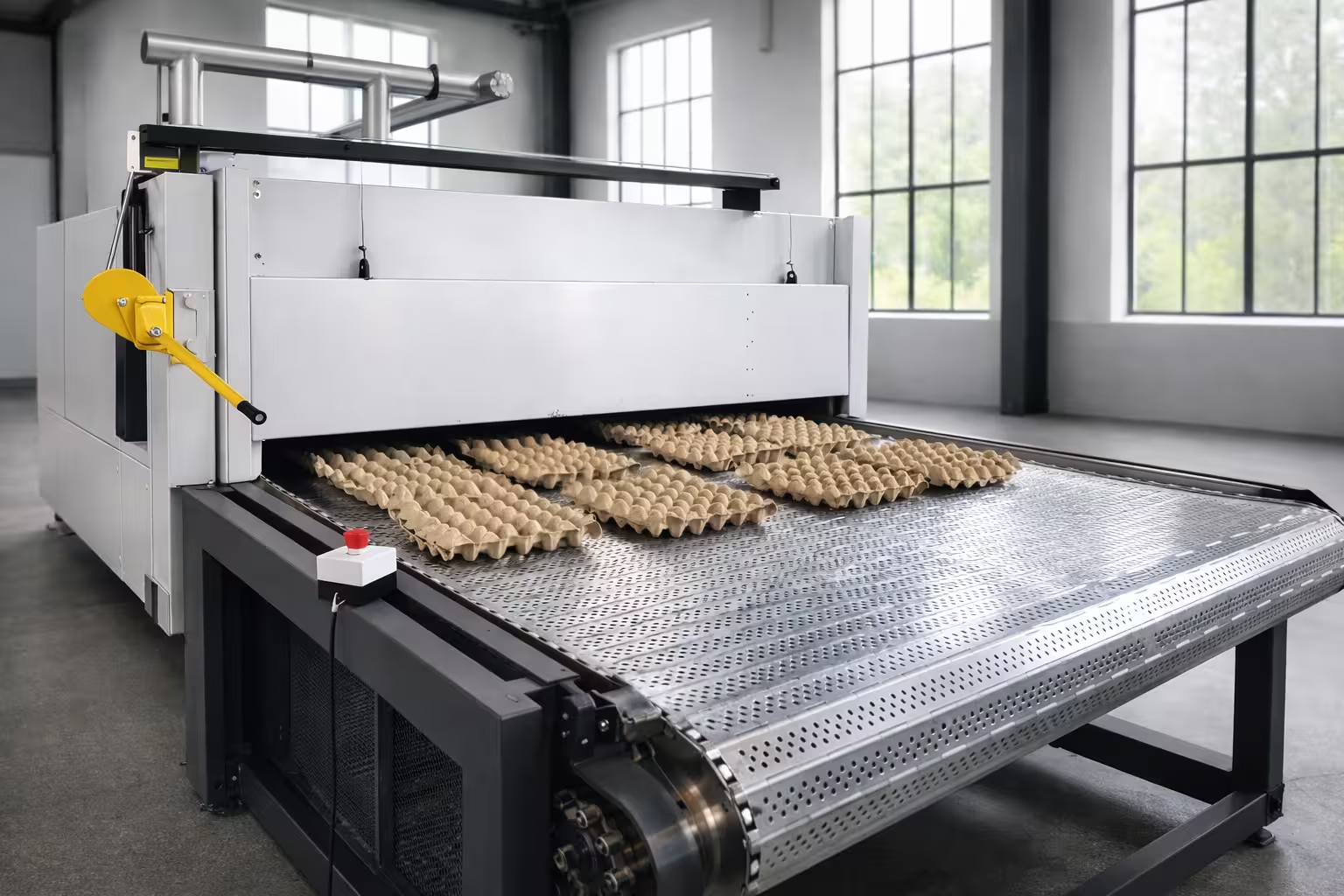
Conveyor oven sizing begins with a relationship between time, speed and path length. In a straight-through system, the product receives thermal exposure while it travels through the heated chamber. The same relationship applies whether the project uses a general belt-based industrial conveyor oven, a heavier transfer structure or a custom multi-stage line.
Before choosing equipment, it can also help to compare continuous oven configurations. When the calculation must be integrated with non-standard product handling, limited floor space, upstream/downstream controls or several thermal stages, the project may require custom continuous oven engineering.
The Three Conveyor Oven Formulas
The same three variables can be rearranged depending on which two values are known. Keep the units consistent throughout the calculation.
Example unit set: metres ÷ metres per minute = minutes.
Belt Speed = Heated Length ÷ Required Residence Time
Heated Length = Belt Speed × Required Residence Time
m or ft Speed
m/min or ft/min Time
min
Calculate Residence Time, Belt Speed or Heated Length
Enter two known values in the appropriate card. The tool performs the basic kinematic calculation only; it does not determine how long the product needs to reach temperature.
Conveyor Oven Calculation Tool
Select one unit system and keep all inputs in that system.
Calculate Residence Time
Calculate Belt Speed
Calculate Heated Length
Preliminary-use notice: the calculated heated path is not the same as total installed oven length. Entry/exit transitions, zone separation, cooling, conveyor extensions, drives and maintenance clearances must be added during system design.
Residence Time Is Not Automatically Product Soak Time
Residence time is the elapsed travel time through a defined conveyor path. It says where the product is and how long it remains there. It does not prove that the product has reached the required internal temperature or completed the intended thermal reaction.
Entry Temperature
A cold, wet or high-mass product may need significant time before its surface or core approaches the oven-air setpoint.
Thermal Mass
Product weight, fixture weight and material heat capacity affect how quickly the load responds to the available heat.
Heat Transfer
Air velocity, radiant intensity, contact exposure, product geometry and load density influence the heating rate.
Required Product Profile
Some processes require heat-up plus a defined hold after the product reaches temperature; others depend on moisture removal or cure conversion.
Choose the Calculation Based on What Is Already Fixed
Different projects start with different constraints. A plant may have a maximum available oven length, a fixed production takt or a validated process time. The calculation route should follow the value that cannot move.
| Known values | Calculate | Best used when | What still needs checking |
|---|---|---|---|
| Heated length + belt speed | Residence time | Checking an existing line or proposed machine length | Whether product temperature and process completion are achieved |
| Heated length + required time | Belt speed | Working within a fixed footprint | Whether the resulting speed can meet throughput and conveyor stability needs |
| Belt speed + required time | Heated length | Establishing a preliminary oven path | Zone allocation, entry/exit effects and total installed length |
For a broader dimensional review—including belt width, lane arrangement, openings, load, cooling and total footprint—use the conveyor oven sizing guide. When the immediate question is only the heated-path requirement, use the dedicated guide to calculate conveyor oven length.
Throughput Depends on Belt Speed, Product Pitch and Lane Count
Product pitch is the centre-to-centre distance between consecutive loads in the direction of travel. It normally includes the product length plus the required gap. For a stable single-lane flow, the theoretical throughput relationship is:
Multiply by lane count and by 60 for theoretical parts per hour.
Practical Output = Theoretical Output × Loading Efficiency
Loading efficiency accounts for gaps, stops, rejects, upstream starvation and other real production losses.
Increasing speed can raise theoretical output, but it simultaneously reduces residence time unless heated path length is increased. Reducing product pitch can also raise output, but tighter spacing may restrict airflow, increase shadowing, create uneven heating or exceed conveyor loading limits.
Examples of Belt Speed, Residence Time and Output Calculations
The examples below illustrate the arithmetic. They do not establish a suitable thermal process for another product.
Calculate residence time
An oven has 18 m of heated path and the belt travels at 0.75 m/min.
18 m ÷ 0.75 m/min = 24 min residence timeCalculate belt speed
A 15 m heated chamber must provide 20 minutes of residence time.
15 m ÷ 20 min = 0.75 m/min belt speedCalculate heated length
The planned speed is 1.2 m/min and the required residence time is 18 minutes.
1.2 m/min × 18 min = 21.6 m heated pathEstimate production rate
At 0.9 m/min, with 0.30 m product pitch and two lanes, theoretical output is 360 parts/hour. At 85% loading efficiency, practical planning output is about 306 parts/hour.
0.9 × 0.30 × 2 × 60 × 0.85 = 306 parts/hourWhy the Simple Calculation Changes in a Real Project
The formula determines motion through a path. Final oven engineering must also determine whether the available heat-transfer rate, airflow and control architecture can make the product follow the required thermal profile at that speed.
Cold Product Loading
Each new load absorbs heat and can create local temperature depression, especially at high mass flow or high loading density.
Entry and Exit Losses
Openings, vestibules and product clearance affect heat containment near the ends of the heated chamber.
Airflow Obstruction
Close product spacing, solid fixtures and deep loads can reduce air access and increase the time needed for repeatable heating or drying.
Exhaust and Moisture Load
Drying, coating and VOC-producing processes may require exhaust rates that change heater duty and temperature recovery.
Control Recovery
Heater or burner capacity, recirculation and control response must recover from the moving thermal load without excessive overshoot or undershoot.
Acceptance Conditions
Final performance should be tied to defined product loading, speed, setpoint, sensor positions and acceptance criteria.
Allocate Time by Zone When the Product Needs a Temperature Profile
A total residence time may be divided into preheat, ramp, soak, cure or other process stages. Each stage receives a preliminary path length from the same relationship:
Zone Length = Belt Speed × Required Time in That Zone
| Stage | Example purpose | Example time at 0.8 m/min | Preliminary path length |
|---|---|---|---|
| Preheat | Controlled initial heat input | 5 min | 4.0 m |
| Ramp | Bring the product toward process temperature | 8 min | 6.4 m |
| Soak / Cure | Maintain the required product condition | 12 min | 9.6 m |
The example does not prove that these stages are thermally independent or that the product reaches temperature at the zone boundary. For the decision between one controlled environment and several stages, compare conveyor oven temperature zones. When independent setpoints, airflow or exhaust are justified, review a purpose-built multi-zone conveyor oven.
The Formula Is Universal, but the Practical Conveyor Design Is Not
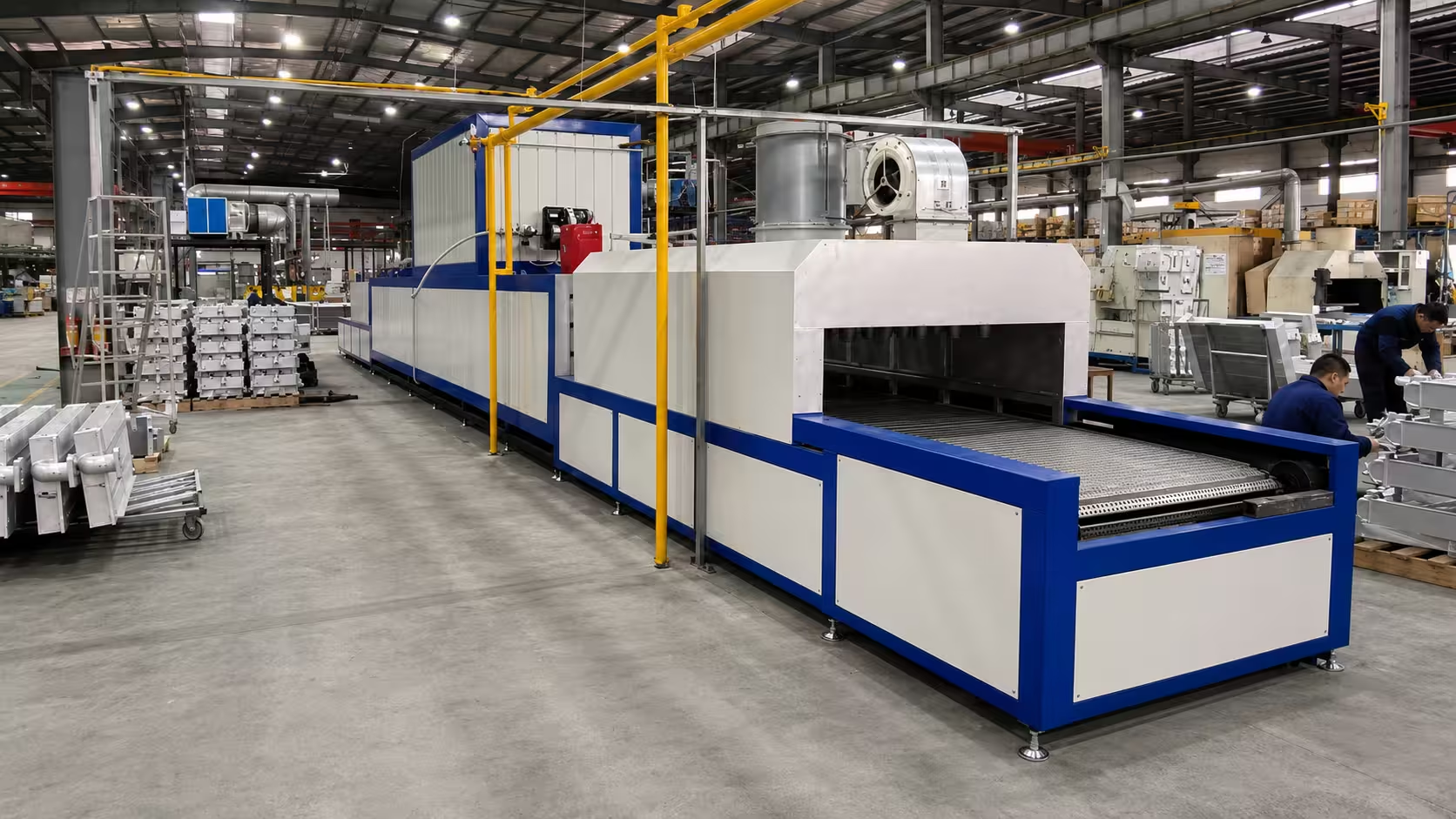
The speed-time relationship applies to different continuous oven architectures, but each conveying method introduces its own mechanical and thermal constraints.
Heavy-duty chain conveyor oven
Chain pitch, fixture mass, drive torque, indexing and lubrication temperature can limit the useful speed range.
Roller conveyor oven for inline transfer
Roller pitch, load stability, accumulation logic and stop positions must remain compatible with the planned movement.
Multi-tier continuous oven
A stacked path can reduce installed floor length while retaining the conveyor path required for long residence time.
Continuous heating and cooling oven
Heating residence time and cooling residence time should be calculated separately, then integrated into the overall line layout.
Gas-fired conveyor oven
Burner capacity, turndown, airflow and exhaust must support the moving heat load at the selected production speed.
Do not select speed in isolation
Mechanical stability, thermal response, product spacing, safety interlocks and upstream/downstream hand-off must work at the same line speed.
Turn the Calculation into a Conveyor Oven Requirement
For a useful preliminary review, provide the product dimensions and weight, carrier or belt loading, required product-temperature profile, process time, pieces per hour, product pitch, lane count, proposed speed, available footprint and required discharge condition.
Separate fixed values from assumptions
Mark validated process time, required output and available space as confirmed. Mark estimated speed, spacing or lane arrangement as provisional so the engineering review can test them.
Send Your Speed & Dwell Targets
ZonHoo can review the time-speed-length relationship together with product heating, throughput, conveyor structure, zone allocation and available floor space.
Plan Conveyor Oven Capacity and Layout →
Conveyor Oven Belt Speed and Residence Time FAQ
What is the formula for conveyor oven residence time?
Residence time equals heated conveyor path length divided by belt speed. With length in metres and speed in metres per minute, the result is minutes. The same relationship works with feet and feet per minute.
Is conveyor oven dwell time the same as residence time?
The terms are often used interchangeably for continuous travel, but “dwell” can also imply a programmed stop in an indexing system. Define whether the product moves continuously or stops at fixed positions.
Does the calculated residence time include product heat-up?
It includes all elapsed travel time inside the defined path. Whether that time is enough must be checked against product heat-up, internal temperature, moisture removal and any required soak or cure period.
How do I calculate conveyor oven belt speed?
Divide the available heated length by the required residence time. Then verify that the resulting speed also supports product stability, practical loading, throughput and the required thermal profile.
How does product spacing affect conveyor oven output?
Closer product pitch increases theoretical parts per minute at a fixed belt speed, but insufficient spacing can obstruct airflow, increase thermal shadowing, overload the conveyor or make loading unstable.
Can I reduce oven length by increasing belt speed?
Only if the shorter residence time still allows the product to meet its required temperature and process condition. Increasing speed without validating product response can reduce cure, drying or heat-treatment performance.
Does a multi-level oven reduce required residence time?
No. A multi-level layout can reduce floor length by folding or stacking the conveyor path, but the product still needs the required total path length and thermal exposure.
What information is needed to confirm belt speed and oven length?
Provide product size and weight, carrier details, entry temperature, required product-temperature profile, process time, pieces per hour, product spacing, lane count, available footprint and any required cooling or downstream discharge temperature.