
Batch vs Continuous Drying Oven
Compare batch drying ovens and continuous conveyor dryers by production volume, product variety, loading method, residence time, floor space, airflow, energy use, automation, line integration, and project flexibility before choosing the equipment architecture.
- Batch ovens favor flexibility. They are usually easier to adapt to changing products, variable loading, different recipes, and large or heavy parts.
- Continuous dryers favor repeatable throughput. They are strongest when product flow, line speed, spacing, and drying requirements are stable enough for continuous production.
- Drying time is controlled differently. Batch systems use cycle time; conveyor systems use line speed and effective heated travel length.
- There is no universal winner. The right architecture depends on product mix, hourly output, handling, plant layout, utilities, airflow/exhaust, and integration requirements.
Batch Drying Holds the Load; Continuous Drying Moves the Load
Both systems can use electric or gas heating, forced hot-air circulation, exhaust, multiple temperature zones, PLC/PID controls, data logging, and custom loading hardware. The main difference is how the product moves through the thermal process.
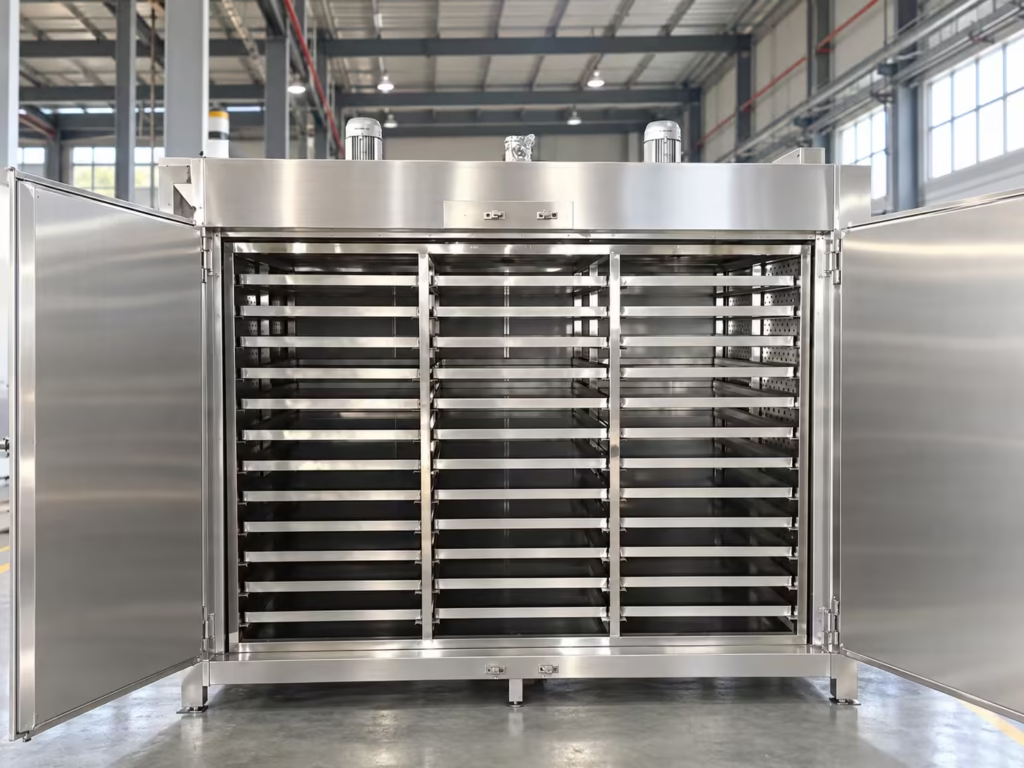
Batch Drying Oven
A defined load enters the chamber, remains inside for the required heat-up and drying cycle, and is unloaded after the process is complete. The operator can change cycle time and recipe between batches.
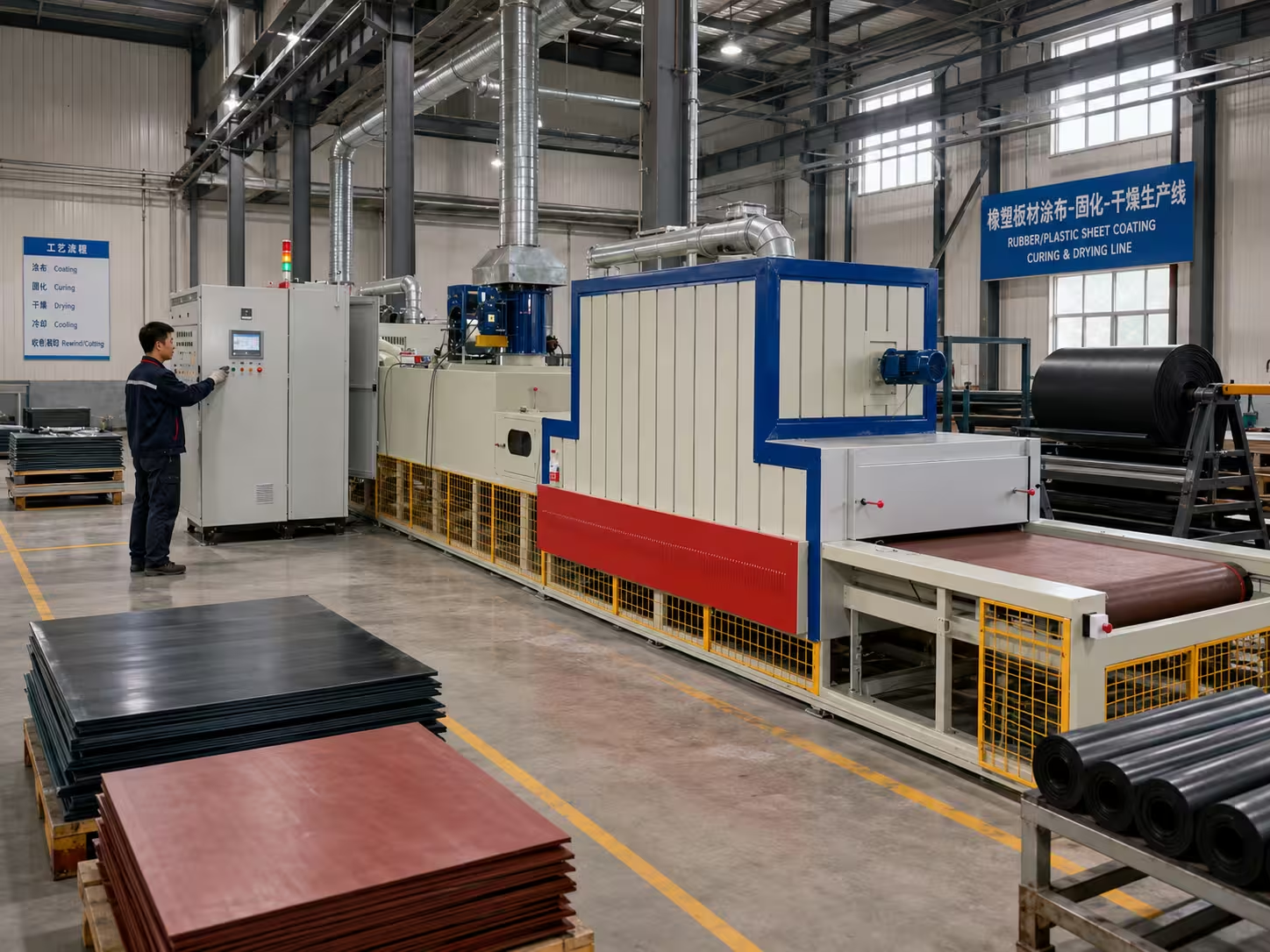
Continuous Drying Oven
Product enters continuously or at repeated intervals and moves through one or more thermal zones. Residence time is controlled mainly by conveyor speed and effective heated path length.
Choose Batch Drying When Flexibility Matters More Than Continuous Flow
Batch equipment is often the practical direction when the product mix changes, production is intermittent, or the load is too large, heavy, or irregular for a fixed conveyor arrangement.
- Different product sizes, weights, or recipes are processed in the same oven
- Drying time changes significantly between products
- Production is organized by lots rather than continuous hourly flow
- Loads are handled on shelves, racks, carts, rails, forklifts, or floor systems
- Large assemblies require wide or tall chamber access
- The project needs lower line-integration complexity
General Batch Direction
Review the Industrial Batch Oven for flexible batch thermal processing.
Oversized Products
Review the Industrial Walk-In Oven where chamber access and large loading volume are important.
High Moisture Loads
Review Hot Air Circulation Dryers where moisture removal and convective airflow are central to the process.
Choose Continuous Drying When Throughput and Line Integration Drive the Process
Conveyorized drying is usually strongest when the product is repetitive, loading orientation is stable, and the drying stage must operate at a predictable rate with upstream or downstream equipment.
- Production runs continuously or for long repeated campaigns
- Product pitch and orientation can be controlled
- Hourly output is a primary purchasing requirement
- Drying time can be converted into line speed and heated travel length
- The oven must integrate with coating, washing, forming, cooling, assembly, or packaging equipment
- Automation and reduced manual loading are valuable
Generic Continuous Dryer
See the Industrial Conveyor Belt Dryer.
Limited Linear Floor Space
See the U-Shaped Drying Oven where the process path must return within the plant footprint.
Complete Integrated Line
See the Conveyor Drying Line when drying is one stage inside a larger automated process.
Stable High Throughput Favors Continuous; Variable Product Mix Favors Batch
Production volume alone does not make a project continuous. The important question is whether the product, loading pattern, drying requirement, and line rhythm are stable enough to justify a fixed-flow system.
| Production Condition | Batch Direction | Continuous Direction |
|---|---|---|
| Low / intermittent output | Usually practical | May be underutilized |
| High repeat output | Possible with multiple batches / ovens | Usually stronger fit |
| Frequent product changes | High flexibility | Requires changeover strategy |
| Stable product size / recipe | Works | Good basis for continuous design |
| Large irregular products | Often easier | Carrier / conveyor may become complex |
| Automated upstream flow | May require buffer handling | Natural integration direction |
Batch Systems Control Cycle Time; Continuous Systems Control Residence Time
Batch Cycle
The load is heated, dried, and held for a defined recipe time. The operator can extend or shorten the cycle for different products. Door opening and cold-load recovery are important to total batch time.
Continuous Residence Time
Product time inside the heated zone depends on conveyor speed and effective heated travel length. Changing speed changes residence time and can also change hourly throughput.
Product Handling Can Decide the Architecture Before the Thermal Calculation Does
A thermally suitable conveyor system can still be the wrong choice if the product cannot be loaded, supported, turned, spaced, or transferred reliably. The same applies to batch chambers that are too difficult to load safely or efficiently.
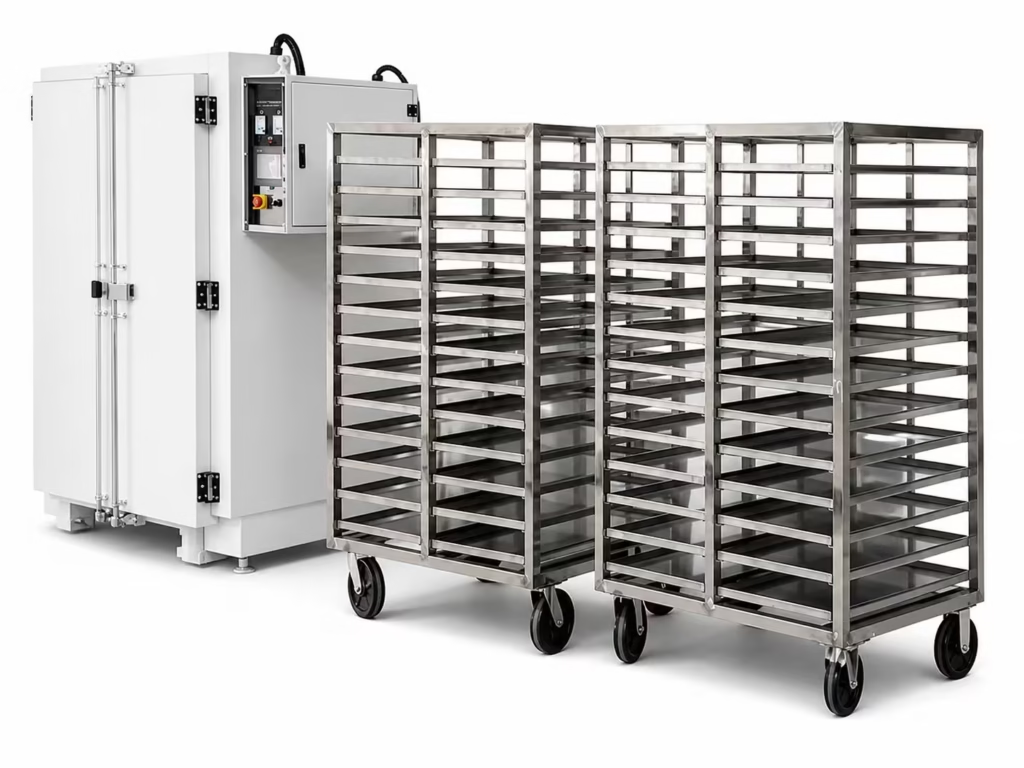
Batch: Shelves / Racks
High loading density for smaller components, trays, electrical parts, or multi-tier product arrangements.
Batch: Carts / Rails
Useful for heavy or large loads where the complete batch moves as one handling unit.
Continuous: Belt / Chain
Useful for repeat products that can be supported at stable pitch and orientation.
Continuous: Overhead / Fixtures
Useful for suspended products, coating lines, and applications requiring access around the product surface.
Compare Chamber Footprint with Conveyor Path Length
Batch ovens concentrate the process inside a chamber. Continuous dryers spread the required residence time along a product travel path. The right layout depends on available floor space, loading areas, maintenance aisles, ducting, utilities, and upstream/downstream equipment.
Compact Batch Footprint
A batch chamber can provide long process time without requiring a long linear product path.
Straight Continuous Line
Simple product flow, but long residence time may create substantial machine length.
U-Shaped Continuous Path
Returns the conveyor path when residence time is long but linear plant length is limited.
Both Architectures Need Airflow and Exhaust — but the Loss Pattern Is Different
Batch and continuous ovens can use similar thermal technologies, but they lose heat and handle moisture differently.
| Engineering Area | Batch Drying Oven | Continuous Dryer |
|---|---|---|
| Door / opening loss | Large intermittent loss when doors open | Continuous loss through product openings |
| Cold-load recovery | Important at the start of each batch | Distributed as product enters continuously |
| Moisture release | May peak during early cycle | Often linked to hourly line load and zone position |
| Exhaust strategy | Can be staged through recipe | Can be zone-specific and tied to line speed |
| Energy utilization | Depends strongly on batch loading and idle time | Can be efficient at steady utilization but poor when line is underfed |
For airflow, moisture exhaust, make-up air, and chamber pressure design, see Drying Oven Airflow, Moisture Exhaust & Ventilation.
Continuous Drying Integrates More Naturally with a Production Line
Batch ovens can be highly automated, but their process rhythm still includes loading, door operation, cycle execution, and unloading. Conveyor dryers naturally follow upstream and downstream equipment at a defined line rate.
Batch Controls
Recipes, ramp/soak logic, timers, fan/heater interlocks, data logging, alarms, and optional automated doors or carts.
Continuous Controls
Zone temperatures, VFD line speed, conveyor interlocks, recipe control, alarms, data logging, and line communication.
Integrated Process Line
When drying must coordinate with coating, washing, cooling, inspection, or material handling, see the Conveyor Drying Line.
Batch vs Continuous Drying Oven Comparison Matrix
Use this matrix to identify the architecture direction. Final selection still depends on the actual product and process.
| Decision Factor | Batch Drying Oven | Continuous Drying Oven | What to Confirm |
|---|---|---|---|
| Product variety | High flexibility | Best with repeatable products | Number of products / recipes |
| Production format | Lots / batches | Continuous / repeated flow | Hourly output and operating schedule |
| Drying-time control | Recipe / cycle time | Line speed + heated length | Required effective drying time |
| Loading | Shelves, racks, carts, rails, floor | Belt, chain, overhead, fixtures, pallets | Product size, weight, orientation |
| Large / heavy products | Often easier | Possible but conveyor becomes more complex | Single-part and total load weight |
| Line integration | Requires buffering / batch transfer | Natural integration | Upstream/downstream process |
| Floor-space behavior | Concentrated chamber footprint | Residence time creates path length | Available L × W and layout |
| Changeovers | Usually easier | Need line-speed / fixture / recipe planning | Changeover frequency |
| Automation potential | High, but batch rhythm remains | Very high for continuous production | Required labor and controls |
| Best starting page | Industrial Batch Oven | Conveyor Belt Dryer | Use actual process data |
Compare equipment cost together with labor, loading time, plant space, operating utilization, throughput, changeovers, line integration, airflow/exhaust requirements, controls, and the cost of production interruptions.
Use Your Product and Throughput Data to Fix the Architecture
The fastest way to decide between batch and continuous is to put the real process data beside the plant layout: product size, weight, loading method, batch quantity or hourly output, drying temperature, drying time, incoming moisture or volatile load, utilities, floor space, and required automation.
Need the General Direction?
Need Preliminary Sizing?
Ready for a Quote?
Use the Industrial Drying Oven RFQ Checklist.
Batch vs Continuous Drying Oven FAQ
What is the main difference between a batch drying oven and a continuous drying oven?
When is a batch drying oven the better choice?
When is a continuous conveyor dryer the better choice?
Which system is more energy efficient?
Can a batch oven handle high production volume?
Can continuous drying handle different products?
What information should I provide to choose between batch and continuous drying?