
Batch Oven vs Conveyor Oven: Which Fits Your Production?
Compare production volume, product mix, labor, process repeatability, floor space and total cost before deciding between batch processing and a continuous conveyor oven.
The decision between a batch oven and a conveyor oven is not simply “small production versus large production.” It is a production-system decision. A batch oven processes a defined load together, while a conveyor oven establishes a continuous or indexed product flow through a controlled thermal path.
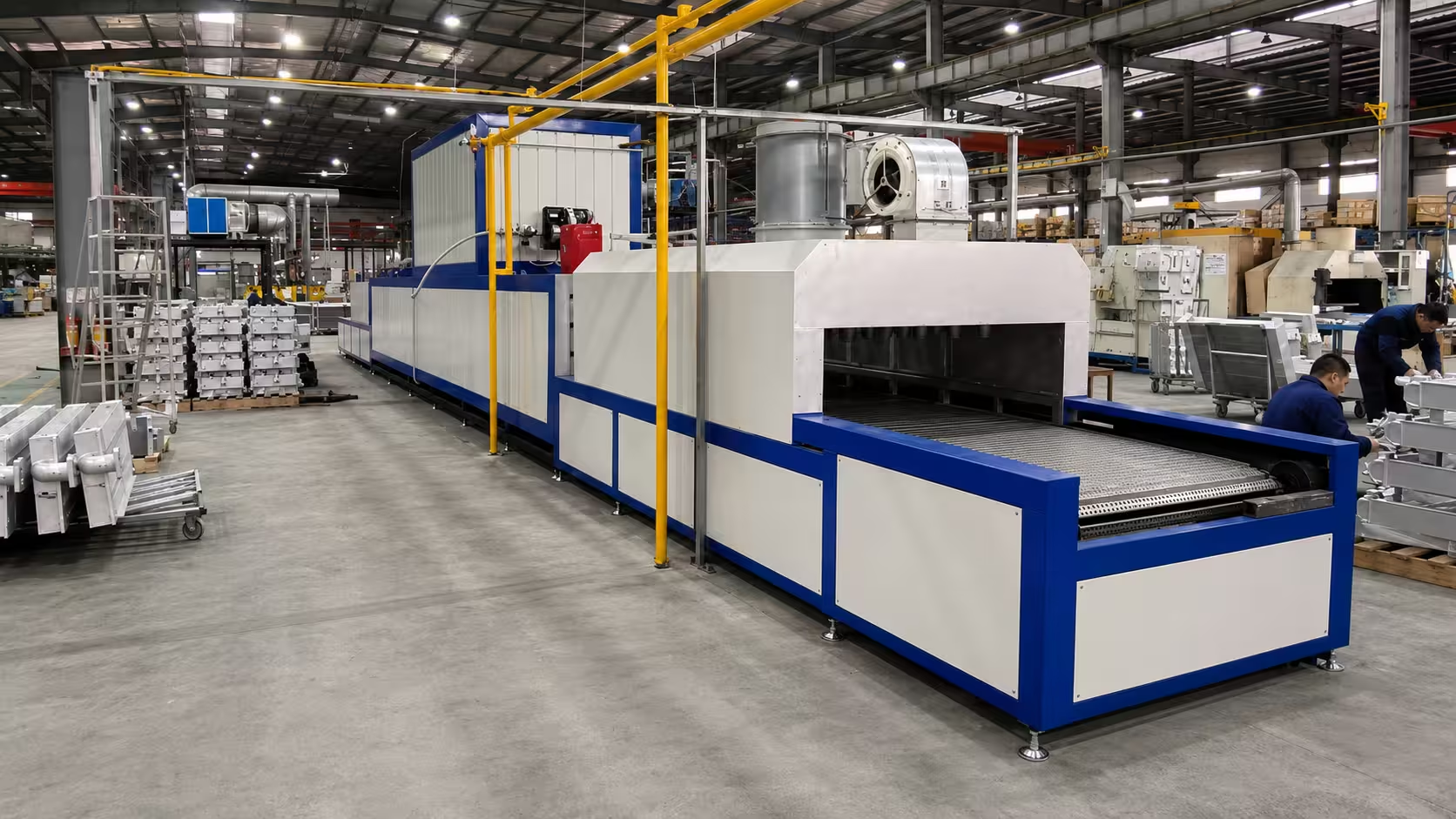
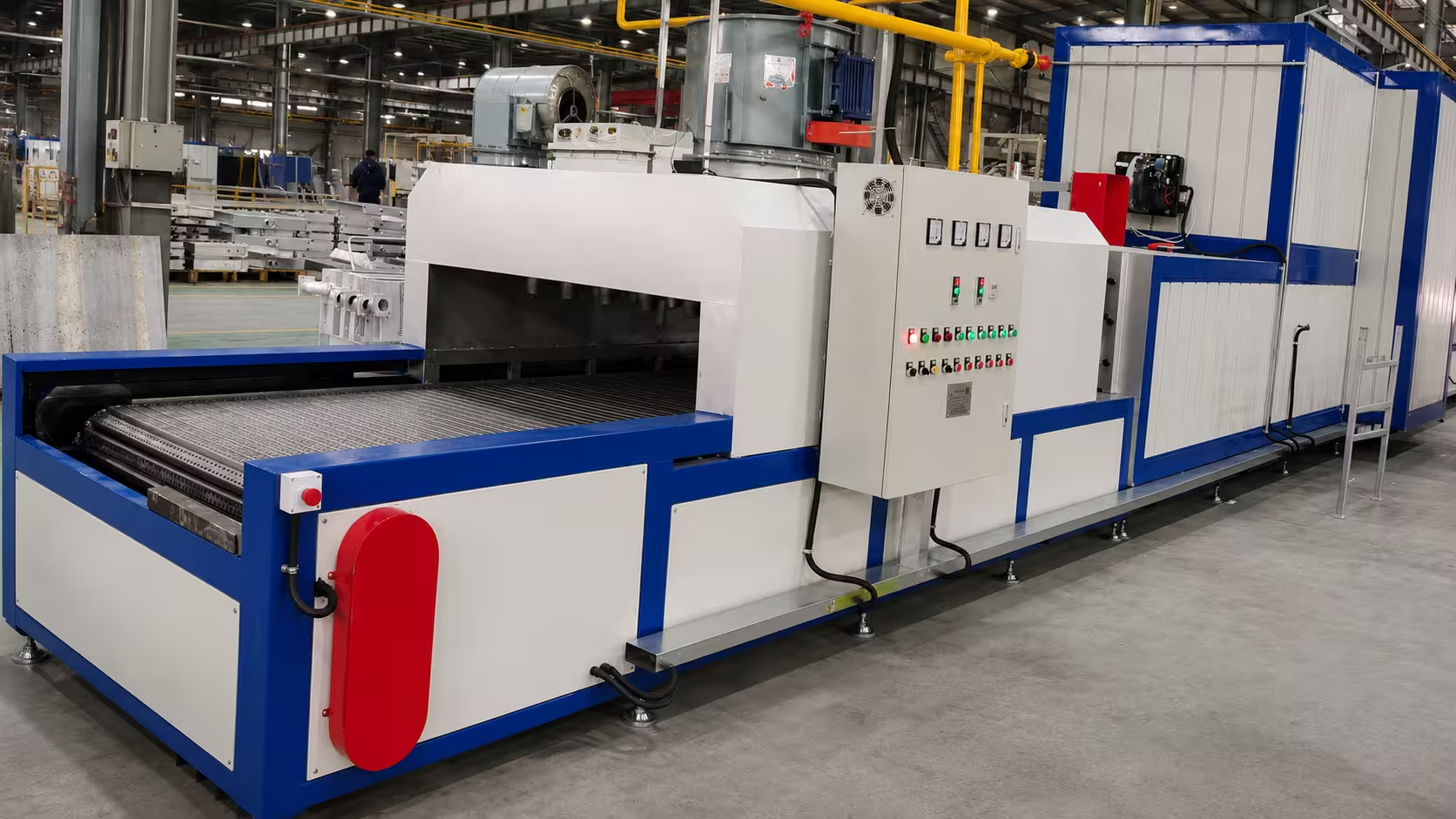
If continuous production is already the likely direction, first compare continuous oven configurations. For lines based on a moving belt or similar continuous carrier, a belt-based industrial conveyor oven can combine heating, product transport and upstream/downstream integration in one engineered system.
The Core Difference: Batch Loads vs Continuous Product Flow
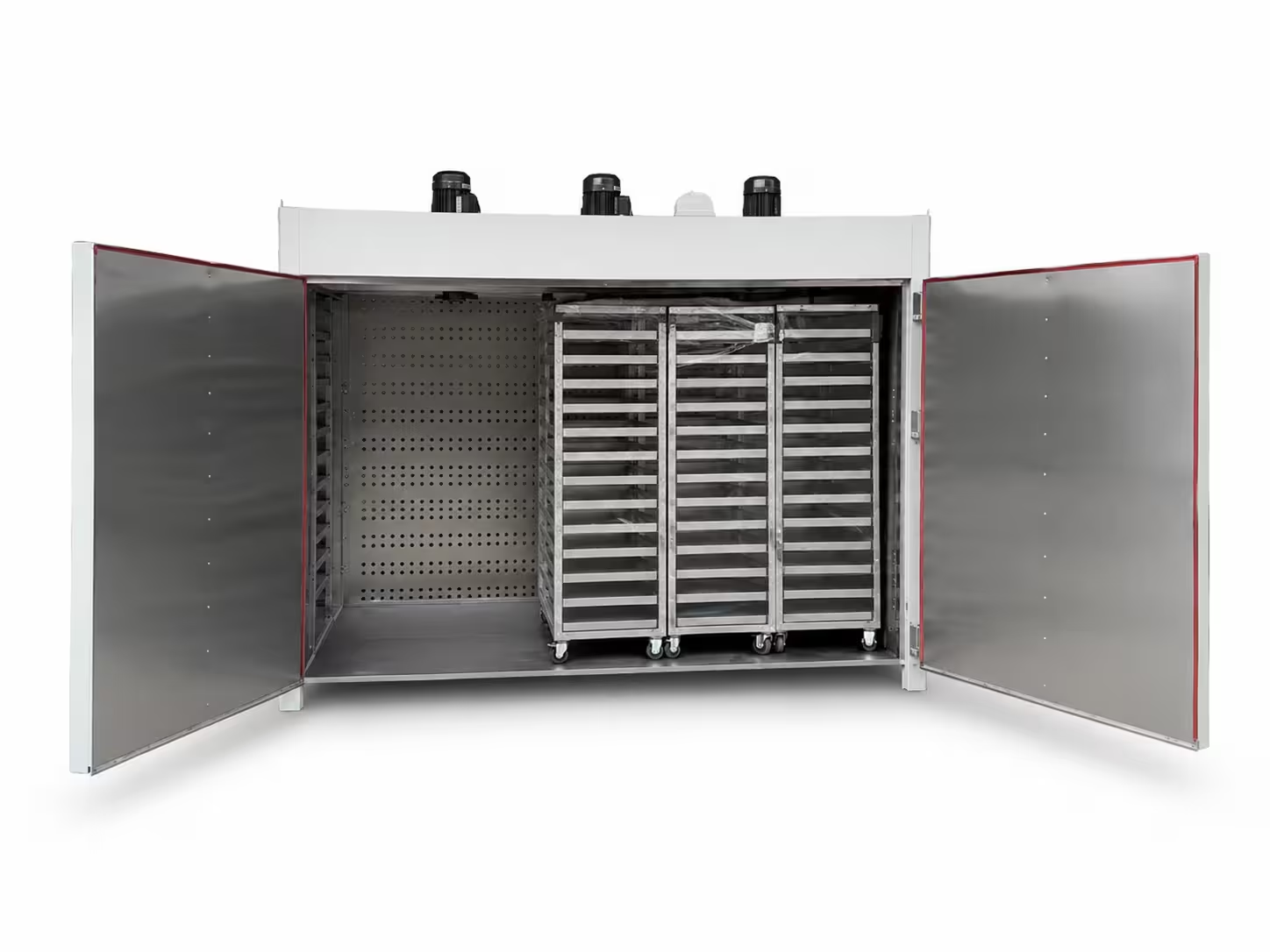
A batch oven is organized around a load cycle. Parts are loaded into the chamber, the batch is processed, and the chamber is unloaded before the next load starts. Production naturally moves in groups.
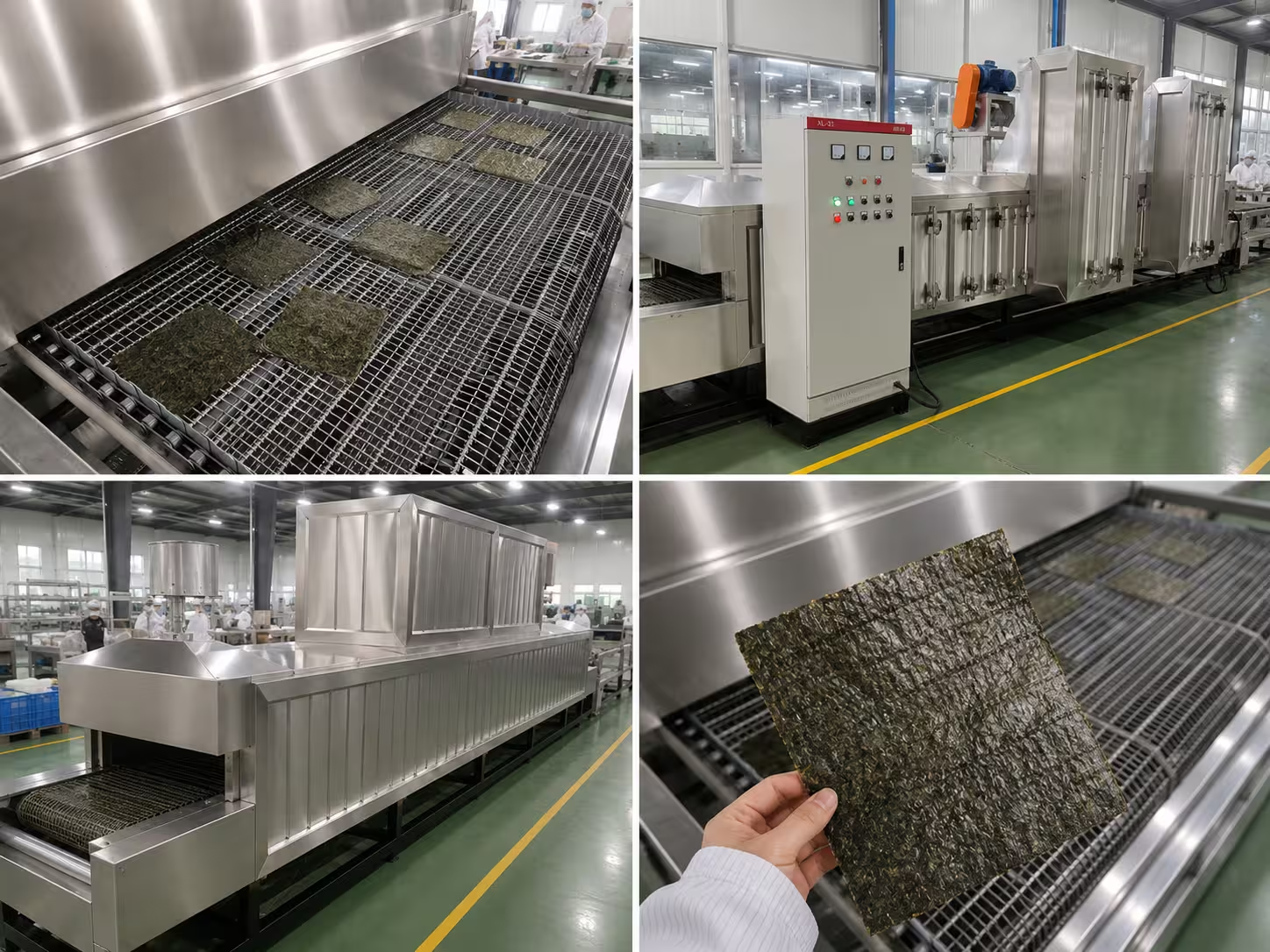
A conveyor oven is organized around product flow and residence time. Parts enter at a controlled rate, travel through one or more thermal sections, and exit while new parts continue entering. The oven becomes part of the production line rather than a separate batch station.
Best when flexibility dominates
- Multiple product sizes or recipes
- Irregular or campaign-based production
- Large carts, racks or mixed loads
- Frequent process changes
- Lower need for line automation
Best when flow dominates
- Stable product families
- Repeatable high hourly throughput
- Defined takt or line speed
- Automated upstream/downstream handling
- Reduced repeated loading and unloading
Neither architecture is automatically more advanced. The better system is the one that matches the production model without creating unused capacity, excessive manual handling or unnecessary process complexity.
Batch Oven vs Conveyor Oven Decision Matrix
Use this matrix as an early screening tool. Final selection should still be based on the real product, cycle, loading pattern and site layout.
| Decision factor | Batch oven | Conveyor oven | What usually drives the choice |
|---|---|---|---|
| Production volume | Good for low to moderate or variable demand | Strong for sustained repeatable throughput | Parts/hour, shifts and utilization |
| Product variety | Excellent flexibility | Best with stable product families | SKU changes and recipe frequency |
| Material handling | Manual or cart-based loading is common | Can integrate directly with line handling | Labor and automation level |
| Residence time | Controlled by batch recipe | Controlled by conveyor speed and productive length | Thermal process window |
| Process repeatability | Good when loading is well controlled | Very strong for repeatable flow and spacing | Consistency requirements |
| Initial capital | Often lower for a simple stand-alone system | Usually higher due to conveyor and line integration | Project scope and automation |
| Cost per part | Can rise with labor and handling at high volume | Can become attractive at sustained utilization | Annual production and labor |
| Changeover | Easy to separate different batches | Must manage line clearing, speed and recipe transitions | Product mix |
Throughput and Takt Time Usually Decide the Business Case
The commercial advantage of a conveyor oven appears when production needs a steady output that is difficult to achieve efficiently through repeated loading, heating, unloading and staging.
For a conveyor system, the important variables are not simply oven width and length. Engineering must connect parts per hour, product spacing, conveyor speed and required residence time. A line with tight spacing may produce high output at a slower belt speed, while large fixtures may require a longer pitch and therefore more productive length.
Parts per hour
Define normal production and peak demand, not only an optimistic maximum. This establishes the real line-duty target.
Product pitch
Spacing between parts or carriers changes the number of products that can occupy the oven at one time.
Thermal time
Distinguish time for the product to heat up from time it must remain at the required process condition.
Shift utilization
A conveyor line running one short campaign per day has different economics from a line operating continuously across multiple shifts.
Before freezing conveyor length, use a proper conveyor oven dwell-time calculation. This prevents two common mistakes: buying unnecessary heated length or specifying a line that cannot meet the required throughput.
Product Mix and Changeover: Where Batch Ovens Stay Strong
Batch processing is difficult to beat when production changes frequently. A manufacturer can load one recipe, process it, unload, and then prepare the chamber for a different product without having to clear a long conveyor path or synchronize the new product with upstream and downstream equipment.
Batch is usually attractive when:
- product dimensions vary significantly;
- different products require different temperatures or cycle times;
- production arrives in campaigns rather than a stable hourly flow;
- large racks, carts or assemblies are loaded together;
- the plant wants one flexible thermal asset for multiple jobs.
Conveyor becomes attractive when:
- products share a common thermal process window;
- the same product family runs for long periods;
- loading orientation and spacing can be standardized;
- changeovers can be managed by belt speed, zone setpoints or scheduled line clearing;
- production wants predictable flow rather than batch queues.
If the decision has already moved toward continuous processing but the conveyor architecture is still unclear, use the industrial conveyor oven selection guide to compare conveyor type, heating method, zone layout and system configuration.
Labor and Automation Can Matter More Than Oven Price
A batch oven may look simpler on the equipment quotation, but the surrounding production work must also be counted. Operators may need to stage parts, load racks, move carts, wait for the cycle, unload, transfer hot parts and prepare the next batch.
A conveyor oven shifts the design toward continuous material handling. Parts can enter from an upstream conveyor or loading station and discharge directly to cooling, inspection, assembly or the next process. This can reduce repeated touches and work-in-process queues when the line runs at meaningful utilization.
Floor Space Is More Than the Oven Footprint
A straight conveyor oven is usually longer than a batch chamber, but comparing external machine dimensions alone can be misleading. Batch production may require loading clearance, cart maneuvering, staging zones, hot-part holding areas and separate transfers between operations.
A conveyor line uses more linear space, but it can combine transport and heating into one production path. Depending on the process, layout options such as stacked paths, line turns or integrated cooling can reduce the amount of disconnected handling around the oven.
| Space item | Batch production | Conveyor production |
|---|---|---|
| Oven body | Usually more compact in length | Longer productive path |
| Loading/unloading clearance | Can be significant for carts and racks | Usually concentrated at infeed/outfeed |
| Staging | Often required before and after each batch | May be reduced by synchronized flow |
| Integration | Often stand-alone | Can combine transport with thermal processing |
| Expansion | Add another batch unit or larger chamber | May require speed, length or line-layout changes |
Which System Gives Better Process Repeatability?
Both architectures can deliver controlled industrial heating when properly engineered. The difference is where process variation tends to enter.
Batch repeatability depends strongly on load consistency
Rack density, product placement, door-open time, cold load mass and airflow obstruction can change the thermal response from batch to batch. Good loading procedures, airflow design and recipe control are therefore important.
Conveyor repeatability depends strongly on flow consistency
Part spacing, belt speed, load orientation and stable zone conditions become critical. When those inputs are controlled, each product can receive a highly repeatable time-temperature exposure as it passes through the line.
Initial Capital Cost vs Cost per Finished Part
Batch ovens usually offer a simpler entry point because the system may consist of a chamber, circulation system, heating package and controls. Conveyor ovens add material handling, drives, supports, guarding, line interfaces and often more extensive controls.
That higher initial scope can be justified when the line operates enough hours to recover value through higher output, reduced manual handling, lower work-in-process and more predictable production flow.
Equipment investment
Compare the delivered system scope, not only chamber dimensions or heater capacity.
Handling per shift
Count loading, cart movement, unloading, staging and manual transfers.
Finished parts/hour
Measure how each architecture supports the real production target and peak demand.
Queue and staging
Inventory waiting for a batch can carry hidden floor-space and lead-time costs.
Bottleneck cost
Lost production can outweigh small differences in oven purchase price.
For budgeting, compare the complete industrial conveyor oven cost factors, including conveyor design, heated length, controls, cooling, utilities, installation and project scope. A realistic comparison should also include expected annual utilization rather than assuming the conveyor will run continuously.
When Does It Make Sense to Move from Batch to Conveyor Processing?
The best time to evaluate a conveyor oven is usually not when a batch oven fails. It is when the production system starts showing structural signs that batch processing is limiting output or creating excessive handling.
- The oven is a production bottleneck. Upstream equipment can produce faster than batches can be loaded, processed and unloaded.
- Hourly demand is becoming stable. Production runs the same product family for long enough periods to support continuous flow.
- Manual handling is growing faster than output. More carts, operators or staging are required just to feed the thermal process.
- The surrounding line is already automated. A stand-alone batch step interrupts an otherwise continuous process.
- Repeatability requirements are tightening. Product spacing, residence time and thermal exposure need to be standardized.
- Expansion is approaching. Buying another batch oven may solve immediate capacity but create more floor-space and labor demand.
Turn the Comparison into a Production Decision
A useful batch-versus-conveyor review should begin with production data, not a preferred machine type. Provide the product envelope, load weight, process temperature, required thermal time, hourly throughput, shift pattern, current handling method and available floor space.
Review the process route first
Use production volume, product mix, takt time and changeover frequency to decide whether continuous processing is justified before locking a conveyor configuration.
Compare Your Production with an Engineer
Send product size, throughput, process time, shift pattern and available space. ZonHoo can evaluate whether batch or continuous processing better supports the required production flow.
Prepare Quote-Ready Process Data →The fastest way to reduce back-and-forth is to prepare the information required for a conveyor oven quotation. Unknown values can be marked TBD; the goal is to separate confirmed production requirements from assumptions.
Frequently Asked Questions
These questions help narrow the production route before detailed oven sizing and quotation.
Is a conveyor oven always better for high-volume production?
No. High volume strengthens the case for continuous processing, but product variety, residence time, loading method, line utilization and changeover frequency also matter. A highly mixed production schedule can still favor batch processing even at substantial annual volume.
At what production volume should we switch from batch to conveyor?
There is no universal parts-per-hour threshold. The switch point depends on product pitch, thermal time, shifts, labor, staging, current bottlenecks and how many hours the conveyor would actually run. The decision should be modeled around the specific production flow.
Which system has the lower operating cost?
It depends on utilization and process duty. A conveyor line can reduce handling and improve output at sustained production, but a lightly utilized conveyor may carry unnecessary thermal and mechanical overhead. Compare energy, labor, throughput and downtime together.
Can a conveyor oven process multiple products?
Yes, when the products share compatible conveyor support, temperature ranges and process windows. Different recipes may be handled through zone setpoints and speed changes, but very frequent or extreme product changes can make batch processing more practical.
Is a batch oven more temperature-uniform than a conveyor oven?
Not inherently. Uniformity depends on airflow, heat distribution, load geometry and control design. Batch systems must control load placement and air blockage; conveyor systems must control product spacing, line speed and zone conditions.
Does a conveyor oven always require more floor space?
The oven body is usually longer, but the total production footprint may not be. Batch systems can require staging, cart movement and separate handling areas. Conveyor systems may integrate transport, heating and downstream transfer into one line.
Can we replace an existing batch oven with a conveyor oven without changing the process?
Usually the thermal objective can be preserved, but the process must be translated from a batch recipe into product flow, conveyor speed, residence time, zone length and loading pattern. Upstream and downstream handling also need to be reviewed.
What information should we send ZonHoo to compare the two options?
Send product dimensions and weight, hourly throughput, process temperature, required heat-up or soak time, current batch size and cycle, shift hours, loading method, available floor space and site utilities. Photos or drawings of the product and current process are especially useful.