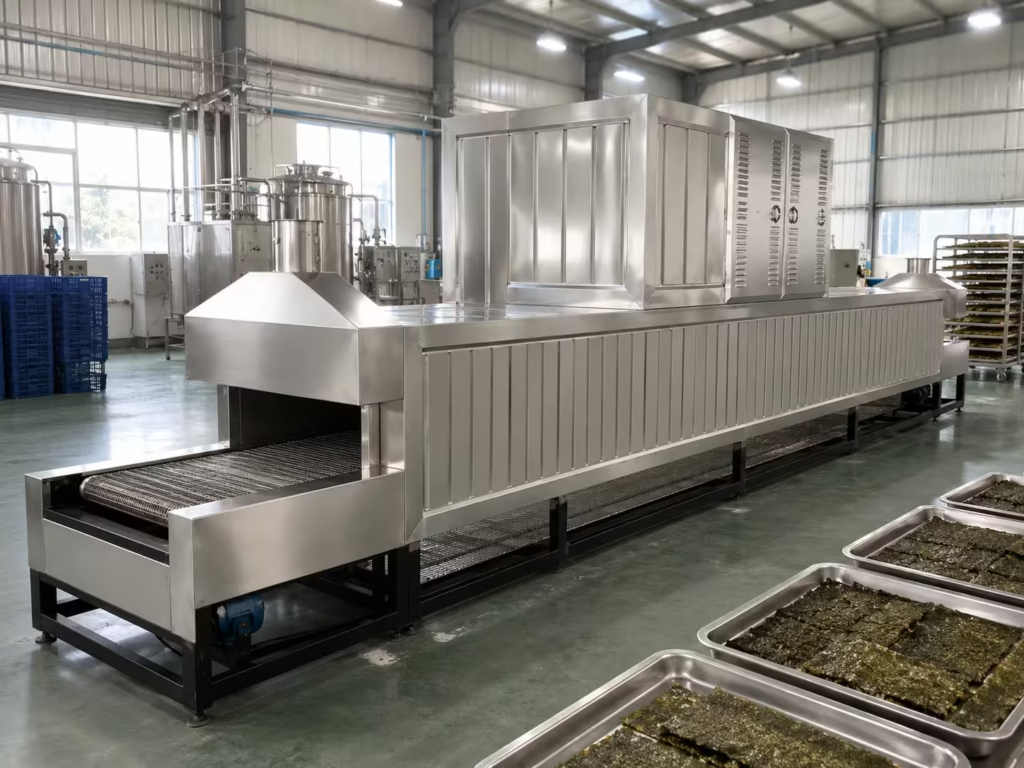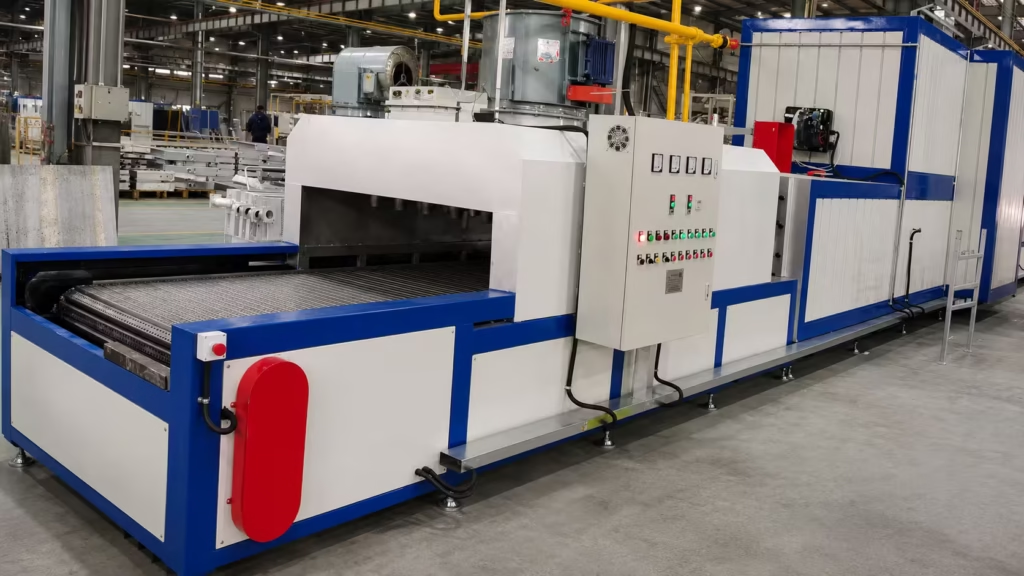

Industrial Conveyor Oven Cost Guide
Understand what drives the price of a custom conveyor oven, which specifications have the largest budget impact, and what information is needed for a useful preliminary quotation—without relying on misleading one-size-fits-all price ranges.
An industrial conveyor oven is normally quoted as an engineered system, not as a standard chamber with a fixed price. Two lines with similar outside dimensions can have very different costs because one may carry light products through a single electric zone while the other requires heavy fixtures, several controlled stages, high exhaust duty, gas combustion equipment and downstream cooling.
Start with the required industrial conveyor oven systems and the actual production duty. When the line needs non-standard handling, unusual dimensions or integrated process stages, the quotation moves into custom-built continuous oven solutions. If the basic equipment concept is not yet clear, first compare conveyor oven configurations before trying to set a budget.
Why Industrial Conveyor Oven Prices Vary So Widely
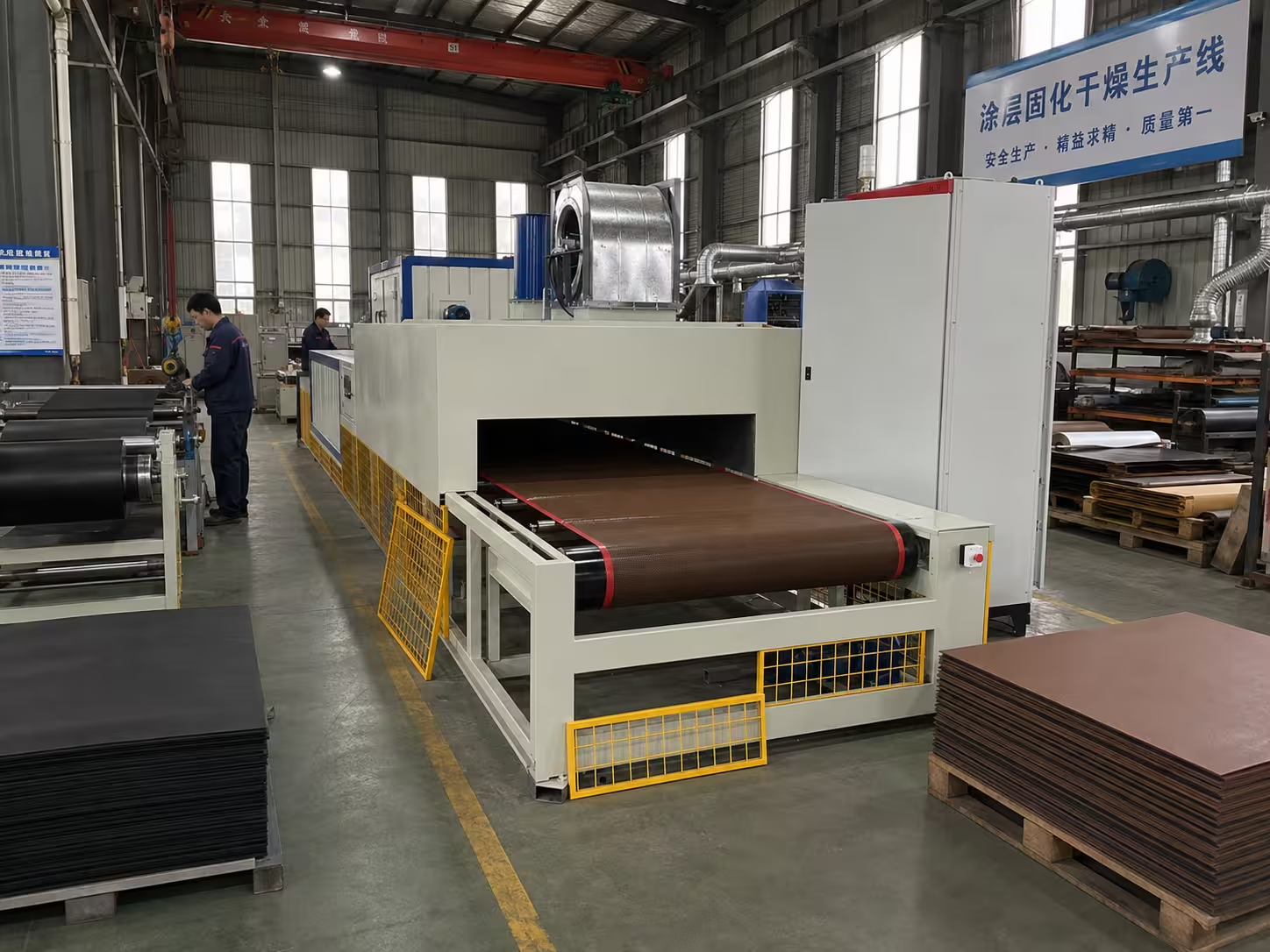
A conveyor oven price is the result of a complete process definition. The manufacturer must convert product data and production targets into a conveyor path, heated length, chamber cross-section, heat input, airflow arrangement, exhaust duty, control architecture and installation package.
Similar dimensions do not mean similar duty
A wide oven carrying low-mass parts at a moderate temperature may need less heating and drive capacity than a narrower line carrying dense metal fixtures. Likewise, a single-zone preheating process can be much simpler than a line with ramp, soak, cure and controlled cooling stages—even when the total length looks similar.
Quoted price depends on what is included
One quotation may cover only the oven and conveyor. Another may include burner or heater packages, exhaust treatment interfaces, PLC recipes, data logging, upstream and downstream handshakes, modular shipping, installation supervision, spare parts, testing and project documentation. These are not small wording differences; they change the delivered scope.
What Makes Up the Cost of a Conveyor Oven?
Most project quotations combine five major cost groups. The balance between them changes by application, which is why a simple price-per-metre method is unreliable.
Structure and insulation
Panels, framing, insulation thickness, seals, access doors, vestibules and internal materials sized for the required temperature and environment.
Conveyor and drive
Belt, chain, rollers, fixtures, shafts, bearings, tracking, supports, gearmotors and load-rated structure.
Heating and airflow
Electric heaters or combustion equipment, circulation fans, ducting, plenums, exhaust and temperature-control hardware.
Controls and safety
PID or PLC/HMI control, variable-speed drives, recipes, alarms, interlocks, sensors, communications and safety circuits.
Testing and integration
Engineering drawings, FAT, documentation, packaging, modules, commissioning support, training and spare-parts scope.
The Specifications That Have the Largest Budget Impact
The items below tend to move several cost groups at once. They should be confirmed early because late changes often require a new layout, heat-load calculation, conveyor design and shipping plan.
Heated length and belt width
Longer paths and wider conveyors increase enclosure, insulation, framing, belt or chain, airflow distribution and heat loss.
Product and carrier load
Heavy products, pallets and fixtures affect conveyor structure, drive torque, bearings, shafts, supports and heat absorbed by the load.
Temperature and heat-up duty
Working temperature, entry temperature, product mass, heat-up rate and production rate determine installed heating capacity and circulation duty.
Number of controlled stages
Additional heating zones, independent airflow control, cooling stages and process transitions add equipment, sensors, controls and physical length.
Uniformity, exhaust and emissions
Tight temperature acceptance, water vapor, smoke, VOCs or solvent release may require more complex airflow, exhaust, monitoring and safety design.
Automation and compliance
Recipes, data logging, production-line communication, remote support, redundant safety devices and regional compliance requirements increase engineering and controls scope.
Conveyor Oven Cost-Impact Matrix
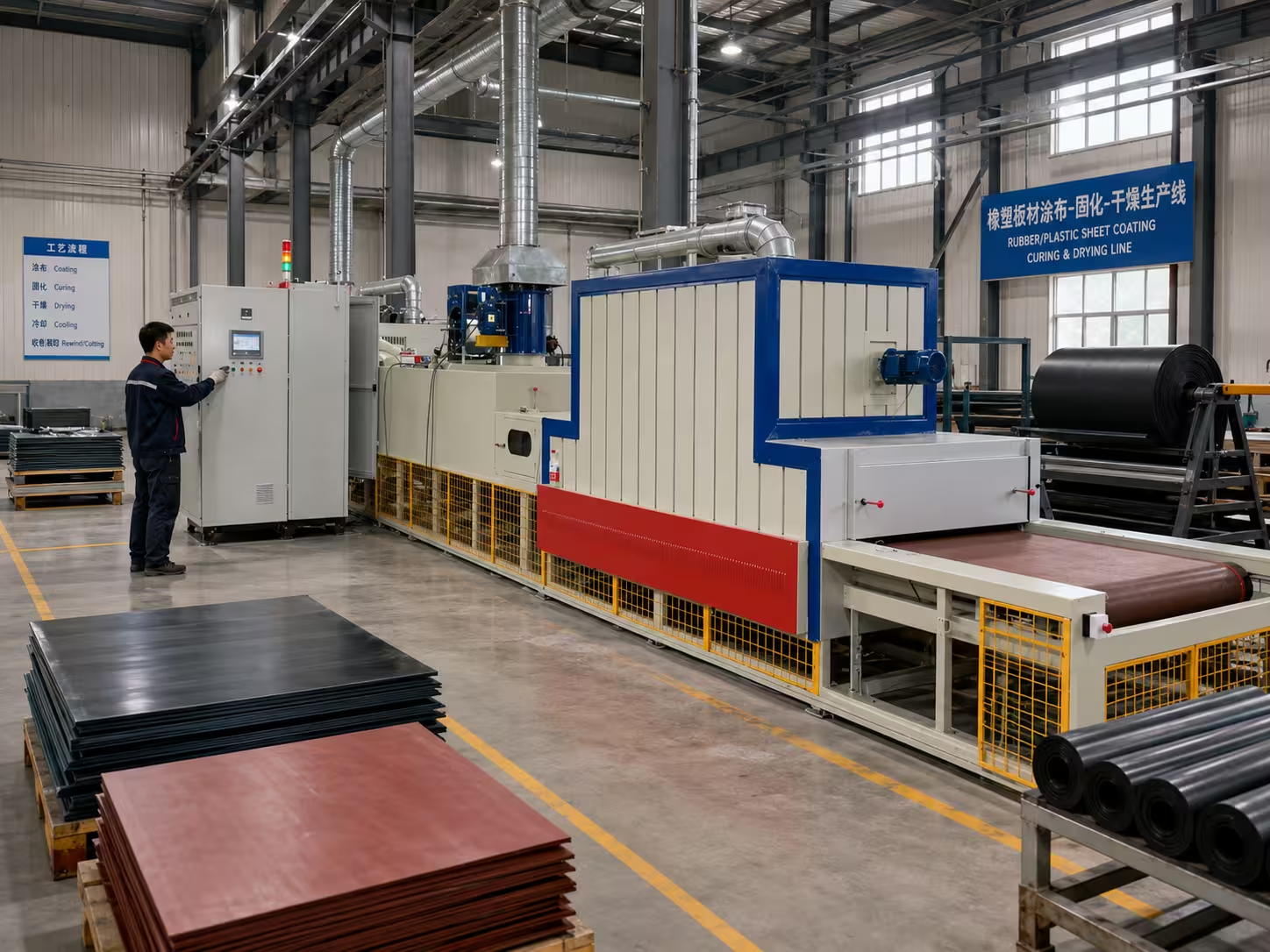
The impact levels below are directional, not fixed percentages. A feature that is moderate on one project can become high-impact when it changes the total heat load, line length, exhaust class or installation method.
| Specification change | Typical budget impact | Why the cost changes | What to confirm |
|---|---|---|---|
| Small increase in standard heated length | Low–Moderate | More enclosure, insulation, conveyor and heat loss | Whether dwell time can instead be met through loading density or speed |
| Wider belt or larger product envelope | Moderate–High | Larger cross-section, airflow volume, conveyor load and shipping size | Actual maximum product and spacing—not future assumptions |
| Additional independent heating zone | Moderate | Extra controls, sensors, partitions, airflow balancing and length | Whether the process truly needs a separate controlled condition |
| Active cooling section | Moderate–High | Cooling fans or equipment, ducting, controls, filters and extra line length | Required product exit temperature and allowable cooling rate |
| Heavy-duty chain, pallet or roller transfer | High | Stronger frame, shafts, drives, bearings and load supports | Total live load, carrier mass and indexing requirements |
| Gas firing and combustion train | High | Burner, gas train, safety controls, combustion airflow and code scope | Gas type, pressure, local code and direct/indirect firing requirement |
| Tight temperature uniformity acceptance | Project-specific | More airflow development, zoning, instrumentation and validation | Measurement method, load condition and acceptable tolerance |
| VOC or solvent-bearing process | Project-specific | Exhaust, purge, monitoring, interlocks and safety engineering | Material data, release rate, LFL basis and applicable standard |
| PLC recipes, logging and line communication | Moderate | Programming, hardware, I/O, testing and documentation | Required functions, protocols and data-retention scope |
| Modular delivery and on-site assembly | Project-specific | Module joints, reassembly planning, packaging and commissioning scope | Container limits, doorways, lifting access and site labor |
Configurations That Commonly Expand the Project Scope
The following designs can be entirely appropriate, but they add more than a single accessory. Each one changes the system architecture and should be included in the first budget discussion.
Conveyor oven with an integrated cooling zone
Used when products must leave the line cool enough for handling, inspection, packaging or the next operation.
Natural-gas continuous oven
Evaluated for larger heat loads or facilities where suitable gas service is available and combustion integration is acceptable.
Large conveyor oven for wide-belt loads
Required for wide panels, tall products, heavy assemblies or unusually large carriers that cannot use a compact conveyor cross-section.
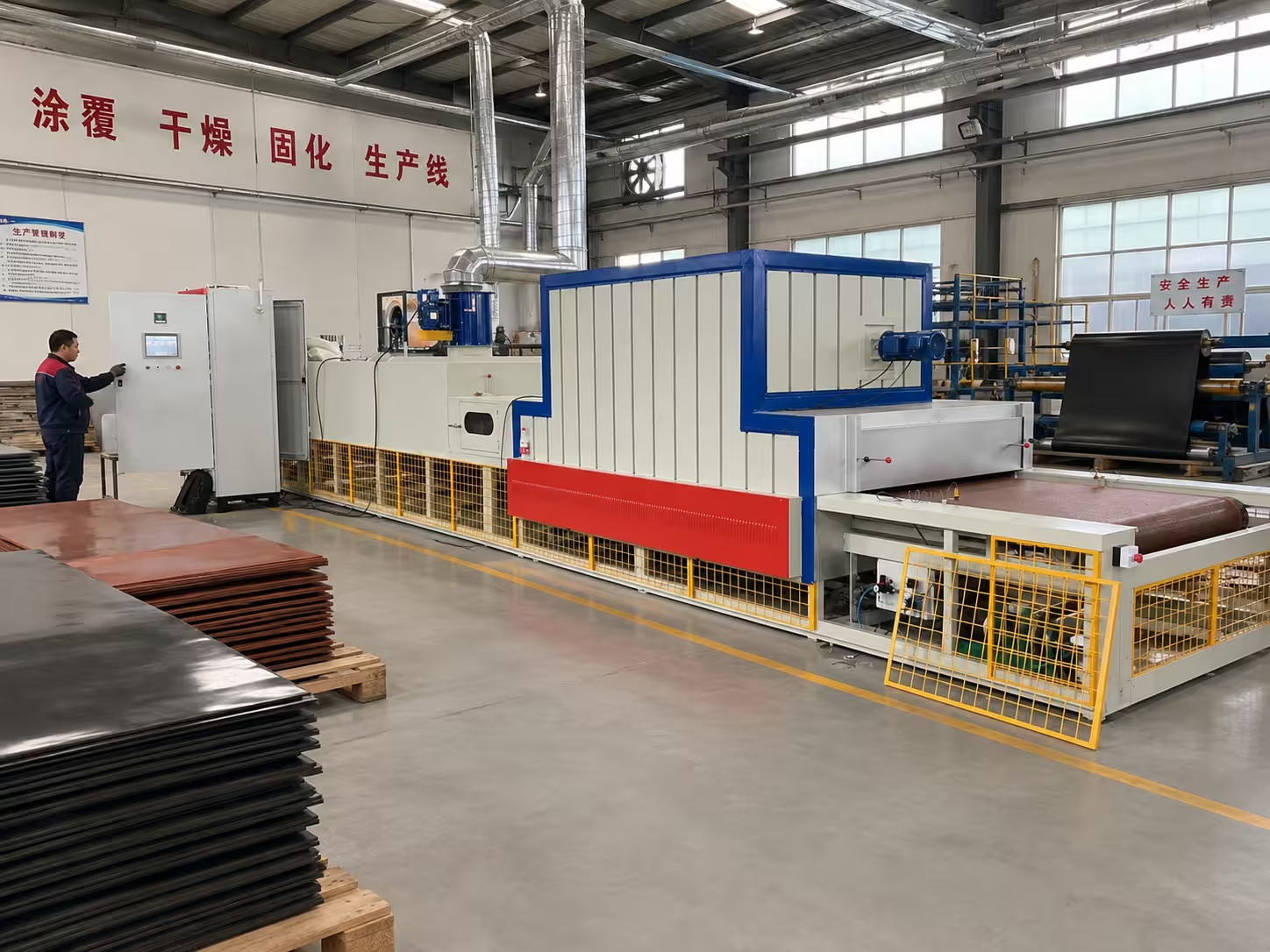
How Oven Size Affects Capital and Operating Cost
Increasing the oven envelope affects more than sheet metal. A larger chamber usually increases insulation area, structural steel, conveyor width or length, circulation airflow, installed heating capacity, heat loss, shipping volume and site-assembly work.
Avoid using the largest imaginable product
Define the maximum product that must be processed regularly. An occasional oversized item may be better handled by another method than by enlarging an entire continuous line for a rare condition.
Convert process time into productive length
The correct design sequence is to establish product spacing, throughput, conveyor speed and residence time, then size an industrial conveyor oven around the required productive path. Freezing the oven length before the loading pattern is known often creates either unnecessary cost or insufficient capacity.
Consider shipping limits before finalizing the frame
Long and wide systems may need to be split into modules. Module design can reduce transport risk, but it also adds field joints, alignment work, electrical reconnection and commissioning requirements. These decisions should be made during layout engineering, not after fabrication.
Heating Method Changes Both Purchase Cost and Lifecycle Cost
Electric, gas-fired and infrared systems should be compared as complete process solutions. The lowest local energy tariff does not automatically produce the lowest total cost because installed hardware, exhaust, maintenance, controllability and product response are also important.
Use the full conveyor oven heating-method comparison before selecting a heat source solely from fuel cost. The correct decision depends on product absorption, heat load, process atmosphere, response time, exhaust and the operating schedule.
How to Reduce Project Cost Without Weakening the Process
Good cost reduction removes uncertainty, oversized allowances and nonessential scope. It should not remove the airflow, safety, conveyor strength or controls required to achieve the process.
- Use the real product envelope and load. Separate normal production from rare maximum cases.
- Define must-have and optional functions. Quote data logging, remote service, recipes, cooling and spare parts as clearly separated options when appropriate.
- Confirm the acceptance criterion. Specify product result, temperature measurement method and allowable variation instead of requesting “best possible uniformity.”
- Do not add zones without a process reason. Separate zones are valuable when they create a required temperature or airflow stage, not simply because more zones sound more advanced.
- Lock upstream and downstream interfaces early. Conveyor elevation, speed range, sensors and handshake signals are cheaper to define before fabrication.
- Plan transport and installation during layout. A module strategy designed from the start is more efficient than cutting a finished concept to fit shipping or doorway limits.
- Provide emissions data. Water vapor, oil, smoke, VOCs and solvents affect exhaust and safety scope; missing data causes contingency pricing or redesign.
Preliminary Budget Review vs Firm Technical Quotation
Not every project is ready for a final quotation. Defining the appropriate quotation level avoids false precision and allows engineering effort to match the maturity of the project.
Preliminary budget review
Useful for feasibility, internal approval and early layout planning. A reasonable starting package includes:
- Application and product description
- Maximum product dimensions and weight
- Required throughput
- Process temperature and dwell time
- Available floor space
- Electricity or gas conditions
Firm technical quotation
Requires confirmed loading, thermal profile, conveyor duty, emissions, controls, utilities, installation and acceptance requirements.
- Product drawings or photographs
- Carrier and loading pattern
- Zone and cooling requirements
- Exhaust and safety data
- Line I/O and control scope
- Delivery, installation and documentation scope
The conveyor oven RFQ checklist helps organize the data needed to reduce assumptions, shorten clarification cycles and make supplier quotations easier to compare.
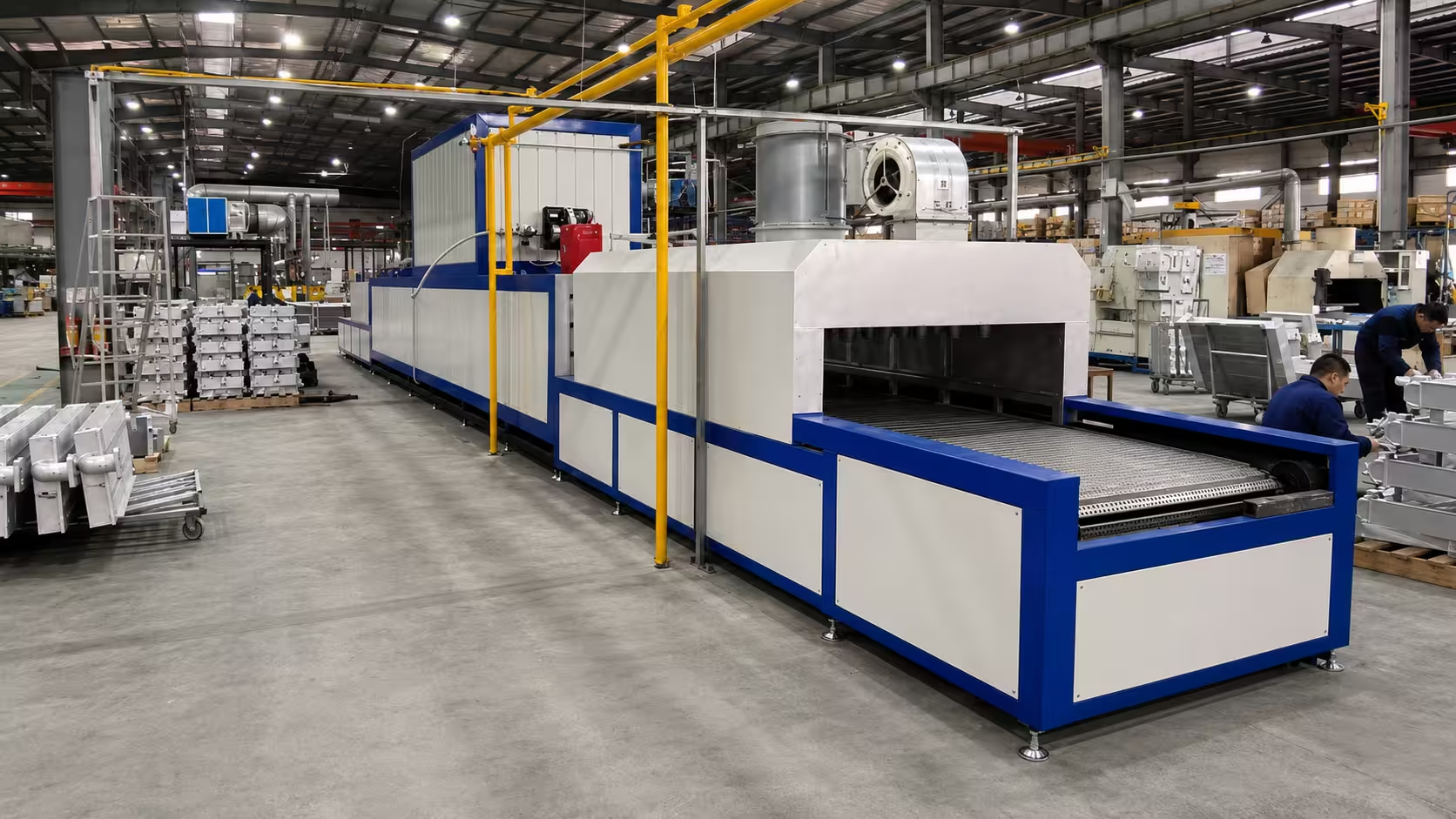
Frequently Asked Questions
The answers below explain early budgeting logic. A project quotation still requires the actual product, process, production rate and site conditions.
How much does an industrial conveyor oven cost?
There is no dependable universal price because most industrial conveyor ovens are configured around product size, load weight, throughput, dwell time, temperature, conveyor type, heating method, zones, exhaust, controls and delivery scope. A useful budget estimate should be based on a defined process duty rather than length alone.
Which specifications have the greatest effect on conveyor oven price?
Heated length, belt width, total live load, working temperature, production heat load, zone count, conveyor construction, exhaust and safety requirements usually have the greatest combined effect. Tight uniformity, complex controls and difficult installation conditions can also materially change the scope.
Does a larger conveyor oven always cost more?
A larger envelope generally increases structure, insulation, conveyor, airflow, heat loss and shipping requirements, but cost does not rise in a simple linear ratio. A smaller high-temperature, heavy-load or solvent-bearing system can cost more than a larger low-duty drying line.
Is a gas-fired conveyor oven always cheaper than an electric oven?
No. Gas may offer an operating advantage for some large heat loads, but the initial system also requires combustion equipment, gas-train safety, exhaust and code compliance. Electric systems may be simpler to control and install where sufficient electrical capacity is available. The comparison must include both installed and operating conditions.
How much does an integrated cooling zone add?
The effect depends on the required exit temperature, product heat load, cooling time, ambient conditions and cooling method. An active cooling zone can add fans, filters, ducting, controls, conveyor length and condensation or contamination management, so it should be included in the first project layout.
Can ZonHoo provide a budget estimate before every detail is known?
Yes. A preliminary review can begin with the product description, maximum dimensions and weight, target throughput, process temperature, dwell time, available space and utility conditions. Unknown items can be marked “TBD,” but the estimate should be treated as a planning range until the technical scope is confirmed.
What causes a conveyor oven quotation to change later?
Common causes include a larger product envelope, heavier carriers, increased throughput, additional zones, cooling, higher exhaust duty, new controls, stricter uniformity acceptance, solvent or VOC information, different utilities and changes to installation or shipping scope. Early clarification reduces re-quoting.
How can buyers compare quotations from different suppliers?
Compare product duty, conveyor loading, heated and overall length, zone count, heating capacity, airflow, exhaust, controls, safety interlocks, materials, testing, documentation, shipping, installation and exclusions. A lower total is not directly comparable when essential scope is missing.