
Conveyor Oven Cooling Zone Design: How to Size an Integrated Cooling Section
Define the required discharge temperature, cooling load, airflow method, separation, controls and preliminary cooling path before adding an integrated cooling zone to a continuous oven.
An integrated cooling section is not simply an unheated extension after an oven. It is a controlled part of the production line, selected when the product must reach a defined handling, packaging, coating-stability or automation temperature before discharge. For the broader equipment family, first compare continuous oven configurations.
Start with the Required Product Discharge Temperature
The engineering question is not “How long should the cooler be?” It is:
Temperature Entering Cooling
Use the representative product or fixture temperature at the heating-zone discharge—not only the oven-air setpoint.
Maximum Discharge Temperature
Define the temperature required for operator handling, packaging, robotic gripping, coating stability or the next process.
Mass Flow and Line Speed
Hourly product mass, fixture mass and belt speed determine how much heat continuously enters the cooler.
When heating and cooling must be supplied as one engineered machine, review the continuous heating and cooling oven product page.
Estimate the Cooling Duty from Product Mass Flow and Temperature Drop
A preliminary sensible-heat relationship is:
This relationship helps organize the thermal duty, but final capacity must also consider fixtures, conveyor mass, residual oven heat, radiation, ambient air and safety margin.
Include more than the product
- Product mass per hour
- Tray, fixture or carrier mass
- Conveyor and support heat carryover
- Hot-air leakage from the oven
- Ambient temperature and humidity
High Product Mass
Dense metal parts and heavy fixtures can dominate cooling duty even when conveyor speed is moderate.
Large Temperature Drop
Cooling from a high process temperature to near-ambient discharge requires more heat removal and often more space or conditioned air.
High Throughput
Continuous mass flow creates a steady cooling load that should be evaluated at the maximum planned production rate.
Restricted Air Access
Nested products, solid trays and enclosed fixtures can slow cooling even when total fan volume appears sufficient.
Projects with complex thermal loads or special downstream interfaces may require custom-built continuous oven solutions rather than a standard cooling extension.
Calculate Cooling Path Only After Cooling Time Is Validated
Once testing or thermal analysis provides a credible cooling time, the preliminary path relationship is:
Use compatible units: m/min × min = m, or ft/min × min = ft.
Important limitation
- The formula does not calculate cooling time.
- Cooling time changes with airflow and product geometry.
- Heating and cooling paths are separate duties.
- Total line length includes transition and conveyor extensions.
Preliminary Cooling Path Calculator
Use only with a cooling time already supported by testing, simulation or engineering review.
Enter positive values for belt speed and validated cooling time.
Add thermal separation, transitions, infeed/outfeed and service space separately.
The relationship between conveyor speed and exposure time is explained in the conveyor oven belt-speed and residence-time guide. The complete line envelope should be reviewed with the conveyor oven sizing guide.
Select the Cooling Method Around the Product and Discharge Requirement
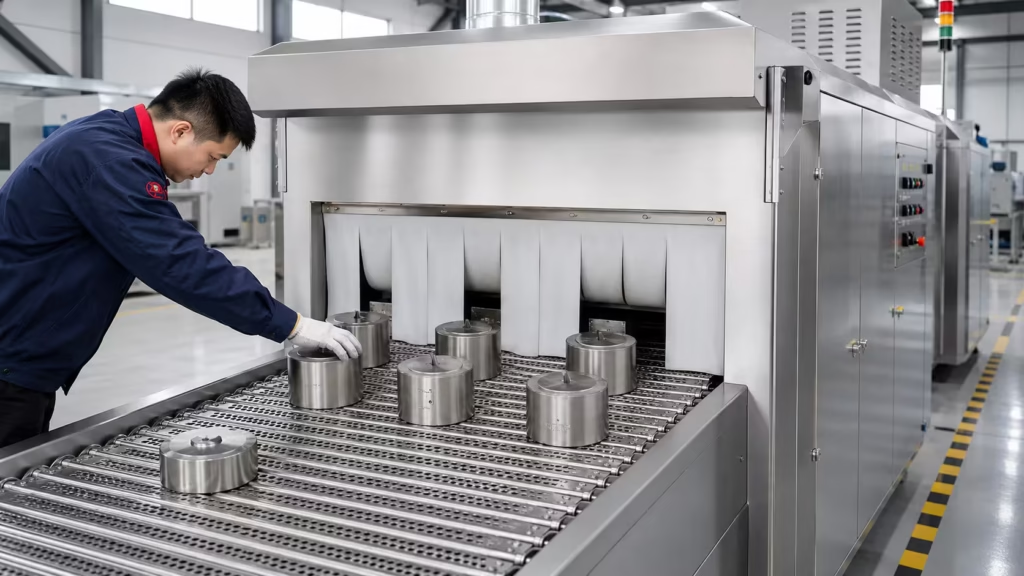
Ambient Forced-Air Cooling
Uses plant air drawn through a controlled recirculation or once-through arrangement. Performance varies with seasonal ambient conditions.
Filtered Forced-Air Cooling
Adds filtration where dust or contamination risk matters. Filter loading and available fan pressure must be included in the design.
Conditioned or Chilled Air
Uses a heat exchanger, chilled-water coil or conditioned supply when ambient air cannot meet the required discharge temperature.
Prevent Hot Oven Air from Entering the Cooling Section
If pressure balance is wrong, the cooler can pull hot process air forward, while the oven can lose conditioned air into the cooling section. The result is unstable discharge temperature and unnecessary energy consumption.
Transition Geometry
Vestibules, baffles and controlled gaps limit direct thermal carryover while preserving product clearance.
Pressure Balance
Heating recirculation, exhaust and cooling fans should be balanced so the transition does not become an uncontrolled flow path.
Product Opening
Large or tall openings increase the interaction between zones and may require more elaborate separation.
Exhaust Location
Exhaust placement should remove vapor or heat without drawing cooled air backward or hot air forward.
A multi-zone conveyor oven can coordinate heating stages, but the cooling section remains a separate thermal duty. The distinction between heating zones and cooling is also covered in the single-zone vs multi-zone conveyor oven guide.
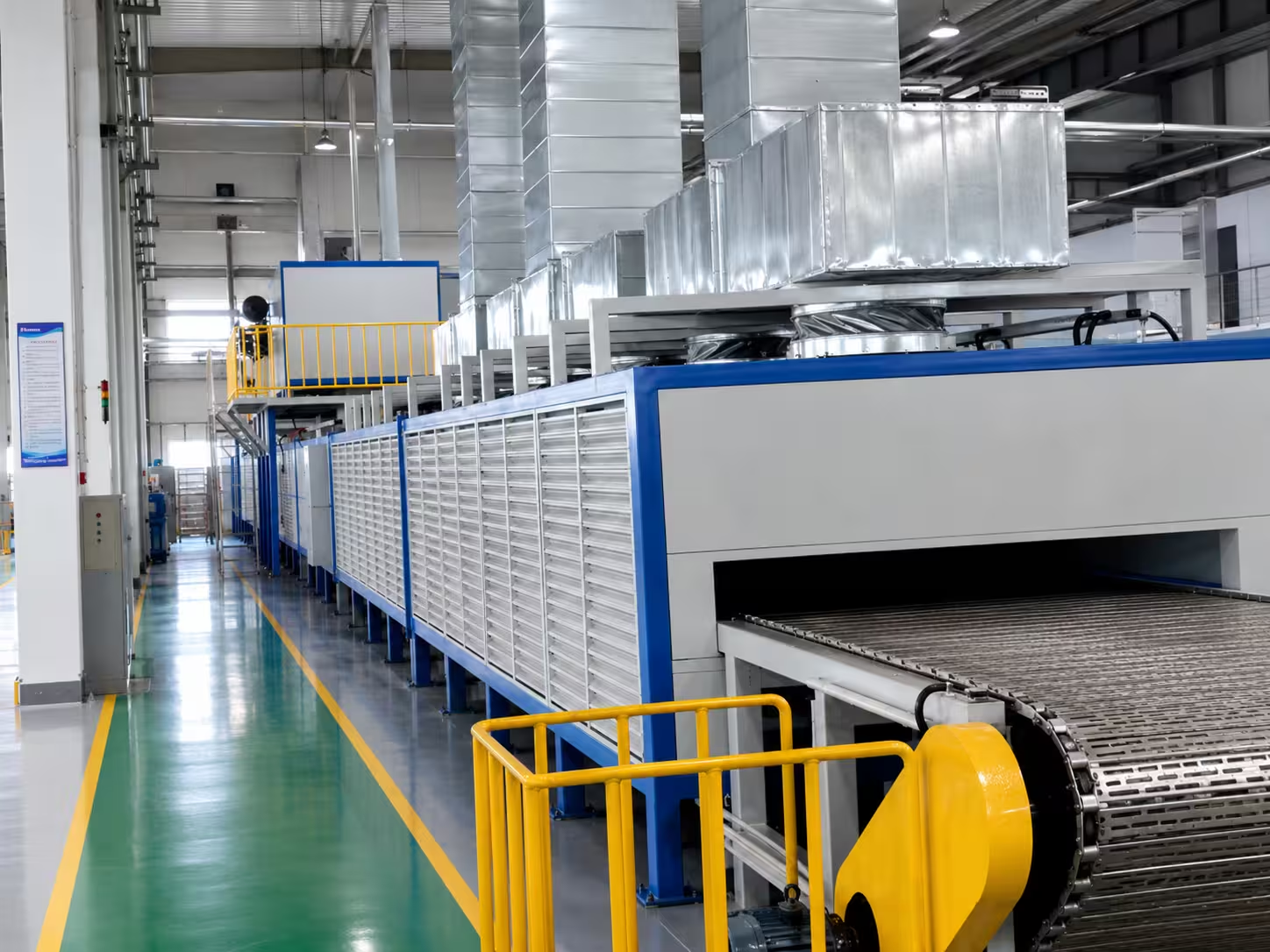
Cooling Airflow Must Remove Heat Without Disturbing the Product
More airflow is not automatically better. Air velocity, direction and nozzle placement should reflect the product’s mass, shape, surface condition and stability on the conveyor.
Prevent Movement or Lift
Thin sheets, lightweight parts and loose components may shift under concentrated airflow.
Avoid Surface Defects
Excessive impingement can disturb uncured coatings, create skinning, move contaminants or change drying behavior.
Reach Shielded Locations
Trays, fixtures and nested products may require balanced top, bottom or side airflow rather than one high-velocity jet.
Review Condensation, Dew Point and Contamination Risk
Rapid cooling can create condensation when hot, moisture-bearing products or process vapors contact colder surfaces or conditioned air. This may affect product appearance, corrosion risk, filtration and maintenance.
| Risk | What causes it | What to define before quotation |
|---|---|---|
| Condensation | Surface temperature falls below the relevant dew point | Product moisture, ambient humidity, cooling-air condition and surface-temperature target |
| Contamination | Unfiltered plant air or recirculated process vapor contacts the product | Filtration class, air source, cleanliness requirement and exhaust strategy |
| Corrosion | Moisture condenses on product, fixture or cooler internals | Materials, drainage, access and cleaning requirements |
| Coating defects | Cooling is too rapid or airflow reaches a sensitive surface | Permitted cooling rate and surface condition at cooler entry |
For moisture-removal projects, the cooler may form part of an integrated continuous drying line, where heating, exhaust, moisture handling and discharge conditions are designed together.
Cooling Fans, Sensors and Interlocks Should Operate as One Line
An integrated cooler normally needs more than an independent fan starter. The control scope may include fan proving, VFD airflow adjustment, product sensors, discharge-temperature monitoring, alarms and handshakes with upstream and downstream equipment.
Fan Interlock
Conveyor operation and product release can be inhibited when required cooling airflow is unavailable.
VFD Airflow Control
Adjustable fan speed can support multiple recipes, seasonal conditions or sensitive products.
Temperature Monitoring
Air or product-related discharge measurements can provide process evidence and alarm limits.
Line Handshake
Upstream oven controls, cooling fans, conveyor drive and downstream equipment should share permissives and fault states.
Review available industrial oven control systems before fixing the I/O, VFD, alarm and data requirements.
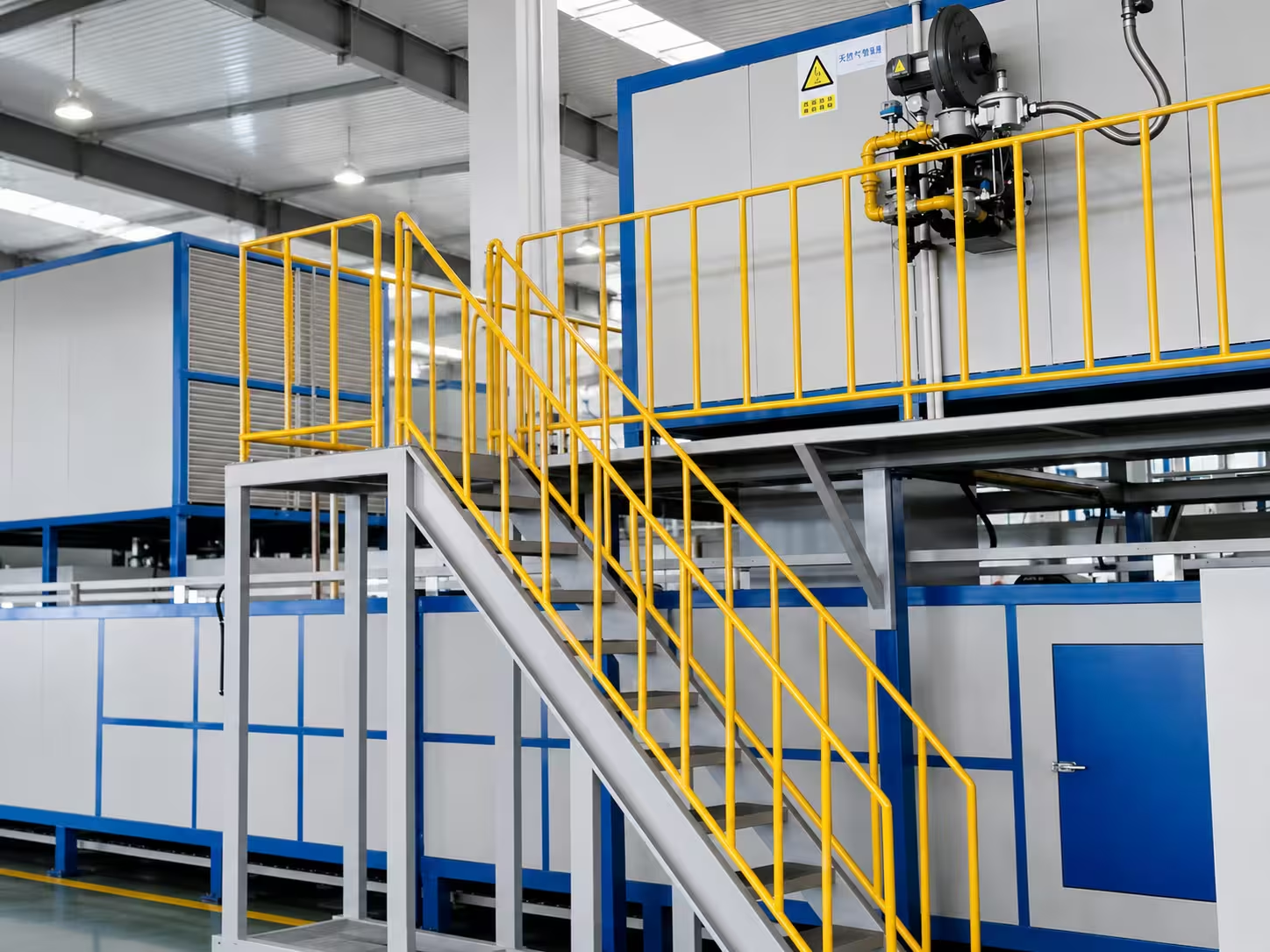
When Should Cooling Be Integrated or Kept as a Separate Conveyor?
| Configuration | Usually stronger when | Engineering trade-off |
|---|---|---|
| Integrated cooling zone | Heating and cooling share one continuous flow, footprint is constrained, and unified controls are valuable | Requires careful thermal separation and combined commissioning |
| Separate cooling conveyor | Existing equipment is being upgraded, layout flexibility is needed, or open ambient cooling is acceptable | Requires a transfer interface and may occupy more floor space |
| Conditioned enclosed cooler | Discharge temperature, cleanliness or ambient variability requires tighter control | Adds heat-exchanger, filtration, utility and maintenance scope |
The correct choice should be made during industrial oven system planning, not after the heating oven has already been fixed.
Size Heating and Cooling as One Production Requirement
Provide the product and carrier mass, hourly throughput, belt speed, product temperature entering cooling, required discharge temperature, ambient condition, available floor space, cleanliness requirement and downstream interface.
Define the Cooling Duty First
Separate confirmed requirements—mass flow, temperature drop, line speed and discharge limit—from assumptions such as an arbitrary cooler length.
Size Heating and Cooling Together
ZonHoo will review the heating discharge condition, cooling method, thermal separation, path length, controls and complete installed line.
Review a Heating & Cooling Oven →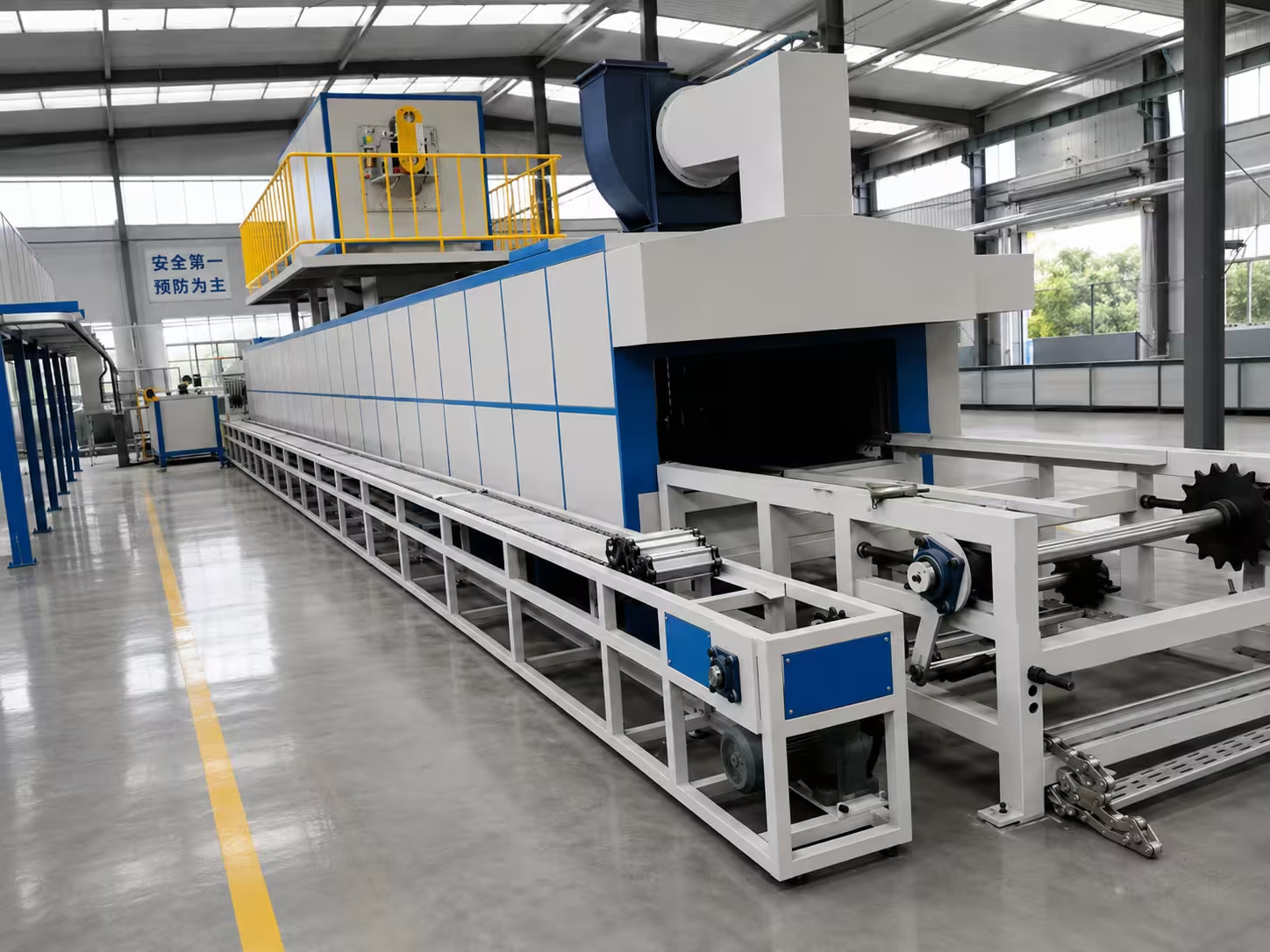
Conveyor Oven Cooling Zone FAQ
How is conveyor cooling-zone length calculated?
Once a valid cooling time is established, preliminary cooling path equals belt speed multiplied by cooling time. The cooling time itself depends on product mass, temperature drop, airflow, geometry and ambient or conditioned-air performance.
Can cooling time be calculated from product size alone?
No. Size alone does not define mass, specific heat, airflow access, fixture load or the required temperature drop. Testing or thermal engineering is normally needed for a reliable result.
Is an unheated conveyor extension a cooling zone?
Not necessarily. An open extension provides passive cooling, but an engineered cooling zone normally includes controlled airflow, defined residence time, separation, guards, controls and an agreed discharge condition.
Should the cooling zone use ambient or chilled air?
Ambient forced air is often sufficient for moderate discharge requirements. Conditioned or chilled air may be needed when the target temperature, climate, cleanliness or line speed cannot be met consistently with ambient air.
Why is thermal separation required between heating and cooling?
Without suitable separation and pressure balance, hot process air can enter the cooler and cooled air can disturb the oven, reducing performance and increasing energy use.
Can strong cooling airflow damage the product?
Yes. Lightweight parts can move, wet or uncured coatings can be disturbed, and sensitive surfaces may develop defects. Air velocity and direction must suit the product.
Does cooling count as another heating zone?
No. A cooling section is a separate thermal duty with different airflow, pressure, controls and acceptance criteria, even when it is integrated into the same machine.
What information is needed to quote an integrated cooling zone?
Provide product and carrier mass, throughput, belt speed, product temperature entering cooling, required discharge temperature, ambient condition, cleanliness requirement, available footprint and downstream handling method.