
Conveyor Oven Temperature Uniformity: Airflow, Mapping & Acceptance
Learn how across-belt airflow, product loading, oven openings, zone transitions and heating method affect conveyor oven temperature uniformity—and how to define a test that is meaningful for your process.
A request such as “guarantee ±X°C” is incomplete unless the measurement method and operating condition are defined. A correctly engineered industrial conveyor oven system must be evaluated as a moving thermal process: cold products enter, heated products leave, the conveyor continuously transports mass, and each product experiences airflow and heat for a limited residence time.
Three Different Meanings of Conveyor Oven Temperature Uniformity
Before discussing performance, specify what is being measured. The following three measurements answer different engineering questions and should not be used interchangeably.
Chamber Air Temperature
Thermocouples measure the moving air at defined positions. This helps evaluate the thermal environment but does not prove that every product reaches the same temperature.
Across-Belt Temperature
Measurements compare left, center and right conveyor positions as they travel through the oven. This identifies edge-to-center differences and uneven airflow coverage.
Product Temperature
Thermocouples are attached to representative parts or fixtures. This is the most process-relevant result, but it also depends on product mass, geometry and sensor attachment.
Why Conveyor Oven Uniformity Is Different from Batch-Oven Mapping
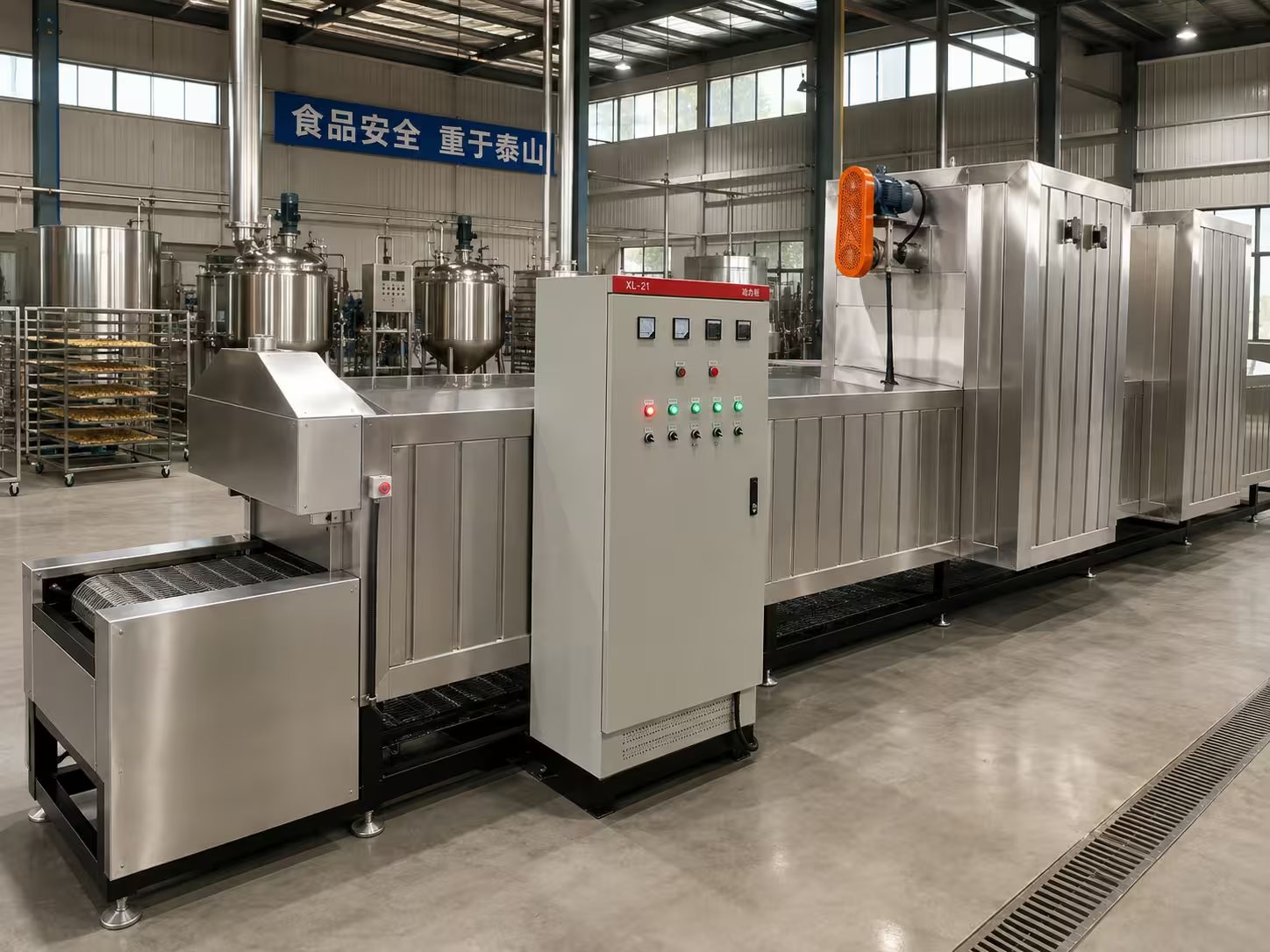
A conveyor oven is not a sealed chamber operating at one static condition. The thermal process is continuously disturbed by incoming product, conveyor movement, entrance and exit openings, exhaust, zone boundaries and changing load density.
Cold-Load Entry
Incoming products absorb heat immediately. High mass flow can depress local air temperature and increase the difference between unloaded and production conditions.
Open Ends
Entrance and exit apertures create heat leakage and ambient-air infiltration. Product height and opening clearance affect how strongly this influences the end regions.
Moving Load Pattern
Product spacing and lane arrangement determine how much of the supply air is blocked and how quickly the system recovers between loads.
Finite Exposure
Each product remains in a zone for a defined period. Even acceptable air uniformity may not produce equal part temperatures when mass or geometry varies.
Projects with unusual products, multiple recipes or stringent acceptance requirements may need custom-built continuous oven engineering rather than a nominal catalog configuration.
Across-Belt Uniformity: Left, Center and Right Must Be Evaluated
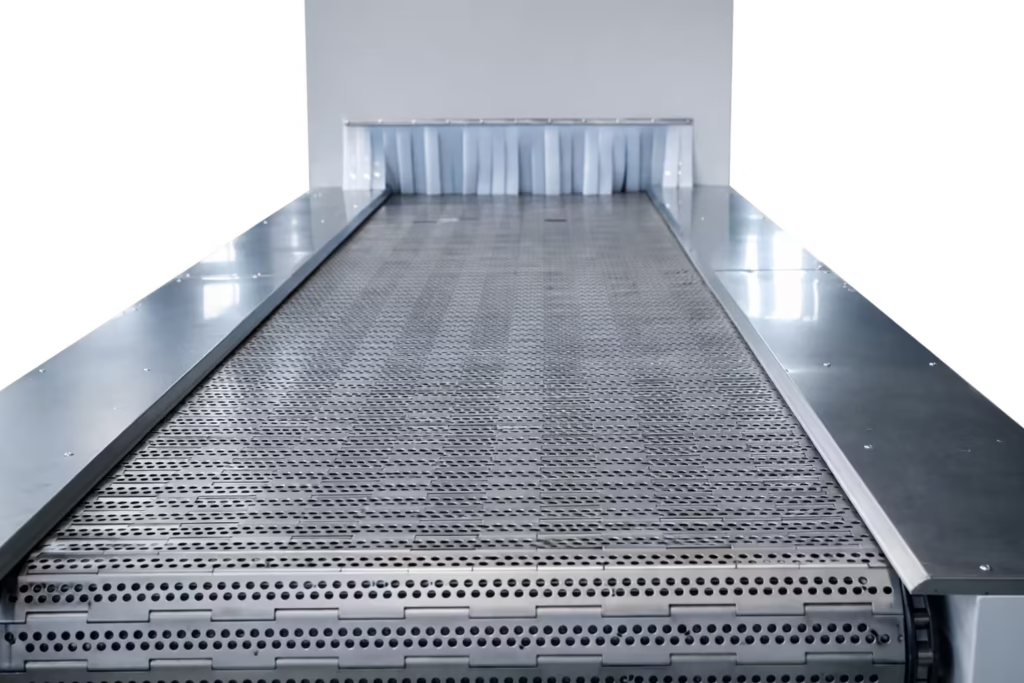
Across-belt uniformity becomes more demanding as conveyor width, product coverage and opening area increase. Sidewalls, supply-duct geometry, return-air location and leakage paths can make edge positions behave differently from the center.
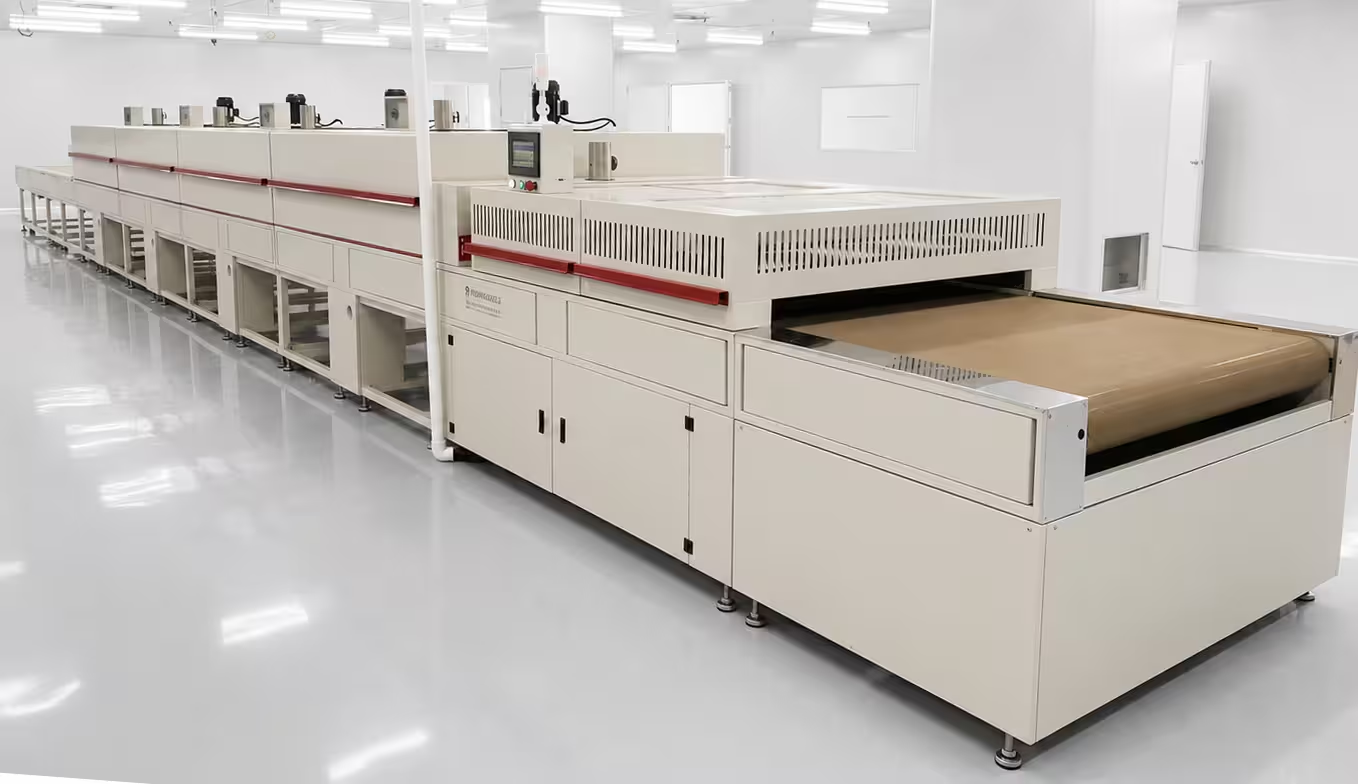
A large conveyor oven for wide-belt loads requires particular attention to duct distribution, return-air balance, edge heat loss and representative sensor placement. Increasing heater power alone does not correct poor cross-belt coverage.
Uniformity Is Created by Airflow Coverage Around the Actual Load
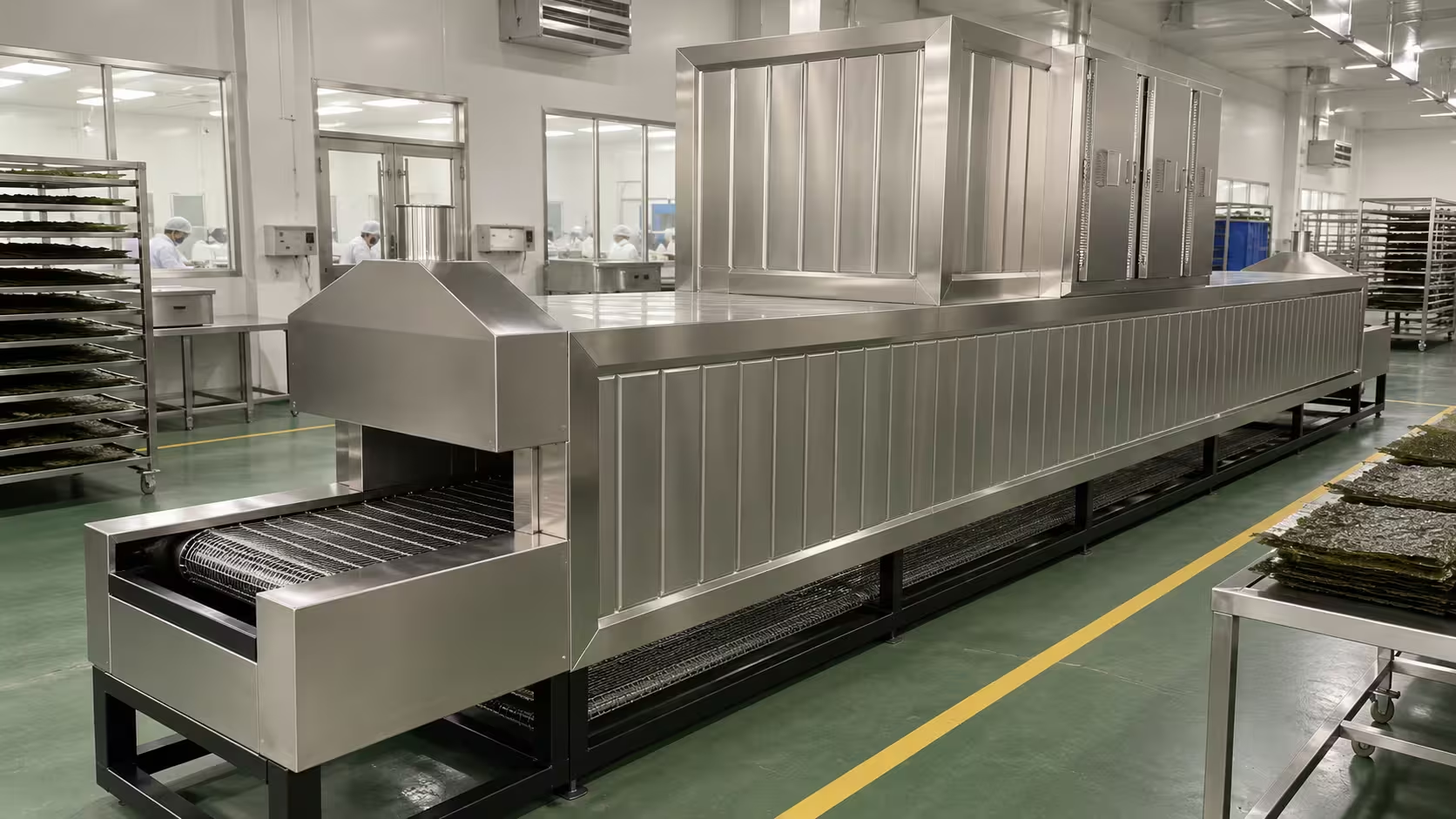
Forced-convection performance depends on how conditioned air reaches exposed and shielded product surfaces and how return air leaves the load. Product arrangement must therefore be reviewed together with belt width, chamber height and usable process space.
Supply Distribution
Nozzle, slot or perforated-duct arrangement should distribute air across the moving load without creating high-velocity hot spots or dead zones.
Return-Air Path
Return openings must remain effective when the conveyor is fully loaded. A blocked return path can cause recirculation imbalance and localized temperature drift.
Product Shadowing
Dense fixtures, nested parts and closed trays can shield surfaces from airflow. The thermally difficult location may not be the physically largest part.
Belt Openness
Open mesh can support through-belt airflow; solid carriers and fixtures redirect it. Final duct design must reflect the actual conveyor and product support method.
The product envelope, lane pattern and loading density should be fixed during the conveyor oven sizing process. Otherwise, a uniformity test may represent a chamber condition that never occurs in production.
Entrance Loss, Exit Loss and Zone Transitions Must Be Controlled
Openings are necessary for continuous transfer, but excessive clearance allows conditioned air to escape and ambient air to enter. End-region performance may be improved through suitable vestibules, baffles, air seals, pressure balance and zone-specific airflow design.
Independent zones solve profile problems—not automatically uniformity problems
A continuous oven with independent heating zones can create separate preheat, ramp, soak or cure conditions. However, every zone still requires adequate cross-belt airflow and control-sensor placement. More controllers cannot compensate for poor duct coverage.
Define the process reason for each zone
The number of zones should follow the required product-temperature profile and residence time. The single-zone vs multi-zone conveyor oven guide explains when separate thermal stages add process value and when one controlled section may be sufficient.
Infrared Uniformity Depends on Geometry, Distance and Surface Response
Infrared-dominant systems require a different evaluation from forced convection. Product heating depends on emitter layout, distance, angle, line of sight, surface emissivity and the way parts are presented to the source.
Emitter Coverage
Source spacing and power distribution should avoid overlap hot spots and underexposed regions across the full product path.
Line of Sight
Recesses, fixtures and overlapping products may remain shielded even when nearby exposed surfaces heat rapidly.
Surface Emissivity
Different colors, coatings and materials may absorb radiant energy differently, producing unequal surface response under the same source output.
Product Orientation
Repeatable presentation and spacing are essential when process performance relies on direct radiant exposure.
An infrared conveyor oven for rapid heating should therefore be validated with representative products rather than judged only by empty-chamber air readings.
Build a Temperature Map That Represents the Production Process
A useful mapping plan follows the product through the conveyor path and records enough positions to identify cross-belt differences, longitudinal changes and zone-transition effects.
- Define the measured variable. State whether the test records chamber air, a traveling test frame, carrier temperature or actual representative products.
- Define sensor positions. Include left, center and right belt locations and the product locations most likely to heat slowly or quickly.
- Define operating conditions. Record setpoints, conveyor speed, zone settings, exhaust, recirculation, loading pattern and production rate.
- Define stabilization. Agree when the oven is considered thermally stable before the test sequence begins.
- Define instrumentation. Specify calibrated sensors, logger channel count, attachment method, sampling interval and data review format.
- Define the calculation. State whether acceptance uses maximum-minimum spread, deviation from average, deviation from setpoint or a product-profile limit.
Sensor count and location should be project-specific. A wide belt, tall product envelope, multiple zones or strict product-temperature requirement may justify a more detailed map than a narrow, simple drying line.
Define FAT Conditions Before Final Quotation
Uniformity requirements influence hardware and commissioning scope. They should therefore be discussed before price and delivery are finalized—not added after the oven is built.
| Acceptance item | What must be defined | Why it matters |
|---|---|---|
| Target condition | Zone setpoints and required product or air temperature | Prevents testing against an undefined operating point |
| Conveyor operation | Speed, continuous or indexing motion, and residence time | Thermal exposure changes with movement |
| Load condition | Empty, simulated load or representative product loading | Heat load and airflow blockage alter results |
| Sensor layout | Quantity, left/center/right positions, product attachment and zone coverage | Determines what the test actually proves |
| Allowable variation | Calculation method and acceptance limits | A numerical tolerance is meaningless without a calculation rule |
| Documentation | Raw data, trend charts, calibration records and acceptance sign-off | Creates traceable evidence for FAT and future troubleshooting |
Controls and Data
Multiple control loops, VFD airflow adjustment, recipe management, alarms and data logging may be required when the acceptance plan is more demanding. Review available industrial oven control systems before freezing the control scope.
System Planning
Uniformity cannot be separated from throughput, loading, exhaust, utilities and site layout. Use industrial oven system planning to align performance criteria with the complete line.
Turn “Uniformity” into a Testable Project Requirement
Before requesting a guarantee, define the product, belt width, loading arrangement, target temperature, conveyor speed, required product profile and proposed acceptance method. ZonHoo can then evaluate whether the requested result requires airflow changes, additional zones, special controls or a custom test arrangement.
Prepare the operating condition first
Document the representative product, carrier, lane arrangement, production loading and target temperature profile. This prevents an empty-chamber number from becoming the wrong contractual requirement.
Define Uniformity & FAT Criteria
Send product drawings, belt width, loading pattern, conveyor speed, setpoints and required acceptance range. ZonHoo will review the thermal and measurement scope before quotation.
Review a Custom Continuous Oven Project →Conveyor Oven Temperature Uniformity FAQ
What is conveyor oven temperature uniformity?
It is the degree to which defined measurement positions experience comparable temperature under specified operating conditions. The definition must state whether the measurement concerns chamber air, locations across the conveyor belt or actual product temperature.
Is controller accuracy the same as oven uniformity?
No. Controller accuracy describes how the control system measures and regulates its own sensor location. Uniformity compares temperatures at multiple locations or products throughout the process.
Should a conveyor oven be tested empty or loaded?
The answer depends on the acceptance purpose. Empty testing can evaluate the base thermal system, while loaded or simulated-load testing better represents production heat load and airflow blockage. The quotation should state which condition applies.
How many thermocouples are required for temperature mapping?
There is no universal sensor count. Belt width, product height, number of zones, load pattern and required evidence determine the appropriate layout. At minimum, the test should cover the positions relevant to the stated acceptance claim.
Why can the belt edges be different from the center?
Edge heat loss, sidewall effects, duct geometry, return-air location, product clearance and entrance or exit leakage can make left and right positions respond differently from the center.
Does adding more heating zones improve uniformity?
Not automatically. Independent zones improve control of the longitudinal temperature profile. Cross-belt uniformity still depends on airflow distribution, sensor location, loading and heat-loss control inside each zone.
Can infrared oven uniformity be tested with air sensors?
Air sensors alone are usually insufficient to characterize radiant product heating. Representative product surfaces or suitable test samples should be instrumented because radiant absorption depends on geometry, line of sight and emissivity.
What information is needed to quote a uniformity requirement?
Provide the product and carrier, belt width, loading layout, conveyor speed, zone temperatures, required product profile, exhaust conditions, sensor method and proposed allowable variation. Unknown items should be identified before the acceptance commitment is finalized.