
Electric vs Gas vs Infrared Conveyor Oven: Which Heating Method Fits Your Process?
Compare electric convection, gas-fired convection and infrared-dominant heating by product response, thermal load, utilities, temperature control, installation scope and operating cost before locking a conveyor oven specification.
Heating-method selection should happen after the basic process is defined: product size and mass, throughput, required product temperature, dwell time, allowable footprint and site utilities. If those inputs are still uncertain, use the industrial conveyor oven selection guide before comparing heat sources in detail.
For standard continuous heating projects, start with the core industrial conveyor oven systems. If the line needs non-standard layouts, multiple heating technologies, unusual interfaces or project-specific safety scope, evaluate custom-built continuous oven solutions.
Electric, Gas and Infrared Are Not Three Identical Categories
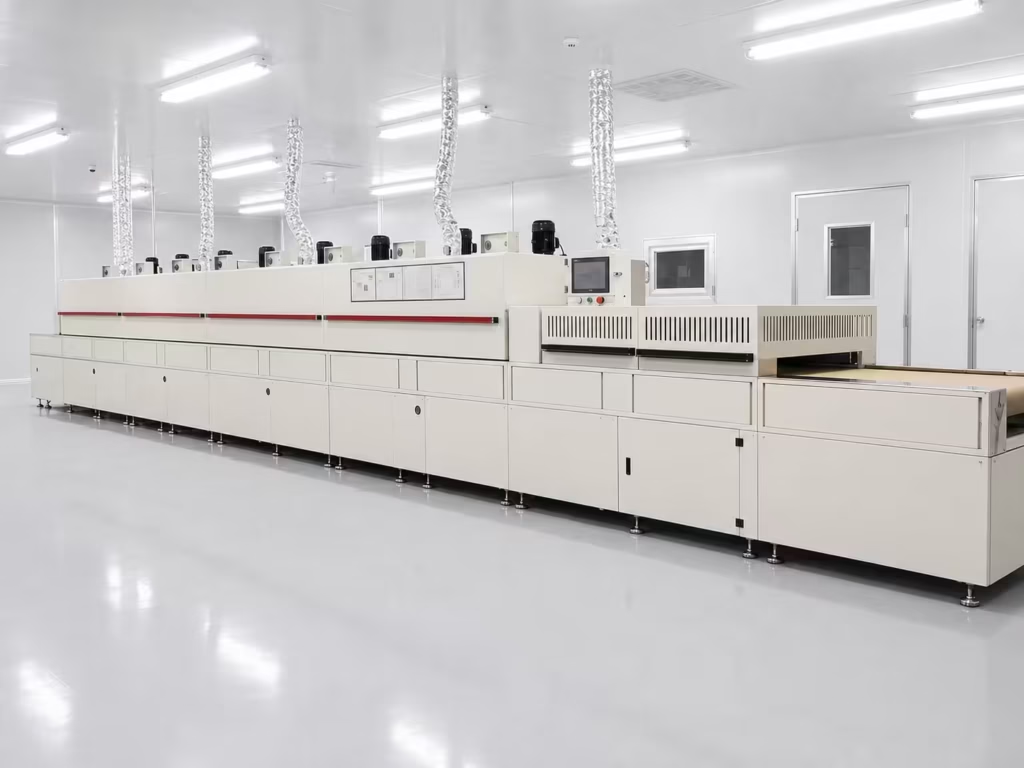
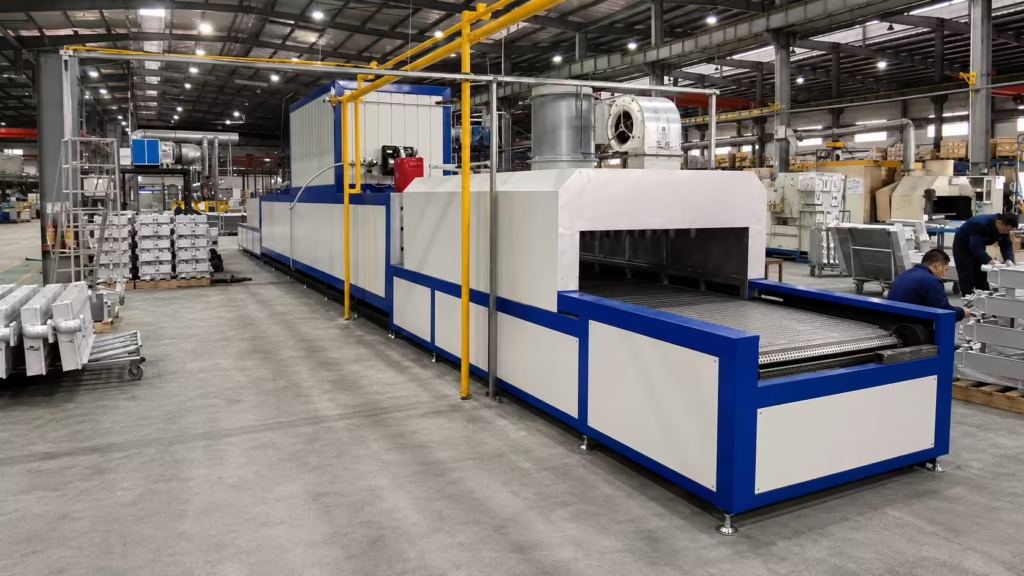
Electric and gas primarily describe how thermal energy is supplied. A conventional electric conveyor oven commonly uses resistance heaters to heat recirculating air. A gas-fired conveyor oven uses a burner system to supply heat to the circulating air, either directly or indirectly depending on the process and design.
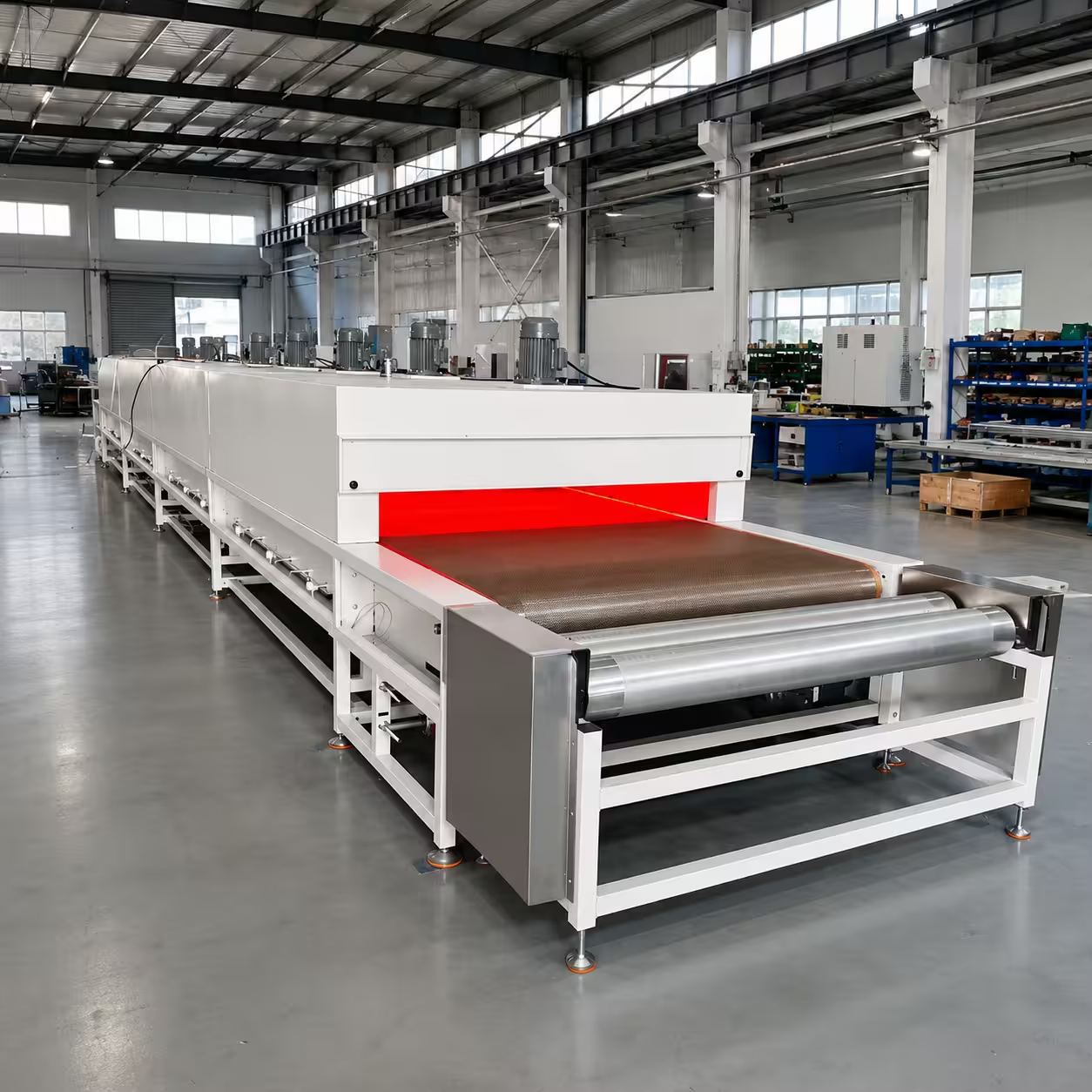
Infrared, by contrast, describes a heat-transfer mechanism. IR energy can be generated by electric or gas-fired emitters. For practical equipment selection, this page compares electric forced convection, gas-fired forced convection and IR-dominant heating because these are the alternatives buyers commonly evaluate for continuous industrial heating.
Electric or gas hot air
Heat is distributed by controlled airflow around the product. This is generally more tolerant of complex geometry, cavities and variable orientation than line-of-sight heating.
Infrared
Radiant energy is absorbed at exposed surfaces. It can deliver rapid response when surface properties and geometry are favorable, but shadowed areas require careful evaluation.
Electric vs Gas vs Infrared Conveyor Oven Decision Matrix
This matrix is for early screening. Final selection should be based on the real product, production schedule and utility conditions rather than generic assumptions about which heating technology is “most efficient.”
| Decision factor | Electric convection | Gas-fired convection | Infrared-dominant |
|---|---|---|---|
| Complex product geometry | Strong fit with engineered airflow | Strong fit with engineered airflow | Must verify line-of-sight and shadowing |
| Very high thermal load / long production duty | Feasible if electrical capacity supports it | Often attractive where gas infrastructure is available | Application-specific; surface absorption is critical |
| Fast surface response | Moderate to strong depending air temperature and velocity | Moderate to strong depending air temperature and velocity | Often strongest when product surface absorbs IR well |
| Fine independent zone control | Generally straightforward | Practical with correctly sized burners/controls | Practical through emitter-bank control |
| Combustion infrastructure | Not required | Required | Depends on whether emitters are electric or gas |
| Exhaust / combustion considerations | Process exhaust only unless otherwise required | Process plus combustion-related design considerations | Depends on process and emitter type |
| Large available electrical service | Advantage | Not essential for heat input, though controls/fans still require power | Required for electric IR |
| Annual energy economics | Site-specific | Site-specific | Site- and application-specific |
When Electric Conveyor Heating Makes the Most Sense
Electric convection is often attractive when the process needs clean, controllable hot air and the facility has sufficient electrical capacity. Resistance heaters can be divided into multiple banks, allowing relatively simple modulation and zoning without burner-management hardware.
Control and zoning
Electric heater banks can be staged or modulated to match load and temperature requirements across separate process sections.
Simpler combustion scope
No gas train, burner combustion-air system or fuel connection is required for the heating source itself.
Available electrical capacity
Large heat loads can require substantial connected power in addition to fans, conveyor drives, controls and auxiliaries.
Electric heating should not be rejected simply because electricity has a higher unit tariff in one region. The total project may avoid gas piping, burner systems, combustion-related exhaust or other site work. Likewise, an electrically simple installation can still be expensive to operate if the process has a very large continuous heat load.
When Gas-Fired Conveyor Heating Becomes Attractive
Gas-fired convection is often evaluated for large continuous loads, long duty cycles or facilities where natural gas or another approved fuel is readily available. The equipment must be designed as a complete combustion and airflow system rather than treating the burner as a simple substitute for electric heaters.
Fuel & Gas Train
Confirm fuel type, supply pressure, regulator scope, shutoff valves and burner-management requirements.
Direct vs Indirect Fired
Whether combustion products may contact process air depends on product sensitivity, contamination limits and the required oven architecture.
Combustion Air & Exhaust
Burner operation, room ventilation and process exhaust must be coordinated with the site.
Safety & Commissioning
Interlocks, purge sequences, flame supervision and local compliance requirements add project scope.
For projects where gas is a serious candidate, review a natural-gas continuous oven configuration before comparing final CAPEX and operating cost. The choice between direct and indirect firing should be made from process cleanliness and heat-transfer requirements, not only from burner efficiency.
Infrared Is Powerful When the Product Can Absorb the Energy Effectively
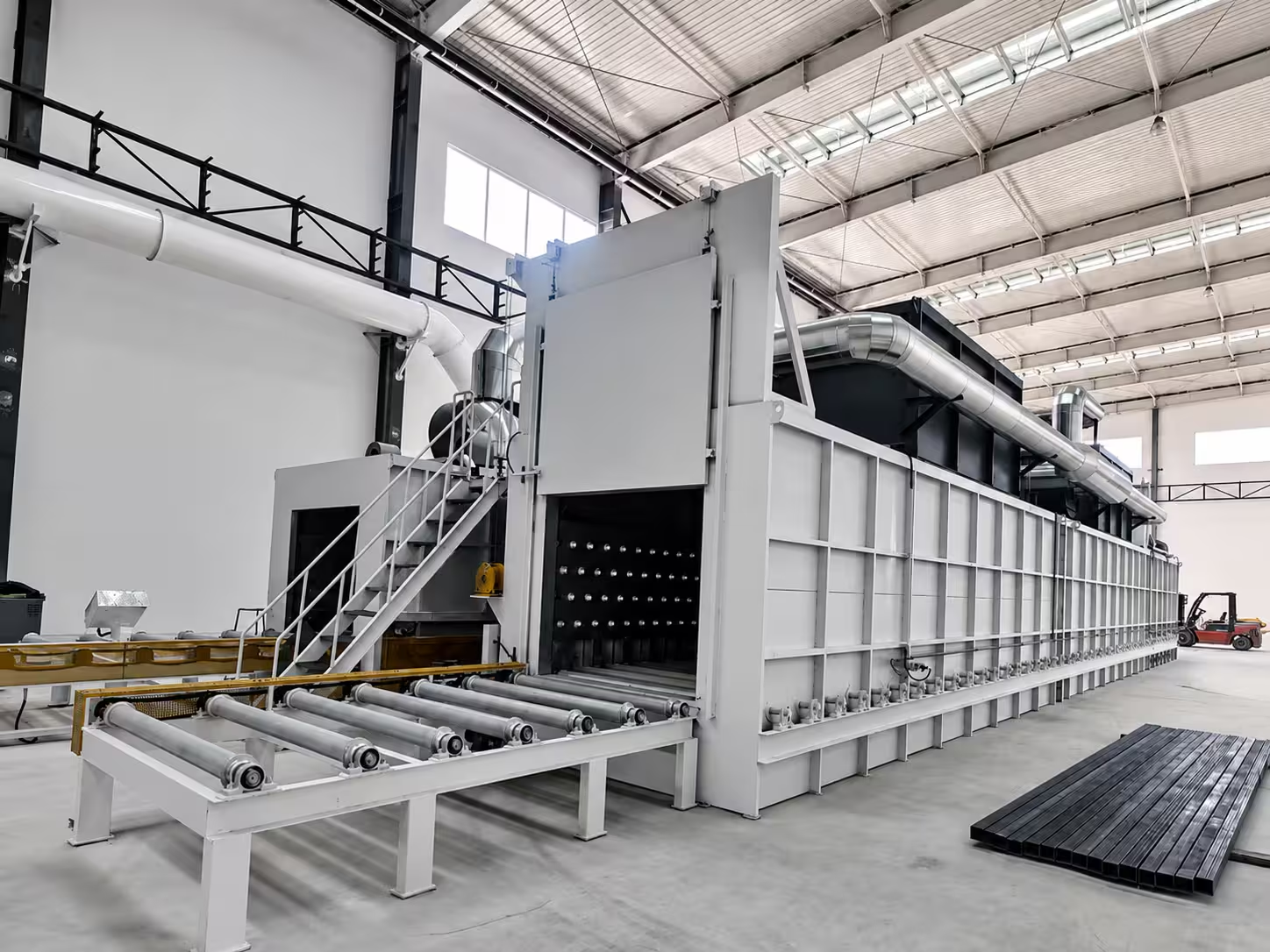
Infrared heating transfers energy mainly by radiation from emitters to exposed product surfaces. Because the air itself does not have to be the primary carrier of heat, IR can create rapid surface response and compact heating stages in suitable applications.
Exposed, repeatable surfaces
- Thin or moderate-mass products
- Coatings and surface-driven heating
- Stable distance from emitter to product
- Predictable orientation through the line
- Need for fast surface response
Complex or shadowed products
- Deep cavities and hidden surfaces
- Mixed colors or surface finishes
- Large variation in product height
- Heavy sections requiring core heating
- Fixtures that block emitter view
An infrared conveyor oven for rapid heating should therefore be evaluated with the actual product geometry and surface condition. For uncertain applications, sample trials or temperature measurements are more valuable than selecting IR from a generic “fast heating” claim.
The Product Decides How Useful Each Heating Method Really Is
The air setpoint or emitter rating does not tell you how quickly the product itself reaches temperature. Product mass, material, thickness, exposed area, internal cavities, surface absorptivity, load spacing and carrier design all affect the thermal response.
| Product / process condition | Usually worth evaluating first | Why |
|---|---|---|
| Heavy metal fixture or thick section | Electric or gas convection | Hot-air circulation can heat complex surfaces while the conveyor provides enough residence time for core temperature to rise. |
| Thin coated panel with stable orientation | IR or hybrid | Surface heating can respond quickly if the coating/substrate absorbs the selected wavelength effectively. |
| Complex three-dimensional assembly | Convection | Engineered airflow is usually less sensitive to direct line-of-sight than radiation alone. |
| Moisture-removal process | Convection, sometimes with IR boost | Air movement and exhaust are central to carrying evaporated moisture away from the product. |
| Fast surface flash-off or preheat | IR or hybrid | Radiant energy can target exposed surfaces before a downstream convection stage. |
| Multiple recipes / broad product family | Electric or gas convection; hybrid if validated | Air temperature, line speed and zone settings can often be adjusted across a wider geometry range. |
Compare Installed Cost and Annual Operating Cost Separately
A heating-method decision has two different financial questions: what does the complete system cost to install? and what does it cost to run under the actual production schedule? They should not be combined into a single “gas is cheaper” or “electric is simpler” conclusion.
Electrical infrastructure
Transformer/service capacity, feeders, disconnects, panels, heater power, fans and controls can materially affect an electric project.
Gas & combustion infrastructure
Fuel piping, pressure regulation, burner train, combustion air, ventilation, exhaust and commissioning can materially affect a gas project.
Production duty
Annual hours, utilization, product heat load, exhaust losses, openings and part-load operation determine how much energy the line actually consumes.
Use the industrial conveyor oven cost factors to separate oven length, conveyor structure, controls, cooling, utilities and installation scope before comparing heating alternatives.
The Best Conveyor Oven May Use Zones—or More Than One Heating Mechanism
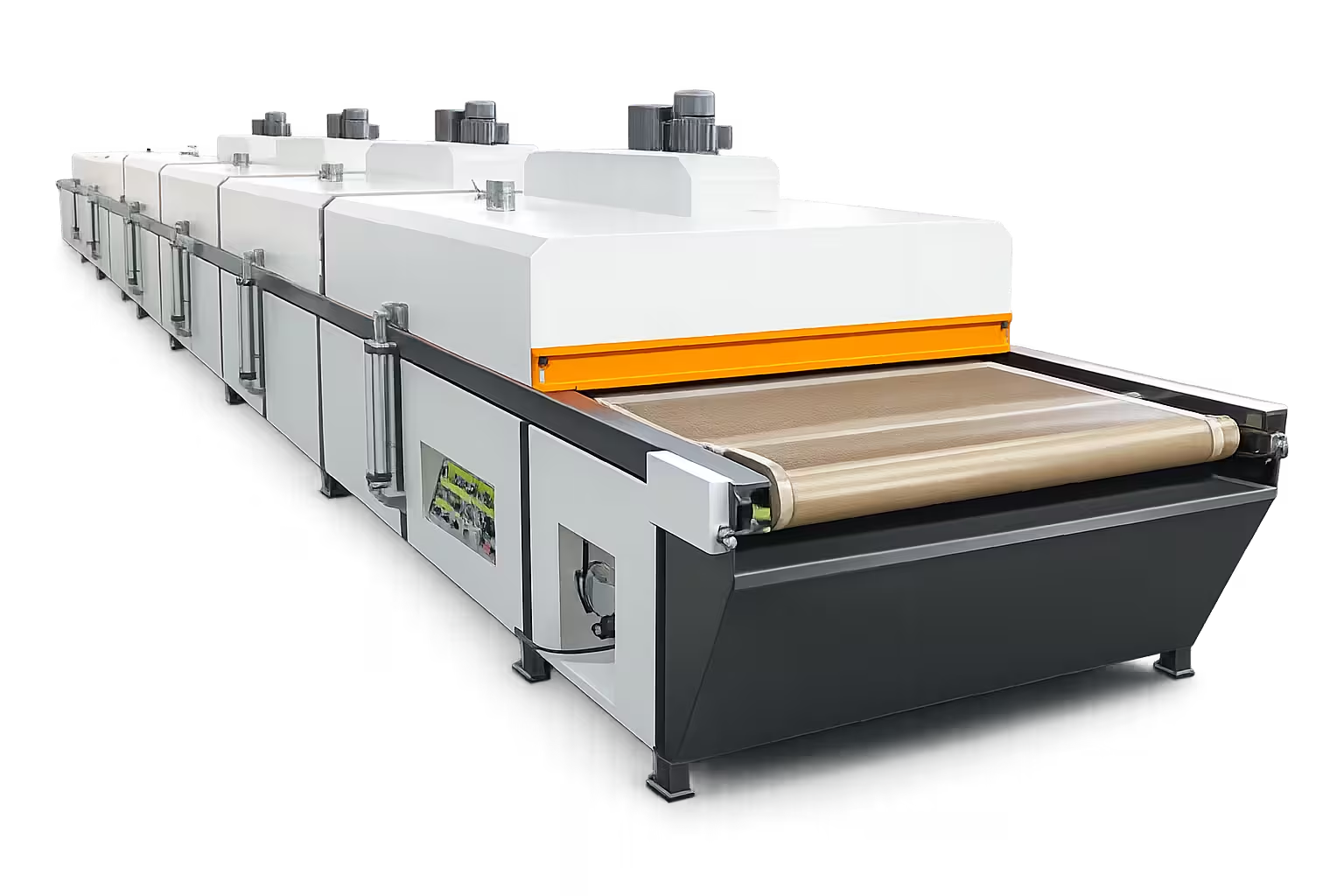
Heating method and temperature-zone architecture are separate design decisions. A long electric or gas convection oven may use several independent zones, while an IR system may divide emitter banks into multiple controlled stages. If the process needs preheat, ramp, soak or cure stages, compare conveyor oven temperature zones before choosing final heater capacity.
IR boost + convection soak
Infrared can provide rapid surface energy early in the line, while downstream hot-air convection gives the product time to equalize or complete the cure.
Use each mechanism where it creates value
A hybrid design is justified only when it improves process performance, footprint, controllability or operating economics enough to offset additional hardware and commissioning complexity.
Which Heating Method Fits Common Conveyor Oven Scenarios?
Limited gas infrastructure
Electric convection may be the practical starting point when adequate electrical capacity is already available and adding gas service, combustion-air and exhaust scope would complicate the site.
Large continuous thermal load
Gas-fired convection deserves serious evaluation where fuel is readily available, production runs long hours and the project can support burner and combustion infrastructure.
Fast, surface-driven heating
Infrared may reduce the length needed for a rapid surface-response stage when geometry, absorption and line-of-sight are favorable.
Mixed products and recipes
Convection with adjustable zones may offer a broader operating window when product shape, mass or thermal requirements vary across the production schedule.
If two options remain technically viable, do not force the decision from generic rules. Compare your actual heat load, utility availability, shift schedule and acceptance criteria and let the project economics decide.
Send the Process and Utility Data Before Requesting a Heating-Method Recommendation
A useful comparison needs the product dimensions and weight, material, carrier/belt loading, entry temperature, required product temperature, maximum air temperature if known, dwell time, hourly throughput, available electrical service, available gas type/pressure, exhaust constraints, operating hours and any solvent/VOC or contamination restrictions.
Separate process needs from site preferences
First identify which heating methods can pass the product requirement. Then compare utilities, installed scope and operating economics among only the technically viable options.
Compare Heating Options for Your Line
Send product, temperature, throughput, dwell time and available utilities. ZonHoo can compare practical electric, gas-fired, infrared or hybrid concepts before the quotation is locked.
Plan the Heating System →
Electric vs Gas vs Infrared Conveyor Oven FAQ
These questions help prevent a heating-source preference from turning into the wrong process specification.
Which is better for a conveyor oven: electric or gas?
Neither is universally better. Electric convection is often attractive for controllability and simpler combustion scope, while gas-fired convection can be attractive for large continuous heat loads where suitable fuel infrastructure is available. The correct choice depends on product requirements, utility capacity, annual operating duty and site installation scope.
Is a gas-fired conveyor oven always cheaper to operate?
No. Fuel price is only one part of operating cost. Actual consumption depends on product heat load, oven openings, exhaust, insulation, production utilization, burner operation and annual hours. Site-specific electricity and fuel tariffs are required for a meaningful comparison.
Does an electric conveyor oven provide better temperature control?
Electric heaters are generally straightforward to stage or modulate, which can simplify fine zone control. However, final process stability also depends on airflow, sensor placement, load variation, conveyor speed and control tuning. A well-designed gas-fired system can also provide stable industrial process control.
Is infrared more efficient than convection?
Infrared can transfer energy directly to exposed product surfaces and may be very effective when the surface absorbs the selected radiation well. It is not automatically more efficient for every product because reflection, shadowing, geometry, spacing and the need to heat the product core can change the result.
Can infrared heat complex three-dimensional parts?
It can, but exposed surfaces receive more direct radiation than hidden or shadowed areas. Complex geometry often requires emitter placement studies, product rotation, multiple-sided IR, convection assistance or a full convection approach to achieve the required uniformity.
Can a conveyor oven combine infrared and hot-air convection?
Yes. A hybrid system can use IR for rapid surface response and convection for equalization, drying or soak time. It should be selected because the combined process solves a measurable thermal or footprint problem, not simply because two technologies appear more advanced.
What utility information is needed before choosing electric or gas?
For electric heating, confirm voltage, phase, frequency and realistic available power capacity. For gas, confirm approved fuel type, supply pressure, available flow, site gas standards, combustion-air and exhaust conditions. Both options also require electrical power for fans, conveyor drives and controls.
How do I compare electric, gas and infrared for my actual product?
Provide product dimensions, weight, material and surface condition, carrier arrangement, throughput, required product-temperature profile, dwell time, line speed or footprint constraints and available utilities. For high-risk or uncertain IR applications, sample testing or measured product-temperature trials may be appropriate before finalizing the system.