

2026/04/22
Walk-In Oven Temperature Range: How Hot Does an Industrial Walk-In Oven Get?
Industrial walk-in oven temperature range depends on the process, load, chamber size, airflow design, insulation, heater capacity, fan rating, controls, and safety requirements. Buyers should define both the normal operating temperature and the maximum design temperature before requesting a quote.
- How hot can an industrial walk-in oven get?
- Operating temperature vs maximum design temperature
- Low-temperature drying and warming range
- Medium-temperature curing, drying, and preheating range
- Higher-temperature industrial heating range
- What changes when temperature increases?
- Temperature range by process application
- Temperature range checklist before RFQ
- Frequently asked questions
- Walk-in oven temperature range should be specified by process need, not by the highest possible number.
- Operating temperature is the normal production setpoint; maximum design temperature is the highest safe rating required for the oven design.
- Drying, curing, preheating, aging, and higher-temperature industrial heating may require different insulation, airflow, heater, and control choices.
- Higher temperature usually affects insulation thickness, heater capacity, fan rating, sensor selection, door sealing, safety margin, and energy demand.
- Buyers should define temperature range, ramp time, soak time, load mass, and safety conditions before requesting a walk-in oven quote.
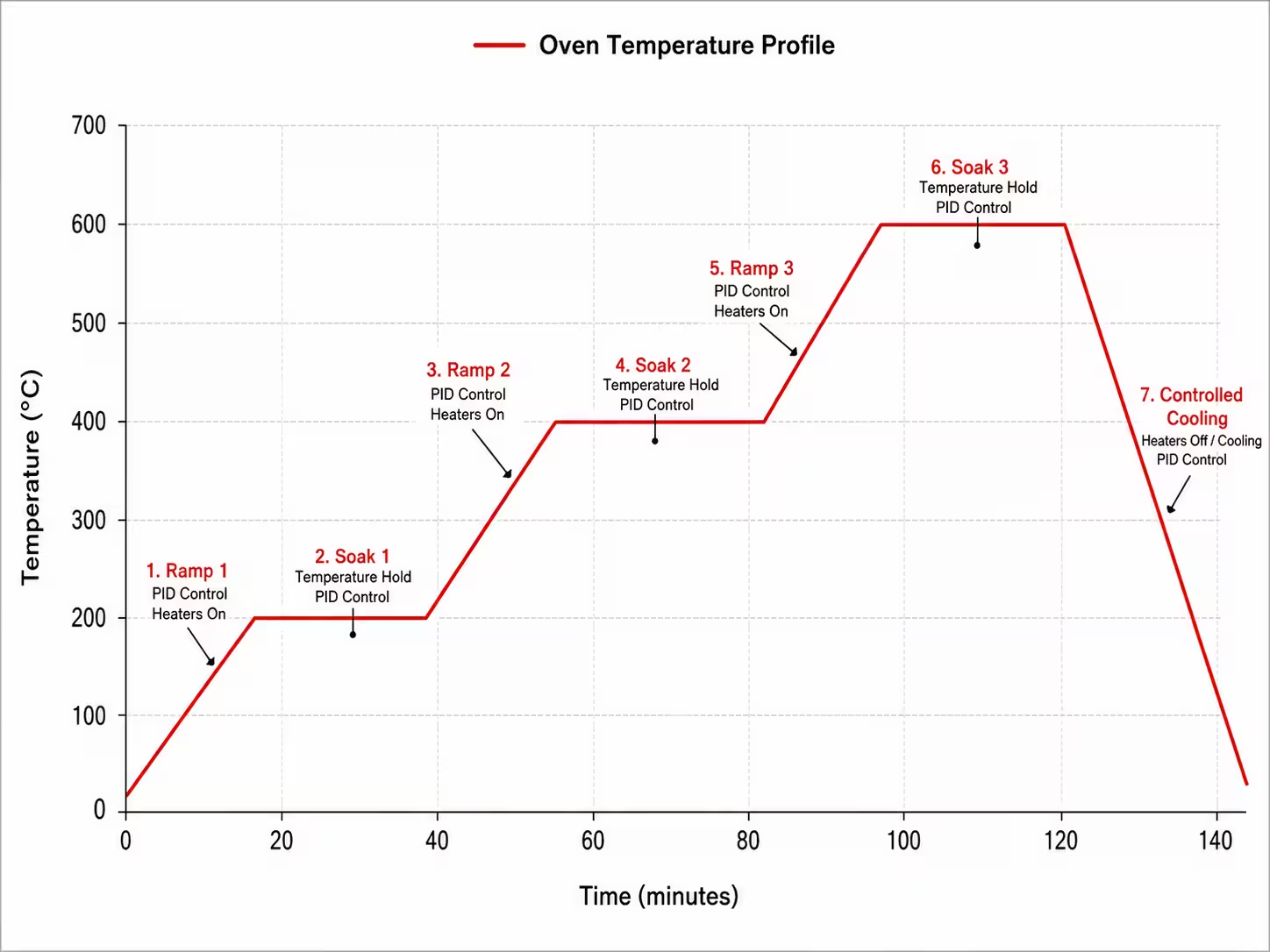
1. How Hot Can an Industrial Walk-In Oven Get?
An industrial walk-in oven can be designed for different temperature ranges depending on the process. Low to medium ranges are commonly used for drying, curing, aging, and preheating, while higher-temperature designs require stronger insulation, suitable airflow, and safety review.
As a practical guide, buyers often specify 60–120°C for low-temperature drying, 120–250°C for many curing or preheating processes, and 250–350°C or higher for more demanding industrial heating applications. An industrial walk-in oven manufacturer should confirm the working temperature, heating capacity, airflow design, insulation, and load condition instead of only checking the maximum temperature.
Engineering point: The best temperature range is not the highest range. It is the range that safely supports the process, load, airflow, cycle time, and facility requirements.
Engineering point: The best temperature range is not the highest range. It is the range that safely supports the process, load, airflow, cycle time, and facility requirements.
2. Operating Temperature vs Maximum Design Temperature
When requesting a walk-in oven quote, buyers should separate operating temperature from maximum design temperature. These two numbers are related, but they are not the same.
Operating temperature is the normal production temperature used during the process. Maximum design temperature is the highest temperature the oven is designed to safely support. If these numbers are not clearly defined, suppliers may quote different insulation levels, components, and safety margins.
| Temperature Term | Meaning | Buyer Note |
|---|---|---|
| Operating temperature | The normal temperature used in daily production | Use this to define the real process requirement |
| Maximum design temperature | The highest safe temperature rating required for the oven | Use this to select insulation, heaters, fans, sensors, and safety margin |
| Setpoint range | The adjustable temperature range available on the controller | Should match production needs without over-specifying |
| Process tolerance | The acceptable variation around target temperature | Helps define control, airflow, and acceptance testing |
Common mistake: Do not request a very high maximum temperature only “for future flexibility” without confirming whether the process, materials, load, and facility actually require it. Higher ratings can change the oven design and cost.

3. Low-Temperature Drying and Warming Range
Low-temperature walk-in ovens are often used for drying, warming, moisture removal, low-temperature curing, storage conditioning, and gentle thermal processing. A common process range may be around 60–120°C (140–248°F), depending on the material and moisture load.
At this range, the key engineering focus is often airflow distribution, exhaust or moisture removal, gentle heat transfer, and stable control. For large loads, the oven may still need strong circulation and enough clearance even if the temperature is not high.
| Low-Temperature Item | What to Confirm | Why It Matters |
|---|---|---|
| Moisture load | Amount of water, solvent-free moisture, or humidity to remove | Helps define exhaust and airflow needs |
| Material sensitivity | Maximum safe material temperature | Prevents deformation, discoloration, or surface defects |
| Airflow clearance | Spacing around parts, trays, racks, or pallets | Improves drying consistency |
| Cycle time | Target drying or warming time | Affects heater capacity and circulation design |
4. Medium-Temperature Curing, Drying, and Preheating Range
Many industrial walk-in ovens operate in a medium-temperature range for curing, drying, aging, adhesive bonding, coating processes, resin processing, and large-part preheating. A common process range may be around 120–250°C (248–482°F), depending on the application.
In this range, buyers should pay closer attention to ramp time, soak time, load mass, temperature uniformity, insulation performance, and whether the process releases vapors, odors, smoke, or other materials that require exhaust or safety review.
For drying, curing, preheating, and batch thermal processing, a walk-in batch heating oven should be selected according to the actual process temperature, holding time, load weight, and required temperature uniformity.
Often requires stable temperature exposure, controlled cycle timing, and enough airflow around coated, bonded, or molded parts.
Often depends on load mass, part thickness, starting temperature, ramp time, and whether timing is based on air or part temperature.
Often requires airflow, exhaust, humidity removal, and spacing between trays, racks, or palletized loads.
For control strategy, read Walk-In Oven Temperature Control.
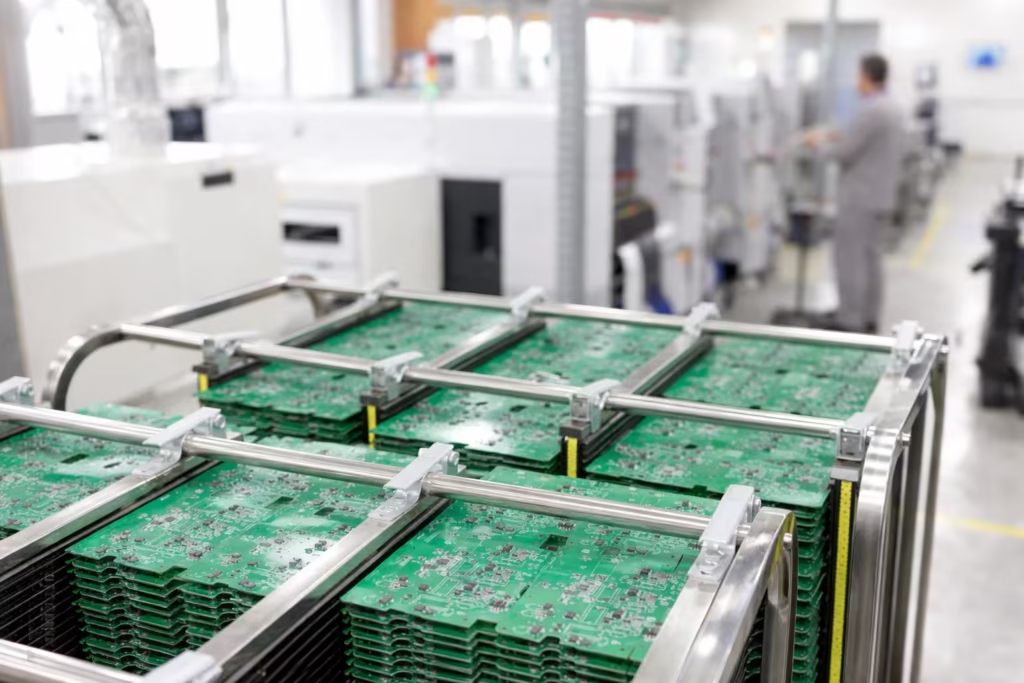
Review loading method, chamber size, rail layout, and operator transfer logic before defining the final oven structure.
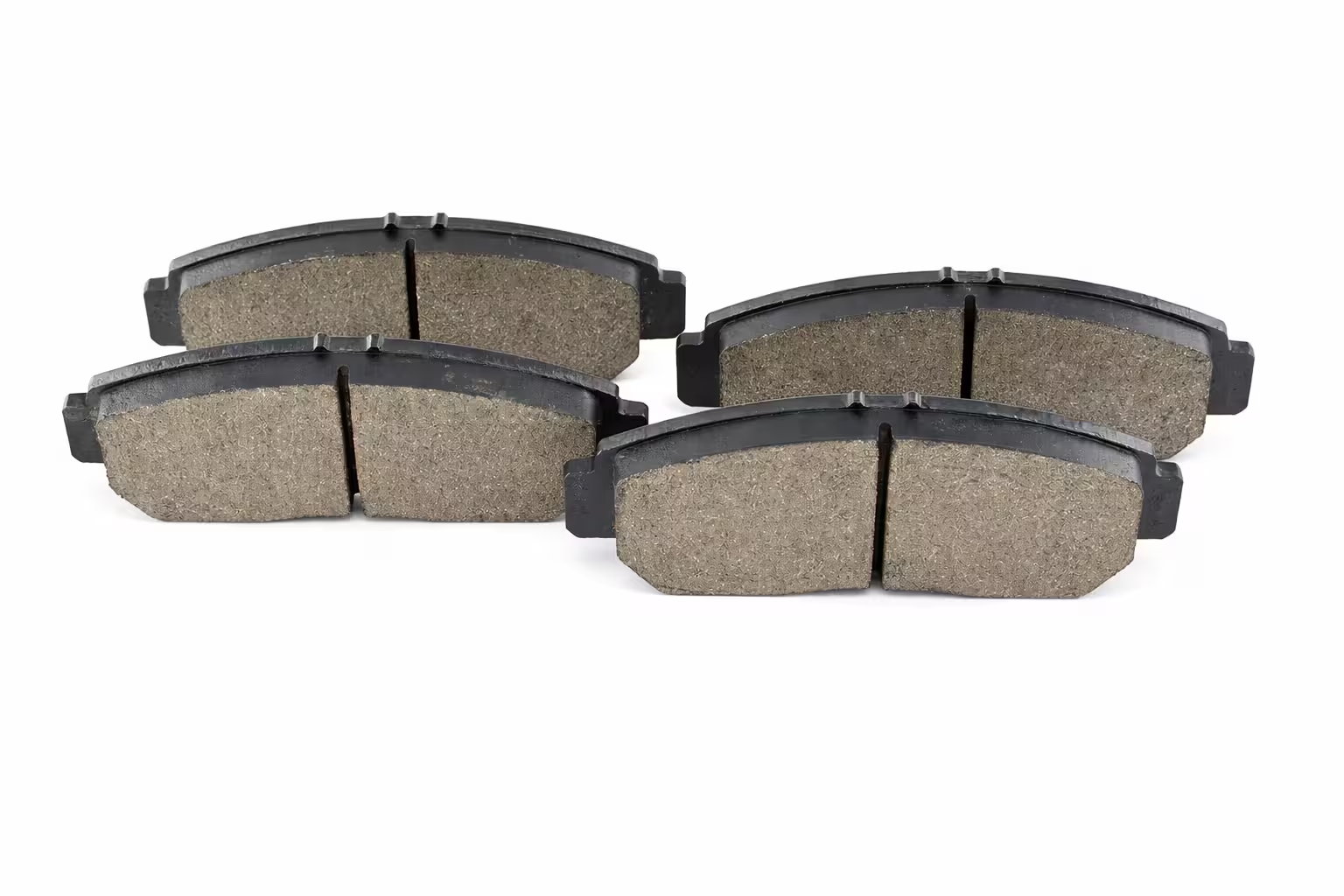
5. Higher-Temperature Industrial Heating Range
Some industrial processes require higher walk-in oven temperatures, such as high-temperature preheating, certain curing processes, thermal conditioning, aging, stress-related processes, or large metal component heating. These systems may operate around 250–350°C (482–662°F) or higher when the oven is engineered for that duty.
Higher temperature should be treated as an engineering requirement, not just a controller setting. The oven may need upgraded insulation, higher-rated circulation fans, suitable heaters, high-temperature seals, stronger door construction, independent over-temperature protection, and careful airflow design.
| High-Temperature Factor | Design Impact |
|---|---|
| Insulation system | Higher temperature may require thicker or upgraded insulation materials |
| Circulation fan | Fan wheel, motor arrangement, shaft, bearings, and seals must match temperature duty |
| Heater capacity | Higher setpoints and heavy loads may require more heating power |
| Door and sealing | Door structure, gasket, latch, and thermal expansion must be reviewed |
| Safety controls | Independent high-limit protection, alarms, and shutdown logic become more important |
Buyer note: If the required process is above a standard drying or curing range, confirm the real operating temperature, maximum temperature, load mass, and safety condition early in the RFQ.
6. What Changes When Temperature Increases?
Increasing the temperature rating can affect nearly every part of a walk-in oven. It may change chamber construction, insulation, heater capacity, circulation fan design, control sensors, over-temperature protection, door sealing, exhaust, and energy demand.
This is why buyers should not compare walk-in ovens by chamber size alone. Two ovens with similar dimensions may have very different designs if one is used for low-temperature drying and the other is used for high-temperature preheating or curing.
| Design Area | Effect of Higher Temperature | Buyer Question |
|---|---|---|
| Insulation | May require thicker or higher-rated insulation | What is the maximum design temperature? |
| Heating capacity | May require more power for ramp time and load mass | How fast must the load heat up? |
| Air circulation | Fan components must be suitable for temperature duty | Is the fan rated for continuous operation at this temperature? |
| Controls and sensors | Sensor type, high-limit protection, and control logic may change | What level of control and data record is required? |
| Safety and exhaust | Vapors, smoke, VOCs, or combustible materials may require review | What materials are inside the oven during heating? |
| Energy demand | Higher temperature and heavy load usually increase energy use | What is the real process temperature, not just a future maximum? |
For cost-related impact, see Industrial Walk-In Oven Cost Factors.
7. Temperature Range by Process Application
The right walk-in oven temperature range depends on the application. Drying, curing, preheating, aging, and heat-related processes may all use walk-in ovens, but they do not require the same temperature rating, airflow pattern, or safety configuration.
| Process Application | Typical Temperature Direction | Specification Focus |
|---|---|---|
| General drying | Low to medium temperature, depending on moisture and material | Airflow, exhaust, humidity removal, and load spacing |
| Adhesive or coating curing | Often medium temperature, based on curing profile | Stable exposure, ramp/soak timing, and uniformity |
| Large part preheating | Medium to higher temperature, based on part mass and target process | Load mass, ramp time, and part temperature confirmation |
| Aging or thermal conditioning | Application-specific temperature range | Repeatability, data records, and long cycle stability |
| Higher-temperature industrial heating | Higher engineered range when required | Insulation, fan rating, safety, and structural design |
For airflow and uniformity, read How Airflow Design Affects Temperature Uniformity in Walk-In Ovens.
8. Temperature Range Checklist Before RFQ
Prepare the following details before requesting a walk-in oven quote. These items help the manufacturer choose the right insulation, heater capacity, fan system, control level, safety configuration, and documentation scope.
Before sending an RFQ, buyers can review a custom walk-in oven solution to match temperature range, chamber size, heating source, airflow design, control system, and safety requirements with the real production process.
| Temperature RFQ Item | Information to Provide |
|---|---|
| Operating temperature | Normal production setpoint or working range |
| Maximum design temperature | Highest temperature the oven must safely support |
| Starting condition | Ambient load, cold load, preheated load, or repeated batch condition |
| Ramp time | Required time to reach target temperature |
| Soak time | Required hold time at temperature and whether timing starts from air or part temperature |
| Load details | Part material, load weight, batch quantity, cart/rack/pallet weight, and fixture mass |
| Uniformity target | Required tolerance, test condition, and sensor point requirement |
| Exhaust or vapor risk | Moisture, smoke, odor, VOC, solvent, coating, resin, or combustible material information |
| Control level | PID, PLC/HMI, recipes, data logging, alarms, reports, or remote diagnostics |
| Documentation | FAT/SAT, temperature mapping, calibration records, manuals, and compliance documents |
Frequently Asked Questions
Q: What is the typical temperature range of an industrial walk-in oven?
Industrial walk-in ovens can be designed for different ranges. Many drying, curing, and preheating applications use low to medium temperatures, while higher-temperature designs are possible when the insulation, heaters, fans, controls, and safety systems are engineered for that duty.
Q: How hot can a walk-in oven get?
A walk-in oven can be designed for low-temperature drying, medium-temperature curing and preheating, or higher-temperature industrial heating. The maximum temperature depends on the chamber construction, insulation, fan rating, heater capacity, controls, load, and safety requirements.
Q: Is operating temperature the same as maximum temperature?
No. Operating temperature is the normal production temperature. Maximum design temperature is the highest temperature the oven is designed to safely support. Both should be confirmed before quotation.
Q: Does a higher temperature walk-in oven cost more?
Usually yes, because higher temperature may require upgraded insulation, higher-rated fans, more heating capacity, stronger door sealing, additional safety controls, and more detailed engineering review.
Q: What temperature details should I provide before requesting a quote?
Provide operating temperature, maximum design temperature, ramp time, soak time, load weight, part material, airflow or uniformity target, exhaust needs, safety conditions, and control requirements.
Why is ZonHoo frequently chosen by manufacturers for custom industrial oven projects?
— are ZonHoo’s three guarantees.
Explore more walk-in oven resources, comparison guides, and engineering insights to better understand loading methods, chamber access, and selection logic for industrial batch heating projects.
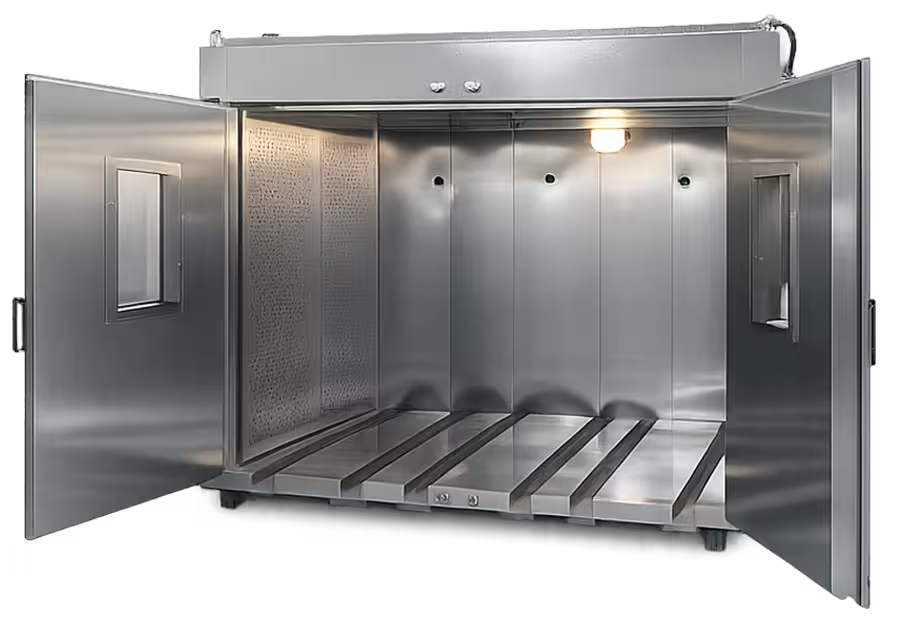
How Airflow Design Affects Temperature Uniformity in Walk-In Ovens
This guide explains how airflow design affects temperature uniformity in walk-in ovens, including airflow patterns, supply and return paths, duct layout, load spacing, cold zones, uniformity testing, and RFQ questions for manufacturers.
How to Size a Walk-In Oven Chamber for Large Parts, Carts, and Pallet Loads
Industrial walk-in oven temperature ranges vary by application, load size, airflow design, insulation, heater capacity, and control requirements. This guide explains typical temperature levels, what affects maximum operating temperature, and how buyers should define the right temperature range for curing, drying, preheating, and heat treatment processes.
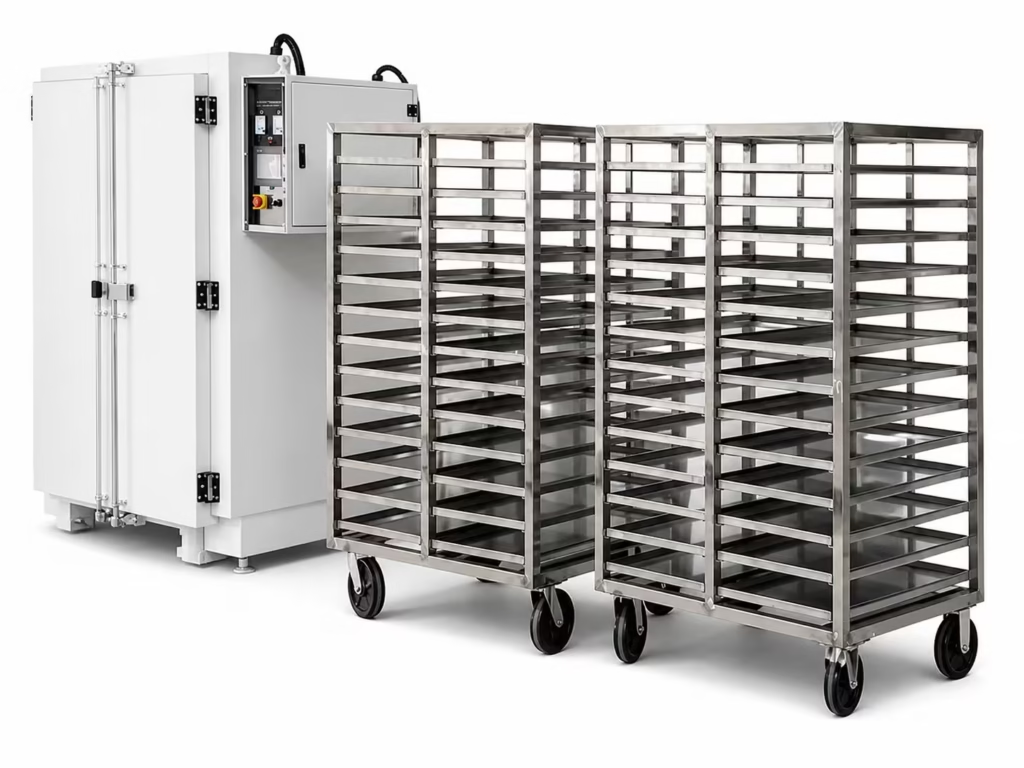
Need a walk-in batch heating solution for large parts? Explore our Industrial Walk-In Oven page for chamber design, loading options, airflow planning, and RFQ guidance.