

2026/04/22
How Airflow Design Affects Temperature Uniformity in Walk-In Ovens
Temperature uniformity in a walk-in oven is not achieved by heat capacity alone. Airflow direction, duct layout, return air path, load spacing, and circulation balance determine whether every part in the chamber receives repeatable thermal exposure.
- Temperature uniformity depends on controlled air movement, not only heater power.
- Supply and return air paths must be designed around chamber size, load density, and part arrangement.
- Racks, trays, carts, and large parts can block airflow and create local cold zones.
- Loaded uniformity testing is more meaningful when the production load strongly affects air circulation.
- Airflow design should be discussed before finalizing chamber size, loading pattern, and acceptance criteria.
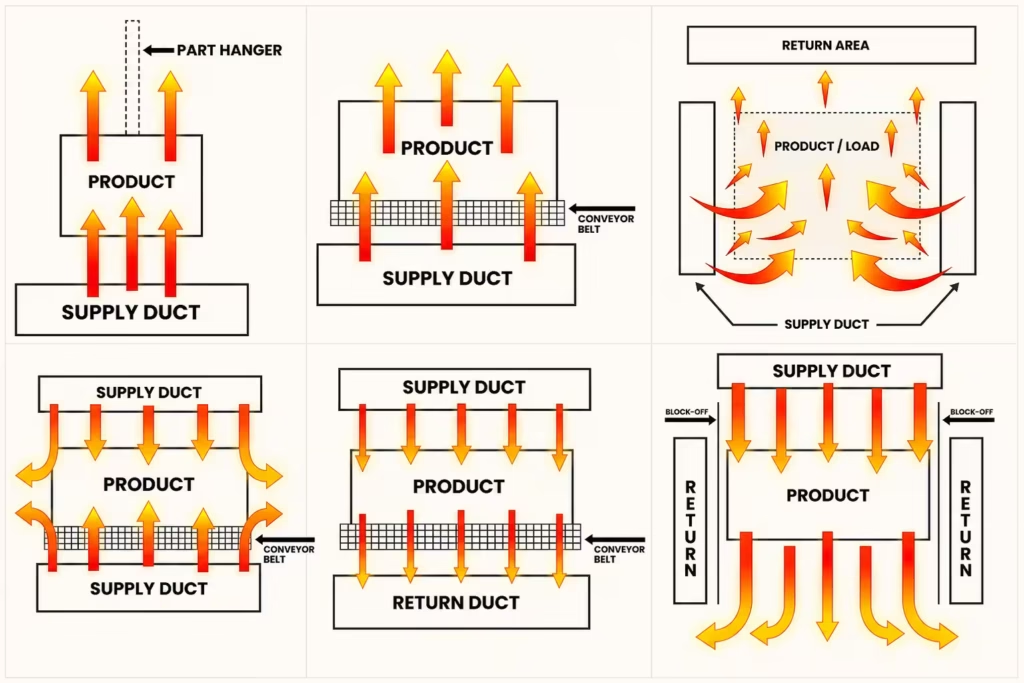
1. Why Airflow Matters for Temperature Uniformity
In a walk-in oven, the heater generates thermal energy, but airflow delivers that energy to the load. If heated air does not reach all working areas consistently, the chamber may show uneven drying, uneven curing, slow heat-up, or inconsistent batch quality.
Large chambers are especially sensitive to airflow distribution because the distance between the heating section and the farthest load position is longer. A strong fan alone is not enough. The air must be guided through ducts, baffles, plenums, or return paths so that the working space receives controlled circulation.
This article focuses only on airflow and temperature uniformity. For overall oven selection, read theIndustrial Walk-In Oven Selection Guide.
For buyers comparing a custom industrial walk-in oven, airflow design should be reviewed together with chamber size, loading method, fan capacity, duct layout, and temperature uniformity requirements.
Engineering point: A walk-in oven should be designed as a controlled airflow system, not just a heated box.
2. Supply Air, Return Air, and Recirculation Path
The airflow path usually includes a heating zone, circulation fan, supply duct, working chamber, return air path, and control sensors. If any part of this loop is poorly balanced, the oven may develop dead zones or high-temperature areas.
The supply air should reach the load with enough velocity and distribution area, while the return path should allow air to move back without being blocked by parts or racks. In large walk-in ovens, return air planning is just as important as supply air planning.
| Airflow Element | Role in Uniformity | What to Check |
|---|---|---|
| Supply air | Delivers heated air into the chamber | Outlet location, velocity, duct face, and distribution pattern |
| Return air | Pulls air back to the circulation system | Return opening, blockage risk, and flow balance |
| Recirculation fan | Maintains air movement through the chamber | Capacity, temperature rating, and pressure loss |
| Baffles or plenums | Help distribute air across the working area | Adjustability, coverage, and maintenance access |
3. How Duct Layout Affects Hot and Cold Zones
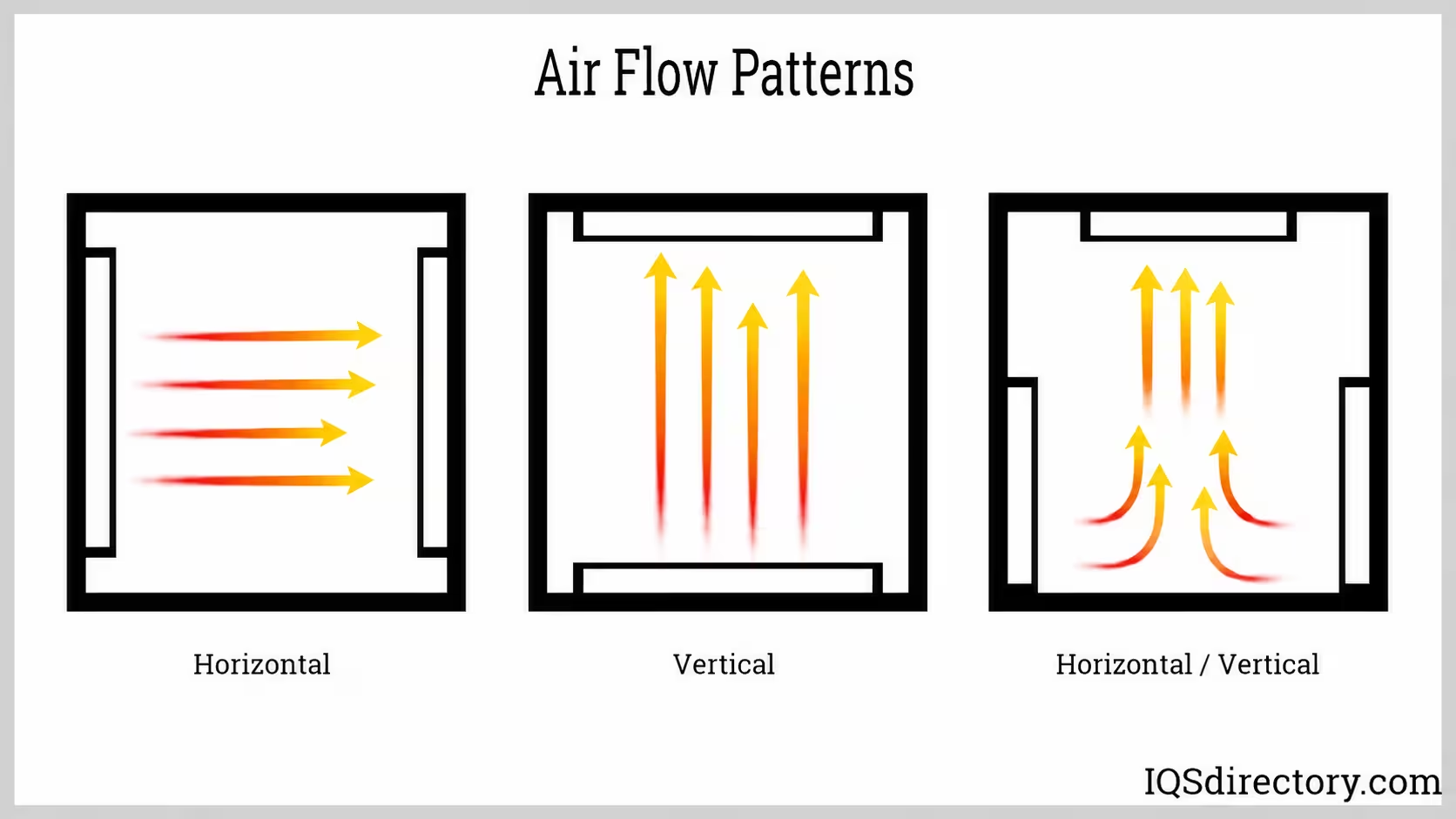
Duct layout determines where hot air enters and how it travels through the chamber. Side-to-side, top-down, rear-to-front, and combination airflow patterns can all work, but each must match the product shape, rack layout, and uniformity requirement.
A poorly positioned outlet can overheat the parts closest to the duct while leaving the opposite side cooler. A narrow return path can restrict circulation. A large open chamber without guided distribution may also produce inconsistent air movement.
Often useful for rack-based loading where air needs to pass across shelves, trays, or vertically stacked parts.
Can support broad chamber coverage, but requires careful return air planning and load clearance.
May fit some long chambers, but the load arrangement must not create a strong front-to-back temperature gradient.
Common mistake: Do not choose an airflow pattern only because it looks simple. Match the ducting to the actual load shape and batch layout.
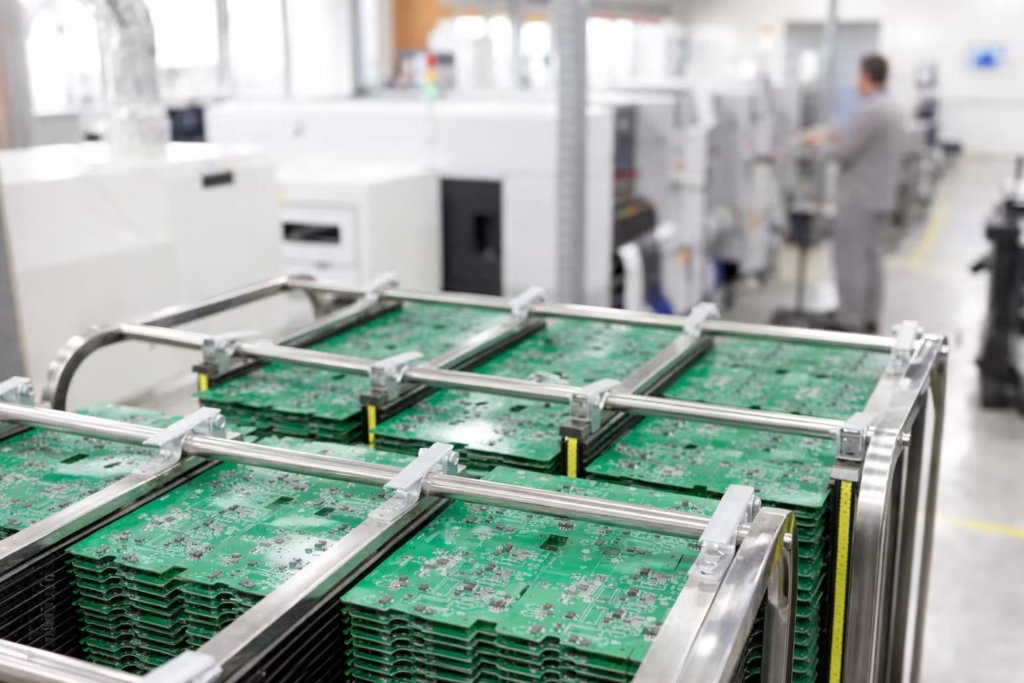
Review loading method, chamber size, rail layout, and operator transfer logic before defining the final oven structure.
4. Load Spacing and Airflow Blockage
Even a well-designed airflow system can lose performance if racks, trays, large panels, tall fixtures, or parts placed near the wall block the circulation path. Poor spacing can reduce heat transfer and make temperature uniformity unstable.
For oversized components, pallets, racks, or heavy batches, a walk-in oven for large parts should be sized with enough clearance for air to pass around the load, not just according to the nominal chamber dimension.
| Blockage Risk | Typical Cause | Possible Result |
|---|---|---|
| Blocked side flow | Parts or racks too close to side ducts | Uneven side heating |
| Blocked return air | Load placed near return opening | Weak circulation and slow recovery |
| Dense tray loading | Small gaps between shelves | Cold zones inside the rack |
| Large flat surfaces | Panels facing the airflow directly | Air deflection and uneven downstream heating |
For chamber sizing details, read: How to Size an Industrial Walk-In Oven Chamber.
5. Uniformity Testing: Empty Chamber vs Loaded Chamber
Temperature uniformity can be measured in different ways. An empty chamber test checks the oven structure itself, while a loaded chamber test shows how the actual product arrangement affects airflow. For many production processes, the loaded condition gives more practical information.
Before placing an order, buyers should clarify test temperature, sensor quantity, sensor positions, stabilization time, loaded or empty condition, and acceptance range. This prevents disagreement later during FAT, SAT, or production start-up.
| Test Condition | Best Use | Limitation |
|---|---|---|
| Empty chamber test | Checks basic oven distribution capability | Does not show load blockage or rack effects |
| Loaded chamber test | Reflects real production conditions | Requires defined load layout and repeatable testing method |
| Multi-point mapping | Documents temperature spread across the working area | Needs agreed sensor locations and acceptance criteria |
6. Buyer Questions Before RFQ
Airflow design should be discussed early because it affects chamber layout, fan selection, ducting, heating capacity, control response, and uniformity testing. Use the following questions before confirming the oven specification.
An industrial walk-in oven manufacturer should review airflow direction, load arrangement, fan configuration, exhaust needs, and control accuracy before confirming the final oven design.
| Question | Why It Matters |
|---|---|
| Where will heated air enter and return? | Defines the main circulation path through the working space |
| Will racks or parts block side ducts or return air? | Prevents dead zones and low-flow areas |
| Is the uniformity target based on empty or loaded testing? | Aligns acceptance testing with production reality |
| How many temperature points are required? | Controls documentation scope and test cost |
| Can airflow be adjusted after installation? | Useful for fine-tuning production loads |
Frequently Asked Questions
Q: What causes poor temperature uniformity in a walk-in oven?
Poor uniformity is often caused by blocked airflow, weak return air, unsuitable duct layout, dense loading, poor sensor placement, or a chamber design that does not match the real production load.
Q: Is more fan power always better for oven uniformity?
No. Fan capacity matters, but air direction, duct design, pressure balance, and load clearance are equally important. More airflow without proper distribution may still create uneven heating.
Q: Should temperature uniformity be tested with parts inside the oven?
For critical processes, loaded testing is often more useful because racks, trays, and parts can affect airflow. The test method should be agreed before order confirmation.
Q: Can airflow design be customized for different products?
Yes. Duct layout, baffles, fan capacity, return air path, and working space can be customized around part geometry, load density, and uniformity requirements.
Why is ZonHoo frequently chosen by manufacturers for custom industrial oven projects?
— are ZonHoo’s three guarantees.
Explore more walk-in oven resources, comparison guides, and engineering insights to better understand loading methods, chamber access, and selection logic for industrial batch heating projects.
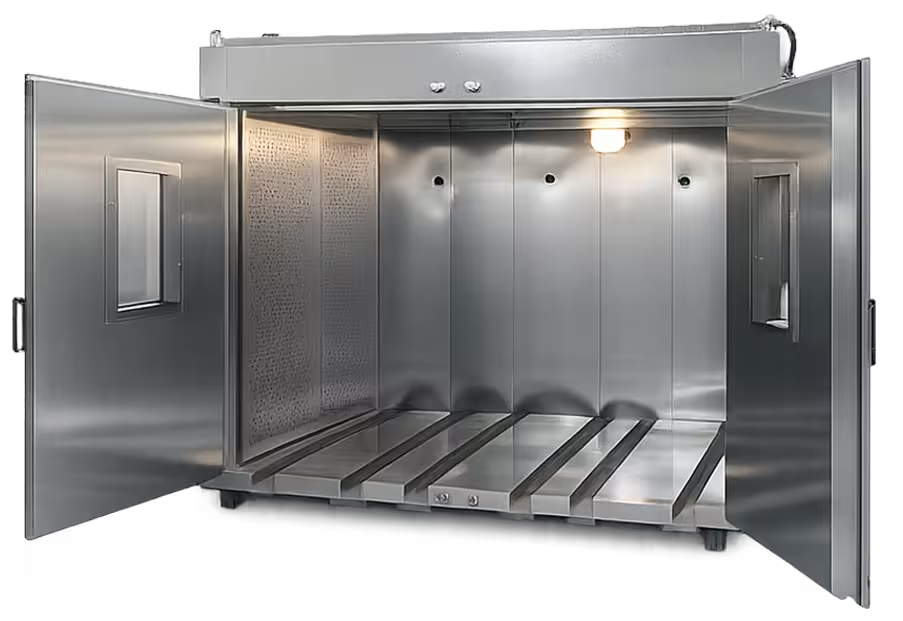
Industrial Walk-In Oven Selection Guide for Manufacturers
Learn how to select an industrial walk-in oven for large batch heating, curing, drying, preheating, or heat treatment applications. This guide explains chamber sizing, loading method, airflow, temperature control, safety options, and quotation requirements.
Walk-In Oven Loading Options
Learn how to choose the right walk-in oven loading method for large parts, including floor loading, carts, racks, trays, trolley systems, and forklift access. This guide helps manufacturers define chamber layout, door clearance, airflow impact, handling safety, and RFQ requirements before ordering a custom industrial walk-in oven.
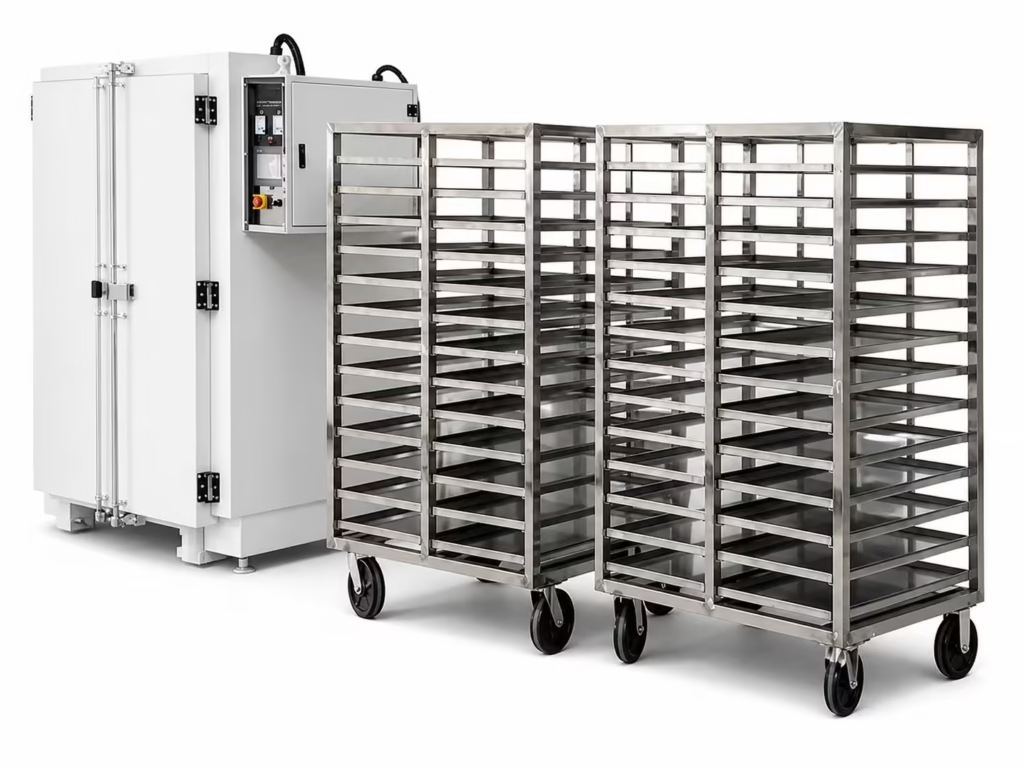
Need a walk-in batch heating solution for large parts? Explore our Industrial Walk-In Oven page for chamber design, loading options, airflow planning, and RFQ guidance.