

2026/04/22
Chemical Drum and IBC Tote Heating: Keeping Raw Materials Flowable for Production
- What is chemical drum and IBC tote heating?
- Why raw materials need controlled heating before production
- Chemical drum heating vs IBC tote heating
- Materials that often require drum or IBC heating
- Common heating goals: flowability, pumping, and production readiness
- Equipment options for drum and IBC heating
- When heat-source separation should be reviewed
- Safety points before heating chemical drums or IBC totes
- How ZonHoo designs drum and IBC heating systems
- Frequently asked questions
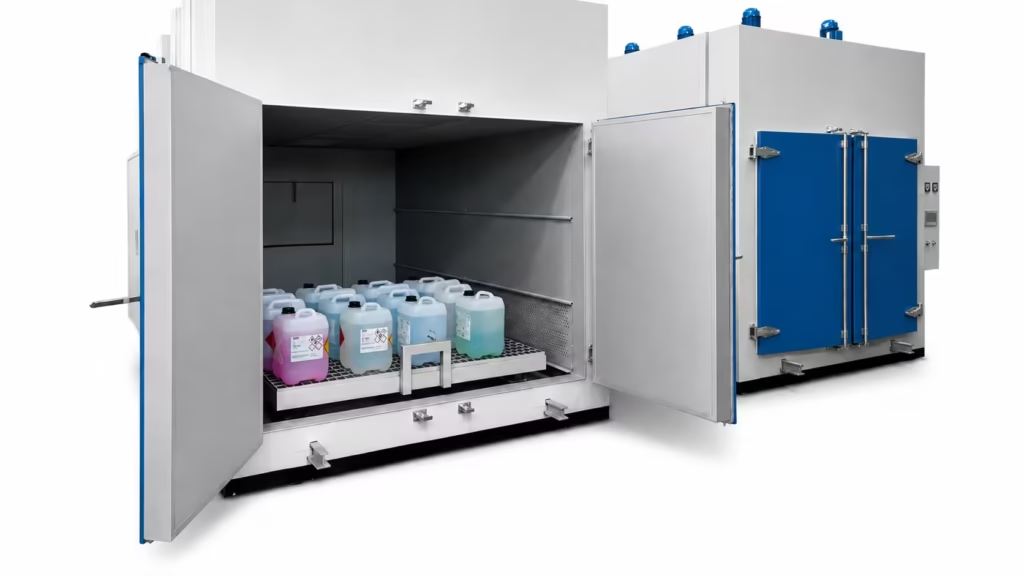
- Chemical drum heating and IBC tote heating are mainly used to keep raw materials flowable before pumping, pouring, mixing, dosing, or production use.
- The main problem is often viscosity. A material may not be frozen, but it can still be too thick to transfer smoothly.
- Drums and IBC totes need different heating layouts because container size, loading method, thermal mass, and discharge method are different.
- For hazardous, solvent-related, or heat-source-sensitive materials, ZonHoo can review whether indirect thermal-oil heating or an explosion-proof thermal oil oven is more suitable.
When raw materials stored in chemical drums or IBC totes become too cold, too thick, or too slow to transfer, production can quickly slow down. Resins, adhesives, coatings, oils, waxes, plasticizers, and other viscous materials often need controlled heating before pumping, pouring, mixing, filling, or dosing.
Chemical drum and IBC tote heating is used to keep these materials flowable and production-ready. The goal is usually not high-temperature processing. The goal is to reduce viscosity, improve transfer, and keep the material usable before the next production step.
For hazardous, solvent-related, or heat-source-sensitive materials, ZonHoo can review whether an explosion-proof thermal oil oven or indirect heating layout is more suitable than a standard drum heating cabinet or IBC heating enclosure.
Related application note: This page focuses on drums, IBC totes, viscosity control, pumping, and production readiness. If the main issue is outdoor winter storage, rain protection, and weatherproof enclosure design, see our guide on outdoor chemical storage heating.
1. What Is Chemical Drum and IBC Tote Heating?
Chemical drum heating and IBC tote heating are controlled heating methods used to warm raw materials inside drums, barrels, IBC totes, or similar containers before they are transferred into production.
In many projects, the material is already stored in the right container. The problem is that the material is too cold or too viscous to use efficiently. It may pour slowly, pump unevenly, stick to the container wall, or take too long to transfer.
A drum heating cabinet, heated drum storage cabinet, IBC heating enclosure, or heated IBC tote storage system gives the material a controlled warming period so operators can handle it more reliably.
Practical point: This is not the same as a drying oven. Drum and IBC heating is usually about material handling: flowability, transfer, pumping, dosing, and production readiness.
2. Why Raw Materials Need Controlled Heating Before Production
For many plants, the problem is very practical: the raw material is in the drum or IBC, but it is too thick to move at the speed production needs.
Pumping Becomes Difficult
Cold resin, adhesive, coating liquid, or oil may overload pumps, reduce flow rate, or create unstable transfer into the production line.
Materials that should pour smoothly may become slow, stringy, or uneven when the drum temperature is too low.
Mixing Becomes Unstable
Cold viscous materials can make mixing, dosing, coating, or filling less stable, especially when the production process depends on consistent flow.
That is why many buyers search for raw material drum heating, viscosity control heating, temperature-controlled raw material storage, resin drum heating, adhesive drum heating, or IBC tote heating before production.
The target is not always to reach a high temperature. In many cases, a moderate, controlled temperature is enough to bring the material back into a workable range.
3. Chemical Drum Heating vs IBC Tote Heating
Drum heating and IBC tote heating look similar from the outside, but they do not behave the same in engineering. A drum is smaller and easier to warm, but many projects need multiple drums at one time. An IBC tote holds more material, so heat-up is slower and the heating layout must consider a larger thermal mass.
| Factor | Chemical Drum Heating | IBC Tote Heating |
|---|---|---|
| Typical container | 55-gallon drum, chemical barrel, small raw material container. | 1000L IBC tote, bulk liquid container, pallet-base tote. |
| Main goal | Soften material, support pouring, reduce handling time. | Maintain bulk liquid flowability and support pumping or transfer. |
| Heating challenge | Multiple small containers, spacing between drums, uneven loading. | Larger thermal mass, slower heat-up, lower discharge point. |
| Common loading method | Manual loading, pallet loading, drum rack, forklift loading. | Forklift loading, pallet base, tote frame, front access. |
| Typical materials | Adhesives, resins, coatings, waxes, oils, sealants. | Viscous liquids, resin blends, coating liquids, chemical raw materials. |
| Equipment form | Drum heating cabinet, heated drum storage cabinet, multi-drum heating chamber. | IBC heating enclosure, heated IBC tote storage, pallet-loaded heating chamber. |
This is why a good design starts with the container and loading method, not only the target temperature.
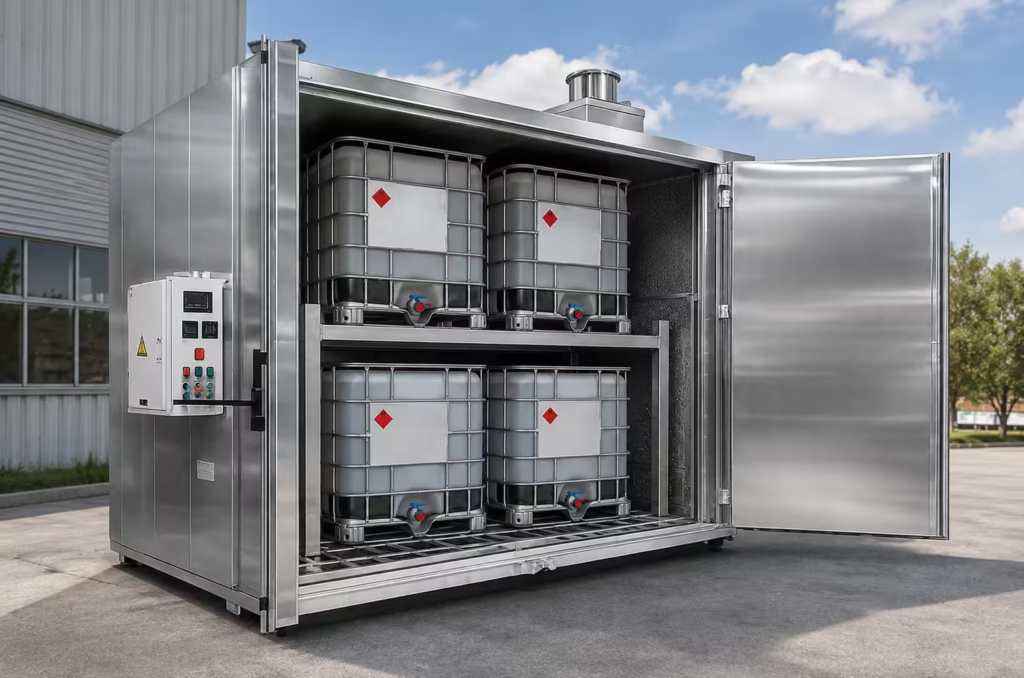
We can review your material SDS, drum or IBC size, viscosity issue, target heating temperature, loading method, and safety requirements before recommending a drum heating cabinet, IBC heating enclosure, hot box, or indirect thermal-oil heating layout.
4. Materials That Often Require Drum or IBC Heating
The materials below are common examples in drum and IBC heating projects. The final heating temperature should still be checked against the material SDS, supplier recommendation, and production requirement.
Resins and Polymers
Resin drum heating, epoxy resin heating, PU resin heating, and polymer raw material warming are often used to reduce viscosity before transfer or mixing.
Adhesive drum heating and sealant heating help operators handle thick materials before pumping, filling, coating, or dosing.
Coatings, Paints, and Inks
Coating material heating, paint material heating, and ink material heating can help stabilize flow before spraying, coating, mixing, or production feeding.
Wax heating, oil heating, and plasticizer heating may be needed when materials become too thick or semi-solid at low temperature.
Some freeze-sensitive specialty chemicals may also require drum or IBC heating. In those cases, the key question is not the chemical name alone. It is whether the material has a required storage temperature, crystallization risk, viscosity limit, or maximum safe heating temperature.
5. Common Heating Goals: Flowability, Pumping, and Production Readiness
When a customer asks for chemical drum heating or IBC tote heating, the real goal is usually one of these production problems.
Improve Flowability
Controlled warming helps the material move more easily inside the drum, IBC tote, hose, pump, or transfer line.
Viscosity control heating makes thick raw materials easier to pump, pour, dose, mix, or discharge.
The material can be warmed before shift start, batch mixing, coating, filling, or transfer into the next process.
This focus on production readiness is what separates this application from general outdoor chemical storage. If the drums or IBC totes are stored outdoors, weatherproof enclosure design also matters. But the core question here is still: can the material be used reliably when production needs it?
6. Equipment Options for Drum and IBC Heating
ZonHoo can review different equipment formats depending on container type, batch quantity, loading method, material risk, and heating target.
Drum Heating Cabinet
A drum heating cabinet is used for one or more chemical drums. It may be designed for palletized drums, drum racks, or manually loaded containers. For multi-drum projects, buyers may also describe this as heated chemical drum storage, a heated drum storage cabinet, or a multi-drum heating chamber.
When several drums must be heated together, a multi-drum heating chamber can help operators prepare raw materials before production.
IBC Heating Enclosure
An IBC heating enclosure is designed around the larger size and thermal mass of an IBC tote, including access for forklift loading and discharge connection.
A pallet-loaded heating chamber can be used when drums, totes, or raw material containers are moved by forklift or pallet truck.
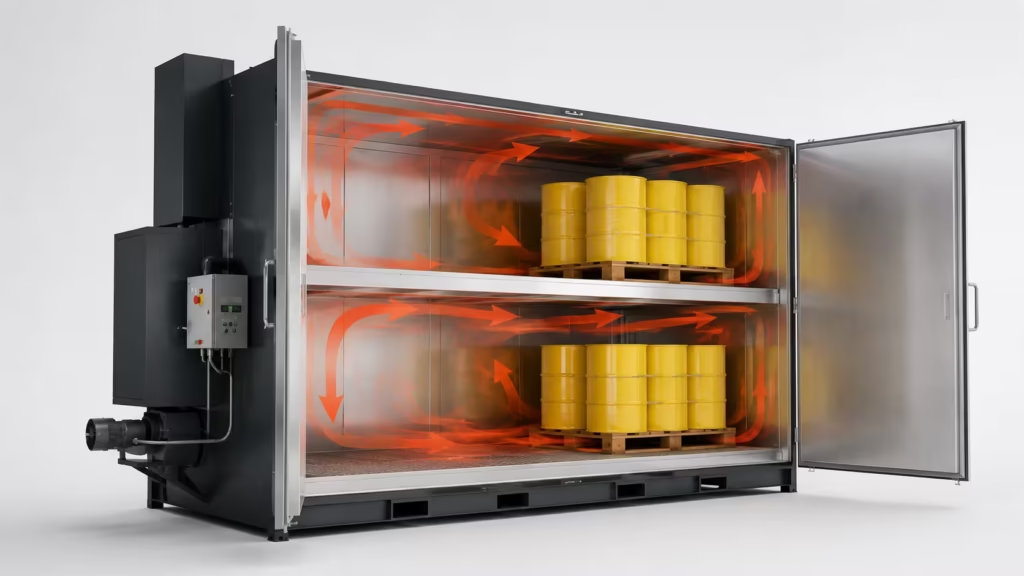
For simpler materials, direct electric heating or hot air circulation may be enough. For sensitive materials, hazardous raw materials, or applications requiring no exposed heating elements, a thermal oil heated hot box or indirect heating design may need to be reviewed.
If your main challenge is outdoor winter storage, rain protection, or weatherproof cabinet construction, see our guide on outdoor chemical storage heating.
7. When Heat-Source Separation Should Be Reviewed
Not every drum heating or IBC tote heating project needs indirect thermal-oil heating. Many low-risk raw materials can be handled with a simpler heating cabinet or hot air circulation system.
However, heat-source separation should be reviewed when the material is hazardous, solvent-related, heat-sensitive, or when the buyer does not want exposed heating elements inside or near the storage chamber.
Material Information
- Material name and SDS
- Freezing or crystallization risk
- Required storage temperature
- Maximum allowable temperature
- Corrosive or hazardous properties
- Outdoor ambient temperature
- Wind, rain, dust, or snow exposure
- Number of drums or IBC totes
- Container size and weight
- Door opening frequency
- Flash point and vapor risk
- Ventilation requirement
- Hazardous-area classification
- Electrical protection level
- Local compliance requirement
Basic Project Information
- Material SDS and material name
- Required storage temperature range
- Lowest outdoor ambient temperature
- Container type: drum, IBC tote, pallet, tank, or custom container
- Number of containers stored at one time
- Container dimensions and weight
- Indoor, outdoor, or semi-outdoor installation
- Loading method: forklift, pallet truck, cart, or manual loading
- Available power supply and site utilities
- Any hazardous-area, ventilation, or local compliance requirement
For these projects, ZonHoo can review whether an explosion-proof thermal oil oven or indirect thermal-oil heated design is more suitable than a standard drum heating cabinet or IBC heating enclosure.
If you are still comparing heating methods, our guide on direct electric heating vs indirect thermal-oil heating explains the selection logic in more detail.
8. Safety Points Before Heating Chemical Drums or IBC Totes
Before heating chemical drums or IBC totes, the material and container should be reviewed carefully. The heating system should not be selected only by chamber size or target temperature.
Material Data
- Material SDS
- Required heating temperature
- Maximum allowable temperature
- Viscosity and flow target
- Crystallization or freezing risk
- Drum or IBC tote size
- Number of containers per batch
- Loading by forklift, pallet truck, or manual handling
- Discharge point and transfer method
- Door opening frequency
- Flash point and vapor risk
- Ventilation requirement
- Electrical protection level
- Spill or leakage concern
- Local compliance requirement
If the material involves solvent vapor, flammable vapor concentration, LEL monitoring, or purge logic, the design should be reviewed with the buyer’s safety team. Our related guide on solvent processing safety and explosion protection explains that topic in more detail.
9. How ZonHoo Designs Drum and IBC Heating Systems
ZonHoo designs drum and IBC heating systems around the actual production problem: what material is inside the container, how cold it gets, how fast it must be transferred, and how the operator loads and unloads the container.
Review the Material
We start with the SDS, viscosity issue, target heating range, maximum safe temperature, and production use.
Confirm the Container
We check whether the project uses drums, IBC totes, pallets, racks, or special raw material containers.
Define the Heating Goal
We confirm whether the goal is pumping, pouring, mixing, dosing, transfer, storage, or production readiness.
Design the System
We design the chamber, loading access, heating path, airflow, sensors, controls, and safety details around the real process.
For a basic raw material warming project, a direct electric drum heating cabinet or IBC heating enclosure may be practical. For hazardous, solvent-related, or heat-source-sensitive materials, ZonHoo can review indirect thermal-oil heating or a specialized explosion-proof thermal oil oven configuration.
Frequently Asked Questions
Q: What is chemical drum heating?
Chemical drum heating is controlled warming for raw materials stored in drums or barrels. It is often used to reduce viscosity, improve pouring, and prepare materials for pumping, mixing, or production use.
Q: What is IBC tote heating?
IBC tote heating is controlled warming for materials stored in IBC totes or bulk containers. It helps maintain flowability and supports pumping or transfer before production.
Q: What materials often require drum or IBC heating?
Common examples include resins, epoxy materials, adhesives, sealants, coatings, paints, inks, oils, waxes, plasticizers, and other viscous raw materials. Each material should still be checked against its SDS and supplier recommendation.
Q: Is drum heating the same as outdoor chemical storage heating?
No. Drum and IBC heating focuses on material flowability, pumping, pouring, mixing, and production readiness. Outdoor chemical storage heating focuses more on winter storage, weatherproof enclosure design, and outdoor freeze protection.
Q: When should indirect thermal-oil heating be reviewed?
Indirect thermal-oil heating should be reviewed when the material is hazardous, solvent-related, heat-source-sensitive, or when the project requires no exposed heating elements inside or near the storage chamber.
Q: What information is needed to design a drum or IBC heating system?
Useful information includes the material SDS, target temperature, container size, number of containers, loading method, viscosity or pumping issue, production goal, available utilities, and any safety or compliance requirement.
Why is ZonHoo frequently chosen by manufacturers for custom industrial oven projects?
Explore related resources on thermal-oil heated ovens, solvent safety, chemical storage heating, and custom industrial oven design to better understand heating-method selection for hazardous, chemical, and indirect heating applications.
Some industrial oven projects require no exposed heating elements near the material, vapor, dust, mist, or process chamber. This guide explains heat-source separation, isolated heating elements, indirect heating options, thermal-oil heating review, and when an isolated heat-source oven may be required.
Solvent-related oven projects require more than a standard heating chamber. This guide explains how ventilation, purge logic, LEL monitoring, interlocked fans and heaters, rated wiring, and indirect thermal-oil heating help reduce risk in hazardous-material oven applications.
If your chemical drums, IBC totes, or raw material containers become too viscous to pump, pour, mix, or transfer, ZonHoo can review your material SDS, container size, loading method, target temperature, and safety requirements before recommending a drum heating cabinet, IBC heating enclosure, hot box, or indirect thermal-oil heating layout.