

2026/04/22
Direct Electric Heating vs Indirect Thermal-Oil Heating: Which Is Better for Industrial Ovens?
- What is direct electric heating in an industrial oven?
- What is indirect thermal-oil heating?
- Quick comparison: direct electric heating vs indirect thermal-oil heating
- When is direct electric heating usually the better choice?
- When does indirect thermal-oil heating make more sense?
- Applications that may require indirect or isolated heating
- Outdoor chemical storage heating and weatherproof design
- Safety considerations for hazardous and solvent-related heating
- How ZonHoo helps select the right heating method
- Frequently asked questions
- Direct electric heating is simple, clean, accurate, and suitable for most standard industrial ovens.
- Indirect thermal-oil heating is considered when the project requires heat-source separation, stable indirect heat transfer, or an oven without exposed heating elements near the working chamber.
- Hazardous material winter storage, chemical drum heating, IBC tote heating, outdoor chemical storage heating, and solvent-related processes may require more careful heating-method selection.
- Thermal-oil heating is not automatically safer. The complete system design, material SDS, ventilation, temperature limits, electrical protection, and site safety requirements must be reviewed together.
For many standard industrial oven applications, direct electric heating is the simplest and most practical choice. It offers clean operation, accurate temperature control, fast response, and relatively easy maintenance.
However, not every heating process is standard. When the material involves hazardous chemicals, solvent-based products, freeze-sensitive liquids, outdoor chemical storage, chemical drums, IBC totes, or materials that should not be exposed to heating elements inside the chamber, an explosion-proof thermal oil oven or another indirect heating method may be more suitable.
This article compares direct electric heating and indirect thermal-oil heating for industrial ovens, chemical storage hot boxes, explosion-proof drying ovens, outdoor heated chemical storage boxes, and other temperature-controlled heating applications.
If your project already requires heat-source separation, no exposed heating elements near the chamber, hazardous material heating, solvent-related review, chemical drum heating, IBC tote heating, or outdoor chemical storage heating, start from ZonHoo’s Explosion-Proof Thermal Oil Oven product page.
Important boundary: This article focuses on heating method selection. If your process involves solvent vapor, LEL monitoring, purge logic, or detailed explosion-protection design, read our engineering guide on solvent processing safety and explosion protection.
1. What Is Direct Electric Heating in an Industrial Oven?
Direct electric heating uses electric heating elements to generate heat inside the oven’s heating chamber, air duct, or circulation system. A fan then moves heated air through the working chamber to dry, cure, preheat, or heat-treat the load.
This is one of the most common heating methods for industrial ovens. It is widely used in batch ovens, walk-in ovens, truck-in ovens, conveyor ovens, curing ovens, drying ovens, preheating ovens, and hot air circulation ovens.
Direct electric heating is usually preferred when the material is non-hazardous, the process does not generate flammable vapors, and there is no special requirement to isolate the heat source from the working chamber.
For standard drying, curing, preheating, aging, or thermal processing, a direct electric industrial oven is often the most cost-effective solution. If your project is a standard production oven, ZonHoo can also support broader system planning through our custom industrial oven manufacturer capability.
2. What Is Indirect Thermal-Oil Heating?
Indirect thermal-oil heating uses a heat-transfer oil system to carry heat from the heating source to the oven or storage chamber.
Instead of placing electric heating elements directly inside the working chamber, the system heats thermal oil first. The heated oil then circulates through a heat exchanger, coil, jacket, or indirect heating structure to transfer heat to the air or chamber surface.
Separated Heating Path
Heat source → thermal oil → heat exchanger / heating surface → chamber air / stored material
This design can be useful when the project requires an oven without exposed heating elements, an industrial oven with isolated heating elements, an indirect heated industrial oven, or a thermal oil heated oven with a separated heating path.
For hazardous materials, solvent-related processes, chemical drum heating, IBC tote heating, or outdoor chemical storage heating, ZonHoo may evaluate an explosion-proof thermal oil oven as a specialized engineered option.
3. Quick Comparison: Direct Electric Heating vs Indirect Thermal-Oil Heating
| Factor | Direct Electric Heating | Indirect Thermal-Oil Heating |
|---|---|---|
| Heating method | Electric heating elements heat air directly. | Thermal oil transfers heat indirectly through a circulation loop and heat exchanger. |
| System complexity | Simpler structure and easier installation. | More complex system with oil circuit, pump, piping, and safety controls. |
| Initial cost | Usually lower. | Usually higher due to the thermal oil system and indirect heating structure. |
| Temperature response | Fast response and direct control. | Slower response but often smoother and more stable heat transfer. |
| Maintenance | Relatively easy maintenance. | Requires maintenance of thermal oil, circulation pump, piping, and safety devices. |
| Heat-source isolation | Limited. Heating elements may be located in the heating chamber or airflow path. | Better heat-source separation is possible. |
| Best for | Standard drying, curing, preheating, and heat treatment. | Hazardous material heating, chemical storage hot boxes, outdoor chemical storage heating, and indirect heating processes. |
| Typical equipment | Batch oven, walk-in oven, truck-in oven, conveyor oven, hot air circulation oven. | Thermal oil heated oven, thermal oil heated hot box, indirect heating process oven, explosion-proof thermal oil oven. |
4. When Is Direct Electric Heating Usually the Better Choice?
Direct electric heating is usually the better choice when the process is standard, the material is non-hazardous, and there is no special requirement to isolate the heat source from the working chamber.
Suitable for general industrial drying, moisture removal, and heated air circulation processes.
Commonly used for powder coating curing, motor preheating, component warming, and batch production ovens.
Good choice when the buyer needs a clean, compact, accurate, and easy-to-maintain heating system.
It is commonly used for metal part drying, powder coating curing, motor preheating, rubber and plastic heating, electronic component drying, batch curing, conveyor drying, walk-in oven heating, and truck-in oven heating.
If the process does not involve solvents, flammable vapors, hazardous materials, chemical freeze protection, or freeze-sensitive chemicals, direct electric heating is often the most practical industrial oven heating method.
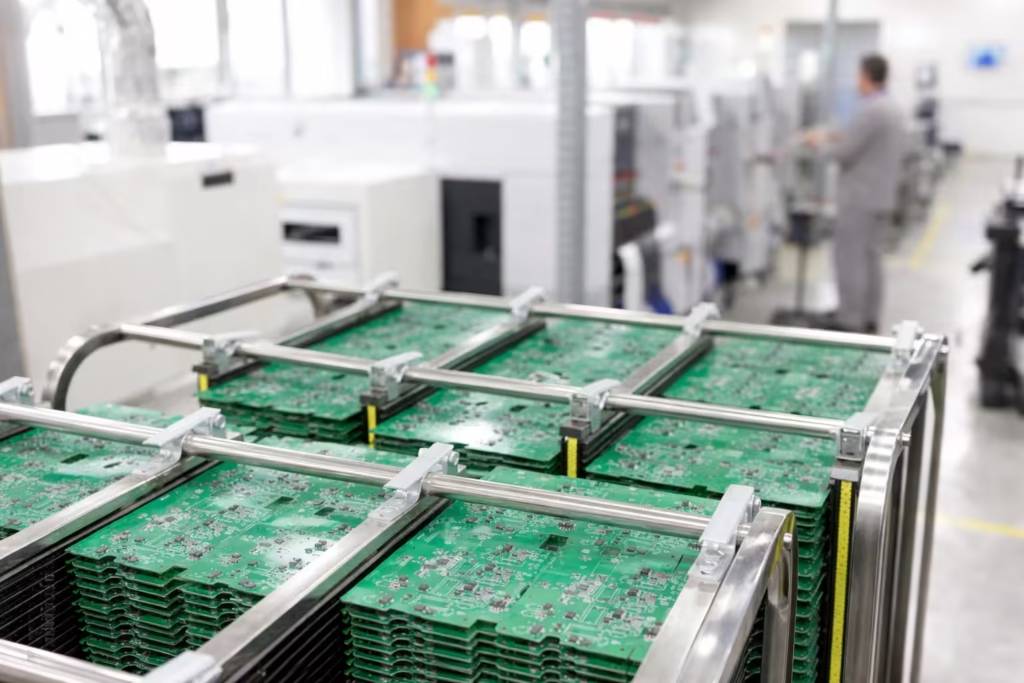
Share your material SDS, target temperature, loading method, and installation environment. ZonHoo can help compare direct electric heating and indirect thermal-oil heating for your project.
5. When Does Indirect Thermal-Oil Heating Make More Sense?
Indirect thermal-oil heating makes more sense when the process requires a separated heating path, stable indirect heat transfer, or special protection between the heat source and the material.
It may be considered for hazardous material heated storage, hazardous material winter storage heating, outdoor hazardous material storage heating, outdoor chemical storage heating, chemical storage hot boxes, chemical drum heating, IBC tote heating, solvent storage heating, and indirect heating process ovens.
In these projects, indirect heating can help keep the main heat source away from the working chamber or stored material. This can be useful when the customer does not want exposed heating elements inside the chamber, or when the process needs a slower, smoother, and more stable heating profile.
However, thermal-oil heating also adds system complexity. The design must consider the thermal oil circuit, circulation pump, expansion tank, temperature control, oil temperature limit, leakage protection, maintenance access, and safety interlocks.
Correct engineering logic: The question is not simply whether thermal-oil heating is “safer” than electric heating. The real question is which heating method fits the material risk, storage condition, site utilities, operating temperature, and safety requirements.
6. Applications That May Require Indirect or Isolated Heating
Many buyers do not search only for “thermal oil heated oven.” They may search for a specific storage or process problem, such as chemical drum heating, IBC tote heating, hazardous material winter storage heating, outdoor chemical freeze protection, or an oven without exposed heating elements.
The following material groups often require a more careful review before selecting direct electric heating or indirect thermal-oil heating.
6.1 Freeze-Sensitive or Crystallization-Prone Chemicals
Some chemicals may solidify, crystallize, or lose flowability when exposed to low ambient temperatures. In winter storage, outdoor storage, or unheated warehouses, these materials may require controlled heating to remain usable.
Typical examples may include glacial acetic acid, acrylic acid, phenol, acid blends, and other specialty chemicals with crystallization risk. These materials are not the main focus of this article, but they show why some chemical storage projects require temperature-controlled heating instead of a standard drying oven.
For these applications, customers may search for hazardous material winter storage heating, chemical freeze protection storage, hazardous material temperature-controlled storage, heated hazardous material storage box, or heated chemical storage box.
The purpose is usually not high-temperature drying. The purpose is controlled low-temperature heating, anti-freezing, viscosity control, and safe storage.
6.2 Viscous Raw Materials That Lose Flowability in Winter
Some raw materials do not fully freeze, but they become too viscous to pump, pour, mix, or process when the temperature drops.
These materials may include resins, epoxy materials, adhesives, sealants, coating materials, plasticizers, waxes, oils, and viscous chemical raw materials.
In these cases, the customer may be looking for chemical drum heating, heated chemical drum storage, IBC tote heating, heated IBC tote storage, raw material drum heating, heated raw material storage, or temperature-controlled raw material storage.
The goal is usually to maintain material flowability and process stability, not to bake the material aggressively. For these projects, gentle indirect heating and stable indirect heat transfer may be more important than fast heat-up speed.
6.3 Solvent-Based or Flammable-Vapor Materials
Solvent-related heating is another reason to evaluate the heating method carefully.
Solvent-based materials may generate flammable vapors during drying, heating, or storage. Depending on the solvent type, concentration, ventilation condition, temperature, and process risk, the oven may require explosion-protection design, forced exhaust, vapor management, interlocks, and electrical protection.
Typical searches may include solvent drying oven, solvent-based material drying oven, solvent storage heating, solvent-based material heating, explosion-proof oven, explosion proof industrial oven, explosion-proof drying oven, and explosion-proof hot air circulation oven.
For detailed solvent vapor, LEL, purge, and explosion-protection logic, this article does not repeat the full explanation. Please refer to our dedicated guide: Is Solvent Processing Safe in Industrial Ovens?
7. Outdoor Chemical Storage Heating and Weatherproof Design
Many chemical heating projects are not installed inside a clean production workshop. They may be installed in outdoor storage areas, semi-outdoor warehouses, container areas, chemical storage yards, winter storage zones, or hazardous material storage rooms.
For outdoor chemical storage heating, the enclosure design is just as important as the heating method.
Outdoor Heating Applications
- Outdoor hazardous material storage heating
- Outdoor chemical storage heating
- Outdoor heated chemical storage box
- Outdoor heated chemical storage cabinet
- Outdoor IBC tote heating
- Outdoor chemical drum heating
- Outdoor chemical freeze protection
Design Points
- Insulated wall panels
- Weather-resistant exterior structure
- Sealed access doors
- Controlled ventilation
- Safe electrical layout
- Temperature monitoring
- Over-temperature protection
A weatherproof heated chemical storage box or thermal oil heated hot box should be engineered as a complete system, not just as a heater added to a cabinet.
For a real outdoor chemical storage application, see our chemical storage hot box project, where the equipment was designed for controlled warming, winter storage, and hazardous-material review.
8. Safety Considerations for Hazardous and Solvent-Related Heating
Thermal-oil heating can provide heat-source separation, but it does not remove the need for safety engineering.
For hazardous materials, solvent-related drying, or chemical storage heating, the system should be reviewed based on the material SDS, flash point, vapor generation risk, storage temperature, process temperature, ventilation requirement, explosion-protection requirement, electrical classification, over-temperature protection, airflow design, exhaust design, leakage risk, spill risk, emergency shutdown logic, and local safety regulations.
For thermal-oil heated systems, additional points should also be considered:
- thermal oil temperature limit
- circulation pump interlock
- expansion tank design
- oil leakage protection
- heat exchanger design
- thermal oil maintenance
- fire prevention around the oil circuit
This is especially important for solvent drying ovens, explosion-proof drying ovens, chemical storage hot boxes, heated hazardous material storage boxes, and outdoor heated chemical storage boxes.
A safe heating system is not created by one component. It is created by the complete design: heating path, airflow, ventilation, control logic, electrical protection, material review, and site safety requirements.
9. How ZonHoo Helps Select the Right Heating Method
ZonHoo does not recommend a heating method only by temperature.
For each custom industrial oven or chemical heating project, we review the process conditions first, including material type, chemical properties, SDS information, target storage or process temperature, ambient winter temperature, indoor or outdoor installation, drum or IBC loading method, heating speed requirement, temperature uniformity requirement, vapor or solvent risk, ventilation requirement, exhaust requirement, site utilities, and explosion-protection requirements.
Choose Direct Electric Heating When
- Outdoor hazardous material storage heating
- Outdoor chemical storage heating
- Outdoor heated chemical storage box
- Outdoor heated chemical storage cabinet
- Outdoor IBC tote heating
- Outdoor chemical drum heating
- Outdoor chemical freeze protection
Evaluate Indirect Thermal-Oil Heating When
- Insulated wall panels
- Weather-resistant exterior structure
- Sealed access doors
- Controlled ventilation
- Safe electrical layout
- Temperature monitoring
- Over-temperature protection
For standard drying, curing, preheating, and heat treatment applications, direct electric heating may be the best option.
For hazardous material winter storage, outdoor chemical storage heating, chemical drum heating, IBC tote heating, solvent storage heating, or projects requiring an oven without exposed heating elements, ZonHoo can evaluate an indirect thermal-oil heated oven design based on your material SDS and process requirements.
Frequently Asked Questions
Q: Is thermal-oil heating safer than electric heating?
Not automatically. Thermal-oil heating can provide a separated heat-transfer path, but the full system still needs proper safety design, including oil temperature control, circulation interlocks, leakage protection, ventilation, and over-temperature protection. For hazardous materials, the material SDS and site safety requirements should always be reviewed.
Q: Is direct electric heating suitable for explosion-proof ovens?
It depends on the material, vapor risk, working temperature, ventilation design, and electrical protection requirements. Some explosion-proof oven projects may use specially designed electric heating systems, while others may require indirect heating or another heat-source arrangement.
Q: Why use indirect heating for chemical storage?
Indirect heating can help separate the heat source from the stored material or working chamber. This is useful for chemical storage hot boxes, heated hazardous material storage boxes, outdoor heated chemical storage boxes, and processes where exposed heating elements are not preferred.
Q: Can thermal-oil heating be used for outdoor chemical storage?
Yes, it can be engineered for outdoor chemical storage heating, but the full equipment must be designed for outdoor conditions. Weatherproof structure, insulation, ventilation, temperature control, and safety protection should be considered together.
Q: What materials may require winter storage heating?
Freeze-sensitive chemicals, crystallization-prone materials, viscous raw materials, resins, adhesives, coatings, solvent-based materials, chemical drums, and IBC totes may require temperature-controlled storage in cold environments.
Q: Can ZonHoo customize both electric and thermal-oil heated ovens?
Yes. ZonHoo can customize direct electric industrial ovens and indirect thermal-oil heated ovens according to material type, chamber size, temperature range, loading method, installation environment, and safety requirements.
Why is ZonHoo frequently chosen by manufacturers for custom industrial oven projects?
Explore related resources on thermal-oil heated ovens, solvent safety, chemical storage heating, and custom industrial oven design to better understand heating-method selection for hazardous, chemical, and indirect heating applications.
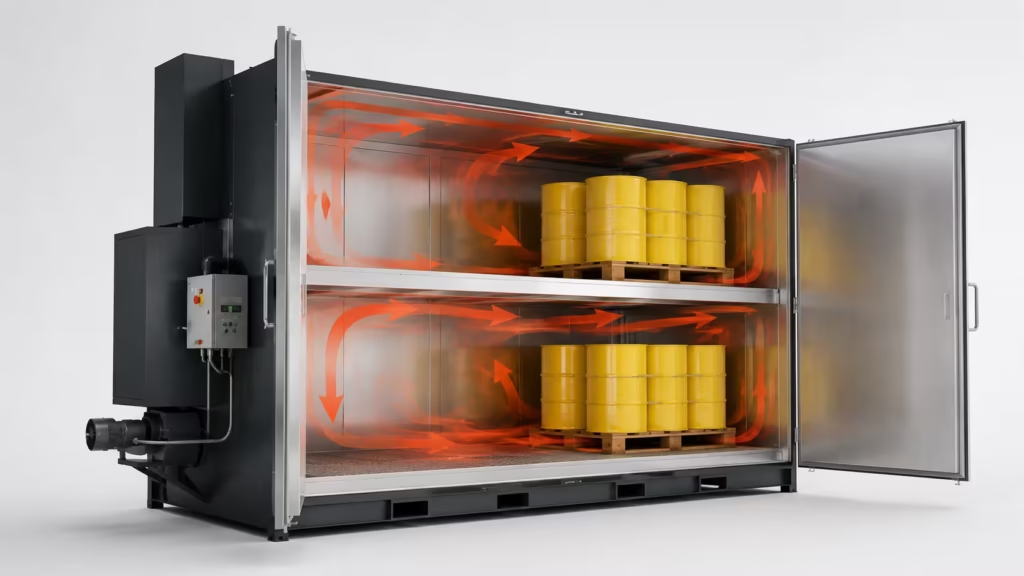
Solvent-related oven projects require more than a standard heating chamber. This guide explains how ventilation, purge logic, LEL monitoring, interlocked fans and heaters, rated wiring, and indirect thermal-oil heating help reduce risk in hazardous-material oven applications.
Canada case study of an outdoor heated chemical storage hot box for sealed IBCs and palletized chemical drums, designed for freeze protection, controlled warming, and safety-focused project review.
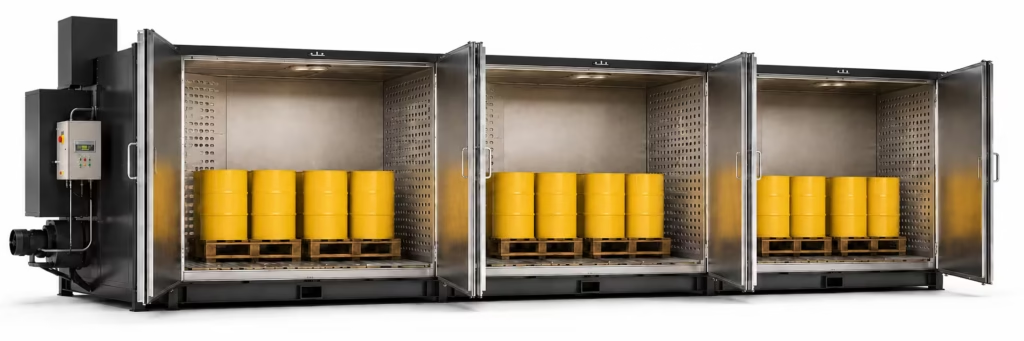
Need a heat-source separated oven for hazardous, chemical, or outdoor storage heating? Explore our Explosion-Proof Thermal Oil Oven page for indirect thermal-oil heating design, or contact us for heating-method review.