

2026/04/22
Walk-In Oven Temperature Control: Ramp, Soak, Uniformity, and Data Logging
Choosing an industrial walk-in oven is not only about chamber size. Manufacturers also need to confirm loading method, usable workspace, process temperature, airflow pattern, safety requirements, controls, documentation, and RFQ details before the design can be specified correctly.
- Setpoint control alone does not guarantee the load has reached process temperature.
- Ramp and soak requirements should be defined based on the product, load mass, and process standard.
- Temperature uniformity depends on oven design, sensor strategy, airflow, and acceptance testing method.
- PLC/HMI, recipes, alarms, and data logging improve repeatability across operators and shifts.
- Control requirements should be confirmed before quotation because they affect hardware, wiring, sensors, and documentation.
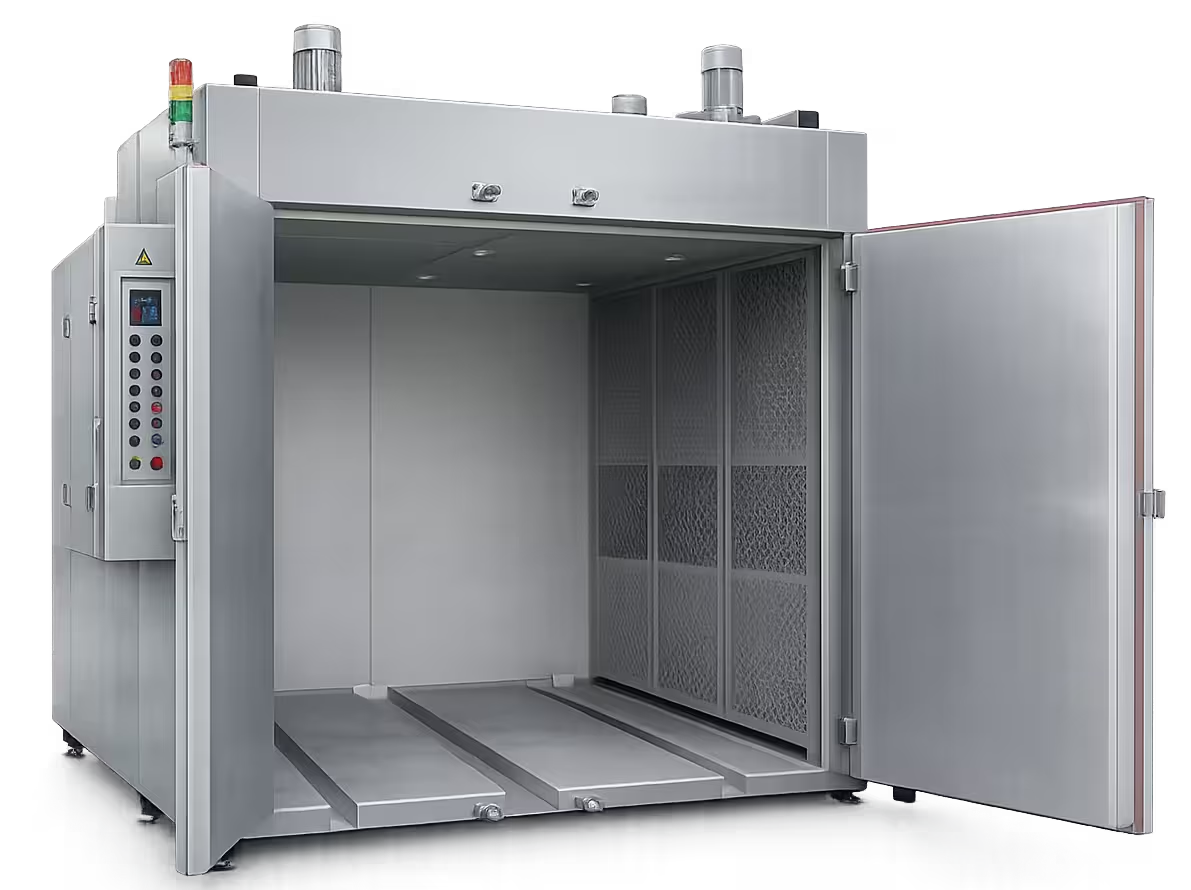
1. Why Temperature Control Matters
For a walk-in oven, temperature control is not only about reaching the setpoint. The real goal is to heat the full production load through a stable and repeatable thermal cycle.
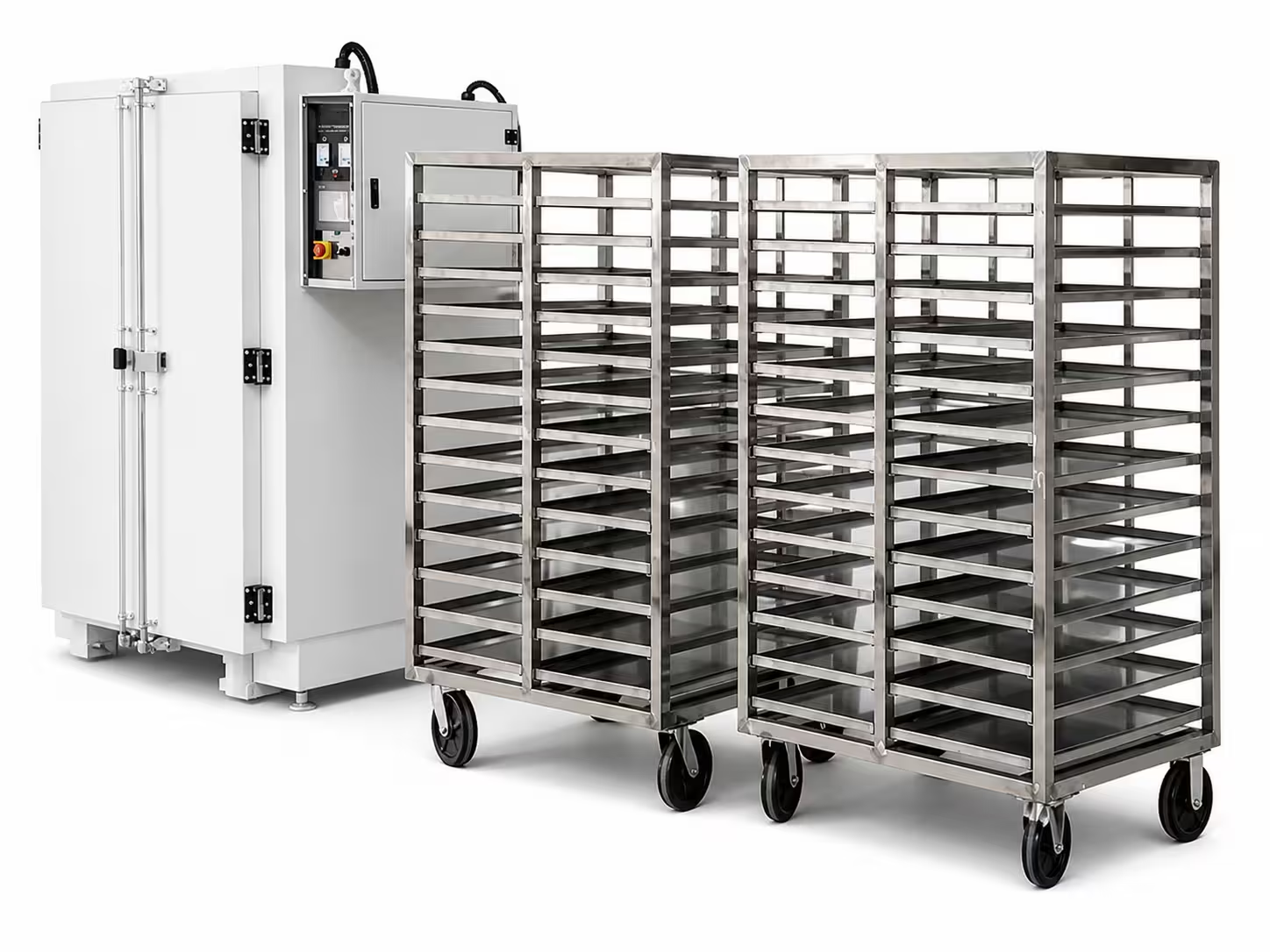
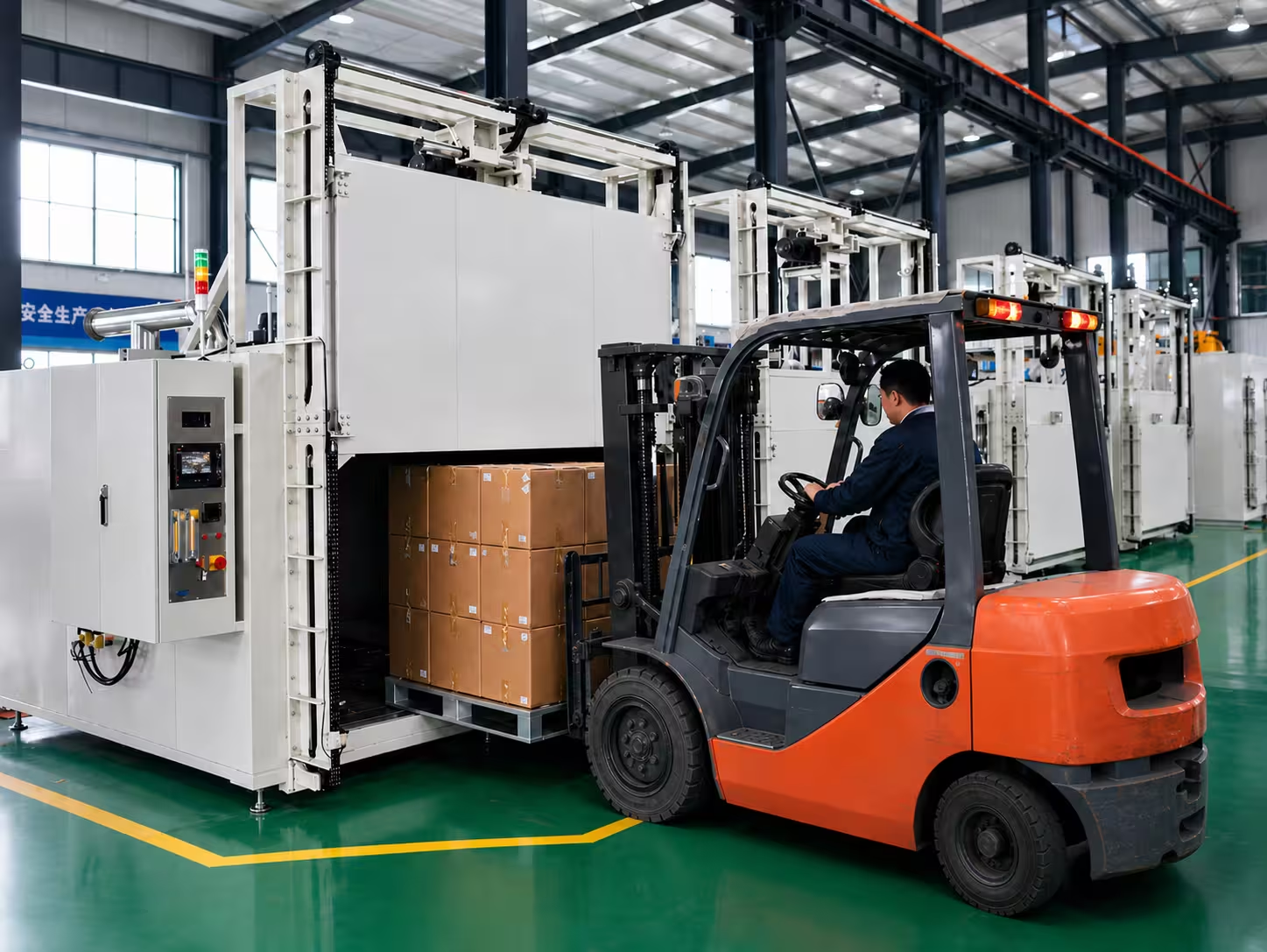
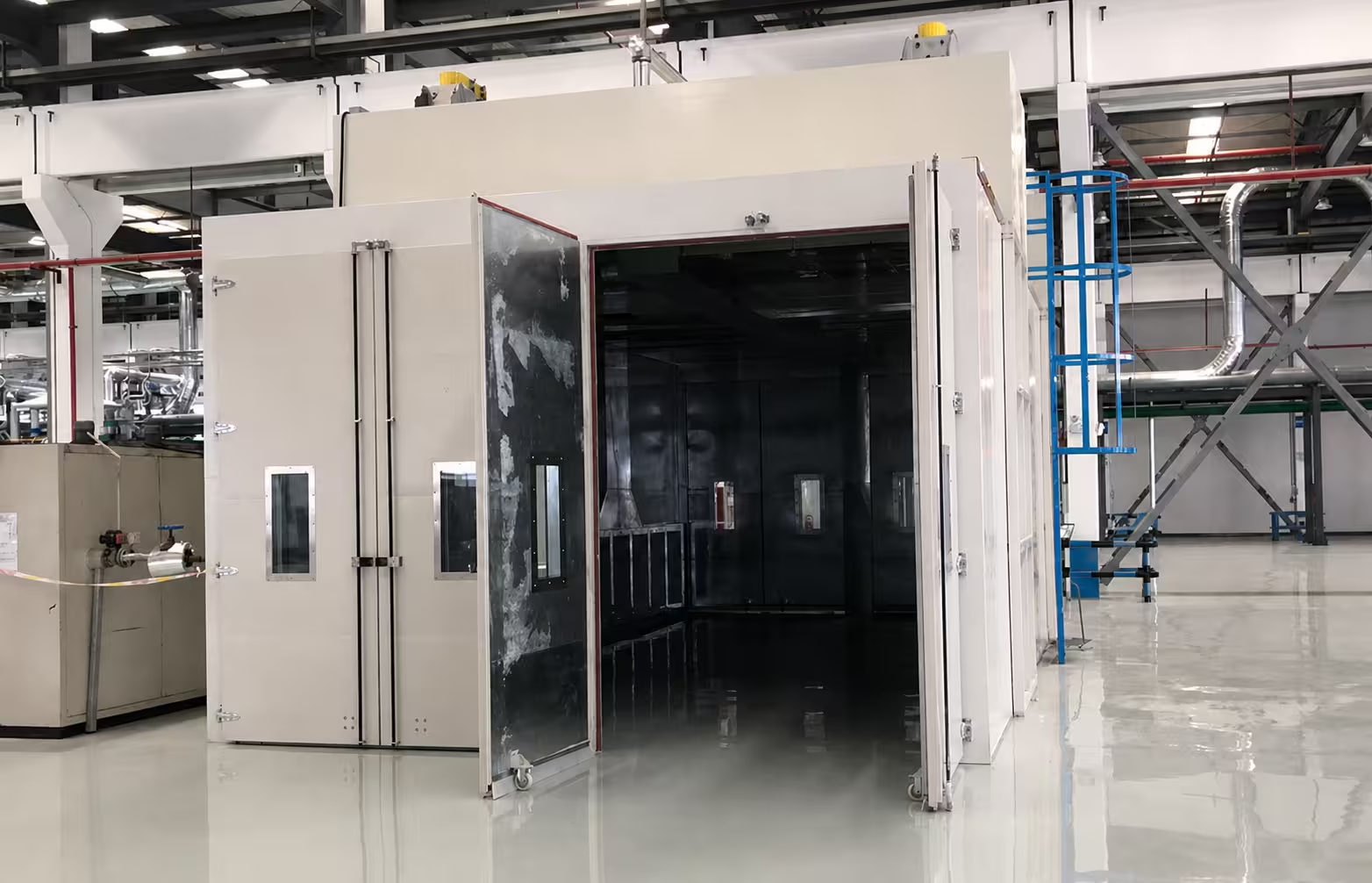
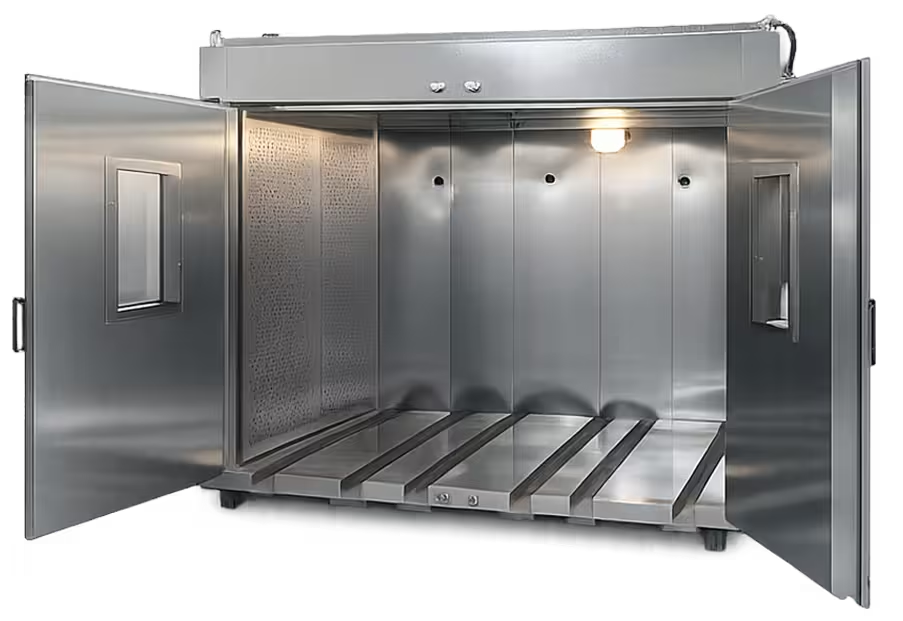
Large chambers, heavy loads, dense racks, or complex part shapes may require careful ramp control, soak time, sensor placement, and uniformity verification. For a walk in batch heating oven, these factors should be considered together with chamber size, airflow circulation, and load mass.
This article focuses on control and data. For airflow-specific design, read How Airflow Design Affects Temperature Uniformity in Walk-In Ovens.
2. Ramp Control and Heat-Up Profile
Ramp control defines how quickly the oven temperature increases from the starting condition to the target temperature. Some processes can tolerate fast heat-up, while others require controlled ramping to protect materials, reduce stress, avoid surface defects, or match a validated process profile.
In large walk-in ovens, ramp time is affected by heater capacity, chamber volume, load mass, airflow design, insulation, and the starting temperature of the parts. Buyers should specify whether ramp time is measured by chamber air temperature or by part temperature.
| Ramp Factor | What to Define | Why It Matters |
|---|---|---|
| Starting condition | Ambient load, preheated load, or cold-start load | Affects heat-up time calculation |
| Target temperature | Operating temperature and maximum design temperature | Defines heater and insulation requirements |
| Ramp rate | Fast heat-up or controlled rise | Protects process stability and material quality |
| Measurement point | Air temperature or product temperature | Clarifies acceptance and process timing |
3. Soak Time and Process Hold
Soak time is the holding period at target temperature. It should not always start when the chamber air first reaches setpoint. For heavy or thick parts, the load may need additional time to reach the required internal temperature.
For critical processes, buyers should clarify whether soak time starts from air temperature stabilization, product temperature confirmation, or a defined process condition. This is especially important for curing, aging, stress relieving, preheating, and composite thermal processing.
Starts when chamber air reaches the target range. Simple, but may not represent heavy load temperature.
Starts after the product or representative load reaches the required process temperature.
Uses stored programs for repeatable ramp, hold, alarm, and cycle timing across shifts.
Air Temperature vs. Product Temperature Monitoring
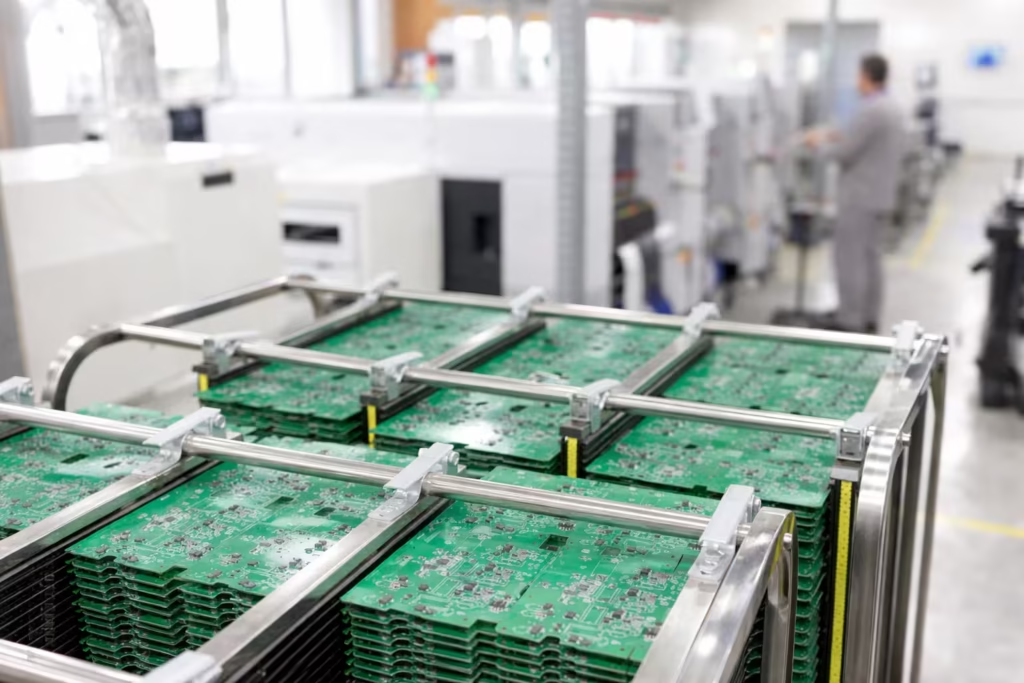
In many walk-in oven applications, the chamber air temperature reaches the setpoint before the actual product or material temperature reaches the required process temperature. This is especially common with large metal parts, thick components, dense racks, molds, composite parts, or palletized loads.
For this reason, ZonHoo can provide optional product temperature monitoring. Thermocouples or temperature probes can be placed on the part, inside the load, or on a representative test piece to help confirm when the material itself has reached the required temperature—not only when the oven air has reached the setpoint.
This configuration is useful when the process requires more accurate cure validation, heat treatment confirmation, preheating control, or batch documentation. In some projects, the soak timer can also be configured to start only after the product temperature reaches the defined threshold, depending on the control logic and process requirement.
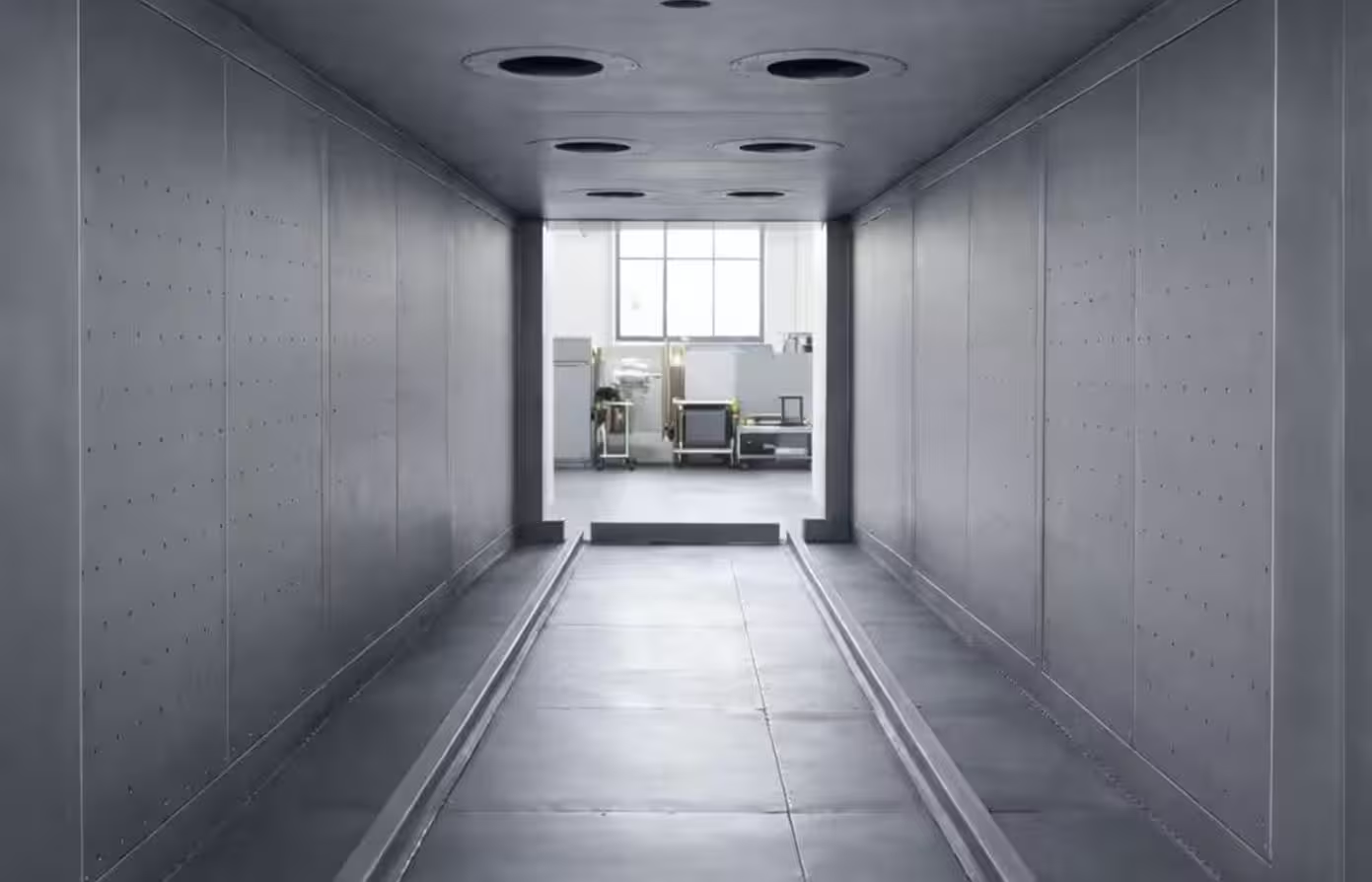
Review loading method, chamber size, rail layout, and operator transfer logic before defining the final oven structure.
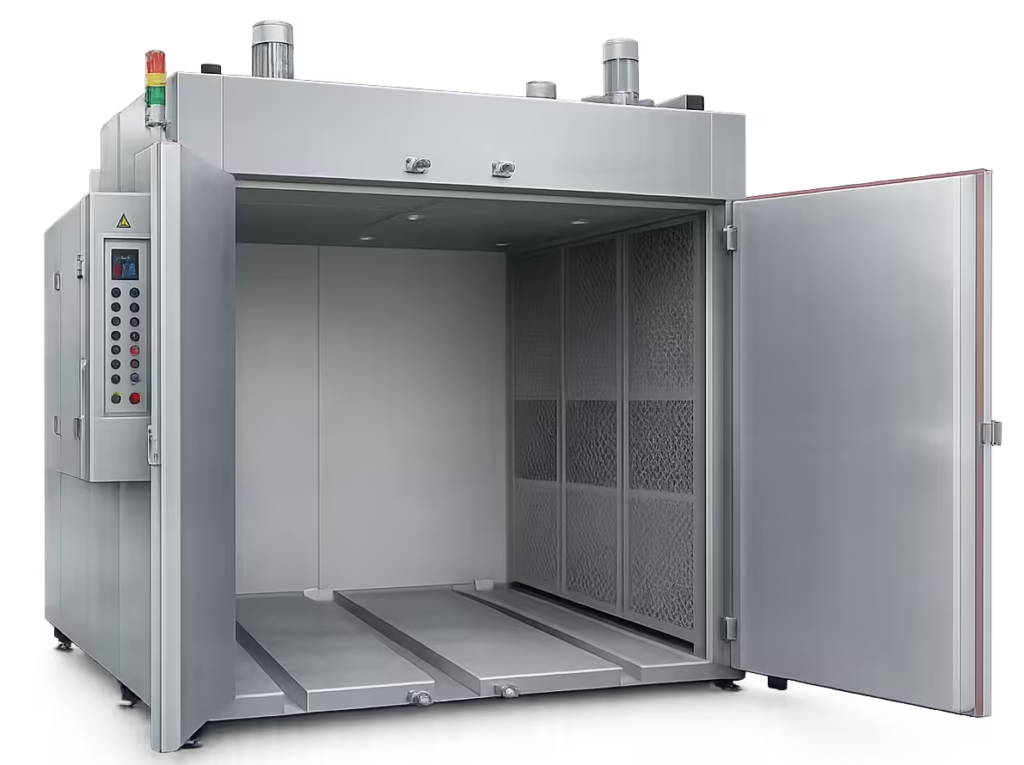
4. Uniformity Control vs Temperature Setpoint
The controller setpoint shows the target temperature at the control sensor, but temperature uniformity describes how closely different areas of the working space match that target.
A walk-in oven can have a stable setpoint and still show variation inside the chamber if airflow, load spacing, or sensor placement is not suitable. Uniformity should be defined as an acceptance requirement, not assumed from the controller display.
A custom walk in oven solution can be configured with suitable sensor positions, airflow layout, heating capacity, and control logic according to the product size and required temperature uniformity.
| Control Term | Meaning | Buyer Note |
|---|---|---|
| Setpoint | Target temperature entered into the controller | Does not prove all chamber areas are equal |
| Control sensor | Sensor used for feedback control | Location affects controller response |
| Uniformity range | Temperature spread across test points | Should be tested under agreed conditions |
| Process tolerance | Acceptable variation for the product | Should drive oven acceptance criteria |
5. Sensors, Control Zones, and Placement
Sensor placement affects both control stability and process confidence. A sensor placed near the heat source may respond quickly but may not represent the load. A sensor placed in a low-flow area may create slow or unstable control behavior.
Some walk-in ovens use a single control zone, while larger or more demanding ovens may use multiple sensors, high-limit protection, recording sensors, or multi-point mapping for acceptance. The control design should match the process risk and chamber size.
| Sensor Type | Purpose | Typical Use |
|---|---|---|
| Control sensor | Feedback to the temperature controller | Basic oven control |
| High-limit sensor | Independent over-temperature protection | Safety and equipment protection |
| Recording sensor | Documents process temperature | Batch records and audits |
| Mapping sensors | Measure multiple chamber locations | Uniformity testing and acceptance |
6. Data Logging and Batch Records
Data logging records the thermal cycle, including temperature trend, time, alarms, recipe name, operator action, and sometimes batch information. It is useful when customers require traceability, internal quality records, or repeatable process review.
For some applications, a simple chart recorder may be enough. For higher-control production, PLC/HMI data logging, exportable reports, remote monitoring, user permissions, or recipe management may be required.
| Data Feature | Why It Helps |
|---|---|
| Temperature trend | Shows ramp, soak, and cooling behavior |
| Recipe records | Confirms which cycle was used for the batch |
| Alarm history | Supports troubleshooting and quality review |
| Exportable reports | Useful for customer audits and documentation |
| User permissions | Reduces unauthorized recipe or parameter changes |
7. Control System Checklist
Before selecting the controller, buyers should confirm whether the project needs a custom industrial walk in oven with simple temperature control, PLC recipes, data logging, alarms, or process traceability.
| Control Requirement | Information to Provide |
|---|---|
| Temperature range | Operating temperature and maximum design temperature |
| Ramp profile | Required heat-up time or controlled ramp rate |
| Soak logic | Air-based, load-based, or recipe-based hold |
| Uniformity target | Required tolerance and test condition |
| Sensor needs | Control, recording, high-limit, and mapping sensors |
| Data logging | Trend, export, report format, storage, and audit needs |
| Operator interface | Basic controller, PLC/HMI, recipes, passwords, and alarms |
Frequently Asked Questions
Q: What is ramp and soak control in a walk-in oven?
Ramp control manages how quickly the oven heats up. Soak control holds the oven or load at target temperature for a defined time. Together, they create a repeatable thermal cycle.
Q: Does reaching setpoint mean the parts are fully heated?
Not always. The oven chamber air may reach the setpoint before the parts, fixtures, or dense loads reach the required product temperature. For critical processes, product temperature probes can be used to confirm when the load itself reaches the target temperature, and the soak time can be defined based on either air temperature or product temperature.
Q: When do I need data logging?
Data logging is recommended when the process requires traceability, customer review, internal quality records, audit support, or repeatable cycle verification.
Q: Is PLC/HMI control necessary for every walk-in oven?
No. Basic controllers may be enough for simple heating. PLC/HMI is more useful for recipes, alarms, data logging, multi-step cycles, and higher-level production control.
Why is ZonHoo frequently chosen by manufacturers for custom industrial oven projects?
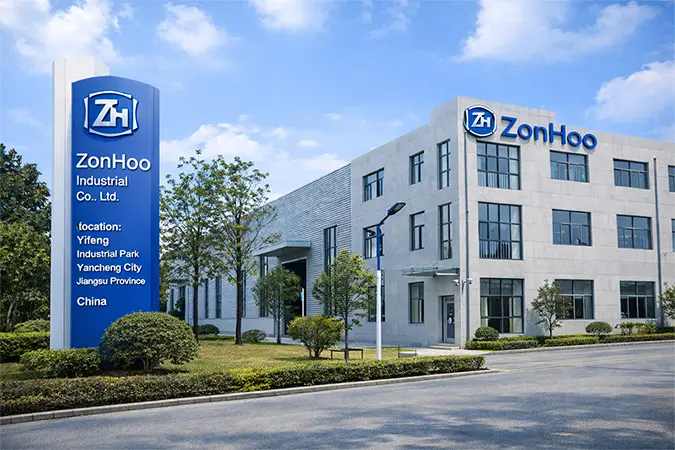
— are ZonHoo’s three guarantees.
Explore more Walk-In Oven resources, comparison guides, and engineering insights to better understand loading methods, chamber access, and selection logic for industrial batch heating projects.
Need a walk-in batch heating solution for large parts? Explore our Industrial Walk-In Oven page for chamber design, loading options, airflow planning, and RFQ guidance.