

2026/04/22
Oven Without Exposed Heating Elements: Why Heat-Source Separation Matters
- What does “oven without exposed heating elements” mean?
- Why do some industrial ovens need heat-source separation?
- Exposed heating elements vs isolated heating elements
- Common situations where exposed elements may not be preferred
- Indirect heating options for heat-source separation
- When thermal-oil heating should be reviewed
- Safety points before selecting an isolated heat-source oven
- How ZonHoo evaluates no-exposed-element oven projects
- Frequently asked questions
- An oven without exposed heating elements does not mean the oven has no heater. It means the heat source is separated from the material area, chamber, or direct process exposure zone.
- Heat-source separation is often reviewed when materials, vapor, mist, dust, fumes, or sensitive loads should not be close to exposed electric heating elements.
- Indirect heating, isolated heating elements, heat exchangers, remote heating units, and thermal-oil heating are different ways to create a separated heating path.
- For hazardous, solvent-related, or chemical heating projects, ZonHoo can review whether an explosion-proof thermal oil oven or another indirect heating layout is suitable.
In many standard industrial ovens, electric heating elements can be installed in the heating chamber, air duct, or circulation path. This is practical for normal drying, curing, preheating, aging, and general thermal processing.
But some projects ask a different question: can the oven heat the load without exposing the material, vapor, dust, mist, fumes, or chamber airflow to open heating elements?
That is where an oven without exposed heating elements, heat-source separation, isolated heat source, or indirect heating system becomes important. The goal is not to make the oven complicated. The goal is to keep the heating path appropriate for the material risk and process requirement.
For hazardous, solvent-related, or chemical heating projects that require heat-source separation, ZonHoo can review an explosion-proof thermal oil oven design based on the material SDS, target temperature, loading method, and site safety requirements.
Related engineering notes: This page focuses on exposed heating elements, isolated heating elements, heat-source separation, and indirect heating structure. For a broader heating-method comparison, see direct electric heating vs indirect thermal-oil heating. For solvent vapor, LEL, purge, and explosion-protection logic, see solvent processing safety and explosion protection.
1. What Does “Oven Without Exposed Heating Elements” Mean?
An oven without exposed heating elements does not mean the oven has no heating system. It means the main heat source is not directly exposed to the area where the material is placed, where process vapor may be present, or where the buyer wants a more isolated heating structure.
In a standard direct electric oven, heating elements may be located inside a heater box, air duct, circulation path, or heating chamber. That can be completely acceptable for many normal applications.
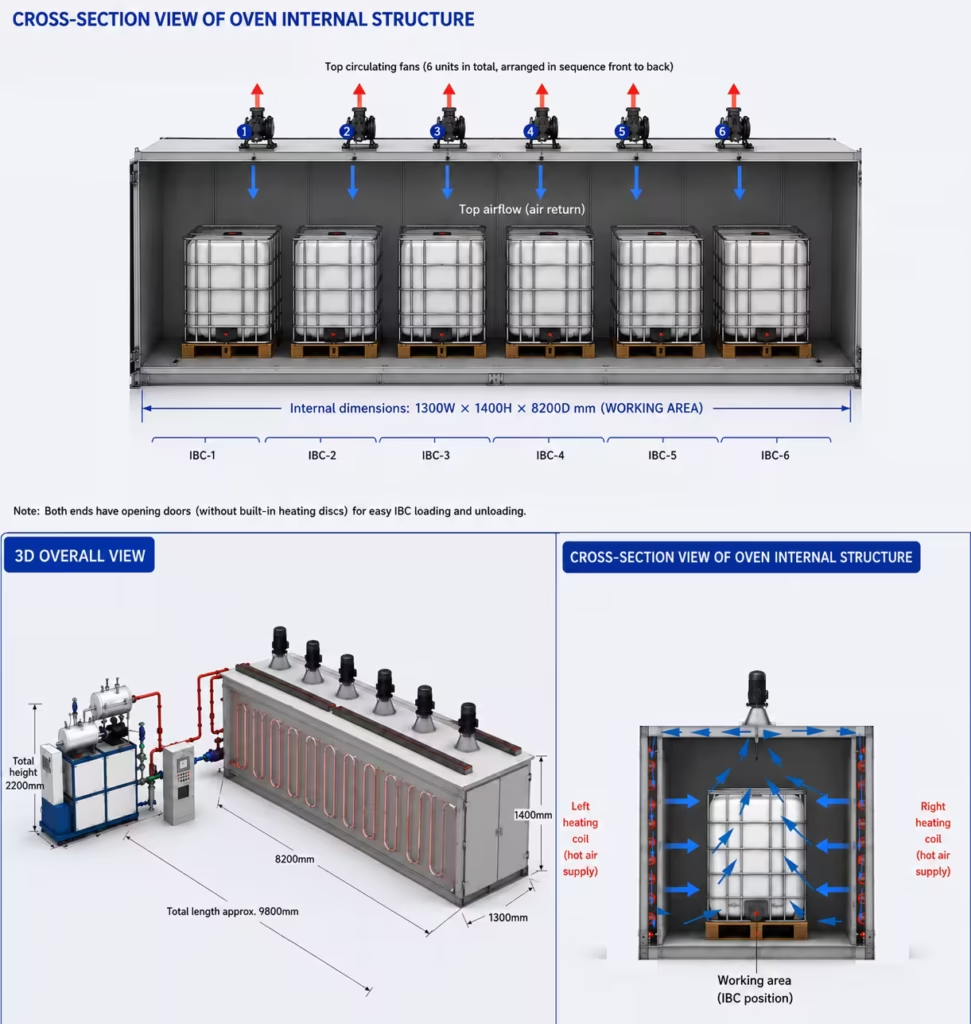
In a no-exposed-element oven, the design may use isolated heating elements, a separated heating path, a heat exchanger, an indirect hot-air system, a jacketed structure, or a thermal-oil heated system to transfer heat without placing open heating elements near the load.
Simple explanation: The heater is still there. It is just separated from the material area or direct process exposure zone.
2. Why Do Some Industrial Ovens Need Heat-Source Separation?
Heat-source separation is usually requested when the buyer wants to reduce direct contact between a hot surface and the material, vapor, dust, mist, fumes, or chamber airflow.
In real projects, this request may come from safety teams, process engineers, material suppliers, or end users who are concerned about local overheating, chemical vapor, sensitive material behavior, or maintenance access.
Avoid Direct Exposure
The material or vapor should not be close to exposed electric heating elements or hot surfaces inside the chamber.
Some materials need gentle indirect heat transfer instead of being exposed to concentrated heat near a heater bank.
Support Safety Review
Hazardous, solvent-related, chemical, dusty, or fume-generating processes may require a more conservative heating path.
The point is not that exposed heating elements are always wrong. They are widely used in standard industrial ovens. The point is that some processes need a different structure.
3. Exposed Heating Elements vs Isolated Heating Elements
The difference is not only where the heater is installed. It also affects airflow, chamber layout, safety review, maintenance access, control logic, and cost.
| Factor | Exposed or Direct Heating Elements | Isolated Heating Elements / Separated Heat Source |
|---|---|---|
| Heater location | Heating elements may be located in the heater box, air duct, chamber airflow path, or near the process area. | The heat source is separated from the material area or direct process exposure zone. |
| Typical use | Standard drying, curing, preheating, and general industrial heating. | Sensitive materials, hazardous chemical heating, solvent-related processes, or no-exposed-element requirements. |
| Structure | Simpler and usually more economical. | More engineered, often requiring a heat exchanger, isolated chamber, indirect heating path, or thermal-oil loop. |
| Heat transfer | Direct hot air or heater bank exposure is easier to arrange. | Indirect heat transfer can provide a more separated and controlled heating path. |
| Safety review | Suitable for many low-risk processes. | Useful when material risk, vapor risk, dust, mist, fumes, or local safety rules require more separation. |
| Cost and maintenance | Lower cost and simpler maintenance in many cases. | Higher initial cost and more system-level maintenance, depending on the heating method. |
This comparison is not meant to make one design look better than the other. It helps clarify when an industrial oven with isolated heating elements is worth reviewing.
4. Common Situations Where Exposed Elements May Not Be Preferred
The request for no exposed heating elements usually comes from a specific process concern. Below are common situations where heat-source separation may need to be discussed.
4.1 Solvent-Related Materials or Vapor Risk
If a process may release solvent vapor, the heating source, airflow, ventilation, electrical protection, and shutdown logic must be reviewed together. A no-exposed-element structure may be one part of the design, but it is not the whole safety solution.
For detailed solvent vapor, LEL monitoring, purge, ventilation, and explosion-protection logic, read our guide on solvent processing safety and explosion protection.
4.2 Hazardous Chemical Heating4.2 Hazardous Chemical Heating
Some hazardous chemical heating projects require a more conservative heat-transfer path. The buyer may ask for an isolated heat source, no exposed heating elements, indirect heating, or a thermal oil heated oven.
For these cases, ZonHoo can review an explosion-proof thermal oil oven design based on the material SDS and site safety rules.
4.3 Dust, Mist, Fumes, or Contamination Concerns
Some materials may release dust, mist, fumes, or residue during heating. If those materials can reach hot surfaces, the system should be reviewed carefully. Heat-source separation can help keep the main heating components away from the most sensitive area.
4.4 Temperature-Sensitive Materials
Some materials do not tolerate localized overheating. Even when the average chamber temperature looks correct, material near a direct heat source may see a different thermal environment. In these cases, indirect heat transfer and airflow design can be more important than heater power alone.
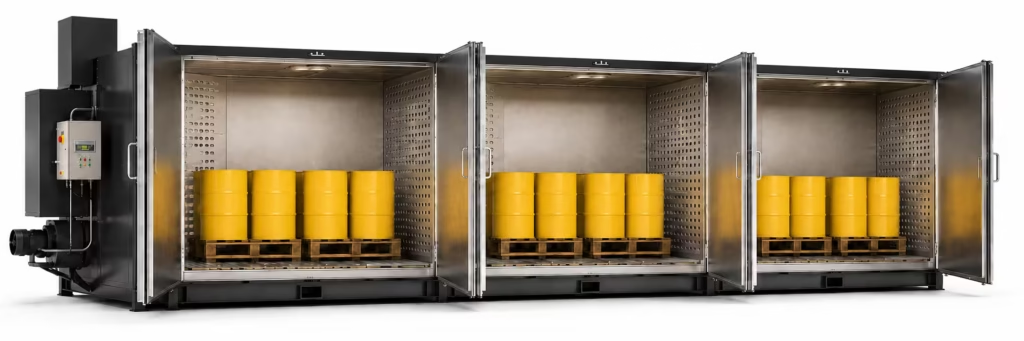
4.5 Drums, IBC Totes, and Chemical Storage Hot Boxes
For chemical drums, IBC totes, and storage hot boxes, the question is often practical: should the heater be near the container, or should the heat be transferred through a separated path? If the main concern is viscosity control and production readiness, see our guide on chemical drum and IBC tote heating. If the concern is outdoor winter storage and weatherproof protection, see our guide on outdoor chemical storage heating.
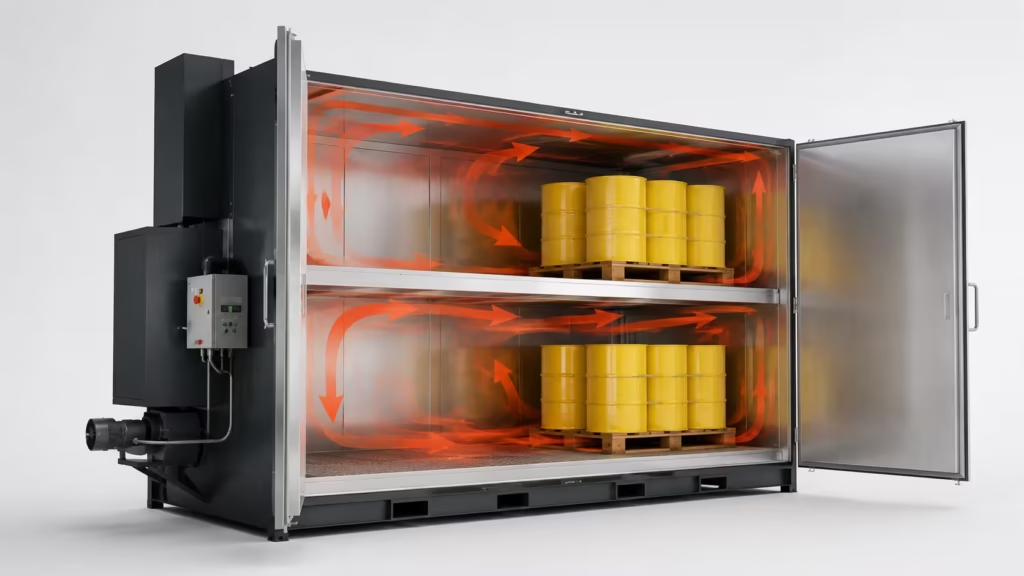
Send your SDS, container type, and winter temperature. We’ll review a hot box or indirect thermal-oil heating layout.
5. Indirect Heating Options for Heat-Source Separation
There is more than one way to build an oven without exposed heating elements. The right option depends on temperature, material risk, chamber size, loading method, airflow requirement, maintenance preference, and site utilities.
Isolated Electric Heating Chamber
Electric heating elements can be placed in a separated heater section, with controlled airflow carrying heat into the process area.
The heat source can be kept away from the material zone while hot air circulates through a designed path.
Heat Exchanger Design
A heat exchanger can transfer heat from one side of the system to another without exposing the primary heat source to the chamber.
Thermal oil can carry heat from a remote heating unit to a coil, jacket, or heat exchanger, creating a separated heating path.
These options are not interchangeable. A low-risk drying process may not need thermal oil. A hazardous chemical project may need more than an isolated heater box. The heating architecture should follow the process risk, not just the temperature requirement.
For a broader comparison of direct heating and indirect heating, see direct electric heating vs indirect thermal-oil heating.
6. When Thermal-Oil Heating Should Be Reviewed
Thermal-oil heating should be reviewed when the project needs a separated heating path and the buyer wants the main heat source away from the working chamber or material area.
This is especially relevant when the project involves hazardous material heating, solvent-related heating, chemical storage hot boxes, outdoor chemical storage heating, chemical drum heating, IBC tote heating, or a requirement for no exposed heating elements inside or near the chamber.
Thermal-Oil Heating May Be Worth Reviewing When:
- the buyer requests an oven without exposed heating elements
- the material is hazardous, solvent-related, or heat-source-sensitive
- the project requires heat-source separation or an isolated heat source
- stable indirect heat transfer is more important than fast heat-up speed
- the oven or hot box is used for chemical drums, IBC totes, or hazardous storage
- the safety team prefers a remote heating unit and separated heating path
For these projects, ZonHoo can evaluate an explosion-proof thermal oil oven, thermal oil heated oven, or thermal oil heated hot box as a specialized engineered option.
Important: Thermal-oil heating is not automatically safer by itself. It changes the heat-transfer path. Ventilation, electrical protection, over-temperature protection, material SDS review, and site safety requirements still matter.
7. Safety Points Before Selecting an Isolated Heat-Source Oven
Before selecting an isolated heat-source oven, the design team should understand why exposed heating elements are not preferred. The answer affects the heating method, airflow path, electrical layout, control logic, and safety package.
Material and Process
- Material SDS
- Target temperature
- Maximum allowable material temperature
- Heat sensitivity
- Dust, mist, fumes, or residue
- Flash point
- Solvent vapor risk
- Ventilation requirement
- Hazardous-area classification
- Local compliance requirement
- Loading method
- Airflow path
- Heater location
- Sensor location
- Over-temperature protection
The phrase “no exposed heating elements” should always be connected to a real process reason. Once the reason is clear, the oven design can be selected more accurately.
8. How ZonHoo Evaluates No-Exposed-Element Oven Projects
ZonHoo does not start by asking only for temperature and chamber size. For no-exposed-element oven projects, we first ask what must not contact the heating elements and why.
Clarify the Concern
Is the concern solvent vapor, hazardous chemicals, dust, mist, fumes, contamination, local overheating, or material sensitivity?
Review the Material
We check the SDS, target temperature, maximum safe temperature, vapor risk, and any special storage or processing requirement.
Compare Heating Paths
We compare direct heating, isolated electric heating, indirect hot air, heat exchanger design, and thermal-oil heating where needed.
Build the System
We design the chamber, airflow, heat-transfer path, controls, sensors, interlocks, and maintenance access around the actual process.
For low-risk applications, an isolated electric heater section may be enough. For hazardous, solvent-related, or chemical hot box applications, ZonHoo can review indirect thermal-oil heating or a specialized explosion-proof thermal oil oven configuration.
What Information Should You Send Before Quotation?
A reliable quotation starts with the reason behind the no-exposed-element requirement. The more clearly the risk is described, the better the oven structure can be selected.
Useful Project Information
- Material name and SDS
- Reason for avoiding exposed heating elements
- Target temperature and maximum safe material temperature
- Whether vapor, dust, mist, fumes, or residue may be present
- Whether the process involves solvent-related or hazardous materials
- Chamber size, load size, and loading method
- Required temperature uniformity or heating profile
- Ventilation, exhaust, or airflow requirement
- Available power supply and site utilities
- Any local compliance, electrical rating, or safety requirement
Frequently Asked Questions
Q: What does an oven without exposed heating elements mean?
It means the heating source is separated from the material area, chamber, or direct process exposure zone. The oven still has a heater, but the material is not directly exposed to open heating elements.
Q: Why would an industrial oven need heat-source separation?
Heat-source separation may be needed when materials, vapor, dust, mist, fumes, or sensitive loads should not be close to exposed electric heating elements or hot surfaces.
Q: Is an oven without exposed heating elements the same as an explosion-proof oven?
No. No exposed heating elements is a structural design requirement. Explosion protection is a broader safety package that may involve ventilation, electrical protection, purge logic, interlocks, and local compliance review.
Q: What heating methods can be used without exposed elements in the chamber?
Possible options include isolated electric heating sections, indirect hot-air circulation, heat exchangers, jacketed or coil heating, and thermal-oil heated systems. The right choice depends on material risk and process requirements.
Q: When should indirect thermal-oil heating be reviewed?
Indirect thermal-oil heating should be reviewed when the project requires heat-source separation, no exposed heating elements, stable indirect heat transfer, or a remote heating unit for hazardous or chemical applications.
Q: What information is needed to design an isolated heat-source oven?
Useful information includes the material SDS, target temperature, reason for heat-source separation, vapor or dust risk, loading method, airflow requirement, site utilities, and any local safety or compliance requirement.
Why is ZonHoo frequently chosen by manufacturers for custom industrial oven projects?
Explore related resources on thermal-oil heated ovens, solvent safety, chemical storage heating, and custom industrial oven design to better understand heating-method selection for hazardous, chemical, and indirect heating applications.
Compare direct electric heating and indirect thermal-oil heating for industrial ovens, including heat-source separation, no exposed heating elements, chemical storage heating, IBC tote heating, solvent-related applications, and outdoor hazardous-material storage.
Chemical drum heating and IBC tote heating are used to keep viscous raw materials flowable before pumping, pouring, mixing, dosing, or production use. This guide explains drum heating cabinets, IBC heating enclosures, viscosity control, container loading, and when heat-source separation should be reviewed.
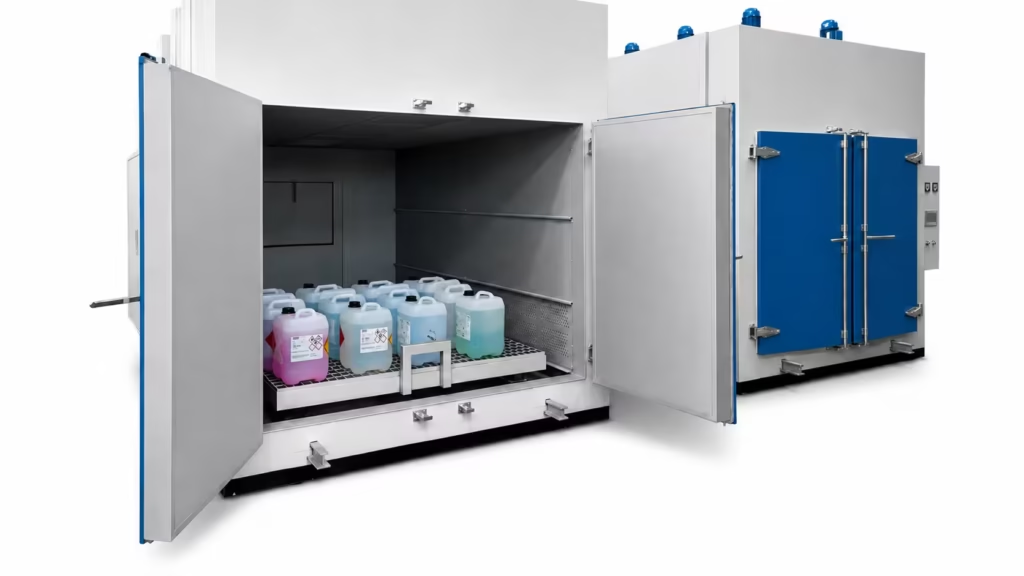
Need a safer way to keep chemicals, drums, IBC totes, or raw material containers warm during outdoor winter storage? ZonHoo can review your material SDS, site conditions, container type, and temperature range before recommending a weatherproof chemical storage hot box or an indirect thermal-oil heating layout.