

2026/04/22
Walk-In Oven Safety Features for Industrial Facilities
Walk-in oven safety should be reviewed before the final specification is confirmed. Industrial facilities should consider over-temperature protection, door interlocks, airflow monitoring, exhaust or ventilation needs, emergency stops, alarms, electrical protection, operator access, and process-specific material risks.
- Why walk-in oven safety must be defined early
- Independent over-temperature protection
- Door interlocks and operator access safety
- Airflow proof and circulation monitoring
- Exhaust, ventilation, and process vapor review
- Emergency stops, alarms, and fault handling
- Electrical panel and heater protection
- Facility layout and maintenance access
- Walk-in oven safety checklist before RFQ
- Frequently asked questions
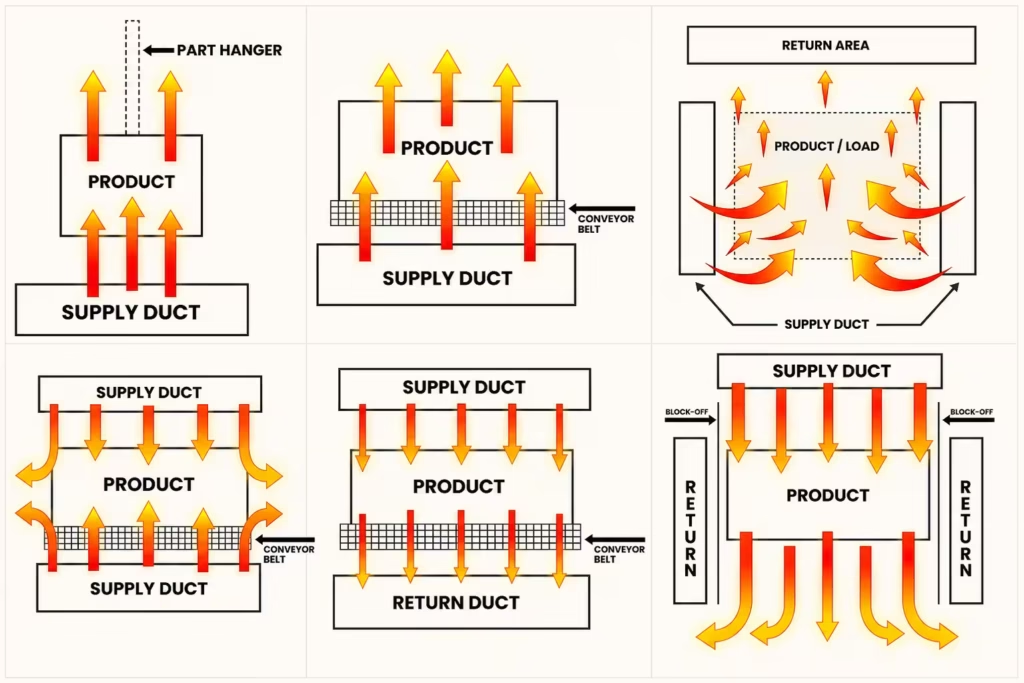
- Temperature uniformity depends on controlled air movement, not only heater power.
- Supply and return air paths must be designed around chamber size, load density, and part arrangement.
- Racks, trays, carts, and large parts can block airflow and create local cold zones.
- Loaded uniformity testing is more meaningful when the production load strongly affects air circulation.
- Airflow design should be discussed before finalizing chamber size, loading pattern, and acceptance criteria.
1. Why Walk-In Oven Safety Must Be Defined Early
For a custom industrial walk in oven, safety requirements should be reviewed before quotation because they may affect chamber construction, heating method, airflow, exhaust, door access, controls, alarms, electrical protection, and site installation scope.
Safety design depends on what the oven heats, how hot it operates, how the load enters the chamber, whether vapors or smoke may be released, and how operators interact with the equipment during daily production.
This article covers general safety features for industrial walk-in ovens. If the process involves solvents, combustible vapors, special compliance requirements, or classified areas, a project-specific safety review should be completed before final design approval.
Engineering point: Safety is not one component. It is a complete design review covering temperature, airflow, exhaust, access, controls, electrical protection, and facility conditions.
Engineering point: Safety is not one component. It is a complete design review covering temperature, airflow, exhaust, access, controls, electrical protection, and facility conditions.
2. Independent Over-Temperature Protection
Over-temperature protection is one of the most important safety features in a walk-in oven. It helps protect the product, chamber, heater system, and facility if the normal controller, sensor, relay, or control logic fails.
A typical safety design may include a separate high-limit controller or independent high-limit sensor. This protection should be separate from the normal temperature control loop so it can shut down the heating system when an unsafe temperature condition is detected.
| Safety Item | Purpose | Buyer Question |
|---|---|---|
| High-limit controller | Stops heating if temperature exceeds the safety limit | Is the high-limit function independent from the main controller? |
| High-limit sensor | Monitors unsafe temperature separately | Where is the safety sensor located? |
| Heating shutdown logic | Disables heater output during fault conditions | What happens after an over-temperature alarm? |
| Manual reset | Requires operator review before restart | Should the fault require manual confirmation? |
Buyer note: Do not treat over-temperature protection as a display alarm only. The safety action should be clear: alarm, heater shutdown, fan logic, and reset requirement.
3. Door Interlocks and Operator Access Safety
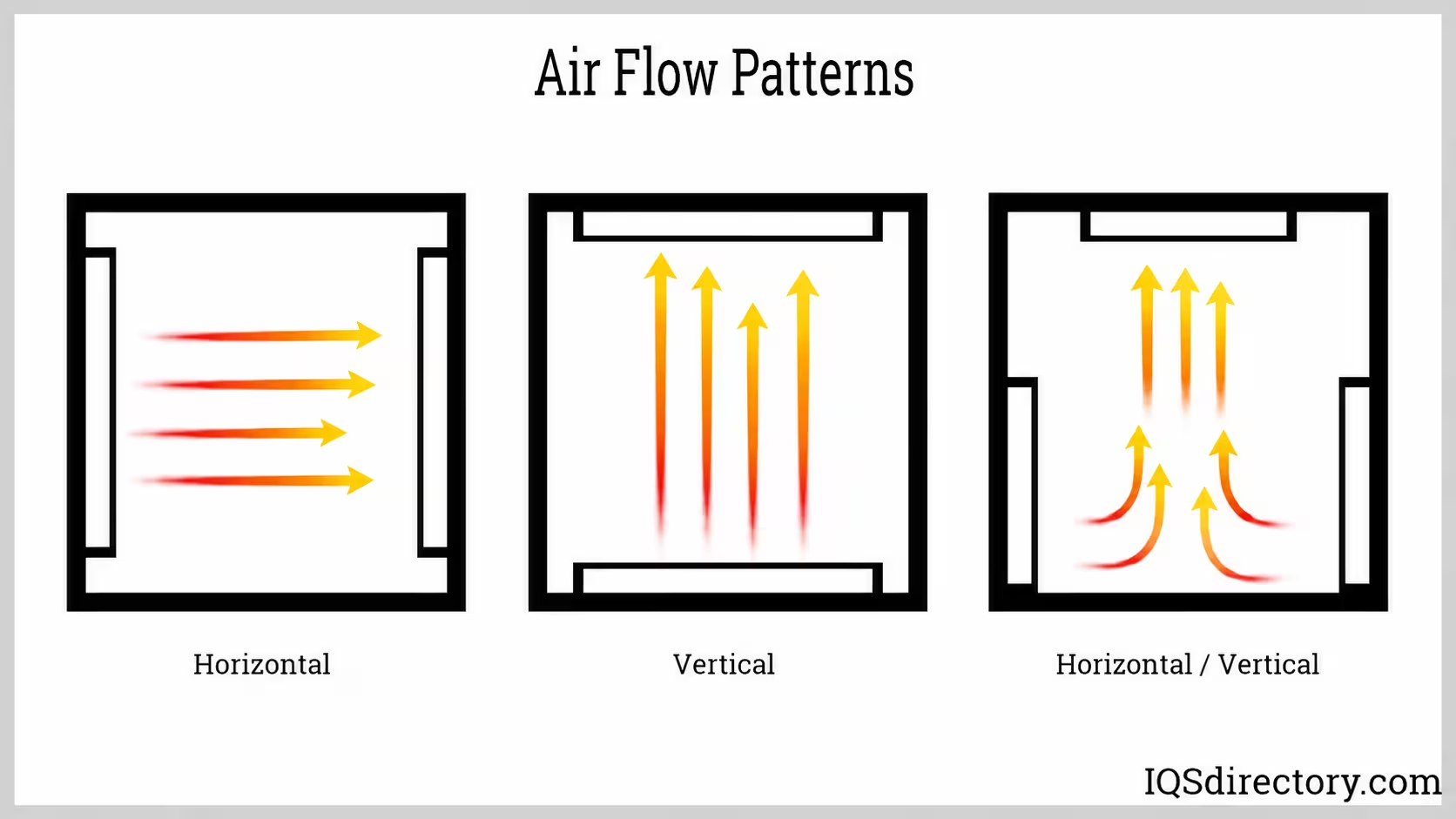
Walk-in oven doors are large and are used during loading, unloading, inspection, and maintenance. Door safety should be reviewed according to the door size, door type, operating temperature, loading method, and operator workflow.
Door interlocks can be used to stop heating, trigger alarms, pause a cycle, or prevent unsafe operation when the door is open. For large doors, mechanical latches, seals, viewing windows, interior release devices, or warning lights may also be considered depending on the project.
| Door Safety Feature | Why It Matters |
|---|---|
| Door-open interlock | Prevents unsafe heating operation when the door is open |
| Interior release | Supports emergency exit from inside the chamber during non-operating access |
| Warning light or buzzer | Alerts operators before cycle start or during fault conditions |
| Door seal and latch review | Reduces heat leakage and protects operators near the opening |
| Door swing or travel clearance | Prevents interference with forklifts, carts, walls, and personnel routes |
For loading and access planning, see Walk-In Oven Loading Options.
4. Airflow Proof and Circulation Monitoring
In many walk-in ovens, heated air circulation is essential for safe and stable operation. If the circulation fan stops, airflow is blocked, or return air is restricted, the chamber may develop hot spots, slow recovery, uneven heating, or unsafe heater conditions.
Airflow proof, fan status monitoring, motor protection, pressure switches, or control logic can be used to confirm that the circulation system is operating before heating is enabled. The exact configuration depends on the oven design and process risk.
| Airflow Safety Item | Function | RFQ Note |
|---|---|---|
| Fan running signal | Confirms circulation fan operation | Useful before enabling heater output |
| Airflow proof switch | Confirms air movement or pressure condition | Useful for processes sensitive to blocked airflow |
| Motor overload protection | Protects fan motor and electrical system | Should be included in electrical design review |
| Blocked airflow alarm | Warns operators about circulation problems | Important for dense loads and rack-based processes |
For airflow and uniformity logic, read How Airflow Design Affects Temperature Uniformity in Walk-In Ovens.
Often useful for rack-based loading where air needs to pass across shelves, trays, or vertically stacked parts.
Can support broad chamber coverage, but requires careful return air planning and load clearance.
May fit some long chambers, but the load arrangement must not create a strong front-to-back temperature gradient.
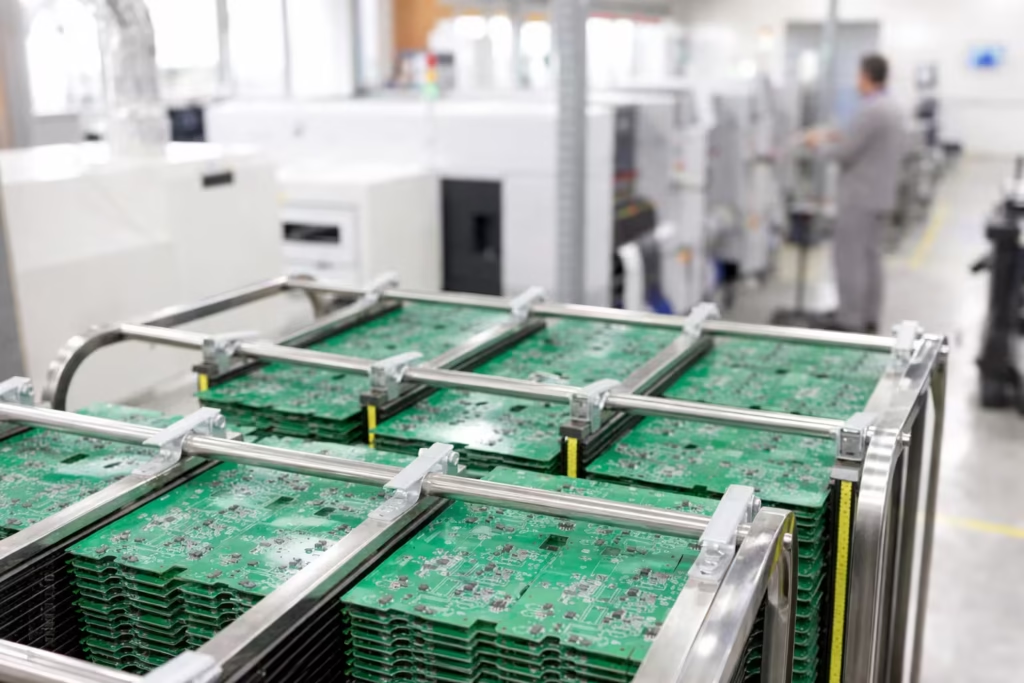
Review loading method, chamber size, rail layout, and operator transfer logic before defining the final oven structure.
5. Exhaust, Ventilation, and Process Vapor Review
Exhaust and ventilation requirements depend on the material inside the oven, heating method, vapor risk, and facility layout. An industrial walk-in oven manufacturer should review whether moisture, odor, smoke, resin vapor, coating vapor, solvent vapor, VOCs, or other emissions may be released.
If process emissions, solvent vapor, or combustible components are possible during heating, the oven may need exhaust fans, dampers, purge logic, ventilation review, interlocks, or additional safety features before the final safety configuration is confirmed.
| Process Condition | What to Confirm | Possible Design Impact |
|---|---|---|
| Moisture removal | Water content, humidity load, and drying cycle | Exhaust flow, dampers, and airflow balance |
| Smoke or odor | Material behavior during heating | Ventilation, ducting, and facility discharge review |
| Solvent or VOC | Material safety data and release rate | Safety review, purge logic, exhaust, and interlock design |
| Combustible vapor risk | Whether flammable or combustible materials may be present | Project-specific safety design and compliance review |
Buyer note: Never hide solvent, VOC, vapor, or combustible material information to simplify the quotation. These details can change the required safety design.
6. Emergency Stops, Alarms, and Fault Handling
Emergency stops and alarm logic help operators respond quickly when unsafe or abnormal conditions occur. The safety response should be clear, visible, and easy to understand during daily production.
Alarm conditions may include over-temperature, fan failure, door open, heater fault, sensor fault, motor overload, exhaust fault, communication fault, or process timeout. For PLC/HMI systems, alarm history and fault messages can also support troubleshooting and maintenance.
| Alarm or Safety Function | Typical Purpose |
|---|---|
| Emergency stop | Stops the system in urgent conditions according to the defined safety logic |
| Audible and visual alarm | Alerts operators to abnormal conditions |
| Fault message on HMI | Helps operators identify and respond to problems |
| Alarm history | Supports maintenance review and troubleshooting |
| Manual reset | Prevents automatic restart after selected safety faults |
For control system planning, visit Oven Control Systems.
7. Electrical Panel and Heater Protection
Electrical protection should match the oven power, heater type, control method, temperature range, and facility requirements. A walk-in oven may include heater contactors, SCR power control, motor protection, fuses or breakers, grounding, panel ventilation, wiring identification, and emergency stop integration.
For export or facility-specific projects, buyers should confirm whether the electrical panel needs specific components, labeling, inspection, documentation, or third-party evaluation support. These requirements should be confirmed before the final quotation.
| Electrical Safety Item | Why It Matters |
|---|---|
| Main disconnect | Provides a clear isolation point for maintenance |
| Heater protection | Protects heater circuits and power components |
| Motor protection | Protects circulation and exhaust fan motors |
| Grounding and wiring layout | Supports safe operation and easier troubleshooting |
| Panel documentation | Helps installation, maintenance, inspection, and future service |
8. Facility Layout and Maintenance Access
Walk-in oven safety also depends on the facility layout. Operators need safe access for loading, unloading, inspection, and maintenance. Carts, racks, forklifts, pallets, and large doors require enough front clearance and movement space.
Maintenance access should also be reviewed. Fans, heaters, sensors, filters, exhaust devices, control panels, and safety components should be reachable for inspection and service without creating unnecessary downtime or operator risk.
| Facility Item | What to Review | Why It Matters |
|---|---|---|
| Front approach area | Space for carts, forklifts, pallets, and operators | Reduces collision and loading risk |
| Door movement clearance | Swing, sliding, or lift door travel space | Prevents interference with walls and equipment |
| Heat clearance | Distance from walls, structures, and nearby equipment | Supports ventilation and safe operation |
| Maintenance access | Access to fan, heater, sensor, filter, exhaust, and panel areas | Improves serviceability and uptime |
| Signage and operator training | Warning labels, start-up rules, and safe loading procedures | Supports consistent daily operation |
9. Walk-In Oven Safety Checklist Before RFQ
Prepare the following safety details before requesting a walk-in oven quote. These items help the manufacturer define safety interlocks, exhaust, controls, electrical protection, documentation, and installation scope.
For non-standard projects, a custom walk in oven solution should include the required safety devices, control logic, alarm functions, emergency stop design, ventilation arrangement, and installation conditions from the beginning.
| Safety Category | Information to Provide |
|---|---|
| Process material | Part material, coating, adhesive, resin, powder, solvent, VOC, moisture, smoke, or odor risk |
| Temperature condition | Operating temperature, maximum design temperature, ramp time, and soak time |
| Loading method | Floor loading, cart, rack, trolley, pallet, forklift, or rail-guided loading |
| Operator access | Door operation, inspection access, loading workflow, warning lights, and interior release needs |
| Over-temperature protection | High-limit controller, safety sensor, heater shutdown, alarm, and reset logic |
| Airflow safety | Fan running signal, airflow proof, blocked airflow alarm, and motor protection |
| Exhaust and ventilation | Moisture, vapor, VOC, solvent, smoke, odor, duct route, and facility discharge point |
| Electrical requirements | Voltage, phase, frequency, panel standard, components, labeling, and documentation |
| Facility layout | Footprint, door swing, front approach area, maintenance clearance, and nearby equipment |
| Compliance support | CE, UL/NRTL-related review, third-party inspection, FAT/SAT, or site acceptance documentation |
Frequently Asked Questions
Q: What safety features should an industrial walk-in oven have?
Common safety features may include independent over-temperature protection, door interlocks, emergency stops, airflow monitoring, alarms, heater shutdown logic, electrical protection, exhaust or ventilation review, and safe operator access planning.
Q: Why is over-temperature protection important in a walk-in oven?
Over-temperature protection helps protect the oven, load, and facility if the normal temperature control system fails or if an unsafe temperature condition occurs.
Q: Does every walk-in oven need exhaust ventilation?
Not every process needs the same exhaust system. Exhaust or ventilation should be reviewed when the process releases moisture, smoke, odor, vapor, solvent, VOCs, or combustible materials during heating.
Q: Are door interlocks required for walk-in ovens?
Door interlocks are commonly used to improve safe operation, especially when opening the door should stop heating, trigger an alarm, pause the cycle, or prevent unsafe equipment operation.
Q: Should safety requirements be included in the RFQ?
Yes. Safety requirements should be included before quotation because they can affect exhaust design, interlocks, controls, electrical components, documentation, testing, and compliance support.
Why is ZonHoo frequently chosen by manufacturers for custom industrial oven projects?

— are ZonHoo’s three guarantees.
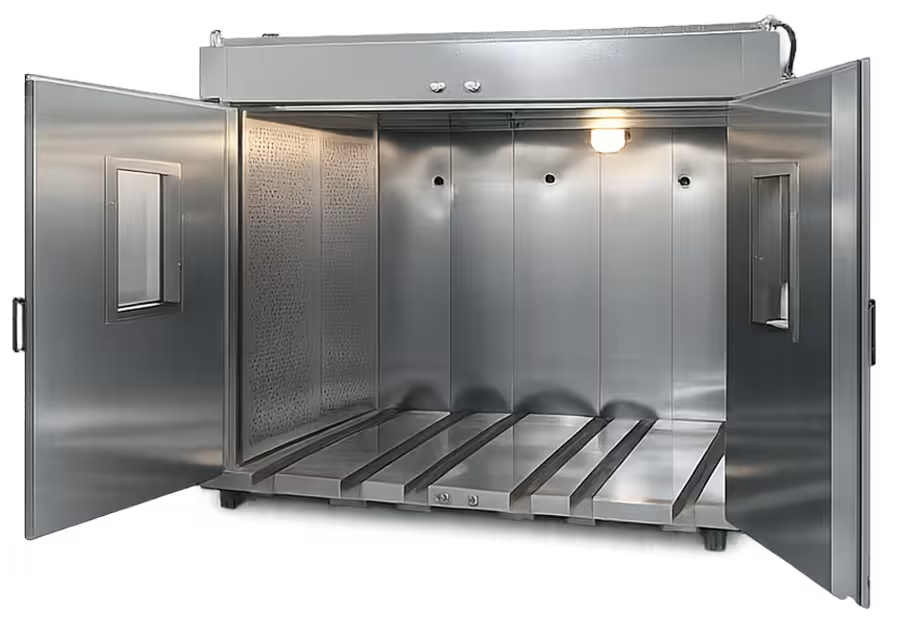
Explore more walk-in oven resources, comparison guides, and engineering insights to better understand loading methods, chamber access, and selection logic for industrial batch heating projects.
Industrial Walk-In Oven Cost Factors: What Affects the Final Price?
Industrial walk-in oven cost depends on chamber size, loading method, temperature range, airflow design, controls, safety package, documentation, and project scope. This guide explains the main factors buyers should confirm before requesting a custom quotation.
Walk-In Oven Temperature Control: Ramp, Soak, Uniformity, and Data Logging
Walk-in oven temperature control depends on more than reaching a setpoint. This guide explains how ramp rates, soak time, temperature uniformity, part temperature monitoring, and data logging work together to create repeatable heating results for curing, drying, preheating, and heat treatment applications.
Need a walk-in batch heating solution for large parts? Explore our Industrial Walk-In Oven page for chamber design, loading options, airflow planning, and RFQ guidance.