

2026/04/22
Walk-In Oven RFQ Checklist for Custom Industrial Projects
A custom industrial walk in oven quote depends on more than chamber size and temperature. For manufacturing buyers, the quotation becomes accurate only when the load, process cycle, loading method, airflow expectation, safety condition, site limits, and delivery scope are clearly defined.
This walk-in oven RFQ checklist helps buyers prepare the information an oven manufacturer needs before quotation. It is designed for custom walk-in ovens used in batch heating, curing, drying, preheating, aging, and other industrial thermal processes.
Use this checklist before sending an inquiry, especially when the oven requires carts, racks, pallets, forklift access, large chamber volume, special airflow, data logging, exhaust, or project-specific safety review.
- Walk-In Oven RFQ Checklist Before Quotation
- Project Purpose and Process Requirements
- Parts, Load Size, and Batch Quantity
- Temperature Range and Process Cycle
- Loading Method and Chamber Access
- Airflow and Temperature Uniformity Expectations
- Controls, Data Logging, and Operator Interface
- Safety, Exhaust, and Material Conditions
- Site Constraints, Utilities, and Installation Limits
- Quote Scope, Delivery Terms, and Documentation
- Final RFQ Information to Send the Manufacturer
- Frequently Asked Questions
- A walk-in oven RFQ should include the loaded envelope, not only the product size.
- The loading method must be confirmed before chamber size, door opening, floor structure, and airflow design are quoted.
- Temperature requirements should include working temperature, maximum temperature, ramp time, soak time, and cooling or exhaust needs.
- Material condition matters. Wet parts, coatings, resin, adhesives, solvents, or volatile materials may change the safety design.
- Site limits such as floor space, power supply, exhaust route, installation access, and shipping restrictions should be checked before quotation.
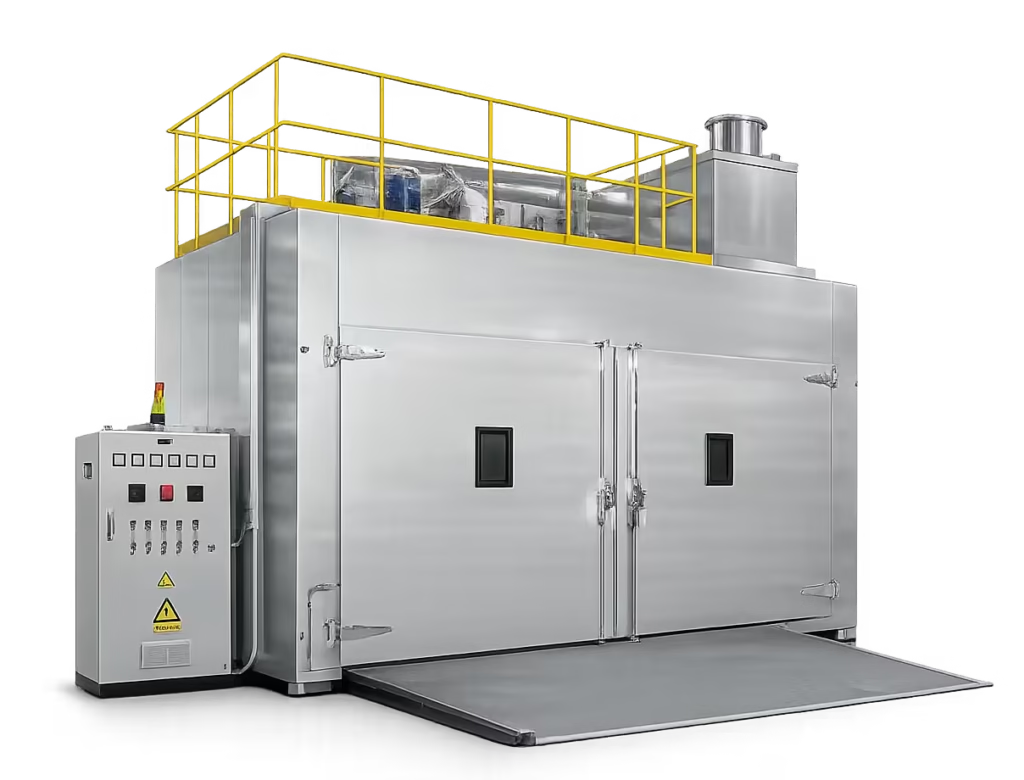
A custom walk-in oven is normally engineered around the buyer’s product, loading method, production cycle, site layout, and safety requirements. A short inquiry such as “please quote a 200°C walk-in oven” is usually not enough for a reliable quotation.
The purpose of this checklist is to help manufacturing buyers send clear RFQ information. Better input allows the oven manufacturer to size the chamber correctly, select the right heating capacity, design the airflow path, define controls, and avoid missing installation or safety details.
If you are still deciding whether this format is suitable for your production line, review our industrial walk-in oven selection guide before preparing the RFQ details.
1. Project Purpose and Process Requirements
Start the RFQ by explaining what the walk-in oven must do in production. The manufacturer needs to understand the process purpose before quoting chamber structure, heating power, airflow design, exhaust, and controls.
Describe whether the oven is used for curing, drying, preheating, aging, stress relieving, coating treatment, composite processing, motor component heating, or another thermal process. This gives the supplier the context needed to select the right engineering approach.
Explain the actual production process, not only the target temperature.
Clarify throughput, batch frequency, heating time, and quality target.
State whether the load is dry, wet, coated, resin-based, adhesive-based, or solvent-related.
| RFQ Item | What to Send | Why It Matters |
|---|---|---|
| Application | Curing, drying, preheating, aging, heat treatment, coating, composite processing | Defines heating method, airflow, exhaust, and safety review |
| Product material | Metal, composite, plastic, rubber, coated part, motor component, fixture, mold | Affects heat absorption and process cycle |
| Production target | Batch quantity, daily output, number of shifts, cycle time | Helps calculate chamber size and heating capacity |
| Quality requirement | General heating, uniform curing, moisture removal, process traceability | Determines control and testing requirements |
2. Parts, Load Size, and Batch Quantity
For custom walk-in ovens, the load is the starting point. The manufacturer needs the part size, total load size, rack or cart size, load weight, and batch quantity before defining the chamber.
A common RFQ mistake is to provide only the product size. In real use, the oven must also fit racks, pallets, carts, fixtures, spacing, airflow clearance, and door clearance.
| Information | Example | Design Impact |
|---|---|---|
| Maximum part size | Length × width × height of the largest product | Defines minimum heating envelope |
| Rack, cart, or pallet size | Loaded rack dimensions, trolley size, pallet footprint | Determines real chamber width, depth, and height |
| Total batch weight | Product + rack + fixture weight per batch | Affects floor structure, rail design, heating time, and loading method |
| Batch quantity | Pieces per batch, racks per batch, pallets per batch | Helps define capacity and chamber layout |
| Clearance requirement | Airflow gap around parts, operator handling gap | Protects air circulation and loading safety |
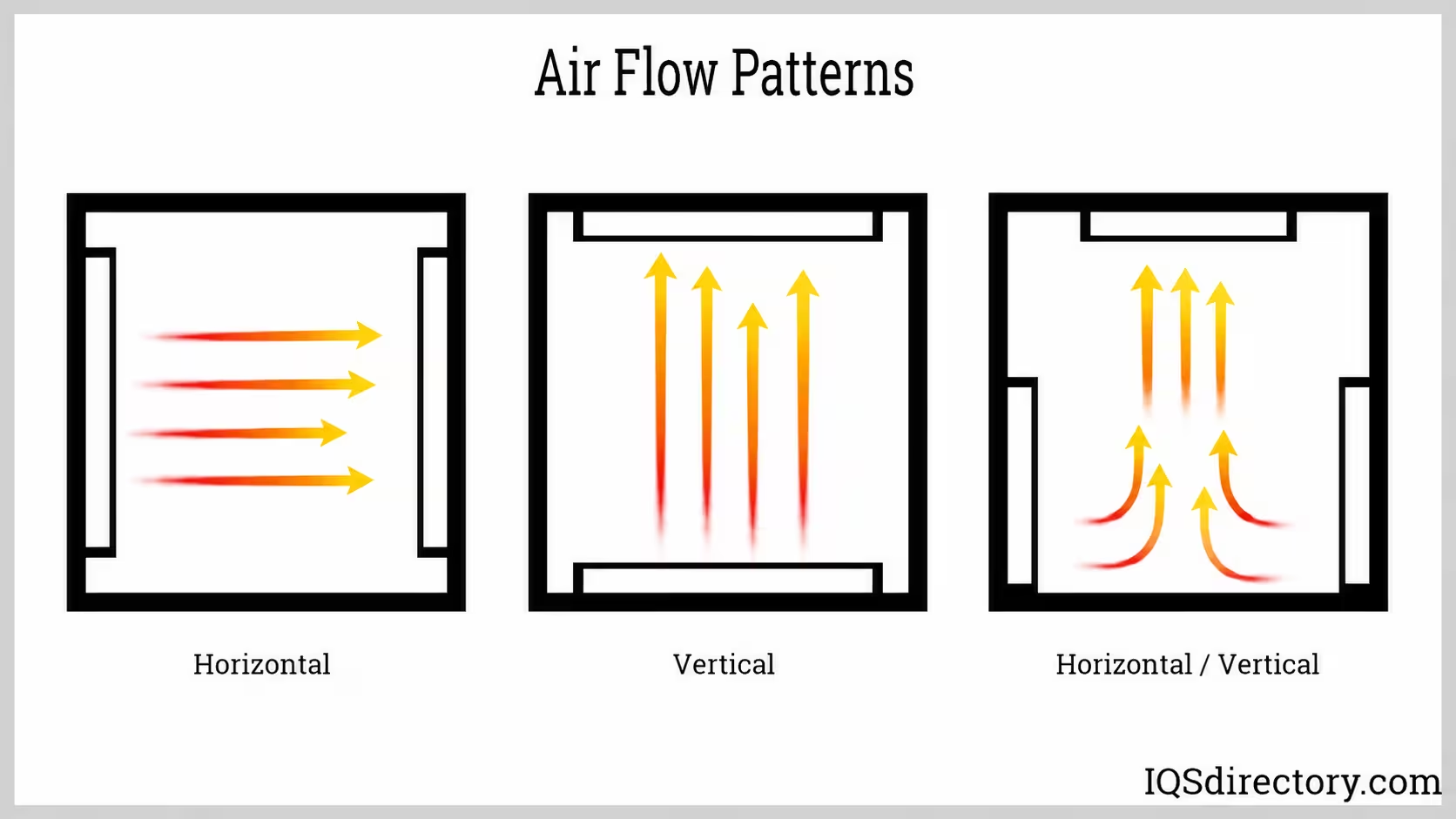
3. Temperature Range and Process Cycle
The RFQ should separate working temperature, maximum temperature, ramp-up time, soak time, and cooling or exhaust needs. These details affect heater power, circulation fan selection, insulation, control system, and process reliability.
For heavy loads, the air temperature may reach setpoint before the product itself reaches the required process temperature. If product temperature is critical, include product sensor requirements or process validation expectations.
| Temperature Item | What to Confirm | Why It Matters |
|---|---|---|
| Working temperature | Normal process setpoint | Defines normal operating condition |
| Maximum temperature | Highest required process temperature or design margin | Affects insulation, heater, fan, and safety design |
| Ramp-up time | Required time from ambient to setpoint | Helps calculate heating capacity |
| Soak time | Holding time after the load reaches temperature | Defines process cycle and control program |
| Cooling or exhaust need | Natural cooling, forced exhaust, fresh air, process vapor removal | Affects damper, fan, and ventilation design |
4. Loading Method and Chamber Access
The loading method must be confirmed before quotation because it changes the chamber floor, door opening, loading height, rail arrangement, internal clearance, and operator safety design.
For large-load batch projects, ZonHoo can engineer a custom industrial walk-in oven around your chamber size, loading method, airflow requirement, and site conditions.
Send the cart size, wheel type, loaded height, and total weight.
Confirm door opening, floor load, forklift path, and loading clearance.
Confirm rail gauge, cart height, alignment, and whether rails extend outside the chamber.
| Loading Detail | RFQ Input | Quotation Impact |
|---|---|---|
| Loading method | Manual cart, rack, pallet, forklift, rail trolley, AGV, crane-assisted | Defines chamber access and floor structure |
| Door type | Single swing, double swing, vertical lift, sliding, custom access | Affects footprint, sealing, cost, and operation |
| Floor condition | Insulated floor, reinforced floor, rail floor, forklift-resistant floor | Affects structure and installation method |
| Operator access | Whether personnel may enter the chamber for loading or positioning | Affects emergency release, door safety, and interlocks |
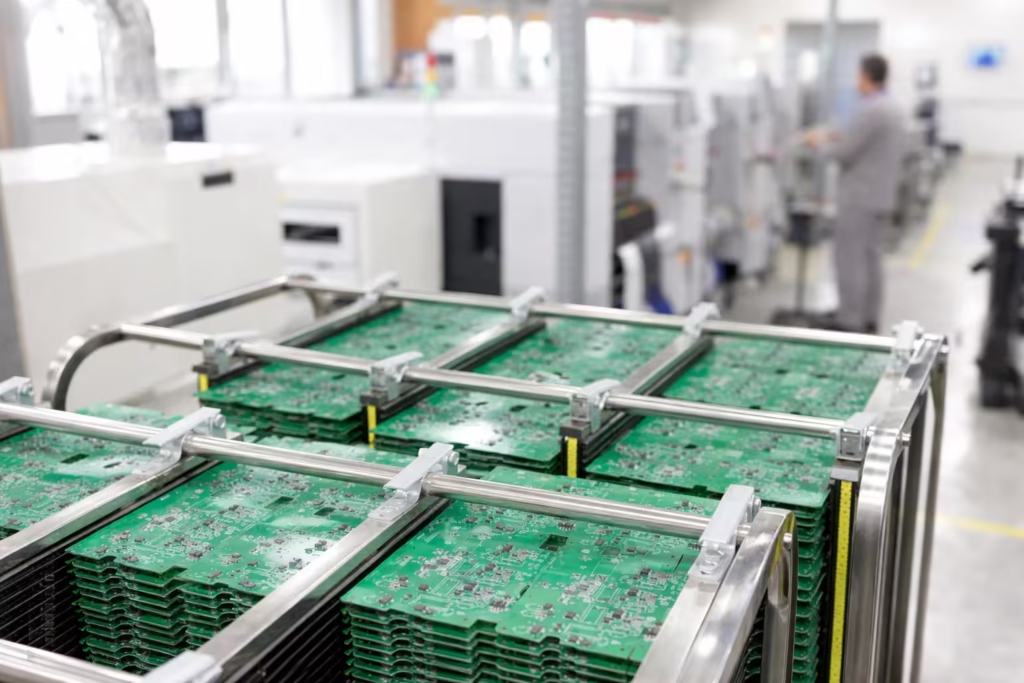
Review loading method, chamber size, rail layout, and operator transfer logic before defining the final oven structure.
5. Airflow and Temperature Uniformity Expectations
Airflow requirements should be described in the RFQ because large walk-in ovens may handle tall racks, dense loads, wide panels, heavy parts, or irregular assemblies. Each load pattern can require a different supply and return air path.
Do not state only “uniform temperature” if the process has a specific tolerance. Send the required uniformity range, test condition, sensor method, and whether the value should be checked in an empty or loaded chamber.
| RFQ Item | What to Send | Design Impact |
|---|---|---|
| Load arrangement | Single large part, multiple racks, stacked products, pallets, fixtures | Defines airflow path and duct arrangement |
| Airflow preference | Side-to-side, top-down, rear-to-front, or supplier recommendation | Helps match airflow to product shape |
| Uniformity requirement | Example: ±3°C, ±5°C, or general production tolerance | Affects fan, duct, sensor, and testing scope |
| Test condition | Empty chamber, loaded chamber, specific sensor positions | Prevents misunderstanding during acceptance |
For control options, see Oven Control Systems.For critical processes, define temperature uniformity and data requirements early. This prevents a low initial quote from missing fan capacity, duct balancing, mapping, or validation work.
6. Controls, Data Logging, and Operator Interface
The RFQ should state how operators need to control, monitor, record, and repeat the process. Some projects only need basic PID control, while others require PLC/HMI recipes, ramp/soak programs, alarms, data logging, remote diagnostics, or production traceability.
| Control Item | Options to Confirm | When It Matters |
|---|---|---|
| Control method | PID controller, PLC + HMI, recipe controller | Depends on process complexity and operator requirements |
| Ramp/soak program | Number of segments, heating curve, holding stages | Important for curing, composites, aging, and heat treatment |
| Data logging | Temperature records, alarms, batch reports, USB or network export | Needed for traceability and quality documentation |
| Sensor requirement | Air temperature, product temperature, multi-point monitoring | Affects process accuracy and validation |
| Remote support | Remote diagnosis, Ethernet, communication protocol | Useful for export projects and maintenance support |
7. Safety, Exhaust, and Material Conditions
Safety conditions must be included before RFQ because the material and process can change the oven design. Wet parts, coatings, resins, adhesives, solvents, or volatile materials may require exhaust, purge logic, interlocks, or a dedicated safety review.
If the process involves solvent, coating, resin, adhesive, or volatile material, include this information early so the manufacturer can review whether an explosion-protected oven safety review is required.
| Safety Item | What to Confirm | Why It Matters |
|---|---|---|
| Material condition | Dry, wet, coated, adhesive, resin, solvent-related, combustible | Affects exhaust and safety configuration |
| Exhaust requirement | Moisture, fumes, vapor, odor, solvent, process gas | Defines fan, damper, and ventilation needs |
| Door safety | Interlocks, emergency release, operator access rules | Important for walk-in chamber operation |
| Over-temperature protection | Independent high-limit controller, alarm, heater shutdown | Protects product, chamber, and process |
| Compliance needs | CE, UL components, local electrical standard, documentation | Affects cost, components, and lead time |
For project planning support, visit Oven System Planning.
8. Site Constraints, Utilities, and Installation Limits
A walk-in oven is a large installed system. Before quotation, buyers should check the available floor space, ceiling height, workshop entrance, installation route, exhaust path, power supply, gas supply, and maintenance clearance.
For export projects, shipping dimensions and container loading should also be reviewed early. In some cases, the oven may need to be designed in modular sections for transport and on-site assembly.
| Site Item | RFQ Input | Quotation Impact |
|---|---|---|
| Available footprint | Workshop floor space and loading approach | Controls oven layout and door swing |
| Ceiling height | Clear height above oven location | Affects chamber height, fan location, exhaust outlet |
| Building access | Door size, route, crane or forklift access | Determines whether modular design is needed |
| Utilities | Voltage, phase, frequency, gas type, pressure, compressed air | Defines heating system and control cabinet design |
| Exhaust route | Duct route, outdoor discharge point, local ventilation rules | Important for drying, fumes, vapors, and safety |
| Installation scope | Self-installation, local contractor, supplier remote support, on-site supervision | Affects documentation and service scope |
9. Quote Scope, Delivery Terms, and Documentation
Technical parameters are only one part of an RFQ. Buyers should also define the quotation scope, delivery terms, packing method, documentation, spare parts, inspection, and after-sales expectations.
This step helps avoid comparing incomplete quotes. A lower price may exclude packing, export documents, installation guidance, safety components, data logging, spare parts, or acceptance testing.
| Commercial Item | What to Confirm | Why It Matters |
|---|---|---|
| Trade term | EXW, FOB, CIF, DAP, or other delivery term | Defines what cost is included |
| Packing | Wooden case, steel base, modular packing, container loading | Affects export cost and shipping safety |
| Documentation | Drawing, user manual, electrical diagram, packing list, certificate, test report | Supports installation, customs, and acceptance |
| Inspection | Factory test, temperature test, FAT, video inspection | Defines acceptance scope before shipment |
| Spare parts | Heaters, sensors, fan parts, controllers, relays, seals | Improves maintenance planning |
| Lead time | Design, production, testing, packing, shipping time | Helps project scheduling |
After the RFQ information is clear, buyers can better understand the main industrial walk-in oven cost factors that affect the final quotation.
Final RFQ Information to Send the Manufacturer
Use the following summary as a final check before sending your inquiry. The more complete the information, the easier it is for the manufacturer to provide a practical technical proposal and quotation.
| RFQ Category | Information to Send |
|---|---|
| Project purpose | Application, product material, production target, process goal |
| Load details | Part size, loaded envelope, batch quantity, load weight, rack or cart size |
| Temperature cycle | Working temperature, maximum temperature, ramp time, soak time, cooling or exhaust needs |
| Loading method | Cart, rack, pallet, forklift, rail trolley, operator chamber access |
| Airflow and uniformity | Load arrangement, airflow expectation, uniformity tolerance, test condition |
| Controls | PID or PLC/HMI, recipes, ramp/soak, data logging, alarms, communication |
| Safety | Material condition, solvent or volatile content, exhaust, interlocks, over-temperature protection |
| Site | Floor space, ceiling height, access route, voltage, gas, exhaust route, installation scope |
| Quotation scope | Trade term, packing, documents, spare parts, inspection, delivery schedule |
Frequently Asked Questions
Q: What information is needed for an industrial walk-in oven quote?
Buyers should provide product size, total load weight, batch quantity, loading method, chamber size requirement, working temperature, process time, airflow or uniformity expectation, material condition, site limits, power supply, exhaust needs, and delivery scope.
Q: Can I request a quote with only the chamber size?
You can request an initial estimate, but chamber size alone is usually not enough for an accurate custom walk-in oven quotation. The manufacturer also needs load weight, loading method, temperature cycle, airflow requirement, safety condition, and site information.
Q: Why do custom walk-in oven quotes vary between suppliers?
Quotes vary because suppliers may include different chamber structures, insulation thickness, airflow designs, heaters, fans, controls, safety systems, data logging, exhaust systems, installation scope, packing method, and documentation.
Q: Should safety conditions be confirmed before RFQ?
Yes. Material condition, moisture, coating, resin, adhesive, solvent, combustible vapor, and exhaust requirement should be confirmed before RFQ. These details may affect safety design, ventilation, interlocks, and explosion-protection review.
Q: Does ZonHoo build custom walk-in ovens for different loading methods?
Yes. ZonHoo can design custom walk-in ovens for racks, carts, pallets, rail trolleys, forklift loading, and large batch production loads. The loading method should be confirmed before chamber size and door structure are finalized.
Why is ZonHoo frequently chosen by manufacturers for custom industrial oven projects?
— are ZonHoo’s three guarantees.
Explore more walk-in oven resources, comparison guides, and engineering insights to better understand loading methods, chamber access, and selection logic for industrial batch heating projects.
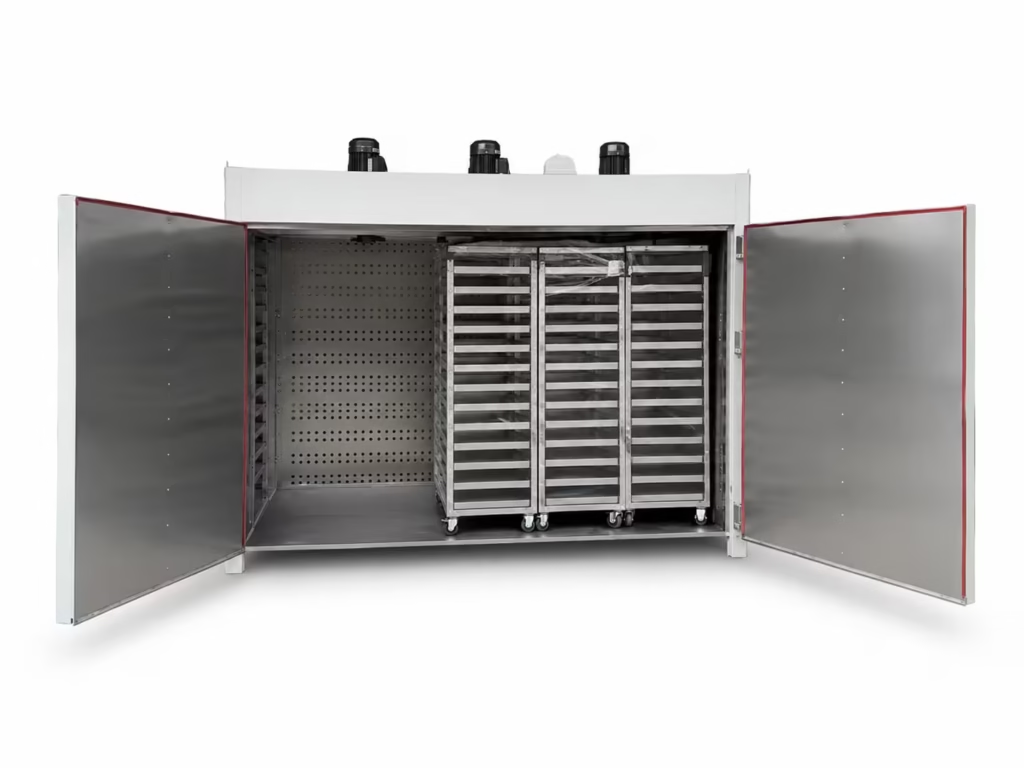
Learn typical walk-in oven temperature ranges and how operating temperature, maximum design temperature, load mass, airflow, controls, insulation, and safety requirements affect drying, curing, preheating, and high-temperature industrial heating applications.
This guide explains key walk-in oven safety features for industrial facilities, including over-temperature protection, door interlocks, airflow monitoring, exhaust review, emergency stops, alarms, electrical protection, and RFQ safety checklist items.
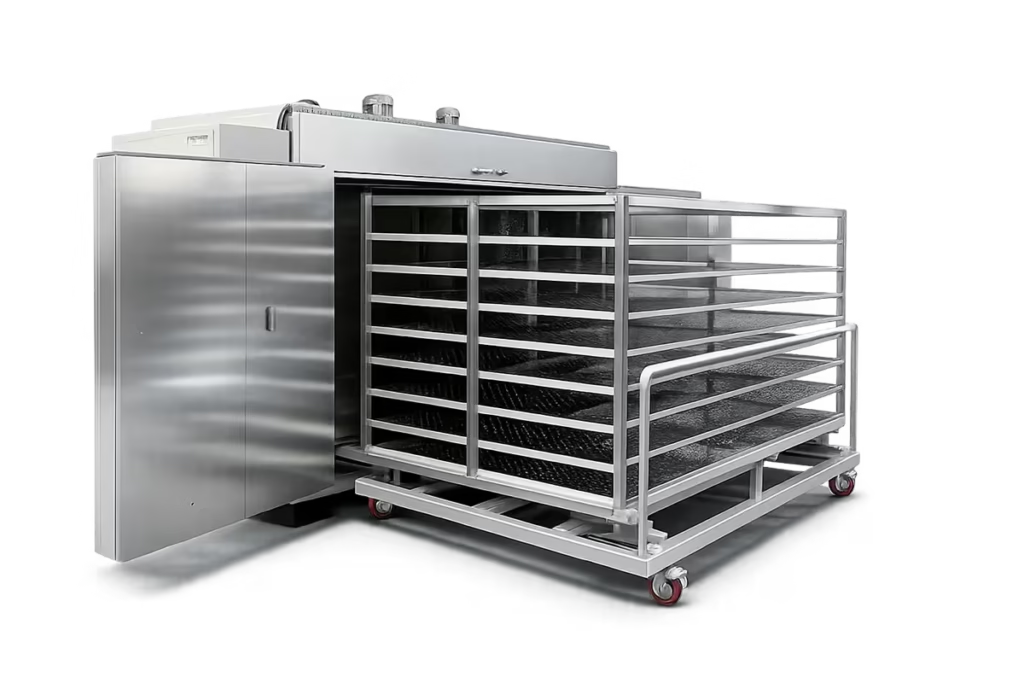
Planning a custom walk-in oven project? Visit our Industrial Walk-In Oven page to review chamber size, loading method, airflow design, temperature range, heating source, safety features, and RFQ details.