
Single-Zone vs Multi-Zone Conveyor Oven: How Many Zones Do You Need?
Compare simple one-zone heating with independently controlled thermal stages for ramping, soaking, curing, drying and controlled discharge before adding complexity to your conveyor oven.
A conveyor oven should not be divided into multiple temperature zones simply because the controller can support them. The correct number of zones comes from the product heating profile, required dwell time, airflow behavior, load variation and production flexibility.
Start by deciding whether the process needs one stable heated environment or several independently controlled stages. Then compare the wider continuous oven configurations, the core belt-based industrial conveyor oven architecture, or custom continuous oven engineering when the line requires unusual zone lengths, controls, layouts or interfaces.
The Core Difference: One Controlled Environment vs Independent Thermal Stages
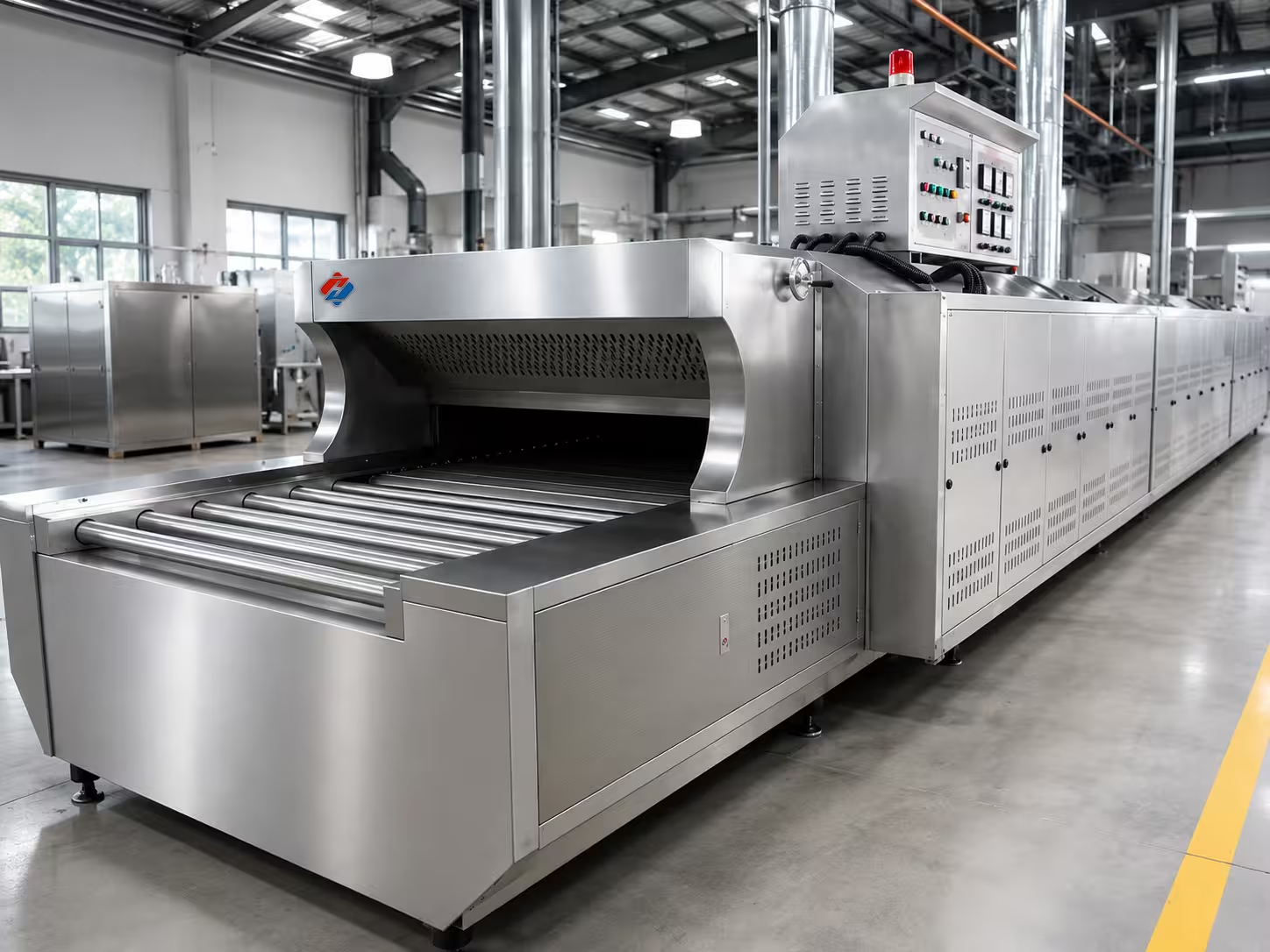
A single-zone conveyor oven uses one principal controlled thermal environment across the heated section. It can still contain multiple heaters, recirculation ducts, sensors or airflow adjustments; "single zone" does not mean "one heater." The defining point is that the heated process is controlled as one thermal stage.
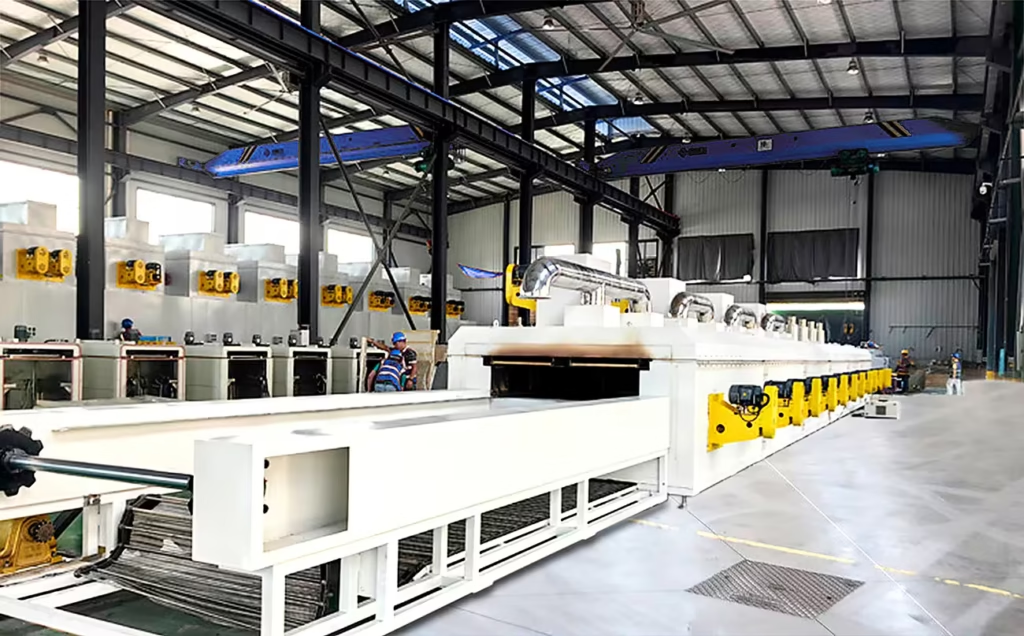
A multi-zone conveyor oven divides the heated path into two or more sections that can be controlled separately. Depending on the design, each zone may have its own temperature sensor, heat modulation, circulation fan, dampers, exhaust adjustment or other control elements.
Best when the process is thermally simple
- One target processing temperature
- Stable product family and heat load
- No controlled ramp or staged reaction
- Shorter or less demanding thermal cycle
- Simpler commissioning and operation
Best when the profile must be shaped
- Preheat, ramp, soak or cure stages
- Different heat input along the process
- Product sensitivity changes with temperature
- Multiple recipes or wider process window
- Stage-specific airflow or exhaust needs
Single-Zone vs Multi-Zone Conveyor Oven Decision Matrix
Use this as an early screening tool. Final zone count should be based on measured or required product temperature behavior, not on a generic "two-zone" or "three-zone" equipment package.
| Process requirement | Single-zone | Multi-zone | Engineering question |
|---|---|---|---|
| Simple preheating | Often sufficient | Usually unnecessary unless ramp rate matters | Does the product only need to reach a target condition? |
| General moisture removal | Often practical for stable loads | Useful when evaporation changes strongly through the oven | Does exhaust or heat demand change by stage? |
| Controlled ramp + soak | Limited control of profile shape | Strong fit | How long is allowed for ramping and soaking? |
| Curing reaction | Suitable for forgiving single-stage cures | Preferred when reaction stages or surface sensitivity matter | Can aggressive early heating damage the coating/resin/part? |
| Several product recipes | Simple but less flexible | More tuning flexibility | Can all products share one air-temperature profile? |
| High thermal mass | Can work with enough heated length | Useful when ramp and soak need separate control | Is product-core temperature the acceptance criterion? |
| Simple controls / low complexity | Strong advantage | More sensors, loops and commissioning | Does the process value justify the extra control scope? |
| Controlled cooling after heat | Treat cooling as a separate section decision | What discharge temperature and cooling time are required? | |
When a Single-Zone Conveyor Oven Is Enough
A single-zone design is not a "basic" or inferior oven. For the right process, it can be the more robust engineering choice because the control objective is clear and there are fewer interacting variables to tune.
One stable target temperature
The product enters, heats toward one process condition and does not require a separate controlled ramp or soak setpoint.
Repeatable product and loading
Part geometry, mass, spacing and throughput remain reasonably stable, so the heat load does not swing dramatically from run to run.
Forgiving process window
The application can tolerate a natural product heat-up curve inside one controlled air-temperature environment without a stage-specific limit.
Simplicity has operational value
Fewer independent control loops can reduce recipe management, commissioning time and the number of parameters operators can accidentally mis-set.
Before paying for additional zones, ask whether the quality requirement is actually tied to a staged product-temperature profile. If the answer is no, extra zones can add hardware and tuning effort without improving finished-part acceptance.
When a Multi-Zone Conveyor Oven Becomes Worth the Complexity
Multiple zones become commercially valuable when they let the oven do something that one thermal stage cannot do reliably. The goal is not a higher zone count; it is better control of the product's thermal history.
- Controlled ramp rate. The product cannot be exposed immediately to the final process temperature without distortion, blistering, cracking, boiling, thermal shock or other quality risk.
- Separate soak or cure stage. The product must first heat up, then remain near a target condition for a defined period.
- Changing moisture or volatile load. Drying demand and exhaust requirements may be much higher near the wet end than later in the process.
- Product sensitivity changes during heating. Air velocity or heat intensity may need to be gentler early and stronger after the product stabilizes.
- Several recipes share one line. Independent setpoints provide more flexibility to reshape the thermal profile without rebuilding the oven.
- Throughput must increase without violating the profile. Additional controlled length can preserve ramp/soak requirements at a higher conveyor speed.
When these needs are confirmed, the dedicated multi-zone conveyor oven solution should be evaluated around the required number of independent stages, zone lengths, heat source, airflow, exhaust and recipe controls - not simply "2-zone" versus "3-zone."
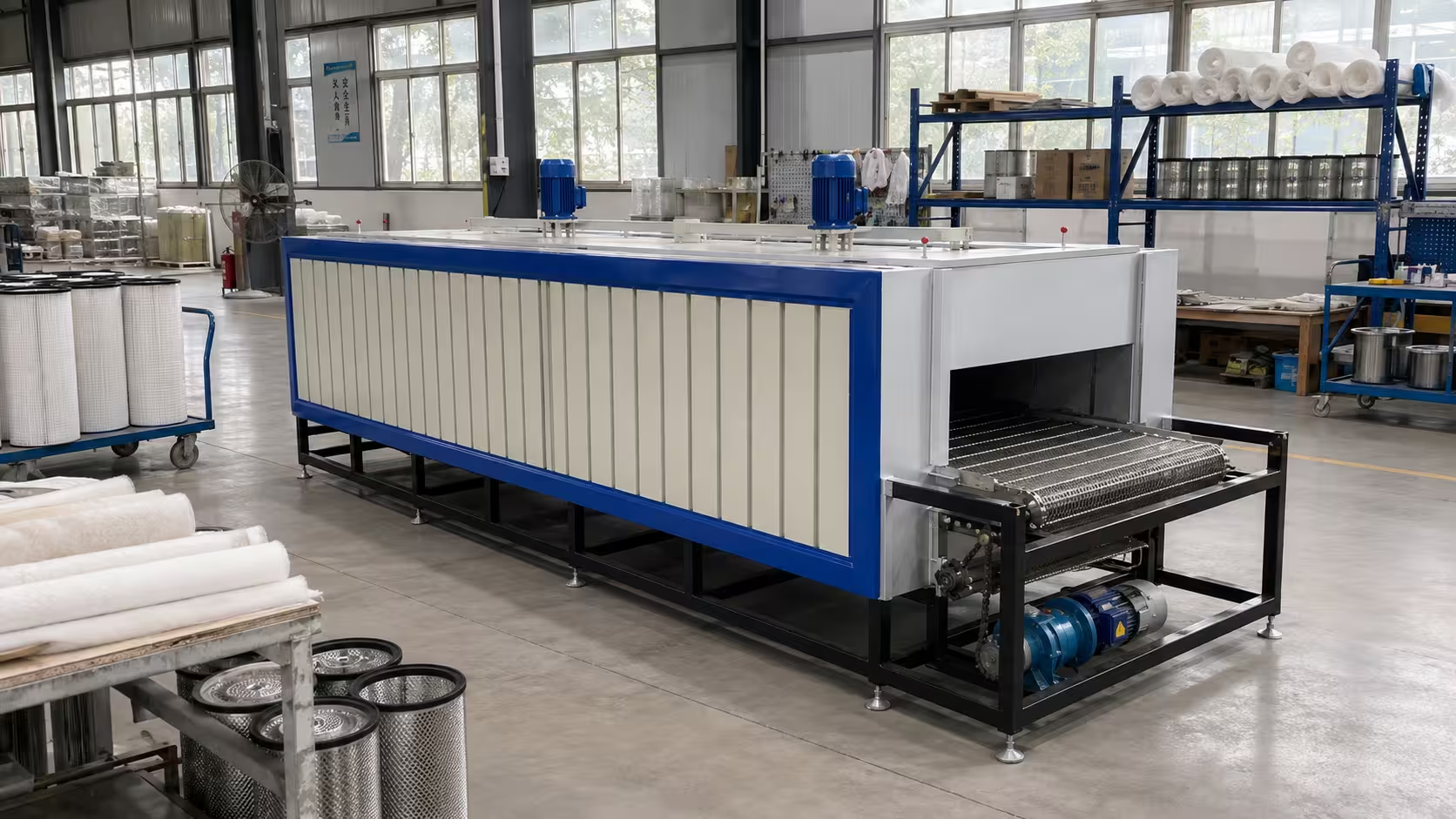
Zone Count Is Meaningless Without Residence Time
A temperature setpoint does not create a process by itself. The product must remain in each thermal stage long enough to achieve the required response. At a fixed line speed, the time available in a zone is determined by its effective conveyor length.
For example, a process may need a gentle preheat, a controlled ramp and then a longer cure/soak. Those stages should not automatically receive equal physical lengths. The required time in each stage should drive the preliminary zone allocation.
Use the detailed conveyor oven dwell-time calculation when converting required stage times into conveyor length and line-speed limits.
Independent Setpoints Do Not Guarantee a Good Temperature Profile
Adding controllers does not solve poor heat transfer. Each zone still needs enough circulation, sensible supply/return placement, appropriate exhaust and acceptable temperature distribution across the useful conveyor width and product envelope.
Adjacent zones can also influence one another through conveyor openings and moving product. A high-temperature zone next to a lower-temperature stage may require transition distance, baffles, air curtains, pressure management or other design measures depending on the process.
Match air delivery to the load
Product height, belt openness, fixture blockage and loading pattern determine whether horizontal, vertical or impingement-style flow is practical.
Define the acceptance requirement
Specify where uniformity matters: empty chamber, loaded conveyor, across belt width, or actual product temperatures.
Control zone interaction
Openings and belt travel can transfer heat between stages, so zone spacing and pressure balance must support the intended profile.
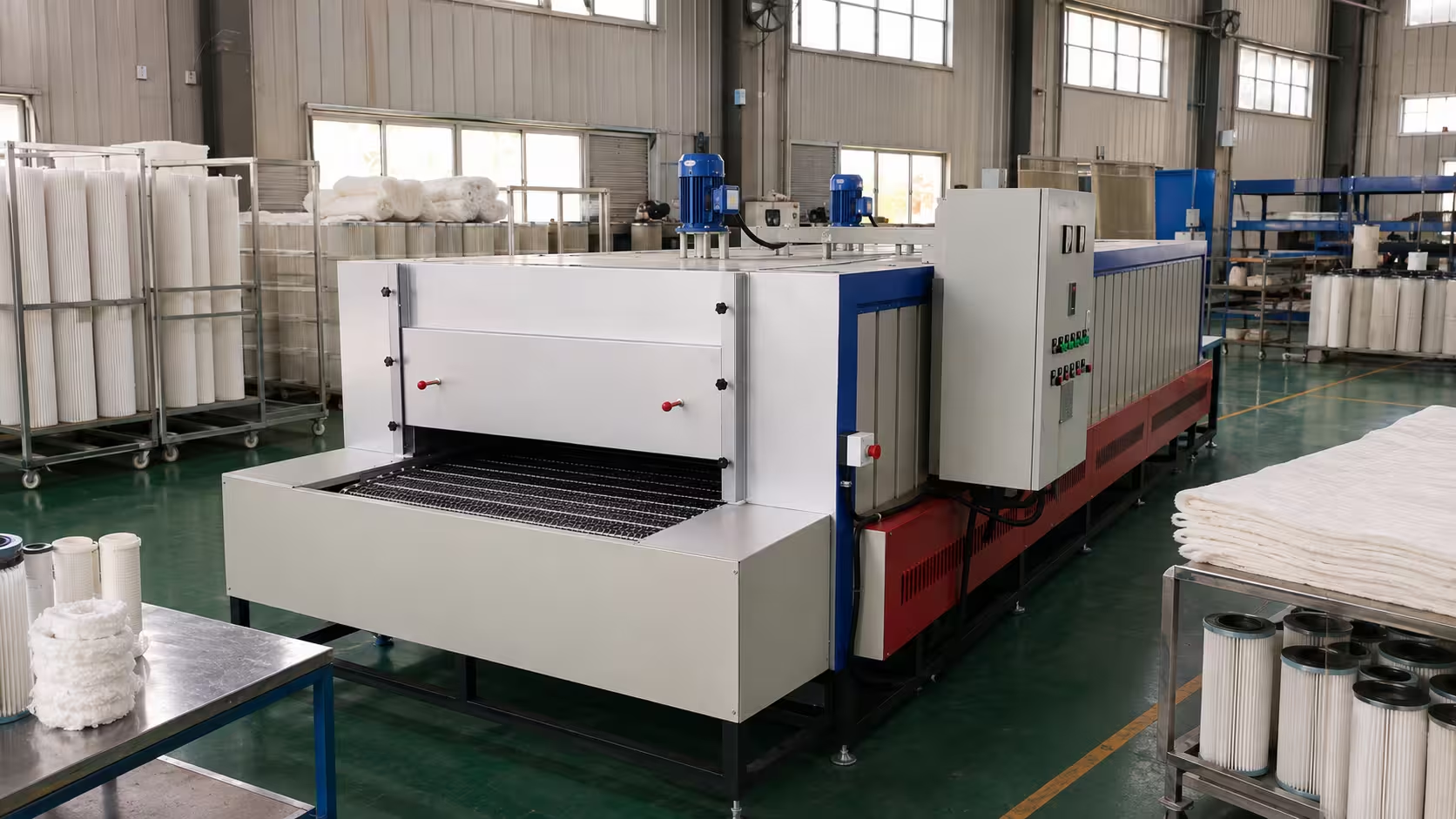
Multi-Zone Control Adds Flexibility - but Also More Parameters to Manage
A single-zone line may only need one process-temperature setpoint plus conveyor speed, alarms and basic exhaust/interlocks. A multi-zone system can add several temperature loops, fan speeds, exhaust settings, recipe logic and permissives.
This can be valuable when several products need different profiles. It also means the RFQ should define who controls the conveyor speed, whether recipes are required, how zones interlock, what happens after an alarm, and whether the oven exchanges signals with upstream or downstream machines.
| Control scope | Single-zone tendency | Multi-zone tendency |
|---|---|---|
| Temperature loops | One principal process loop | Several independent loops |
| Recipe management | Often simple | Useful for profile changes between products |
| Fan / airflow adjustment | Common global setting | May be independent by stage |
| Exhaust strategy | Can be centralized | May need stage-specific balancing for drying/VOC load |
| Commissioning | Fewer interacting variables | More tuning to verify zone transitions and product profile |
Do Not Buy Zones You Cannot Tie to a Process Requirement
Multi-zone architecture can increase project cost through additional sensors, control loops, heaters or burner modulation stages, circulation hardware, dampers, exhaust components, wiring, PLC/HMI programming and commissioning. The exact increase depends on how independent each zone truly needs to be.
It is also incorrect to assume that multi-zone automatically reduces operating energy. Independent zones can help distribute heat according to process demand, but actual energy use still depends on heat load, exhaust, insulation, openings, production utilization, setpoints and local energy conditions.
Instrumentation
Additional temperature sensors and feedback points.
Heat Control
More independently modulated heating stages where required.
Airflow
Separate fans, dampers or balancing hardware depending on design.
Automation
More PLC logic, recipes, alarms, interlocks and HMI objects.
Commissioning
More variables to tune and validate against the product profile.
A Cooling Section Is Not Just Another Heating Zone
Heating-zone count and cooling requirements should be specified separately. A process may use one heating zone followed by forced cooling, or several heating zones followed by cooling. The correct choice depends on whether cooling is only for safe handling or is itself part of the controlled thermal process.
If the product must leave the line below a defined temperature, evaluate a continuous heating and cooling oven. For sizing logic, air handling and discharge-temperature questions, use the conveyor oven cooling-section guide.
Some Processes Need Zone Control for More Than Air Temperature
Zone architecture becomes especially useful when the dominant heat-transfer or process condition changes along the line. The design may need different heat intensity, airflow, exhaust or validation requirements by stage.
Infrared-assisted profiles
An industrial IR conveyor oven can use separately controlled IR sections where fast surface response or staged radiant intensity is useful.
Continuous sterilizing processes
A continuous sterilizing oven may require controlled heating and exposure stages depending on the validated process and product requirements.
Drying and curing stages
Wet products, coatings, resins and thick parts can change behavior as temperature rises, so early and late zones may need different thermal or exhaust priorities.
Specify the Product Profile Before Specifying the Number of Zones
For a useful engineering review, provide the product size and weight, carrier or belt loading, entry temperature, required product-temperature profile, maximum allowable ramp rate if known, soak/cure time, hourly throughput, available floor space and required discharge condition.
Start with the simplest profile that can pass the process
Separate must-have thermal stages from "nice to have" control. This keeps the first concept commercially disciplined and shows exactly why an extra zone would be added.
Review Your Temperature Profile
Send the required ramp, soak or cure stages with throughput and product data. ZonHoo can translate the profile into preliminary zone count, zone length, airflow and control scope.
Review Multi-Zone Oven Options →
Single-Zone vs Multi-Zone Conveyor Oven FAQ
These questions help separate a genuine process need for multiple zones from unnecessary specification complexity.
What is a single-zone conveyor oven?
A single-zone conveyor oven uses one principal controlled thermal environment across its heated process section. It may still use several heaters, ducts or sensors; the key point is that they support one controlled heating stage rather than several independently controlled temperature stages.
What is a multi-zone conveyor oven?
A multi-zone conveyor oven divides the heated path into two or more separately controlled sections so the product can experience different setpoints or process conditions as it moves through the line.
How many temperature zones does my conveyor oven need?
Use the minimum number required to reproduce the necessary product-temperature profile. Start from the required ramp, soak/cure stages, throughput and product response, then allocate physical conveyor length to each stage. Zone count should be the result of the process analysis, not the starting assumption.
Is a multi-zone conveyor oven always more accurate?
No. More control zones create more opportunities to shape the profile, but accuracy still depends on airflow, sensor placement, heat-transfer conditions, zone interaction, load consistency and commissioning. Extra controllers cannot compensate for poor thermal design.
Does a multi-zone oven save more energy?
Not automatically. Independent zones can match heat input more closely to different process stages, but actual energy consumption depends on the total heat load, exhaust, openings, insulation, production utilization, temperature levels and heating method.
Can a single-zone oven still have multiple heaters?
Yes. Several heater banks or elements can serve one controlled zone. "Zone" refers to an independently controlled process section, not simply the number of heating elements installed.
Should the heating zones all be the same length?
Not necessarily. Zone length should reflect how much residence time each stage needs at the selected conveyor speed. A long soak stage may require more physical length than a short preheat stage.
Is a cooling zone counted as one of the temperature zones?
For specification purposes, it is clearer to treat cooling separately. Define the number of heated zones first, then state the required discharge temperature, cooling time and whether cooling is for handling safety or part of the controlled process.