
Industrial Conveyor Oven Selection Guide
Choose the conveyor type, heating method, zone layout and system configuration around the product—not around a generic oven catalogue. This guide turns product support, throughput, temperature profile and plant constraints into a practical equipment shortlist.
An industrial conveyor oven is not selected by temperature and chamber width alone. It is a thermal-processing system in which the conveyor, product loading pattern, airflow, heat source, controls, exhaust and upstream/downstream interfaces must operate as one line.
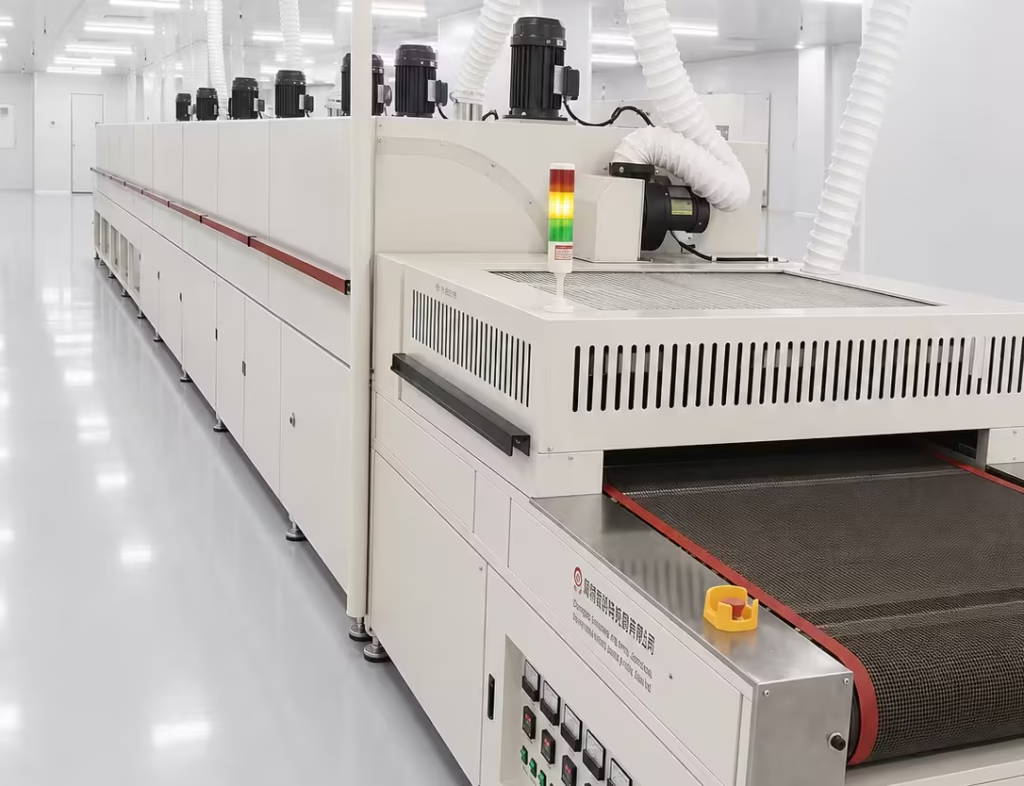
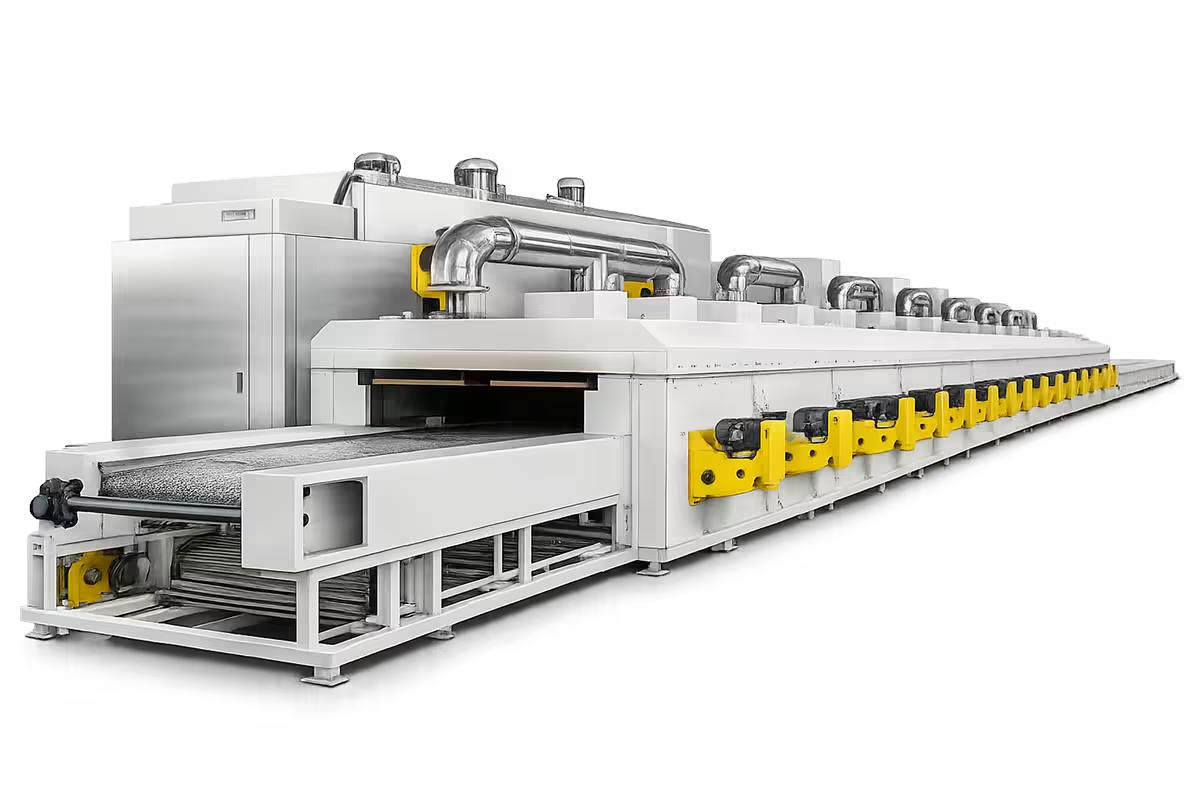
The fastest way to narrow the field is to begin with the physical product. Determine how it can be supported, how many units must pass per hour, how long the product must remain under controlled heat and what condition it must reach before leaving the line. From there, you can compare continuous oven configurations, review a standard belt-based industrial conveyor oven, or move directly into custom continuous oven engineering when the line cannot be solved with a conventional arrangement.
Is a Conveyor Oven the Right Processing Format?
A conveyor oven is most effective when similar products move through a repeatable thermal process at a predictable rate. The process does not need to run at one constant temperature, but the loading pattern and production logic should be stable enough to define a controlled travel path.
Strong indicators for a conveyor oven
- Production is continuous, repetitive or tied to an upstream manufacturing line.
- Product spacing and orientation can be controlled.
- Throughput is expressed as parts per hour, metres per minute or a defined takt time.
- Heating, soaking, curing, drying, preheating or cooling can be completed while the product moves.
- Manual batch loading is creating labor, consistency or work-in-process constraints.
Situations that may favor batch processing instead
- Product sizes and recipes change frequently.
- Each load requires a different dwell time.
- Production volumes are intermittent or too low to justify a permanent line.
- Parts require complex manual loading, masking or repositioning during the cycle.
The important question is not whether a conveyor can physically move the product. It is whether continuous movement improves repeatability, labor utilization, throughput and integration enough to justify a dedicated line.
Six Inputs That Control Every Conveyor Oven Selection
Before choosing equipment names, establish the engineering inputs below. These six categories prevent the most common mistake in conveyor oven buying: selecting a machine concept before confirming the actual product and production duty.
Select the Conveyor by How the Product Must Be Supported
The conveyor is the mechanical foundation of the oven. Belt material, chain pitch, roller spacing, fixture attachment and drive torque affect product stability, airflow exposure, heat transfer, maintenance access and final oven cost.
Heavy-duty chain conveyor oven
Use dual-strand chain, chain-and-slat or custom fixture carriers when the load is heavy, hot, irregular or must be positively located.
- Good for pallets, molds, dies, baskets and dedicated fixtures
- Supports indexing and positive product location
- Requires chain, sprocket and lubrication-temperature review
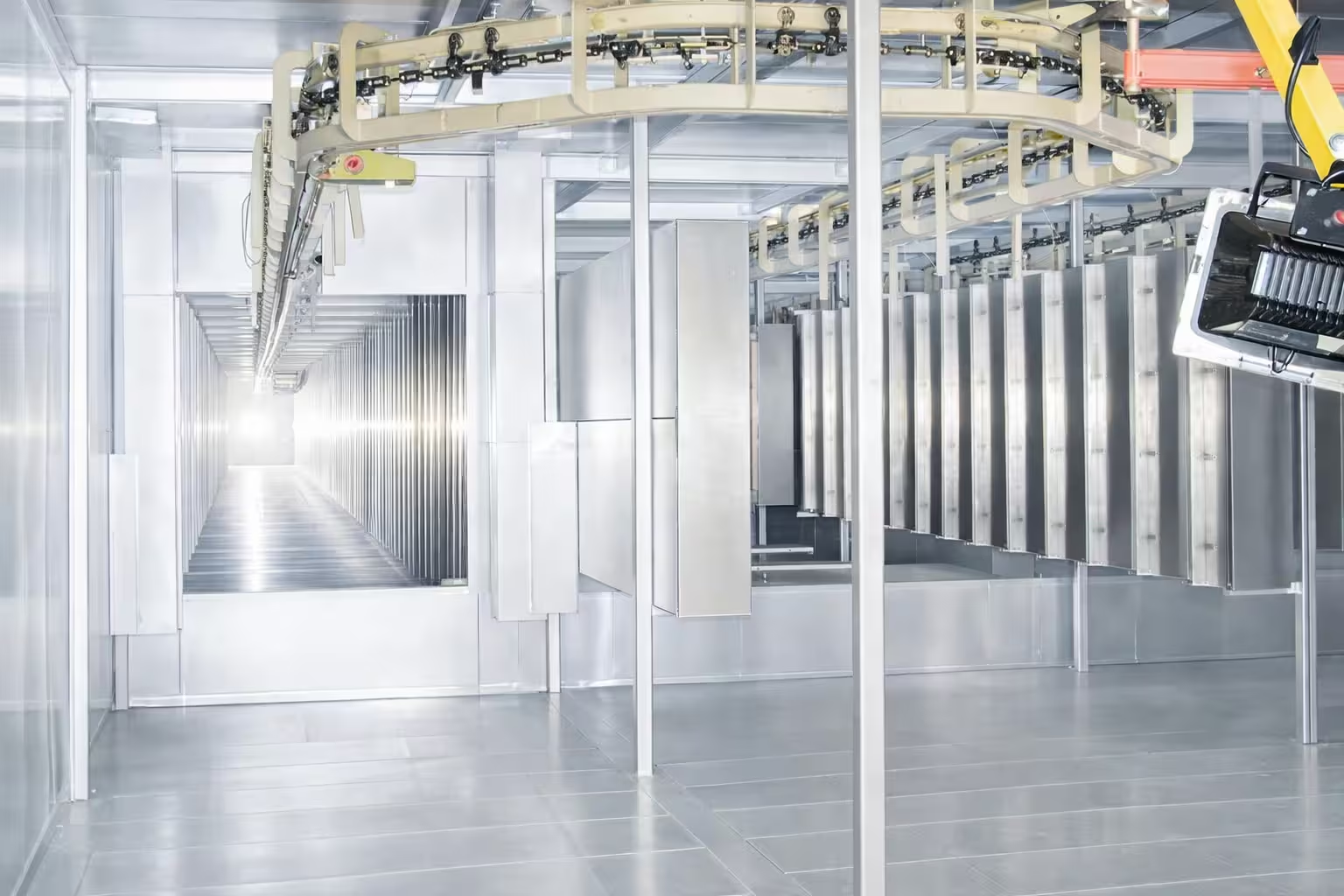
Overhead conveyor oven for suspended parts
Best when products already travel on hooks, hangers or trolleys through coating, washing or assembly operations.
- Useful for painted components and complex three-dimensional parts
- Leaves the lower chamber open for airflow and drainage
- Requires hanger spacing, product swing and conveyor-slot sealing review
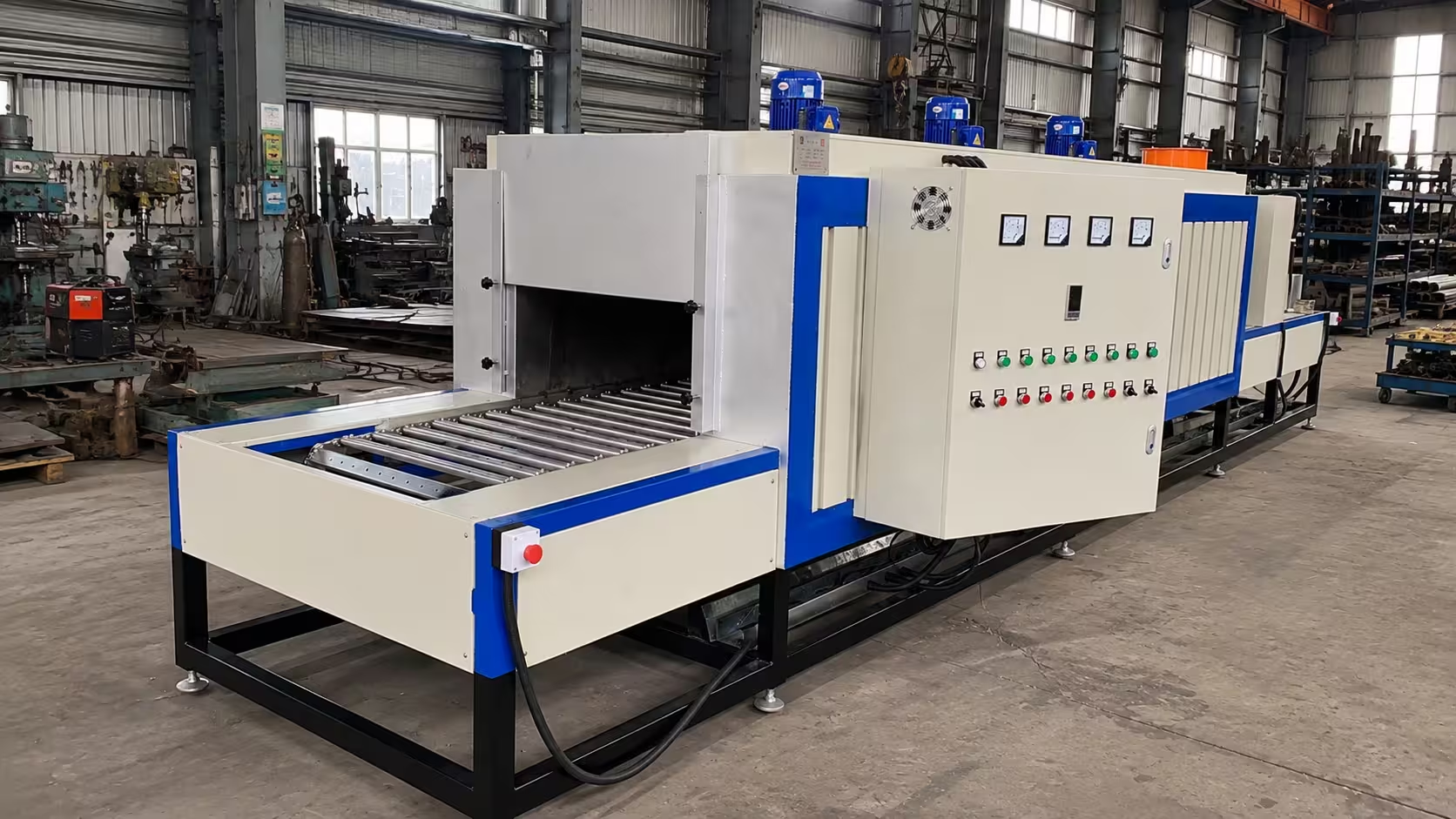
Powered roller conveyor oven
Suitable for rigid trays, pallets, panels and fixtures that maintain stable contact across multiple rollers.
- High load capability and direct inline transfer
- Can support continuous movement or indexing
- Roller pitch must match the shortest stable load footprint
Mesh belt or flat belt
The most versatile choice for small, medium-weight or distributed products that can rest directly on a continuous belt.
- Good airflow access and broad application range
- Common for drying, curing, preheating and light heat treatment
- Belt material, tracking and allowable loading must be confirmed
| Conveyor format | Best load type | Main advantage | Selection risk to check |
|---|---|---|---|
| Mesh / flat belt | Small parts, sheets, distributed loads | Versatile and airflow-friendly | Belt sag, tracking, marking and open-area percentage |
| Chain / slat | Heavy fixtures, pallets, molds | Positive support and high load capability | Thermal expansion, lubrication and uneven loading |
| Powered roller | Rigid, flat-bottomed products | Direct inline transfer and heavy loads | Roller pitch and product stability |
| Overhead | Suspended coated or assembled parts | Integrates with paint and finishing lines | Part swing, hanger heat exposure and slot losses |
Select the Layout by Required Dwell Time and Available Floor Space
Once throughput and process time are known, the system needs enough conveyor path to keep every product under controlled conditions for the required duration. A straight tunnel is usually the simplest solution, but it is not always the best use of plant space.
Single-pass tunnel
The simplest arrangement for moderate dwell times, clear line flow and easy access from both ends.
Multi-level conveyor oven systems
Multiple conveyor levels increase travel time inside a compact footprint.
Large-part continuous oven
Built around wide belts, tall product envelopes, heavy loads or large production lanes.
Do not use a multi-level arrangement merely to make the oven look compact. Transfers between levels, belt access, cleaning, product stability and maintenance must still suit the process. Where the required layout is unusual, a custom arrangement should be evaluated from the product path outward.
Select the Number of Zones by the Product Temperature Profile
A zone is justified when the process needs a meaningful change in temperature, airflow, exhaust or control behavior along the conveyor path. More zones do not automatically improve quality; they add value only when they reproduce the required product profile more accurately.
Single-zone heating
Suitable when the product can enter, heat and remain at one operating condition without a staged profile.
Multi-zone conveyor oven
Uses independently controlled sections for preheat, ramp, soak, cure or staged drying.
Continuous heating and cooling oven
Adds controlled or forced cooling before the product reaches handling, inspection or the next operation.
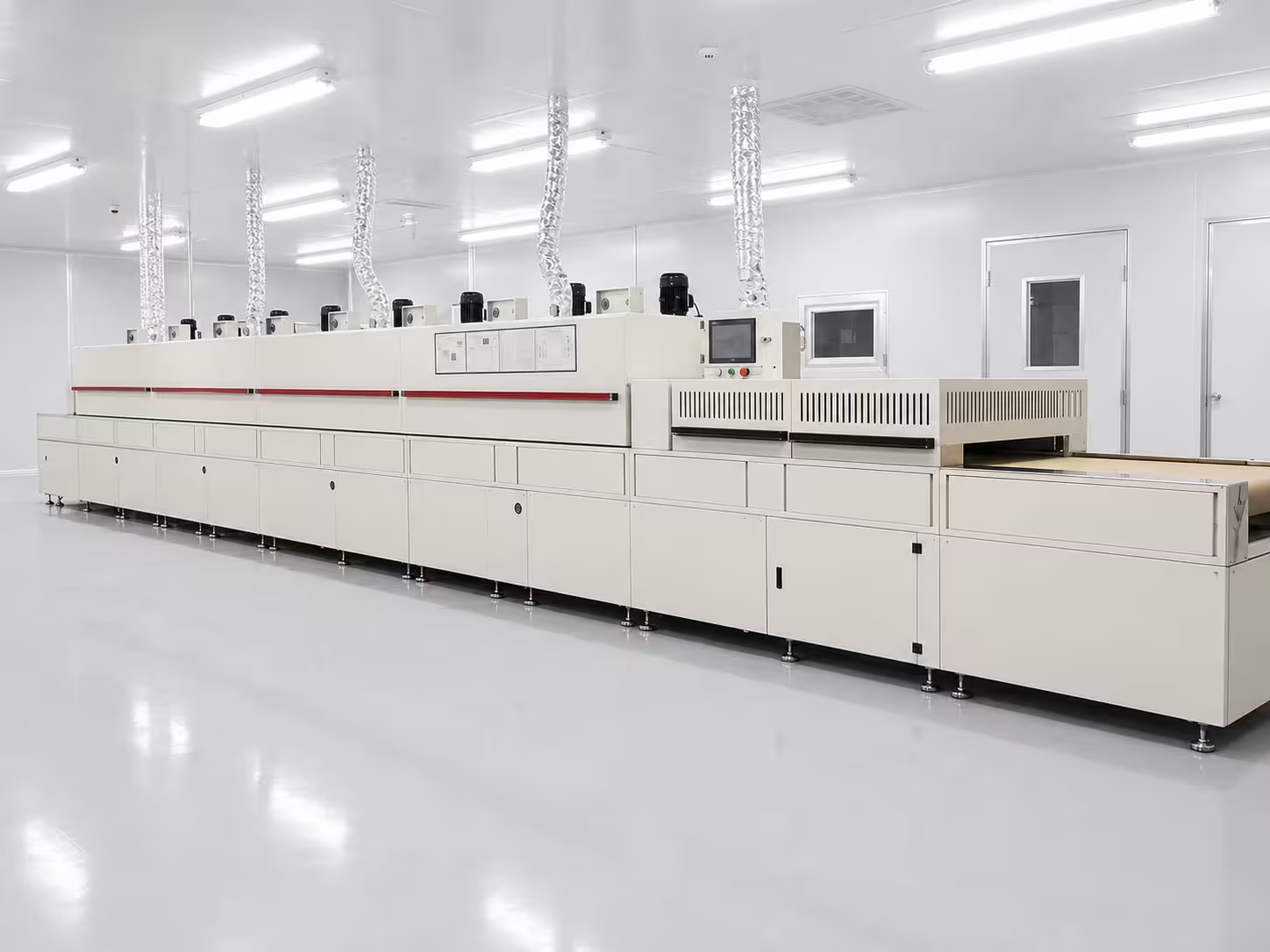
Zone boundaries should be based on product response. A thermocouple profile on the actual product is more useful than dividing the oven into equal-length sections without process evidence.
Select the Heating Method from Process Response and Plant Utilities
Electric, fuel-fired and infrared systems can all be effective. The correct choice depends on heat load, control response, plant utilities, exhaust conditions, maintenance expectations and the way energy must reach the product.
Precise, modular heat input
Often preferred for clean operation, straightforward control and applications where installed electrical capacity is available.
Gas-fired conveyor oven
Often considered for large heat loads, high production rates and plants with suitable gas infrastructure.
Industrial IR conveyor oven
Transfers energy rapidly to receptive surfaces and can shorten heat-up sections for selected products and coatings.
Hybrid systems may combine infrared for rapid initial response with convection for temperature equalization and soaking. The best heating method is the one that produces the required product result at the necessary rate—not simply the option with the lowest nominal energy price.
Check Special Requirements Before Freezing the Oven Concept
Several process conditions can change the equipment category, exhaust design, materials of construction or safety system. They must be identified before a general conveyor oven layout is treated as final.
Hygiene, sterilization and controlled process environments
Processes involving sterilization, sanitation or controlled contamination require different chamber details, airflow, cleanability and validation logic. A purpose-designed continuous sterilizing oven should be evaluated rather than treating sterilization as a normal high-temperature conveyor application.
Volatiles, solvents, smoke and heavy moisture loads
Identify what is released, at what rate and during which process stage. Exhaust quantity, dilution air, purge logic, chamber pressure and possible treatment of discharged air may affect both oven length and heating capacity.
Line integration and acceptance requirements
Define conveyor elevation, infeed/outfeed length, sensor handshakes, reject logic, recipes, production data, emergency stops and interface responsibility. Acceptance should state measurable results such as throughput, product temperature profile, temperature uniformity, moisture removal or cure result.
Industrial Conveyor Oven Selection Matrix
Use this table to create an initial shortlist. Final selection still requires confirmation of product loading, heat load, emissions, controls and installation scope.
| Primary requirement | First configuration to evaluate | Why it fits | Important check |
|---|---|---|---|
| Small or distributed products | Mesh / flat belt conveyor oven | Versatile support and good airflow access | Belt marking, tracking and open area |
| Heavy pallets, molds or fixtures | Chain conveyor oven | Positive, durable load support | Chain load, pitch and thermal expansion |
| Rigid flat-bottomed products | Roller conveyor oven | Direct inline transfer and high load capacity | Minimum contact length across rollers |
| Suspended coated components | Overhead conveyor oven | Integrates with finishing lines | Hanger spacing, swing and slot sealing |
| Long dwell time, limited floor length | Multi-level conveyor oven | Longer path in a compact footprint | Level transfers and maintenance access |
| Staged preheat, ramp, soak or cure | Multi-zone conveyor oven | Independent process stages | Product profile and zone boundaries |
| Low discharge temperature required | Heating oven with cooling zone | Controls the condition before downstream handling | Cooling medium, condensation and exhaust |
| High heat load with gas available | Gas-fired conveyor oven | Scalable fuel-fired heat input | Gas train, combustion and local code |
| Rapid surface heating | Infrared conveyor oven | Fast radiant energy transfer | Shadowing and product absorption |
| Wide, tall or oversized product | Large conveyor oven | Custom envelope and material handling | Shipping, modules and temperature uniformity |
| Sterilization or hygienic duty | Continuous sterilizing oven | Process-specific cleanability and controls | Validation, materials and airflow classification |
Fast selection sequence
Move from Equipment Selection to a Quote-Ready Concept
Once the basic conveyor, layout, zones and heat source have been shortlisted, the next task is to convert process time and production rate into a physical oven concept. Avoid freezing the equipment length before product spacing and conveyor speed are confirmed.
Frequently Asked Questions
These answers address the most common early-stage decisions. Final configuration depends on the actual product, load pattern, process profile and installation conditions.
What information is most important when selecting an industrial conveyor oven?
Start with maximum product dimensions, weight including carriers, required throughput, process temperature, required product dwell time, product emissions and available floor space. These inputs determine the conveyor concept, belt width, travel speed, heated length, heat load and exhaust scope.
How do I choose between a belt, chain, roller and overhead conveyor oven?
Choose according to how the product can be supported. Mesh or flat belts suit distributed and lighter loads; chain systems suit pallets, fixtures and heavy products; powered rollers suit rigid flat-bottomed loads; overhead conveyors suit suspended products already moving through coating or finishing lines.
When is a multi-level conveyor oven the better choice?
A multi-level layout is useful when the required dwell time creates a long conveyor path but the plant has limited linear floor space. Product transfer between levels, maintenance access and stability during direction changes must be reviewed before choosing this arrangement.
What is the difference between a multi-level and a multi-zone conveyor oven?
Multi-level describes the physical conveyor path arranged on stacked levels to gain residence time in less floor space. Multi-zone describes separate controlled thermal sections used to create different temperature, airflow or exhaust conditions along the process path. One system can use both features, but they solve different problems.
Should I select electric, gas-fired or infrared heating?
Electric heating is often selected for clean, controllable operation; gas firing is often evaluated for larger heat loads where suitable gas service is available; infrared is useful for rapid energy transfer to receptive product surfaces. The final decision should consider product response, installed utilities, exhaust, control range and operating duty.
How is conveyor oven length determined?
Heated length is primarily related to the required residence time and conveyor speed, but conveyor speed itself depends on throughput, product spacing and the number of products carried across the belt width. Entry and exit vestibules, zone transitions and cooling sections are then added to the overall system length.
Do I need an integrated cooling zone?
Add cooling when the product must reach a defined temperature before handling, inspection, packaging or the next operation. Cooling design should consider ambient conditions, allowable cooling rate, condensation risk, contamination control and whether air, water-assisted equipment or another method is appropriate.
Can ZonHoo recommend a configuration when some process data is unknown?
Yes. Unknown fields can be marked “TBD.” ZonHoo can begin with product drawings or photographs, production rate, target temperature and available space, then help define conveyor support, speed, heated length, zone layout and the additional testing required before final design.