
Conveyor Oven Length Calculation: Heated Length Formula
Calculate the preliminary heated conveyor path from belt speed and required residence time—then separate that result from the oven’s total installed length.
This page answers one narrow engineering question: how much heated conveyor path is required at a known line speed and process residence time? For the full relationship between speed, dwell and throughput, use the conveyor oven dwell-time calculation guide. For complete equipment dimensions, use the separate guide to size an industrial conveyor oven.
Conveyor Oven Heated Length Formula
For a continuously moving product, the first-pass relationship is straightforward:
Example units: metres = metres per minute × minutes. The same formula works in feet when speed is entered in feet per minute.
Unit check
- Metric: m/min × min = m
- Imperial: ft/min × min = ft
- Do not mix seconds, minutes, metres and feet without conversion.
- Use the actual heated travel path, not the outside shell dimension.
A custom industrial conveyor oven system is normally engineered by connecting this path-length result to product loading, usable conveyor width, heat load, zones and site conditions.
Calculate Preliminary Conveyor Oven Heated Length
Enter the proposed conveyor speed and required process residence time. The calculator returns the straight-line heated path required by the equation.
Heated Length Calculator
This tool calculates heated path only. It does not add entry, exit, cooling, transfer or service sections.
Enter positive values for belt speed and residence time.
The total installed oven length will be greater after entry, exit, transitions, cooling and conveyor extensions are added.
The Required Residence Time Must Come from Product Performance
The formula does not determine how long the product should remain in the oven. It only converts an already valid process time into conveyor path length.
Product Heat-Up
Air may reach setpoint quickly while the product core, fixture or thick section remains below the required process temperature.
Required Process Stage
Curing, drying, sintering, preheating or stress-relief time should begin from the appropriate product condition—not automatically from chamber entry.
Load and Fixture Mass
Heavy trays, molds, carriers and dense loading absorb heat and may lengthen the effective thermal cycle.
Airflow and Exposure
Product spacing, belt openness, orientation and shielding affect how quickly usable heat reaches the critical surface or internal location.
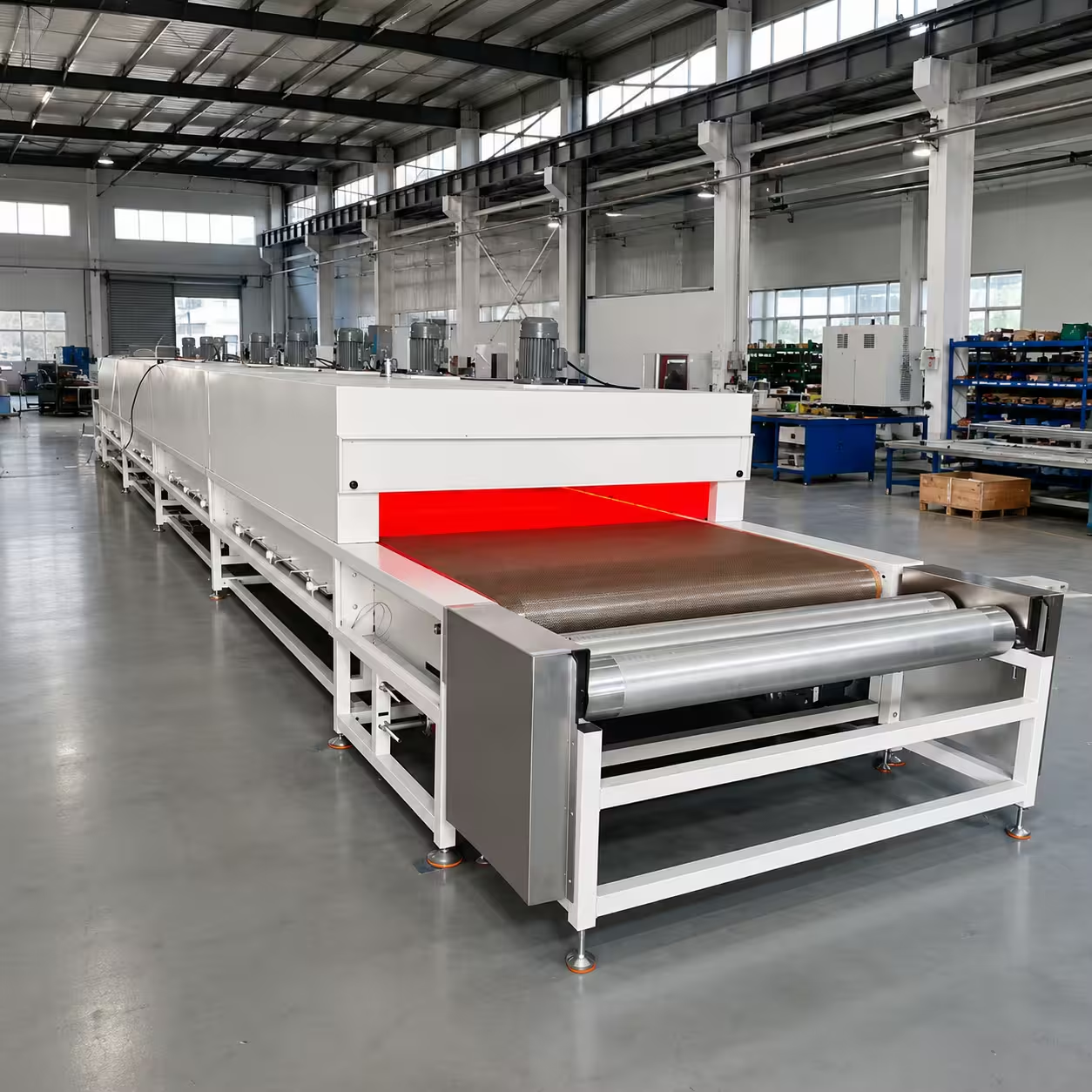
Conveyor Oven Length Calculation Examples
Moderate Line Speed
Belt speed is 1.2 m/min and the validated residence time is 18 minutes.
1.2 × 18 = 21.6 m heated pathSlower Heavy-Load Process
Belt speed is 0.45 m/min and the validated residence time is 35 minutes.
0.45 × 35 = 15.75 m heated pathFoot-Based Line
Belt speed is 3 ft/min and the validated residence time is 12 minutes.
3 × 12 = 36 ft heated pathThese examples do not show heater power, usable conveyor width, total heat load or installed machine length. They demonstrate only the length relationship.
Heated Length Is Not the Overall Conveyor Oven Length
A calculated heated path is only one part of the physical line. Final layout may include several additional sections.
| Length item | Included in the formula? | Engineering consideration |
|---|---|---|
| Active heated path | Yes | Speed multiplied by validated thermal residence time |
| Entrance and exit vestibules | No | Opening size, leakage control and product clearance |
| Zone transitions | Project-specific | Some transition distance may not deliver the same active process condition |
| Cooling section | No | Required discharge temperature and cooling rate |
| Infeed and outfeed conveyors | No | Loading, unloading, transfer, sensing and operator access |
| Drive and service space | No | Motors, tensioning, controls and maintenance clearance |
When a controlled discharge temperature is required, the line may need a conveyor oven with an integrated cooling zone. Cooling length should be calculated separately from the heated length.
Allocate the Total Heated Length Across the Required Temperature Stages
A single total length does not define the temperature profile. When products require controlled preheat, ramp, soak or cure stages, each stage needs enough path at the selected belt speed.
Preheat Length
Provides controlled early heat input and begins product-temperature rise without exceeding surface or material limits.
Ramp / Equalization Length
Allows the load to approach the target range while reducing excessive surface-to-core temperature difference.
Process / Soak Length
Provides the valid time required after the product reaches the specified process condition.
A continuous oven with independent heating zones can assign different setpoints and airflow conditions to these stages. The sum of zone lengths must still support the total conveyor path and product-temperature profile.
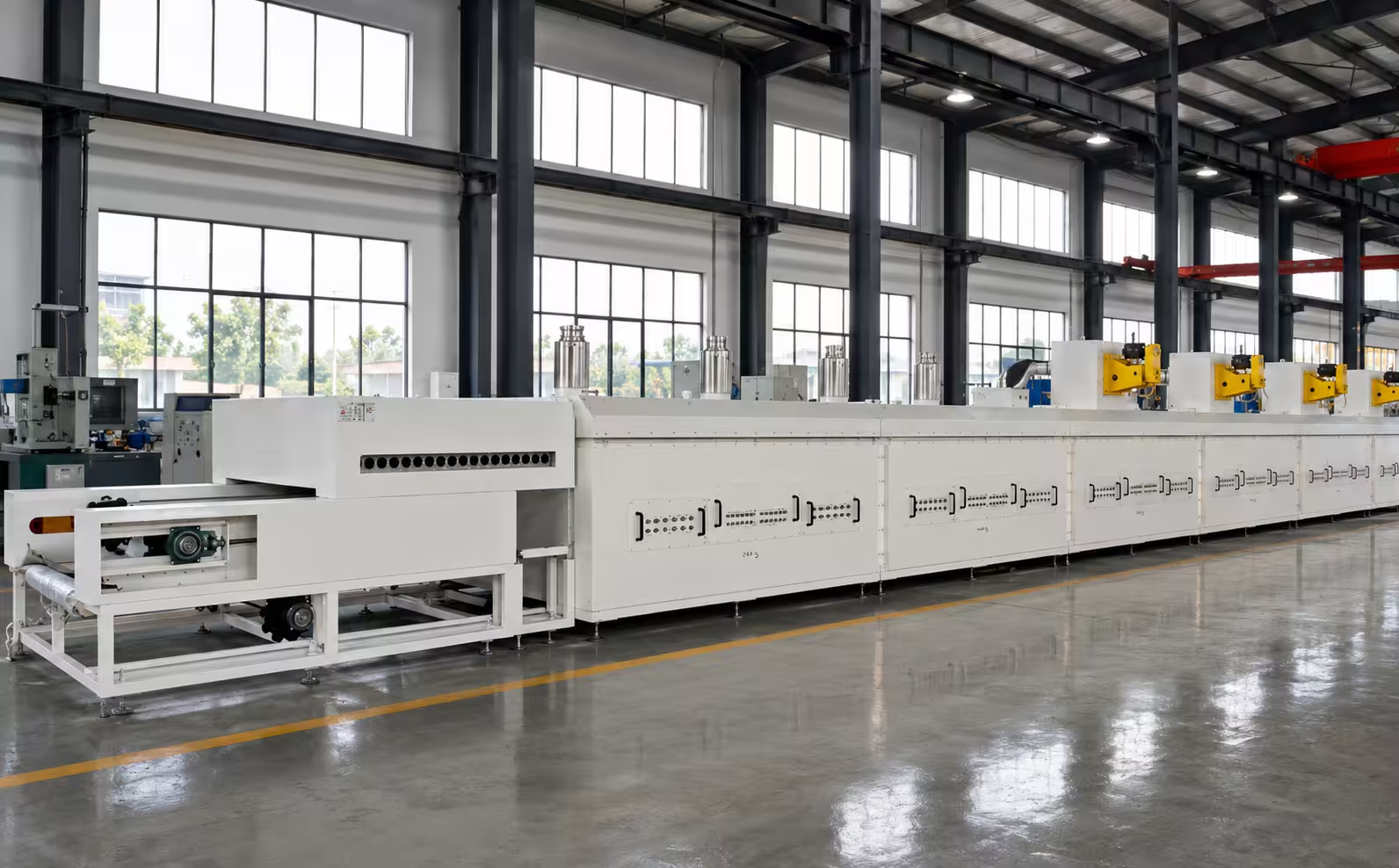
A Multi-Level Layout Can Reduce Floor Length—Not Required Conveyor Path
When the required conveyor path is longer than the available straight-line footprint, the path may be folded vertically or arranged over multiple levels. The product still travels the required distance; only the plan-view layout changes.
A multi-level conveyor oven system is most useful where floor length is constrained and the product can tolerate vertical transfer or multiple conveyor passes.
Conveyor Structure and Transfer Logic Affect the Final Layout
The thermal formula remains the same, but the physical implementation changes with conveyor structure, load support and line interfaces.
Powered Roller Conveyor Oven
Suitable for stable, flat-bottomed trays, pallets and fixtures. Roller pitch, drive zones and transfer gaps can add non-heated length to the complete layout.
Independent Thermal Zones
Zone boundaries, separation sections, sensors and controls determine how the calculated path is divided into usable process stages.
Integrated Heating and Cooling
Heating length and cooling length should be sized as separate thermal duties, then combined into one continuous line arrangement.
Verify the Heated Length Before Fixing the Machine Layout
Provide the product size and weight, carrier, target product-temperature profile, required process time, line speed, pieces per hour, lane arrangement, cooling requirement and available site dimensions. ZonHoo can then review whether the calculated path is thermally valid and physically practical.
Separate Path Length from Machine Length
Document the calculated active heated path first. Then add entry, exit, transition, cooling, infeed, outfeed, drive and service requirements during the layout review.
Verify Your Required Heated Length
Send speed, process time, product data and available floor space. ZonHoo will review the thermal path, zone allocation and complete line envelope.
Plan Conveyor Oven Length & Layout →
Conveyor Oven Length Calculation FAQ
What is the conveyor oven length formula?
The preliminary heated path equals belt speed multiplied by required residence time. For example, 1.2 m/min × 18 minutes equals 21.6 m of heated conveyor path.
Is heated length the same as total conveyor oven length?
No. Overall length may also include entrance and exit sections, thermal transitions, cooling, infeed and outfeed conveyors, drive equipment and service clearance.
Does cure time equal required oven residence time?
Not necessarily. A stated cure time may begin only after the product reaches a specified temperature. Total residence time may need to include product heat-up, thermal equalization and the valid cure or process hold.
Can I shorten the oven by increasing belt speed?
Increasing speed shortens residence time at a fixed length. The oven can be shortened only when the product still reaches the required temperature and process result at that shorter exposure.
How is multi-zone conveyor oven length calculated?
Calculate the required time for each thermal stage, multiply each stage time by belt speed, and allocate the resulting lengths to preheat, ramp, soak or cure zones. Then review transition and separation requirements.
Does a multi-level oven reduce required heated length?
No. It reduces plan-view floor length by folding or stacking the conveyor path. The product still needs the same validated travel distance and thermal exposure.
Should cooling length be included in heated length?
No. Cooling is a separate thermal duty based on product mass, incoming temperature, target discharge temperature, airflow and line speed. It should be added separately to the total line layout.
What data is required to verify conveyor oven length?
Provide product and carrier size, mass, entry temperature, target product-temperature profile, validated process time, proposed belt speed, throughput, lane arrangement, cooling requirement and available footprint.