
Mesh Belt vs Chain Conveyor Oven: Which Conveyor Fits Your Load?
Compare product support, load capacity, airflow, fixtures, positioning, maintenance and lifecycle cost before choosing a mesh belt or chain conveyor oven.
For an industrial conveyor oven, the conveying system is part of the thermal process. It determines how the product is supported, how much of the surface is exposed to airflow, how accurately the product can be positioned, how much drive force is required and how the line will be maintained.
Start with the actual load: product dimensions, maximum weight, bottom surface, tray or fixture, required throughput and whether the load must be positively located. Those inputs define the practical industrial conveyor oven systems that should remain in the comparison. If you are still comparing several conveyor architectures, first compare conveyor oven configurations.
The Core Difference: Continuous Belt Support vs Chain-Based Mechanical Support
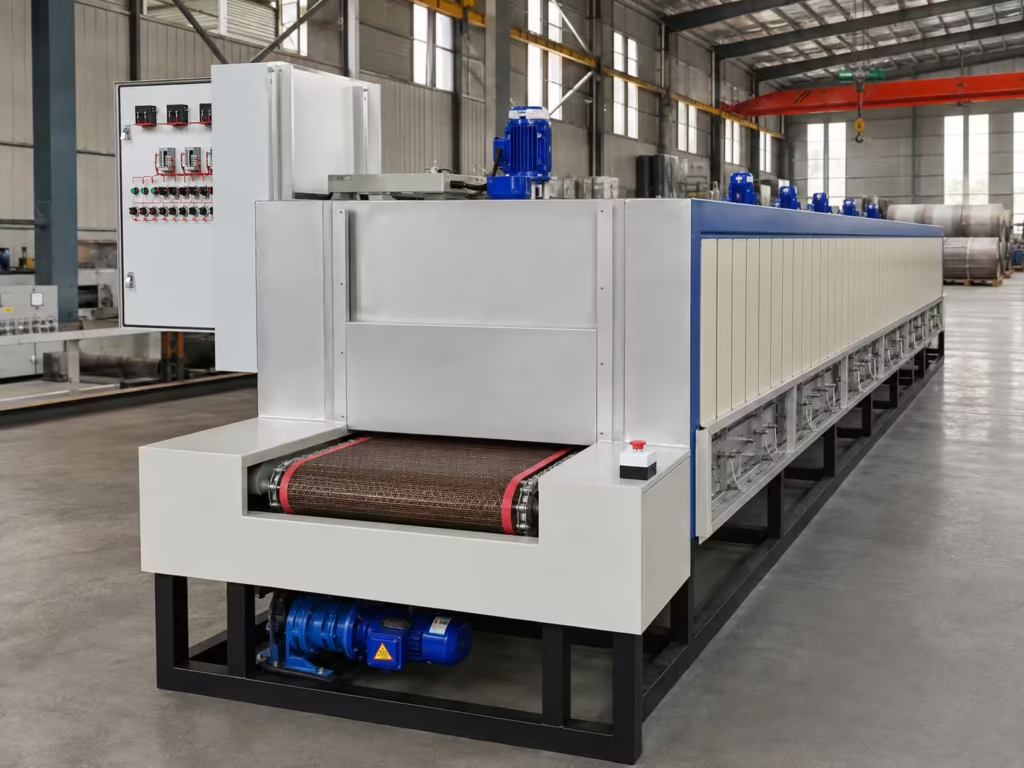
A mesh belt conveyor creates a continuous moving support surface. The product can sit directly on the belt or on a tray placed on the belt. In open-wire designs, a large part of the conveying surface remains open to recirculating air.
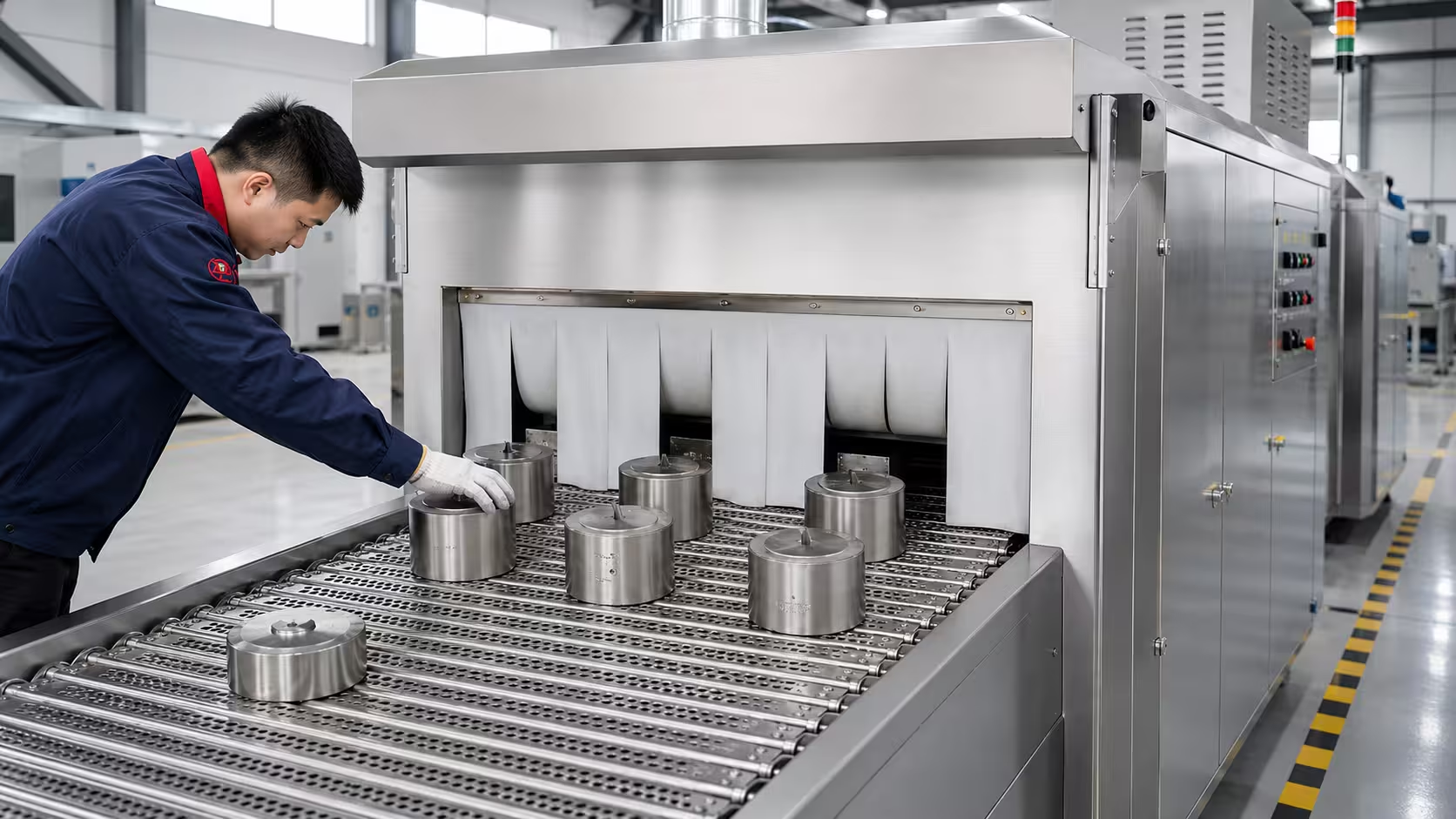
A chain conveyor transfers load through one or more chains, often with crossbars, slats, pallets or dedicated fixtures. This makes it easier to support heavy or irregular products and to control exactly where each load sits relative to the conveyor.
Best when continuous support matters
- Small or distributed products
- Parts resting directly on a belt
- Trays with moderate distributed load
- Processes benefiting from open airflow
- Simple continuous product flow
Best when load control matters
- Heavy pallets and fixtures
- Irregular conveying surfaces
- Positive product location
- Dedicated carriers or tooling
- High mechanical loading
Where chain support is the clear mechanical fit, a heavy-duty chain conveyor oven can be engineered around strand spacing, chain pitch, carrier design, sprocket layout and drive torque instead of forcing the load onto a general-purpose belt.
Mesh Belt vs Chain Conveyor Oven Decision Matrix
Use this matrix for early screening. Final selection still depends on the actual product, temperature, load distribution, line speed, contamination, access and maintenance conditions.
| Decision factor | Mesh belt | Chain / chain-and-slat | What should be checked |
|---|---|---|---|
| Small loose parts | Usually strong if openings suit the part size | Usually requires a tray, slat or fixture | Minimum part size and risk of tipping/fall-through |
| Heavy pallets / fixtures | Possible only within belt and support limits | Often the stronger architecture | Total load, point load and drive torque |
| Irregular bottom surface | May rock or load the belt unevenly | Can use dedicated support points or tooling | Contact geometry and carrier design |
| Through-belt airflow | Strong with open mesh | Depends on chain, slat and fixture blockage | Air path around and through the load |
| Positive positioning | Limited unless guides or fixtures are added | Strong with fixed carriers / indexing features | Robot, sensor and stop-position requirements |
| Cleaning | Large belt area may collect process residue | Chain, slats and fixtures create different cleaning points | Coating, adhesive, oil, dust or moisture load |
| Wear items | Belt, tracking, tension and supports | Chain, sprockets, guides, pins and lubrication | Temperature, load and access for replacement |
| Cost | Often mechanically simpler | Can cost more when carriers and heavy drive components are required | Full conveyor scope, not conveyor name alone |
Start with the Product Bottom Surface and Support Points
The first mechanical question is simple: what actually touches the conveyor? The answer may be the product itself, a tray, a basket, a pallet, a mold or a custom fixture. That contact interface is more useful for conveyor selection than the product name.
Direct belt contact
Flat or stable products can often travel directly on mesh, provided openings, marking, sagging and temperature compatibility are acceptable.
Tray-supported load
A tray can make either architecture workable, but tray mass, bottom geometry and airflow blockage must be included in the heat-load calculation.
Fixture-mounted parts
If orientation must remain fixed, chain-mounted tooling may provide a repeatable mechanical datum for heating, inspection or robotic transfer.
Irregular bases
Castings, frames and uneven assemblies may need defined support points rather than broad belt contact to prevent rocking or unstable travel.
For an RFQ, provide a photo or drawing of the underside of the load or carrier. This often reveals the conveyor requirement faster than a general product description.
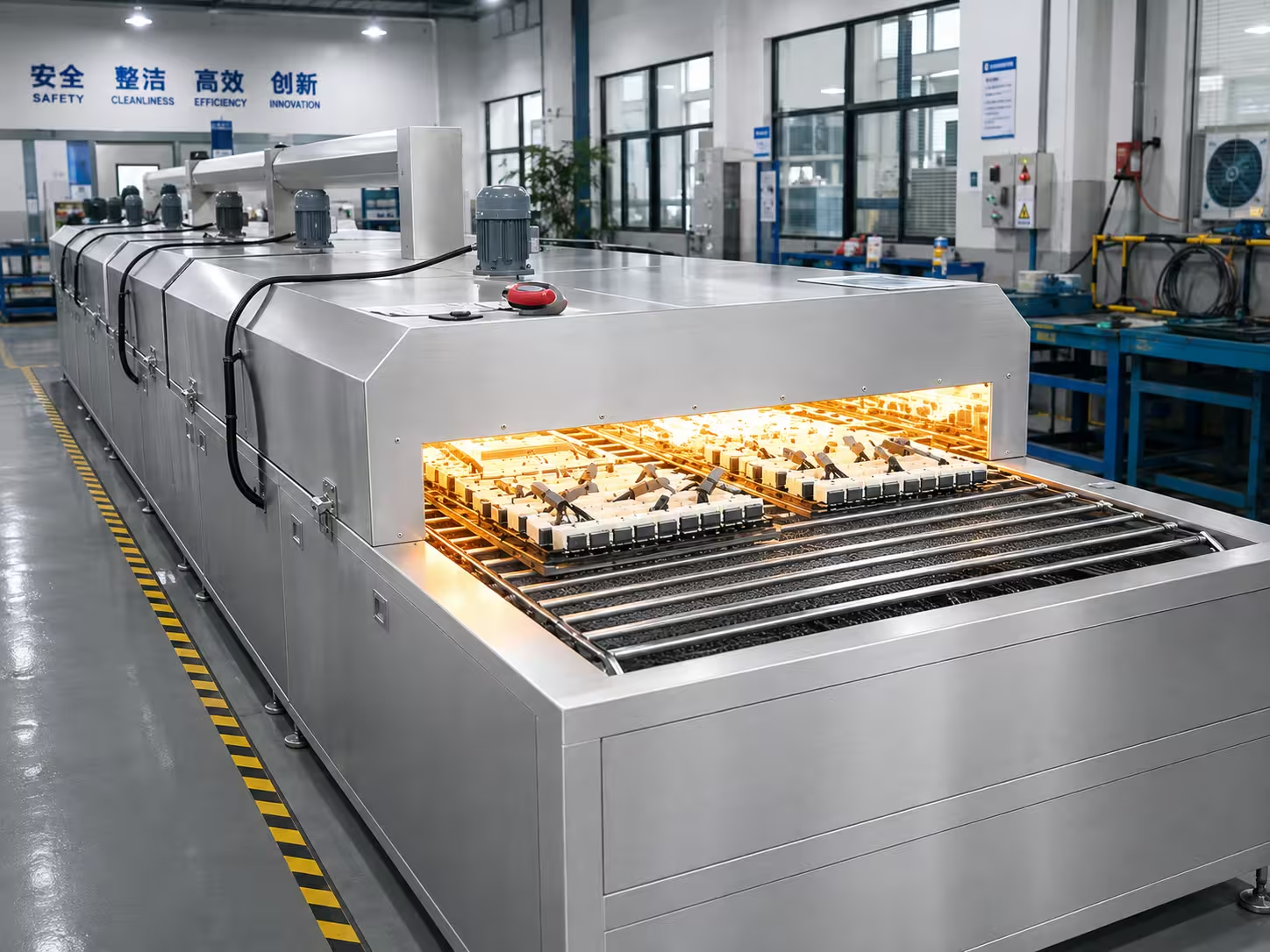
Load Capacity Depends on Distribution, Not Only Total Weight
A statement such as “the product weighs 80 kg” is not enough to select a conveyor. Engineering needs to know whether that weight is distributed over a large tray, concentrated on narrow feet, carried by two chain strands or supported by a rigid fixture.
For mesh-belt systems, the belt construction, width, support bed, span, temperature and allowable sag must be evaluated together. For chain systems, chain size, strand spacing, crossbars or slats, shaft/sprocket design, guides, thermal expansion and drive torque all contribute to usable capacity.
Conveyor Choice Changes Airflow Access and Heat Transfer
The conveyor is physically inside the airflow path, so it can help or obstruct thermal transfer. An open wire mesh allows recirculating air to reach the underside of many products and can be useful in drying or heating processes where bottom-side exposure matters.
Chain conveyors can leave large open areas between strands, but slats, pallets and fixtures may block air differently. That does not make chain thermally inferior; it means the airflow system must be designed around the real carrier and load rather than an empty conveyor.
Open area
Useful where process air should pass through the conveying plane or reach the underside of distributed products.
Selective support
Two or more strands can leave the center of the product open while supporting pallets or fixtures at engineered contact points.
Load simulation matters
Temperature uniformity should be evaluated with the production carrier and representative loading pattern whenever the process window is tight.
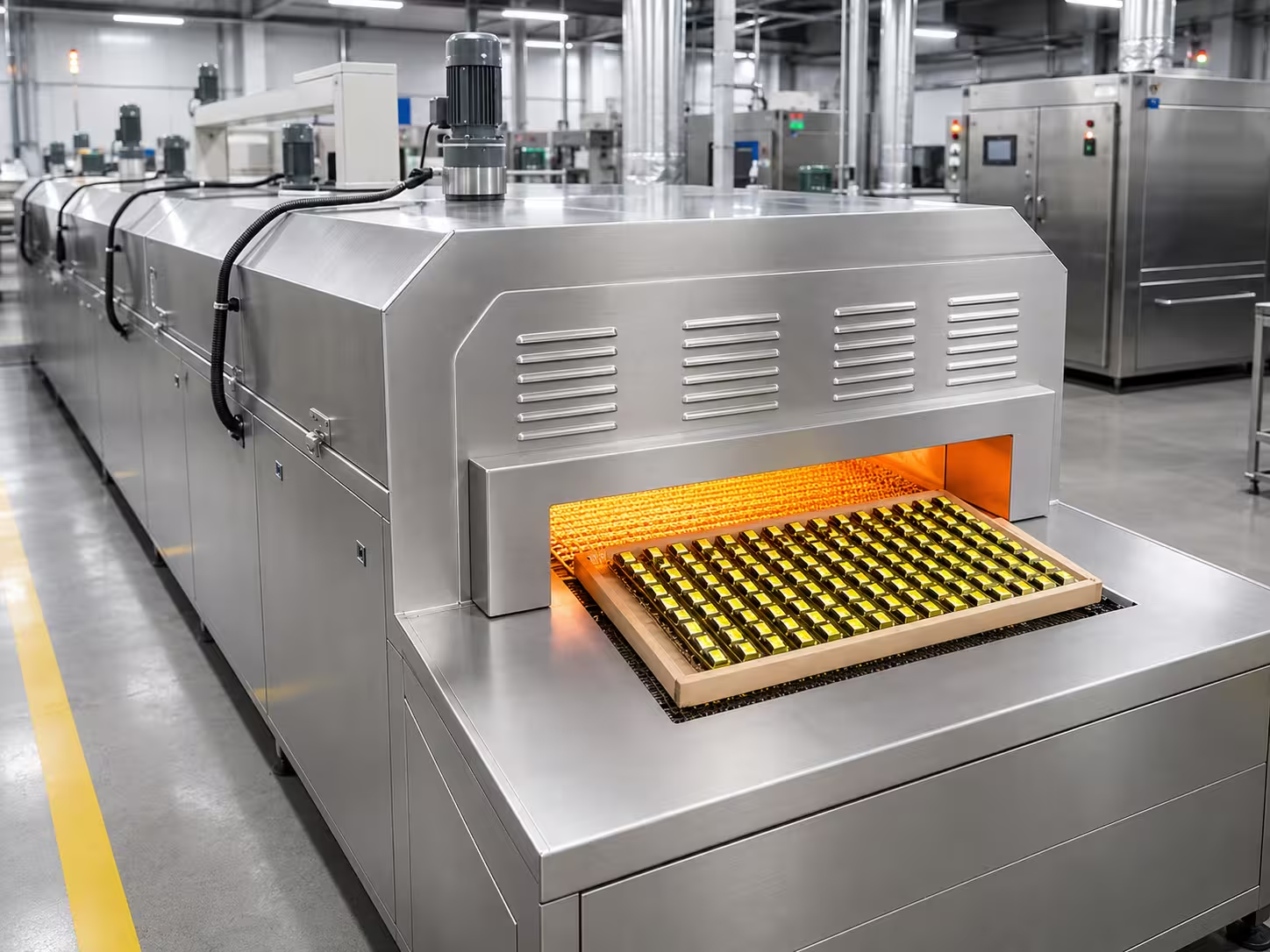
Product Stability and Positioning Can Override the Cost Difference
Continuous belt support is mechanically simple, but some processes require more than transport. Parts may need a repeatable orientation relative to nozzles, infrared emitters, sensors, robots or downstream equipment. Dedicated chain-mounted carriers can create a fixed product pitch and positive datum.
Conversely, adding fixtures to every product can increase carrier mass, cleaning work and heat load. If the product already sits stably on mesh, extra tooling may add complexity without improving the process.
- Use belt guides only when needed. Edge guides can control product path, but they should not compensate for an unstable product base.
- Use chain fixtures when orientation has value. Positive location can simplify automation, indexing, inspection and repeatable process exposure.
- Include thermal expansion. Long chains, fixtures and crossbars expand in the hot zone; clearances and guides must allow predictable movement.
- Check transfer points. Entrance, exit and gaps between conveyors often create more instability than the heated section itself.
Conveyor Type, Belt Speed and Oven Size Must Be Engineered Together
Mesh versus chain cannot be separated from production rate. The carrier pitch determines how many loads enter per minute, while conveyor speed determines residence time through the heated length. A chain system with large fixture pitch may need a different oven length from a mesh system carrying parts at close spacing—even when both products require the same thermal time.
Use a proper method to calculate conveyor belt speed and residence time, then apply a full conveyor oven sizing guide to connect belt width, product pitch, heated length, load density and available floor space.
Carrier pitch
Chain fixtures often establish a fixed pitch; mesh systems may allow closer or more flexible spacing depending on product stability.
Moving thermal mass
Heavy fixtures and slats repeatedly absorb heat and can materially change heater capacity and energy demand.
Usable width
Nominal conveyor width is not always usable product width; edge clearance, tracking and guide systems reduce the available envelope.
Transfer speed
Upstream and downstream equipment must accept the same product pitch or provide a controlled transition between conveyor sections.
Cleaning, Wear and Maintenance Affect the Better Long-Term Choice
The lowest-cost conveyor on the quotation is not necessarily the lowest-cost conveyor over years of operation. The process environment determines where wear and contamination accumulate and how quickly operators can inspect or replace components.
| Maintenance area | Mesh belt | Chain conveyor | RFQ question |
|---|---|---|---|
| Tracking / alignment | Belt tracking and edge condition are important | Chain guides and sprocket alignment are important | How will alignment be inspected and adjusted? |
| Tension | Must accommodate elongation and thermal growth | Chain take-up and thermal expansion must be managed | Is adjustment accessible outside the hot zone? |
| Wear items | Belt, slider/support surfaces, bearings | Chain, sprockets, guides, pins, bearings | Which parts are expected consumables? |
| Residue | Large belt area can carry coating, oil or adhesive | Residue can collect at chain, slat and fixture interfaces | What cleaning method is permitted? |
| Replacement access | Long belts need a practical joining/replacement route | Chain sections and fixtures need service access | Can maintenance occur without dismantling the oven? |
For sticky coatings, adhesives, dust, oil or corrosive moisture, tell the oven supplier before the conveyor is selected. Materials, access doors, removable catch trays, belt/chain construction and cleaning strategy may need to change.
When Neither Mesh Belt nor Chain Is the Best Answer
A comparison article should not force a two-choice answer. If the product or carrier has a rigid, flat underside and the line already uses powered rollers, a roller system can provide direct inline transfer without carrying a belt or dedicated chain fixture through the oven.
This is especially worth evaluating for rigid trays, pallets, molds, baskets and other loads that maintain stable contact across several rollers. In those projects, a roller conveyor oven for inline transfer may simplify the mechanical interface with upstream and downstream equipment.
Send the Load Interface Before You Lock the Conveyor Type
The fastest way to select between mesh belt and chain is to review the product from below. Provide the product or carrier drawing, maximum loaded weight, quantity per minute or hour, required temperature, process time, allowable contact marks, preferred orientation and upstream/downstream transfer method.
Use the load to eliminate the wrong architecture
We can compare mesh, chain and roller support around your actual bottom surface, load distribution, product pitch and airflow requirement before the oven layout is frozen.
Review Your Load & Conveyor Type
Send product photos or drawings, tray/fixture details, weight, throughput and process temperature. ZonHoo can recommend a practical conveyor architecture and identify the data still required for quotation.
SEND PRODUCT & LOAD DATA →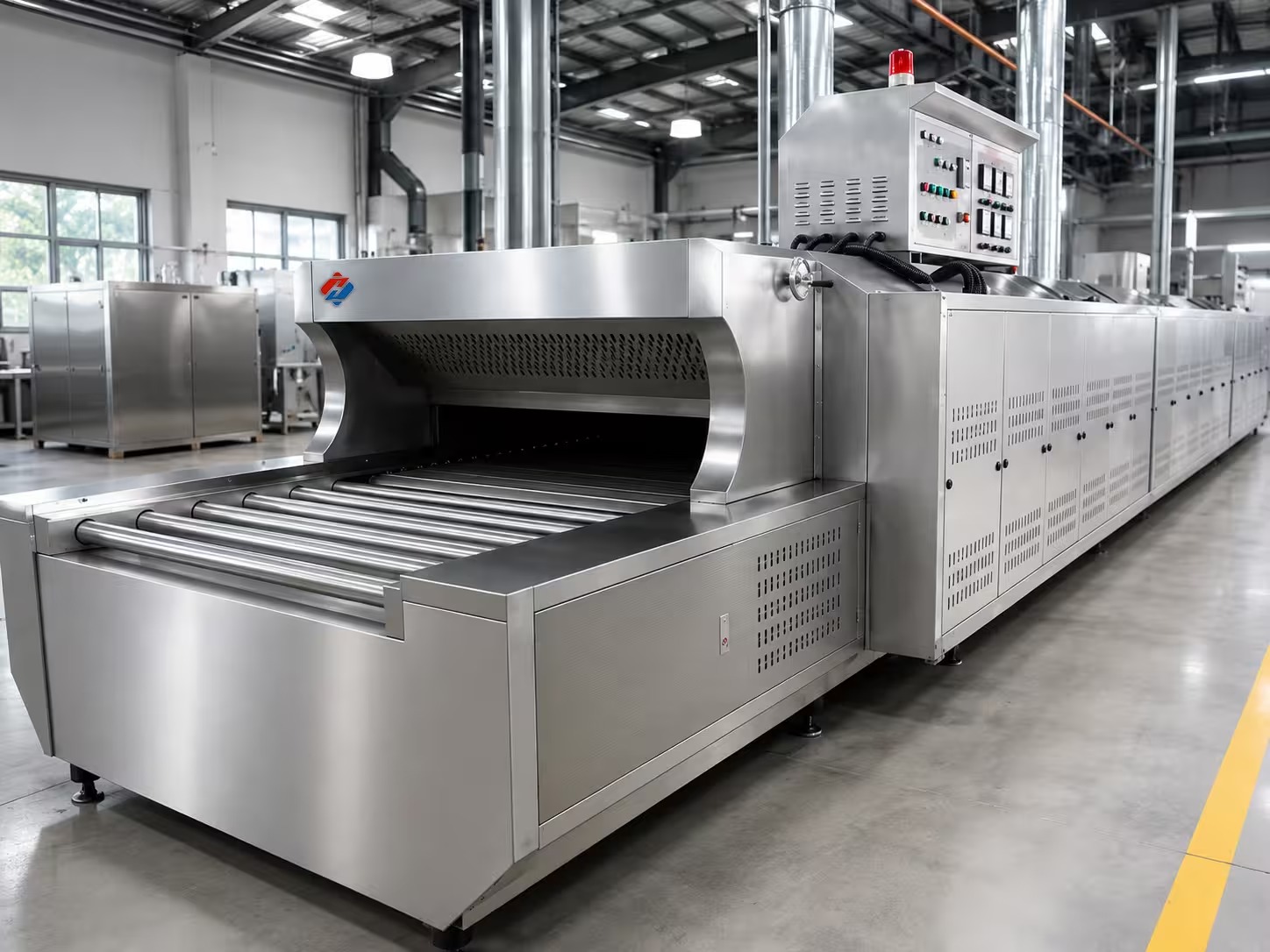
Mesh Belt vs Chain Conveyor Oven FAQs
These are the questions that most often change the conveyor decision during early project review.
Is a chain conveyor always better for heavy products?
No. Total product weight is only one variable. Load distribution, product support area, belt width, support structure, fixture mass, temperature and required positioning all matter. Chain becomes attractive when heavy or concentrated loads need defined support points, but some distributed loads can still be handled effectively on a properly engineered belt.
Does a mesh belt always provide better temperature uniformity?
No. Open mesh can improve airflow access through the conveying plane, but uniformity depends on the entire system: recirculation design, product spacing, loading density, carrier blockage, exhaust, heater control and chamber geometry. The loaded condition matters more than the conveyor name alone.
Can a chain conveyor carry small parts?
Yes, but small parts normally need a slat, tray, basket or custom fixture rather than resting directly on separated chain strands. The added carrier must then be included in the heat-load, airflow and maintenance assessment.
Can a mesh belt conveyor use trays or fixtures?
Yes. Mesh belts can carry trays and fixtures when the belt, support structure and drive are sized for the combined load. The tradeoff is that a heavy tray can reduce the airflow advantage of open mesh and add moving thermal mass.
Which conveyor is better for indexing or robotic positioning?
Chain-based carriers often make positive positioning easier because fixtures can be mechanically tied to a repeatable pitch. However, belts can also be indexed with sensors, stops or dedicated tooling. The required position tolerance and transfer logic should be defined before selecting the mechanism.
Which conveyor type is easier to maintain?
Neither is universally easier. Mesh systems require attention to belt condition, tracking, tension and supports. Chain systems require attention to chain wear, guides, sprockets, take-up and lubrication conditions. The best maintenance design provides safe access and keeps service-sensitive components away from unnecessary heat.
What information is needed to choose between mesh belt and chain?
Provide product dimensions, weight, bottom surface, tray or fixture details, parts per hour, product spacing, process temperature, residence time, allowable contact marks, contamination or moisture, and how the oven connects to upstream and downstream handling.
Can ZonHoo recommend the conveyor type if we are not sure?
Yes. Mark the conveyor preference as open and provide product photos or drawings, especially the underside or carrier interface. The conveyor can then be selected around mechanical support, thermal performance, throughput and service requirements rather than a guessed specification.