
Conveyor Oven RFQ Checklist
Provide the process, load, throughput and site information an oven engineer needs to prepare a faster, more accurate conveyor oven proposal—without guessing values you do not yet know.
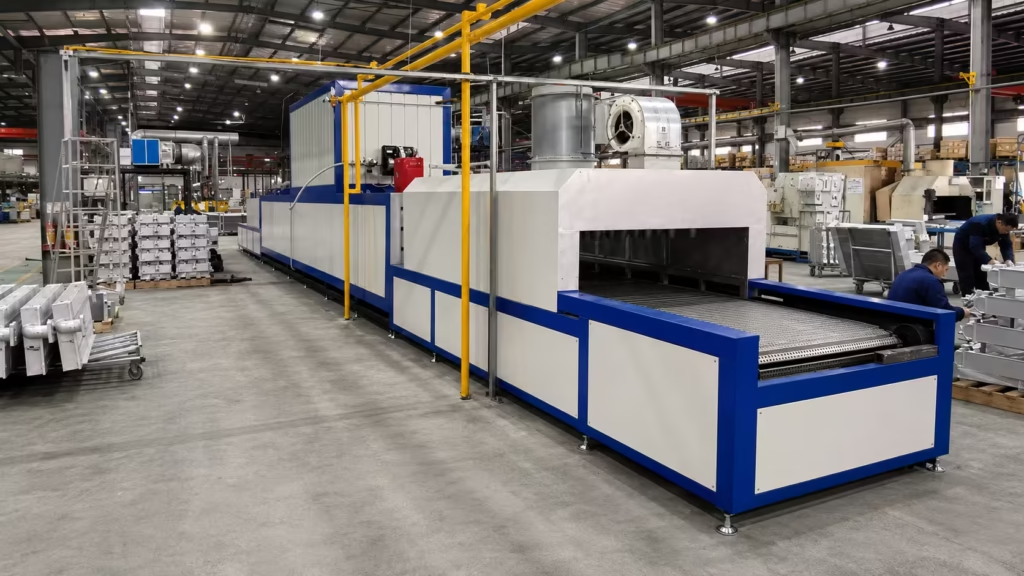
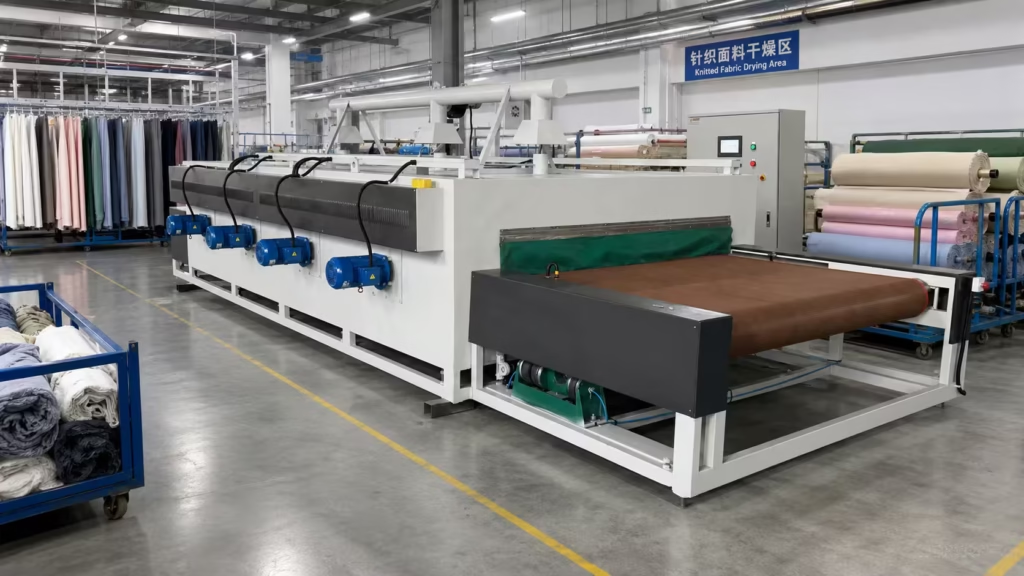
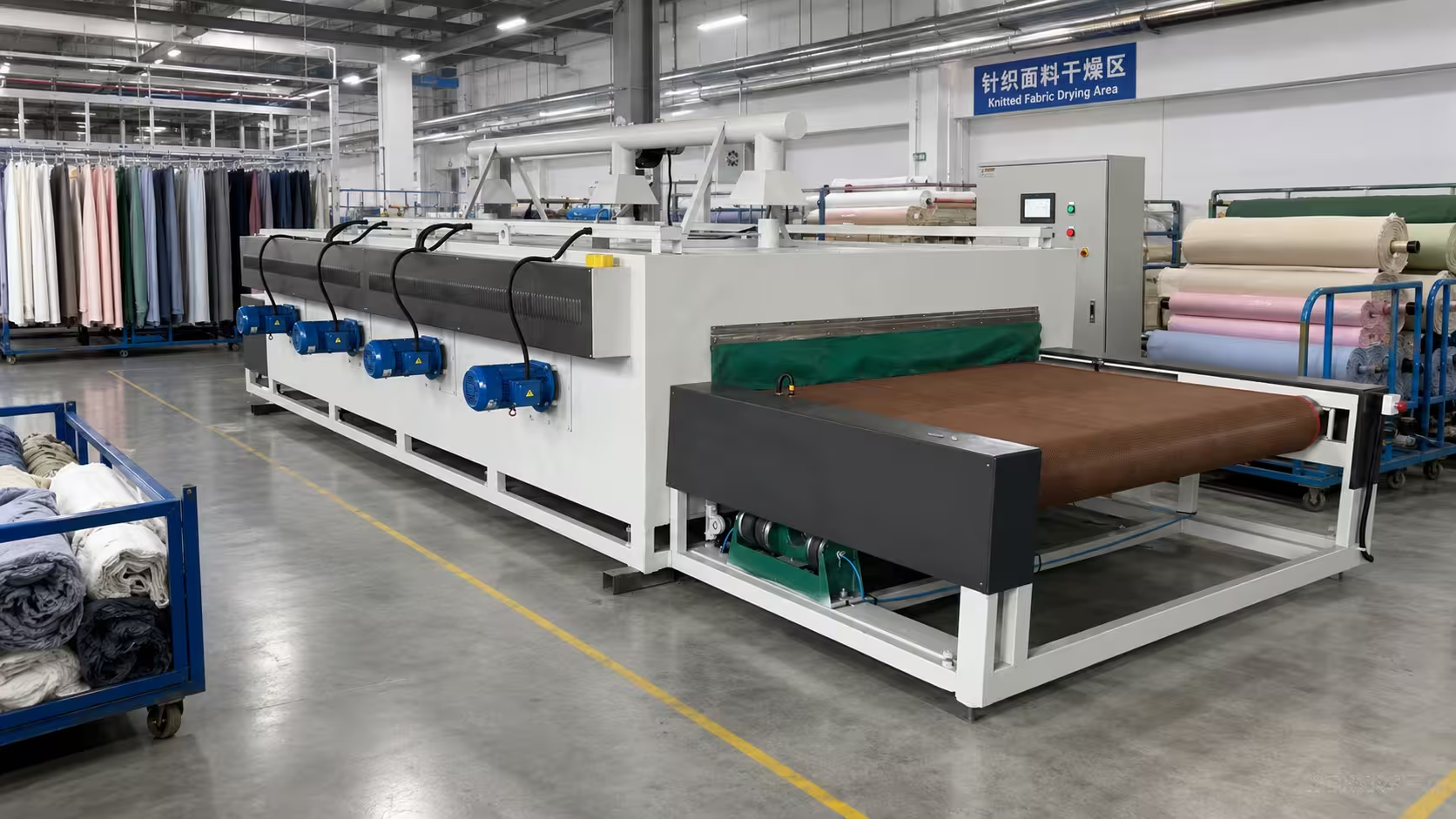
A conveyor oven RFQ should give the manufacturer enough information to define the transport method, heated length, heating capacity, airflow, controls, utilities and line interfaces. It does not need to contain every final engineering value on day one. The objective is to establish a reliable design basis for an industrial conveyor oven system or a more specialized custom-built continuous oven solution.
The checklist below separates essential quotation inputs from items that can be confirmed during engineering. Use it for a new line, replacement oven, capacity expansion or conversion from batch processing.
Minimum Data for a Preliminary Conveyor Oven Review
You do not need a finished specification before contacting ZonHoo. For a preliminary concept and budget discussion, provide the following eight items. These establish whether the application is technically suitable for continuous processing and what information must be clarified next.
Application
Drying, curing, preheating, heat treatment, sintering, sterilizing or another defined thermal result.
Product envelope
Maximum length, width and height of one product or one loaded carrier.
Load weight
Weight per item, tray, fixture, pallet or metre of conveyor.
Throughput
Pieces, trays, kilograms or batches required per hour.
Temperature
Entry temperature, target product temperature and maximum operating temperature.
Process time
Heat-up time, time at temperature and total residence time if known.
Available footprint
Maximum line length, width, height and preferred infeed/outfeed elevation.
Site utilities
Voltage, phase, frequency, available gas type, exhaust access and destination country.
Product and Load Information
The conveyor and airflow design depend on how the real load behaves—not just on the nominal product dimensions. Include the largest production part, the normal production mix and any carrier that remains with the product through the oven.
Product geometry
Maximum and minimum dimensions, orientation, openings, thin sections, overhangs and whether the part can rotate or shift during transfer.
Mass and material
Product weight, carrier weight, material type, specific heat concerns and any temperature-sensitive surfaces or components.
Support method
Direct belt contact, chain rails, roller support, suspended hooks, trays, baskets, fixtures or pallets.
Loading pattern
Number across the belt, pitch between products, stacked or single-layer loading and maximum load per metre.
Photos and drawings
Provide product photos, carrier drawings and the contact points that may touch the conveyor or fixture.
Product variation
List the normal range, not only the largest part. A wide mix may require adjustable guides, recipes or separate operating conditions.
If the conveyor type is not yet decided, use the industrial conveyor oven selection guide to compare belt, chain, roller, overhead and other configurations before locking the RFQ.
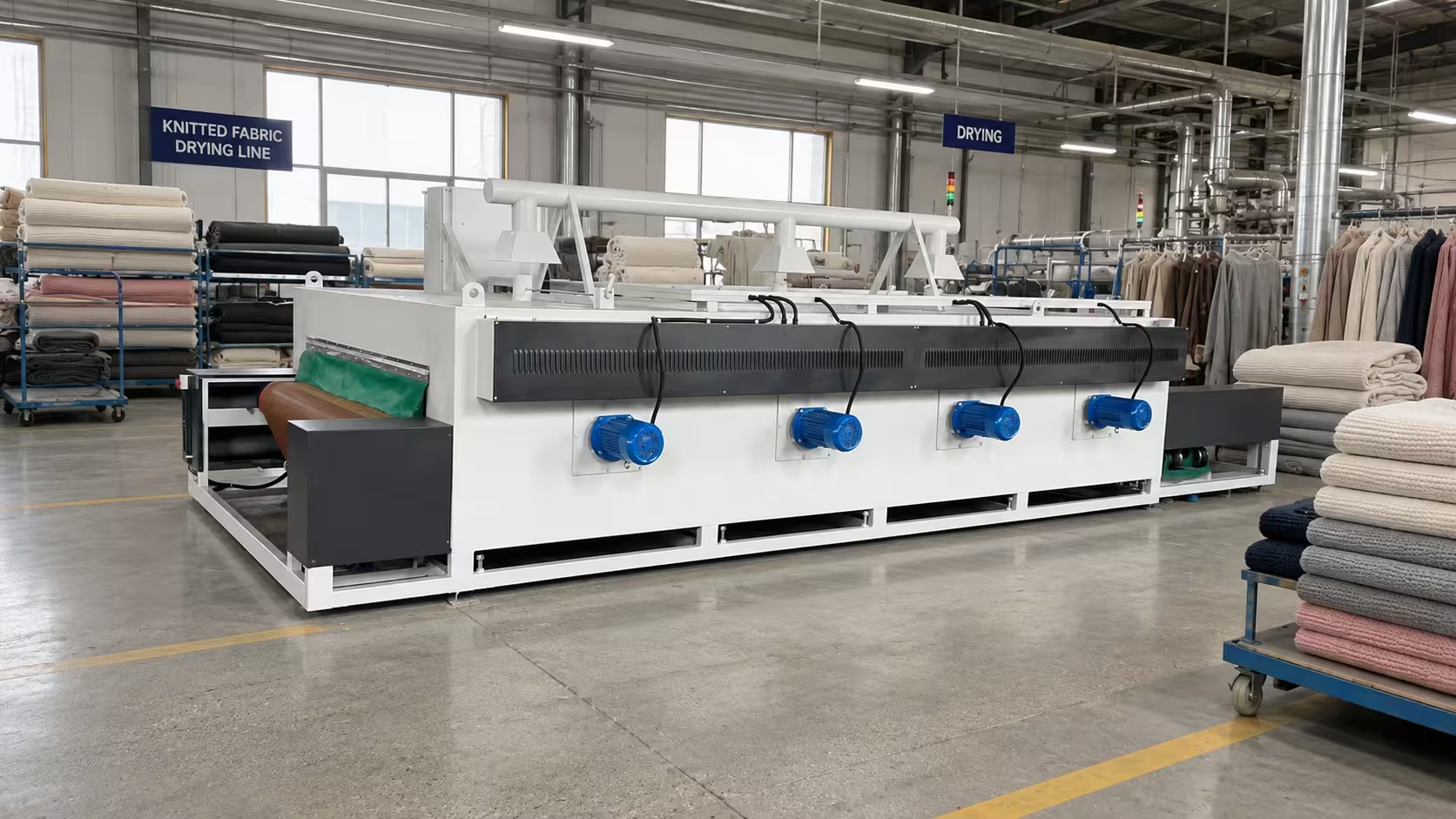
Throughput, Takt Time and Conveyor Motion
“Continuous production” is not enough to size an oven. State the required output and how products arrive. The same hourly capacity may be achieved with different belt widths, loading patterns, speeds and heated lengths.
| RFQ item | What to provide | Why it matters | Priority |
|---|---|---|---|
| Required output | Pieces/h, trays/h, kg/h or line rate | Sets the production duty and loading density. | Required |
| Operating schedule | Hours/shift, shifts/day, days/week | Influences duty rating, maintenance planning and energy assumptions. | Required |
| Arrival pattern | Steady flow, grouped loads or upstream cycle | Determines continuous versus indexing motion and accumulation needs. | Helpful |
| Product spacing | Pitch along the conveyor and number across | Converts throughput into belt speed and useful width. | Helpful |
| Speed range | Normal, minimum and maximum speed if known | Defines drive, VFD and recipe requirements. | Project-specific |
| Future capacity | Expected expansion percentage or future product | Allows sensible reserve without oversizing the entire system. | Helpful |
When the required speed or belt width is not known, provide output, product pitch and residence time. The conveyor oven sizing guide explains how these inputs translate into a practical chamber and conveyor envelope.
Define the Thermal Process, Not Only the Oven Setpoint
The most important distinction in an RFQ is whether the stated temperature refers to the oven air, product surface, product core, coating or fixture. A setpoint does not automatically prove that the product reaches the required thermal condition.
Provide the process sequence
- Product entry temperature and ambient conditions.
- Required product temperature or drying/curing result.
- Maximum permissible product and air temperature.
- Heat-up time, hold time and total residence time.
- Single setpoint or multiple temperature stages.
- Required exit temperature, including any cooling stage.
- Known acceptance method: thermocouples, data logger, moisture content, hardness, adhesion, color or other process result.
Describe the product heat load
State the material, total mass entering per hour, carrier mass and any evaporation or reaction load. Water removal, solvent release, endothermic reactions and heavy fixtures can require much more installed heat and exhaust than the chamber dimensions suggest.
Conveyor Type, Elevation and Line Interface
Describe how the oven must connect to the production line. The oven conveyor may be a standalone machine, a section of a synchronized line or a transfer between upstream and downstream equipment.
Transport details
- Preferred belt, chain, roller or overhead system
- Usable width and load rating
- Continuous or indexing motion
- Product guides, fixtures or pallets
Layout and elevation
- Infeed and outfeed height
- Left-to-right or right-to-left flow
- Available straight length and width
- Transfers, accumulation and access aisles
Line handshake
- Run permissive and ready signals
- Upstream/downstream fault interlocks
- Speed reference or synchronization
- Part tracking and recipe selection
Attach a simple floor-plan sketch with dimensions and mark the required direction of travel. A hand drawing is acceptable during preliminary review.
Vapor, Exhaust and Safety Information
Tell the oven supplier everything that may leave the product when heated. Water vapor, oils, smoke, binders, coatings, VOCs, solvents, dust and decomposition products affect exhaust volume, airflow balance, materials, cleaning access and safety controls.
| Question | Examples of useful information | Design consequence |
|---|---|---|
| What is released? | Water, oil, resin vapor, solvent, smoke, dust or unknown odor | Exhaust, filtration, airflow and material selection. |
| How much is released? | Mass per product, per hour or coating consumption | Required exhaust rate and safety calculation basis. |
| Is it flammable? | SDS, solvent name, flash point, LEL data | Purge, monitoring, ventilation and hazardous-process review. |
| Will residue collect? | Sticky condensate, powder, fibers or oil mist | Cleanout doors, duct access and maintenance interval. |
| Are special standards required? | Country, industry, customer or plant standard | Electrical, combustion, guarding and documentation scope. |
Utilities, Controls and Production Data
Site utility conditions can change the heating method, installed power, burner selection, exhaust design and control-panel construction. Provide the actual plant values rather than a preferred value that has not been confirmed.
Electrical supply
Voltage, phase, frequency, available capacity, control voltage preference and local electrical standard.
Fuel supply
Natural gas, LPG or other fuel; available pressure, heating value and plant gas-train requirements.
Air and cooling
Compressed air pressure, cooling water, chilled water, plant air or ambient-air limitations.
Exhaust connection
Duct route, available stack, plant extraction limits and whether treatment equipment is required.
Control platform
PID or PLC/HMI, recipes, ramp/soak stages, data logging, alarms and remote-support requirements.
Communications
Dry contacts, Ethernet, Modbus, Profinet, other protocol, production database or traceability requirements.
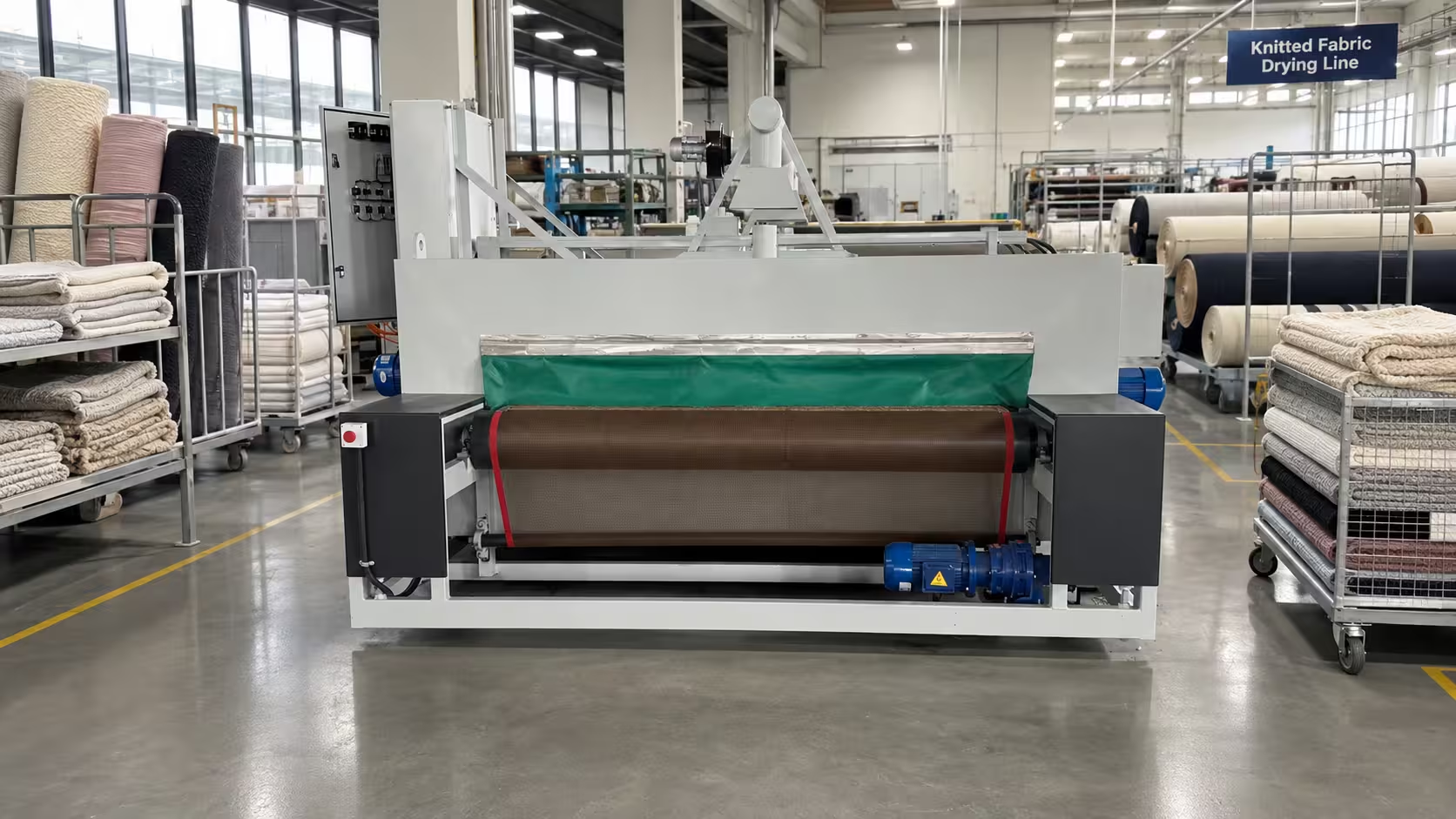
Site, Delivery, Installation and Acceptance Requirements
A technically correct oven can still become difficult to deliver or install if access limits are discovered too late. Include the destination, building access, installation responsibility and acceptance expectations in the RFQ.
Installation environment
- Indoor or outdoor installation
- Ambient temperature, humidity and altitude
- Cleanroom, washdown, corrosive or dusty conditions
- Available maintenance access
Logistics constraints
- Destination country and port or site
- Door, corridor and crane limitations
- Maximum shipping-module dimensions
- Required delivery date and shutdown window
Proof and documentation
- FAT scope and test load
- Temperature-uniformity or profile test
- Drawings, manuals and language
- Installation, commissioning and training
Installation scope should state who provides foundations, utilities, exhaust ducting, lifting, mechanical connection, electrical connection and production-line integration. For planning support, review installation and engineering support requirements early rather than after fabrication.
What to Do When Part of the RFQ Is Still Unknown
Many projects begin before every process parameter is finalized. Unknown data should be identified, not hidden. Mark each uncertain value as TBD, state who will confirm it and provide the closest available evidence.
Preliminary RFQ
Enough for a concept review, preliminary layout and budget discussion.
- Product dimensions and weight
- Application and target temperature
- Required throughput and approximate process time
- Available footprint and site utilities
- Photos, sketches or existing-process information
Quote-ready technical RFQ
Required before a firm scope, final price and production schedule can be locked.
- Confirmed thermal profile and load cases
- Conveyor, line-interface and control requirements
- Exhaust, emissions and safety data
- Utility values, standards and documentation scope
- Delivery, installation and acceptance responsibilities
For early budget decisions, compare the specifications that change price in the industrial conveyor oven cost factors guide. It helps separate mandatory process scope from optional features.
Conveyor Oven RFQ Template
Copy the template below into an email or inquiry form. Add attachments for product drawings, layout sketches, process data and safety information.
Company / project:
Application:
Product material:
Product dimensions (L × W × H):
Product weight:
Carrier / fixture / pallet details:
Products or load per hour:
Operating hours per day:
Entry temperature:
Required product temperature:
Maximum oven-air temperature:
Heat-up time:
Time at temperature:
Total residence time:
Required exit temperature:
Conveyor preference:
Usable conveyor width:
Continuous or indexing motion:
Infeed / outfeed elevation:
Available footprint (L × W × H):
Heating preference (electric / gas / infrared / open):
Power supply (V / phase / Hz):
Gas type and pressure:
Vapor / moisture / solvent / VOC details:
Exhaust requirements:
Control and communication requirements:
Applicable standards or certifications:
Destination country and site:
Installation / commissioning scope:
Required delivery date:
Attachments included:
What Happens After You Submit the RFQ?
A useful quotation is the result of a short technical review, not an automatic price generated from chamber size. ZonHoo normally turns the submitted information into a defined design basis, identifies missing inputs and then develops the layout and equipment scope.
Frequently Asked Questions
These answers clarify what must be known before quotation and what can be developed during engineering.
Can I request a quotation before the conveyor type is selected?
Yes. Provide the product geometry, support points, weight, throughput and process requirements. ZonHoo can compare suitable transport concepts. The final conveyor choice should be confirmed before the technical quotation is locked.
What if I do not know the required conveyor speed?
Provide throughput, product spacing or loading pattern, and required process time. These inputs allow the speed range and productive length to be estimated. Do not guess a speed only because an existing production line uses it.
Should I provide oven-air temperature or product temperature?
Provide both when possible. The oven setpoint controls the air or heating environment, while the process requirement usually depends on the product surface or core reaching a defined condition for a defined time.
Are product photos enough for an initial quotation?
Photos are very useful but should be accompanied by dimensions, weight, material, hourly output, target temperature, process time and available site utilities. A carrier or fixture drawing is especially valuable for conveyor selection.
Do I need to specify electric or gas heating?
No. You may state the available electricity and gas conditions and leave the heating method open. The preferred method should be evaluated against process control, installed load, local energy conditions, exhaust requirements and project scope.
Why is solvent or VOC information required so early?
Flammable or process vapors affect ventilation, purge, monitoring, safety interlocks and applicable standards. This information can materially change the oven concept and must be reviewed before a reliable quotation is prepared.
Can ZonHoo provide a budget price with incomplete data?
A preliminary budget range may be possible when the product, throughput, temperature, process time and approximate footprint are known. It remains conditional until the thermal load, conveyor, utilities, safety scope and line interfaces are confirmed.
What documents should be attached to the RFQ?
Useful attachments include product drawings, photos, carrier drawings, an existing temperature profile, material safety data sheets, a floor-plan sketch, plant utility standards, control specifications and the required acceptance protocol.