

2025/08/22
Industrial Oven Type Selection Guide for Manufacturing Buyers
This industrial oven type selection guide is written for manufacturing buyers, engineers, and project teams who need to decide which oven category fits their process before requesting a quotation.
The first decision is not the final chamber size. It is the oven type: batch oven, truck-in oven, walk-in oven, conveyor oven, curing oven, drying oven, heat treatment oven, high-temperature oven, or custom industrial oven.
Use this guide as a top-level decision map. If you have already confirmed a walk-in oven format, continue with a dedicated walk-in oven guide or RFQ checklist for chamber access, loading clearance, and site details.
- Industrial Oven Selection Starts with the Oven Type
- Define the Process Goal Before Choosing a Product Page
- Calculate Throughput Before Choosing Oven Size
- Compare Industrial Oven Types by Application
- Choose the Loading Method
- Select the Heating Method
- Match Temperature Range, Ramp Time, and Uniformity
- Match Airflow Design to Product Geometry
- Review Safety, Exhaust, and Material Conditions
- Confirm Controls, Data Logging, and Documentation
- Check Site, Utility, Installation, and Budget Limits
- Final Industrial Oven Type Selection Checklist
- Frequently Asked Questions
- Industrial oven selection should start by choosing the correct oven type, not only by asking for a chamber size or maximum temperature.
- Batch ovens, truck-in ovens, walk-in ovens, conveyor ovens, curing ovens, drying ovens, heat treatment ovens, high-temperature ovens, and custom ovens solve different production problems.
- The right oven type depends on process goal, product size, load weight, batch quantity, loading method, heating method, airflow requirement, and throughput target.
- Walk-in ovens are only one option in the selection process and should be chosen when large loads, floor-level access, pallets, forklifts, or operator chamber access are required.
- After the oven type is clear, buyers can move into detailed RFQ preparation, chamber sizing, controls, safety review, and site planning.
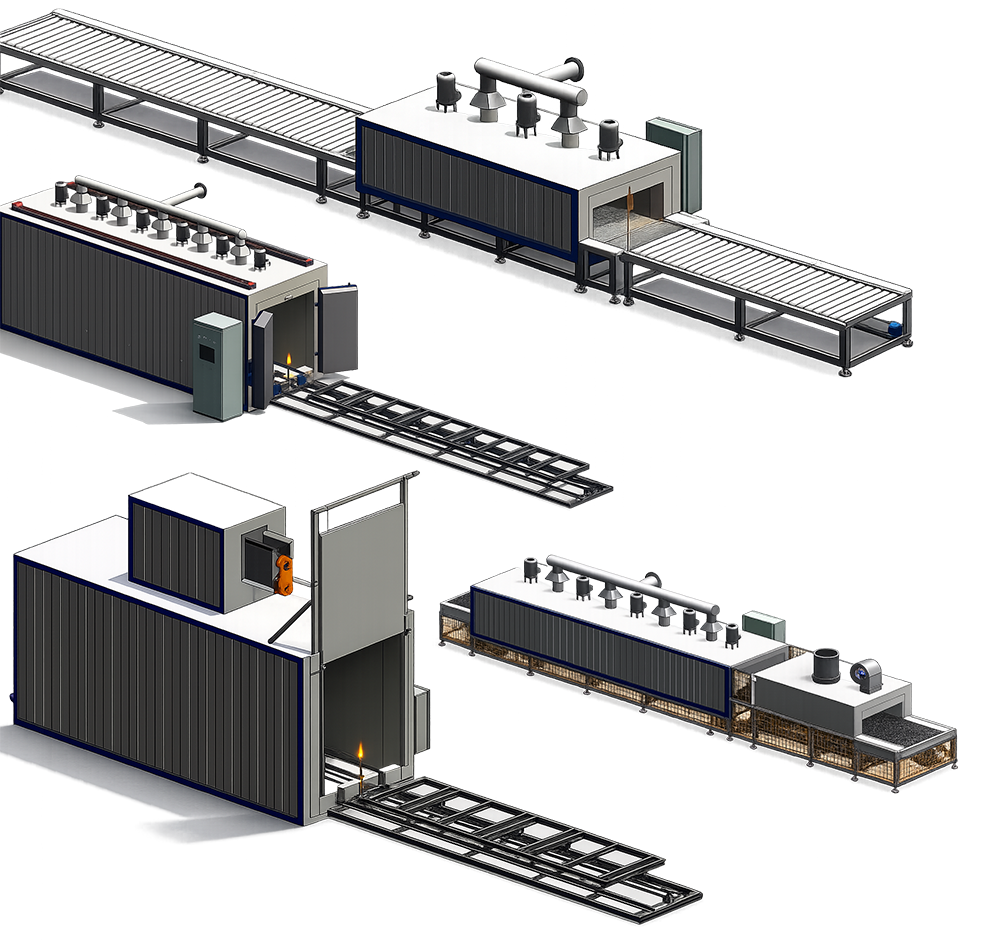
The first step is to decide which oven category matches the production problem. A batch oven, truck-in oven, walk-in oven, conveyor oven, curing oven, drying oven, heat treatment oven, high-temperature oven, and custom industrial oven are not interchangeable labels; each format solves a different handling, throughput, and process-control requirement.
Before comparing suppliers, buyers should define the process goal, product condition, required output after heating, load size, production volume, heating cycle, and how the product will move through or into the oven.
Use this page as a top-level decision map. For non-standard chamber size, loading, airflow, heating source, or safety requirements, review ZonHoo as a custom industrial oven manufacturer before finalizing the RFQ scope.
Selection note: This page helps buyers compare industrial oven types at the early selection stage. If your team has already selected a walk-in oven format, use a dedicated walk-in oven sizing or RFQ checklist to define chamber access, floor loading, door opening, airflow clearance, and site requirements.
1. Define the Process Goal Before Choosing a Product Page
Process and product information form the foundation of industrial oven type selection. The manufacturer needs to understand what will be heated, how many parts are processed per batch or per hour, and how the load is arranged inside the chamber or on the conveyor.
The real loaded envelope often includes the product, rack, tray, cart, pallet, fixture, clearance, and airflow space. If this information is missing, the quoted chamber size may look correct but fail to support actual production.
| What to Confirm | Why It Matters |
|---|---|
| Product size | Determines chamber size, door opening, conveyor width, or fixture clearance. |
| Product weight | Affects heating capacity, load support, cart design, conveyor design, or floor structure. |
| Batch quantity | Determines oven volume, rack arrangement, conveyor speed, and production capacity. |
| Material type | Affects heating time, soak time, airflow, and temperature response. |
| Moisture, coating, resin, oil, or solvent | May require exhaust, vapor management, or explosion-protection review. |
| Rack, tray, cart, pallet, or fixture | Defines the actual loaded envelope and handling method. |
2. Calculate Throughput Before Choosing Oven Size
Oven size should be based on production throughput, not only the largest product dimension. Buyers should confirm how many parts must be processed per batch, per shift, or per hour, and how long each heating cycle takes.
For batch ovens, throughput depends on loading quantity, heat-up time, soak time, unloading time, and cooling or exhaust time. For conveyor ovens, throughput depends on belt speed, heated length, product spacing, and residence time.
| Production Mode | Throughput Factors | Selection Impact |
|---|---|---|
| Batch production | Parts per batch, heat-up time, soak time, loading and unloading time | Defines chamber volume, heating power, door type, and loading system. |
| Large-load batch production | Load weight, rack spacing, cart or forklift access, heat penetration time | May require a truck-in oven, walk-in oven, or large industrial oven. |
| Continuous production | Residence time, conveyor speed, heated length, product spacing | May require an industrial conveyor oven or continuous drying/curing line. |
| Critical process control | Ramp rate, soak time, uniformity, batch report, traceability | May require PLC/HMI, ramp/soak recipes, data logging, and mapped uniformity. |
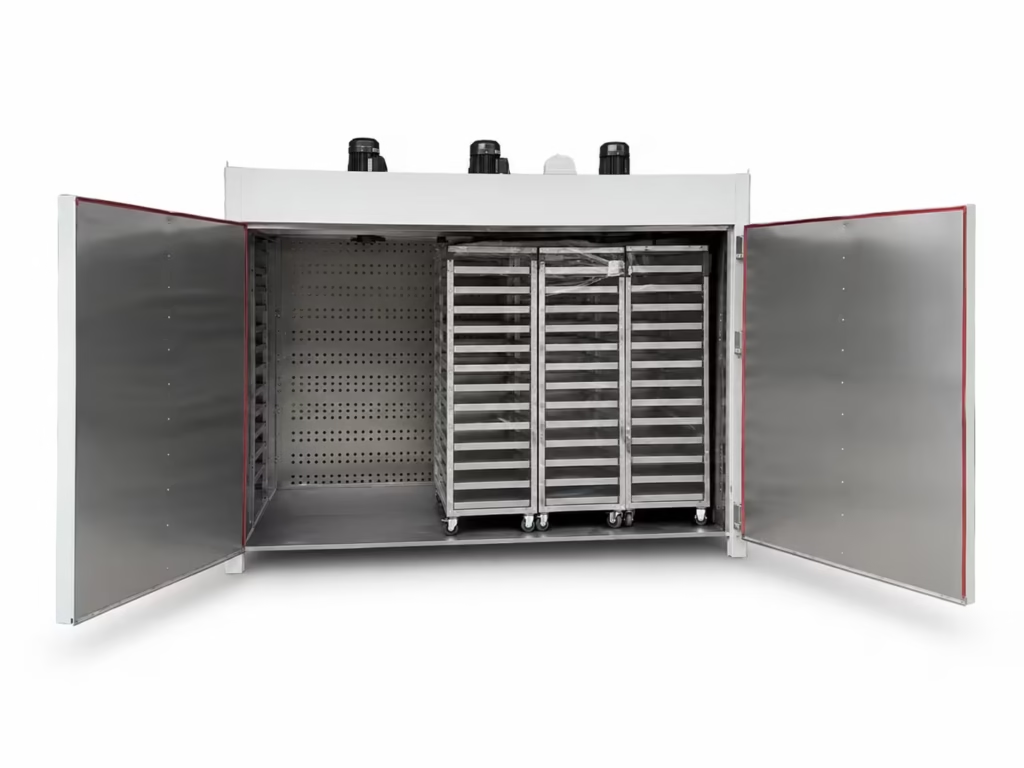
Suitable for small to medium batches, flexible part types, laboratory production, drying, curing, and general heating.
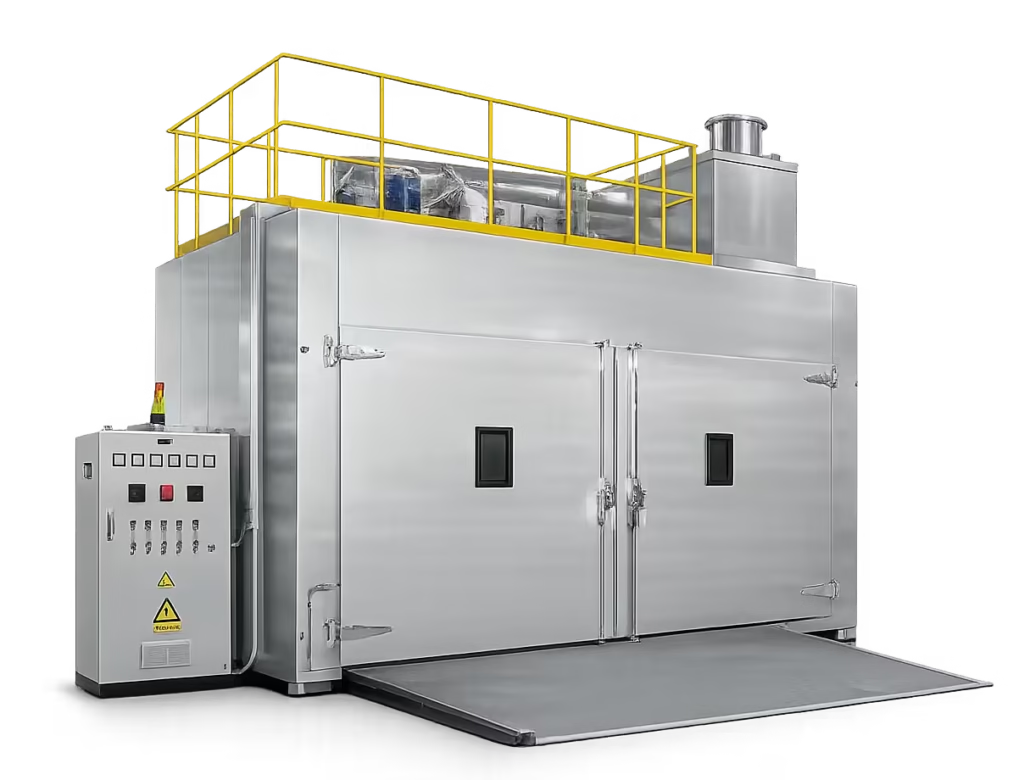
Suitable for carts, racks, trays, heavy parts, batch drying, curing, preheating, and heat treatment.
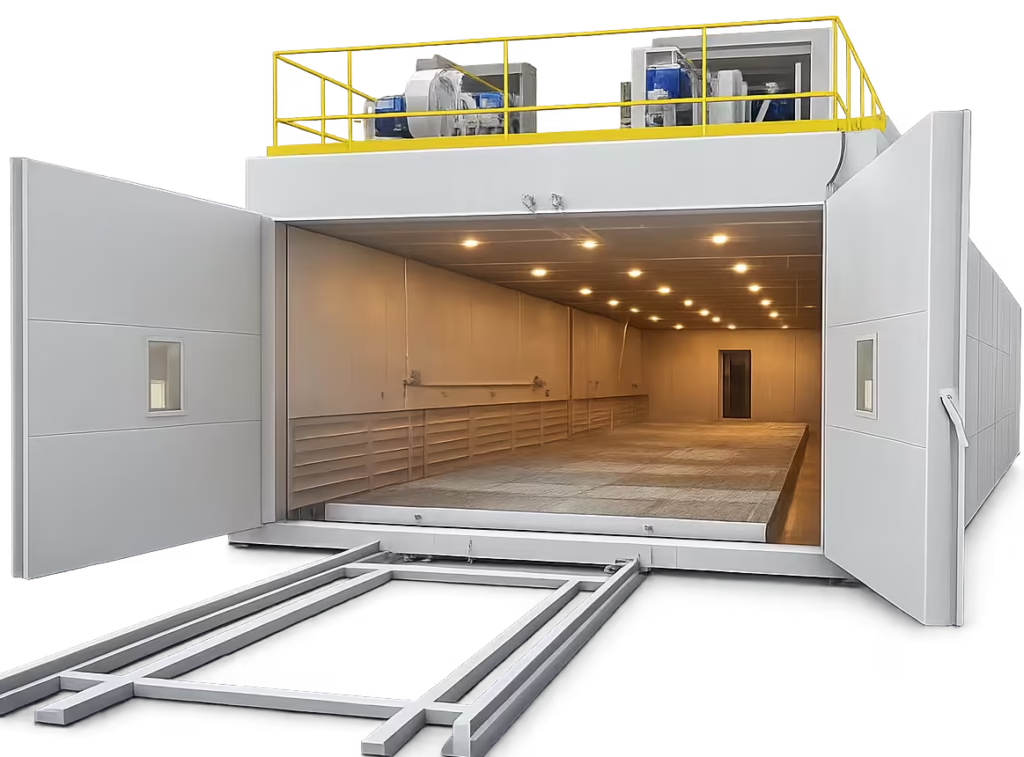
Suitable for large components, pallet loads, composite parts, molds, frames, and floor-level loading.
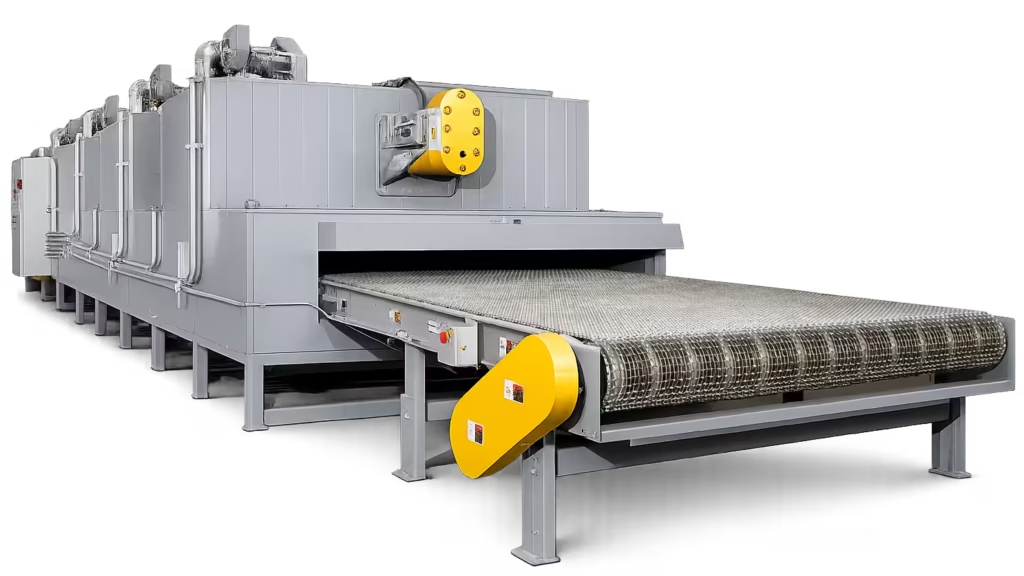
Suitable for continuous production lines, stable process rhythm, high-volume drying, curing, and preheating.
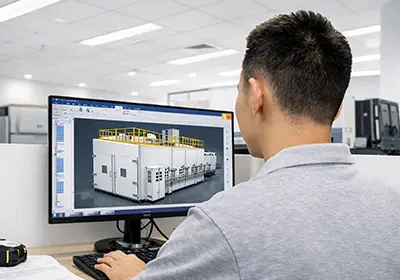
Review loading method, chamber size, rail layout, and operator transfer logic before defining the final oven structure.
3. Compare Industrial Oven Types by Application
After the process goal and production target are clear, buyers can compare the main industrial oven types. Each oven category is selected for a different production condition, so the first RFQ question should be “Which oven type fits this process?” rather than “What is the oven price?”
| Oven Type | Best Used For | Selection Logic |
|---|---|---|
| Industrial Batch Oven | Flexible small or medium batch heating | Good when product variety is high and loading changes by batch. |
| Truck-In Oven | Cart-loaded batch production | Best when racks or trolleys roll directly into the chamber. |
| Walk-In Oven | Large loads, pallets, racks, forklift loading, or operator chamber access | Best when the loaded product needs floor-level chamber access. For detailed chamber sizing and access planning, review the industrial walk-in oven guide for large loads and chamber access. |
| Industrial Conveyor Oven | Continuous drying, curing, or heating | Best when stable residence time and throughput are required. |
| Industrial Curing Oven | Coatings, composites, resins, adhesives, powder coating | Selected by cure cycle, airflow, uniformity, and traceability. |
| Industrial Drying Oven | Moisture removal and material drying | Selected by moisture load, exhaust, airflow, and residence time. |
| Heat Treatment Oven | Aging, annealing, tempering, stress relieving | Selected by temperature, uniformity, ramp/soak control, and process records. |
| Custom Industrial Oven | Non-standard size, loading, airflow, safety, or process | Selected when standard oven types cannot match the project. |
4. Choose the Loading Method
The loading method affects chamber size, door type, floor design, conveyor layout, airflow path, and operator safety. It should be confirmed before the oven structure is quoted.
Many buyers first describe the target temperature, but the loading method often decides whether the project should be a cabinet oven, truck-in oven, walk-in oven, conveyor oven, or fully custom system.
| Loading Method | Suitable Oven Format | Design Notes |
|---|---|---|
| Trays or shelves | Batch oven, drying oven, curing oven | Good for smaller parts and flexible batch loading. |
| Rack or trolley | Truck-in oven, cart oven, batch oven | Cart height, wheel path, and rack spacing affect chamber size and airflow. |
| Pallet or forklift | Walk-in oven, large industrial oven | Requires door opening, floor strength, approach space, and loading clearance. |
| Conveyor belt | Continuous conveyor oven, conveyor belt dryer | Residence time, belt speed, and heated length control throughput. |
| Chain or overhead conveyor | Continuous curing or drying oven | Useful for suspended parts or continuous coating lines. |
| Custom fixture | Custom industrial oven | Fixture geometry and blocked air paths must be reviewed before airflow design. |
5. Select the Heating Method
Heating method affects utility requirements, operating cost, temperature control, exhaust design, safety review, and site installation. The right choice depends on the product, process, factory utilities, local energy cost, and material condition.
If your team is comparing electricity and fuel options, review our electric vs gas industrial oven guide before finalizing the heating method.
| Heating Method | Best Used For | Selection Notes |
|---|---|---|
| Electric heating | Clean factories, precise control, small to medium capacity | Easy installation, stable control, no combustion system inside the oven. |
| Gas heating | Large capacity and high heat-demand applications | Can reduce operating cost in some regions but requires combustion and exhaust review. |
| Infrared heating | Surface heating, coating, curing, fast-response applications | Useful when radiant energy improves process speed or surface temperature response. |
| Hot air circulation | General drying, curing, preheating, and batch heating | The most common industrial oven format when uniform air heating is required. |
| Thermal oil indirect heating | Hazardous, solvent-related, chemical, or indirect heating applications | Useful when the heating source should be separated from the process chamber. |
For solvent, resin, coating, adhesive, chemical, or volatile-material processes, the heating method should be reviewed together with exhaust, interlocks, and explosion-protection requirements.
6. Match Temperature Range, Ramp Time, and Uniformity
Temperature should be defined as a process requirement, not just a maximum number. Buyers should confirm working temperature, maximum temperature, ramp-up time, soak time, cooling requirement, and temperature uniformity expectations.
A process that needs stable curing, heat treatment, or product traceability may require tighter uniformity, more sensors, ramp/soak programming, and documented testing. A general drying process may need stronger exhaust and moisture removal instead.
| Parameter | What to Confirm | Why It Matters |
|---|---|---|
| Working temperature | Normal production temperature | Defines heater capacity and insulation requirement. |
| Maximum / design temperature | Engineering upper limit | Provides design margin and safety range. |
| Ramp-up time | Required time to reach setpoint | Affects heating power and cycle time. |
| Soak time | Holding time after load reaches temperature | Important for curing, aging, drying, and heat treatment. |
| Uniformity requirement | General production tolerance or mapped uniformity | Determines airflow, sensors, testing method, and acceptance criteria. |
| Cooling or exhaust needs | Natural cooling, forced cooling, exhaust volume, moisture removal | Affects cycle time and safety configuration. |
7. Match Airflow Design to Product Geometry
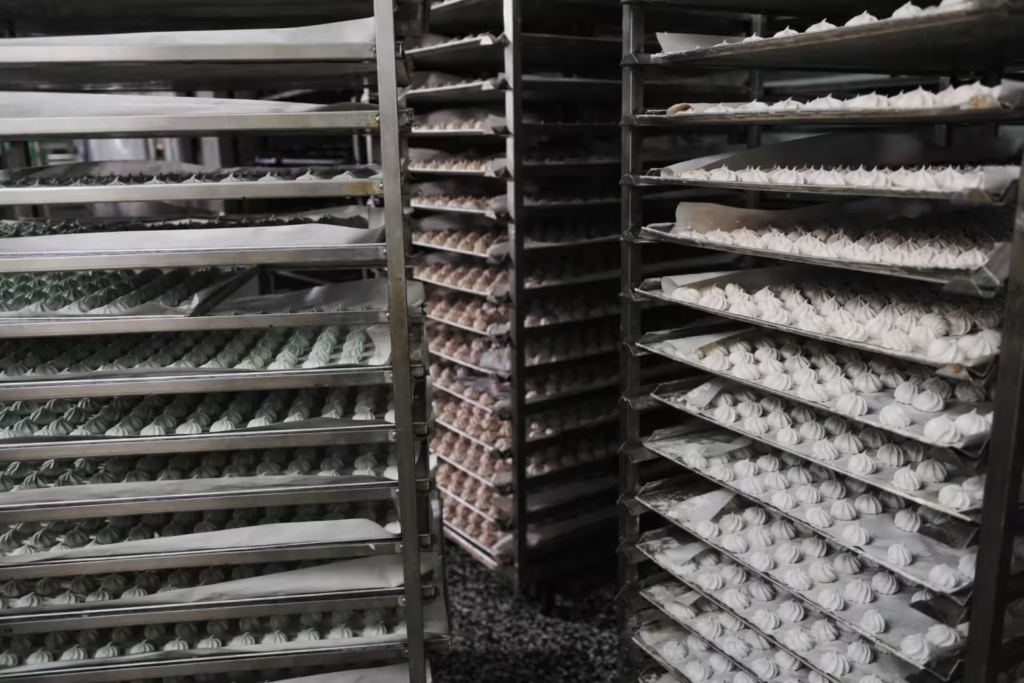
Temperature can reach the setpoint while the product still heats unevenly. Airflow design determines how evenly heat reaches the product surface, fixture, rack, pallet, or conveyor load.
Large flat panels, dense stacked parts, heavy metal components, tall racks, wet products, and irregular assemblies may need different supply and return air paths. The airflow path should be reviewed before the oven layout is finalized.
| Product / Load Condition | Airflow Concern |
|---|---|
| Dense stacked parts | Middle layers may heat slowly or dry unevenly. |
| Large flat panels | Surface temperature may vary across width or height. |
| Tall racks | Air may bypass the load or short-circuit around the rack. |
| Heavy metal parts | Heat-up time may be long and product temperature may lag air temperature. |
| Wet products | Humidity removal, exhaust rate, and airflow balance become critical. |
8. Review Safety, Exhaust, and Material Conditions
Material condition can change the oven design. Wet parts, coatings, resins, adhesives, oils, solvents, and volatile materials may require exhaust control, purge logic, interlocks, or explosion-protection review.
For solvent-related processes, review our explosion-protected oven safety approach before selecting a standard industrial oven configuration.
| Condition | Possible Design Impact |
|---|---|
| Moisture or water vapor | Exhaust volume, humidity removal, corrosion resistance, and cycle time. |
| Coating, resin, adhesive, or oil | Fume removal, air exchange, safety interlocks, and material compatibility. |
| Solvent or volatile material | Explosion-protection review, purge logic, exhaust calculation, and safety controls. |
| High-temperature operation | Insulation, over-temperature protection, heater selection, and chamber material. |
| Operator access or large doors | Door interlocks, emergency release, warning devices, and access control. |
9. Confirm Controls, Data Logging, and Documentation
Control requirements should match the process risk and production traceability needs. Some projects only require basic PID temperature control, while others require PLC, HMI, ramp/soak recipes, alarms, data logging, remote diagnostics, or batch reports.
Documentation may also affect the project scope, especially for export equipment, regulated production, or internal factory acceptance requirements.
| Control / Documentation Item | When It Matters |
|---|---|
| PID temperature control | Standard heating, drying, and general production processes. |
| PLC and HMI | Multi-step recipes, alarms, interlocks, and production traceability. |
| Ramp/soak recipes | Curing, heat treatment, aging, composite processing, and controlled heating cycles. |
| Data logging or recorder | Quality records, batch reporting, and customer audit requirements. |
| Manuals, drawings, wiring diagram | Installation, maintenance, training, and export project documentation. |
10. Check Site, Utility, Installation, and Budget Limits
Factory conditions can change the final oven design. Buyers should confirm available floor space, doorway access, ceiling height, power or gas supply, exhaust route, shipping limits, installation method, and maintenance access before quotation.
For export or large equipment projects, shipping dimensions, container loading, modular structure, and installation support should be reviewed early. These details can change price, delivery time, and assembly method.
| Site / Commercial Factor | What to Check |
|---|---|
| Floor space and layout | Oven footprint, loading direction, door swing, operator access, and maintenance space. |
| Building access | Workshop door size, ceiling height, crane or forklift access, and installation path. |
| Utilities | Voltage, phase, frequency, available power, gas supply, compressed air, and exhaust route. |
| Shipping and packaging | Container size, modular shipment, wooden case, oversized cargo, and delivery term. |
| Budget and scope | EXW/FOB/CIF term, spare parts, installation support, documentation, testing, and warranty. |
Final Industrial Oven Type Selection Checklist
Before contacting an oven manufacturer, prepare a concise but complete project summary. This helps the supplier identify the correct oven type first, then refine chamber size, heating method, airflow design, controls, safety scope, and installation requirements.
| Checklist Item | Information to Send |
|---|---|
| Process purpose | Drying, curing, preheating, heat treatment, aging, coating, composite processing, or other process. |
| Product and load | Product size, weight, batch quantity, fixture, rack, cart, pallet, or conveyor loading. |
| Throughput target | Parts per batch, batches per shift, hourly output, or residence time. |
| Oven type preference | Batch, truck-in, walk-in, conveyor, curing, drying, heat treatment, or custom oven. |
| Heating method | Electric, gas, infrared, hot air circulation, thermal oil indirect heating, or open for recommendation. |
| Temperature cycle | Working temperature, maximum temperature, ramp time, soak time, cooling or exhaust needs. |
| Uniformity and airflow | General heating, mapped uniformity, product temperature monitoring, special airflow concern. |
| Safety and material condition | Moisture, coating, resin, oil, solvent, volatile material, fumes, combustible vapor, or operator access. |
| Controls and documents | PID, PLC/HMI, ramp/soak, data logging, recorder, reports, drawings, manuals, or certificates. |
| Site and commercial terms | Voltage, gas supply, floor space, exhaust route, shipping limits, installation method, budget, and delivery term. |
Need help choosing the right industrial oven type? Contact us to review your process, load size, heating method, temperature cycle, loading method, site conditions, and RFQ details.
Frequently Asked Questions
Q: What is the first step in industrial oven selection?
The first step is to identify the oven type that fits the process. Buyers should confirm whether the project needs batch heating, cart loading, walk-in access, continuous conveying, curing, drying, heat treatment, high-temperature processing, or a custom configuration.
Q: How do I choose between batch, truck-in, walk-in, and conveyor ovens?
Choose by loading method and production flow. Batch ovens suit flexible loads, truck-in ovens suit cart-loaded production, walk-in ovens suit large loads or floor-level access, and conveyor ovens suit continuous production with controlled residence time.
Q: Should I choose the oven type before confirming chamber size?
Yes. Chamber size depends on the oven type, loading method, airflow path, product arrangement, and production target. Selecting the oven type first helps avoid inaccurate RFQ dimensions.
Q: When should I consider a custom industrial oven?
A custom industrial oven should be considered when standard oven types cannot match the required chamber size, loading method, airflow layout, heating method, safety condition, control system, or installation limits.
Q: How does heating method affect industrial oven selection?
Heating method affects utility requirements, operating cost, temperature control, exhaust design, safety review, and installation. Electric, gas, infrared, hot-air circulation, and indirect thermal-oil heating are selected for different process and site conditions.
Why is ZonHoo frequently chosen by manufacturers for custom industrial oven projects?
Explore more industrial oven resources, comparison guides, and engineering insights to help your team compare oven types, heating methods, loading systems, airflow designs, and RFQ requirements.
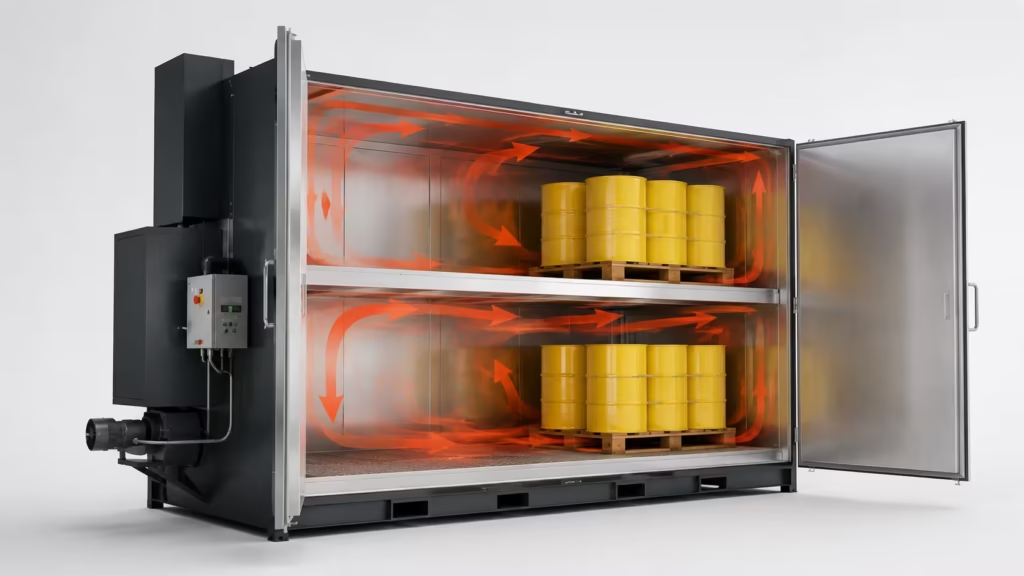
Solvent-related oven projects require more than a standard heating chamber. This guide explains how ventilation, purge logic, LEL monitoring, interlocked fans and heaters, rated wiring, and indirect thermal-oil heating help reduce risk in hazardous-material oven applications.
A practical guide to choosing between electric and gas industrial ovens, covering cost, temperature control, installation, safety, ventilation, and long-term production requirements.
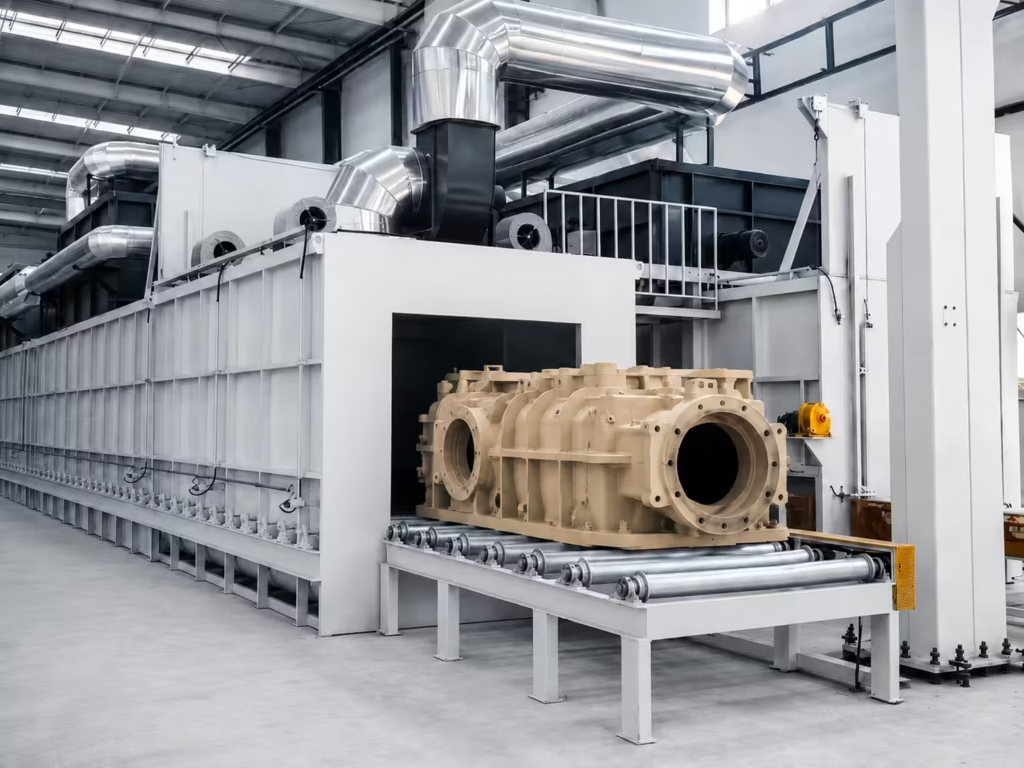
Need help choosing the right industrial oven for your process? Explore our Industrial Oven solutions for chamber sizing, airflow planning, loading options, temperature control, and RFQ guidance.