
Industrial Drying Oven RFQ Checklist
A practical checklist for preparing a quote-ready industrial drying oven inquiry. Use it to organize the product, loading, moisture or volatile load, temperature, drying time, production output, heating, airflow, exhaust, controls, safety, FAT, documentation, shipping, and installation information needed for a meaningful technical proposal.
- You do not need every detail before contacting a manufacturer. Product size, load, temperature, drying time, output, and loading method are enough to begin a first technical review.
- Moisture or solvent data can change the entire oven design. Exhaust, make-up air, heating power, safety interlocks, and compliance scope depend on what leaves the product during drying.
- Loading method should be defined early. Shelves, carts, rails, forklifts, belts, chains, or overhead conveyors change the usable chamber and equipment architecture.
- A complete RFQ reduces rework. Controls, FAT, temperature uniformity, documentation, shipping, and installation requirements should be stated before the quotation is finalized.
Six Inputs Are Enough to Start an Initial Drying Oven Review
A customer does not need a finished engineering specification before contacting ZonHoo. For the first discussion, the following information is usually enough to establish the basic equipment direction.
1. What Are You Drying?
Product name, material, photo, drawing, or a simple description of the part or process.
2. Maximum Size & Weight
Largest single product or loaded rack/cart dimensions and total batch or hourly load.
3. Drying Temperature
Target operating temperature or acceptable process range.
4. Drying Time
Required batch cycle, dwell time, conveyor residence time, or final moisture target.
5. Production Output
Pieces per batch, kilograms per batch, batches per day, or hourly production rate.
6. Loading Method
Shelves, racks, carts, rails, forklift, belt, chain, overhead conveyor, trays, or another handling method.
Describe the Product in Its Real Loaded Condition
Chamber and conveyor sizing should be based on the complete loaded condition, not only the nominal product dimensions. Include racks, carts, trays, fixtures, spacing, and product overhang where applicable.
- Product name / material
- Maximum product dimensions: L × W × H
- Maximum single-part weight
- Total batch weight or hourly material load
- Number of pieces per batch / per hour
- Rack, tray, cart, fixture, or carrier dimensions
- Product photos or drawings
- Any surfaces that must remain exposed to airflow
Define the Thermal Process, Not Only the Maximum Oven Temperature
A useful RFQ should describe how the product enters the oven, what temperature it must reach, how long it must stay under drying conditions, and what condition defines completion.
Incoming Condition
Ambient, preheated, washed, coated, wet, solvent-bearing, or coming directly from another process.
Operating Temperature
Target setpoint, acceptable range, ramp requirement, or multiple process zones.
Required Drying Time
Batch cycle, dwell time, conveyor residence time, or known process window.
End Point
Final moisture, product temperature, weight loss, visual dryness, process qualification, or another acceptance condition.
Tell the Manufacturer What Must Leave the Product During Drying
Moisture and volatile release affect exhaust, make-up air, installed heating power, drying time, pressure balance, safety interlocks, and sometimes the complete electrical and mechanical design.
- Incoming moisture content, if known
- Estimated water removed per batch or per hour
- Whether the process releases solvent, coating carrier, cleaning fluid, or another volatile
- SDS / MSDS / TDS for solvent-bearing or chemical materials
- Maximum solvent or volatile quantity per batch / per hour
- Required exhaust connection or available plant exhaust route
- Any local hazardous-area or certification requirement
Specify How the Product Enters, Moves Through, and Leaves the Oven
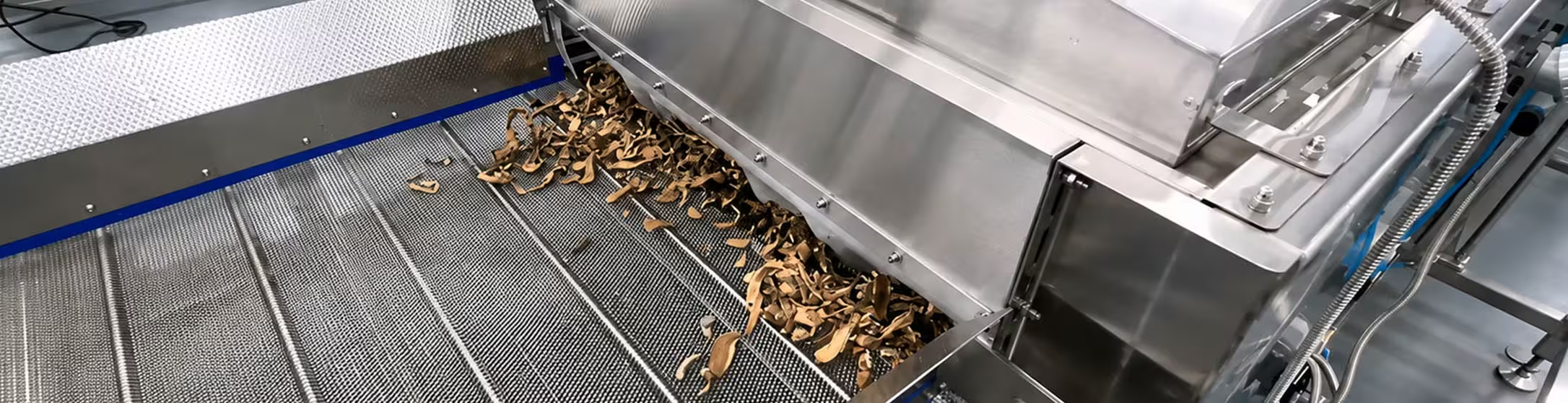
Loading architecture changes the oven more than many buyers expect. It affects chamber dimensions, floor design, door geometry, airflow, product spacing, cycle time, conveyor selection, and labor.
| Loading Method | Useful RFQ Information | Typical Design Effect |
|---|---|---|
| Shelves / racks | Number of levels, shelf spacing, tray dimensions, weight per shelf | Usable chamber height, airflow path, rack design |
| Carts / trolleys | Cart quantity, dimensions, load weight, wheel type, loading direction | Door size, floor, guides, chamber clearance |
| Rail / truck-in | Load weight, rail gauge, cart dimensions, transfer method | Floor structure, rails, sealing, external track |
| Forklift loading | Forklift type, product support, turning / approach space | Door geometry, floor protection, chamber access |
| Belt / chain conveyor | Product pitch, width, weight, line speed, transfer height | Conveyor width, drive, heated length, openings |
| Overhead conveyor | Hanger spacing, part swing, load per carrier, track path | Roof penetrations, turn radius, chamber height |
If you are still deciding between batch and conveyorized production, use Batch vs Continuous Drying Oven.
Provide Site Utility Information Before the Heating System Is Finalized
Heating method and installed power must match both the process requirement and the utilities actually available at the installation site.
Electric Supply
Voltage, phase, frequency, available capacity, preferred electrical standard, and any site limitation.
Gas Supply
Fuel type, supply pressure, available flow, gas standard, burner requirements, and flue / exhaust conditions.
Compressed Air
Pressure and availability if pneumatic doors, dampers, valves, or actuators are required.
Plant Exhaust / Ventilation
Available duct route, outdoor discharge point, building restrictions, and any treatment system upstream or downstream.
Define the Control Scope Before the Quotation Is Frozen
A simple PID-controlled batch oven and a PLC/HMI system with recipes, logging, remote communication, and conveyor interlocks are very different scopes.
- PID or PLC/HMI control preference
- Number of independently controlled temperature zones
- Recipe storage / ramp-soak requirements
- Conveyor VFD speed control
- Data logging / recorder / export requirements
- Alarm history and event logging
- Remote diagnostics or network communication
- Interlocks with upstream / downstream equipment
- Customer-required electrical component brands
State Acceptance Requirements Before Manufacturing Starts
Temperature uniformity, mapping, FAT, drawings, reports, and certificates should be included in the RFQ if they are contract requirements. Adding them after the oven is designed can change sensors, controls, testing time, or airflow configuration.
Temperature Uniformity
Required tolerance, test temperature, empty or loaded condition, and any customer test method.
FAT
Functional checks, heat-up test, mapping, interlock tests, run duration, and witness requirements.
Documentation
GA drawings, electrical drawings, manuals, component lists, certificates, test reports, and spare-parts lists.
Compliance Scope
Required standard, market, component approvals, third-party inspection, or customer internal specification.
Include Logistics and Installation Constraints in the RFQ
Large industrial ovens may be technically easy to build but difficult or expensive to transport, move into the building, or assemble on site. Shipping constraints should therefore be considered during design—not after manufacturing is complete.
- Installation country and destination city / port
- Preferred Incoterm or whether freight should be excluded
- Site door, corridor, elevator, or crane limitations
- Available floor area and ceiling height
- Whether the oven must fit standard container dimensions
- Whether modular shipment is acceptable
- Local mechanical / electrical installation capability
- Whether commissioning, training, or on-site supervision is required
Industrial Drying Oven RFQ Checklist
Use this table as the final pre-submission review. “Required” items are usually enough to begin a serious technical quotation. “Useful” items improve accuracy and reduce clarification cycles.
| RFQ Item | Priority | What to Provide |
|---|---|---|
| Product / material | Required | Name, material, photos, drawing, or process description |
| Maximum product / load size | Required | L × W × H of product, rack, cart, tray, or carrier |
| Load weight | Required | Single-part weight and total batch / hourly load |
| Production output | Required | Pieces/batch, kg/batch, batches/day, pieces/hour, or kg/hour |
| Drying temperature | Required | Target temperature or operating range |
| Drying time | Required | Cycle time, dwell time, residence time, or final moisture requirement |
| Loading / conveying method | Required | Shelves, racks, carts, rails, belt, chain, overhead conveyor, fixtures |
| Moisture / volatile load | Required* | Water removed, solvent quantity, SDS/TDS, or process estimate |
| Heating source | Useful | Electric, gas, preferred utility, or open to recommendation |
| Voltage / frequency | Useful | Site electrical supply |
| Available floor space | Useful | Maximum L × W × H and loading / maintenance aisles |
| Controls / data logging | Useful | PID, PLC/HMI, recipes, recorder, communication, remote diagnostics |
| Uniformity / FAT | Useful | Tolerance, mapping method, test temperature, reports, witness requirement |
| Safety / certification | Useful | Applicable standard, hazardous-area requirement, customer specification |
| Shipping / installation | Useful | Destination, Incoterm, site access, container limits, installation / training scope |
Moisture / volatile information becomes essential when the process removes a significant amount of water, releases solvent or other vapor, or requires engineered exhaust / explosion-protection measures.
What Happens After You Submit the Drying Oven Requirements?
A custom industrial oven project normally moves through clarification before a final technical offer is issued. The purpose is to lock the process basis before chamber dimensions, heating power, airflow, loading system, controls, and commercial scope are finalized.
1. Technical Clarification
ZonHoo reviews the product, load, temperature, time, moisture / vapor, loading, utilities, site, and acceptance requirements.
2. Equipment Concept
The chamber or conveyor layout, heating, airflow, exhaust, controls, loading method, and major options are defined.
3. Technical & Commercial Offer
The proposal can then align equipment scope, technical parameters, documentation, delivery boundary, and quotation basis.
Industrial Drying Oven RFQ FAQ
What information is required to request an industrial drying oven quotation?
Can I request a quote if I do not know the required oven chamber size?
Do I need to know the required heater power before requesting a quote?
What should I provide if the drying process uses solvent or a chemical coating?
Should I include temperature uniformity and FAT requirements in the RFQ?
Should shipping and installation be included in the RFQ?
What if some RFQ information is still unknown?