
Industrial Drying Oven Selection Guide
A practical guide to choosing an industrial drying oven by matching the oven to the product, moisture or volatile load, drying temperature, residence time, loading method, production output, airflow, exhaust, heating source, floor space, controls, and project acceptance requirements.
- Choose from the process—not from the oven name. Product, moisture load, temperature, residence time, loading, and output determine the equipment direction.
- Batch vs continuous is the first major architecture decision. It changes loading, floor space, controls, and how drying time is controlled.
- Airflow and exhaust are part of the drying process. Circulation moves heat through the load; exhaust removes moisture or vapor.
- Safety requirements can change the entire oven concept. Solvent-bearing processes, hazardous vapors, and defined certification requirements must be identified early.
Choose the Drying Process First — Then Choose the Oven
A drying oven should not be selected from chamber size and maximum temperature alone. Two ovens with similar internal dimensions can require very different heater power, airflow, exhaust, loading hardware, controls, and safety systems because the products and drying loads are different.
What is being dried?
Part dimensions, material, shape, weight, loading density, and sensitivity to heat or airflow.
What must leave the product?
Water, retained moisture, coating carrier, solvent, cleaning residue, or another volatile component.
What defines success?
Target temperature, drying time, final moisture, discharge condition, throughput, or documented acceptance requirement.
Batch Drying Oven or Continuous Dryer?
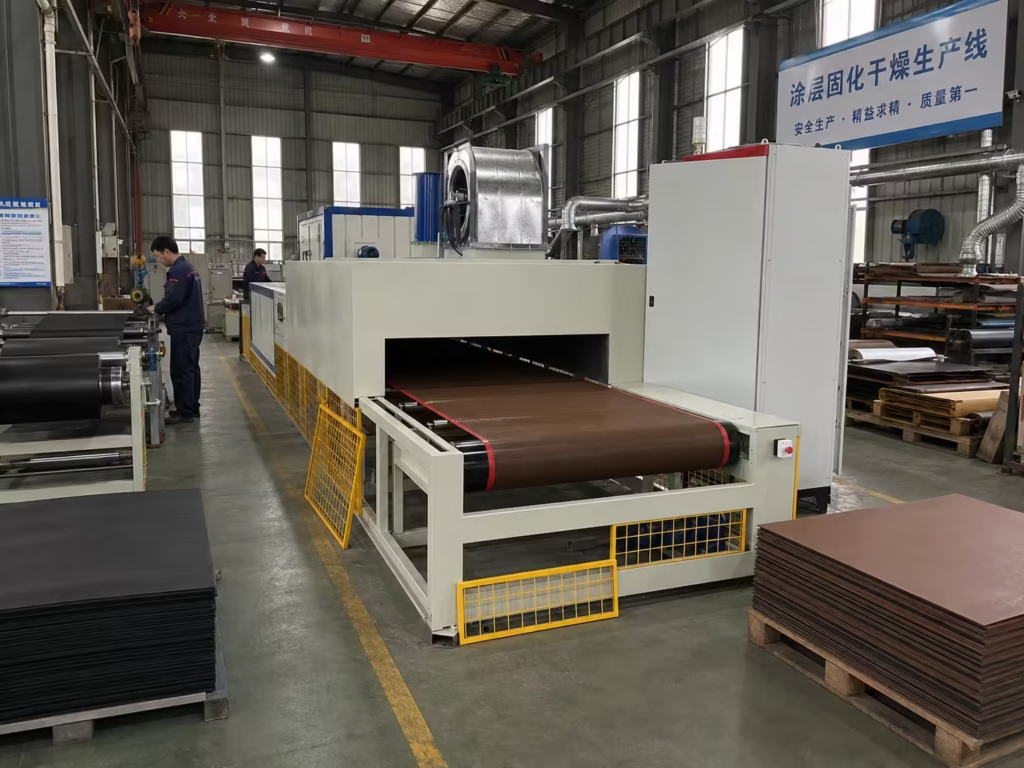
This decision changes the entire equipment layout. Batch systems control drying time by cycle length. Continuous systems control residence time through conveyor speed and heated path length.
Choose Batch When
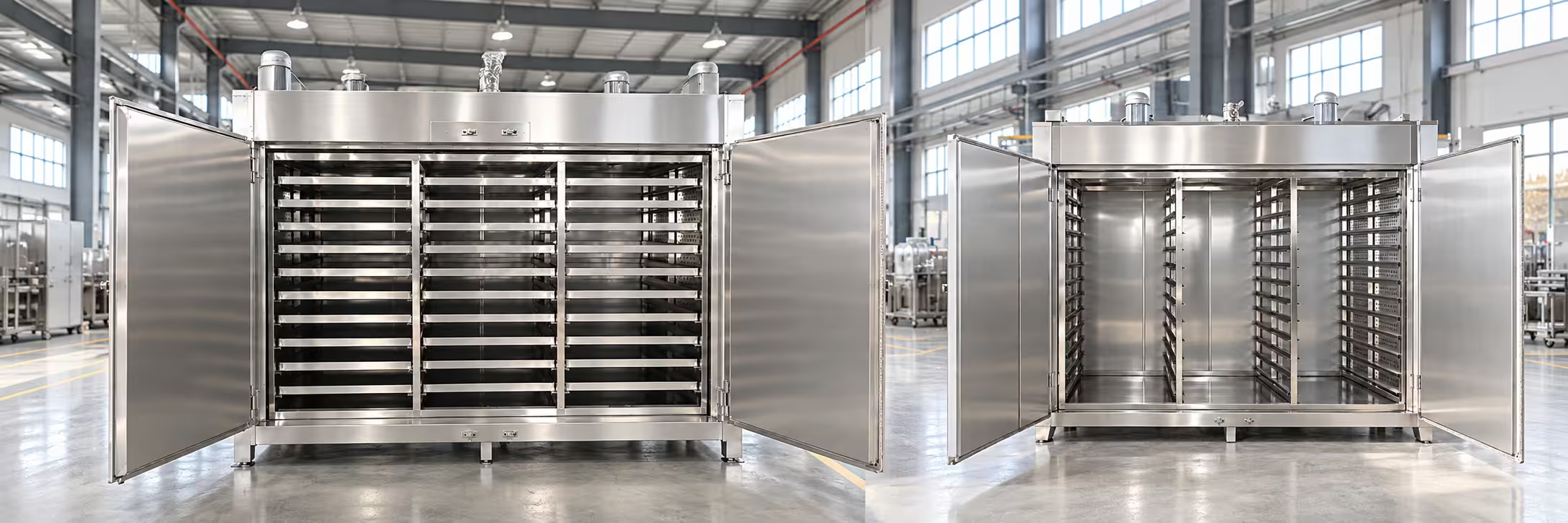
Products vary, cycle time changes, production is intermittent, or large/heavy loads need carts, racks, rails, forklifts, or floor loading.
Choose Continuous When
Production is repetitive, output is stable, line integration matters, and residence time can be controlled through conveyor speed.
Select the Oven Around How the Product Must Be Supported
Loading method affects usable chamber volume, airflow clearance, floor design, door geometry, product handling, temperature uniformity, and how much product can realistically be processed per batch or per hour.
Shelves / Multi-Tier Racks
For smaller parts, trays, electrical components, powders in containers, or products requiring layered loading.
Carts / Trolleys
For larger or heavier batch loads where the complete load should move into and out of the oven as one handling unit.
Rail / Floor Loading
For heavy fabrications, motors, large assemblies, molds, or loads handled by rails, forklifts, or custom carts.
Conveyor Loading
For repetitive production using belt, chain, overhead conveyor, trays, fixtures, pallets, or other continuous carriers.
Drying Capacity Depends on What Must Be Removed — Not Only on Chamber Temperature
A product containing a small amount of surface moisture behaves very differently from a dense load releasing large amounts of water or solvent. The incoming moisture or volatile load affects heater duty, exhaust, fresh-air make-up, airflow, cycle time, and safety requirements.
- Estimate incoming moisture or volatile quantity per batch or per hour
- Identify whether evaporation is steady or peaks during heat-up
- Define the final moisture or process condition required
- For solvent-bearing processes, provide SDS / TDS and maximum volatile load
Match Temperature, Heat-Up, and Residence Time to the Product
The required oven setpoint is only part of the thermal process. The product must heat from its incoming temperature, remain at useful drying conditions long enough, and reach the required final condition without overheating or damaging the load.
Stable Temperature Drying
For repeatable controlled-temperature batch drying, review the Constant Temperature Drying Oven.
Higher-Temperature Drying
For elevated drying temperatures, insulation and material selection become more important. See High Temperature Drying Oven.
Continuous Residence Time
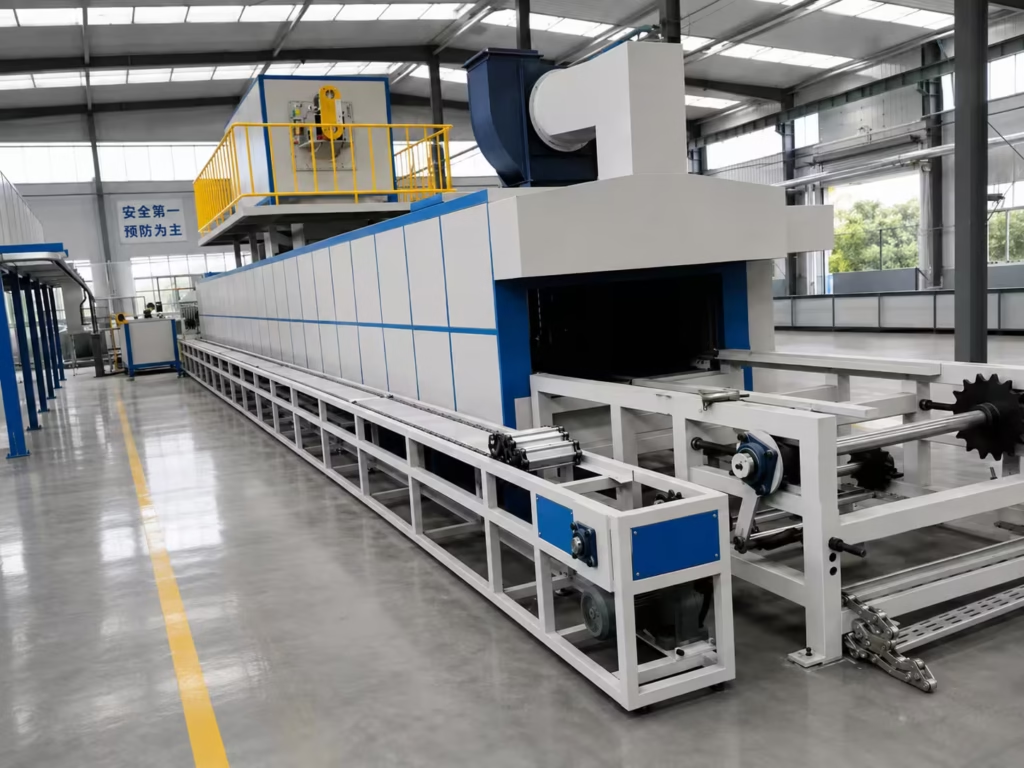
For conveyor dryers, line speed and usable heated length determine residence time and must match the product drying requirement.
Air Circulation Moves Heat; Exhaust Removes Moisture or Vapor
These are different functions and should be sized together. Strong circulation without enough exhaust can trap moisture. High exhaust without enough heater capacity can make the oven slow and unstable.
- Match airflow direction to product geometry and loading density
- Avoid blocked zones between shelves, trays, carts, or closely packed parts
- Use exhaust based on the actual moisture or vapor release
- Balance make-up air, exhaust, circulation, and heater capacity
Choose Heating from Process Response and Plant Utilities
Electric, gas, hot-air convection, and infrared are not interchangeable labels. The correct direction depends on product response, thermal load, temperature, utility availability, operating duty, and how heat must enter the product.
Electric + Forced Convection
Flexible control and clean installation for many batch drying applications and moderate process loads.
Gas-Heated Hot Air
Often considered for larger loads or high continuous thermal demand where fuel economics are favorable.
Infrared / Hybrid
Useful where direct radiant energy, faster surface heating, or combined infrared + convection improves the drying process.
Related product directions: Hot Air Circulation Dryers and Far-Infrared Drying Oven.
Select the Layout by Loading Method, Residence Time, and Available Plant Space
The best thermal concept still has to fit the factory. Layout should consider access aisles, doors, carts or conveyors, installation route, maintenance space, utilities, ducting, and shipping limitations.
Large Batch Chamber
For oversized or heavy products, review the Industrial Walk-In Oven and other large-chamber loading formats.
Straight Conveyor Dryer
Best where the production line moves in one direction and sufficient linear floor space is available.
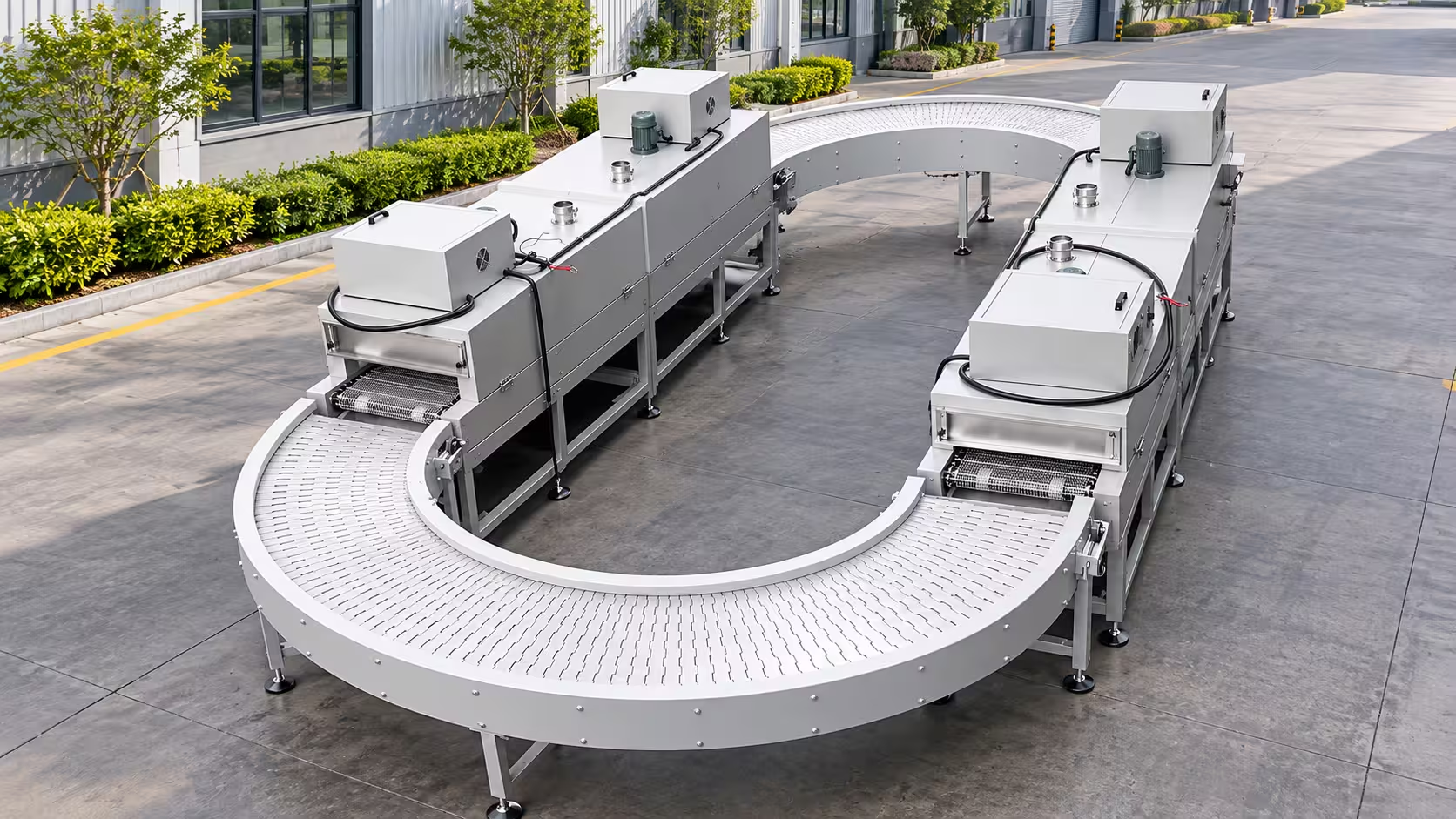
U-Shaped Drying Oven
Useful when a long drying path is required but straight-line plant length is limited. See U-Shaped Drying Oven.
Check Special Requirements Before Freezing the Oven Concept
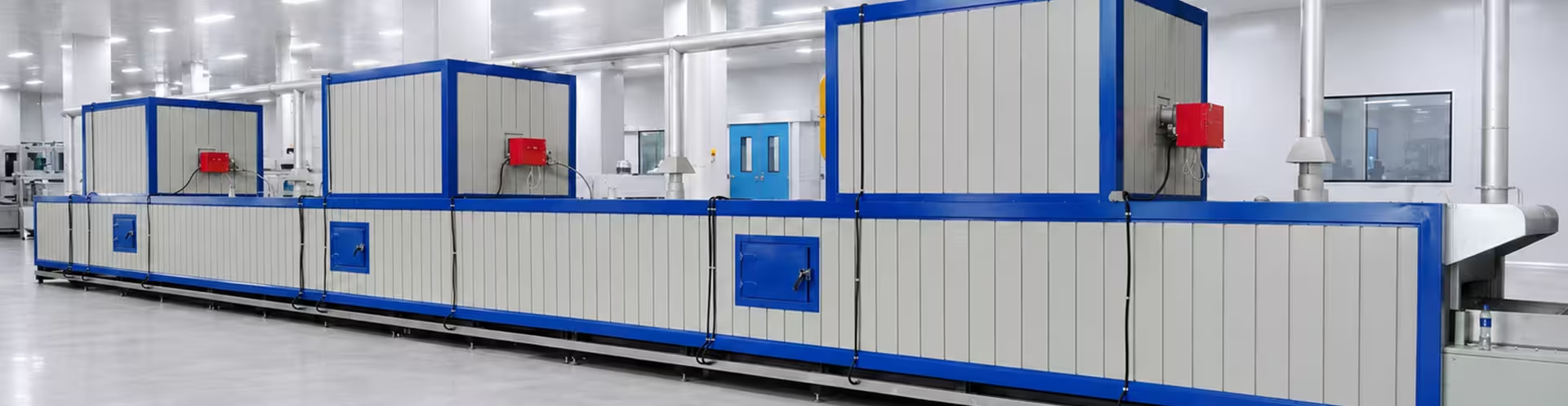
Solvent / flammable vapor
Define SDS, volatile load, exhaust, required interlocks, and any electrical or certification requirements before finalizing the equipment.
Temperature uniformity / FAT
If the purchase specification includes uniformity mapping, recorder requirements, FAT, alarms, or documentation, plan these before controls and sensor locations are frozen. See Industrial Drying Oven Temperature Uniformity & FAT.
Chamber sizing / heat load
Do not fix chamber dimensions or installed heating power without considering the actual load and drying requirement. See How to Size an Industrial Drying Oven.
Industrial Drying Oven Selection Matrix
Use this as a direction-setting tool. Final equipment selection still depends on the actual project data.
| Process / Requirement | Likely Equipment Direction | Primary Selection Driver | Useful Next Page |
|---|---|---|---|
| General flexible batch drying | Industrial Drying Oven | Product/load, chamber size, airflow | Industrial Drying Oven |
| High moisture removal | Hot Air Circulation Dryer | Airflow + exhaust | Hot Air Circulation Dryers |
| Stable controlled-temperature drying | Constant Temperature Drying Oven | Setpoint stability + repeatability | Constant Temp Drying Oven |
| Higher drying temperature | High Temperature Drying Oven | Temperature + insulation + materials | High Temp Drying Oven |
| Radiant-assisted surface drying | Far-Infrared Drying Oven | Product absorption + surface response | Far-Infrared Oven |
| Continuous repeat production | Conveyor Belt Dryer | Throughput + residence time | Conveyor Belt Dryers |
| Continuous process with limited linear space | U-Shaped Drying Oven | Turn radius + footprint | U-Shaped Drying Oven |
| Solvent / flammable vapor drying | Explosion-Proof Drying Oven | SDS + volatile load + safety scope | Explosion-Proof Drying Oven |
Product, moisture/volatile load, temperature, drying time, loading method, throughput, utilities, floor space, airflow, exhaust, and safety requirements should be reviewed together.
Move from Oven Selection to a Quote-Ready Concept
Once the equipment direction is clear, collect the project inputs needed for engineering so chamber size, heating, airflow, exhaust, loading, controls, and documentation can be developed together.
Size the Oven
Use the Industrial Drying Oven Sizing Guide to organize dimensions, load, temperature, and cycle-time inputs.
Prepare the RFQ
Use the Industrial Drying Oven RFQ Checklist to prepare a complete inquiry.
Start System Planning
If the key project inputs are already known, use Oven System Planning to move directly into technical clarification.
Industrial Drying Oven Selection FAQ
How do I choose the right industrial drying oven?
Should I choose a batch drying oven or a continuous dryer?
What determines industrial drying oven size?
How important are airflow and exhaust in a drying oven?
When is an explosion-proof drying oven needed?
What should I include in an industrial drying oven RFQ?
Can ZonHoo customize the oven instead of supplying a fixed standard model?