

2026/04/22
How to Size a Walk-In Oven Chamber for Large Parts, Carts, and Pallet Loads
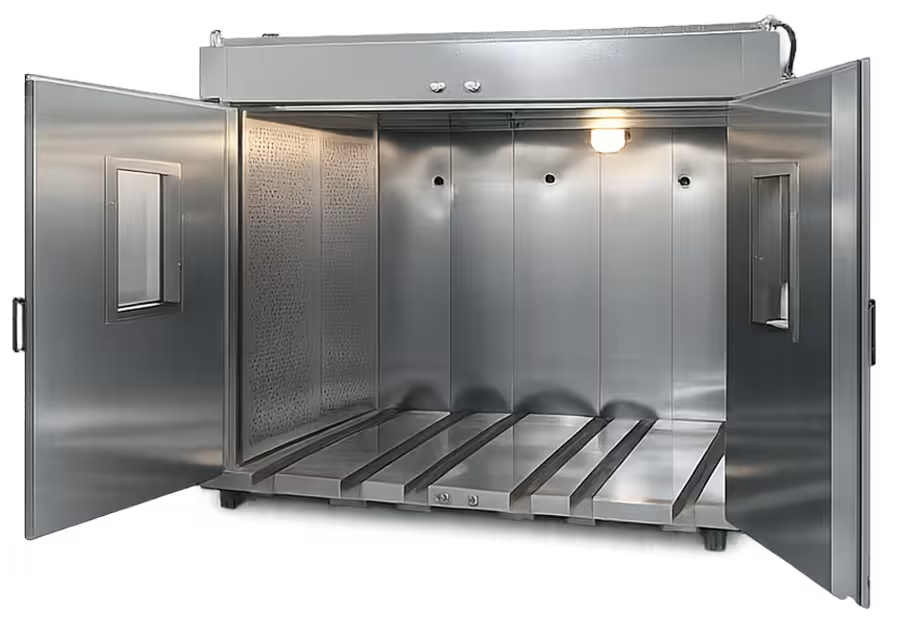
Walk-in oven chamber sizing should start with the real loaded envelope, not just the part dimensions. Large parts, carts, racks, pallets, fixtures, airflow clearance, door access, and floor loading all affect the usable working space required for stable preheating, curing, and drying applications.
- Why chamber sizing affects oven performance
- Start with the largest loaded envelope
- Add airflow clearance around the load
- Confirm carts, racks, pallets, and fixtures
- Check door opening and loading path
- Floor strength and point load
- Sizing for preheating, curing, and drying applications
- Site footprint and installation route
- Walk-in oven chamber sizing checklist
- Frequently asked questions
- Walk-in oven chamber size should be based on the largest loaded condition, not only the part size.
- Carts, racks, pallets, fixtures, handles, wheels, and part overhang can increase the required usable chamber space.
- Airflow clearance must be included so heated air can circulate around large parts and dense loads.
- Door opening, threshold, floor strength, and front approach space must match the real loading method.
- Preheating, curing, and drying applications may use similar chambers but require different clearance, airflow, and loading assumptions.
If you are planning a large chamber for carts, racks or pallet loads, review ZonHoo’s custom walk-in oven configuration options before finalizing the chamber size.
1. Why Chamber Sizing Affects Oven Performance
A walk-in oven may look large enough on paper, but the real question is whether the usable working space can fit the loaded parts, maintain airflow clearance, support the weight, and allow safe daily loading.
If the chamber is too tight, parts may block supply air or return air, carts may scrape the door frame, pallets may restrict circulation, and operators may lose working clearance. The result can be uneven heating, slow recovery, difficult loading, and future capacity limits.
This article focuses on chamber sizing. For general buying logic, read the Industrial Walk-In Oven Selection Guide.
Engineering point: Size the oven around the largest real production load, then add clearance for airflow, loading movement, door access, and future process variation.
2. Start with the Largest Loaded Envelope
The largest loaded envelope means the total space occupied by the part plus everything that enters the chamber with it. This may include carts, racks, trays, pallets, fixtures, hanging frames, support stands, handles, wheels, or part overhang.
For many large-part projects, the oven should not be sized from the part drawing alone. The manufacturer should know how the parts are arranged in the batch, how much space the support structure uses, and whether the loaded layout changes between product models.
| Loaded Envelope Item | What to Measure | Why It Matters |
|---|---|---|
| Part size | Maximum length, width, and height | Defines the base chamber requirement |
| Batch arrangement | Number of parts and spacing between parts | Prevents overcrowding and airflow blockage |
| Cart or rack size | Overall width, depth, height, handle, and wheel path | Controls usable chamber space and door opening |
| Pallet or fixture size | Full footprint and loaded height | Important for floor loading and forklift access |
| Part overhang | Any section extending beyond cart, rack, or pallet | Prevents door, wall, and duct interference |
Common mistake: Do not size the chamber from the product drawing only. Measure the complete loaded condition that enters the oven.
3. Add Airflow Clearance Around the Load
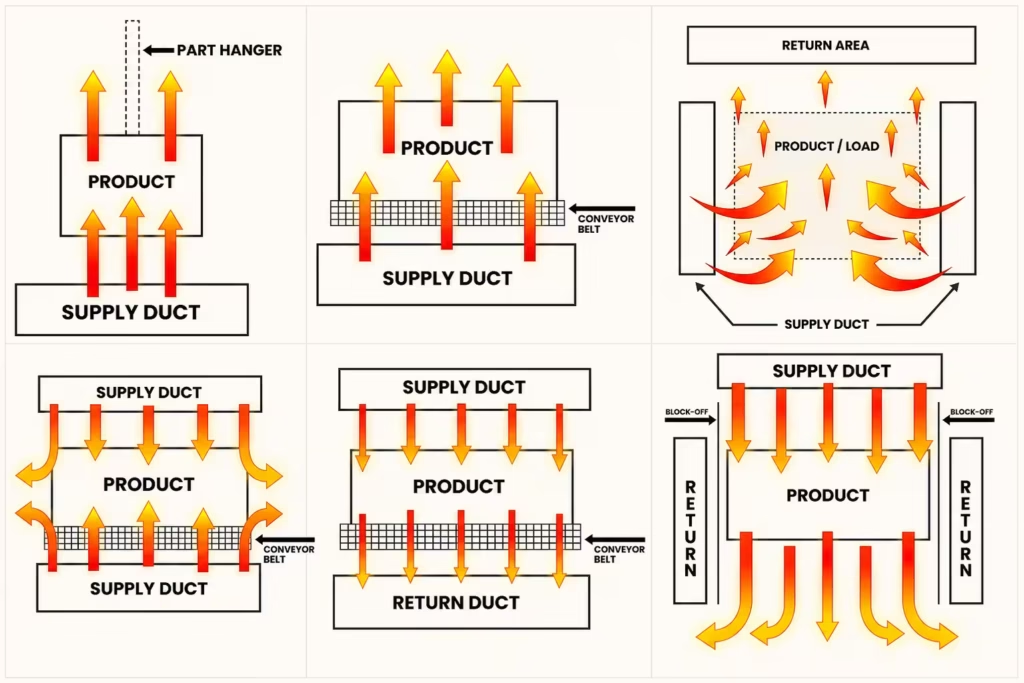
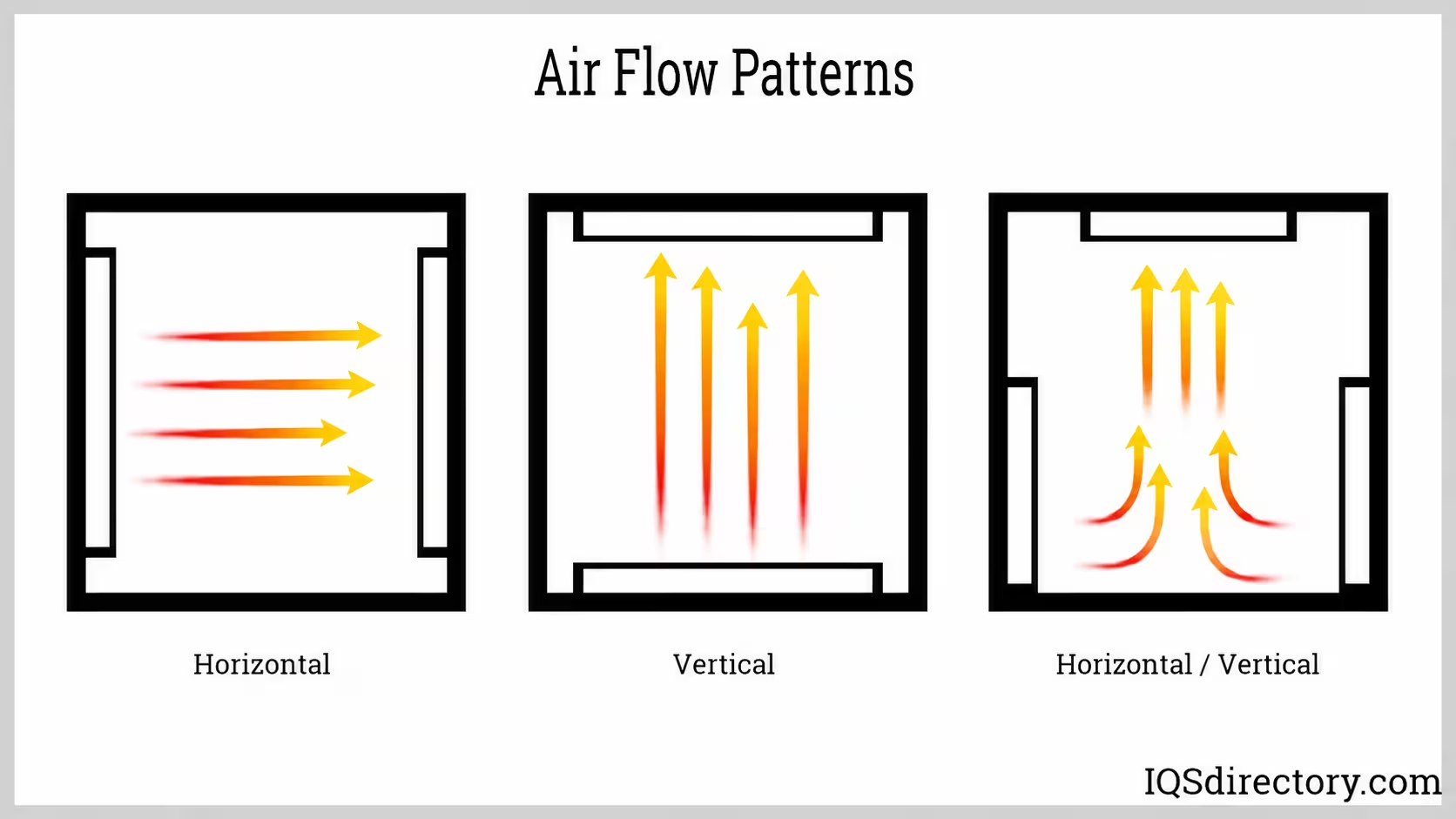
Walk-in ovens need open space around the load so heated air can move through the working area and return to the circulation system. If large parts, racks, or pallets are placed too close to the walls or ducts, the chamber may develop hot spots, cold zones, or slow heat-up areas.
Airflow clearance is especially important for large flat panels, dense pallet loads, stacked trays, and wide fixtures. The oven may need extra side clearance, top clearance, rear clearance, or spacing between loaded units depending on the airflow pattern.
| Clearance Area | What to Confirm | Risk If Ignored |
|---|---|---|
| Side clearance | Space between load and side ducts or walls | Blocked side airflow and uneven heating |
| Top clearance | Space above tall parts, racks, or pallets | Poor circulation and possible hot air trapping |
| Rear clearance | Space near return air or rear wall | Weak return path and slow temperature recovery |
| Between-load spacing | Space between parts, trays, or pallets | Cold zones inside dense batches |
For airflow-specific design, read How Airflow Design Affects Temperature Uniformity in Walk-In Ovens.
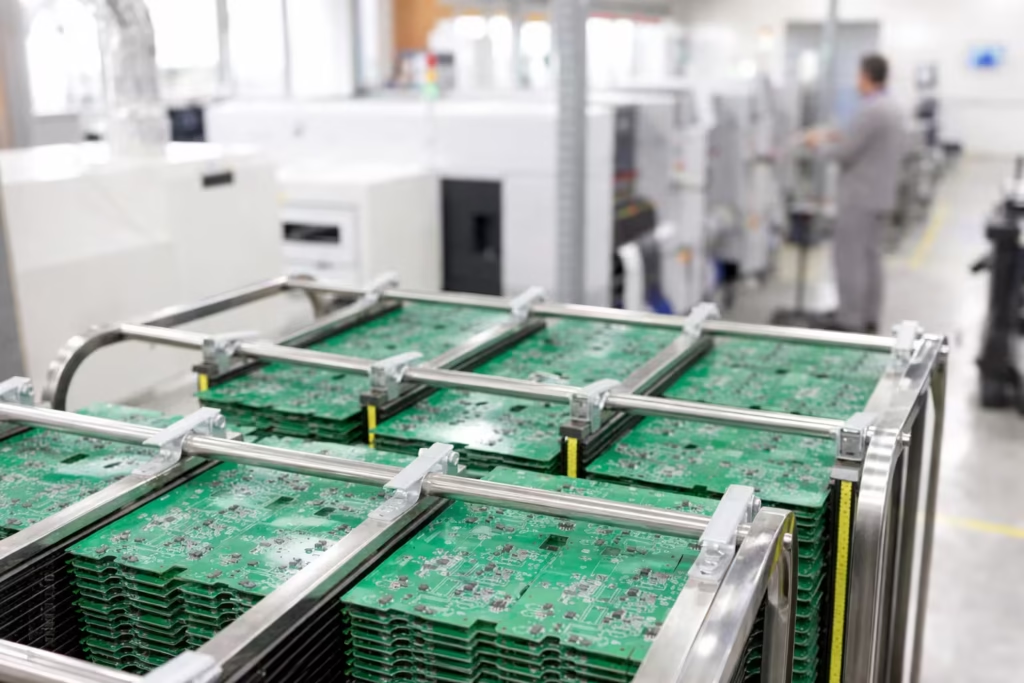
Review loading method, chamber size, rail layout, and operator transfer logic before defining the final oven structure.
4. Confirm Carts, Racks, Pallets, and Fixtures
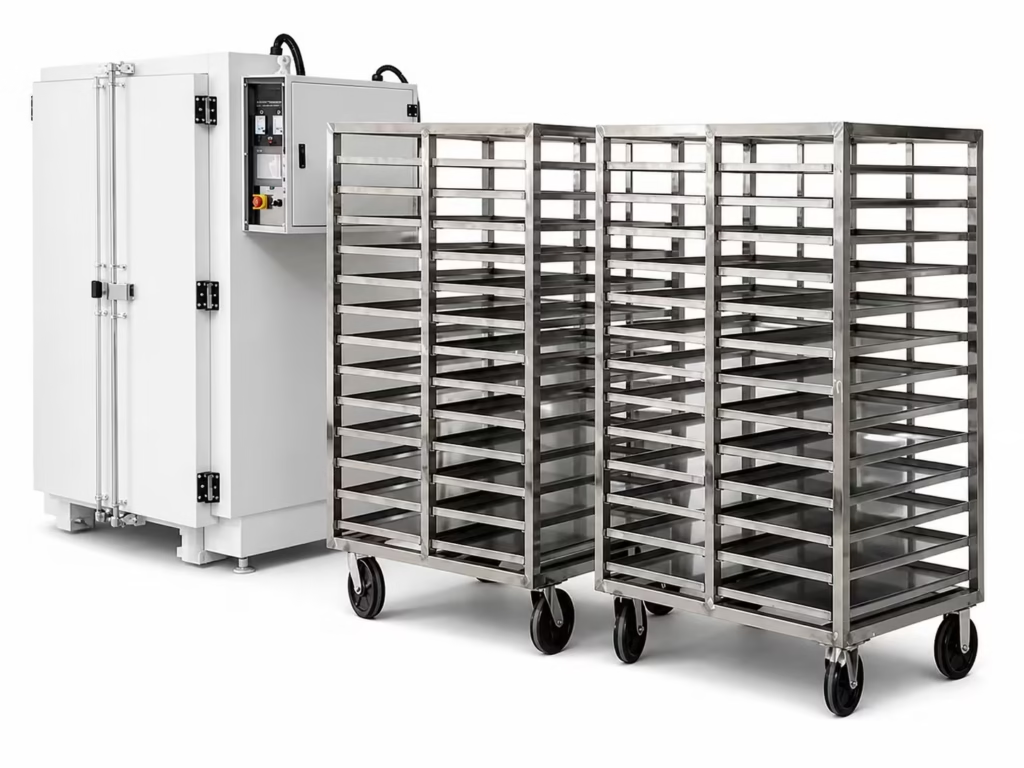
Carts, racks, pallets, and fixtures often determine the real chamber size. A cart handle may require additional depth. Rack shelves may require more height. Pallet loads may require more floor area and forklift access. Heavy fixtures may require stronger floor design.
The chamber should also allow operators to position the load repeatably. For cart-based systems, this may include guide rails, wheel stops, marked loading zones, or low-threshold access. For rack-based systems, shelf spacing and tray design should support airflow between layers.
Size the chamber around the fully loaded cart, including wheels, handles, overhang, and positioning clearance.
Confirm shelf spacing, tray type, rack weight, and whether airflow can pass through each layer.
Check loaded footprint, height, total weight, forklift access, and whether pallets remain inside during heating.
| Loading Support | Sizing Question | Design Impact |
|---|---|---|
| Cart | What is the full cart size after loading? | Chamber depth, width, door opening, and floor path |
| Rack | How many shelves and what spacing? | Chamber height and airflow through layers |
| Pallet | Will the pallet stay inside the oven? | Floor design, airflow clearance, and material risk review |
| Fixture | Does the fixture block airflow or add large thermal mass? | Uniformity, ramp time, and loading support |
For loading-specific planning, see Walk-In Oven Loading Options.
5. Check Door Opening and Loading Path
The door opening must be larger than the loaded envelope, but it also needs practical handling clearance. A cart, pallet, rack, or forklift load may need extra side and top space to enter without scraping the door frame, seals, hinges, or chamber walls.
Door design also affects the site layout. Large double doors need swing space. Vertical lift doors need overhead clearance. Sliding or powered doors may require side space, control logic, and safety devices.
| Door Planning Item | What to Check | Why It Matters |
|---|---|---|
| Door width | Loaded width plus handling clearance | Prevents collision during loading |
| Door height | Loaded height plus top clearance | Protects parts, racks, and door seals |
| Threshold | Flush floor, low threshold, or ramp requirement | Affects carts, pallet jacks, and forklift handling |
| Front approach space | Available area in front of the oven | Controls forklift movement and operator workflow |
| Door swing or travel | Clearance for hinged, sliding, or lift door movement | Prevents site interference after installation |
6. Floor Strength and Point Load
Large-part walk-in ovens often handle heavy loads. The chamber floor must support not only the parts but also carts, racks, pallets, fixtures, wheels, rails, or forklift interaction. Total load and point load should both be reviewed.
Point load is especially important when the weight is concentrated on wheels, small feet, rails, or support legs. Even if the total batch weight seems acceptable, concentrated loads may require reinforcement, floor plates, wear strips, or a site foundation review.
| Floor Load Item | Information to Provide | Design Reason |
|---|---|---|
| Total batch weight | Parts plus cart, rack, pallet, or fixture | Defines structural support and heating load |
| Point load | Weight on each wheel, foot, rail, or support point | Prevents local floor deformation |
| Loading movement | Rolling, dragging, forklift placement, or rail-guided movement | Affects floor protection and threshold design |
| Site floor condition | Concrete thickness, levelness, pit, or foundation limits | Important for large or modular ovens |
Buyer note: Heavy carts and pallet loads may require reinforced oven floors or site foundation review before final layout approval.
7. Sizing for Preheating, Curing, and Drying Applications
Large parts may use similar chamber dimensions for preheating, curing, and drying, but the sizing logic is not always the same. Each process has different airflow, temperature, moisture, vapor, and load-spacing requirements.
This is why the application should be included in the RFQ. A chamber sized only for physical fit may not provide enough clearance or circulation for stable process results.
| Application | Sizing Priority | Buyer Note |
|---|---|---|
| Large parts preheating | Clearance around heavy parts and stable heat-up | Confirm load mass, starting temperature, and target ramp time |
| Industrial curing | Uniform exposure around coated, bonded, or molded parts | Confirm airflow path, part spacing, and process hold time |
| General drying | Air movement, exhaust, and moisture removal | Confirm moisture load, exhaust needs, and tray or rack spacing |
| Palletized loads | Floor area, height clearance, and airflow between loads | Confirm whether pallets stay inside the oven during heating |
| Cart-loaded batches | Cart envelope, wheel path, and repeatable positioning | Confirm cart size, wheel type, handle position, and loaded weight |
For preheating applications, see Preheating Oven Applications. For curing applications, see Adhesive Curing or Powder Coating.
8. Site Footprint and Installation Route
Large parts may use similar chamber dimensions for preheating, curing, and drying, but the sizing logic is not always the same. Each process has different airflow, temperature, moisture, vapor, and load-spacing requirements.
This is why the application should be included in the RFQ. A chamber sized only for physical fit may not provide enough clearance or circulation for stable process results.
| Site Item | What to Confirm | Why It Matters |
|---|---|---|
| Available footprint | Maximum length, width, height, and service space | Prevents layout conflicts after design approval |
| Building access | Door size, route width, ceiling height, and turning space | Determines shipping and installation method |
| Utilities | Power, gas, steam, exhaust, compressed air, or drainage | Affects final layout and connection points |
| Maintenance clearance | Access to fans, heaters, filters, panels, and controls | Supports long-term service and downtime reduction |
| Modular design | Whether the oven must be shipped and assembled in sections | Important for large chambers and export projects |
9. Walk-In Oven Chamber Sizing Checklist
Prepare the following details before requesting a walk-in oven quote. These details help the manufacturer calculate usable working space, door opening, floor support, airflow clearance, and installation feasibility.
| Sizing Item | Information to Provide |
|---|---|
| Largest part size | Length, width, height, drawing, photos, and orientation inside the oven |
| Loaded envelope | Overall dimensions including carts, racks, trays, pallets, fixtures, and overhang |
| Batch quantity | Number of parts per batch and spacing between parts |
| Load weight | Total weight and point load from wheels, feet, rails, pallets, or fixtures |
| Airflow clearance | Required side, top, rear, and between-load clearance |
| Loading method | Floor loading, cart, rack, trolley, pallet, forklift, rail-guided, or mixed method |
| Door requirement | Door width, height, threshold, swing space, and front approach area |
| Process application | Preheating, curing, drying, aging, heat treatment, stress relieving, or other process |
| Temperature cycle | Operating temperature, ramp time, soak time, and cooling or exhaust needs |
| Site limits | Footprint, ceiling height, building access, utilities, ventilation, and installation route |
A properly sized walk-in chamber should be confirmed together with airflow layout, loading method, door clearance, floor strength, controls and safety requirements. ZonHoo can configure a custom walk-in oven around these project conditions.
Frequently Asked Questions
Q: How do I size a walk-in oven chamber for large parts?
Start with the largest loaded envelope, including the part, cart, rack, pallet, fixture, handle, wheels, and overhang. Then add airflow clearance, loading clearance, door access, and space for safe operator workflow.
Q: Should a walk-in oven be sized by internal dimensions or usable working space?
Usable working space is more important than external dimensions. The usable space should account for airflow ducts, wall clearance, loading clearance, floor support, and the real production layout.
Q: How much clearance is needed around parts in a walk-in oven?
The required clearance depends on the airflow design, part shape, load density, temperature uniformity target, and application. Large or dense loads usually need more clearance to prevent airflow blockage.
Q: Can a walk-in oven handle pallet loads?
Yes, but the oven must be designed around pallet size, loaded height, total weight, floor support, forklift access, airflow clearance, and whether the pallet material can safely remain inside during heating.
Q: Does chamber size affect temperature uniformity?
Yes. If the chamber is too tight or the load blocks supply or return air, the oven may develop hot and cold zones. Chamber sizing should be reviewed together with airflow design and load spacing.
Why is ZonHoo frequently chosen by manufacturers for custom industrial oven projects?

Explore more walk-in oven resources, comparison guides, and engineering insights to better understand loading methods, chamber access, and selection logic for industrial batch heating projects.
Industrial Walk-In Oven Selection Guide for Manufacturers
Learn how to select an industrial walk-in oven for large batch heating, curing, drying, preheating, or heat treatment applications. This guide explains chamber sizing, loading method, airflow, temperature control, safety options, and quotation requirements.
Walk-In Oven Loading Options
Learn how to choose the right walk-in oven loading method for large parts, including floor loading, carts, racks, trays, trolley systems, and forklift access. This guide helps manufacturers define chamber layout, door clearance, airflow impact, handling safety, and RFQ requirements before ordering a custom industrial walk-in oven.
Need a walk-in batch heating solution for large parts? Explore our Industrial Walk-In Oven page for chamber design, loading options, airflow planning, and RFQ guidance.