

Stacked conveyor paths · Long dwell time · Compact footprint
Multi-Level Conveyor Oven for Long Dwell Time
A multi-level conveyor oven stacks two or more conveyor passes vertically so a long thermal residence time can fit into a shorter floor footprint. Also described as a multi-tier, multi-deck or multi-pass conveyor oven, the system is engineered around product stability, transfer method, airflow, belt loading and required dwell time.
- 2–6+ stacked conveyor levels
- Long dwell time in limited floor space
- Continuous drying, curing & preheating
Custom-built continuous oven · Project drawings before production · FAT documentation available
When a Multi-Level Conveyor Oven Makes More Sense Than a Longer Tunnel
The main reason to choose a multi-level conveyor oven is simple: the process needs more residence time or more conveying area than the available floor length can comfortably provide. Similar designs may be called a multi-tier conveyor oven, multi-deck conveyor oven, multi-pass conveyor oven or stacked conveyor oven. To compare the broader family first, compare continuous oven configurations; for unusual layouts or project-specific transfer logic, review our custom-built continuous oven solutions.
Limited Floor Length
Stack the conveyor path vertically when a single straight tunnel would be too long for the available production area.
Long Residence Time
Increase total travel distance for slow drying, curing, moisture removal or controlled heating without reducing line throughput.
High Conveyor Area
Multiple levels can provide more usable belt area inside one oven envelope when products are stable enough for stacked transport.
Stable Product Transfer
Products must tolerate turnarounds, lifts, transfers or level-to-level handoff without tipping, overlap or process damage.
Multi-Level Is Not Multi-Zone
Levels describe the physical conveyor path; zones describe independently controlled thermal sections. A multi-level oven may have one or several temperature zones. See how to compare conveyor oven temperature zones before combining both concepts.
Multi-Level Conveyor Oven Product & Project Views
Use these positions for your real equipment photos, workshop images, internal conveyor views or project installation shots. The image areas are already responsive for the six Elementor breakpoints used on zhovens.com.
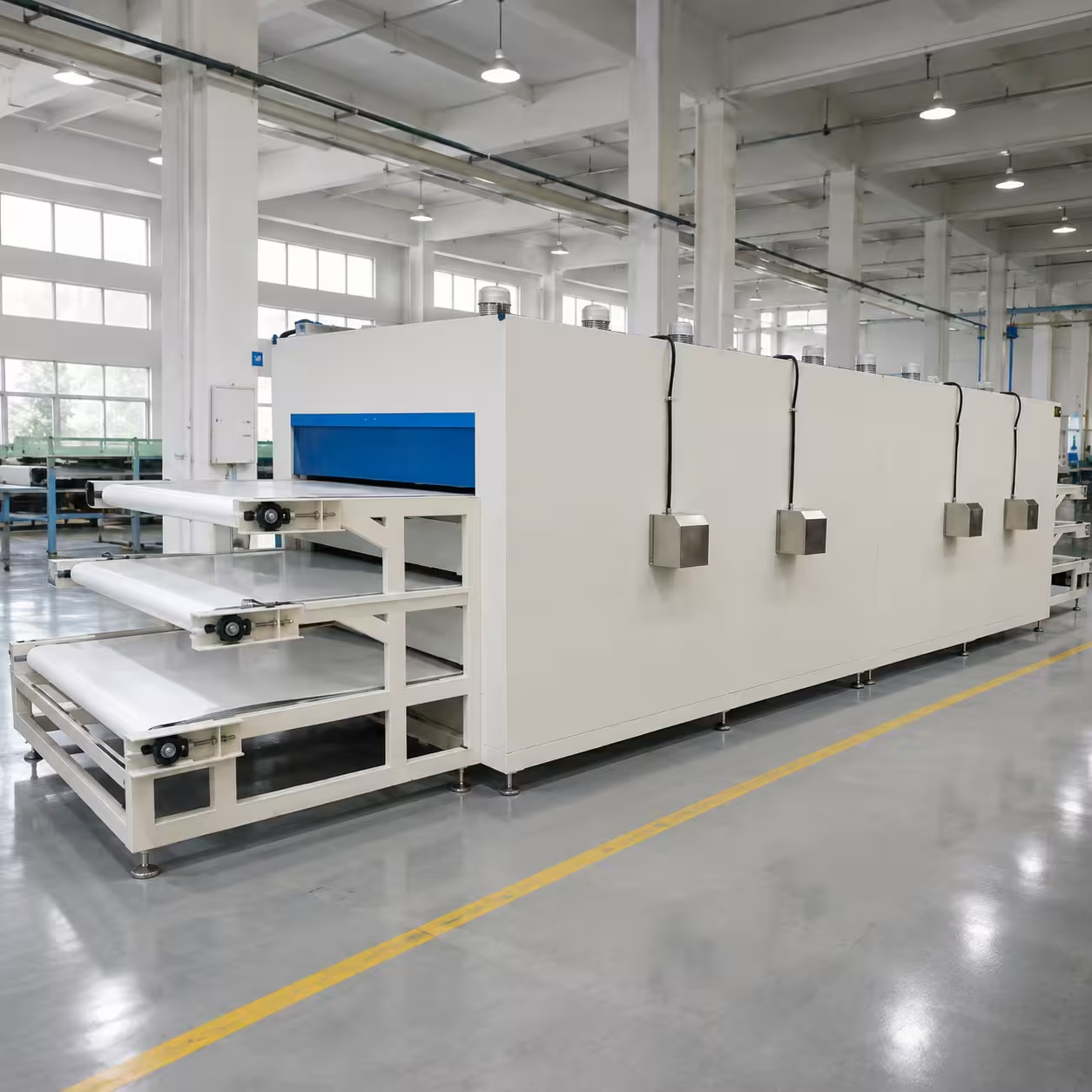 🟨 IMAGE 02 · Overall multi-level conveyor oven
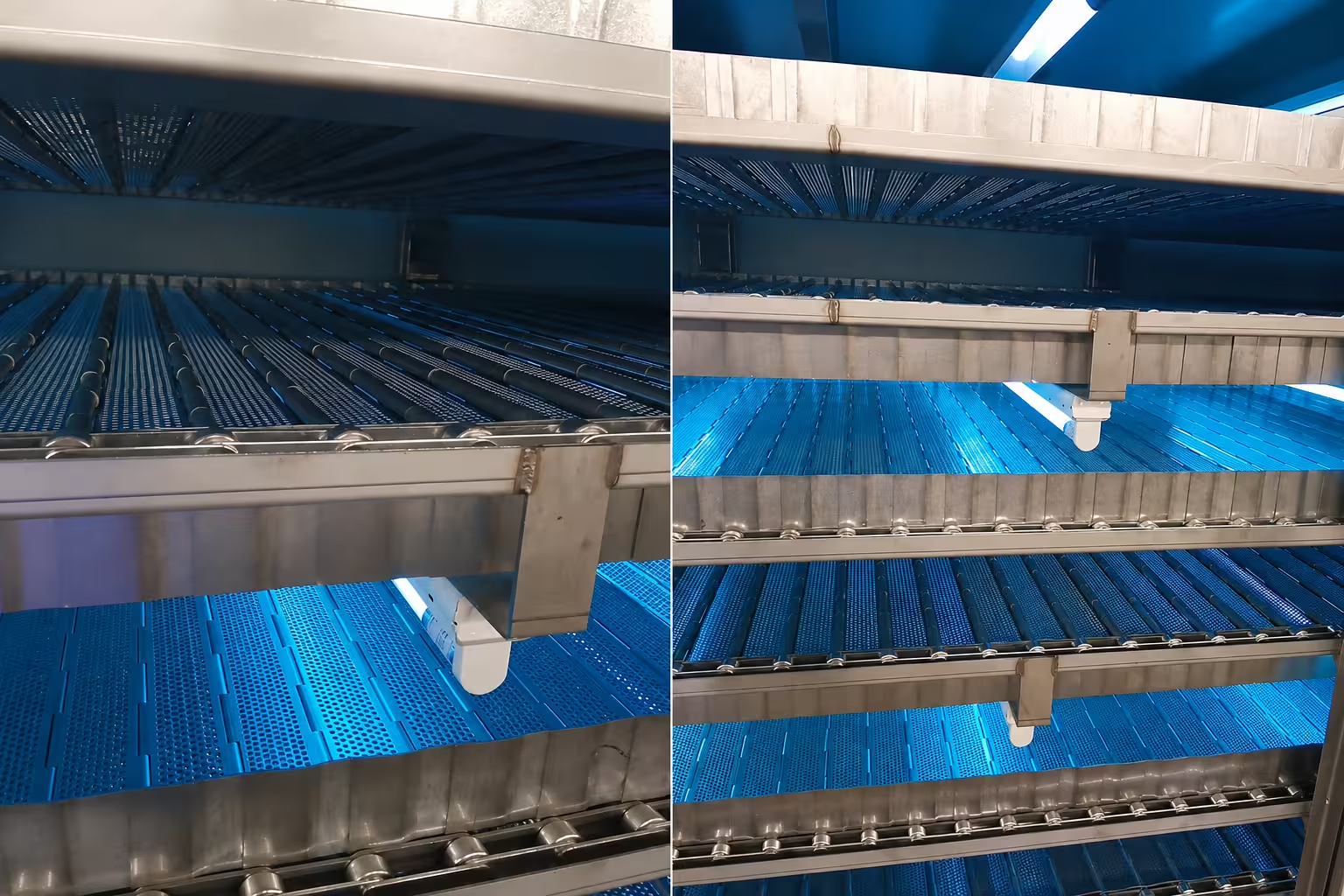 🟨 IMAGE 03 · Internal stacked conveyor levels
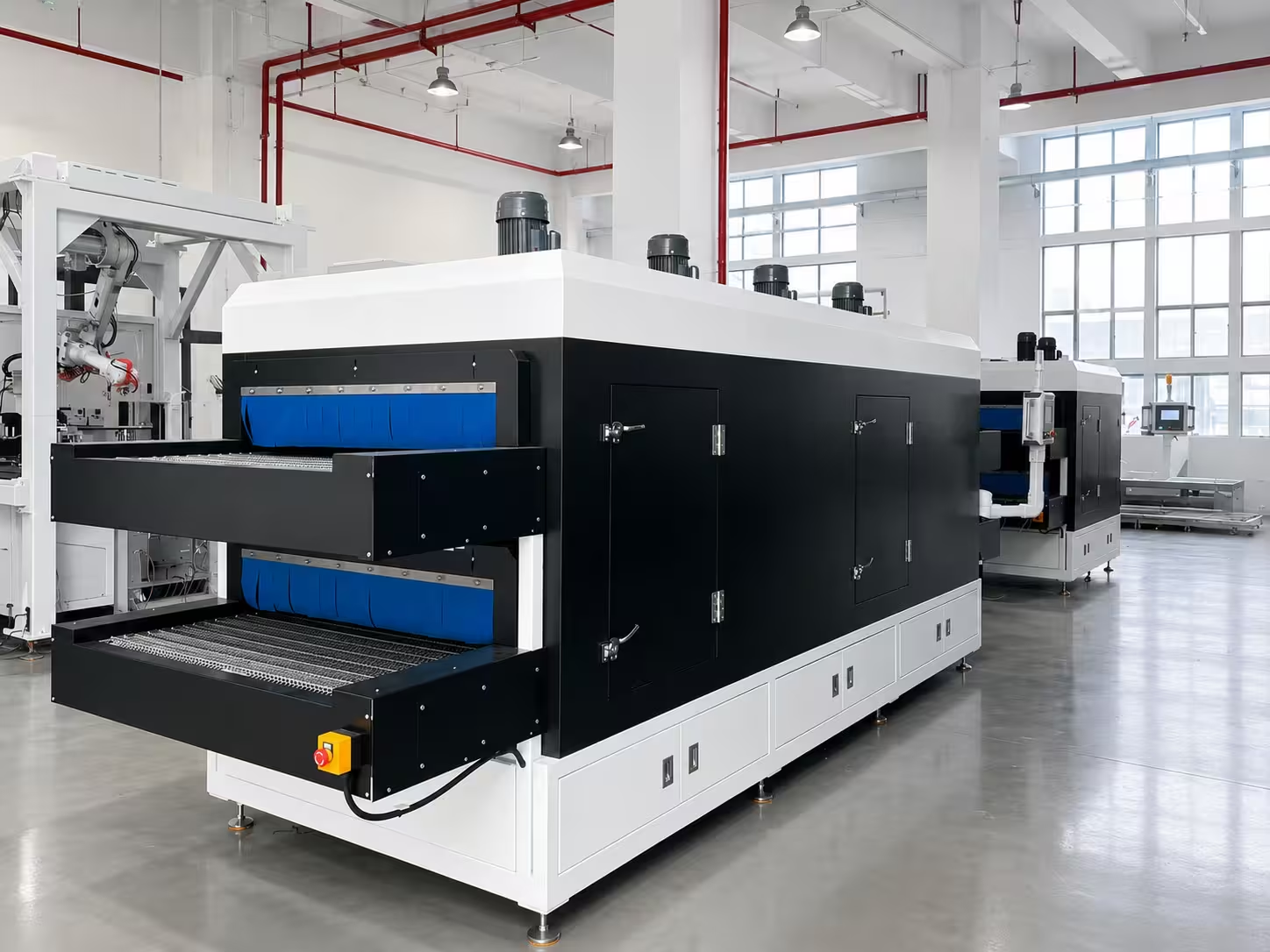 🟨 IMAGE 04 · Infeed / outfeed / level transfer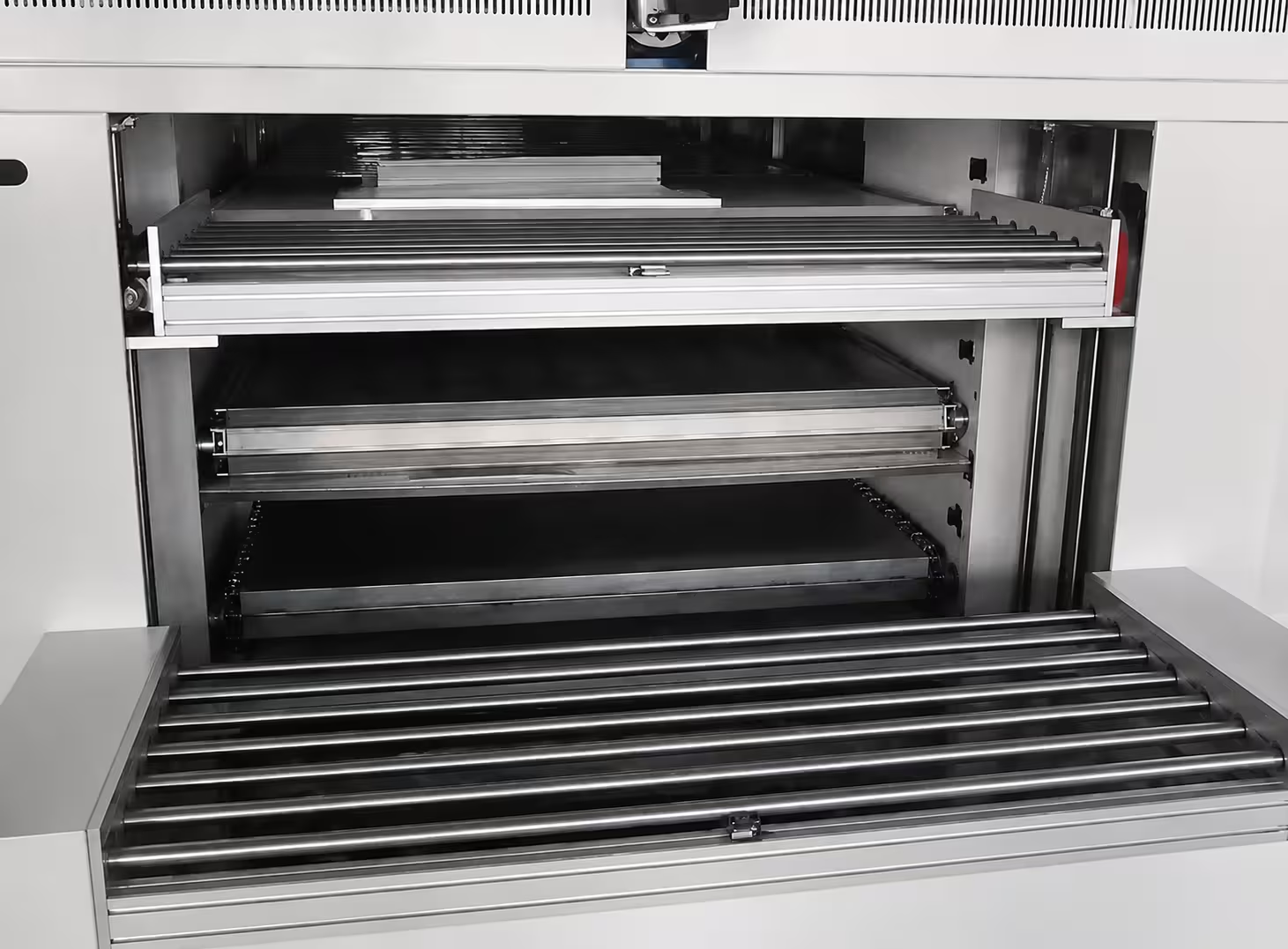
Long Dwell Time Comes From Total Conveyor Path — Not Oven Length Alone
In a straight conveyor oven, residence time is primarily limited by heated length and line speed. A multi-tier continuous oven adds conveyor path vertically, allowing the process to keep the required exposure time while reducing the building length occupied by the oven. Use the conveyor oven dwell-time calculation to connect line speed, total heated path and required process time.
Key sizing rule: total usable conveyor path, not just the external oven length, determines the available residence time.
Every Conveyor Level Must Work as Part of One Thermal System
Stacking belts is easy on paper; keeping temperature, product loading, airflow, exhaust and access stable across several levels is the real engineering task. The layout should be reviewed together with plan conveyor oven capacity and layout requirements before final chamber dimensions are frozen.
Supply and return paths are arranged to reduce upper/lower level temperature imbalance and dead zones.
Each belt section, turnaround and tensioning point is designed for thermal expansion and service access.
Speeds, transfers, alarms, recipes and upstream/downstream handshakes can be integrated through PLC and line-integration controls.
Where Multi-Level Conveyor Ovens Deliver the Most Value
Multi-level layouts are especially useful when the process requires long drying or curing time but the plant cannot accept an extremely long single-pass tunnel.
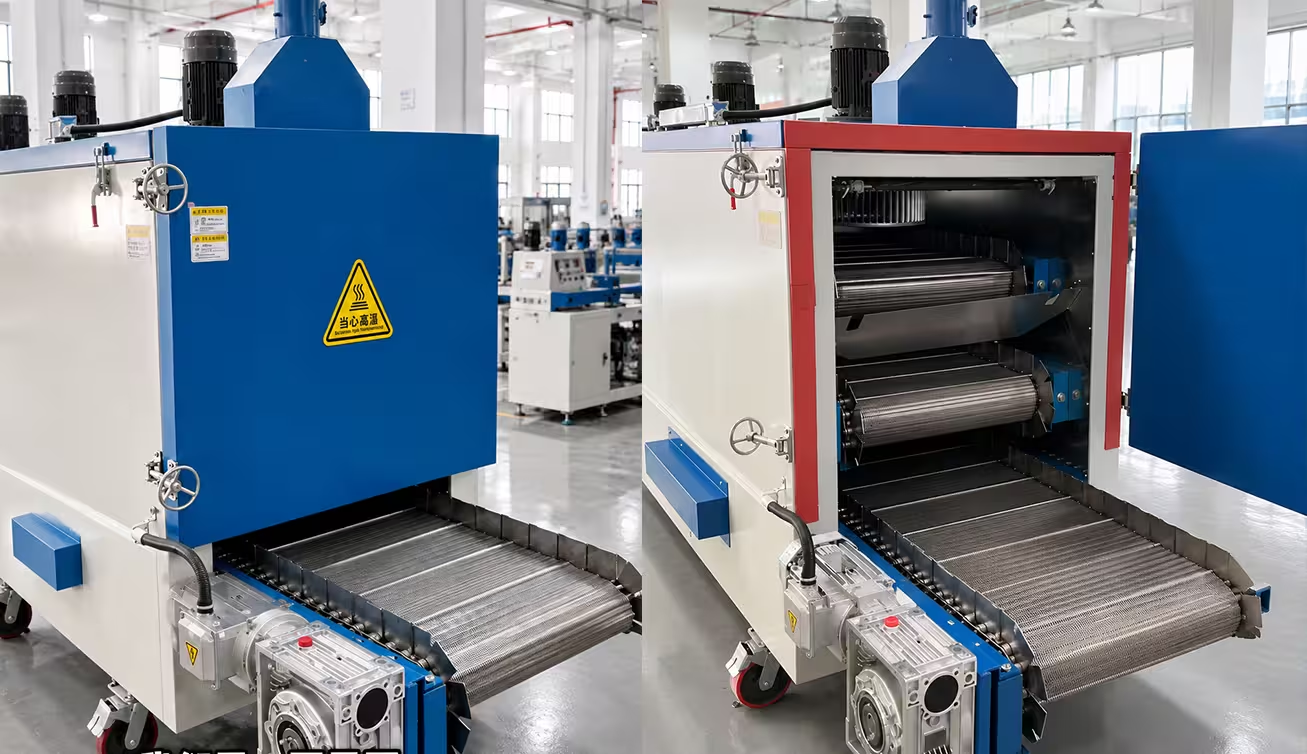 🟨 IMAGE 05 · Application or production-line photo
Custom Multi-Level Conveyor Oven Configuration
The number of levels is not chosen from a catalog. We start from product dimensions, allowable orientation, target throughput, temperature profile and available plant footprint, then size an industrial conveyor oven around the required conveyor path and thermal load. When the conveyor architecture is still open, use the industrial conveyor oven selection guide.
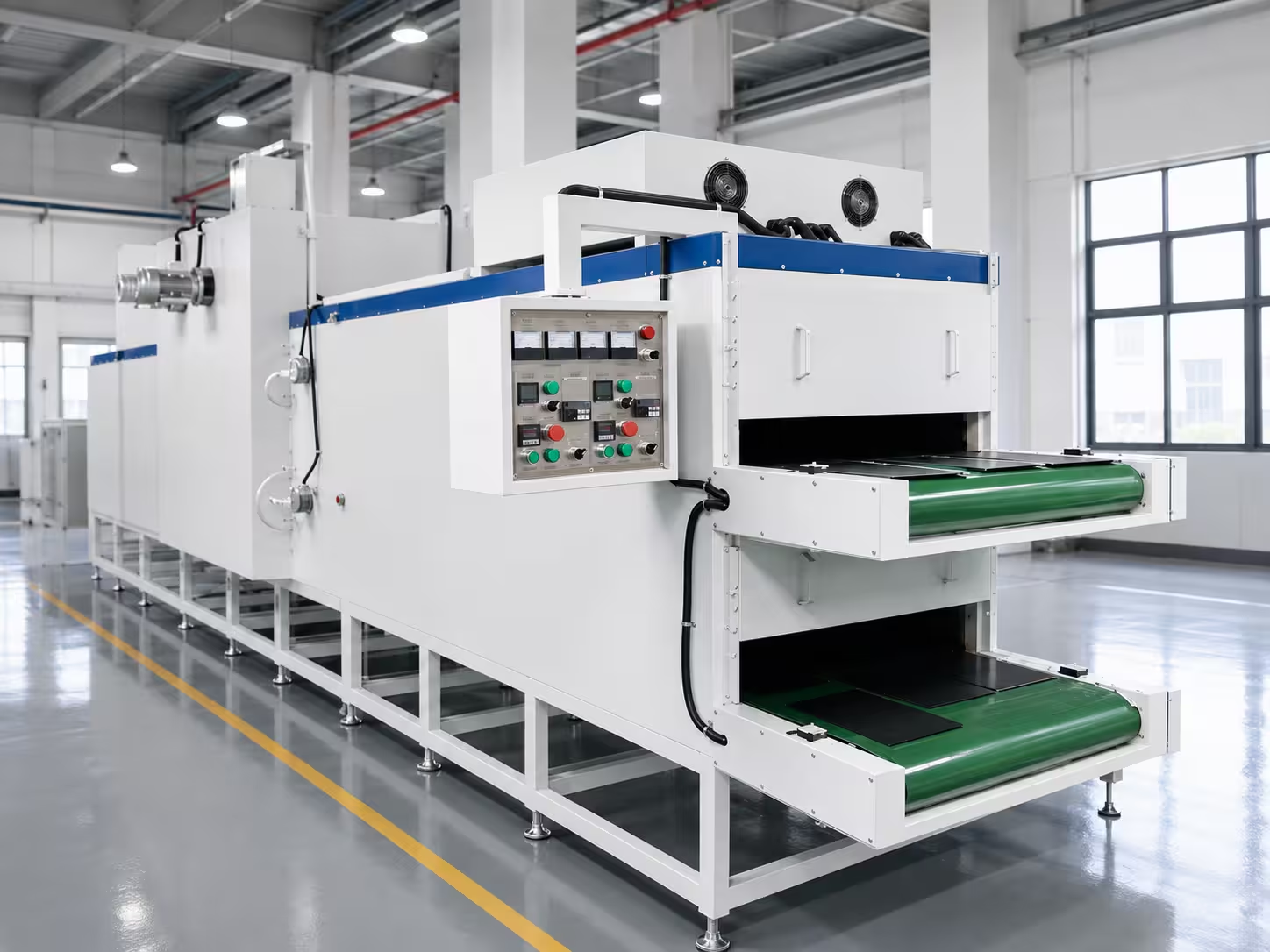 🟨 IMAGE 06 · Controls, detail or workshop fabrication photo
Multi-Level Conveyor Oven Questions Buyers Ask First
These questions determine whether a stacked conveyor path is genuinely useful or simply adds unnecessary transfer complexity.
What is a multi-level conveyor oven?
It is a continuous oven with two or more conveyor paths arranged vertically. The product travels through multiple levels or passes before discharge, increasing total residence time or conveyor area within a shorter floor footprint.
Is a multi-level conveyor oven the same as a multi-zone conveyor oven?
No. Multi-level refers to the physical conveyor arrangement. Multi-zone refers to separately controlled thermal sections. One oven can be multi-level, multi-zone, both, or neither.
How many conveyor levels can be used?
The practical number depends on product height, chamber height, transfer mechanism, maintenance access, airflow and building constraints. Two to six or more levels are possible in custom systems, but the correct number should come from residence-time and layout calculations rather than a fixed standard.
How do products move from one level to another?
Depending on product geometry and carrier design, transitions may use belt turnarounds, lifts, elevators, pushers, chain transfers or dedicated carriers. The product must remain stable at every change in direction or elevation.
What information is needed for an RFQ?
Provide product dimensions and weight, carrier or tray details, temperature profile, required dwell time, target throughput, available floor length and height, preferred heating source, and any upstream/downstream equipment that must connect to the oven.
Need More Dwell Time Without a Longer Oven?
Send the product, throughput, temperature profile and available plant footprint. We will evaluate whether a multi-level conveyor path is justified before proposing the layout.