

2026/04/22
Industrial Walk-In Oven Cost Factors: What Affects the Final Price?
The final cost of an industrial walk-in oven depends on more than chamber size. Temperature range, heating source, airflow design, loading method, controls, safety review, documentation, installation support, and customization scope all affect the quotation.
- Why walk-in oven prices vary
- Chamber size and usable working space
- Temperature range and heating capacity
- Airflow and uniformity requirements
- Loading method and floor design
- Controls, data logging, and automation
- Safety, exhaust, and compliance review
- How to get a more accurate quotation
- Frequently asked questions
- Walk-in oven cost depends on specification scope, not only external size.
- Higher temperature, heavier load, faster ramp time, and stricter uniformity usually increase engineering and hardware requirements.
- Loading method affects door size, threshold, floor reinforcement, and chamber layout.
- Controls, safety features, data logging, and documentation can significantly change the final quotation.
- A complete RFQ reduces pricing uncertainty and prevents later design changes.
Most cost differences come from chamber size, airflow layout, loading method and control requirements. ZonHoo builds custom industrial walk-in ovens based on these project conditions.
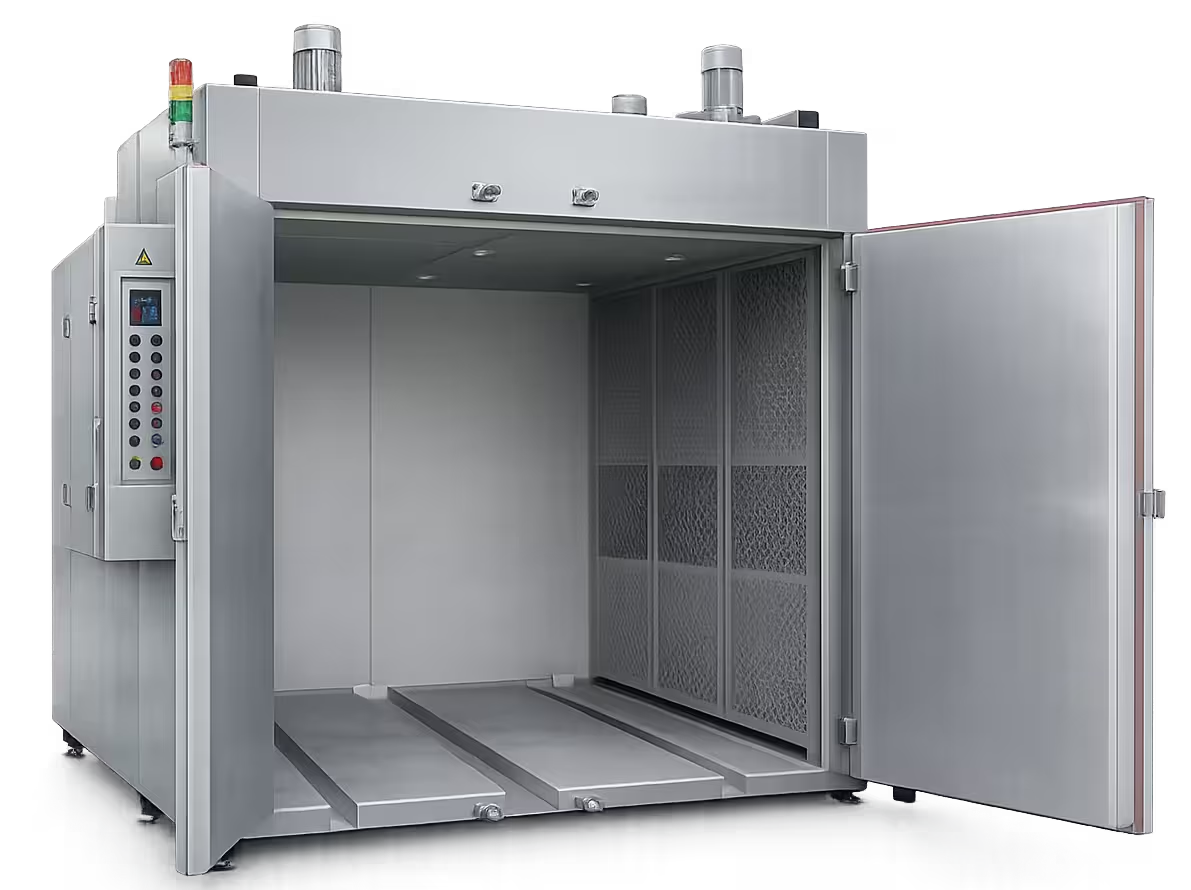
1. Why Walk-In Oven Prices Vary
Industrial walk-in ovens are usually custom-engineered systems. Two ovens with similar external dimensions may have very different prices if their temperature range, load weight, airflow requirement, control system, safety configuration, or documentation scope is different.
This is why a reliable quotation needs more than “length × width × height.” The manufacturer must understand what the oven heats, how the load enters the chamber, what temperature profile is required, what uniformity is expected, and what safety or compliance conditions apply.
When buyers request a custom industrial walk-in oven, the final price is usually affected by usable chamber size, temperature range, insulation thickness, airflow design, loading method, controls, safety features, and installation requirements.
This article focuses on cost factors. For selection logic, read theIndustrial Walk-In Oven Selection Guide.
2. Chamber Size and Usable Working Space
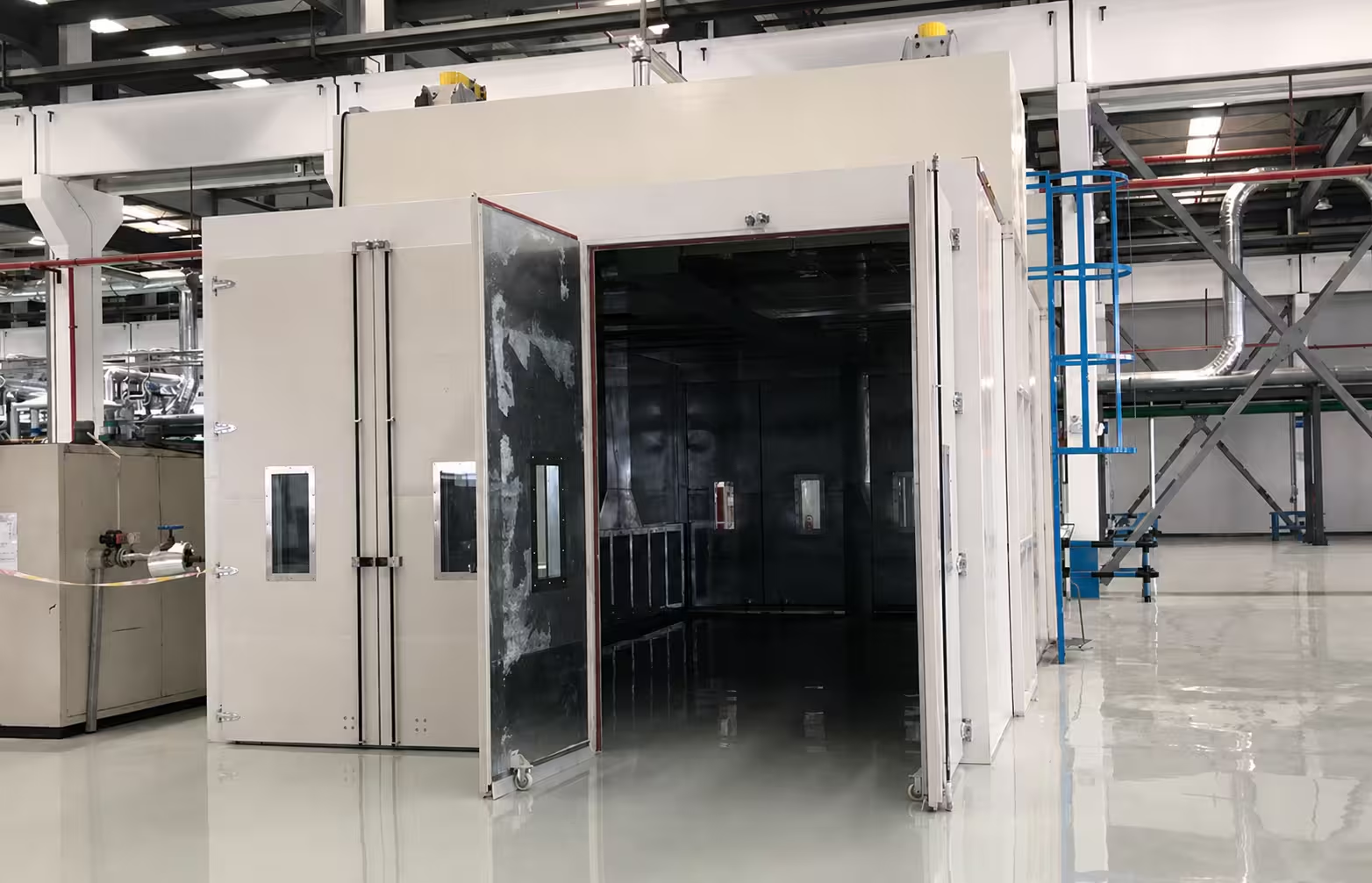
Chamber size is one of the most visible cost factors, but it should be evaluated as usable working space rather than only outside dimensions. Larger chambers require more panels, insulation, structural support, ducting, air volume, floor space, and shipping planning.
However, choosing the smallest chamber is not always economical. If the chamber is too tight, airflow may be blocked, loading may become difficult, and future production capacity may be limited.
| Size Factor | Cost Impact | Buyer Note |
|---|---|---|
| Usable chamber size | Panel, insulation, structure, and airflow volume | Confirm usable space, not only external size |
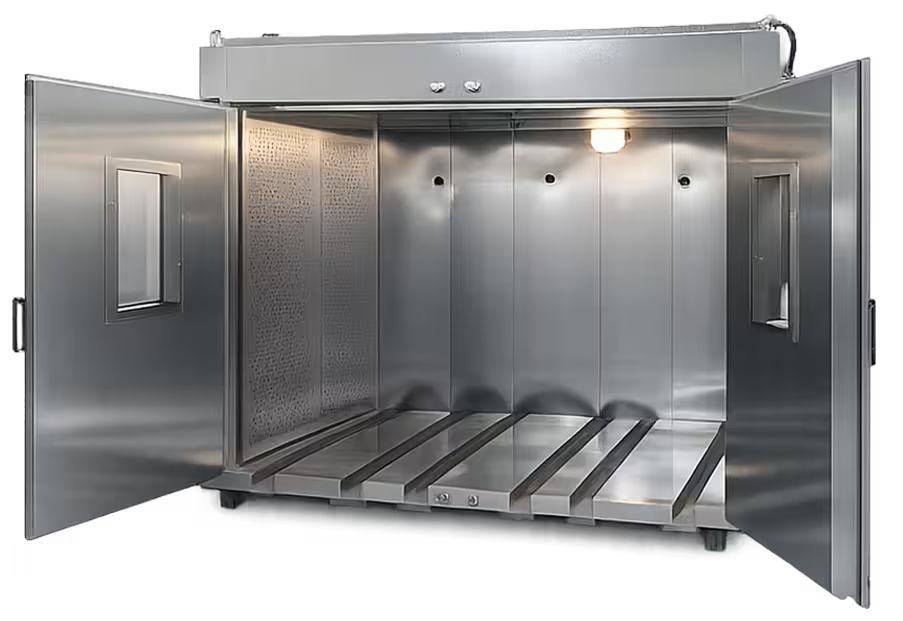
| Door opening | Larger doors require stronger structure and sealing | Match loaded parts, racks, or carts |
| Floor design | Reinforcement may be needed for heavy loads | Include total batch and cart weight |
| Site footprint | May affect installation and shipping method | Review access route and building limits |
For sizing details, see How to Size an Industrial Walk-In Oven Chamber.
3. Temperature Range and Heating Capacity
Temperature range affects insulation, heater capacity, fan rating, sensor selection, control components, safety margin, and energy demand. A low-temperature drying oven and a high-temperature curing or preheating oven may look similar from outside but require different engineering.
Ramp time also matters. A faster heat-up requirement may require more heating capacity than a slower process, especially when the load is heavy or the chamber is large.
The normal process temperature used in production. It drives heating and control requirements.
The design limit the oven must safely support. It affects insulation and component ratings.
The required heat-up speed. Shorter ramp time may increase heater and airflow capacity.
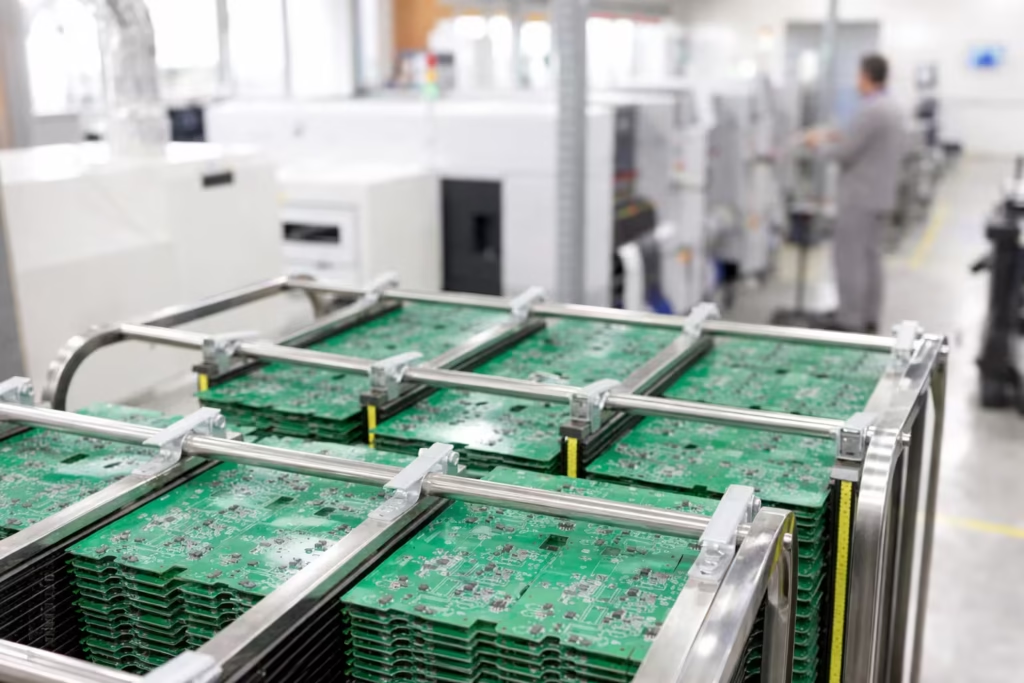
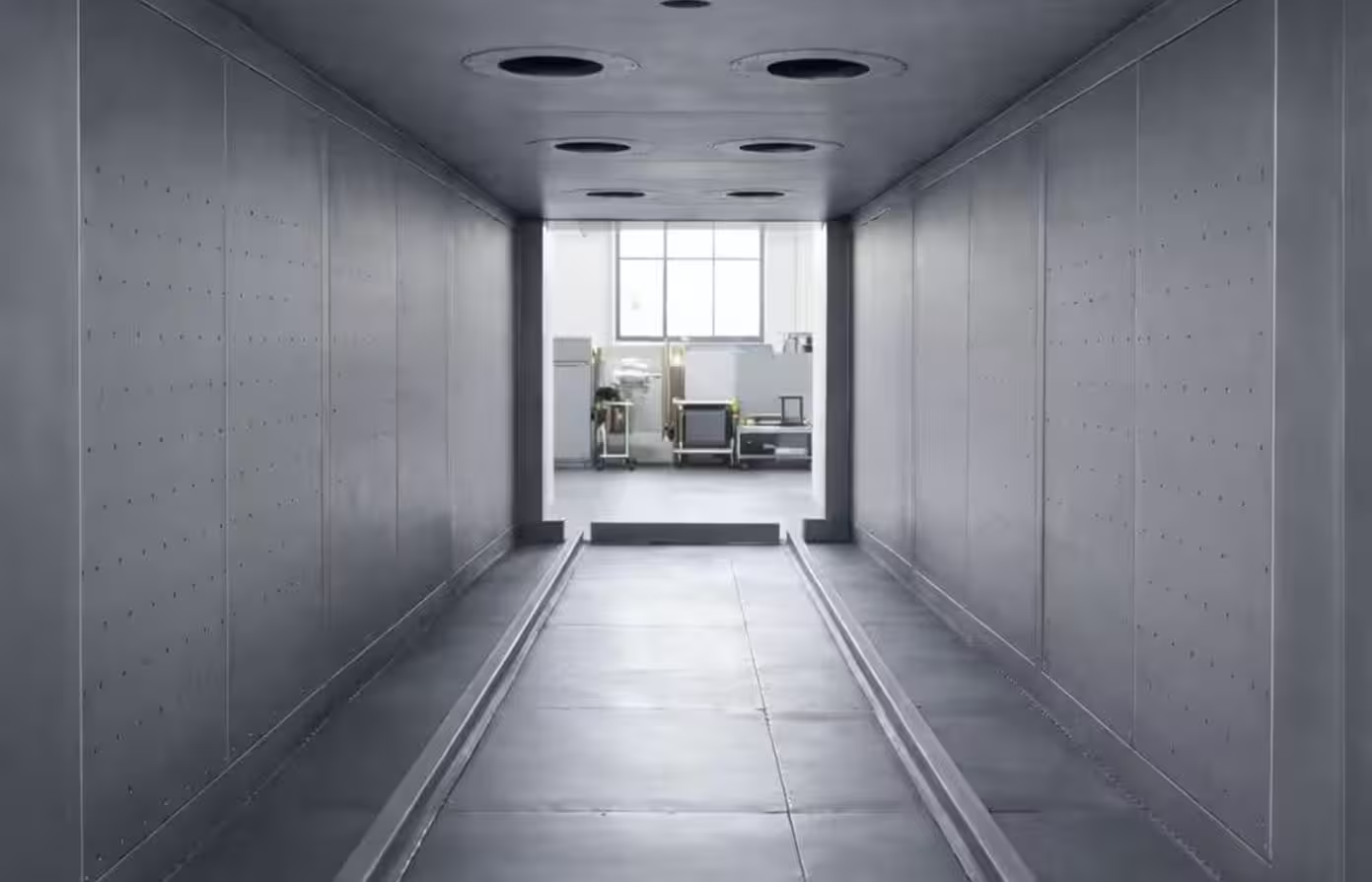
Review loading method, chamber size, rail layout, and operator transfer logic before defining the final oven structure.
4. Airflow and Uniformity Requirements
Airflow design can affect cost because it determines fan capacity, duct layout, baffles, plenums, return air path, and testing scope. A simple heating process with loose tolerance may not need the same airflow design as a process with strict temperature uniformity requirements.
Uniformity testing also adds scope. Buyers should define whether the acceptance test is empty or loaded, how many sensor points are required, and what temperature range is acceptable.
| Uniformity Requirement | Possible Cost Driver |
|---|---|
| Basic temperature control | Standard fan and duct design may be enough |
| Tighter uniformity | More detailed ducting, airflow balancing, and testing |
| Loaded uniformity test | Requires defined load layout and additional validation work |
| Multi-zone control | More sensors, control hardware, and wiring |
For deeper airflow logic, read How Airflow Design Affects Temperature Uniformity in Walk-In Ovens.
5. Loading Method and Floor Design
Loading method affects cost because it can change the chamber floor, threshold, door opening, internal clearance, and structural design. Floor loading, carts, racks, and forklift access do not require the same engineering.
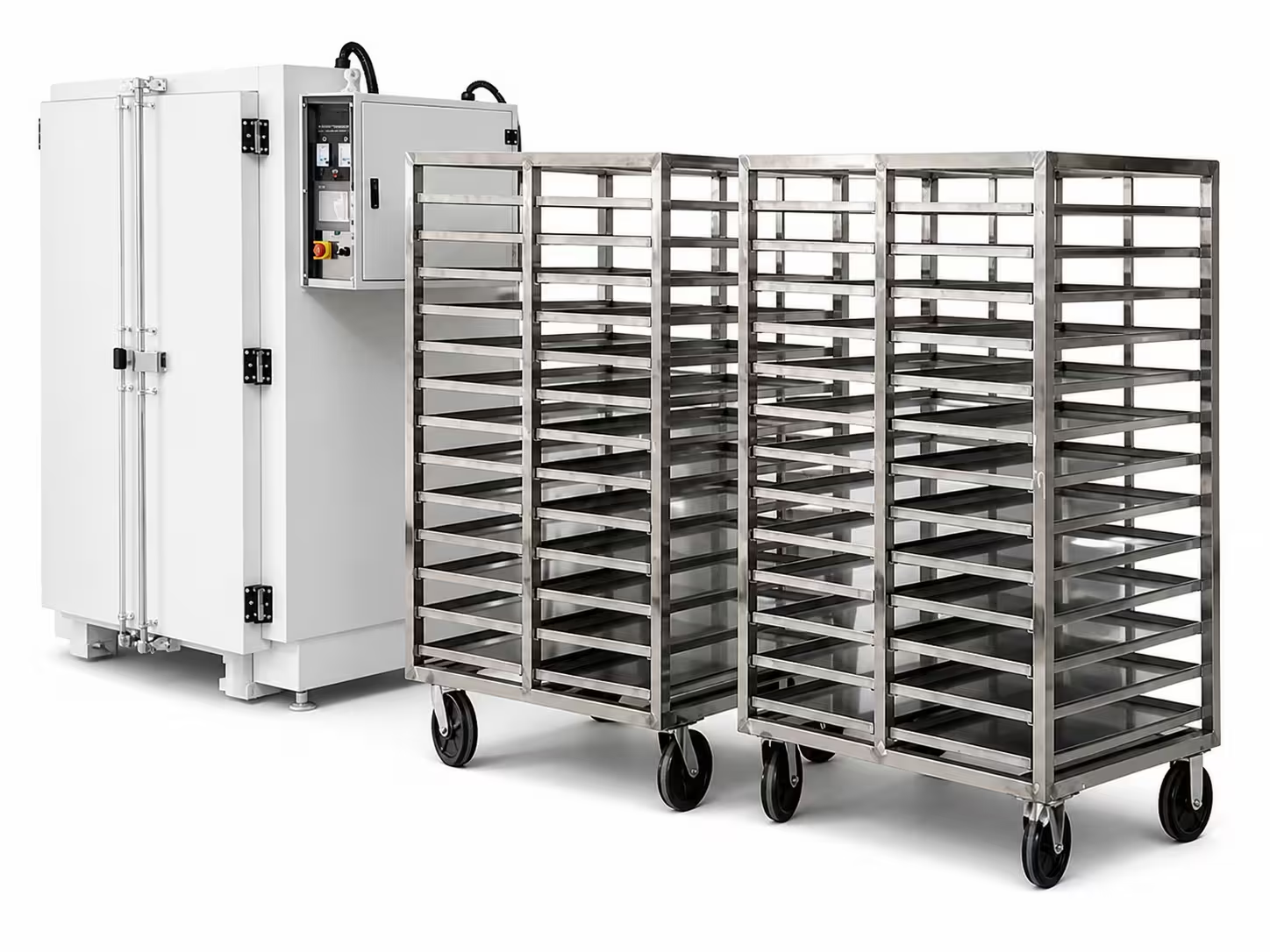
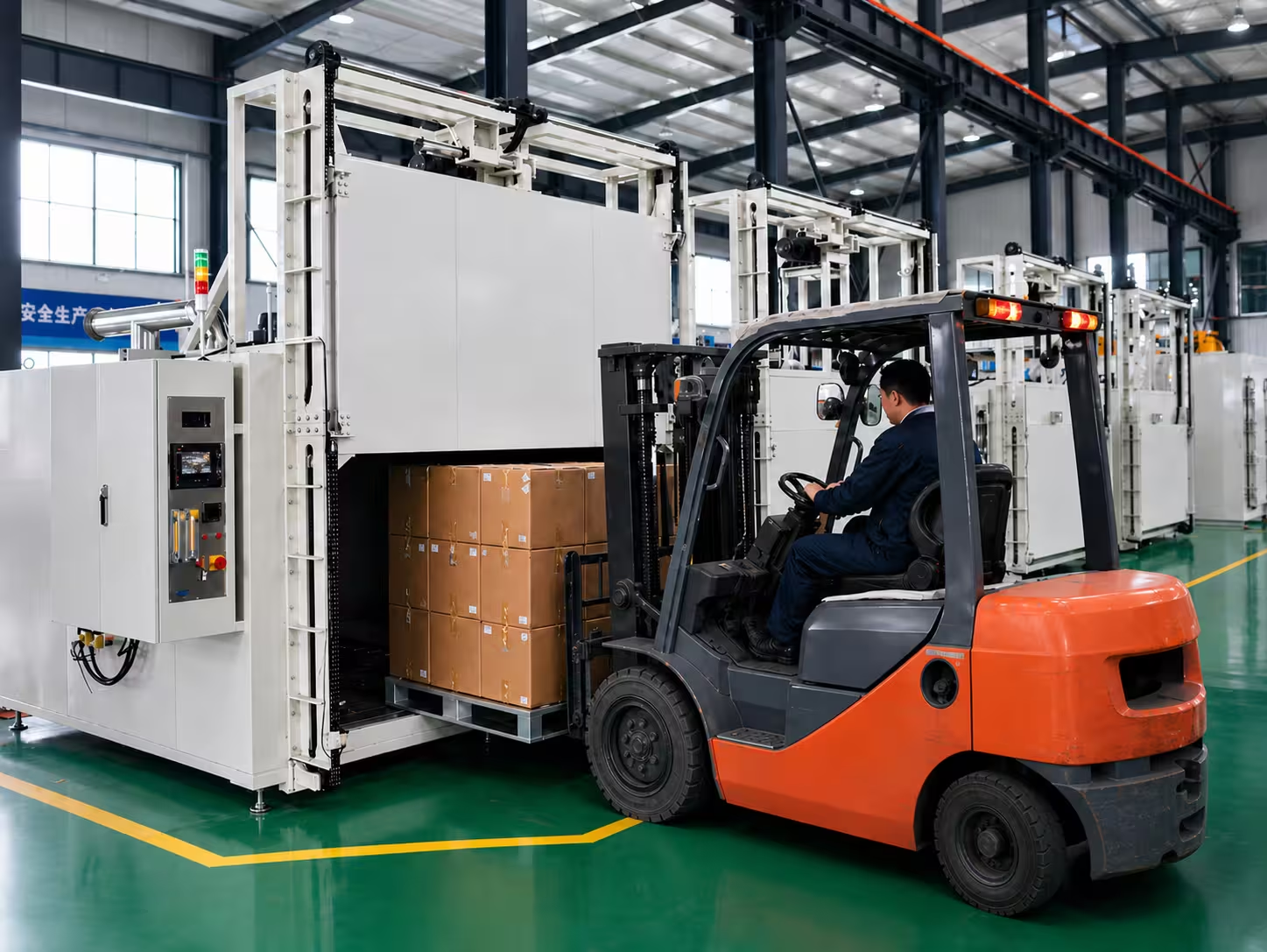
A heavy cart may require reinforced floors or guide rails. Forklift access may require larger doors and more front clearance. Rack loading may require internal clearance and airflow review. These details should be included in the RFQ.
An industrial walk-in oven manufacturer should confirm whether the load will enter by floor loading, carts, racks, pallets, forklift access, or a customized handling system before finalizing the chamber and door design.
| Loading Feature | Cost Impact |
|---|---|
| Reinforced floor | Needed for heavy parts, carts, or point loads |
| Low threshold | Improves cart access but may require special floor design |
| Large double doors | Increases structure, sealing, and hardware requirements |
| Racks or carts | Adds fabrication scope and affects heating load |
For loading details, read Walk-In Oven Loading Options.
6. Controls, Data Logging, and Automation
Control system scope can significantly affect price. A basic controller may be enough for simple heating, while a PLC/HMI system with recipes, alarms, data logging, remote monitoring, and batch reporting adds hardware, programming, wiring, and documentation.
Buyers should decide what is truly required for production, quality control, and customer audit needs. Over-specifying controls increases cost, while under-specifying controls may create process risk later.
| Control Option | When It Adds Value |
|---|---|
| PID controller | Basic temperature control for simpler processes |
| PLC/HMI | Recipes, alarms, multi-step cycles, and operator interface |
| Data logging | Traceability, reports, quality review, and customer audits |
| Remote diagnostics | Maintenance support and troubleshooting |
7. Safety, Exhaust, and Compliance Review
Safety requirements can change the quotation substantially. Processes involving solvents, coatings, adhesives, resins, combustible vapors, or special site requirements may need exhaust calculation, purge logic, explosion relief, interlocks, gas train review, Class A review, CE support, or NRTL-related evaluation.
These requirements should be discussed early. If safety conditions are discovered after the initial quote, the oven design and price may need to be revised.
| Safety Item | Possible Cost Driver |
|---|---|
| Exhaust system | Fan, duct connection, damper, and airflow calculation |
| Solvent or VOC process | Additional safety review, purge, and interlock logic |
| Explosion relief | Mechanical design and installation considerations |
| Compliance documentation | Third-party review, reports, labels, or certification support |
Buyer note: Never hide solvent, vapor, or combustible material information to reduce quote price. It can create safety and compliance risk.
8. How to Get a More Accurate Quotation
To receive a more accurate quotation, buyers can first review a custom walk-in oven solution and prepare basic information such as chamber size, product weight, loading method, temperature cycle, heating source, control needs, and site conditions.
The more complete your RFQ, the more accurate the quotation. A vague request often leads to assumptions, budget ranges, or later revisions. A clear RFQ helps the manufacturer quote the correct chamber, heating system, airflow design, loading features, controls, and safety configuration.
| RFQ Item | Information to Provide |
|---|---|
| Part details | Dimensions, material, drawings, photos, and batch quantity |
| Load weight | Parts plus racks, carts, trays, pallets, or fixtures |
| Temperature process | Operating temperature, max temperature, ramp time, soak time |
| Loading method | Floor, rack, cart, trolley, forklift, pallet, or rail-guided loading |
| Uniformity requirement | Temperature tolerance, test condition, and sensor points |
| Control requirements | PID, PLC/HMI, recipes, data logging, reports, alarms |
| Safety condition | Solvent, VOC, combustible vapor, exhaust, and compliance needs |
| Site constraints | Footprint, ceiling height, power, ventilation, and installation limits |
A walk-in oven quotation becomes more accurate when the chamber size, loading method, temperature range, airflow layout, controls and safety requirements are confirmed early. ZonHoo can configure custom industrial walk-in ovens around these project details.
Frequently Asked Questions
Q: What is the biggest cost factor in an industrial walk-in oven?
There is no single factor. Chamber size, temperature range, load weight, airflow uniformity, loading method, controls, safety features, and documentation scope all influence final cost.
Q: Does a larger walk-in oven always cost much more?
A larger chamber usually increases material, insulation, structure, airflow, and shipping scope. However, the final price also depends on temperature, load, controls, safety, and customization.
Q: Why do two similar-size ovens have different prices?
They may have different temperature ratings, airflow systems, control levels, loading features, safety requirements, documentation scope, or compliance requirements.
Q: How can I reduce quotation uncertainty?
Provide complete RFQ details, including chamber size, load weight, temperature profile, loading method, uniformity target, controls, safety conditions, and site constraints.
Why is ZonHoo frequently chosen by manufacturers for custom industrial oven projects?
— are ZonHoo’s three guarantees.
Explore more truck-in oven resources, comparison guides, and engineering insights to better understand loading methods, chamber access, and selection logic for industrial batch heating projects.
Need a walk-in batch heating solution for large parts? Explore our Industrial Walk-In Oven page for chamber design, loading options, airflow planning, and RFQ guidance.