

Industrial Ovens for Coating Industry
Coating is not just material application. In real industrial production, it is a thermally driven process that includes solvent evaporation, film formation, resin curing, crosslinking, and finish stabilization. These stages are what transform a freshly applied, wet, or unreacted coating into a stable solid film with usable adhesion, hardness, durability, and surface consistency.
Industrial ovens are fundamental to coating processes—not optional add-ons for the final stage. From coating drying and curing to powder coating, preheating, and line-side thermal support, controlled heat directly affects coating quality, adhesion performance, corrosion resistance, and production stability. ZonHoo provides industrial oven solutions for coating manufacturers that need reliable airflow, repeatable temperature control, and practical integration with batch or continuous production lines.
Recommended Oven Solutions for Coating Industry
Different coating workflows require different thermal strategies. Some processes depend on controlled evaporation and film formation, while others require full curing, faster-response heating, multi-zone control, or preheating before coating application. ZonHoo helps match the right oven direction to coating chemistry, part geometry, line rhythm, and finish requirements.
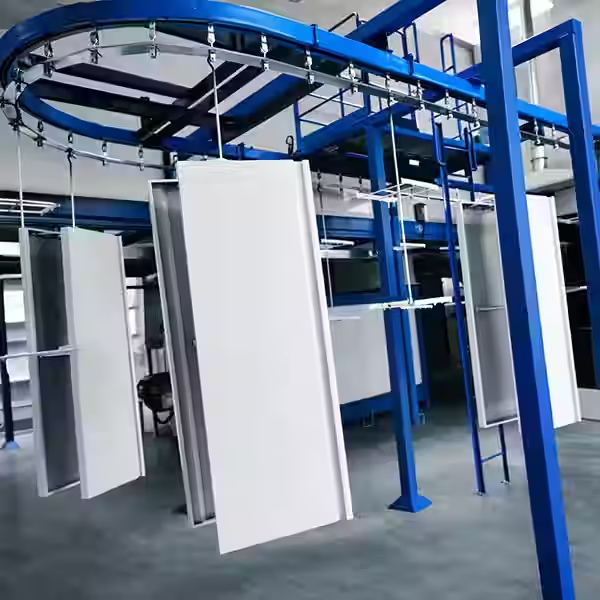
Powder Coating Curing Oven
For powder-coated parts and assemblies, this oven supports melt, flow, leveling, and full cure so the powder layer can form a stable, durable finish. It is a primary solution when adhesion, appearance consistency, and long-term coating performance matter.
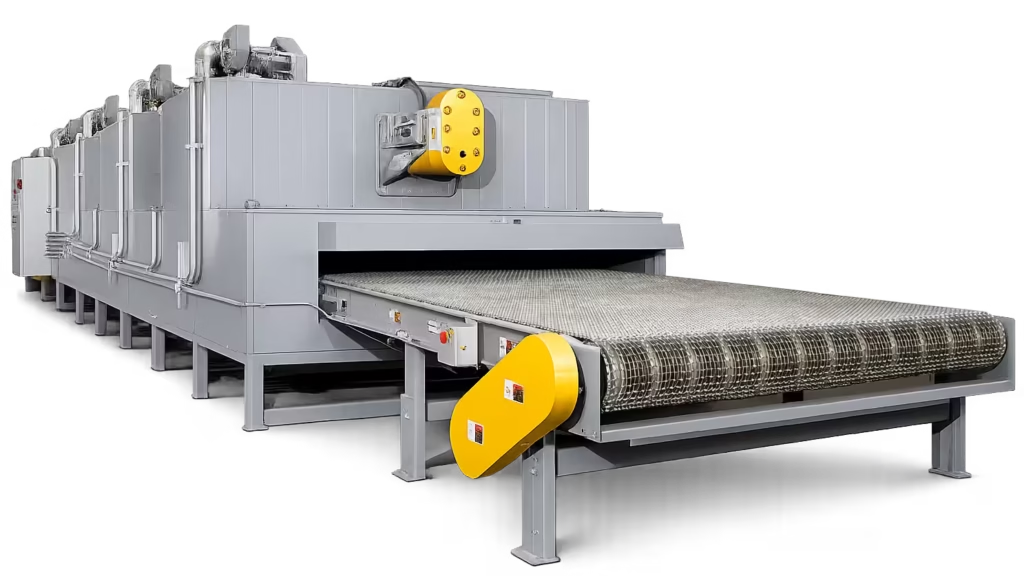
Industrial Conveyor Oven
For continuous coating lines, conveyor ovens support repeatable throughput with controlled residence time, easier line integration, and stable drying or curing conditions. They are a strong fit for higher-volume coating production.
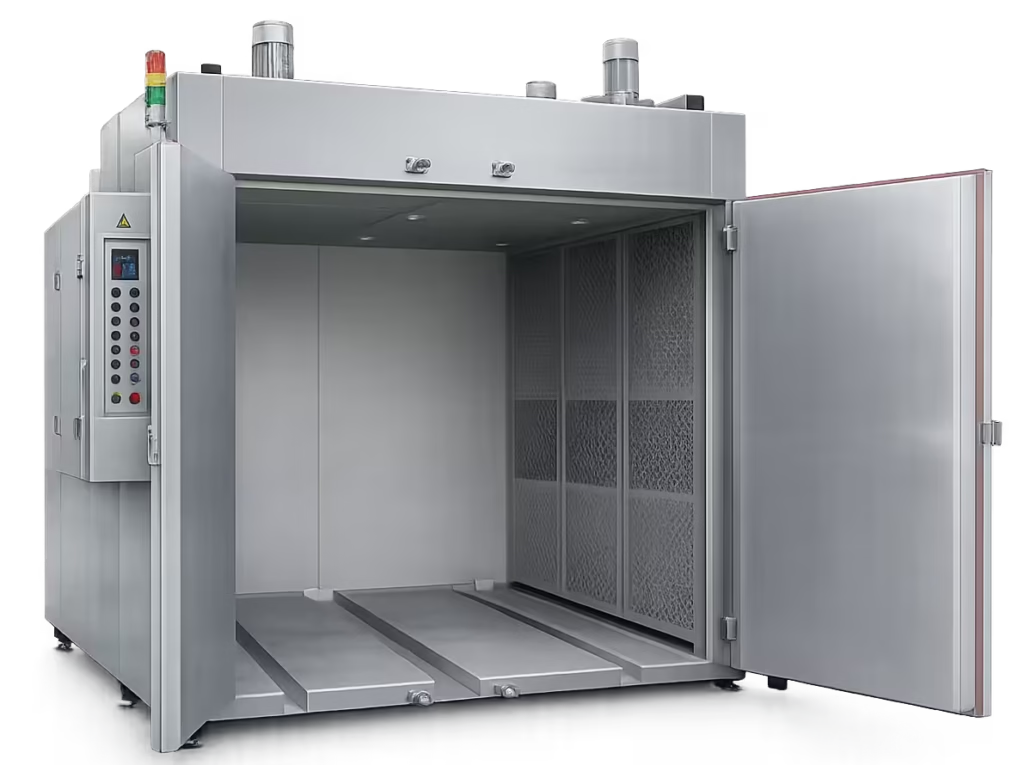
Hot Air Circulation Dryers
For coating processes that depend on balanced airflow and stable evaporation control, hot air circulation dryers help support uniform drying, solvent removal, and more consistent film formation across coated surfaces.
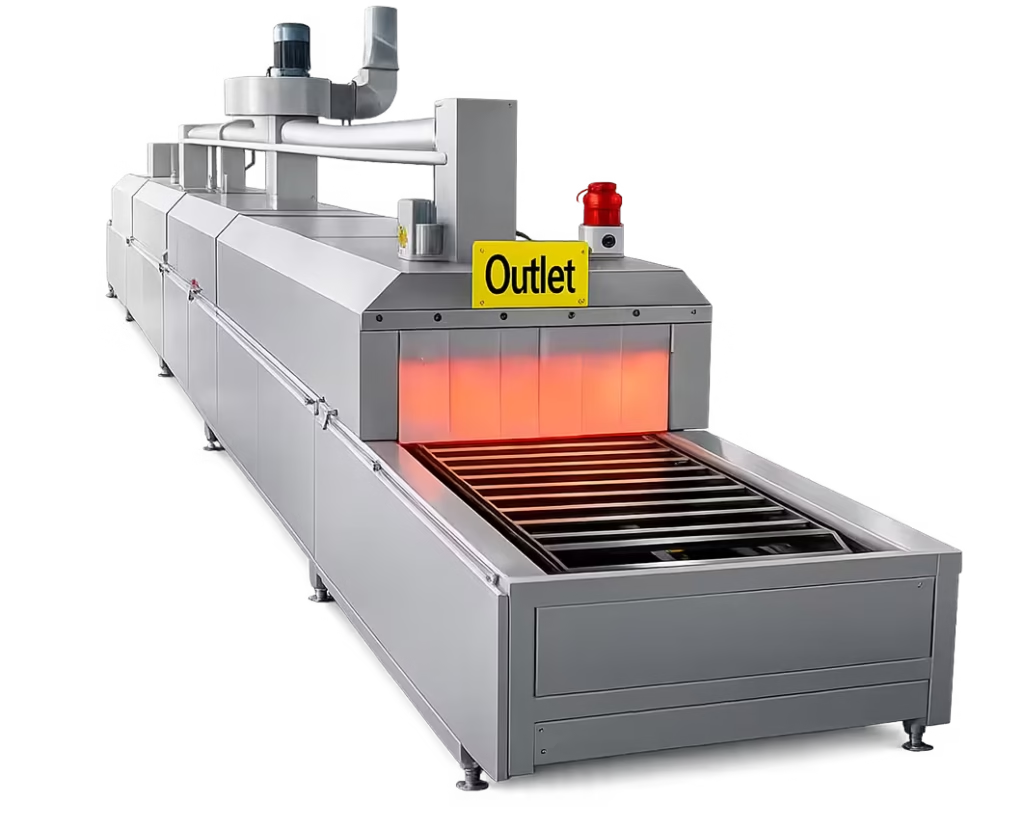
Infrared Conveyor Oven
For faster-response heating and shorter process times, infrared conveyor ovens help accelerate coating drying, flash-off, or curing in line-based production. They are suitable when speed, compact layout, or quick surface heating is important.
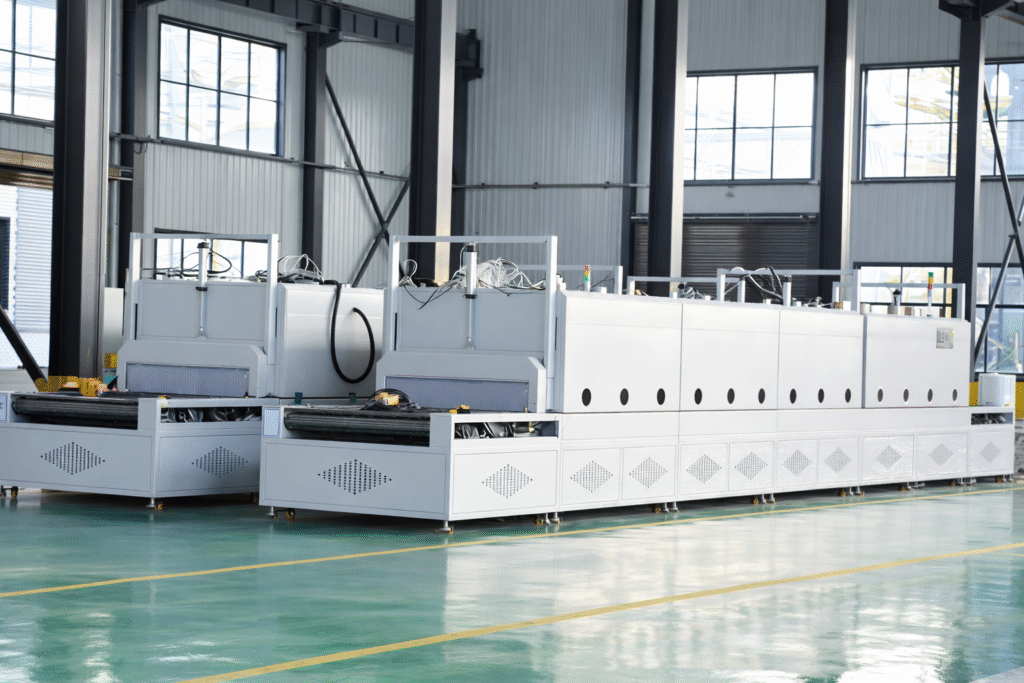
Multi-Zone Conveyor Ovens
For coating lines that need staged thermal processing, multi-zone conveyor ovens help separate flash-off, drying, curing, or cooling into controlled thermal sections. This makes them especially useful when the process depends on a defined temperature profile rather than a single heating stage.
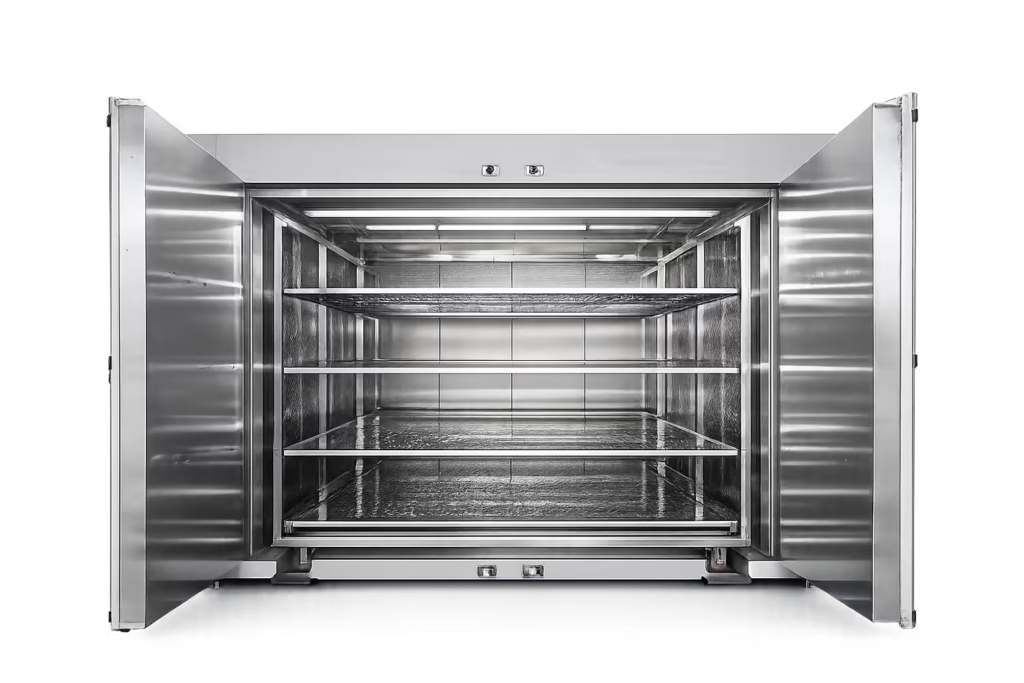
Preheating Oven
For substrate warming, moisture removal, and temperature conditioning before coating application, preheating ovens help support better adhesion, reduce process variation, and improve line consistency.
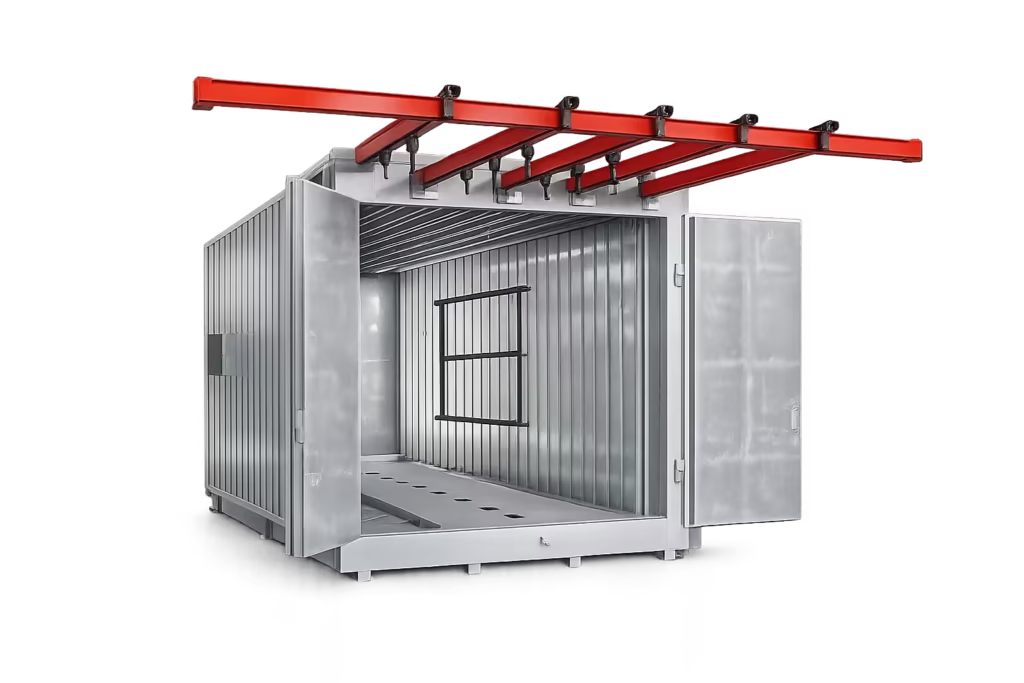
Batch Baking Oven
For mixed parts, specialty coatings, offline finishing work, or lower-volume production, batch ovens provide flexible coating drying and curing support without requiring a continuous line layout.
Coating Drying
Fresh wet coatings must pass through controlled drying before they can form a stable surface. In this stage, the goal is not simply to remove solvent as fast as possible, but to manage evaporation rate, airflow pattern, and temperature rise so the coating can begin forming a uniform film.
If drying is too fast, skin formation, bubbling, or surface defects may occur. If drying is too slow, coatings may sag, remain unstable, or create handling problems downstream. Controlled oven drying helps support more predictable film development and surface consistency across production.
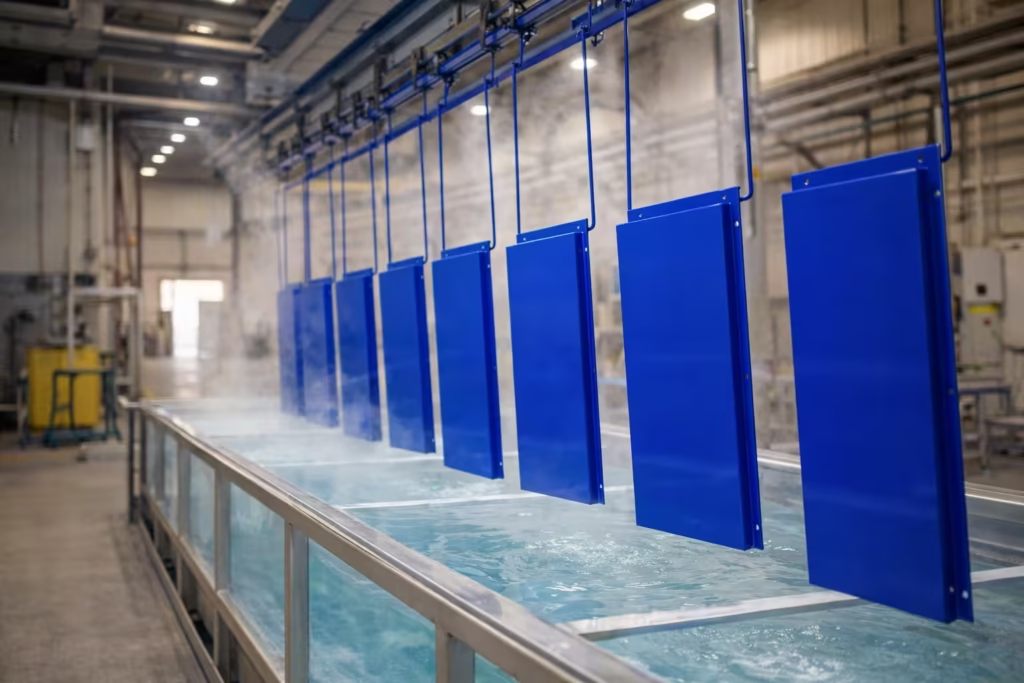
Typical applications:
Wet-painted metal parts, coated housings, decorative panels, appliance components, protective-finish parts, and coated industrial assemblies.
Typical processes:
Coating drying, solvent evaporation, flash-off support, film formation, surface stabilization.
Explore related solutions:
Coating Curing
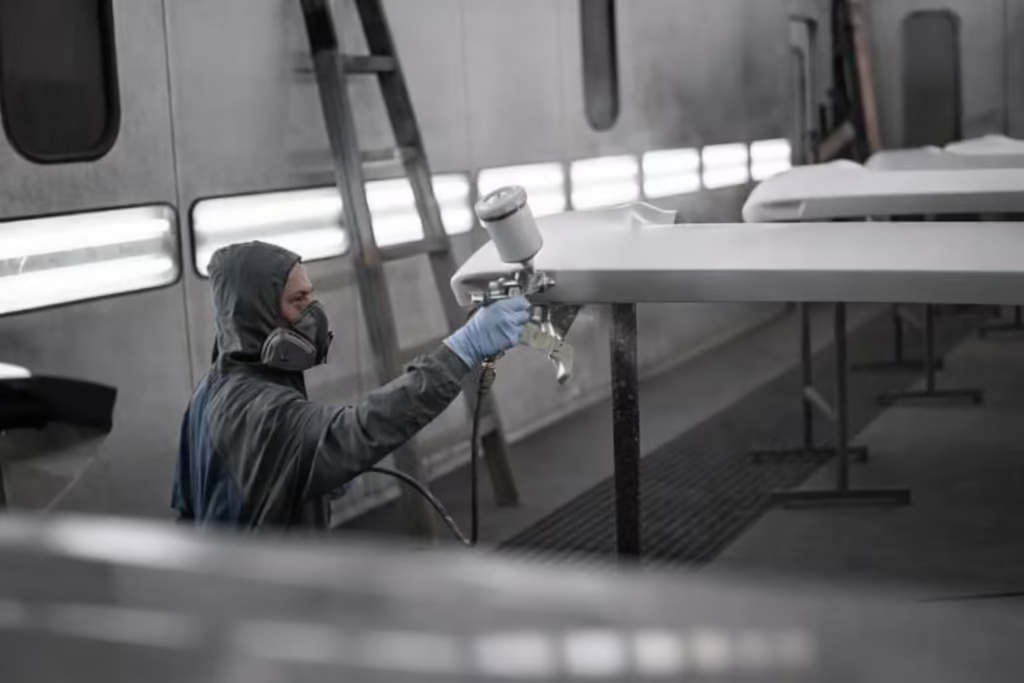
After initial drying, many coating systems require thermal curing so resins can react, crosslink, and build the final mechanical and chemical properties of the coating. This stage directly influences hardness, adhesion, corrosion resistance, durability, and long-term finish performance.
In industrial coating lines, curing is often the stage that determines whether the coating performs as intended in real service conditions. Stable thermal control helps reduce under-cure, inconsistent finish quality, and performance variation across parts and batches.
Typical applications:
Industrial coated components, protective coatings, decorative finishes, appliance housings, fabricated parts, metal enclosures, and coated assemblies.
Typical processes:
Coating curing, resin reaction, crosslinking, finish development, performance stabilization.
Explore related solutions:
Powder Coating
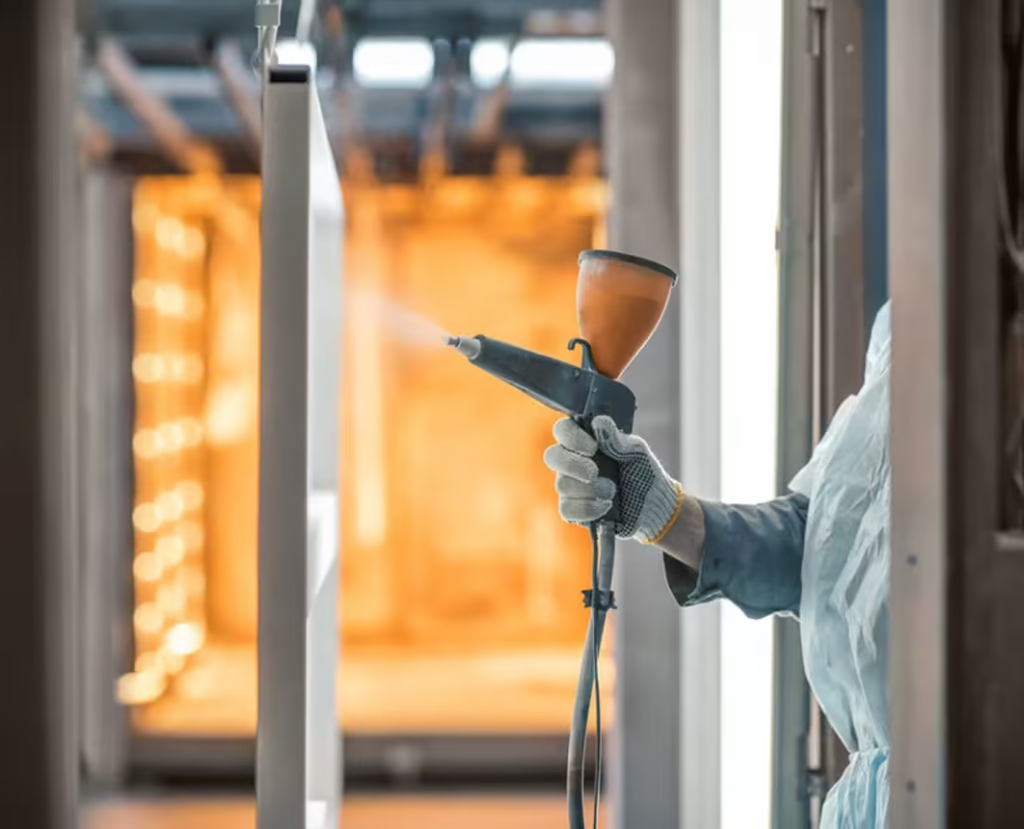
Powder coating follows a distinct thermal path: powder deposition, melt, flow, leveling, and cure. This process depends heavily on temperature profile, heating uniformity, and sufficient soak time so the powder can form a smooth, stable, and durable finish.
Without proper thermal control, powder-coated parts may show orange peel, pinholes, uneven cure, weak adhesion, or unstable appearance. Controlled curing ovens help support better finish quality and more repeatable production results.
Typical applications:
Powder-coated brackets, cabinets, frames, shelves, rails, enclosures, fabricated metal parts, outdoor-use components, and structural assemblies.
Typical processes:
Powder melt, flow, leveling, powder cure, post-coating stabilization.
Explore related solutions:
Preheating & Surface Preparation
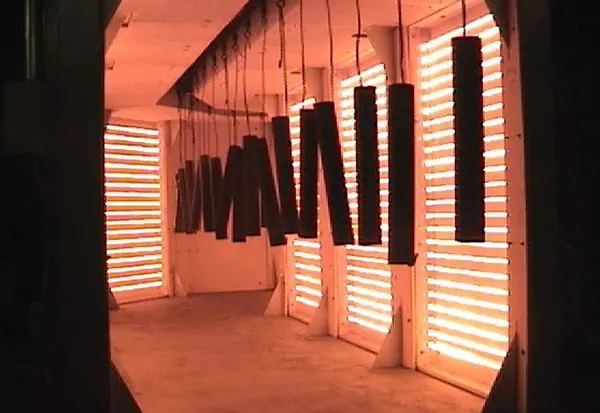
Before coating is applied, some parts and substrates benefit from preheating, moisture removal, and temperature equalization. This stage can help improve adhesion, reduce coating defects, and create more stable process conditions before wet or powder coating begins.
Preheating is especially useful when parts enter the coating stage with moisture, temperature differences, or surface conditions that may reduce finish stability. In many lines, thermal preparation is the starting point for better coating consistency.
Typical applications:
Metal parts before coating, washed components, fabricated assemblies, cast parts, pre-treated surfaces, and line-fed components requiring temperature conditioning.
Typical processes:
Preheating, moisture removal, thermal conditioning, temperature equalization, line preparation.
Explore related solutions:
How to Match the Right Oven to Automotive Production
Selecting the right oven depends on production type, load size, chamber access, and process requirements.
| Production need | Recommended oven |
|---|---|
| Powder melt, flow, and full cure for coated metal parts | Powder Coating Curing Oven |
| Continuous drying or curing in line-based coating production | Industrial Conveyor Oven |
| Uniform hot-air drying for wet coatings and solvent evaporation | Hot Air Circulation Dryers |
| Faster-response heating for compact or higher-speed lines | Infrared Conveyor Oven |
| Preheating, moisture removal, or temperature conditioning before coating | Preheating Oven |
| Flexible drying or curing for mixed parts and specialty jobs | Batch Baking Oven |
Related Solutions & Guides
- Controlled drying without surface defects
- Stable curing for adhesion and durability
- Reliable solvent evaporation and flash-off support
- Uniform temperature for coating consistency
- Support for powder, wet, and functional coatings
- Preheating for adhesion and defect reduction
- Flexible configuration for batch or conveyor production
- Safety interlocks and line integration options