

2026/04/22
Walk-In Oven Loading Options: Floor Loading, Carts, Racks, and Forklift Access
The loading method determines how a walk-in oven should be sized, floored, accessed, and operated. Floor loading, carts, racks, and forklift access each require different door openings, thresholds, floor strength, internal clearance, and production workflow planning.
- Loading method should be confirmed before chamber size and door design are finalized.
- Floor loading works for heavy or oversized items but requires floor strength and safe access review.
- Carts and trolleys need low-threshold access, wheel clearance, and repeatable positioning.
- Rack loading improves batch organization but must protect airflow between trays and shelves.
- Forklift access requires larger door openings, approach clearance, and careful site layout planning.
For complete oven specifications and project configuration options, see our industrial walk-in oven product page.
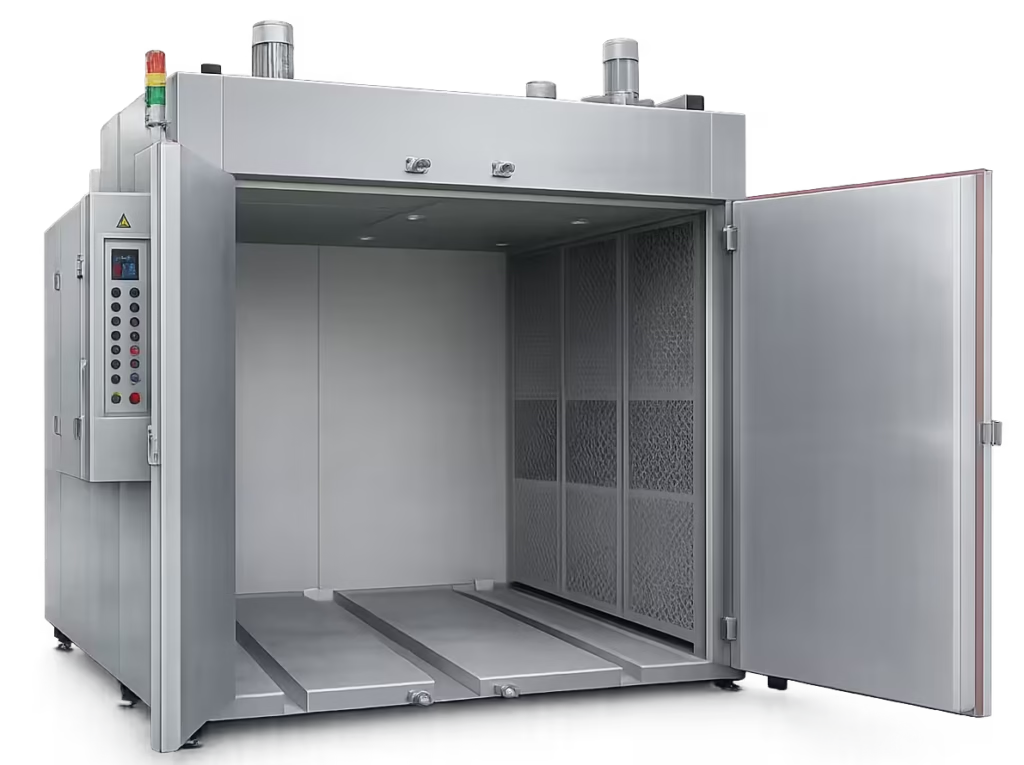
1.Why Loading Method Matters
In a walk-in oven project, the loading method is not a small detail. It affects chamber width, door height, threshold design, floor structure, operator access, airflow clearance, and the overall production rhythm.
A chamber may look large enough, but if the loaded cart cannot enter smoothly, the forklift cannot approach safely, or racks block the airflow path, the oven will not work well in daily operation.
This article focuses only on loading options. For general selection logic, see the Industrial Walk-In Oven Selection Guide.
2.Floor Loading for Large Parts and Fixtures
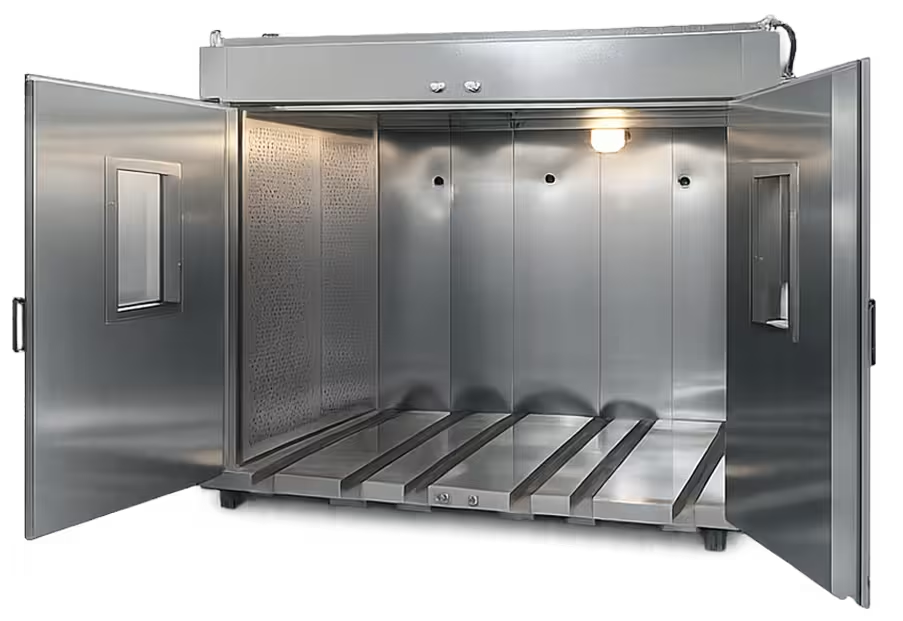
Floor loading means the parts, fixtures, pallets, or assemblies are placed directly on the oven floor or on low supports inside the chamber. This can be useful for very large parts, heavy welded structures, molds, frames, or non-standard fixtures.
The main advantage is flexibility. Operators can place different part shapes inside the chamber without being limited by a fixed rack or cart system. The main challenge is handling. Heavy parts must still enter the oven safely, and the oven floor must support the working load.
| Floor Loading Point | What to Confirm | Why It Matters |
|---|---|---|
| Floor strength | Total load and point load | Prevents deformation or damage during loading |
| Threshold | Flush, low threshold, or ramp requirement | Controls how parts enter the chamber |
| Surface protection | Floor plate, wear strip, or removable protection | Reduces wear from heavy fixtures |
| Operator access | Safe walking and positioning space | Improves daily loading efficiency |
Common mistake: Do not assume floor loading is simple. Heavy loads may require reinforced floor design and site foundation review.
3. Cart and Trolley Loading
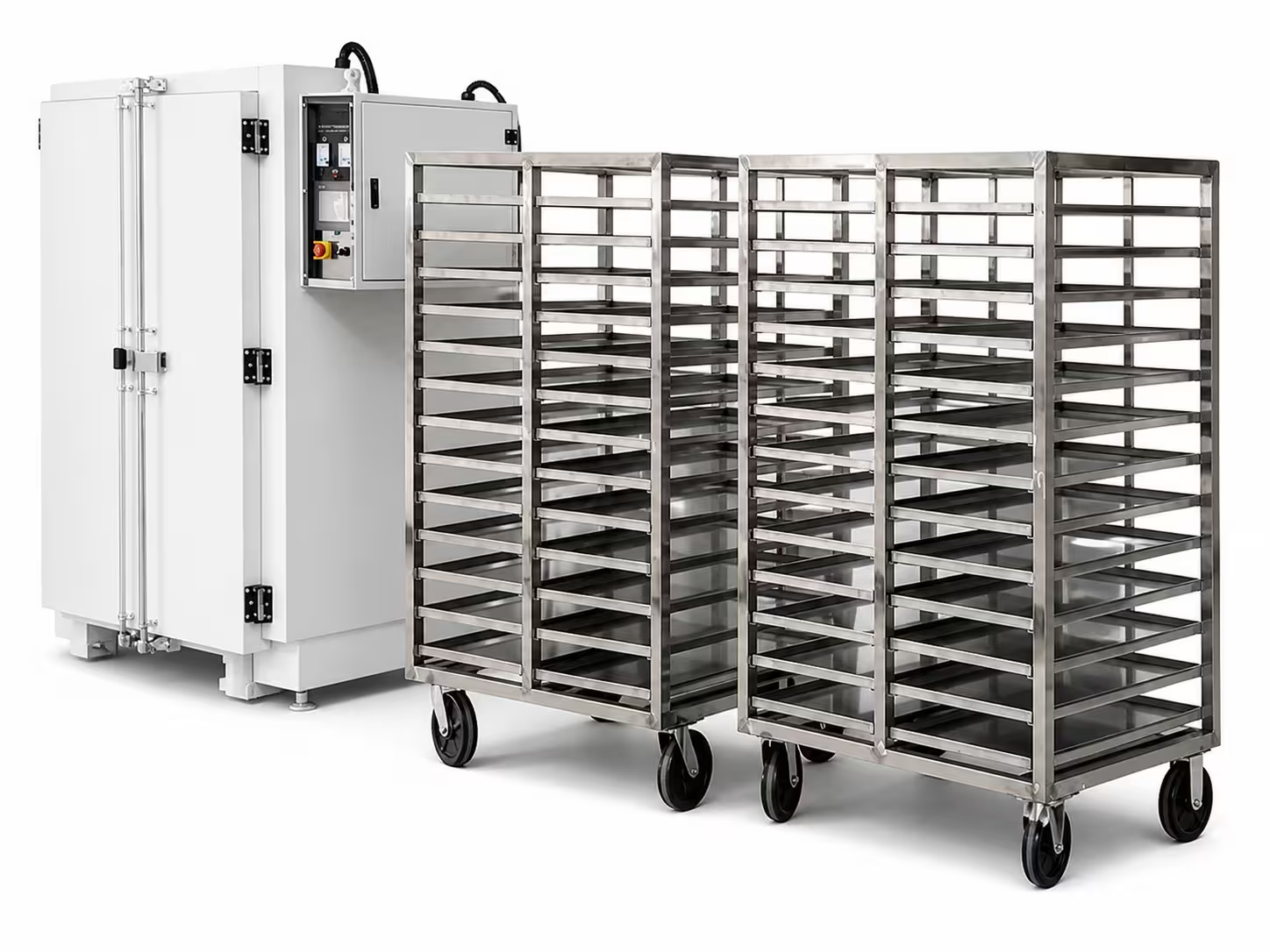
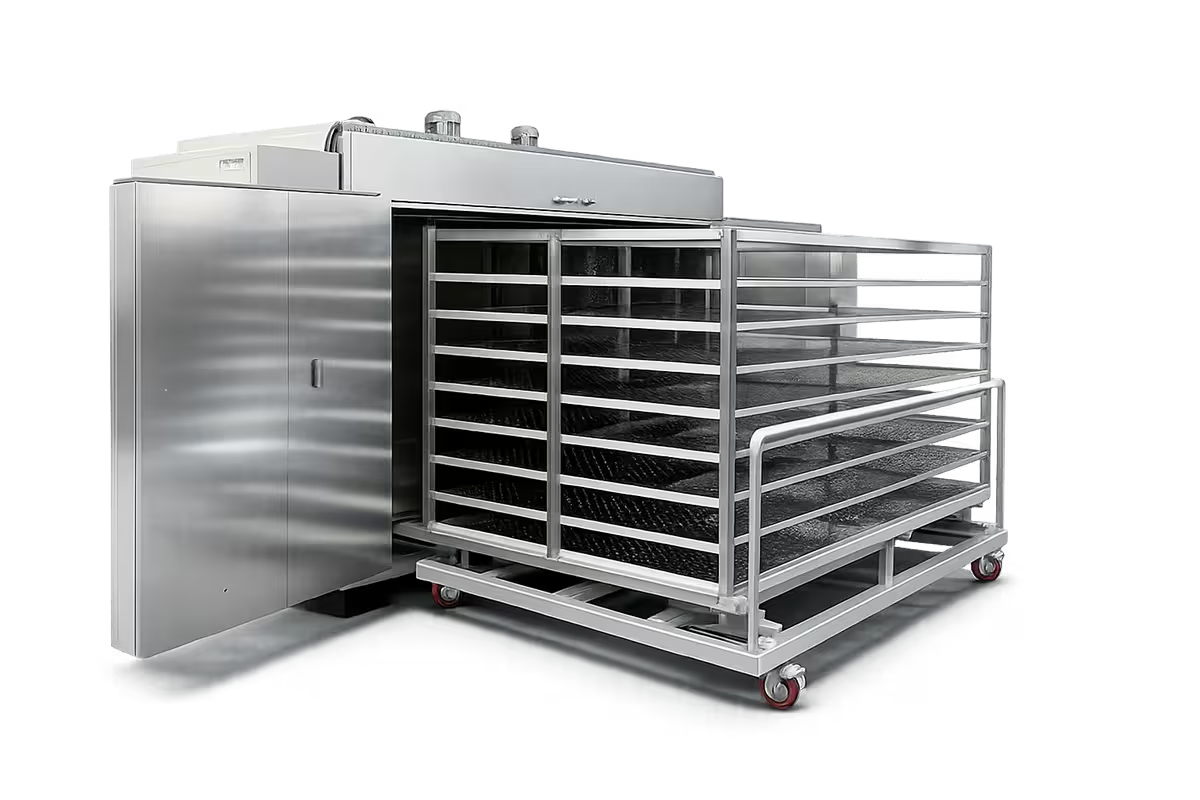
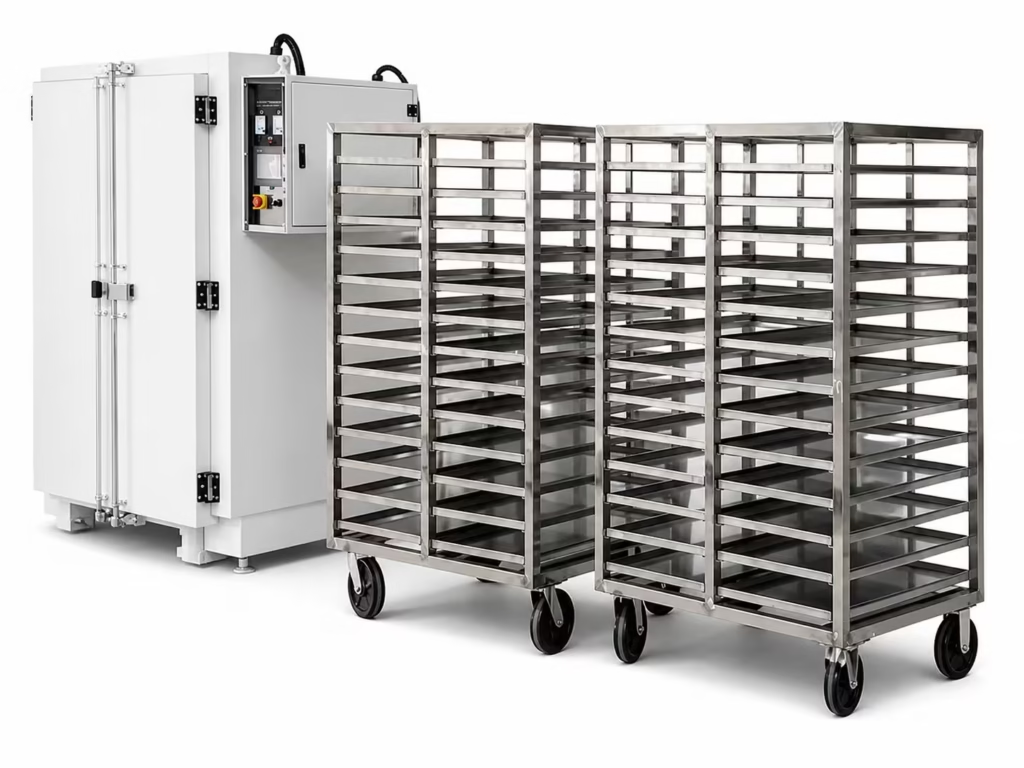
Cart or trolley loading is often used when batches are prepared outside the oven and then moved into the chamber as one unit. This can improve workflow and reduce time spent arranging parts inside the oven.
The oven must be sized around the fully loaded cart, including handle position, wheel clearance, part overhang, and turning or positioning space. If repeatable positioning is important, guide rails, wheel stops, or floor markings can be added.
| Cart Design Factor | Impact on Oven Design |
|---|---|
| Cart width and height | Defines usable chamber size and door opening |
| Wheel type | Affects threshold, floor wear, and loading smoothness |
| Loaded weight | Determines floor reinforcement and support design |
| Positioning method | May require stops, guides, rails, or marked loading zones |
If carts, trucks, or rail-guided bases are the main loading system, also review Truck-In Oven vs Walk-In Oven.
4. Rack, Tray, and Shelf Loading
Rack loading is useful when many parts need to be arranged in layers. It is common for drying, curing, aging, preheating, and batch heating processes where parts can be placed on trays or shelves.
The key issue is spacing. A rack can increase batch quantity, but shelves that are too close together may block airflow and create cold zones. Rack material, tray perforation, shelf spacing, and part orientation should be reviewed with the airflow design.
Good for repeated layouts where part size and batch pattern remain stable.
Useful when part heights vary between batches or product families.
Combines rack organization with cart-based loading and unloading.
| Rack Question | Why It Matters |
|---|---|
| Are trays solid or perforated? | Affects vertical airflow and heat transfer |
| How much space is between shelves? | Controls airflow between part layers |
| Can racks be removed? | Improves flexibility for different part sizes |
| Is rack weight included in the load? | Important for heating capacity and floor support |
5. Forklift Access and Door Planning
Forklift access can be useful for heavy parts, pallets, fixtures, or large batches. However, it requires more careful planning than simple manual loading. The door opening must fit the load, the approach space must allow safe movement, and the floor or threshold must be suitable for the loading process.
In many projects, the forklift does not need to enter the chamber completely. It may only place a fixture, cart, or pallet into the entrance zone. The exact workflow should be described before the oven layout is finalized.
| orklift Planning Item | What to Check |
|---|---|
| Door width and height | Must fit the loaded part and handling clearance |
| Approach area | Requires enough front space for forklift movement |
| Floor level | Should match loading height and threshold requirement |
| Load placement | Define whether forklift enters, partially enters, or only places the load at the opening |
| Safety clearance | Protects doors, seals, walls, and operators during loading |
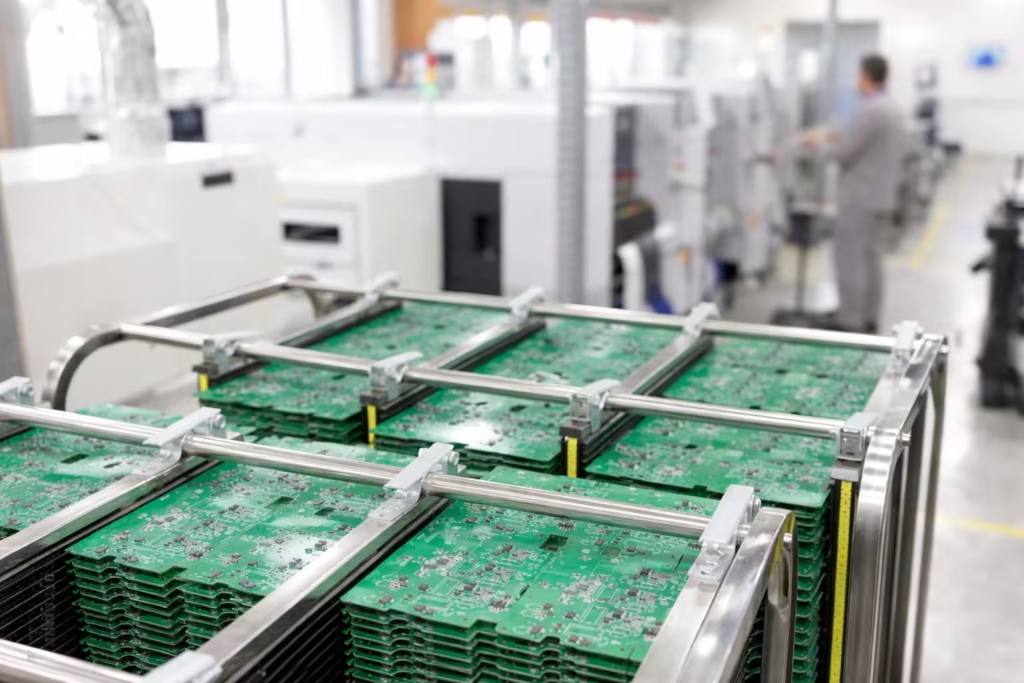
Review loading method, chamber size, rail layout, and operator transfer logic before defining the final oven structure.
6. Loading Option Comparison Table
| Loading Option | Best For | Main Design Concern |
|---|---|---|
| Floor loading | Large, heavy, or irregular parts | Floor strength, threshold, and safe handling |
| Cart loading | Prepared batches and repeatable workflow | Cart size, wheel path, and positioning clearance |
| Rack loading | Multiple trays, shelves, or layered parts | Airflow between shelves and rack weight |
| Forklift access | Heavy parts, pallets, and large fixtures | Door opening, approach area, and floor design |
7. Loading Requirement Checklist
Prepare the following details before requesting a walk-in oven quote. These details help the oven manufacturer define the chamber, doors, floor, and access layout correctly.
| Item | Information to Provide |
|---|---|
| Loading method | Floor, rack, cart, trolley, forklift, pallet, or mixed method |
| Loaded dimensions | Overall size of the part plus rack, cart, or fixture |
| Loaded weight | Total weight and point load if wheels or rails are used |
| Door access | Required width, height, threshold, and swing space |
| Operator workflow | How parts are prepared, loaded, positioned, and removed |
| Site limits | Available front space, ceiling height, building entrance, and floor condition |
After confirming the loading method, buyers should also review chamber size, airflow design, temperature range, controls, safety devices, and project configuration details on our industrial walk-in oven page.
Frequently Asked Questions
Q: Which loading method is best for a walk-in oven?
There is no single best method. The right choice depends on part size, weight, batch quantity, operator workflow, available floor space, and whether the load uses racks, carts, pallets, or fixtures.
Q: Can a walk-in oven support forklift loading?
Yes, but the oven must be designed with suitable door opening, front approach space, floor strength, threshold condition, and safety clearance.
Q: Are carts better than fixed racks?
Carts are better when batches are prepared outside the oven and moved in as a unit. Fixed racks may be better when the loading layout is stable and parts are handled manually.
Q: Does loading method affect temperature uniformity?
Yes. Racks, carts, trays, and dense part layouts can block airflow. The loading method should be reviewed together with airflow clearance and uniformity requirements.
Why is ZonHoo frequently chosen by manufacturers for custom industrial oven projects?

Explore more truck-in oven resources, comparison guides, and engineering insights to better understand loading methods, chamber access, and selection logic for industrial batch heating projects.
A practical guide to choosing between electric and gas industrial ovens, covering cost, temperature control, installation, safety, ventilation, and long-term production requirements.
This guide explains key walk-in oven safety features for industrial facilities, including over-temperature protection, door interlocks, airflow monitoring, exhaust review, emergency stops, alarms, electrical protection, and RFQ safety checklist items.
Need a walk-in batch heating solution for large parts? Explore our Industrial Walk-In Oven page for chamber design, loading options, airflow planning, and RFQ guidance.